
Search
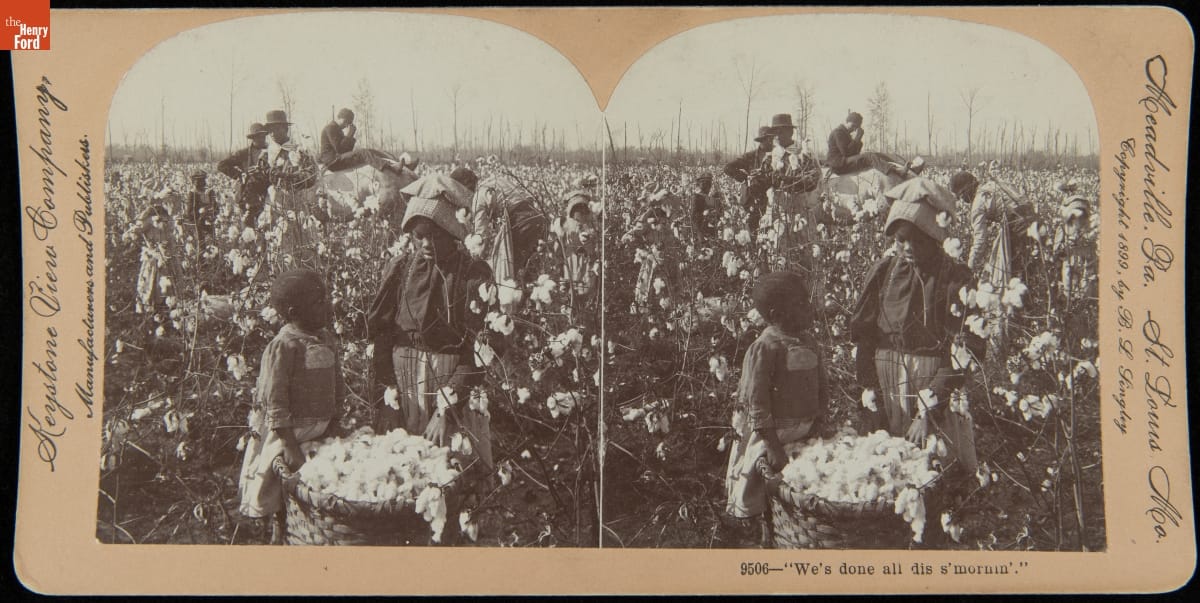
- "We's done all dis s'mornin'," 1899 - This stereograph features children with a full basket of cotton, the cash crop dominating southern agriculture at the time. The caption, in dialect, implied that these children were uneducated. Its translation into six languages conveyed that impression internationally. In reality, cotton pickers earned low wages (one penny per pound) and their impoverished condition undermined access to adequate education.
- 1899
- Collections - Artifact
"We's done all dis s'mornin'," 1899
This stereograph features children with a full basket of cotton, the cash crop dominating southern agriculture at the time. The caption, in dialect, implied that these children were uneducated. Its translation into six languages conveyed that impression internationally. In reality, cotton pickers earned low wages (one penny per pound) and their impoverished condition undermined access to adequate education.
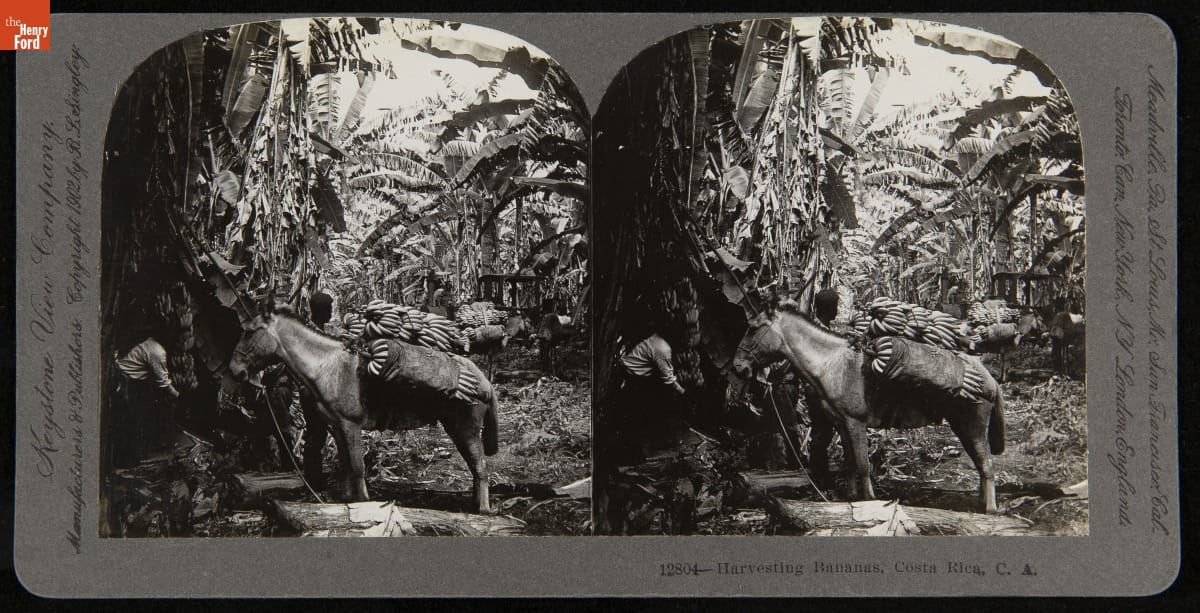
- Harvesting Bananas, Costa Rica, 1902 -
- 1902
- Collections - Artifact
Harvesting Bananas, Costa Rica, 1902
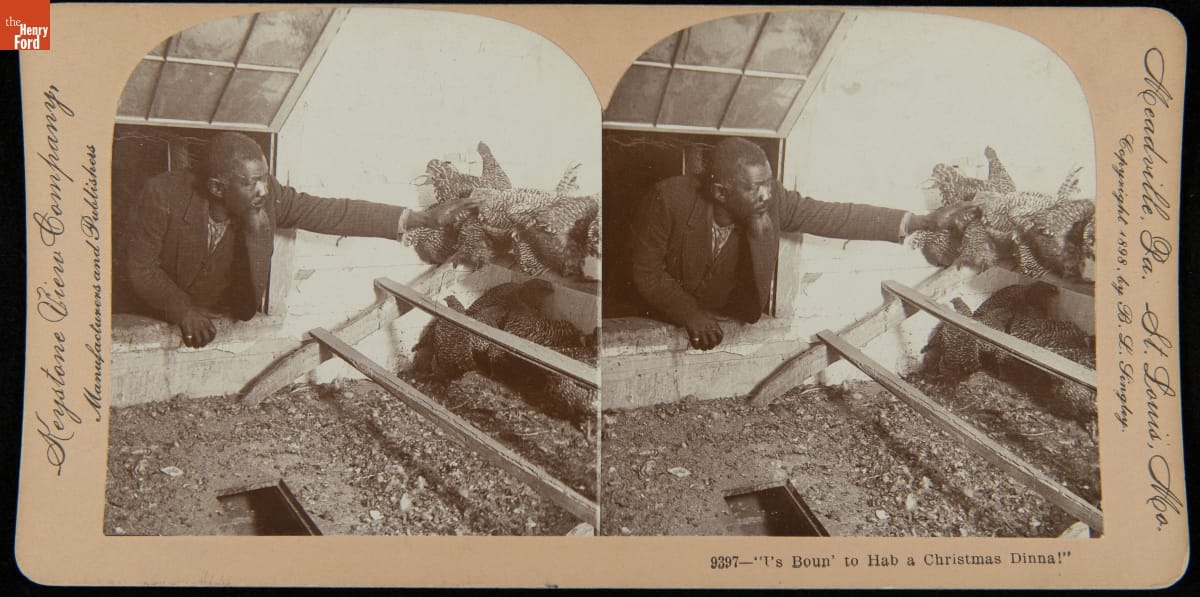
- "I's Boun' to Hab a Christmas Dinna!", 1898 - This stereograph shows a man about to nab a hen from her roost. The scene reinforced racist views by denigrating a black man as a "chicken thief." The caption, in dialect, further vilified rural black culture as uneducated. The Dominique hens likewise factored into the overt racist message through their association with Euro-centric colonial revival ideals, a stark contrast to the New Negro movement launched in 1895.
- 1898
- Collections - Artifact
"I's Boun' to Hab a Christmas Dinna!", 1898
This stereograph shows a man about to nab a hen from her roost. The scene reinforced racist views by denigrating a black man as a "chicken thief." The caption, in dialect, further vilified rural black culture as uneducated. The Dominique hens likewise factored into the overt racist message through their association with Euro-centric colonial revival ideals, a stark contrast to the New Negro movement launched in 1895.