
Search
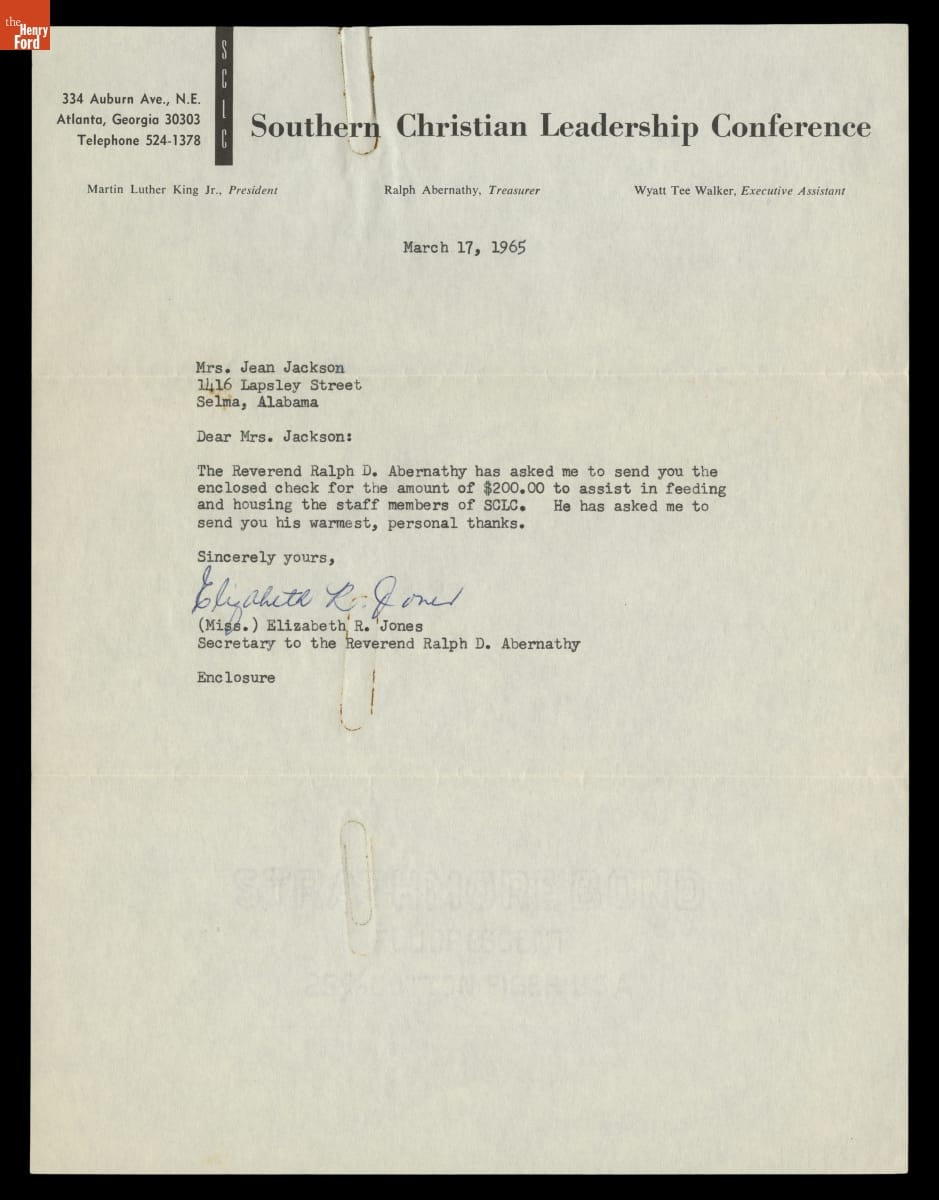
- Letter from Southern Christian Leadership Conference to Richie Jean Jackson with Thanks for Her Hospitality, March 17, 1965 -
- March 17, 1965
- Collections - Artifact
Letter from Southern Christian Leadership Conference to Richie Jean Jackson with Thanks for Her Hospitality, March 17, 1965
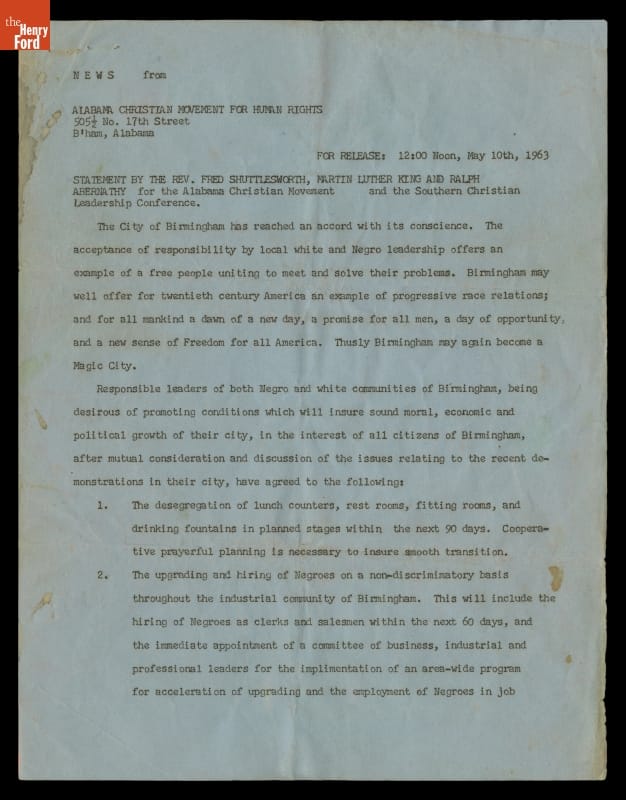
- Press Release on the Birmingham Campaign, May 10, 1963 -
- May 10, 1963
- Collections - Artifact
Press Release on the Birmingham Campaign, May 10, 1963
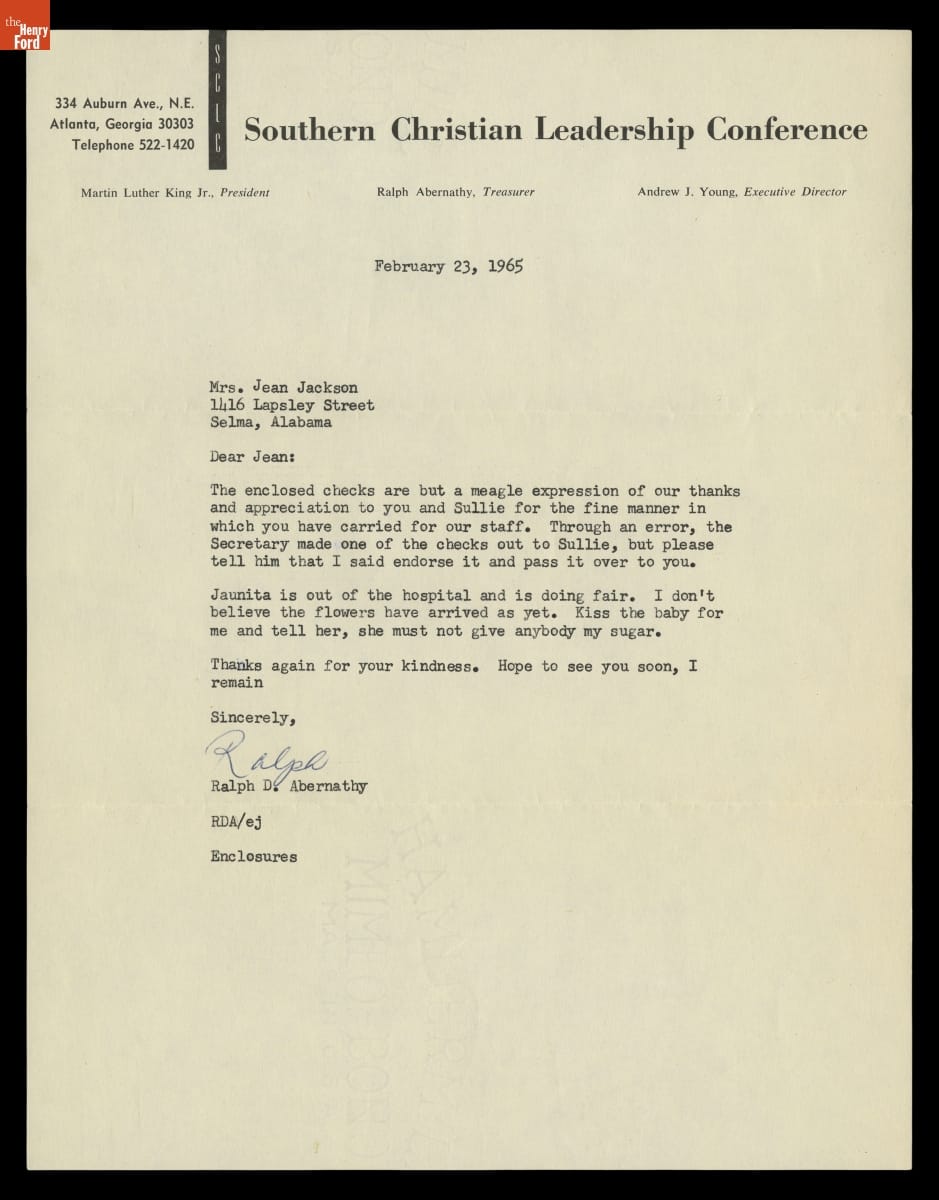
- Letter from Ralph Abernathy, Southern Christian Leadership Conference, to Richie Jean Jackson, February 23, 1965 - The home of Dr. Sullivan and Richie Jean Sherrod Jackson became a refuge for Civil Rights leaders during the struggle for voting rights in the 1960s. Ralph Abernathy, a friend of the Jacksons and Vice President of the Southern Christian Leadership Conference, stayed there. He wrote this letter to Richie Jean, praising the "fine manner in which [she cared] for our staff."
- February 23, 1965
- Collections - Artifact
Letter from Ralph Abernathy, Southern Christian Leadership Conference, to Richie Jean Jackson, February 23, 1965
The home of Dr. Sullivan and Richie Jean Sherrod Jackson became a refuge for Civil Rights leaders during the struggle for voting rights in the 1960s. Ralph Abernathy, a friend of the Jacksons and Vice President of the Southern Christian Leadership Conference, stayed there. He wrote this letter to Richie Jean, praising the "fine manner in which [she cared] for our staff."
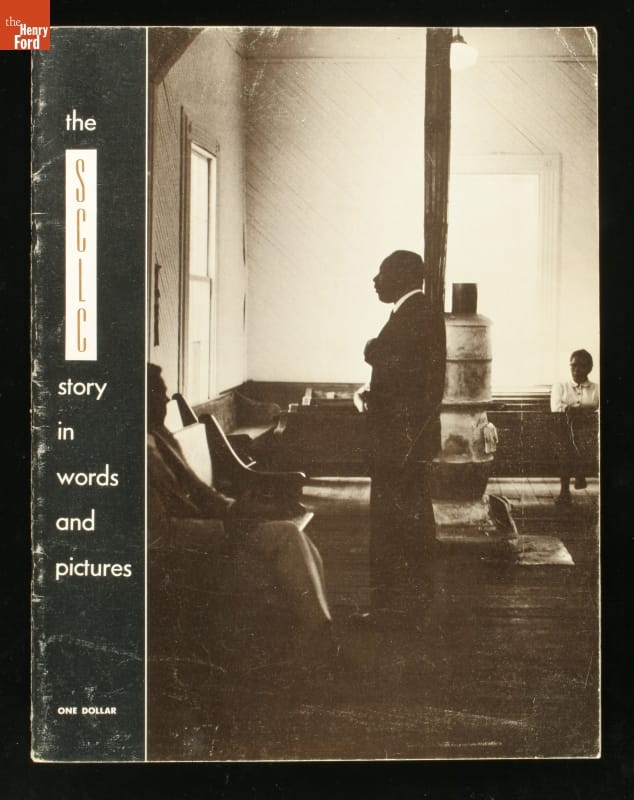
- "The S.C.L.C. Story in Words and Pictures," 1964 - The Southern Christian Leadership Conference, founded after the Montgomery bus boycott by Martin Luther King, Jr. and other activist ministers, was a catalyst in organizing nonviolent demonstrations all over the South. The organization's history, causes and those who support its vision are portrayed in this 1964 book.
- 1964
- Collections - Artifact
"The S.C.L.C. Story in Words and Pictures," 1964
The Southern Christian Leadership Conference, founded after the Montgomery bus boycott by Martin Luther King, Jr. and other activist ministers, was a catalyst in organizing nonviolent demonstrations all over the South. The organization's history, causes and those who support its vision are portrayed in this 1964 book.