
Search
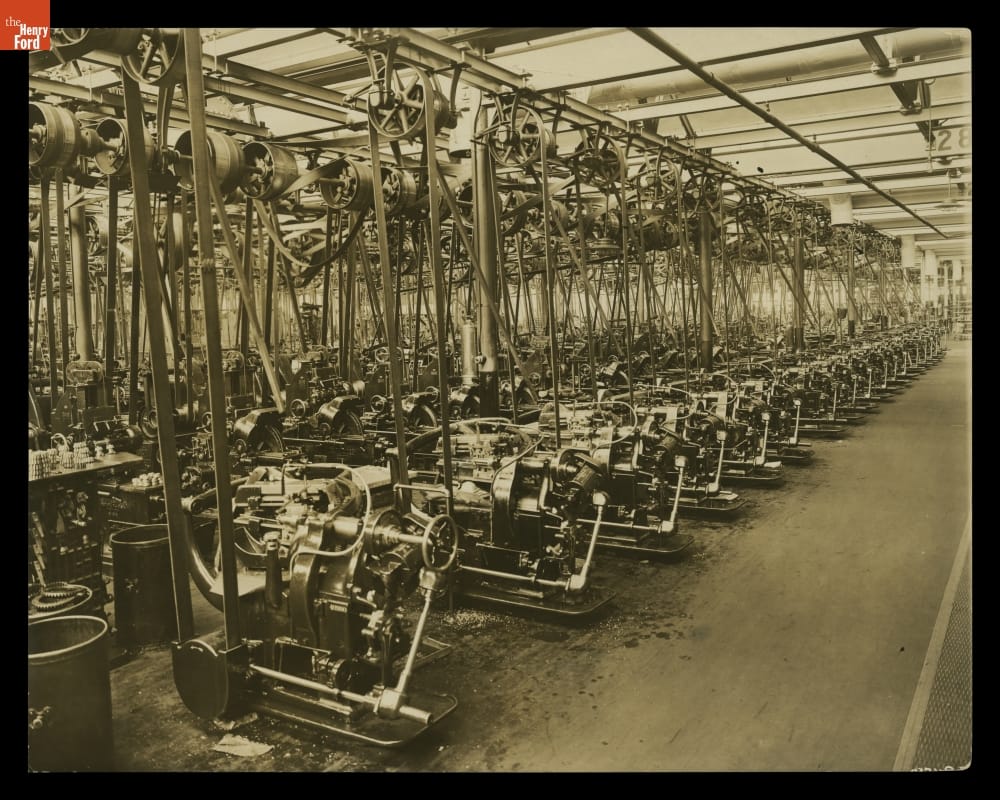
- Machine Shop at Ford Motor Company Highland Park Plant, circa 1913 - The Highland Park Ford Plant, designed by renowned industrial architect Albert Kahn, was the second production facility for the Model T. This photograph shows Highland Park's machine shop filled with specialized machine tools. Among the milling machines shown here are "hobbers," which cut teeth in metal to make gears.
- circa 1913
- Collections - Artifact
Machine Shop at Ford Motor Company Highland Park Plant, circa 1913
The Highland Park Ford Plant, designed by renowned industrial architect Albert Kahn, was the second production facility for the Model T. This photograph shows Highland Park's machine shop filled with specialized machine tools. Among the milling machines shown here are "hobbers," which cut teeth in metal to make gears.
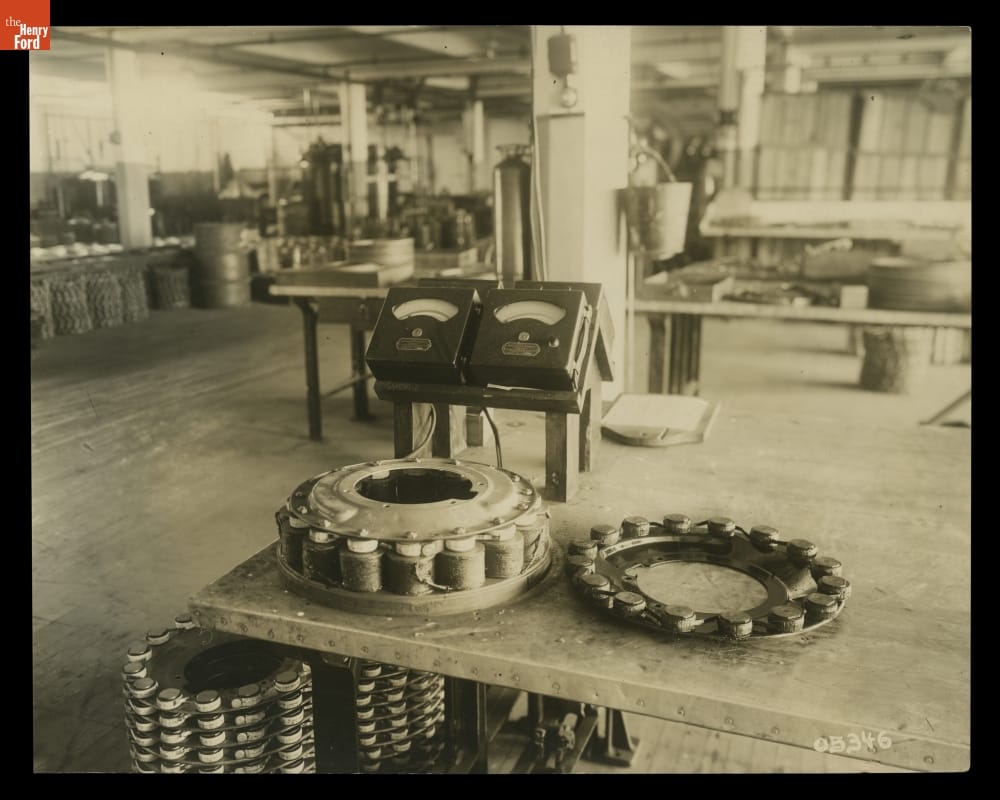
- Equipment for Testing Magnetos in the Ford Motor Company Highland Park Plant, circa 1913 - The Ford Model T's magneto generated electricity to produce the spark that ignited the fuel-air mixture in its engine cylinders. The T's magneto was built into its flywheel rather than as a separate unit driven by a belt or chain from the engine. The design typified the clever, compact engineering found throughout the Model T.
- circa 1913
- Collections - Artifact
Equipment for Testing Magnetos in the Ford Motor Company Highland Park Plant, circa 1913
The Ford Model T's magneto generated electricity to produce the spark that ignited the fuel-air mixture in its engine cylinders. The T's magneto was built into its flywheel rather than as a separate unit driven by a belt or chain from the engine. The design typified the clever, compact engineering found throughout the Model T.
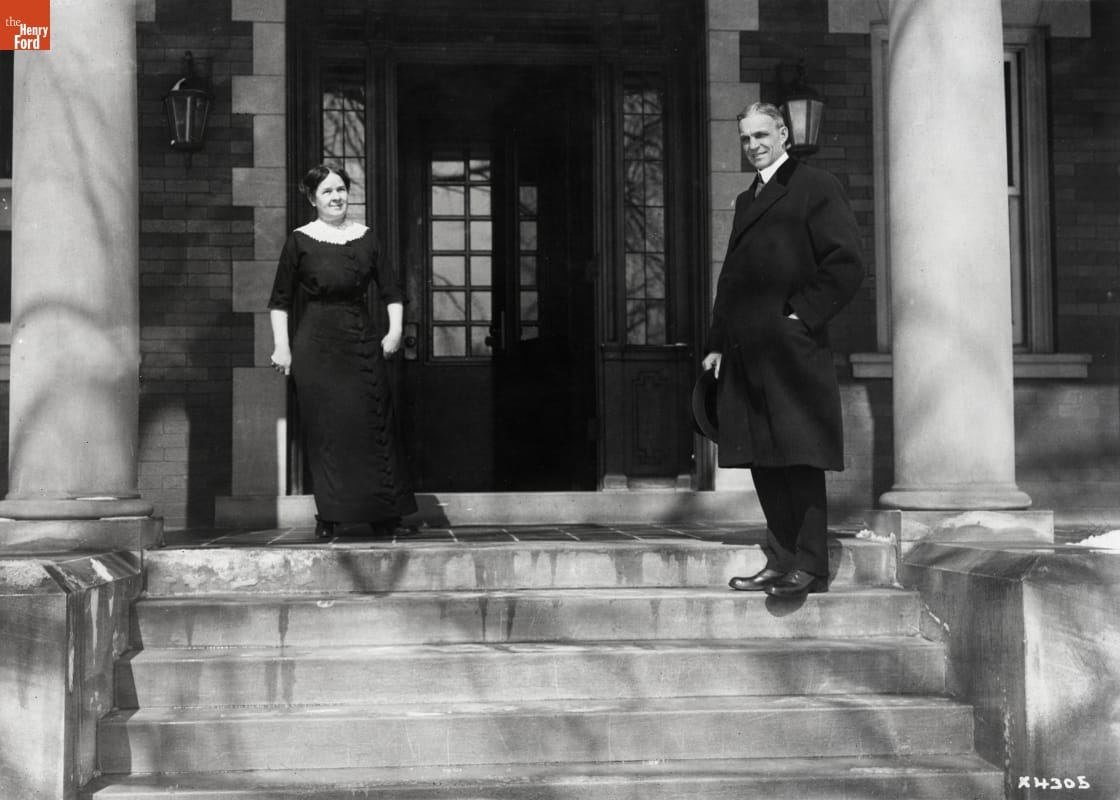
- Clara and Henry Ford on the Porch of their Home on Edison Avenue, Detroit, Michigan, circa 1912 - Clara Ford moved into a large new home with her husband, Henry, and son, Edsel, in 1908. The Italian Renaissance Revival house was built on the corner of Edison and Second Avenues in Detroit. The family's new prosperity only grew with the introduction of the Model T. Henry and Clara lived here seven years before building a new home in Dearborn.
- circa 1912
- Collections - Artifact
Clara and Henry Ford on the Porch of their Home on Edison Avenue, Detroit, Michigan, circa 1912
Clara Ford moved into a large new home with her husband, Henry, and son, Edsel, in 1908. The Italian Renaissance Revival house was built on the corner of Edison and Second Avenues in Detroit. The family's new prosperity only grew with the introduction of the Model T. Henry and Clara lived here seven years before building a new home in Dearborn.
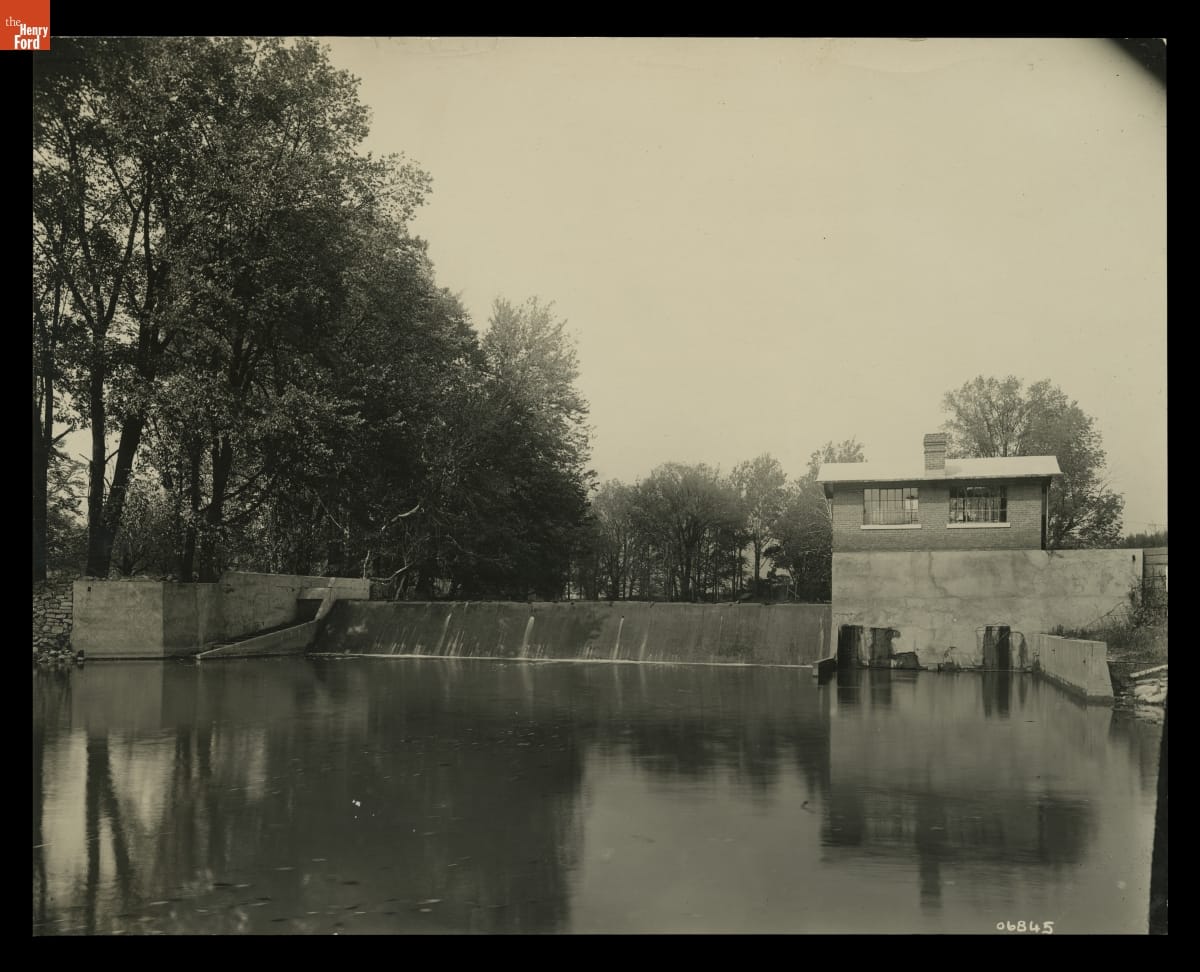
- Dam and Powerhouse at Fair Lane, Home of Henry Ford, 1913-1914 - Fair Lane, Henry and Clara Ford's estate on the Rouge River in Dearborn, Michigan, included its own hydroelectric power plant. The four-story powerhouse, built of the same limestone as the mansion, contained two turbines driven by water diverted from a dam on the river. The turbines turned generators that produced 110 kilowatts of electricity.
- 1913-1914
- Collections - Artifact
Dam and Powerhouse at Fair Lane, Home of Henry Ford, 1913-1914
Fair Lane, Henry and Clara Ford's estate on the Rouge River in Dearborn, Michigan, included its own hydroelectric power plant. The four-story powerhouse, built of the same limestone as the mansion, contained two turbines driven by water diverted from a dam on the river. The turbines turned generators that produced 110 kilowatts of electricity.
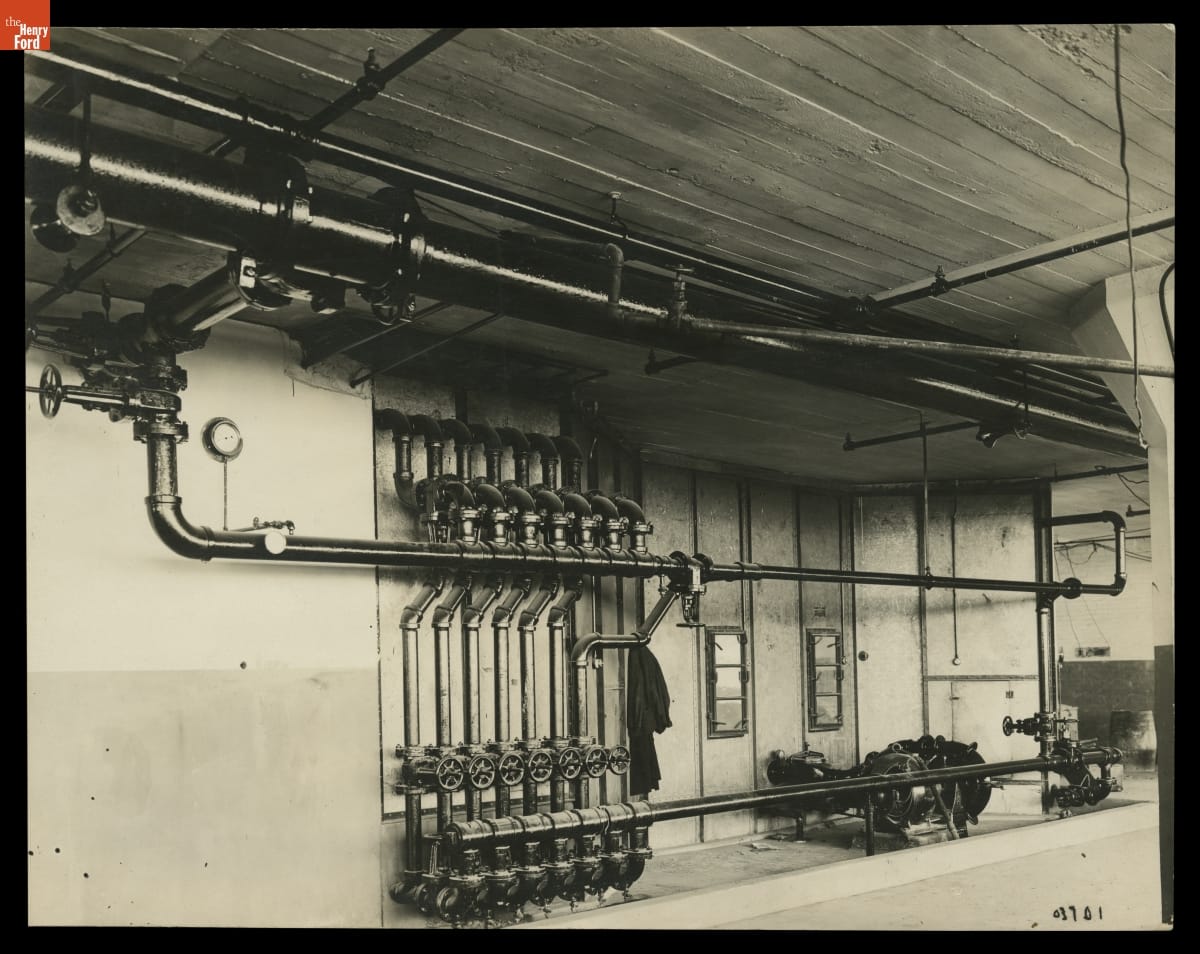
- Interior of the Ford Motor Company Highland Park Plant Powerhouse, circa 1913 - Ford Motor Company opened its Highland Park plant in 1910. It was here that Ford produced most of its 15 million Model T cars, developed its moving assembly line, and instituted its Five Dollar Day. The plant's electricity was supplied by an on-site powerhouse with generators connected to nine gas-steam hybrid engines. Together, the nine engines produced 53,000 horsepower.
- circa 1913
- Collections - Artifact
Interior of the Ford Motor Company Highland Park Plant Powerhouse, circa 1913
Ford Motor Company opened its Highland Park plant in 1910. It was here that Ford produced most of its 15 million Model T cars, developed its moving assembly line, and instituted its Five Dollar Day. The plant's electricity was supplied by an on-site powerhouse with generators connected to nine gas-steam hybrid engines. Together, the nine engines produced 53,000 horsepower.
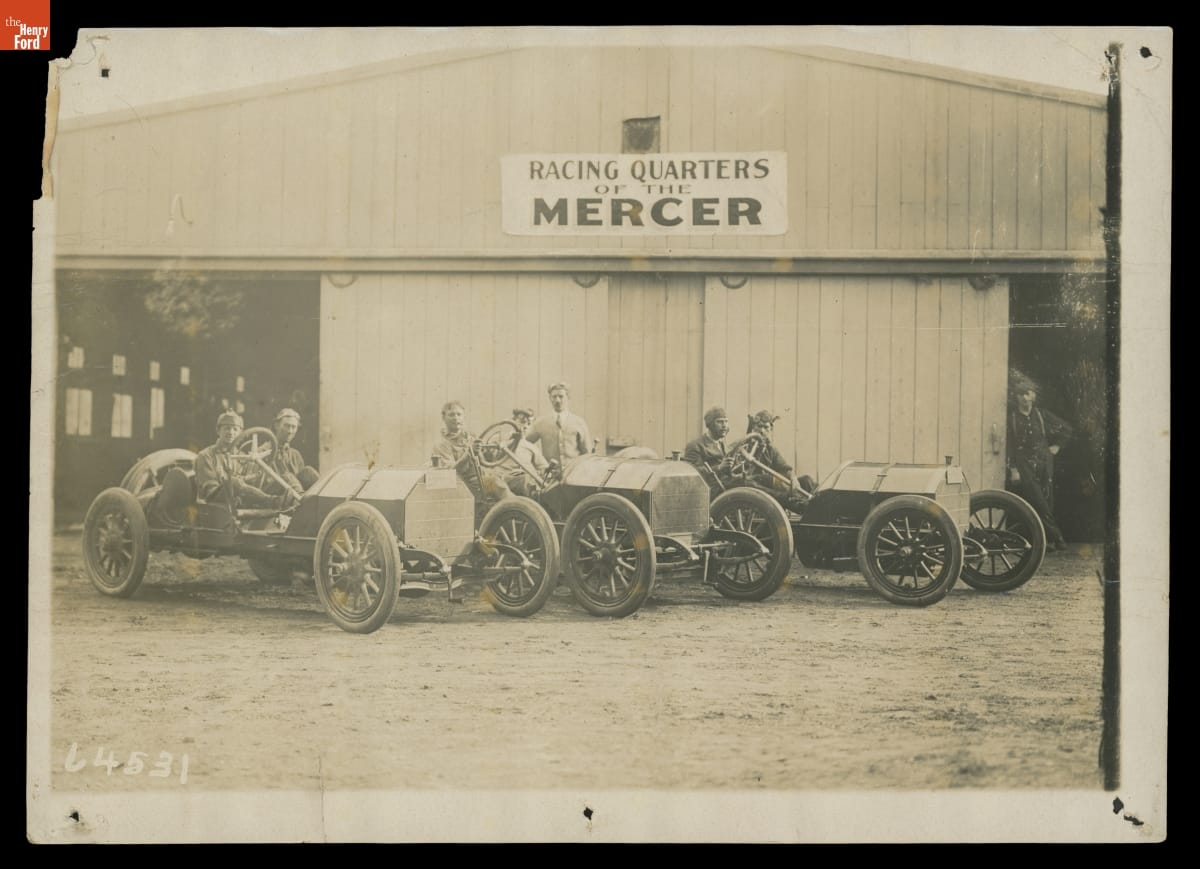
- Three Mercer Race Cars and Designer Finley Robertson Porter at Racing Quarters, circa 1910 - Founded in 1909, the Mercer Automobile Company of Trenton, New Jersey, quickly made its reputation with performance cars. Its Type 35 Raceabout, designed by chief engineer Finley R. Porter, boasted a top speed over 70 miles per hour. Mercer Raceabouts were popular on the road and on the track. Management problems and money troubles closed Mercer in 1925.
- circa 1910
- Collections - Artifact
Three Mercer Race Cars and Designer Finley Robertson Porter at Racing Quarters, circa 1910
Founded in 1909, the Mercer Automobile Company of Trenton, New Jersey, quickly made its reputation with performance cars. Its Type 35 Raceabout, designed by chief engineer Finley R. Porter, boasted a top speed over 70 miles per hour. Mercer Raceabouts were popular on the road and on the track. Management problems and money troubles closed Mercer in 1925.
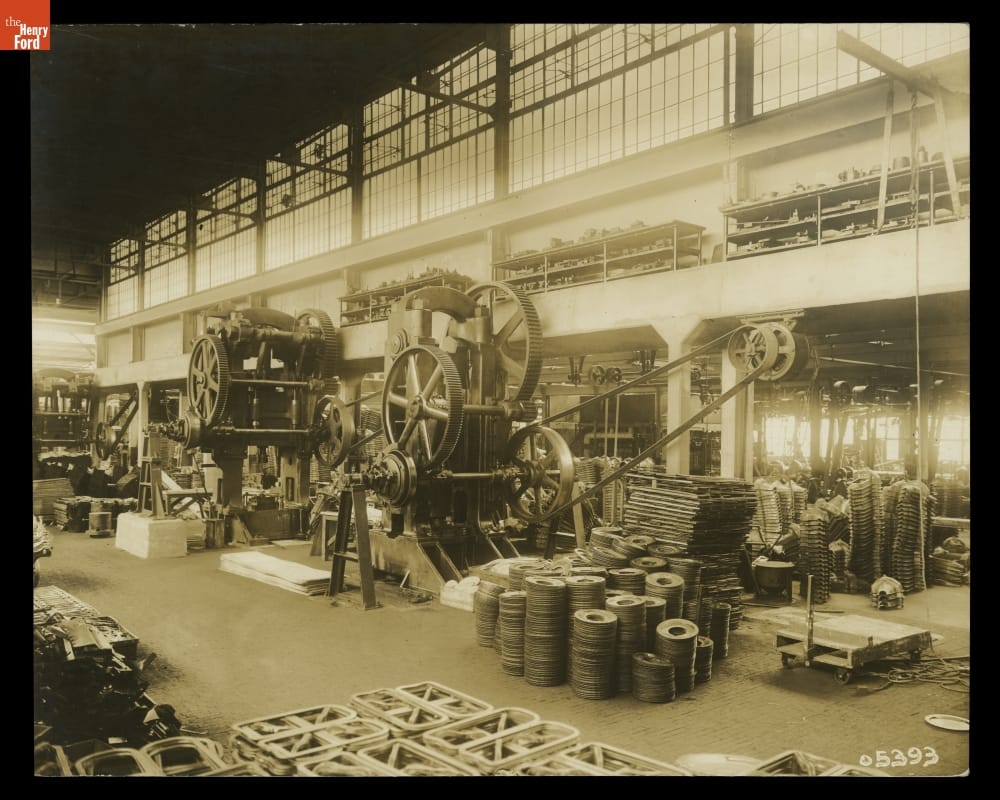
- Stamping Presses at the Ford Motor Company Highland Park Plant, circa 1913 - The Highland Park Ford Plant, designed by renowned industrial architect Albert Kahn, was the second production facility for the Model T. With facilities for casting, machining, stamping (shown here), assembly, and shipping, Highland Park was a comprehensive manufacturing complex. It was here that Henry Ford would perfect the assembly line process, institute the Five Dollar Day, and become world famous.
- circa 1913
- Collections - Artifact
Stamping Presses at the Ford Motor Company Highland Park Plant, circa 1913
The Highland Park Ford Plant, designed by renowned industrial architect Albert Kahn, was the second production facility for the Model T. With facilities for casting, machining, stamping (shown here), assembly, and shipping, Highland Park was a comprehensive manufacturing complex. It was here that Henry Ford would perfect the assembly line process, institute the Five Dollar Day, and become world famous.
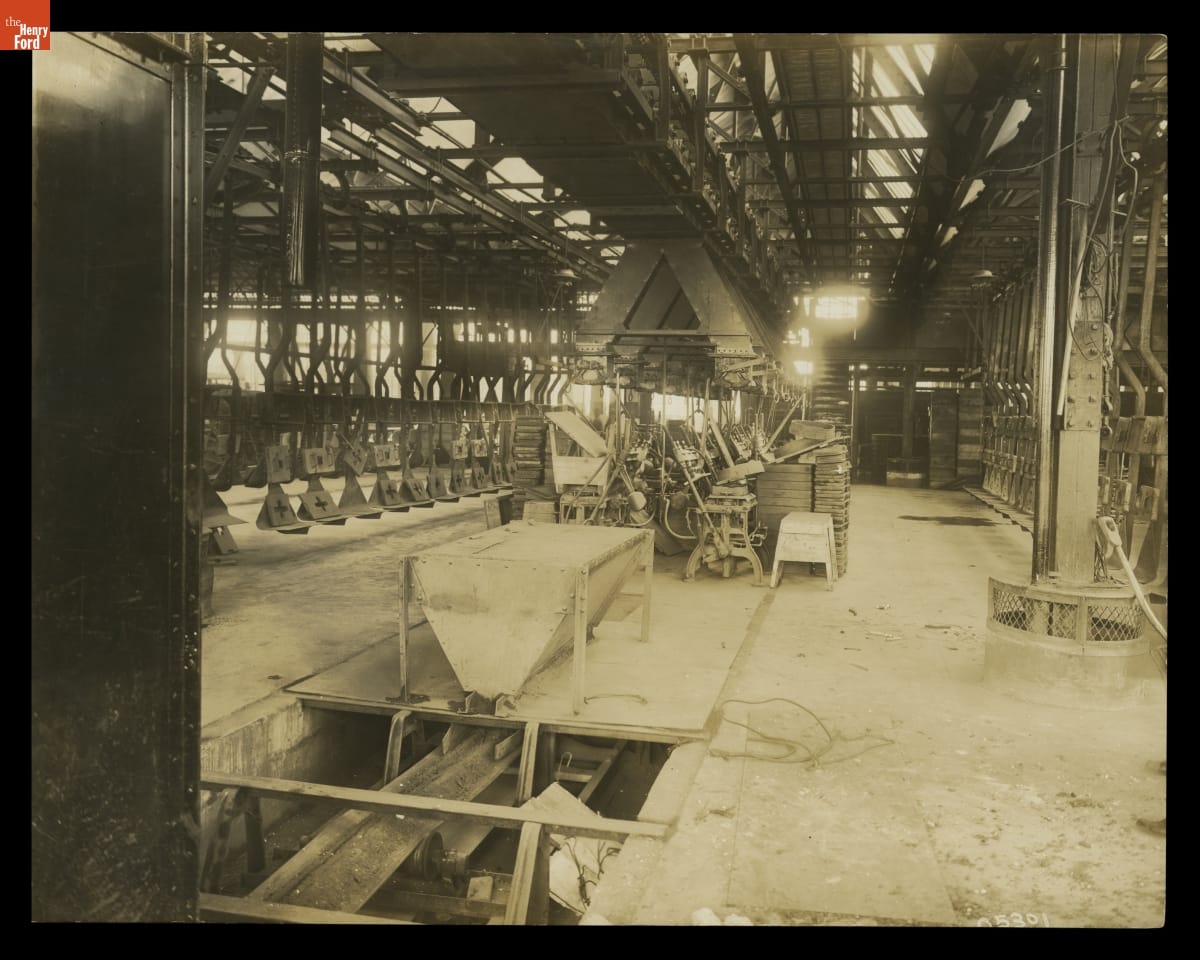
- Molding Machines and Conveyors in Foundry at Ford Motor Company Highland Park Plant, circa 1910 -
- circa 1910
- Collections - Artifact
Molding Machines and Conveyors in Foundry at Ford Motor Company Highland Park Plant, circa 1910
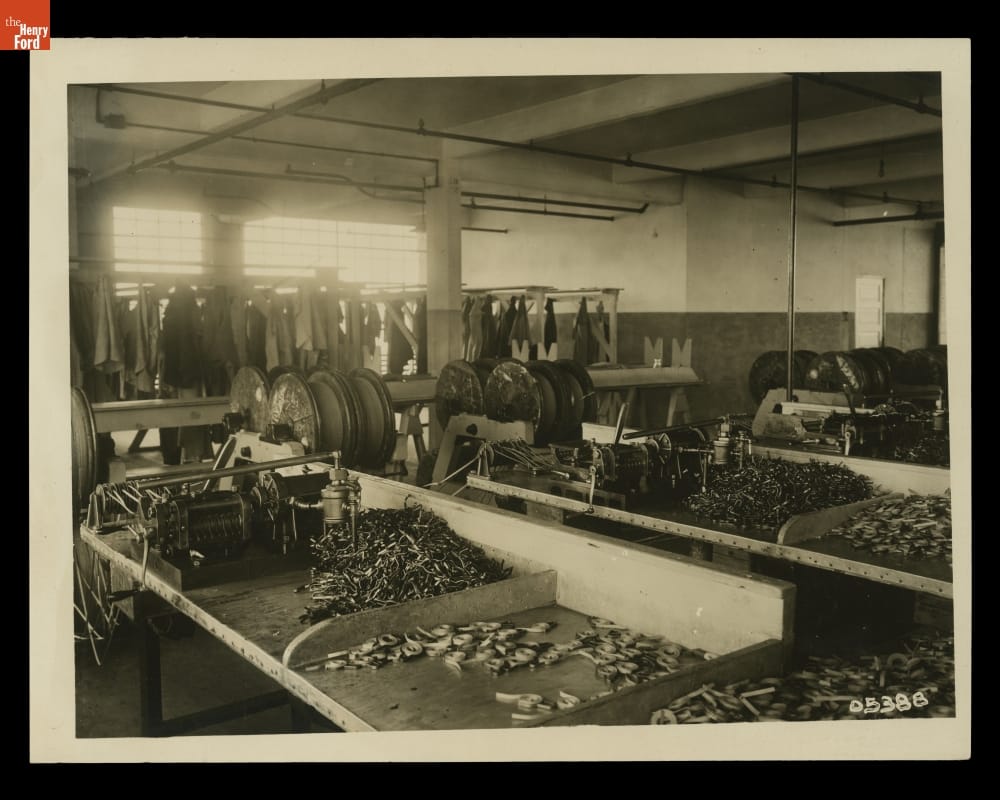
- Equipment for Making Magneto Coils in the Ford Motor Company Highland Park Plant, circa 1913 - The Ford Model T's magneto generated electricity to produce the spark that ignited the fuel-air mixture in its engine cylinders. It was built into the engine flywheel rather than as a separate unit driven by a belt or chain. Sixteen magnets on the spinning flywheel passed by 16 stationary coils, producing a low-voltage electrical current.
- circa 1913
- Collections - Artifact
Equipment for Making Magneto Coils in the Ford Motor Company Highland Park Plant, circa 1913
The Ford Model T's magneto generated electricity to produce the spark that ignited the fuel-air mixture in its engine cylinders. It was built into the engine flywheel rather than as a separate unit driven by a belt or chain. Sixteen magnets on the spinning flywheel passed by 16 stationary coils, producing a low-voltage electrical current.
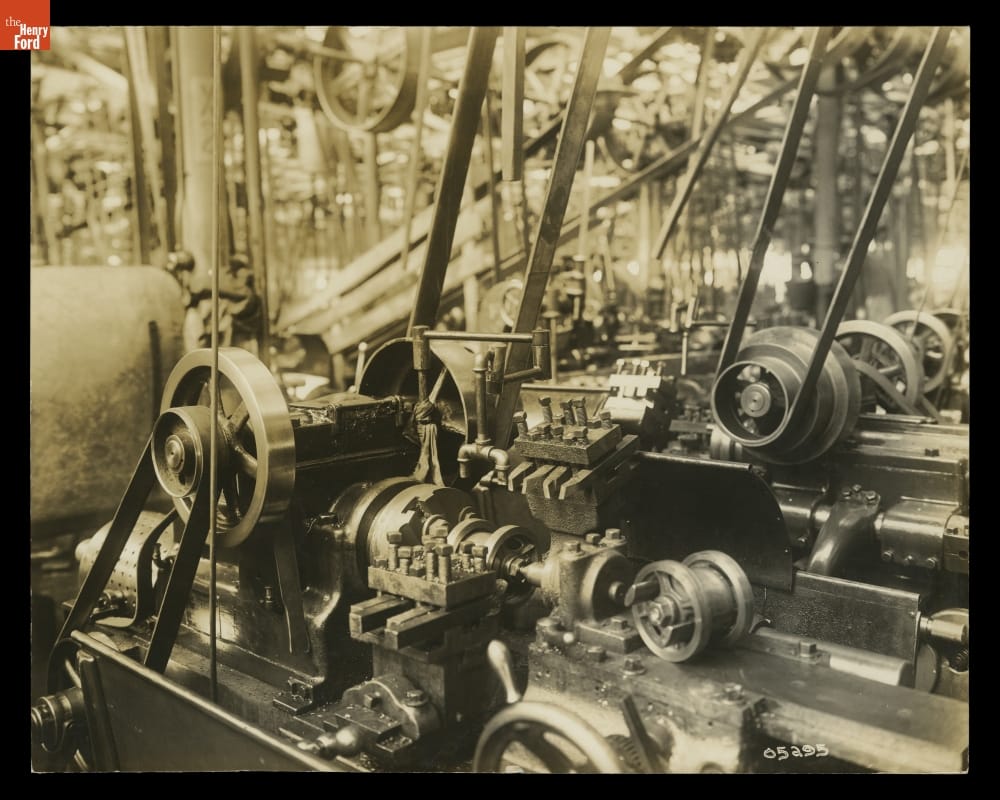
- Machine Shop at the Ford Motor Company Highland Park Plant, circa 1913 - The Highland Park Ford Plant, designed by renowned industrial architect Albert Kahn, was the second production facility for the Model T. This photograph shows Highland Park's machine shop, which was filled with specialized machine tools, around 1913. Within a few years, Henry Ford would perfect the assembly line process, institute the Five Dollar Day, and become world famous.
- circa 1913
- Collections - Artifact
Machine Shop at the Ford Motor Company Highland Park Plant, circa 1913
The Highland Park Ford Plant, designed by renowned industrial architect Albert Kahn, was the second production facility for the Model T. This photograph shows Highland Park's machine shop, which was filled with specialized machine tools, around 1913. Within a few years, Henry Ford would perfect the assembly line process, institute the Five Dollar Day, and become world famous.