
Search
- Flask, 1824-1825 - Glass factories in America began producing inexpensive, mold-formed flasks in the early 1800s. These figured flasks, often decorated with symbols of national pride, appealed to America's common man. This early 1820s flask contains images of two historic figures: General Lafayette, a French aristocrat who helped America win its independence; and DeWitt Clinton, the New York governor who supported construction of the Erie Canal.
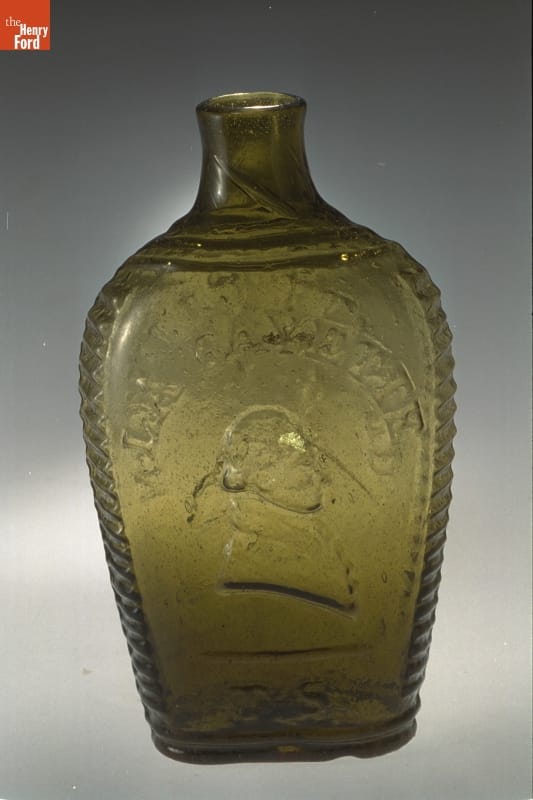
- 1824-1825
- Collections - Artifact
Flask, 1824-1825
Glass factories in America began producing inexpensive, mold-formed flasks in the early 1800s. These figured flasks, often decorated with symbols of national pride, appealed to America's common man. This early 1820s flask contains images of two historic figures: General Lafayette, a French aristocrat who helped America win its independence; and DeWitt Clinton, the New York governor who supported construction of the Erie Canal.
- Flask, 1824-1825 - Glass factories in America began producing inexpensive, mold-formed flasks in the early 1800s. These figured flasks, often decorated with symbols of national pride or political or cultural affiliation, appealed to America's common man. In the mid-1820s, General Lafayette, a French aristocrat who helped America win its independence, revisited the United States. His image adorned flasks commemorating his tour.
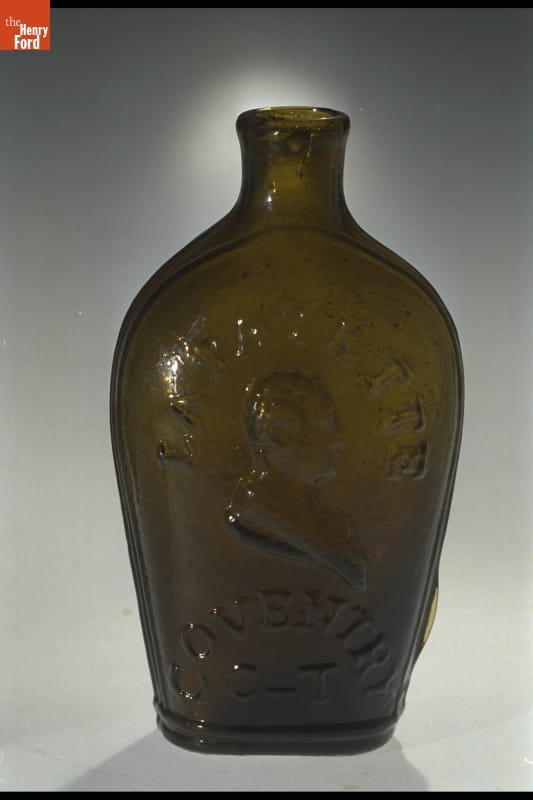
- 1824-1825
- Collections - Artifact
Flask, 1824-1825
Glass factories in America began producing inexpensive, mold-formed flasks in the early 1800s. These figured flasks, often decorated with symbols of national pride or political or cultural affiliation, appealed to America's common man. In the mid-1820s, General Lafayette, a French aristocrat who helped America win its independence, revisited the United States. His image adorned flasks commemorating his tour.