
Search
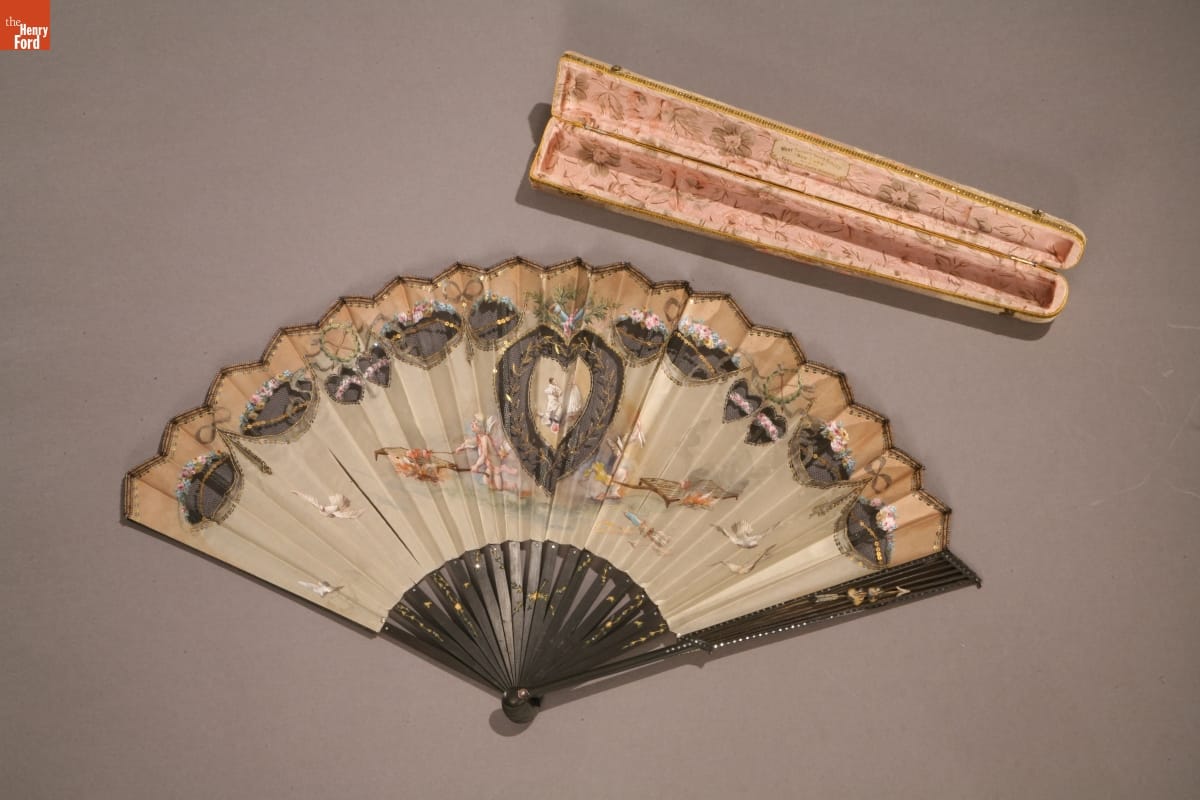
- Stern Brothers Fan, 1895-1900 -
- 1895-1900
- Collections - Artifact
Stern Brothers Fan, 1895-1900
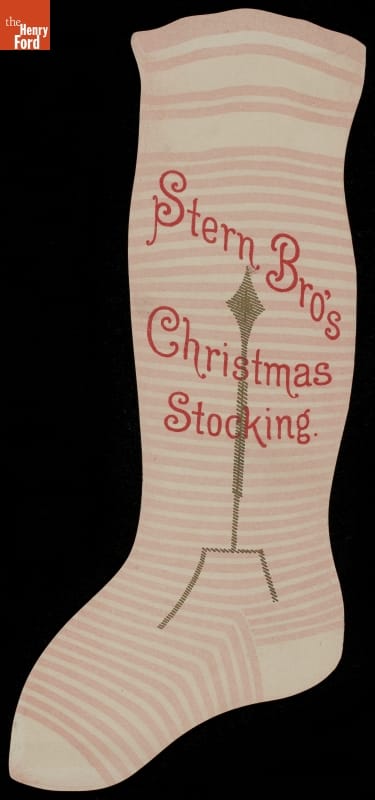
- Trade Card for Ladies' Goods, Stern Brothers, 1870-1900 - In the last third of the nineteenth century, an unprecedented variety of consumer goods and services flooded the American market. Advertisers bombarded potential customers with trade cards. Americans enjoyed and saved the often illustrated little advertisements found in product packages or distributed by local merchants. Many survive as historical records of commercialism in the United States.
- 1870-1900
- Collections - Artifact
Trade Card for Ladies' Goods, Stern Brothers, 1870-1900
In the last third of the nineteenth century, an unprecedented variety of consumer goods and services flooded the American market. Advertisers bombarded potential customers with trade cards. Americans enjoyed and saved the often illustrated little advertisements found in product packages or distributed by local merchants. Many survive as historical records of commercialism in the United States.
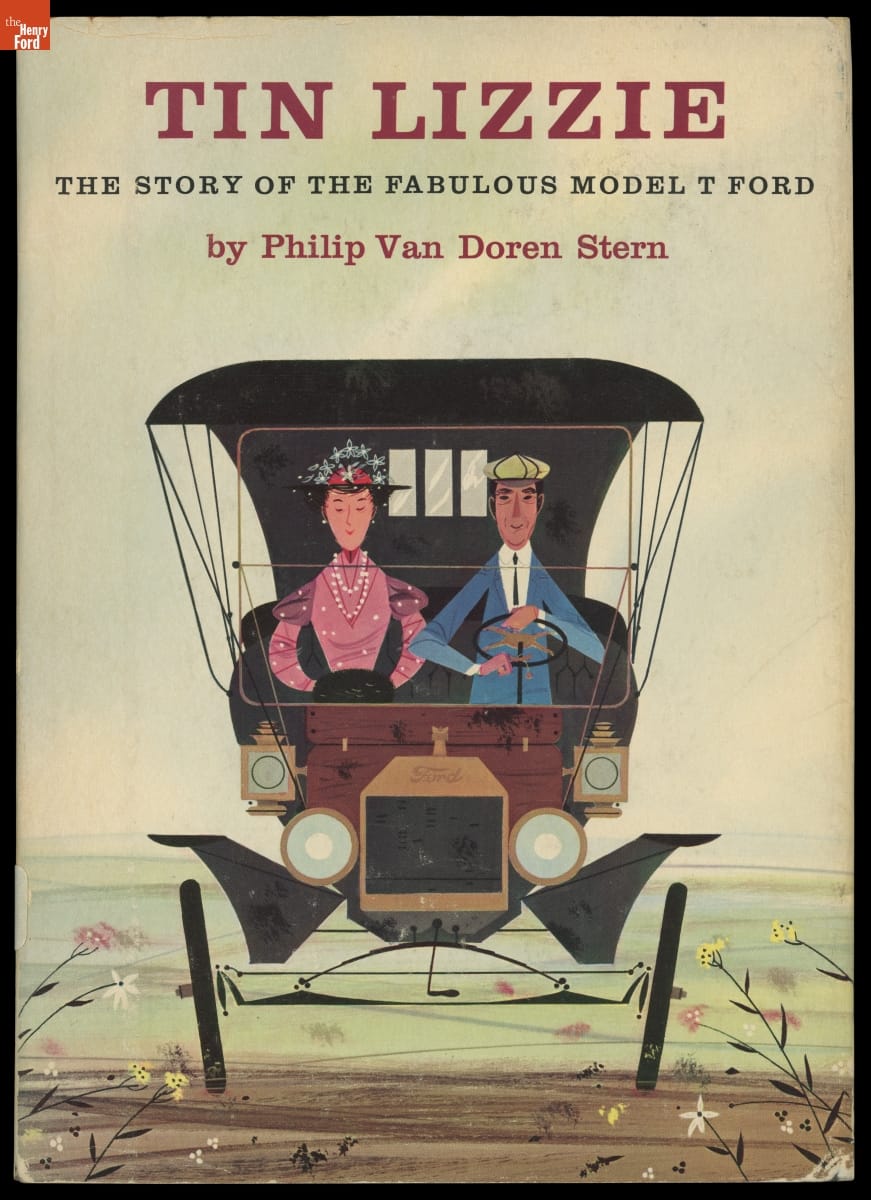
- "Tin Lizzie: The Story of the Fabulous Model T Ford," 1955 - This book by historian Philip Van Doren Stern celebrates Ford Motor Company's revolutionary Model T. (Stern, primarily known as a Civil War researcher, also authored the short story that inspired the screenplay for <em>It's a Wonderful Life</em>.) Stern's text is illustrated with historical photographs as well as sketches by artist Charley Harper, who also illustrated the book jacket and endpapers.
- 1955
- Collections - Artifact
"Tin Lizzie: The Story of the Fabulous Model T Ford," 1955
This book by historian Philip Van Doren Stern celebrates Ford Motor Company's revolutionary Model T. (Stern, primarily known as a Civil War researcher, also authored the short story that inspired the screenplay for It's a Wonderful Life.) Stern's text is illustrated with historical photographs as well as sketches by artist Charley Harper, who also illustrated the book jacket and endpapers.
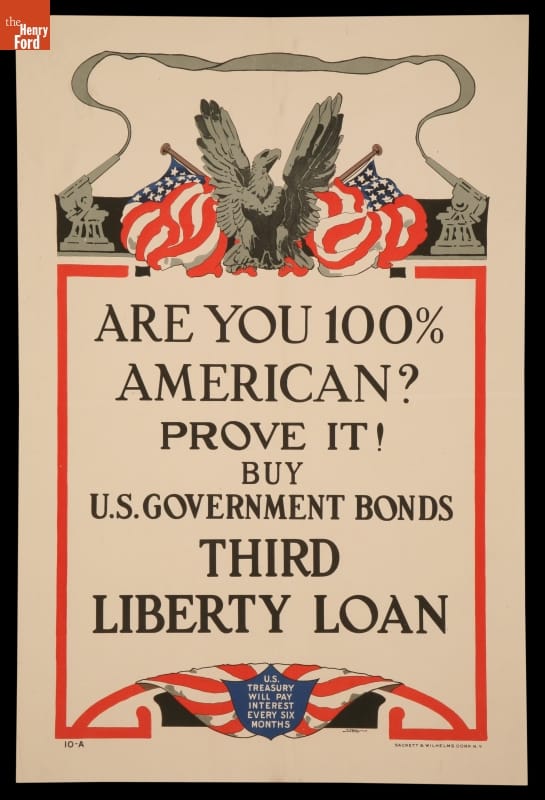
- World War I Poster, "Are you 100% American? Prove It!," circa 1918 - During the First World War, governments of all the warring nations used poster campaigns to encourage civilian and military support of the war effort. Artists widely used an innovative advertising technique for these posters that moved away from a factual depiction of a product's material or event's subject to an emphasis on appealing to the viewer's emotions.
- circa 1918
- Collections - Artifact
World War I Poster, "Are you 100% American? Prove It!," circa 1918
During the First World War, governments of all the warring nations used poster campaigns to encourage civilian and military support of the war effort. Artists widely used an innovative advertising technique for these posters that moved away from a factual depiction of a product's material or event's subject to an emphasis on appealing to the viewer's emotions.
- Letter from Robert A.M. Stern, Chairman of Committee on Lectures and Exhibits, Columbia University, to Richard Gutman, October 1972 -
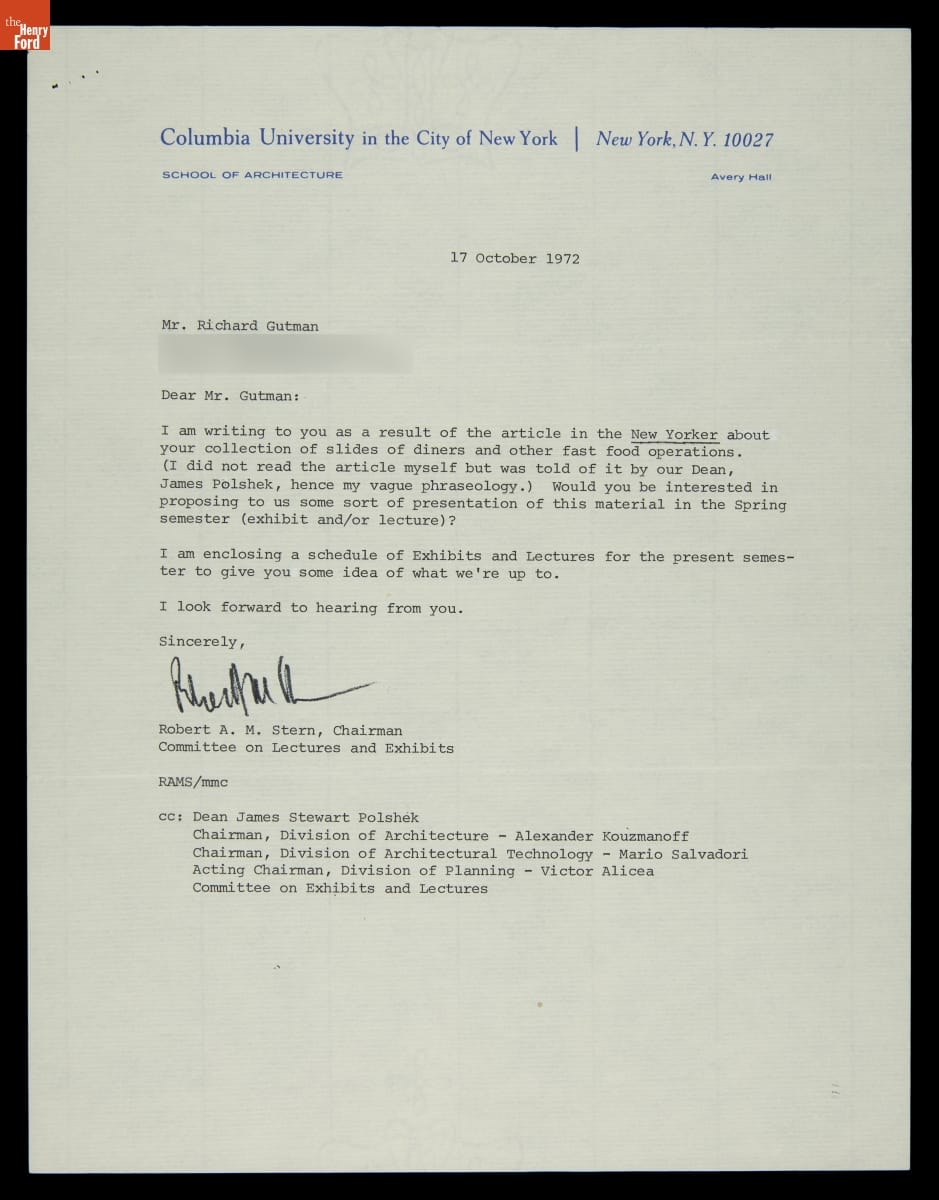
- October 17, 1972
- Collections - Artifact
Letter from Robert A.M. Stern, Chairman of Committee on Lectures and Exhibits, Columbia University, to Richard Gutman, October 1972
- Trade Card for Millinery and Fancy Goods, Oaks & Stern, 1876-1900 - In the last third of the nineteenth century, an unprecedented variety of consumer goods and services flooded the American market. Advertisers, armed with new methods of color printing, bombarded potential customers with trade cards. Americans enjoyed and often saved the vibrant little advertisements found in product packages or distributed by local merchants. Many survive as historical records of commercialism in the United States.
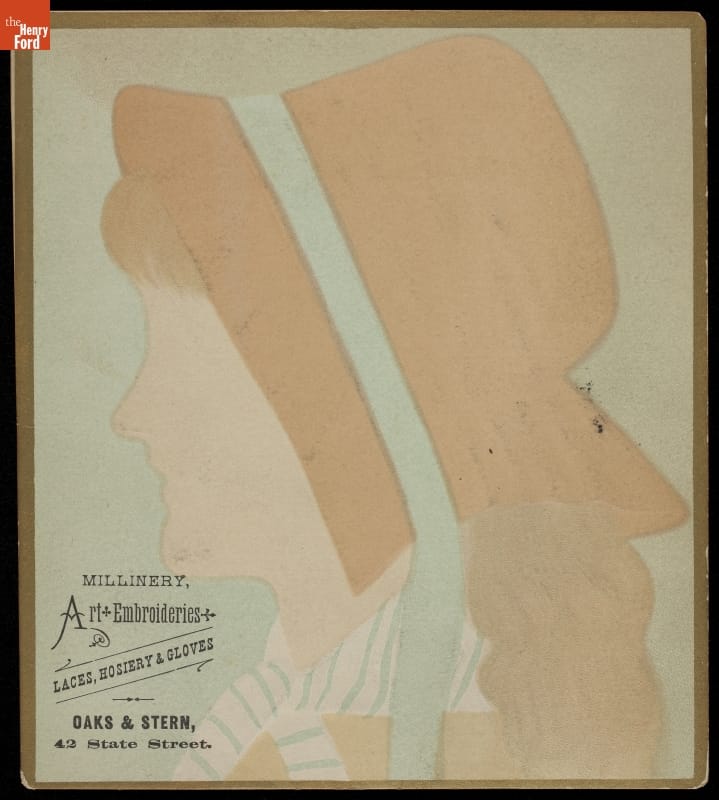
- 1876-1900
- Collections - Artifact
Trade Card for Millinery and Fancy Goods, Oaks & Stern, 1876-1900
In the last third of the nineteenth century, an unprecedented variety of consumer goods and services flooded the American market. Advertisers, armed with new methods of color printing, bombarded potential customers with trade cards. Americans enjoyed and often saved the vibrant little advertisements found in product packages or distributed by local merchants. Many survive as historical records of commercialism in the United States.
- "The Gibson Bathing Girl," 1907 - Charles Dana Gibson's illustrations of beautiful, independent young women reflected and helped define a new ideal of American femininity in the 1890s and early 1900s. These popular images, known collectively as "the Gibson Girl," became a cultural phenomenon referenced in fashion and entertainment. A powerful marketing tool, the widely imitated Gibson Girl proliferated in advertisements and on product packaging.
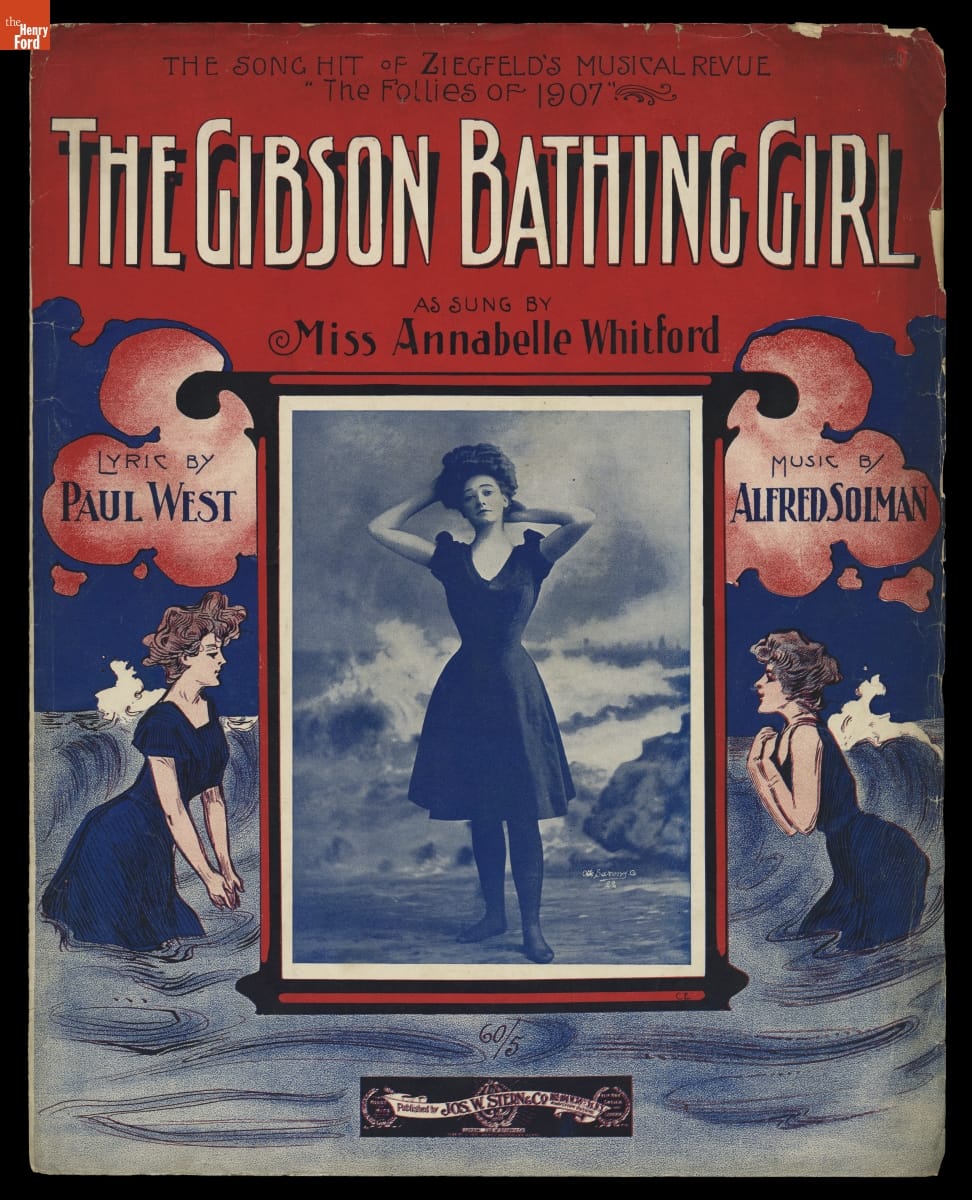
- 1907
- Collections - Artifact
"The Gibson Bathing Girl," 1907
Charles Dana Gibson's illustrations of beautiful, independent young women reflected and helped define a new ideal of American femininity in the 1890s and early 1900s. These popular images, known collectively as "the Gibson Girl," became a cultural phenomenon referenced in fashion and entertainment. A powerful marketing tool, the widely imitated Gibson Girl proliferated in advertisements and on product packaging.
- Dress, circa 1960 -
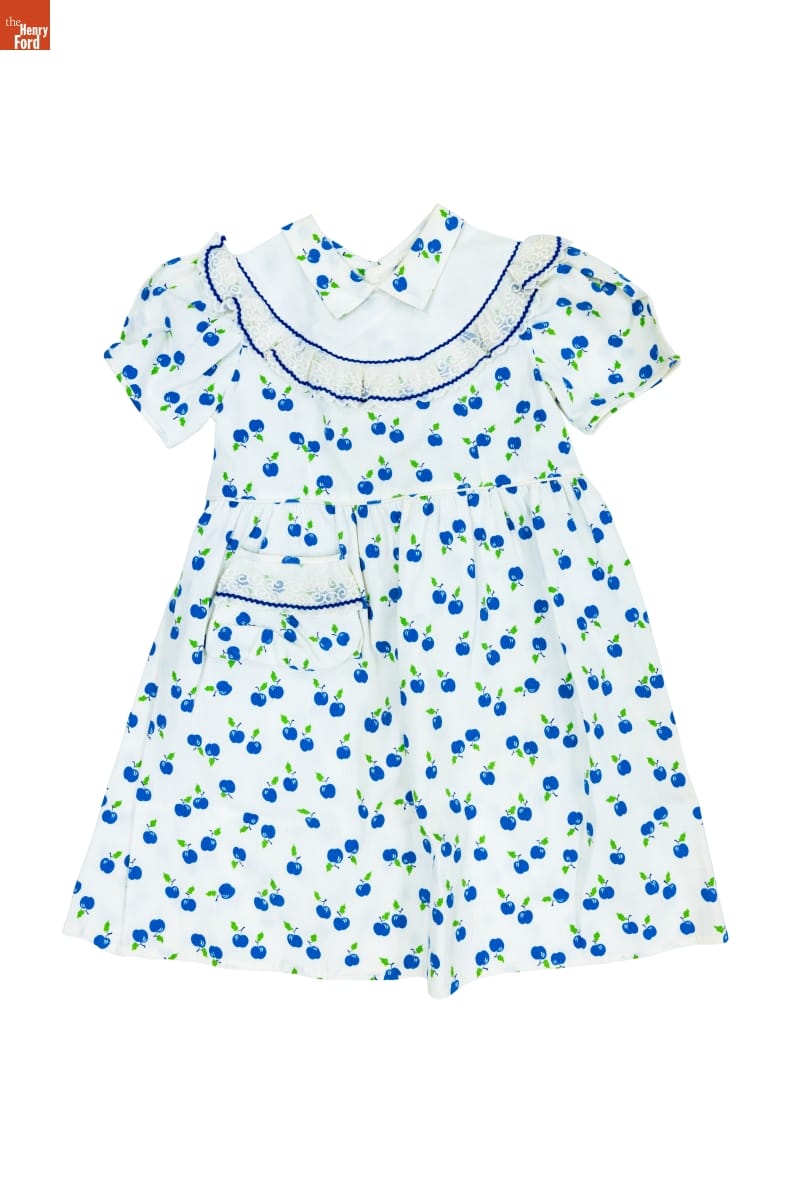
- circa 1960
- Collections - Artifact
Dress, circa 1960
- "Mirandy That Gal O' Mine," 1919 -
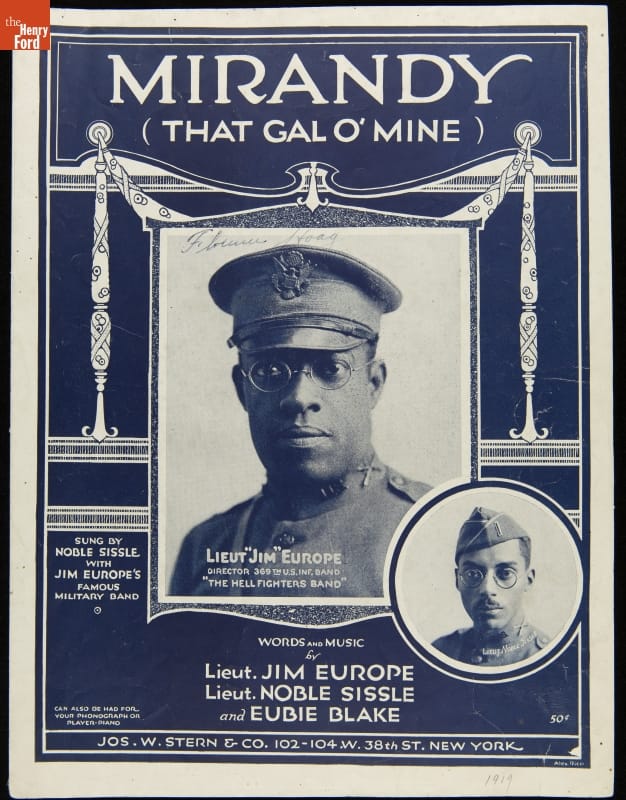
- 1919
- Collections - Artifact
"Mirandy That Gal O' Mine," 1919