
Search
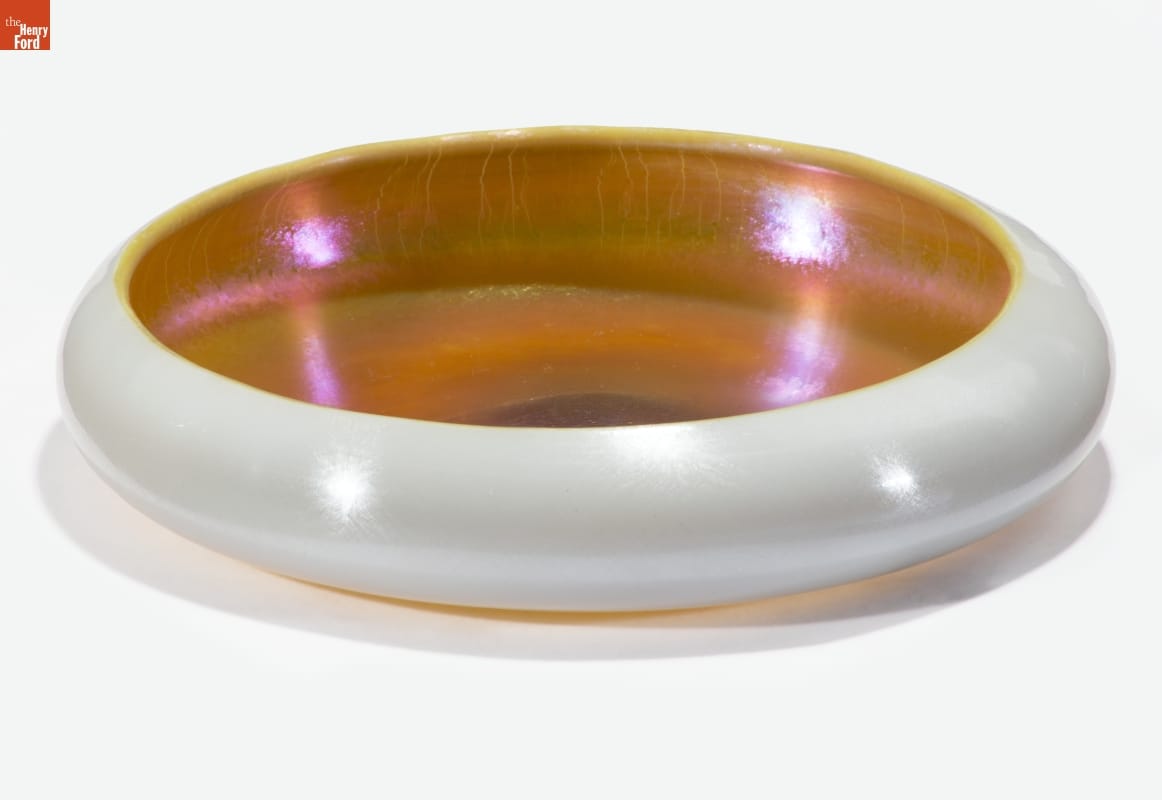
- Aurene Bowl, 1915-1930 - Art Glass is ornamental and decorative glass dating from the mid-to-late 19th century through the early 20th century. Makers of Art Glass employed newly developed technologies for producing vibrant colors and surface textures. This is most famously seen in the iridescent surfaces of Louis Comfort Tiffany and his contemporaries, although Art Glass took many shapes and forms.
- 1915-1930
- Collections - Artifact
Aurene Bowl, 1915-1930
Art Glass is ornamental and decorative glass dating from the mid-to-late 19th century through the early 20th century. Makers of Art Glass employed newly developed technologies for producing vibrant colors and surface textures. This is most famously seen in the iridescent surfaces of Louis Comfort Tiffany and his contemporaries, although Art Glass took many shapes and forms.
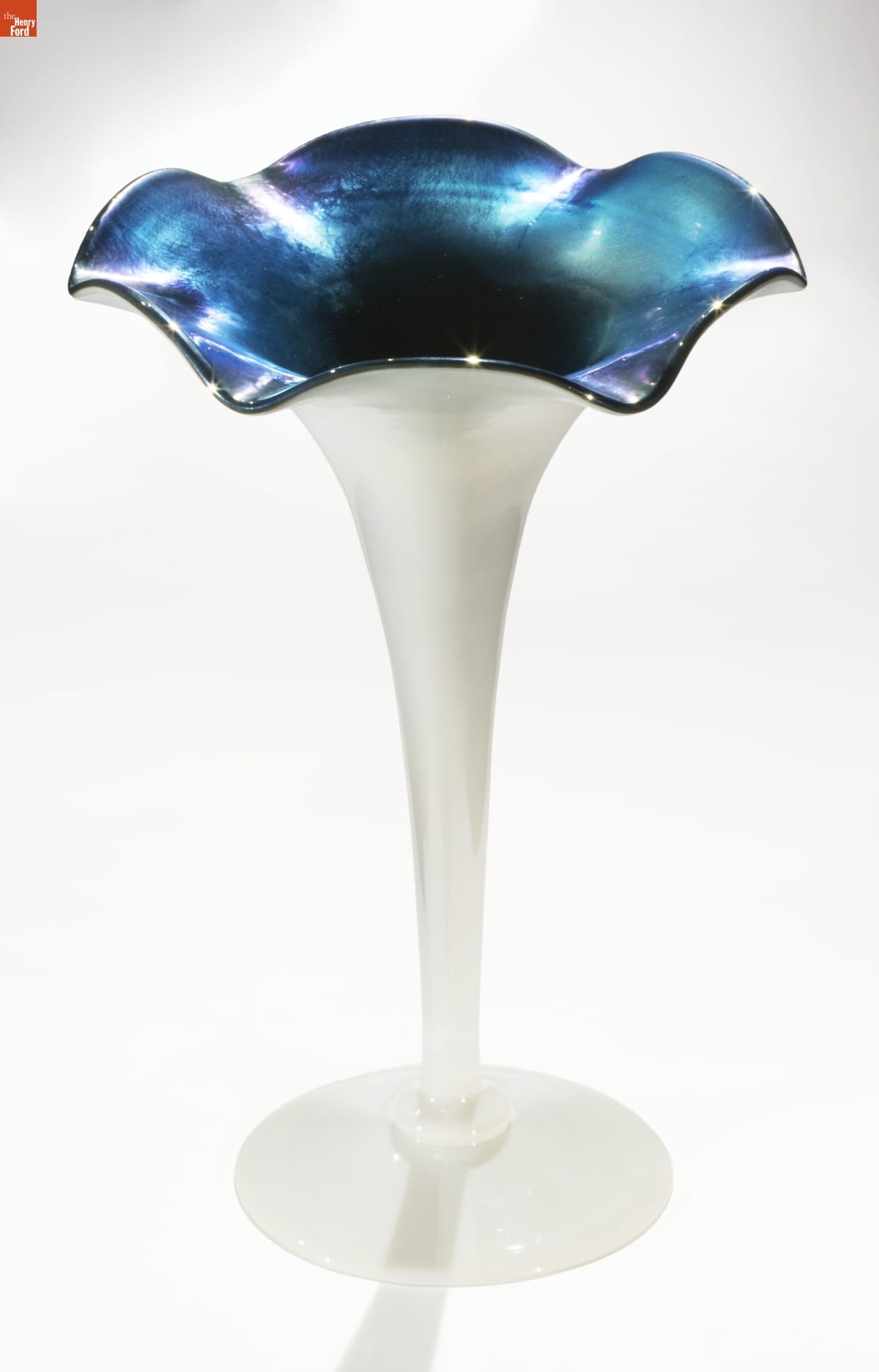
- Aurene Vase, circa 1920 - Aurene was the name that Frederick Carder used for his iridescent art glass at the Steuben Glass Works made in Corning, New York. The glass produces a prismatic effect when light reflects across the surface. This elegant, floral-shaped vase combines a cased white outer shell with a dark blue iridescent interior. Steuben made many varieties of colored Aurene glass until 1932, when it moved toward more modern shapes.
- circa 1920
- Collections - Artifact
Aurene Vase, circa 1920
Aurene was the name that Frederick Carder used for his iridescent art glass at the Steuben Glass Works made in Corning, New York. The glass produces a prismatic effect when light reflects across the surface. This elegant, floral-shaped vase combines a cased white outer shell with a dark blue iridescent interior. Steuben made many varieties of colored Aurene glass until 1932, when it moved toward more modern shapes.
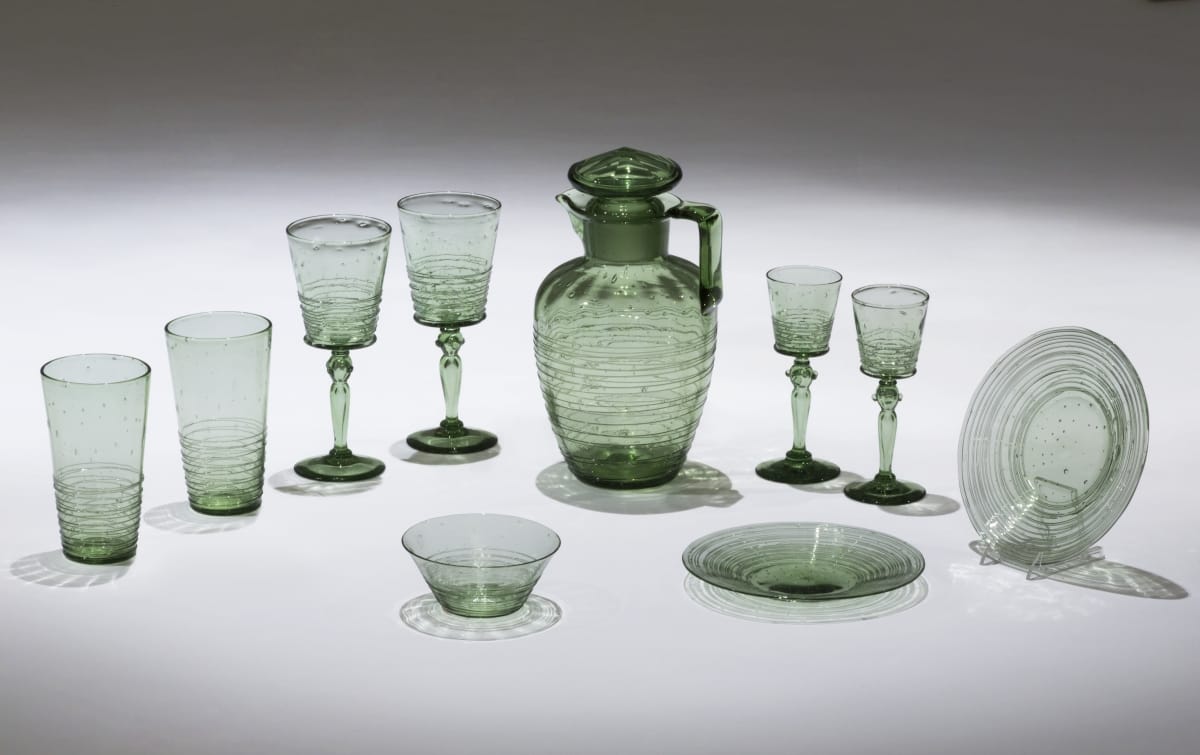
- Collection of Tableware, 1920-1930 -
- 1920-1930
- Collections - Artifact
Collection of Tableware, 1920-1930
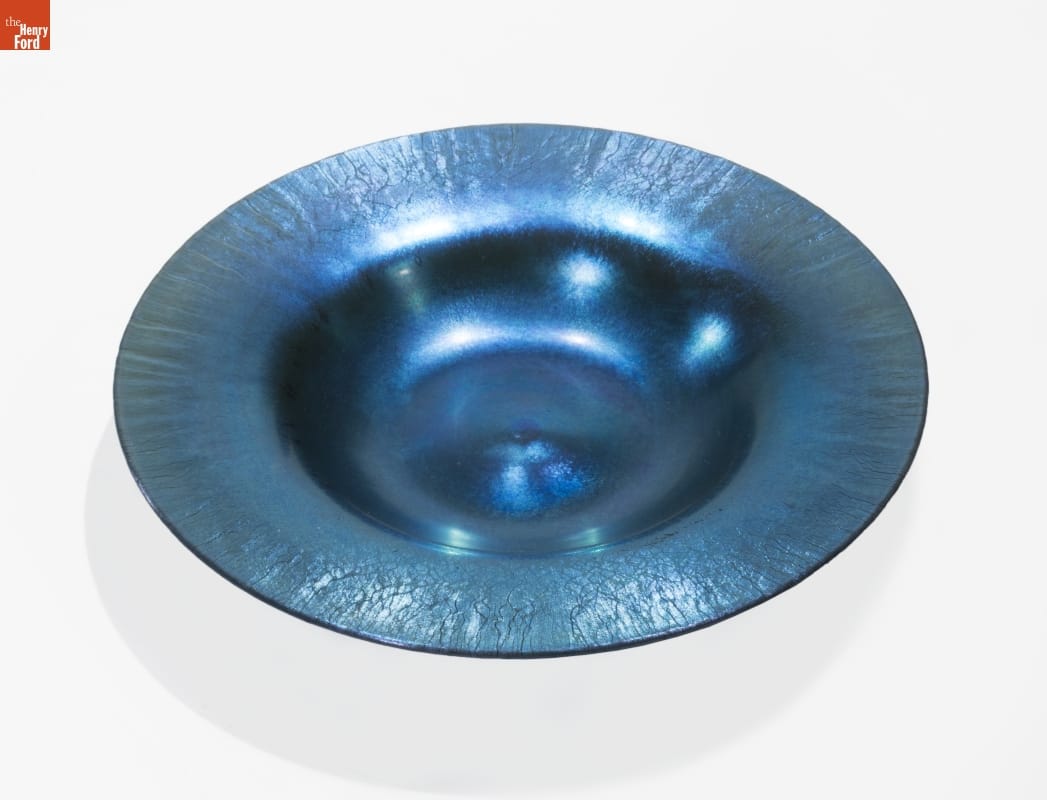
- Aurene Plate, 1920-1929 - Art Glass is ornamental and decorative glass dating from the mid-to-late 19th century through the early 20th century. Makers of Art Glass employed newly developed technologies for producing vibrant colors and surface textures. This is most famously seen in the iridescent surfaces of Louis Comfort Tiffany and his contemporaries, although Art Glass took many shapes and forms.
- 1920-1929
- Collections - Artifact
Aurene Plate, 1920-1929
Art Glass is ornamental and decorative glass dating from the mid-to-late 19th century through the early 20th century. Makers of Art Glass employed newly developed technologies for producing vibrant colors and surface textures. This is most famously seen in the iridescent surfaces of Louis Comfort Tiffany and his contemporaries, although Art Glass took many shapes and forms.
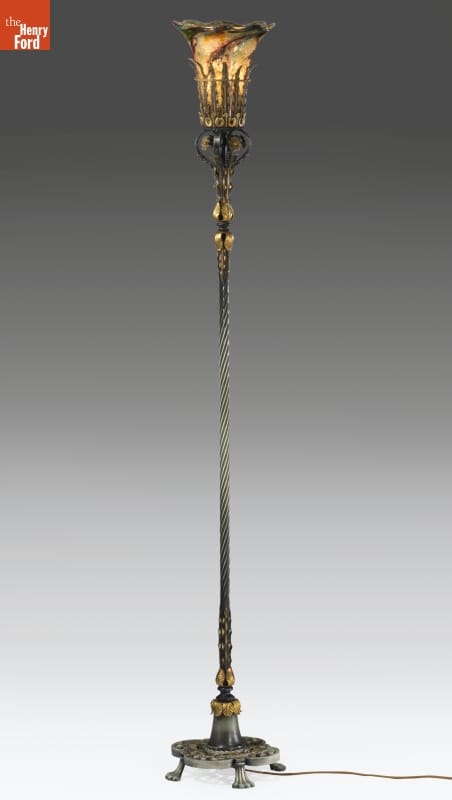
- Floor Lamp, 1910-1925 - Frederick Carder managed the Steuben Glass Works in Corning, New York, from its founding in 1903 until 1932. Carder began his glass making career at the British firm of Stevens and Williams where he experimented with colors and designs. At Steuben, Carder continued experimenting. The "moss agate" shade on this lamp is an example of Carder's interest in creating glass that imitates the refractive qualities of the mineral agate.
- 1910-1925
- Collections - Artifact
Floor Lamp, 1910-1925
Frederick Carder managed the Steuben Glass Works in Corning, New York, from its founding in 1903 until 1932. Carder began his glass making career at the British firm of Stevens and Williams where he experimented with colors and designs. At Steuben, Carder continued experimenting. The "moss agate" shade on this lamp is an example of Carder's interest in creating glass that imitates the refractive qualities of the mineral agate.
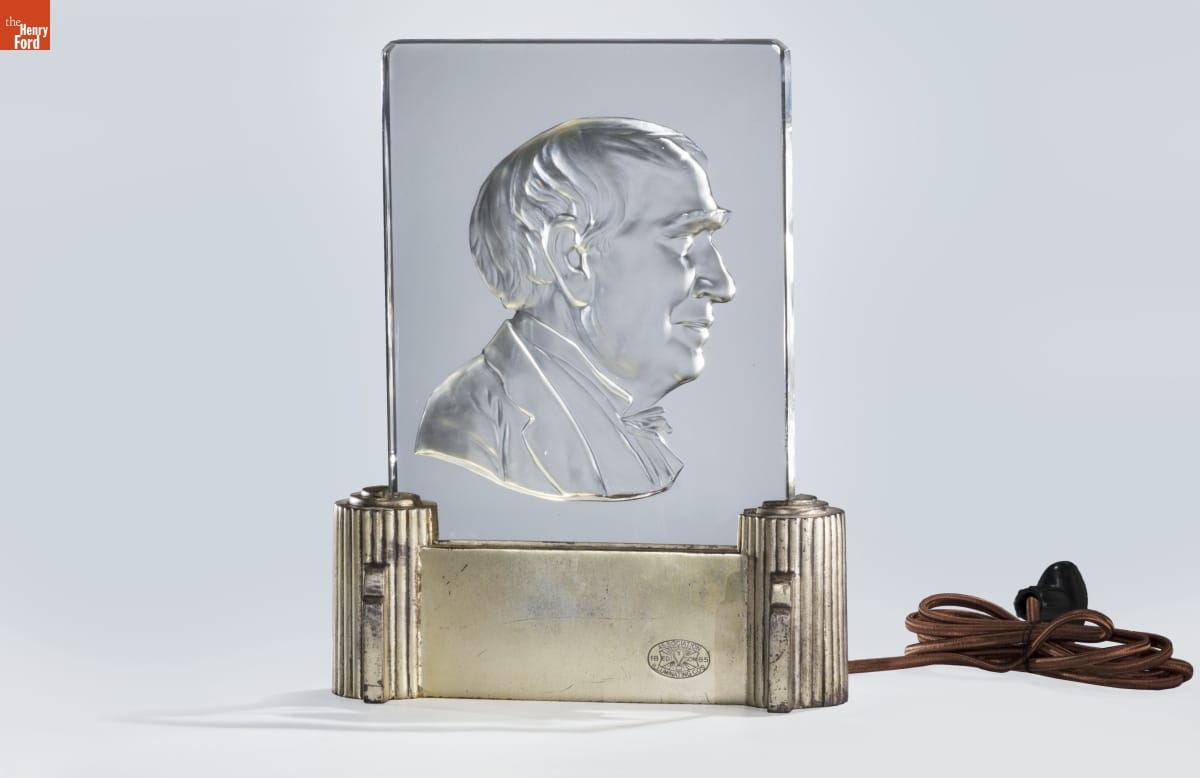
- Plaque of Thomas Edison on Stand, 1929 - On October 21, 1929 Henry Ford hosted a gala celebration in honor of Thomas Edison. The event commemorated the 50th anniversary of Edison's light bulb and the dedication of the Edison Institute, now known as The Henry Ford. Mr. Ford commissioned Frederick Carder of the Steuben Glass Works to create this illuminated profile portrait of Edison. Guests received a portrait as part of their dinner place setting.
- 1929
- Collections - Artifact
Plaque of Thomas Edison on Stand, 1929
On October 21, 1929 Henry Ford hosted a gala celebration in honor of Thomas Edison. The event commemorated the 50th anniversary of Edison's light bulb and the dedication of the Edison Institute, now known as The Henry Ford. Mr. Ford commissioned Frederick Carder of the Steuben Glass Works to create this illuminated profile portrait of Edison. Guests received a portrait as part of their dinner place setting.
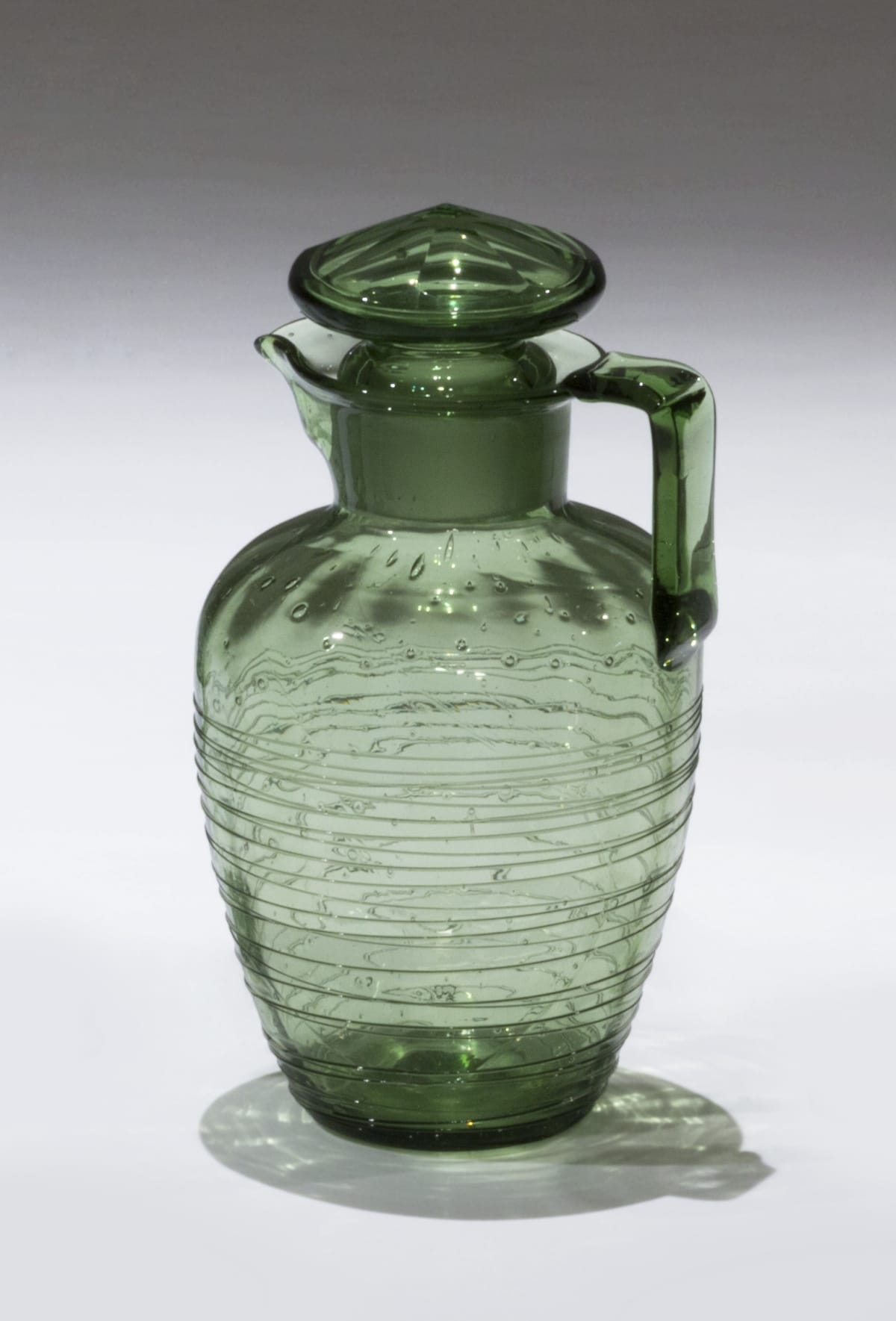
- Pitcher, 1920-1930 -
- 1920-1930
- Collections - Artifact
Pitcher, 1920-1930
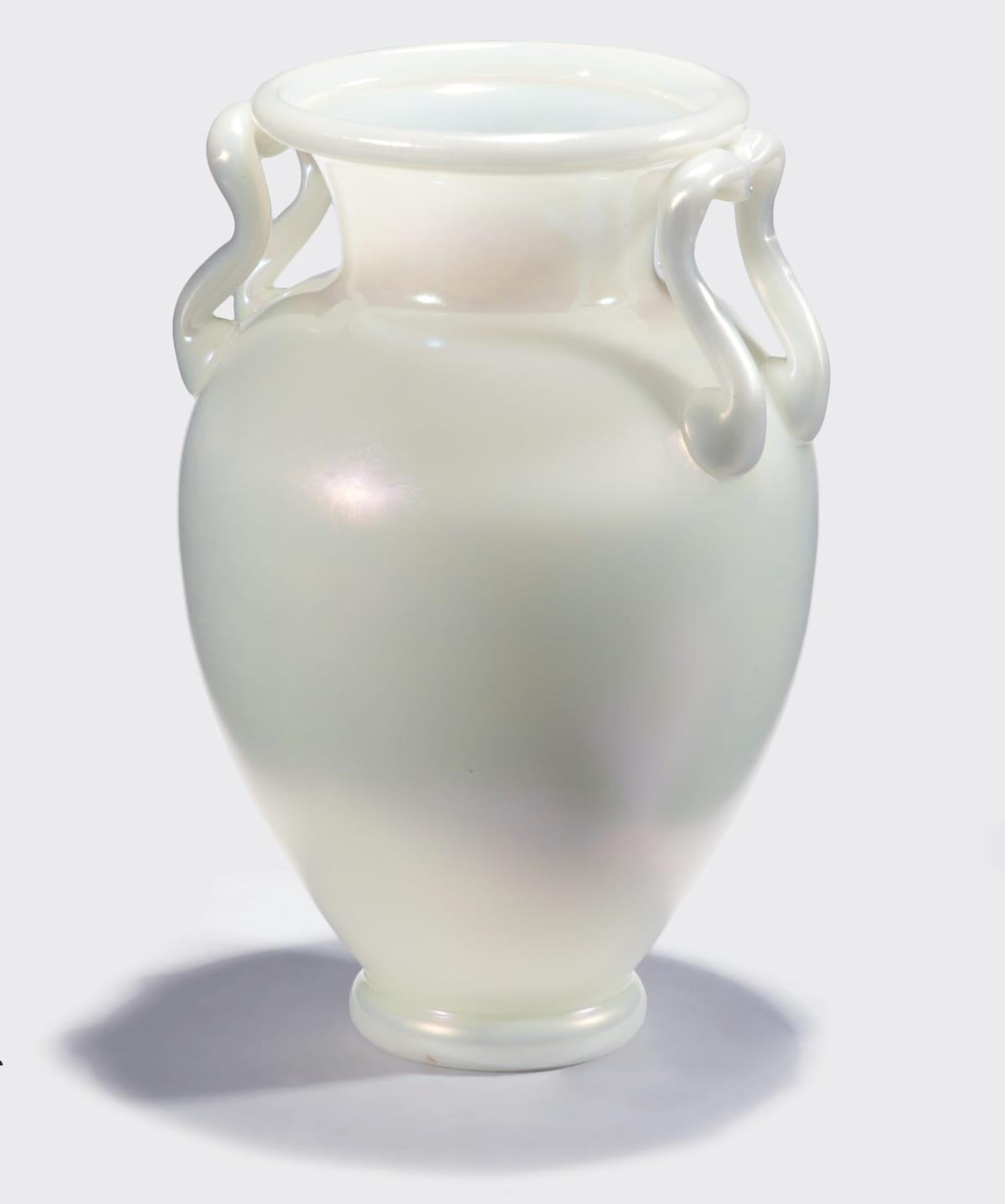
- Vase, 1920-1930 - Aurene was the name that Frederick Carder used for his iridescent art glass at the Steuben Glass Works made in Corning, New York. The glass produces a prismatic effect when light reflects across the surface. This two-handled vase references ancient Greek ceramic water jugs. Steuben made many varieties of colored Aurene glass until 1932, when it moved toward more modern shapes.
- 1920-1930
- Collections - Artifact
Vase, 1920-1930
Aurene was the name that Frederick Carder used for his iridescent art glass at the Steuben Glass Works made in Corning, New York. The glass produces a prismatic effect when light reflects across the surface. This two-handled vase references ancient Greek ceramic water jugs. Steuben made many varieties of colored Aurene glass until 1932, when it moved toward more modern shapes.
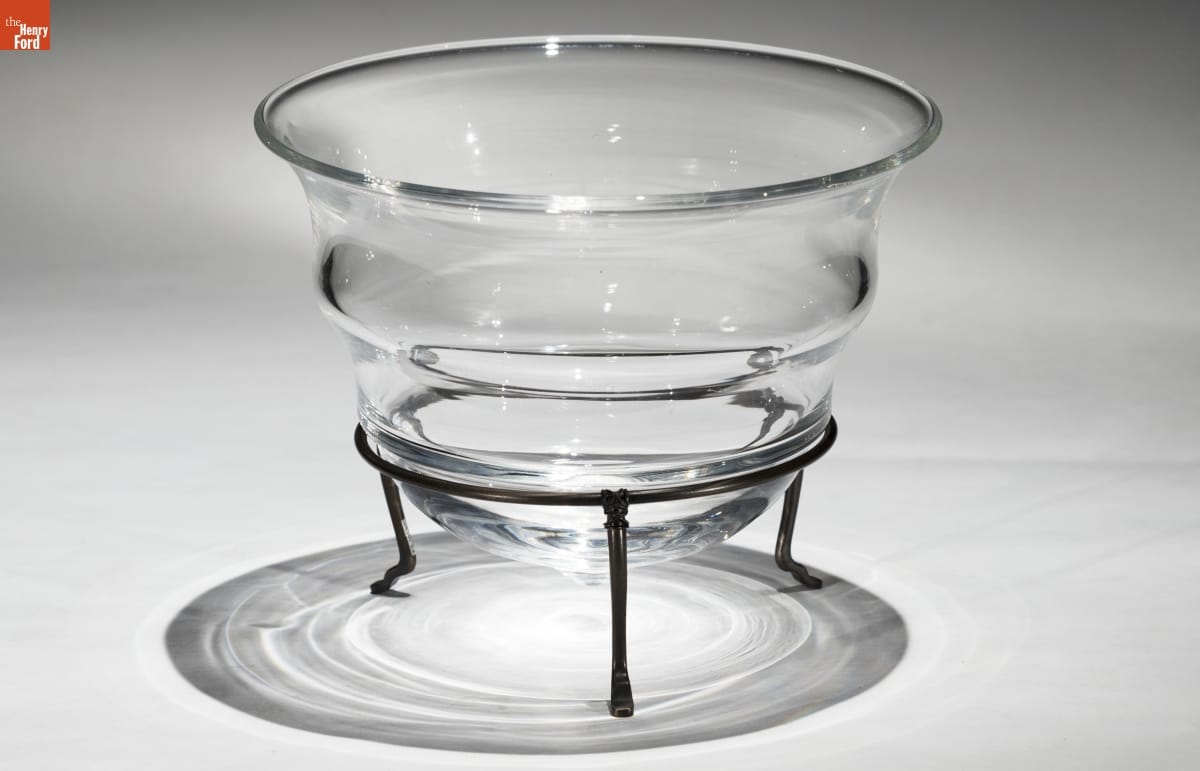
- Archaic Vessel with Stand, 1989 - Starting in the early 1980s--and already established as an internationally recognized architect--Michael Graves began to pursue a parallel career as a product designer. Over the following three and a half decades he and his collaborators designed everything from humble household goods to limited edition luxury items for clients as diverse as Steuben, Alessi, Target, J. C. Penney, and Disney.
- 1989
- Collections - Artifact
Archaic Vessel with Stand, 1989
Starting in the early 1980s--and already established as an internationally recognized architect--Michael Graves began to pursue a parallel career as a product designer. Over the following three and a half decades he and his collaborators designed everything from humble household goods to limited edition luxury items for clients as diverse as Steuben, Alessi, Target, J. C. Penney, and Disney.
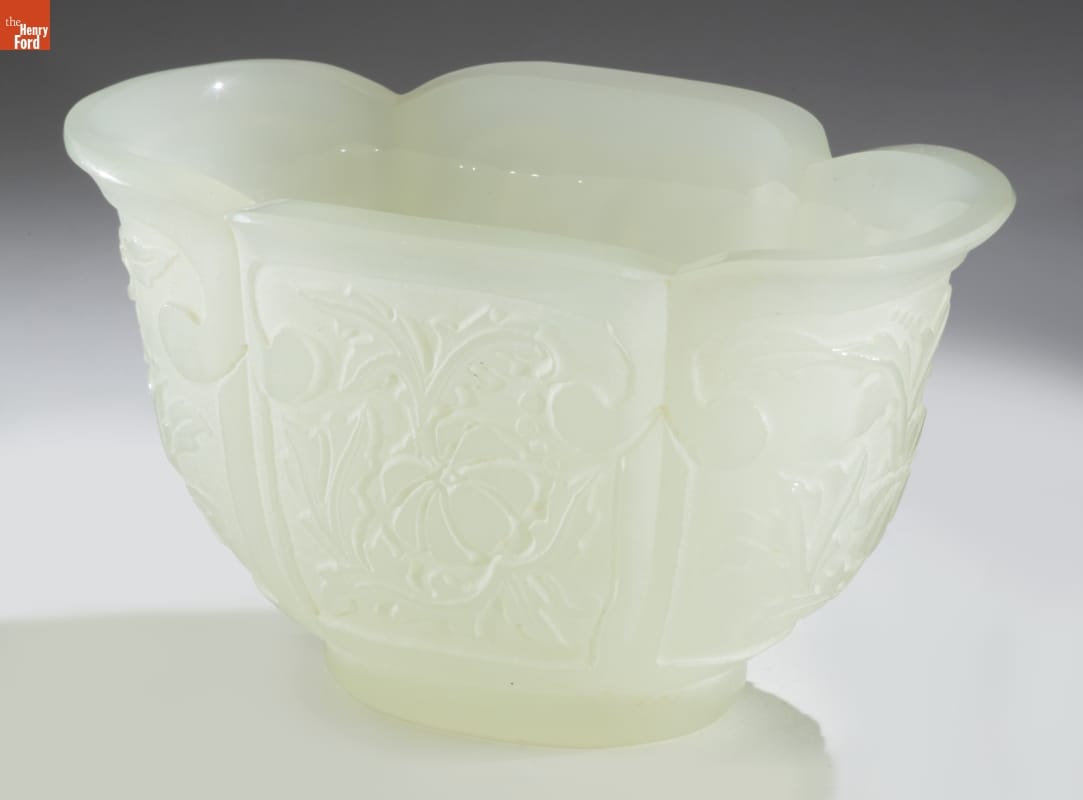
- Ivory Jade Bowl, 1920-1929 - This "Ivory Jade" bowl was meant to imitate a carved, oriental treasure. It was made for an upper middle-class customer who wanted to show off their good taste. This bowl, known as shape 6415 could be ordered from the Steuben Glass works in a variety of colors and surface designs to complement nearly any client's decor.
- 1920-1929
- Collections - Artifact
Ivory Jade Bowl, 1920-1929
This "Ivory Jade" bowl was meant to imitate a carved, oriental treasure. It was made for an upper middle-class customer who wanted to show off their good taste. This bowl, known as shape 6415 could be ordered from the Steuben Glass works in a variety of colors and surface designs to complement nearly any client's decor.