
Search
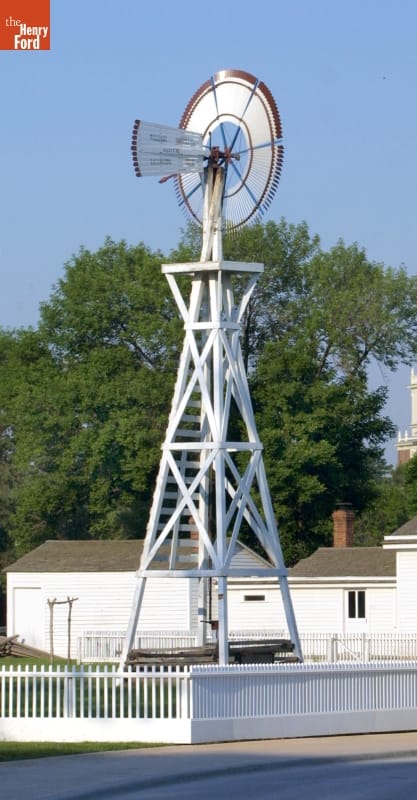
- Stover Windmill, circa 1883 - This windmill is similar to one purchased by William Ford, Henry Ford's father, and used on his Dearborn, Michigan, farm. Farmers throughout the United States in the late 1800s could purchase American prairie-style windmills like this one from scores of manufacturers. These labor-saving devices provided power for farm machinery and pumped well water used by the farmer's family and livestock.
- circa 1883
- Collections - Artifact
Stover Windmill, circa 1883
This windmill is similar to one purchased by William Ford, Henry Ford's father, and used on his Dearborn, Michigan, farm. Farmers throughout the United States in the late 1800s could purchase American prairie-style windmills like this one from scores of manufacturers. These labor-saving devices provided power for farm machinery and pumped well water used by the farmer's family and livestock.
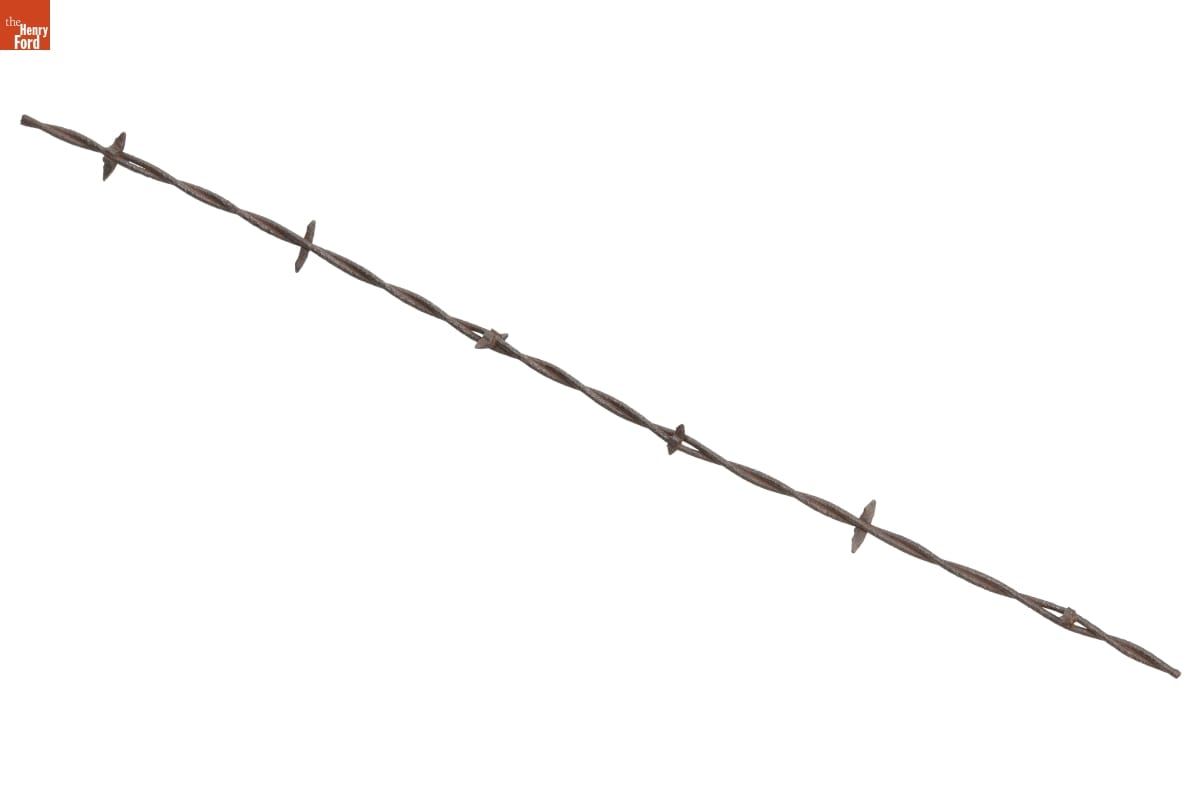
- Stover's "Corsicana Clip" Barbed Wire, Patented 1875 - Inventors received hundreds of patents for barbed wire during the late 1800s. Some innovators created strands of fencing with sharp metal points cut into the wire; others incorporated small wire spurs twisted and attached to the wire to create a painful barrier. Each inventor believed their variation made the best fencing to keep livestock out of crop fields or confine them to pastures.
- 1875
- Collections - Artifact
Stover's "Corsicana Clip" Barbed Wire, Patented 1875
Inventors received hundreds of patents for barbed wire during the late 1800s. Some innovators created strands of fencing with sharp metal points cut into the wire; others incorporated small wire spurs twisted and attached to the wire to create a painful barrier. Each inventor believed their variation made the best fencing to keep livestock out of crop fields or confine them to pastures.
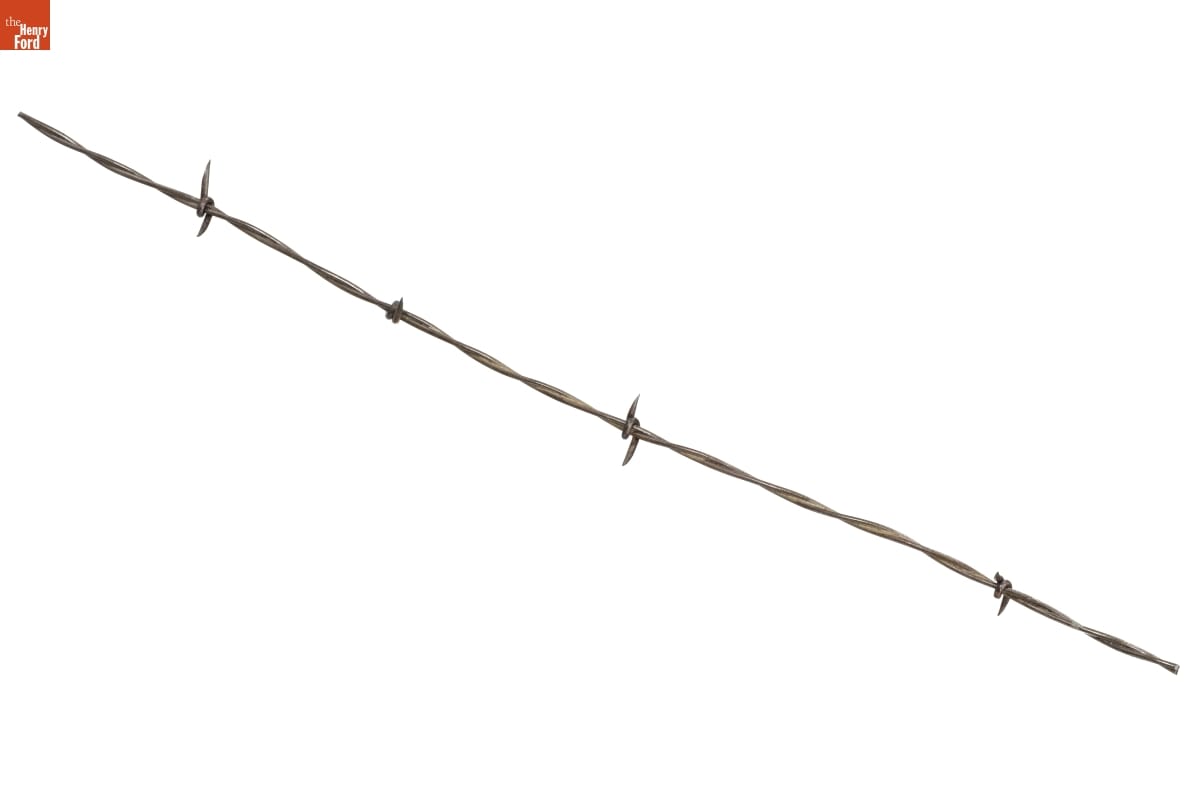
- Stover's Single-Wrap Barb, Two-Line Variation Barbed Wire, Patented 1875 - Inventors received hundreds of patents for barbed wire during the late 1800s. Some innovators created strands of fencing with sharp metal points cut into the wire; others incorporated small wire spurs twisted and attached to the wire to create a painful barrier. Each inventor believed their variation made the best fencing to keep livestock out of crop fields or confine them to pastures.
- 1875
- Collections - Artifact
Stover's Single-Wrap Barb, Two-Line Variation Barbed Wire, Patented 1875
Inventors received hundreds of patents for barbed wire during the late 1800s. Some innovators created strands of fencing with sharp metal points cut into the wire; others incorporated small wire spurs twisted and attached to the wire to create a painful barrier. Each inventor believed their variation made the best fencing to keep livestock out of crop fields or confine them to pastures.
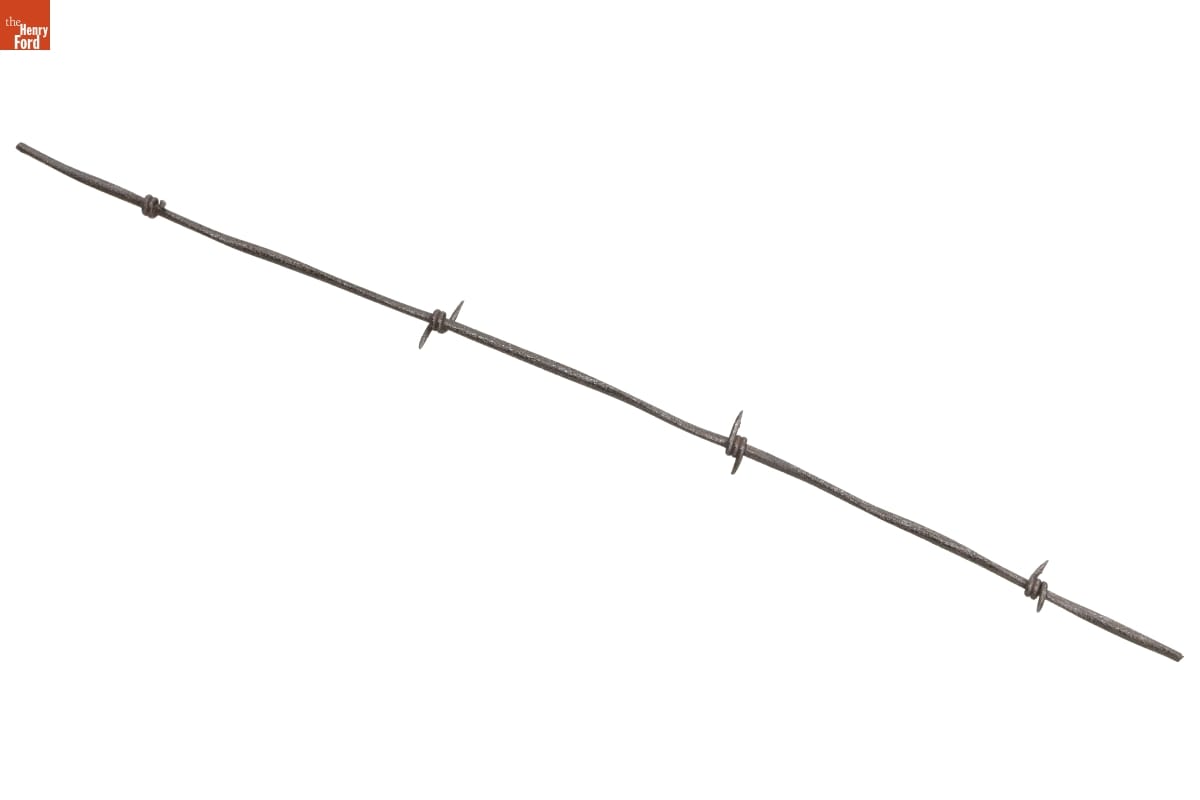
- Stover's Single-Wrap Barbed Wire, Patented 1877 - Inventors received hundreds of patents for barbed wire during the late 1800s. Some innovators created strands of fencing with sharp metal points cut into the wire; others incorporated small wire spurs twisted and attached to the wire to create a painful barrier. Each inventor believed their variation made the best fencing to keep livestock out of crop fields or confine them to pastures.
- 1877
- Collections - Artifact
Stover's Single-Wrap Barbed Wire, Patented 1877
Inventors received hundreds of patents for barbed wire during the late 1800s. Some innovators created strands of fencing with sharp metal points cut into the wire; others incorporated small wire spurs twisted and attached to the wire to create a painful barrier. Each inventor believed their variation made the best fencing to keep livestock out of crop fields or confine them to pastures.
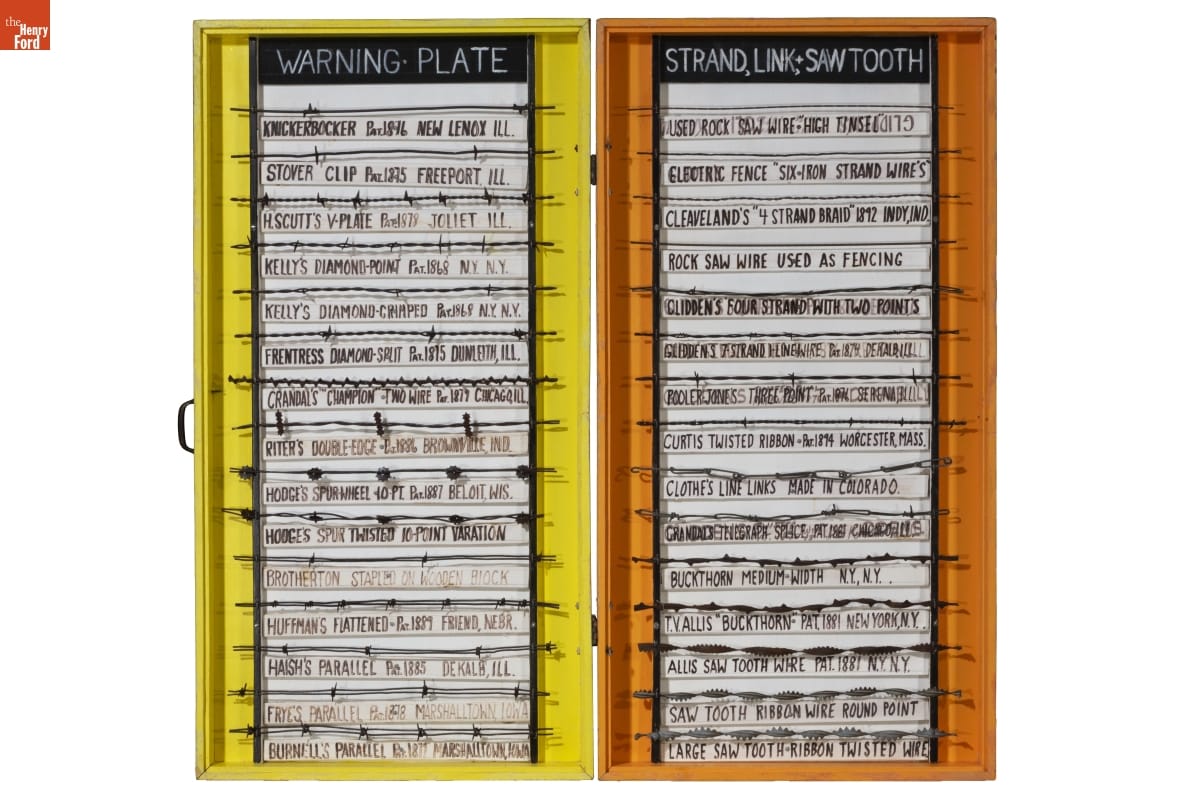
- Barbed Wire Collection Display, Patented 1868 - 1894 - Inventors received hundreds of patents for barbed wire during the late 1800s. Some innovators created strands of fencing with sharp metal points cut into the wire; others incorporated small wire spurs twisted and attached to the wire to create a painful barrier. Each inventor believed their variation made the best fencing to keep livestock out of crop fields or confine them to pastures.
- 1876-1881
- Collections - Artifact
Barbed Wire Collection Display, Patented 1868 - 1894
Inventors received hundreds of patents for barbed wire during the late 1800s. Some innovators created strands of fencing with sharp metal points cut into the wire; others incorporated small wire spurs twisted and attached to the wire to create a painful barrier. Each inventor believed their variation made the best fencing to keep livestock out of crop fields or confine them to pastures.