
Search
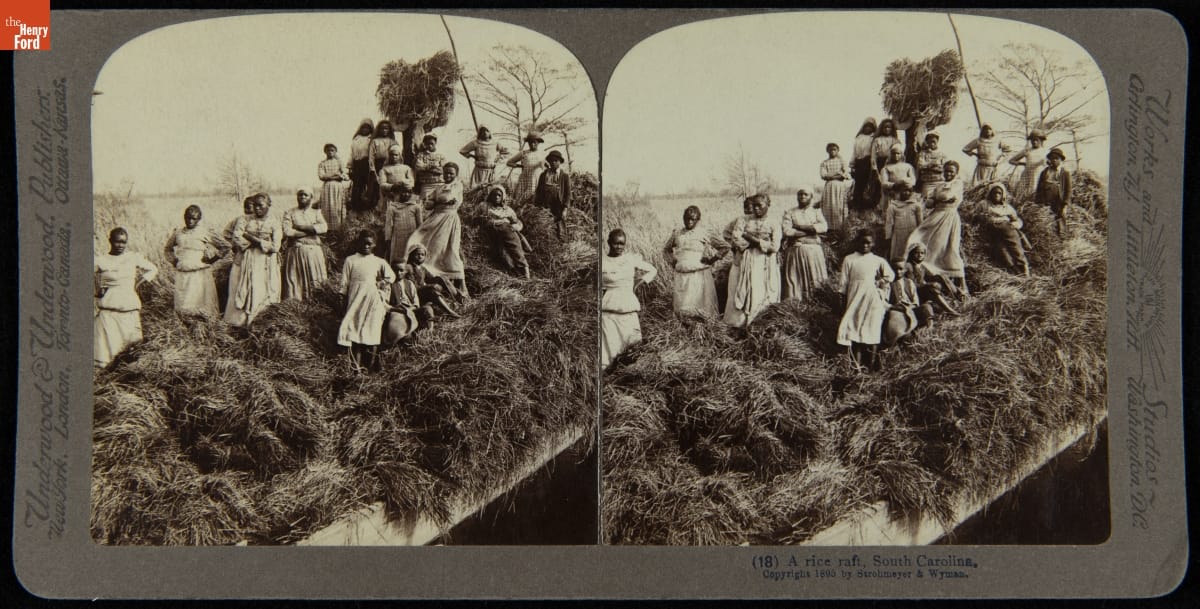
- A Rice Raft, South Carolina, 1895 - African-American women and children worked in rice fields in coastal South Carolina at the turn of the 20th century. This stereograph offers a glimpse of these people, their personalities, and their surroundings. Language on the back, however, conveyed racist stereotypes that devalued African American contributions to agriculture, and prevented viewers from seeing the women and children depicted as equals.
- 1895
- Collections - Artifact
A Rice Raft, South Carolina, 1895
African-American women and children worked in rice fields in coastal South Carolina at the turn of the 20th century. This stereograph offers a glimpse of these people, their personalities, and their surroundings. Language on the back, however, conveyed racist stereotypes that devalued African American contributions to agriculture, and prevented viewers from seeing the women and children depicted as equals.
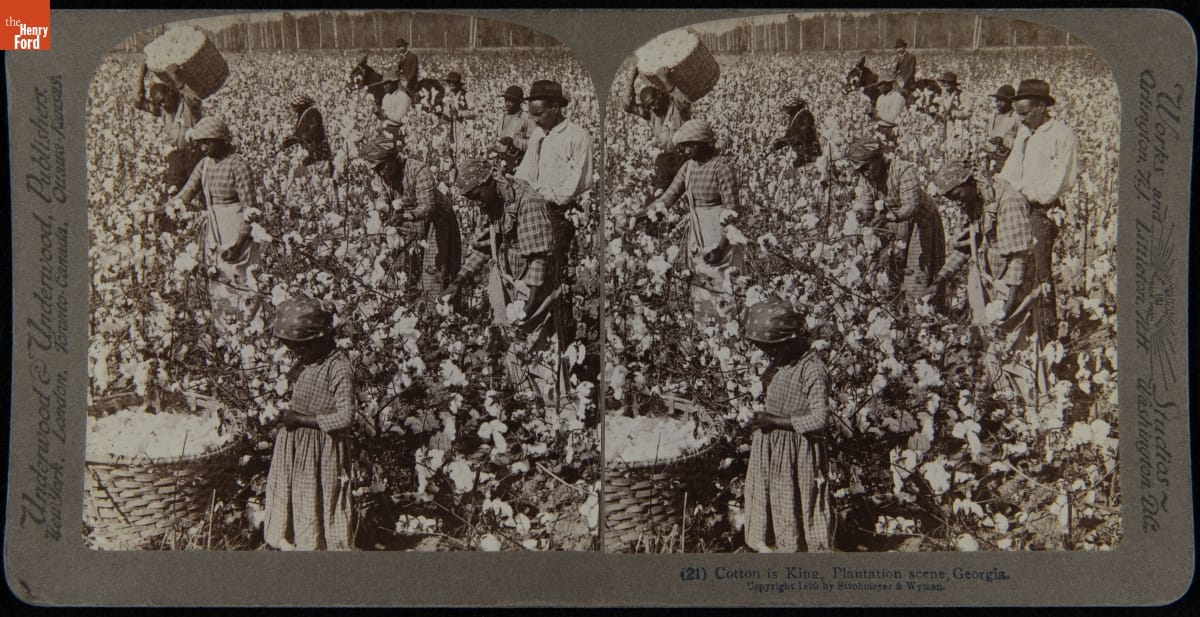
- Cotton is King, Plantation Scene, Georgia, 1895 - This stereograph depicts people picking cotton while a man on horseback oversees the work. This juxtaposition and the term, "plantation," reinforced associations between African Americans and enslavement. The message, conveyed in six languages, reached consumers as violence against African Americans increased and as state laws and the <em>Plessy v Ferguson</em> court decision legalized racial discrimination.
- 1895
- Collections - Artifact
Cotton is King, Plantation Scene, Georgia, 1895
This stereograph depicts people picking cotton while a man on horseback oversees the work. This juxtaposition and the term, "plantation," reinforced associations between African Americans and enslavement. The message, conveyed in six languages, reached consumers as violence against African Americans increased and as state laws and the Plessy v Ferguson court decision legalized racial discrimination.