
Search
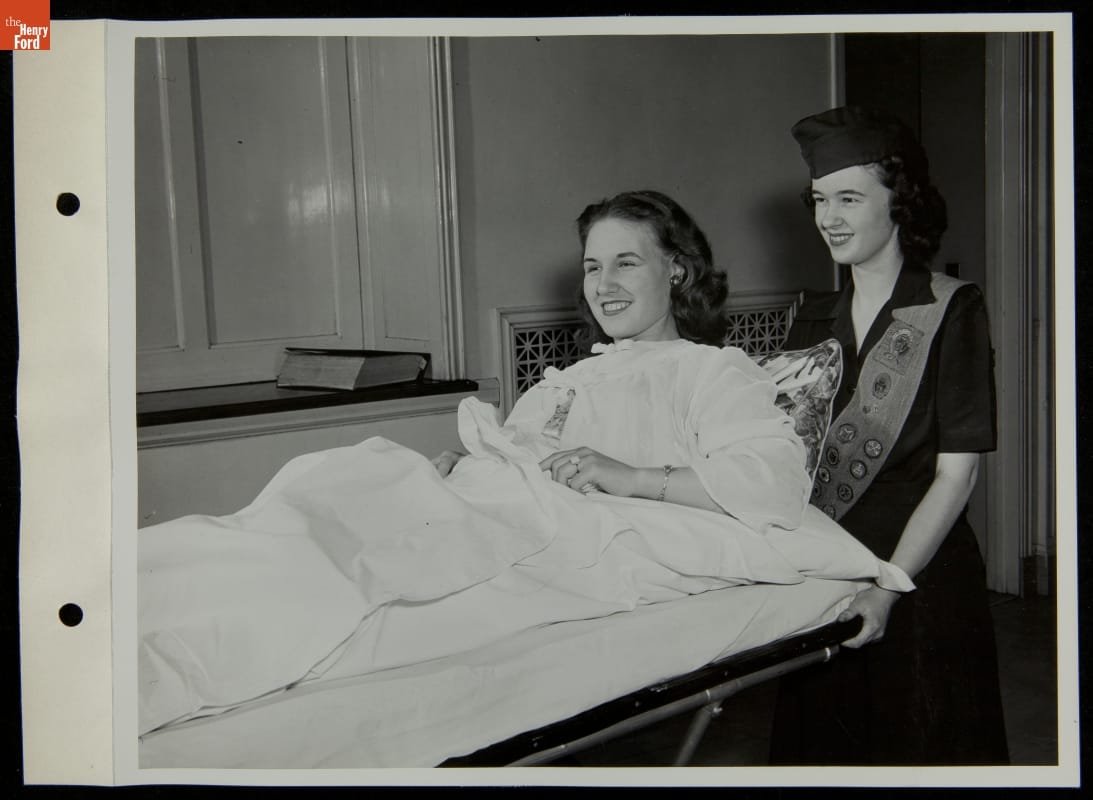
- Girl Scout Aiding a Patient While Doing Community Service at Henry Ford Hospital, Detroit, Michigan, 1946 - Since their organization was founded in 1912, American Girl Scouts have volunteered in local communities. A group of Senior Girl Scouts (ages 14-17) donated service in 1946 at Henry Ford Hospital in Detroit, Michigan. Here, a Girl Scout wearing a sash displaying official patches and badges transports a hospital patient on a gurney.
- February 28, 1946
- Collections - Artifact
Girl Scout Aiding a Patient While Doing Community Service at Henry Ford Hospital, Detroit, Michigan, 1946
Since their organization was founded in 1912, American Girl Scouts have volunteered in local communities. A group of Senior Girl Scouts (ages 14-17) donated service in 1946 at Henry Ford Hospital in Detroit, Michigan. Here, a Girl Scout wearing a sash displaying official patches and badges transports a hospital patient on a gurney.
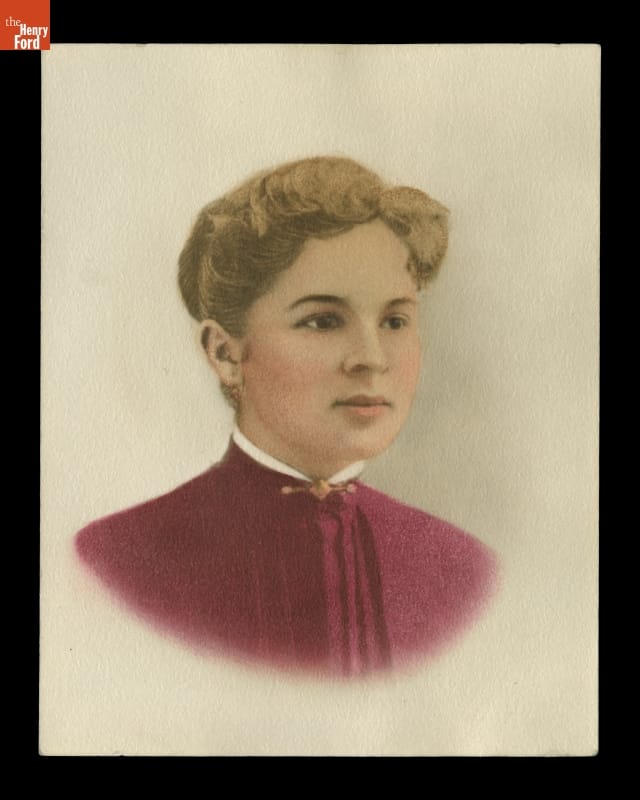
- Portrait of Clara Bryant Ford, circa 1888 - The year 1888 was an important one for Clara Jane Bryant. She married Henry Ford on April 11 -- her 22nd birthday -- at her parents' home in Greenfield Township, Michigan. Clara had met Henry at a New Year's dance in 1885. After a year of courtship, they became engaged in April 1886.
- circa 1888
- Collections - Artifact
Portrait of Clara Bryant Ford, circa 1888
The year 1888 was an important one for Clara Jane Bryant. She married Henry Ford on April 11 -- her 22nd birthday -- at her parents' home in Greenfield Township, Michigan. Clara had met Henry at a New Year's dance in 1885. After a year of courtship, they became engaged in April 1886.
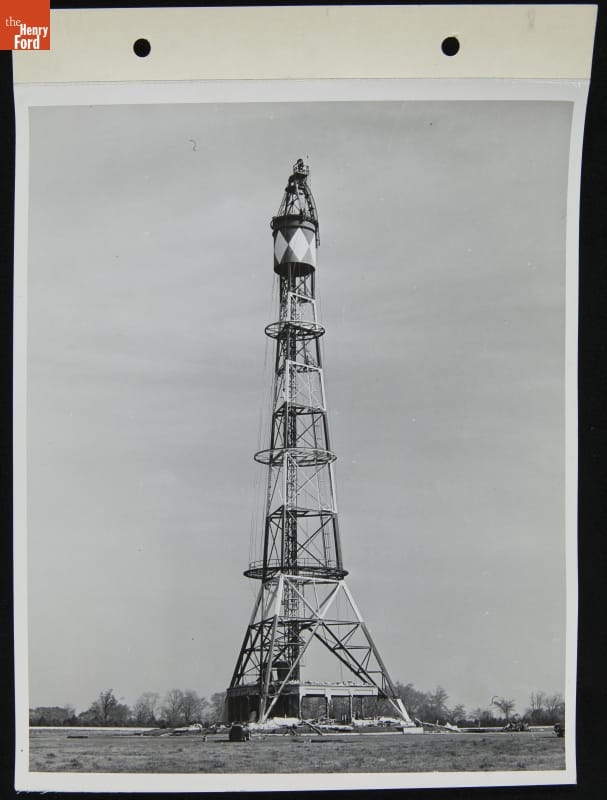
- Dirigible Mooring Mast at Ford Airport, October 24, 1946 - Airships seemed to hold great promise in the 1920s, so Henry Ford built a mooring mast at Ford Airport. The structure, 210 feet tall, was painted in bands of yellow, black, and white for maximum visibility. Only two airships, the Army's <EM>RS-1</EM> and the Navy's <EM>Los Angeles</EM>, ever used the mast before the <EM>Hindenburg</EM> disaster ended the airship era in 1937.
- October 24, 1946
- Collections - Artifact
Dirigible Mooring Mast at Ford Airport, October 24, 1946
Airships seemed to hold great promise in the 1920s, so Henry Ford built a mooring mast at Ford Airport. The structure, 210 feet tall, was painted in bands of yellow, black, and white for maximum visibility. Only two airships, the Army's RS-1 and the Navy's Los Angeles, ever used the mast before the Hindenburg disaster ended the airship era in 1937.
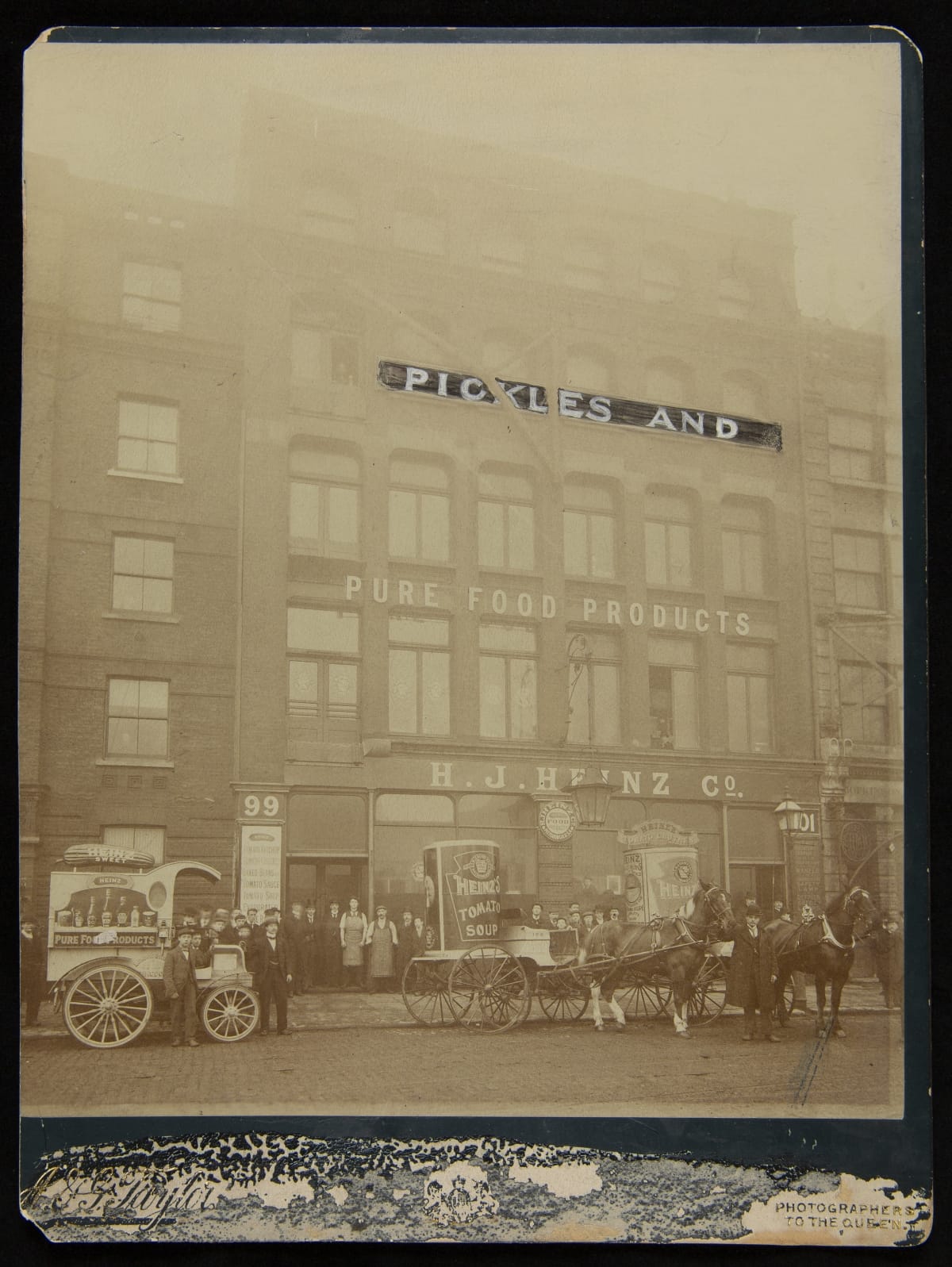
- H. J. Heinz Company London Branch and Employees, circa 1895 - In 1869, H.J. Heinz began his career in the processed food industry selling horseradish out of his parent's home. His product line quickly expanded to include pickled foods, preserves, and condiments, becoming a household name by the turn of the century. This success allowed operations to expand with new branch factories built around the world.
- circa 1895
- Collections - Artifact
H. J. Heinz Company London Branch and Employees, circa 1895
In 1869, H.J. Heinz began his career in the processed food industry selling horseradish out of his parent's home. His product line quickly expanded to include pickled foods, preserves, and condiments, becoming a household name by the turn of the century. This success allowed operations to expand with new branch factories built around the world.
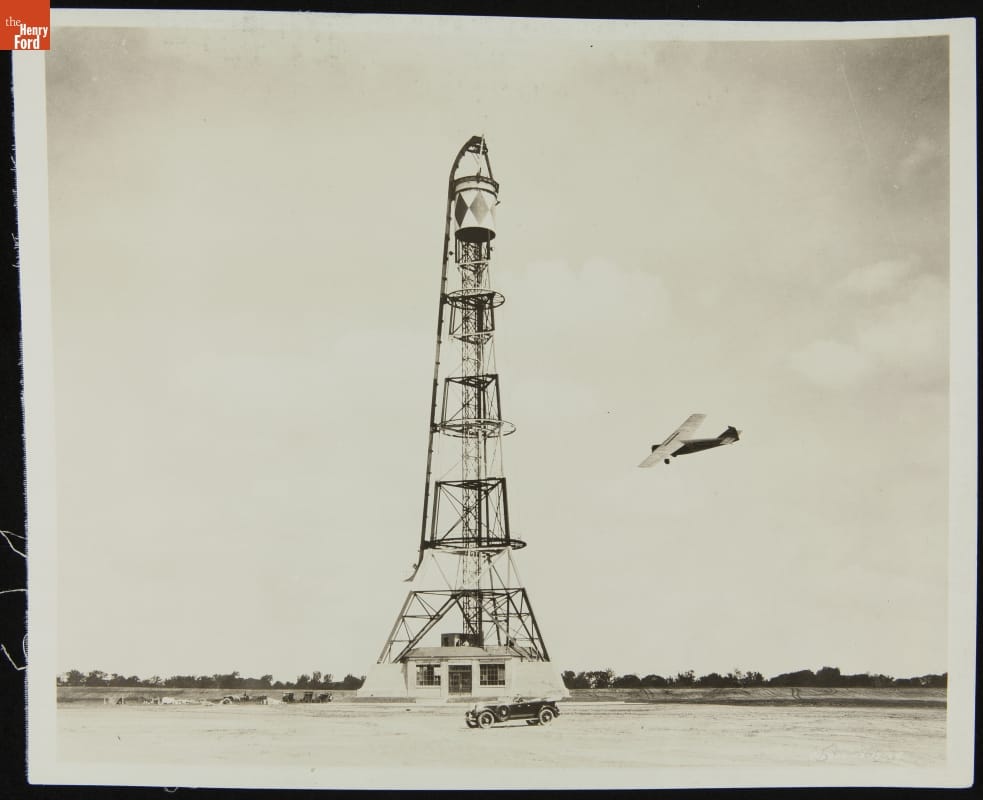
- Stout Air Transport 2-AT Circles the Dirigible Mooring Mast at Ford Airport, December 19, 1925 - When built in 1925, Ford Airport's dirigible mooring mast featured an elaborate "collar" and haul-down device -- visible on the structure's left side -- that rotated 360 degrees, allowing a moored airship to be pointed into the wind regardless of direction. The device, along with the airship, could be lowered to the ground, permitting passengers to board or disembark at ground level.
- December 19, 1925
- Collections - Artifact
Stout Air Transport 2-AT Circles the Dirigible Mooring Mast at Ford Airport, December 19, 1925
When built in 1925, Ford Airport's dirigible mooring mast featured an elaborate "collar" and haul-down device -- visible on the structure's left side -- that rotated 360 degrees, allowing a moored airship to be pointed into the wind regardless of direction. The device, along with the airship, could be lowered to the ground, permitting passengers to board or disembark at ground level.