
Search
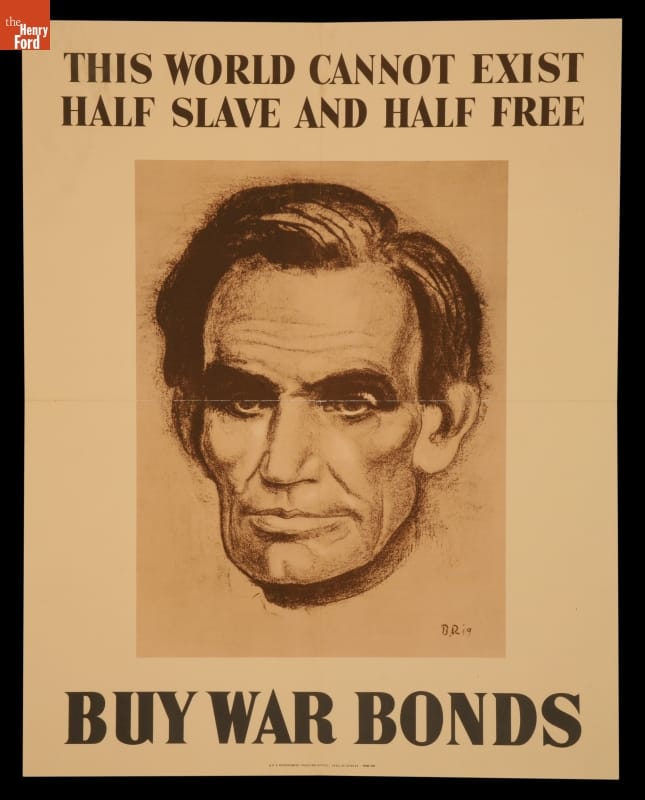
- World War II Poster, "This World Cannot Exist Half Slave and Half Free: Buy War Bonds," 1943 - During the Second World War, all of the national governments of the warring nations used poster campaigns to encourage civilian and military support of the war effort. The advertising technique of these posters followed the innovative style developed during the First World War. By appealing to the viewer's emotions this poster helped the U.S. to rally the home front workers and consumers.
- 1943
- Collections - Artifact
World War II Poster, "This World Cannot Exist Half Slave and Half Free: Buy War Bonds," 1943
During the Second World War, all of the national governments of the warring nations used poster campaigns to encourage civilian and military support of the war effort. The advertising technique of these posters followed the innovative style developed during the First World War. By appealing to the viewer's emotions this poster helped the U.S. to rally the home front workers and consumers.
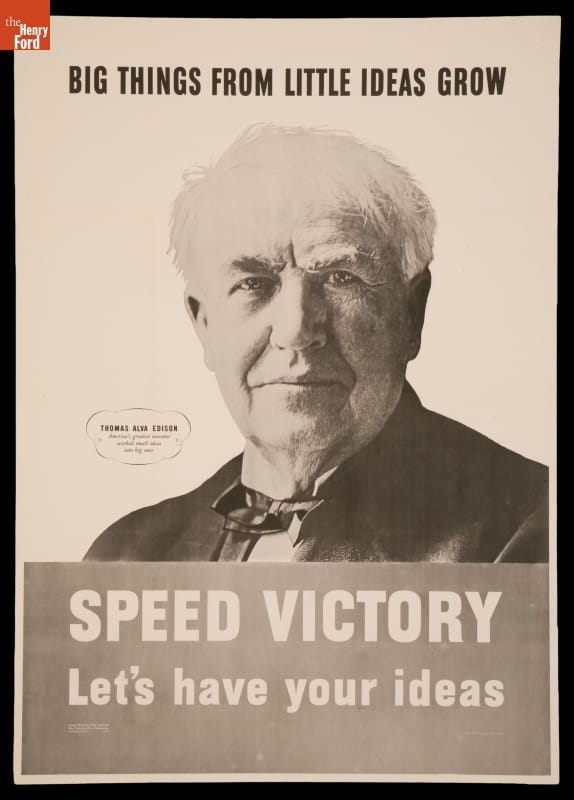
- World War II Poster, "Big Things from Little Ideas Grow; Speed Victory," 1943 - During the Second World War, all of the national governments of the warring nations used poster campaigns to encourage civilian and military support of the war effort. The advertising technique of these posters followed the innovative style developed during the First World War. By appealing to the viewer's emotions this poster helped the U.S. to rally the home front workers and consumers.
- 1943
- Collections - Artifact
World War II Poster, "Big Things from Little Ideas Grow; Speed Victory," 1943
During the Second World War, all of the national governments of the warring nations used poster campaigns to encourage civilian and military support of the war effort. The advertising technique of these posters followed the innovative style developed during the First World War. By appealing to the viewer's emotions this poster helped the U.S. to rally the home front workers and consumers.
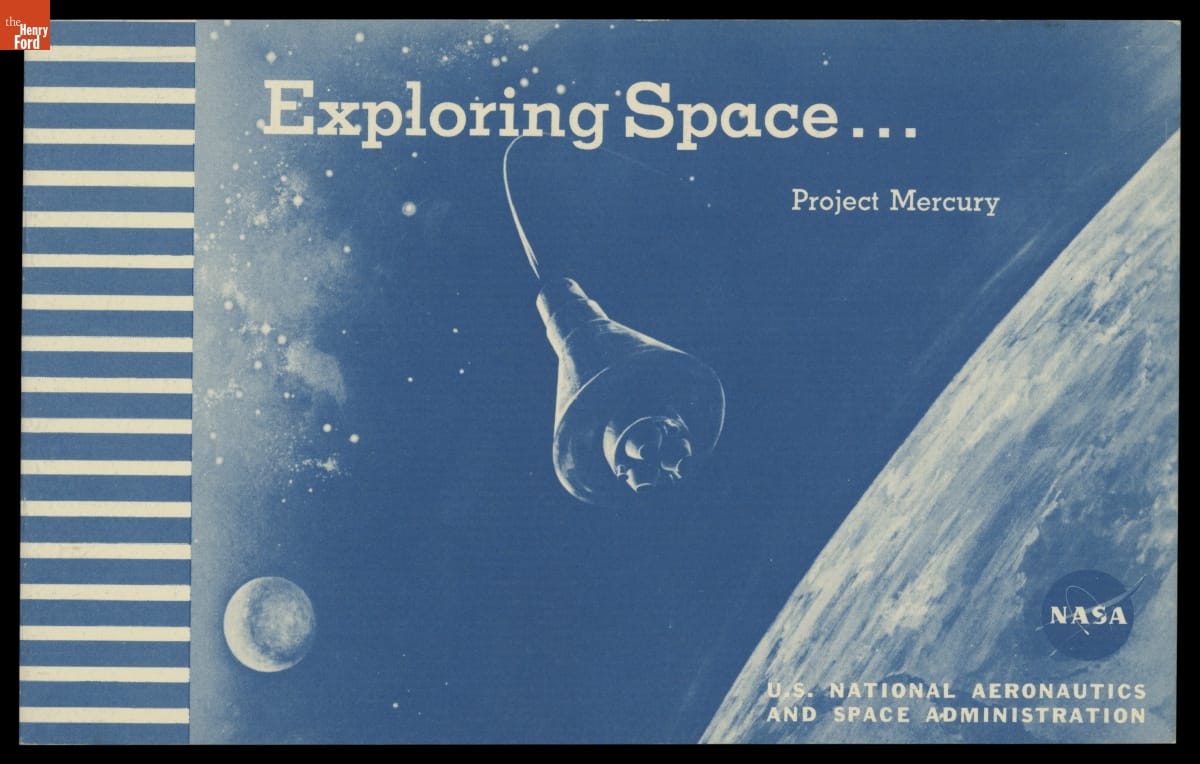
- Brochure, "Exploring Space... Project Mercury," 1961 - The National Aeronautics and Space Administration developed Project Mercury in 1958 to send a manned spacecraft into orbit. This brochure, published in early 1961, explained NASA's progress toward achieving that goal. Later, in May 1961, NASA would launch its first manned capsule. And in 1962, John Glenn orbited the Earth. Project Mercury ended in 1963 after six successful crewed missions.
- 1961
- Collections - Artifact
Brochure, "Exploring Space... Project Mercury," 1961
The National Aeronautics and Space Administration developed Project Mercury in 1958 to send a manned spacecraft into orbit. This brochure, published in early 1961, explained NASA's progress toward achieving that goal. Later, in May 1961, NASA would launch its first manned capsule. And in 1962, John Glenn orbited the Earth. Project Mercury ended in 1963 after six successful crewed missions.
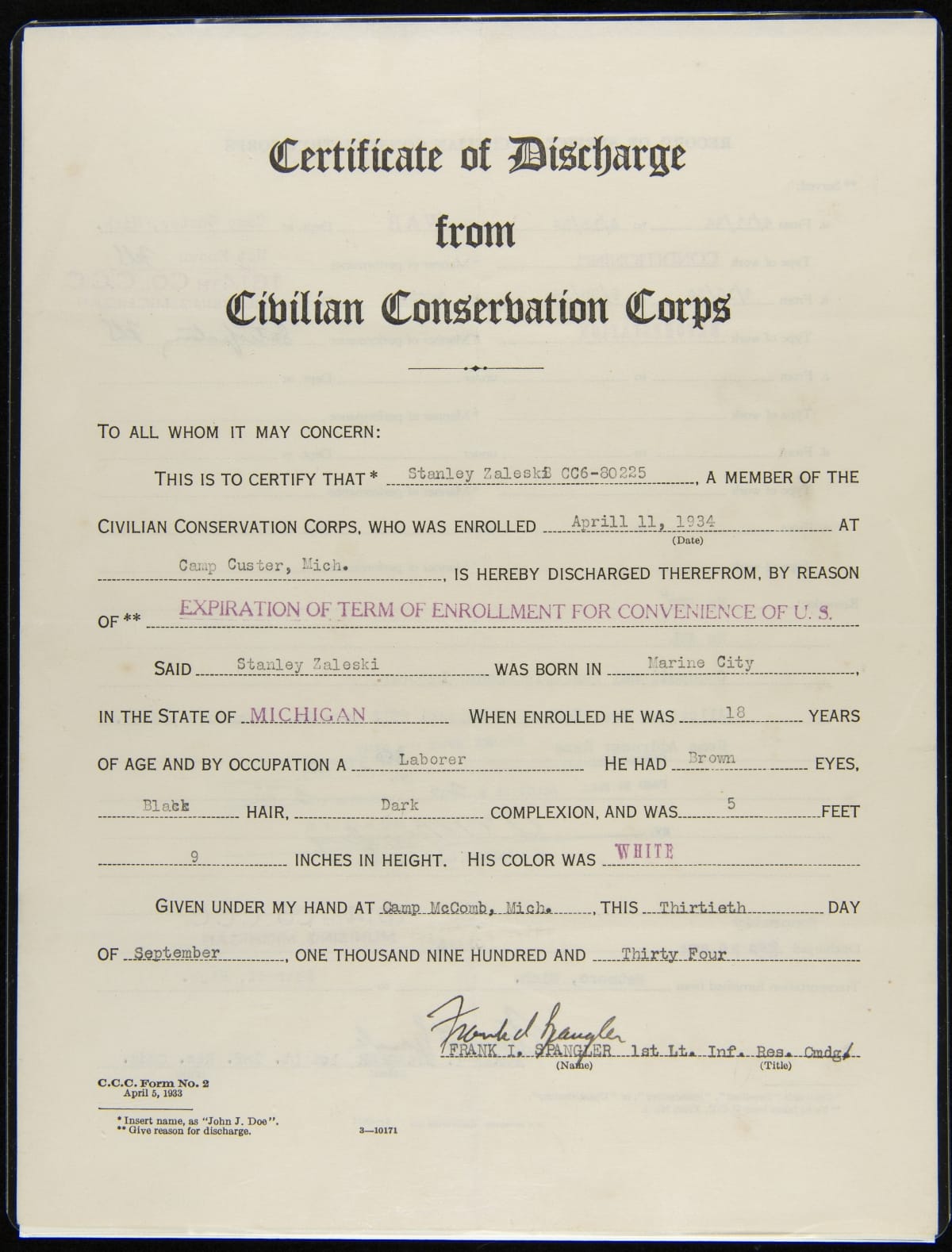
- Certificate of Discharge from Civilian Conservation Corps, September 30, 1934 - Michigan native Stanley Zaleski (1915-1973) enlisted in the Civilian Conservation Corps (CCC) in April 1934 when he was 18. The CCC, established in the early years of the Great Depression, enlisted unemployed, single young men to work in America's public lands, forests, and national parks. Zaleski, who helped with reforestation, was stationed with company 1614 at Camp McComb near Munising, Michigan.
- April 05, 1933
- Collections - Artifact
Certificate of Discharge from Civilian Conservation Corps, September 30, 1934
Michigan native Stanley Zaleski (1915-1973) enlisted in the Civilian Conservation Corps (CCC) in April 1934 when he was 18. The CCC, established in the early years of the Great Depression, enlisted unemployed, single young men to work in America's public lands, forests, and national parks. Zaleski, who helped with reforestation, was stationed with company 1614 at Camp McComb near Munising, Michigan.
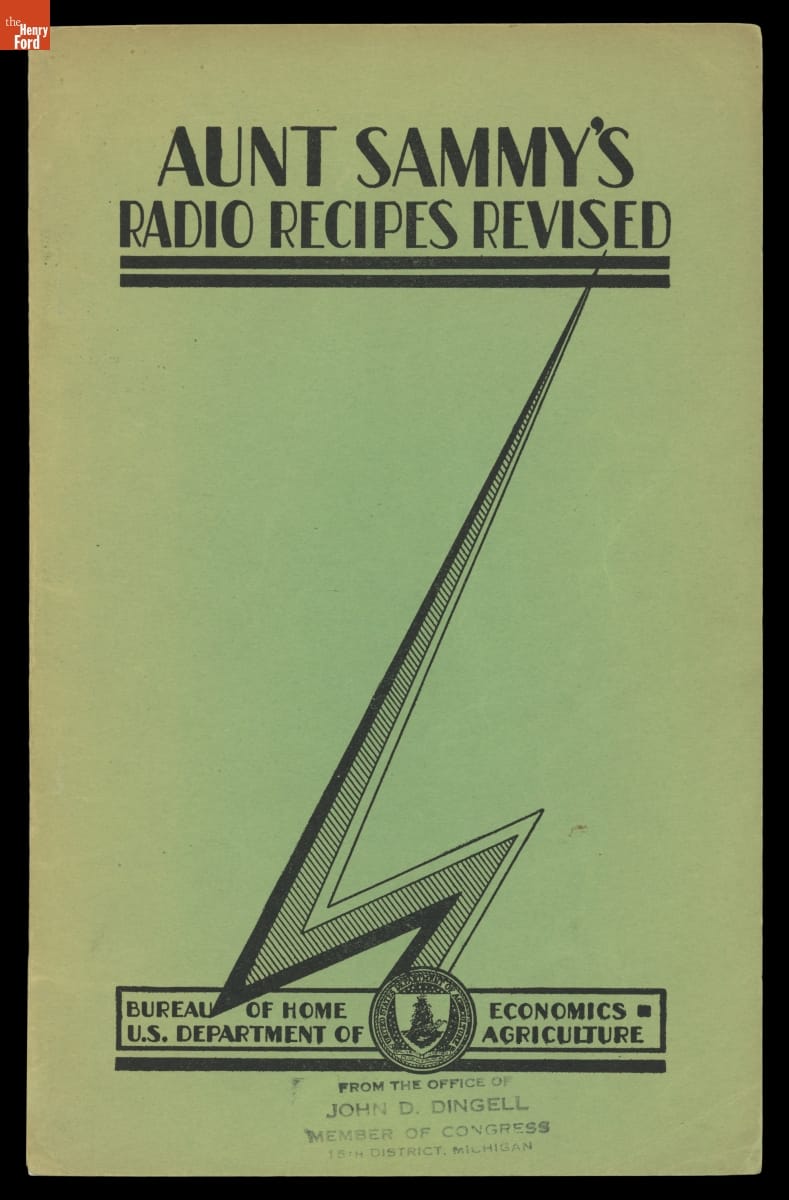
- "Aunt Sammy's Radio Recipes Revised," 1931 -
- 1931
- Collections - Artifact
"Aunt Sammy's Radio Recipes Revised," 1931
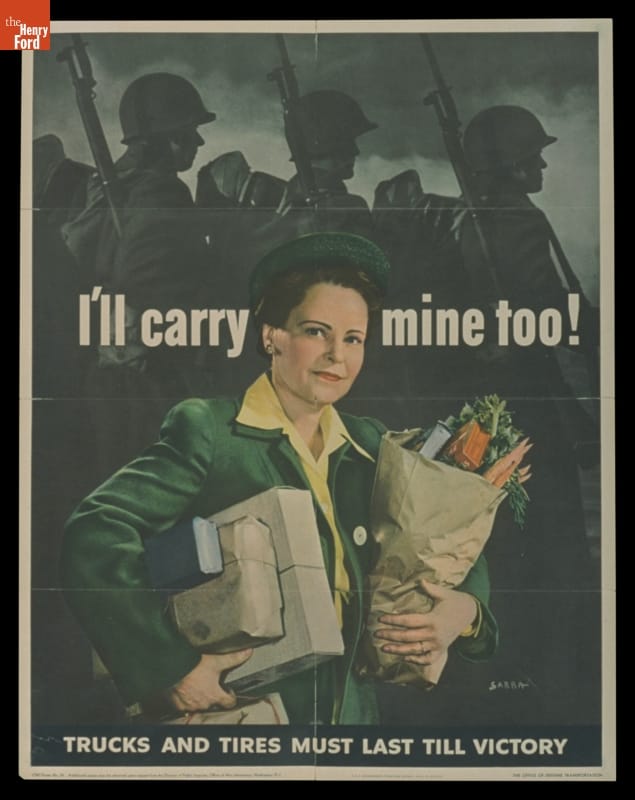
- World War II Poster, "I'll Carry Mine Too! Trucks and Tires Must Last Until Victory," 1943 - During the Second World War, all of the national governments of the warring nations used poster campaigns to encourage civilian and military support of the war effort. The advertising technique of these posters followed the innovative style developed during the First World War. By appealing to the viewer's emotions this poster helped the U.S. to rally the home front workers and consumers.
- 1943
- Collections - Artifact
World War II Poster, "I'll Carry Mine Too! Trucks and Tires Must Last Until Victory," 1943
During the Second World War, all of the national governments of the warring nations used poster campaigns to encourage civilian and military support of the war effort. The advertising technique of these posters followed the innovative style developed during the First World War. By appealing to the viewer's emotions this poster helped the U.S. to rally the home front workers and consumers.
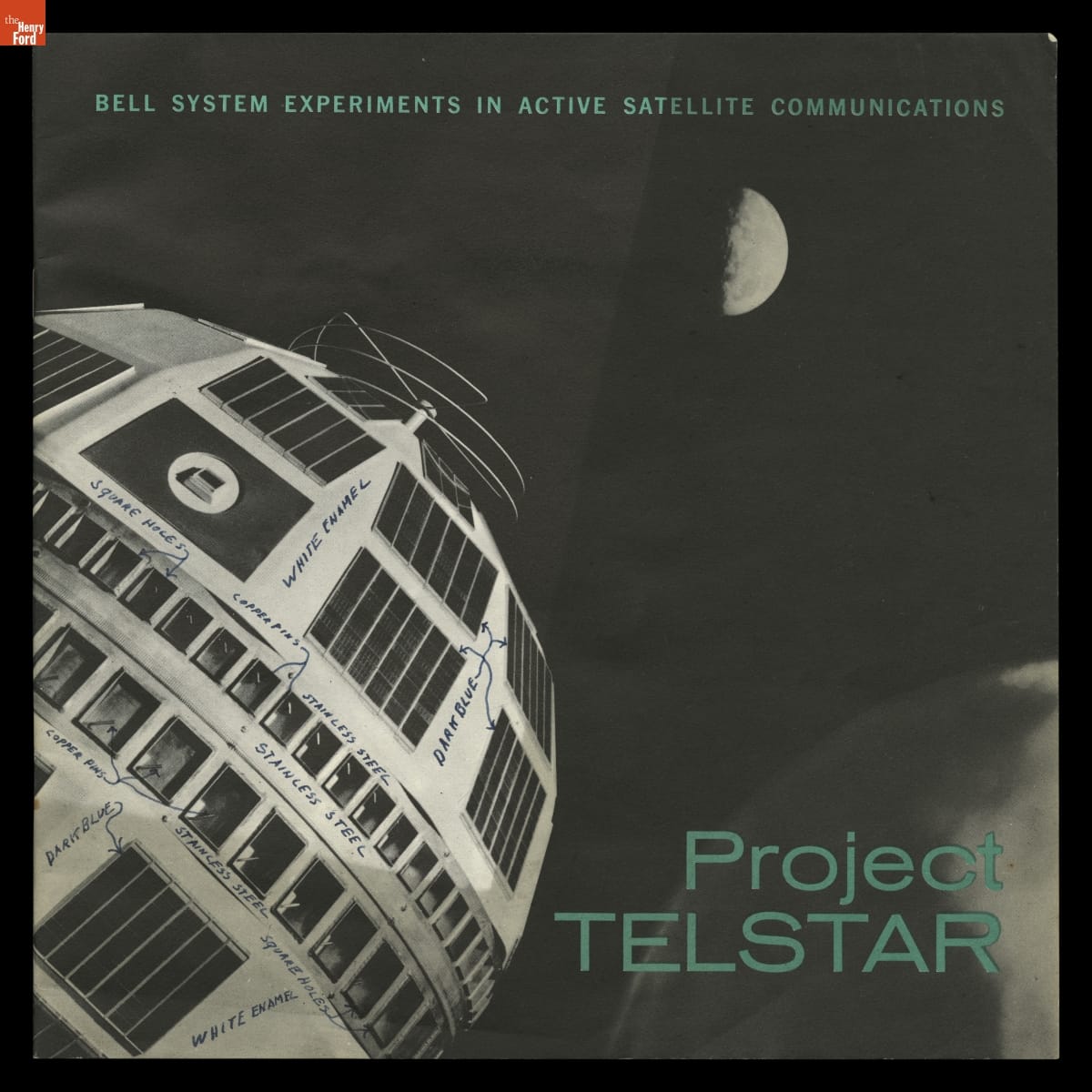
- Brochure, "Project Telstar: Bell System Experiments in Active Satellite Communications," 1962 -
- 1962
- Collections - Artifact
Brochure, "Project Telstar: Bell System Experiments in Active Satellite Communications," 1962
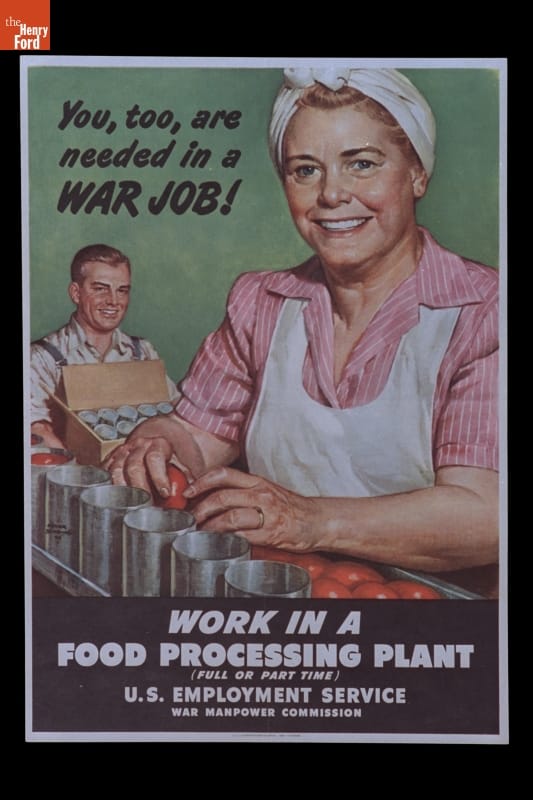
- World War II Poster, "You, Too, Are Needed in a War Job! Work in a Food Processing Plant," 1945 - During the Second World War, all of the national governments of the warring nations used poster campaigns to encourage civilian and military support of the war effort. The advertising technique of these posters followed the innovative style developed during the First World War. By appealing to the viewer's emotions this poster helped the U.S. to rally the home front workers and consumers.
- 1945
- Collections - Artifact
World War II Poster, "You, Too, Are Needed in a War Job! Work in a Food Processing Plant," 1945
During the Second World War, all of the national governments of the warring nations used poster campaigns to encourage civilian and military support of the war effort. The advertising technique of these posters followed the innovative style developed during the First World War. By appealing to the viewer's emotions this poster helped the U.S. to rally the home front workers and consumers.
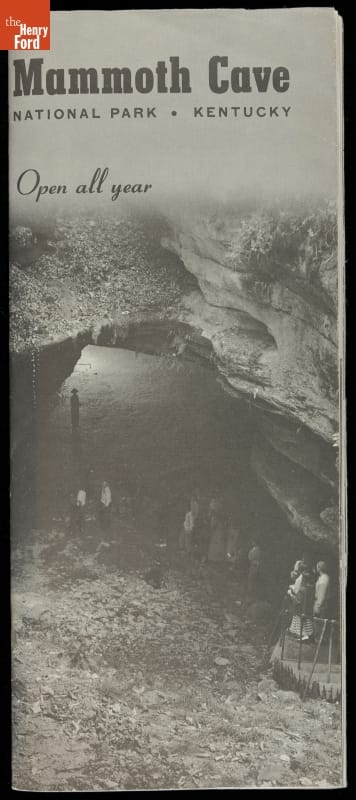
- Travel Guides for Mammoth Cave National Park, Kentucky, 1960 -
- 1960
- Collections - Artifact
Travel Guides for Mammoth Cave National Park, Kentucky, 1960
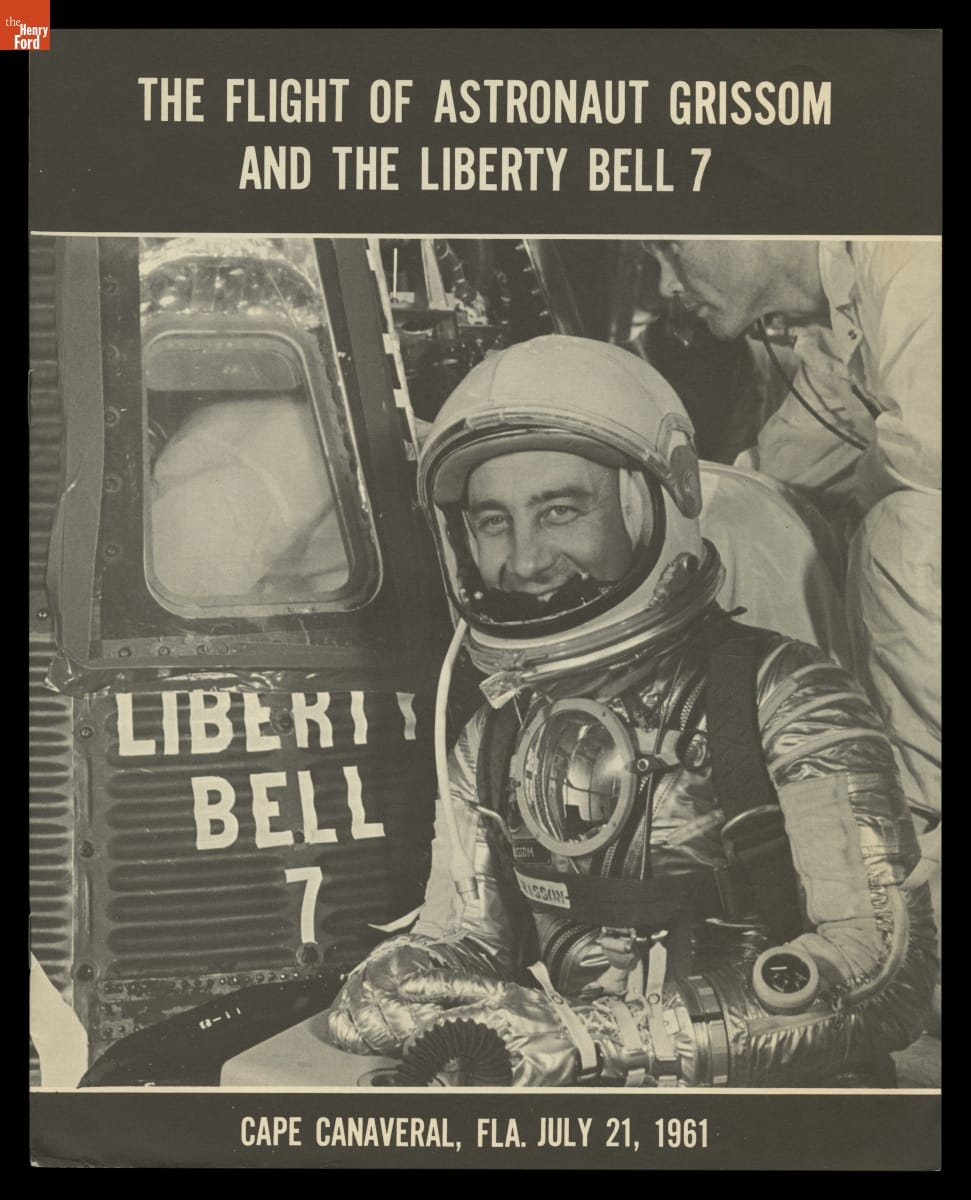
- Brochure, "The Flight of Astronaut Grissom and the Liberty Bell 7," July 21, 1961 - In July 1961, astronaut Virgil "Gus" Grissom became the second American to travel into space. This U.S. government brochure documents Grissom's flight in the National Aeronautics and Space Administration's Project Mercury capsule <em>Liberty Bell 7</em>. Grissom's sub-orbital flight was one step toward NASA's goal to orbit a manned spacecraft around Earth. John Glenn's flight in <em>Friendship 7</em>--the next mission--accomplished that objective.
- July 21, 1961
- Collections - Artifact
Brochure, "The Flight of Astronaut Grissom and the Liberty Bell 7," July 21, 1961
In July 1961, astronaut Virgil "Gus" Grissom became the second American to travel into space. This U.S. government brochure documents Grissom's flight in the National Aeronautics and Space Administration's Project Mercury capsule Liberty Bell 7. Grissom's sub-orbital flight was one step toward NASA's goal to orbit a manned spacecraft around Earth. John Glenn's flight in Friendship 7--the next mission--accomplished that objective.