
Search
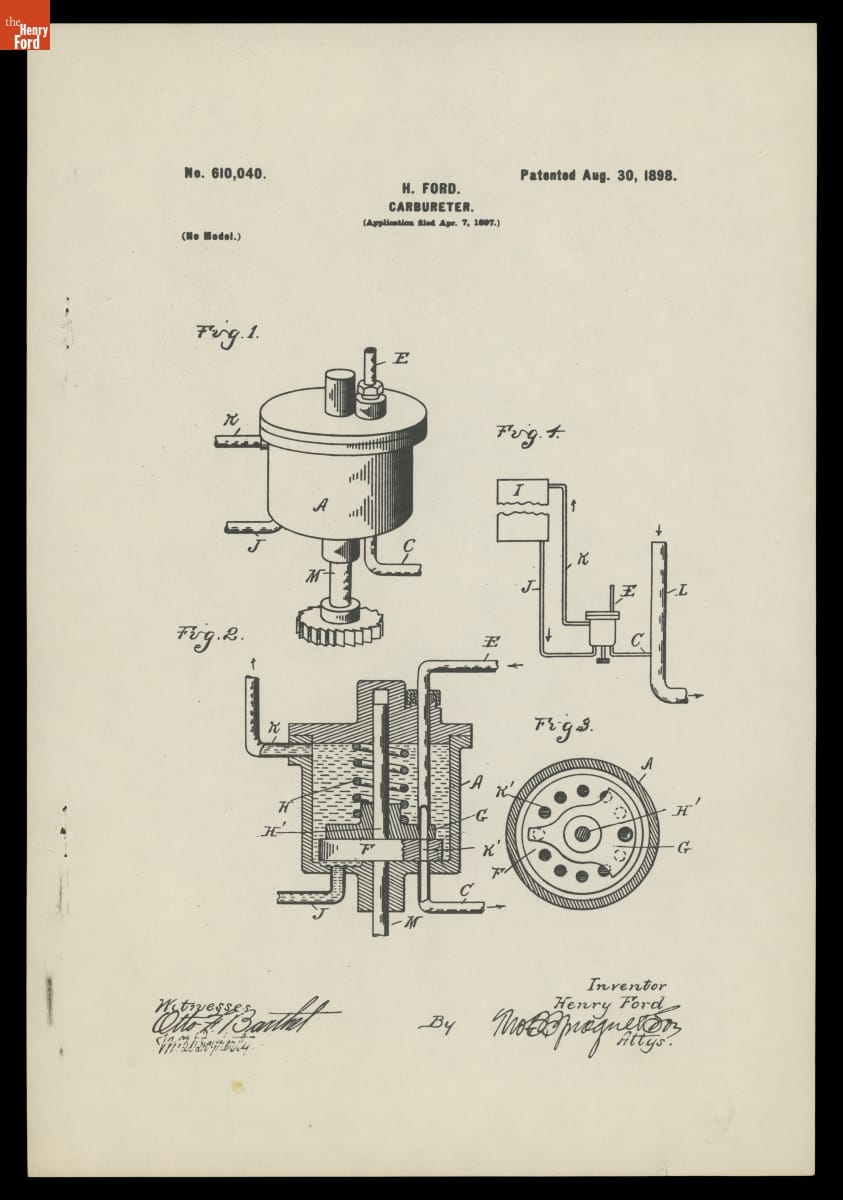
- Patent #610,040, Carburetor Improvements by Henry Ford, Granted August 30, 1898 - Henry Ford received a patent in August 1898 for an improved automobile carburetor -- the device that mixes the fuel and air sent to an engine's cylinders. It was part of Ford's work to design and build his first marketable automobile. Ford's first company, the Detroit Automobile Company, was formed in July 1899 but closed after 15 months.
- August 30, 1898
- Collections - Artifact
Patent #610,040, Carburetor Improvements by Henry Ford, Granted August 30, 1898
Henry Ford received a patent in August 1898 for an improved automobile carburetor -- the device that mixes the fuel and air sent to an engine's cylinders. It was part of Ford's work to design and build his first marketable automobile. Ford's first company, the Detroit Automobile Company, was formed in July 1899 but closed after 15 months.
- Patent, "Programmed Article Handling," 1966 -
- October 18, 1966
- Collections - Artifact
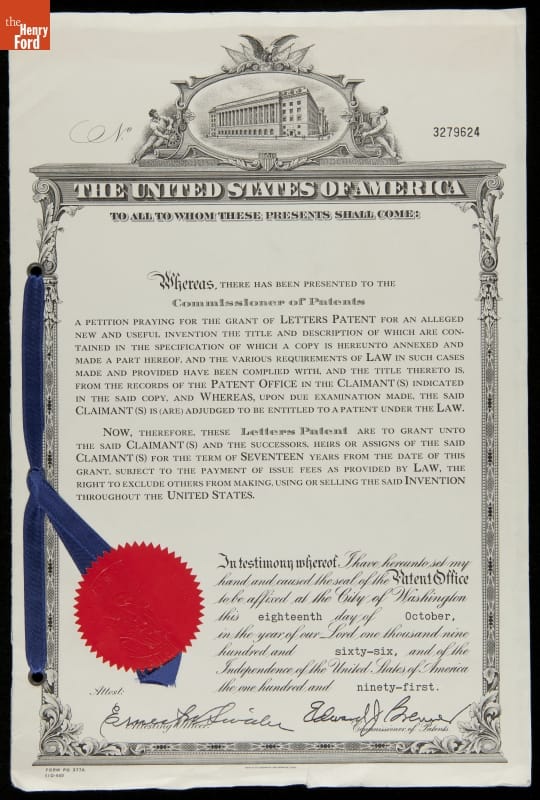
Patent, "Programmed Article Handling," 1966
- United States Patent for Subscription Television Decoder Unit, June 27, 1961 -
- June 27, 1961
- Collections - Artifact
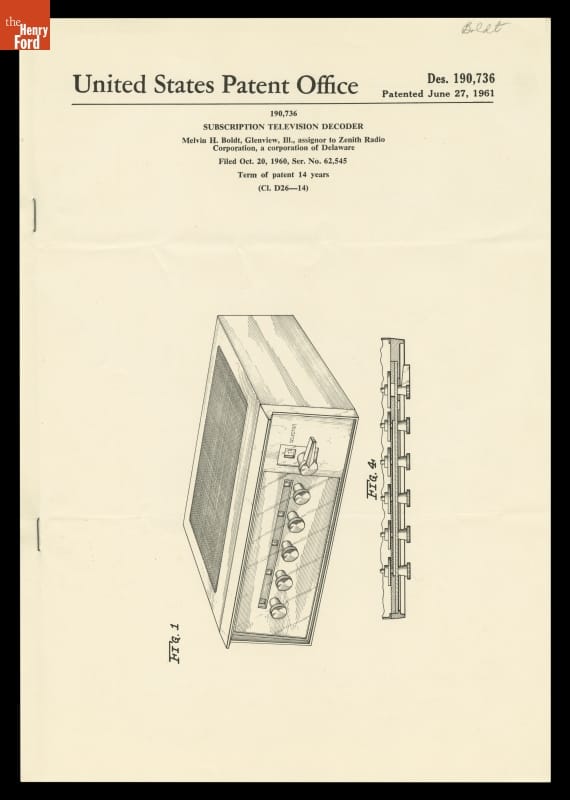
United States Patent for Subscription Television Decoder Unit, June 27, 1961
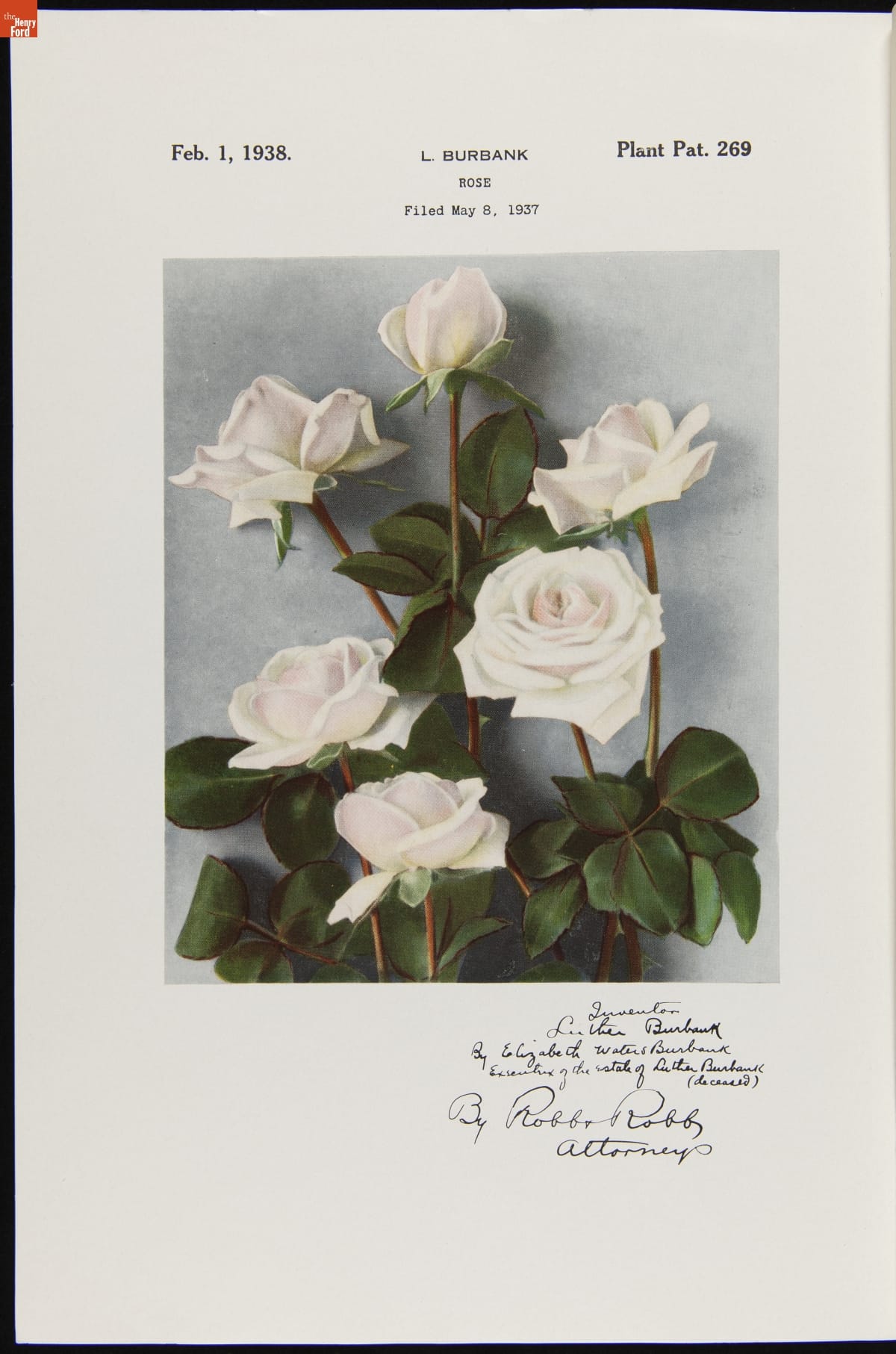
- U.S. Plant Patent 269, for Luther Burbank Rose, Granted to Elizabeth Waters Burbank, February 1, 1938 - Natural plant reproduction once seemed beyond human intervention, but in 1930, the U.S. Patent and Trademark Office began recognizing the work of horticulturalists by awarding patents for new or improved plant varieties. Luther Burbank, the prolific American plant breeder, died in 1926, but his life's work helped justify plant patents. Burbank ultimately received 16 patents, awarded posthumously to his widow.
- February 01, 1938
- Collections - Artifact
U.S. Plant Patent 269, for Luther Burbank Rose, Granted to Elizabeth Waters Burbank, February 1, 1938
Natural plant reproduction once seemed beyond human intervention, but in 1930, the U.S. Patent and Trademark Office began recognizing the work of horticulturalists by awarding patents for new or improved plant varieties. Luther Burbank, the prolific American plant breeder, died in 1926, but his life's work helped justify plant patents. Burbank ultimately received 16 patents, awarded posthumously to his widow.
- United States Patent No. 594,145 for Induction Dynamos, November 23, 1897 - Charles Steinmetz excelled at applying mathematical theory and scientific methods to practical engineering, helping define the role of "scientist-engineer" in the American electrical industry. Working at General Electric in the 1890s, Steinmetz developed influential theories on alternating currents and conducted breakthrough experiments on power loss. His innovations improved the efficiency of electrical power distribution over long distances.
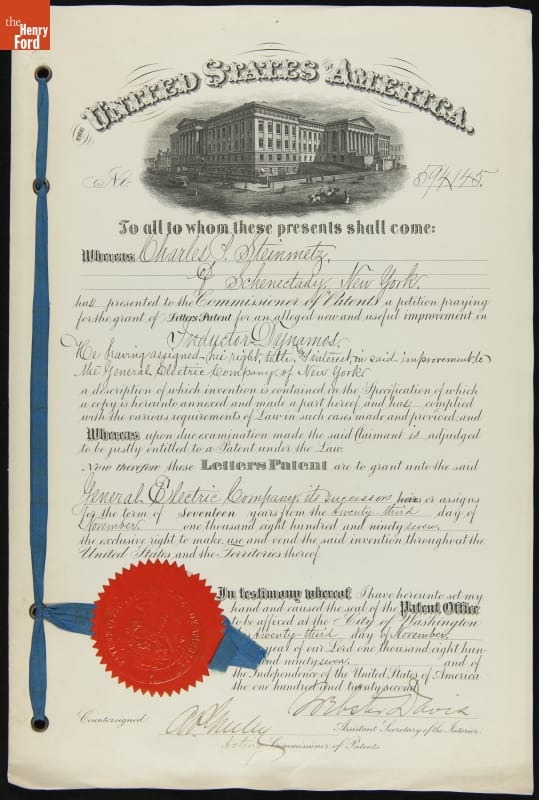
- November 23, 1897
- Collections - Artifact
United States Patent No. 594,145 for Induction Dynamos, November 23, 1897
Charles Steinmetz excelled at applying mathematical theory and scientific methods to practical engineering, helping define the role of "scientist-engineer" in the American electrical industry. Working at General Electric in the 1890s, Steinmetz developed influential theories on alternating currents and conducted breakthrough experiments on power loss. His innovations improved the efficiency of electrical power distribution over long distances.
- Improvement in Hot-Air Engines, S. H. Roper, Specification Forming Part of Letters Patent No. 55,428, June 5, 1866 - Massachusetts machinist Sylvester Roper patented improvements to a hot air engine that produced motion by harnessing the expansion and contraction of warming and cooling air. This patent covers one of those improvements. Roper also built at least seven steam-powered carriages and two steam-powered motorcycles years before automobiles -- as we know them -- appeared.
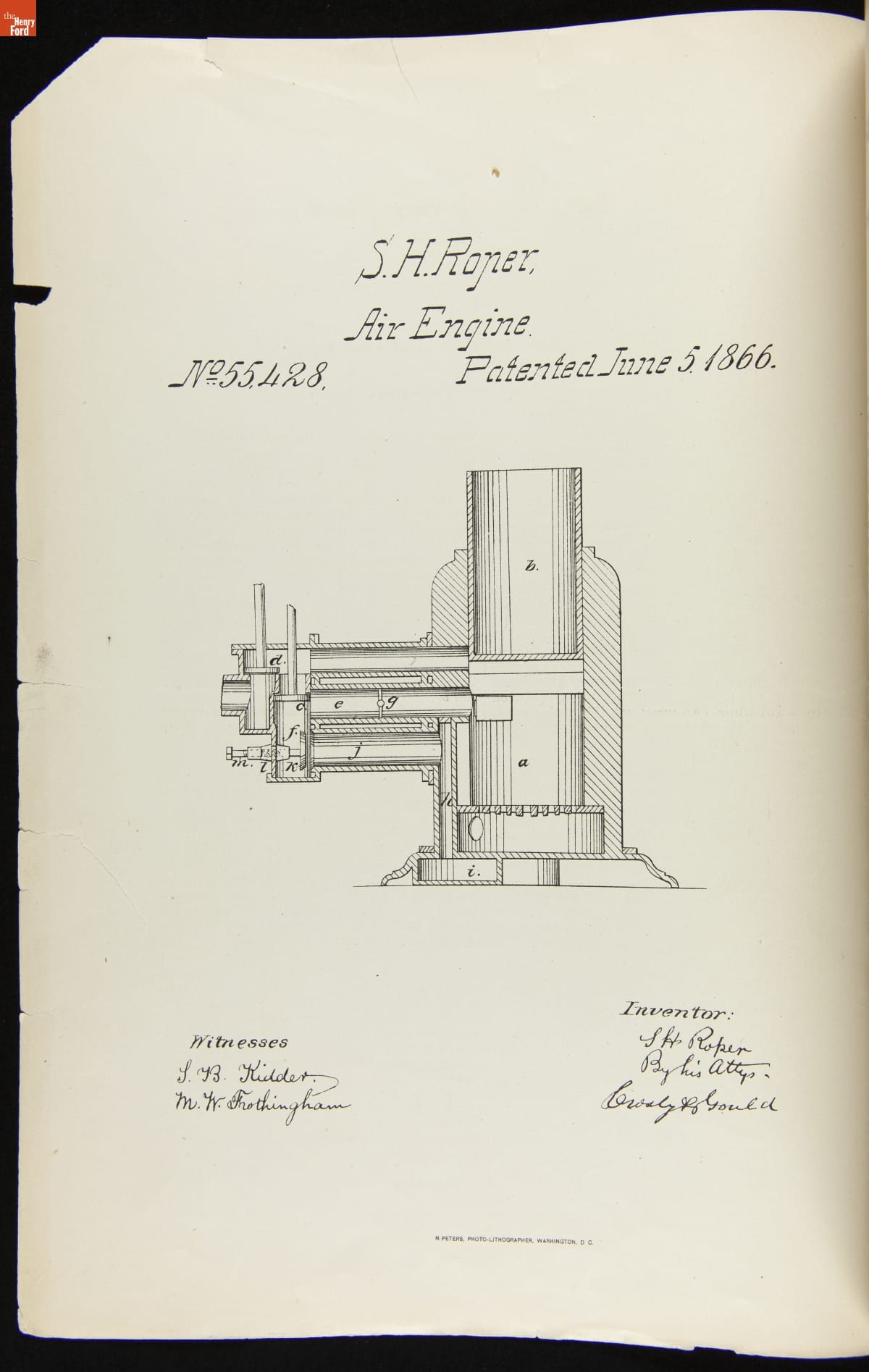
- June 05, 1866
- Collections - Artifact
Improvement in Hot-Air Engines, S. H. Roper, Specification Forming Part of Letters Patent No. 55,428, June 5, 1866
Massachusetts machinist Sylvester Roper patented improvements to a hot air engine that produced motion by harnessing the expansion and contraction of warming and cooling air. This patent covers one of those improvements. Roper also built at least seven steam-powered carriages and two steam-powered motorcycles years before automobiles -- as we know them -- appeared.
- U.S. Patent 1,521,287 for the Acoustic Apparatus (Osophone), Granted to Hugo Gernsback December 30, 1924 -
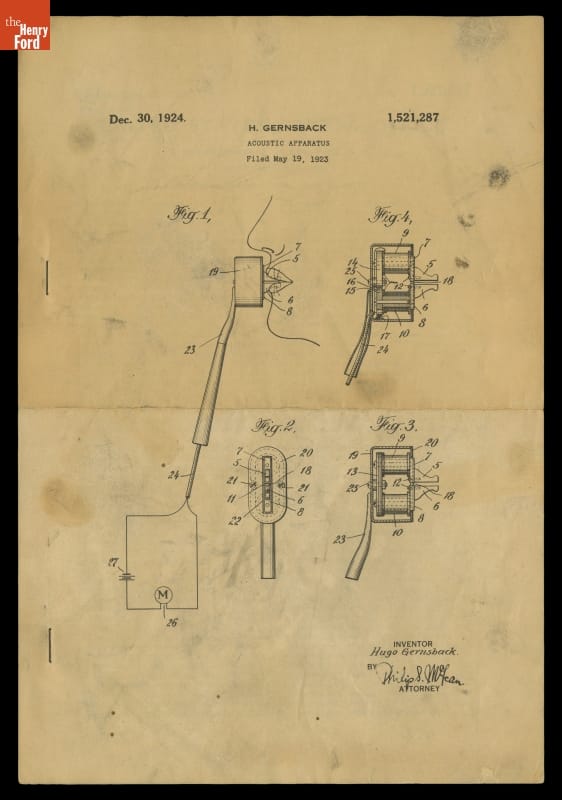
- December 30, 1924
- Collections - Artifact
U.S. Patent 1,521,287 for the Acoustic Apparatus (Osophone), Granted to Hugo Gernsback December 30, 1924
- Improvement in Hot-Air Engines, S. H. Roper, Specification Forming Part of Letters Patent No. 34,723, March 18, 1862 - Massachusetts machinist Sylvester Roper patented improvements to a hot air engine that produced motion by harnessing the expansion and contraction of warming and cooling air. This patent covers one of those improvements. Roper also built at least seven steam-powered carriages and two steam-powered motorcycles years before automobiles -- as we know them -- appeared.
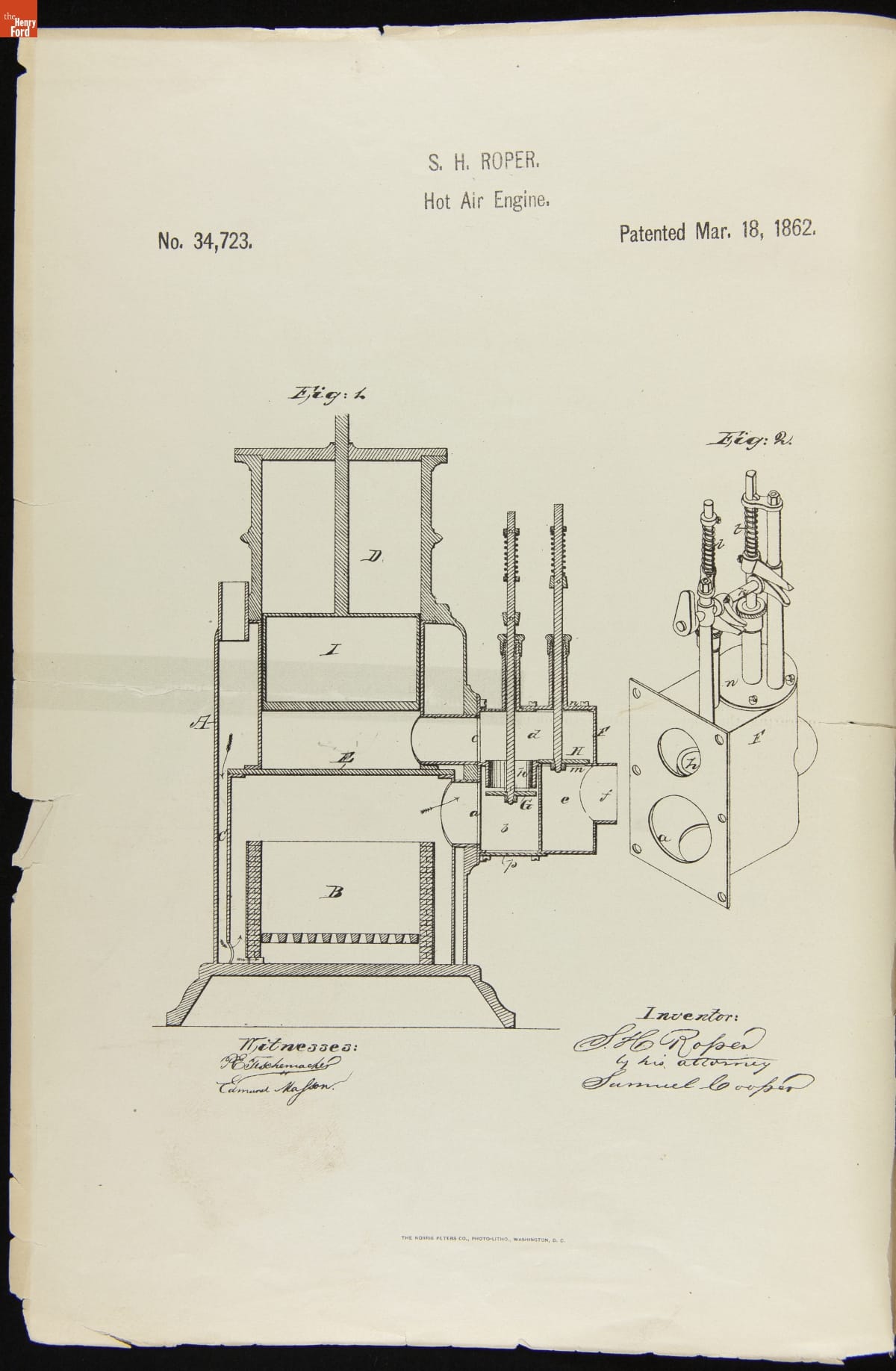
- March 18, 1862
- Collections - Artifact
Improvement in Hot-Air Engines, S. H. Roper, Specification Forming Part of Letters Patent No. 34,723, March 18, 1862
Massachusetts machinist Sylvester Roper patented improvements to a hot air engine that produced motion by harnessing the expansion and contraction of warming and cooling air. This patent covers one of those improvements. Roper also built at least seven steam-powered carriages and two steam-powered motorcycles years before automobiles -- as we know them -- appeared.
- Diagram for Radio Beacon Patent, #1,937,876, Granted December 5, 1933 - The radio beacon may be Henry Ford's most important contribution to aviation. Early pilots depended on landmarks, preventing reliable navigation in bad weather. Ford's engineers developed a radio beacon that simultaneously transmitted the Morse code letter "A" (dot-dash) in one direction and the letter "N" (dash-dot) in another. The pilot steered until the separate signals merged into a steady hum.
- December 05, 1933
- Collections - Artifact
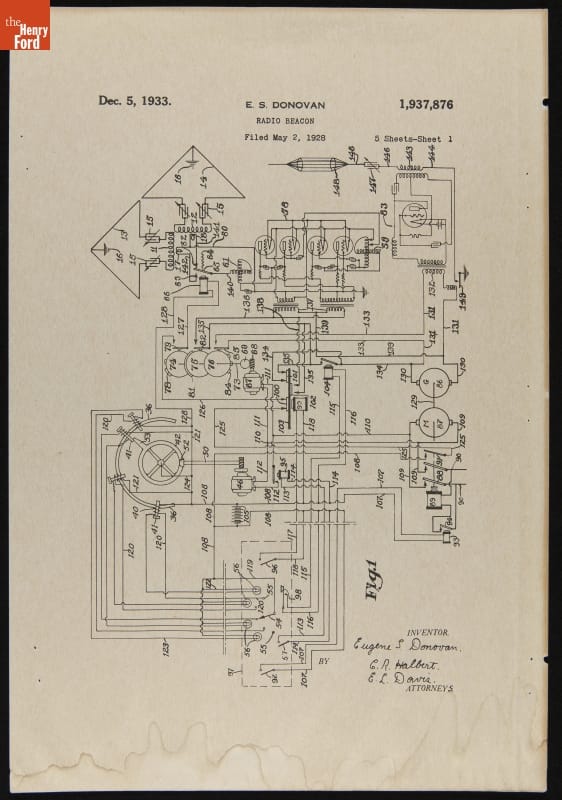
Diagram for Radio Beacon Patent, #1,937,876, Granted December 5, 1933
The radio beacon may be Henry Ford's most important contribution to aviation. Early pilots depended on landmarks, preventing reliable navigation in bad weather. Ford's engineers developed a radio beacon that simultaneously transmitted the Morse code letter "A" (dot-dash) in one direction and the letter "N" (dash-dot) in another. The pilot steered until the separate signals merged into a steady hum.
- Diagrams for Radio Beacon Patent, #1,937,876, Granted December 5, 1933 - The radio beacon may be Henry Ford's most important contribution to aviation. Early pilots depended on landmarks, preventing reliable navigation in bad weather. Ford's engineers developed a radio beacon that simultaneously transmitted the Morse code letter "A" (dot-dash) in one direction and the letter "N" (dash-dot) in another. The pilot steered until the separate signals merged into a steady hum.
- December 05, 1933
- Collections - Artifact
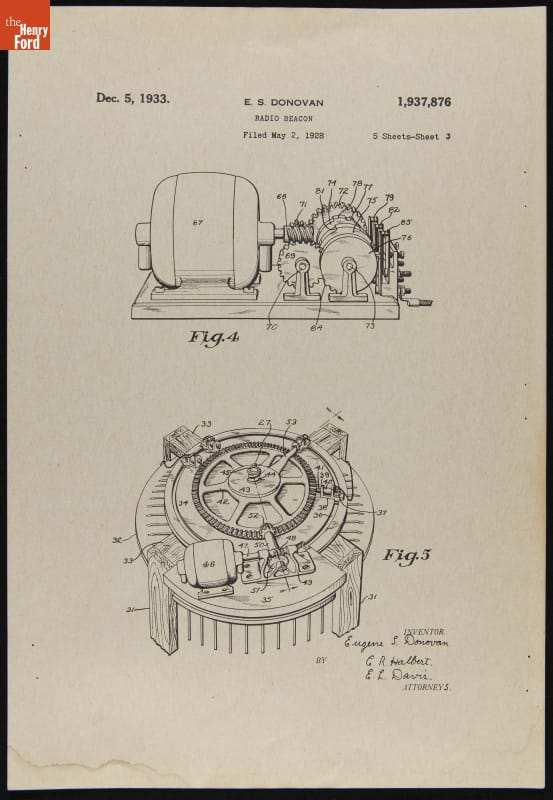
Diagrams for Radio Beacon Patent, #1,937,876, Granted December 5, 1933
The radio beacon may be Henry Ford's most important contribution to aviation. Early pilots depended on landmarks, preventing reliable navigation in bad weather. Ford's engineers developed a radio beacon that simultaneously transmitted the Morse code letter "A" (dot-dash) in one direction and the letter "N" (dash-dot) in another. The pilot steered until the separate signals merged into a steady hum.