
Search
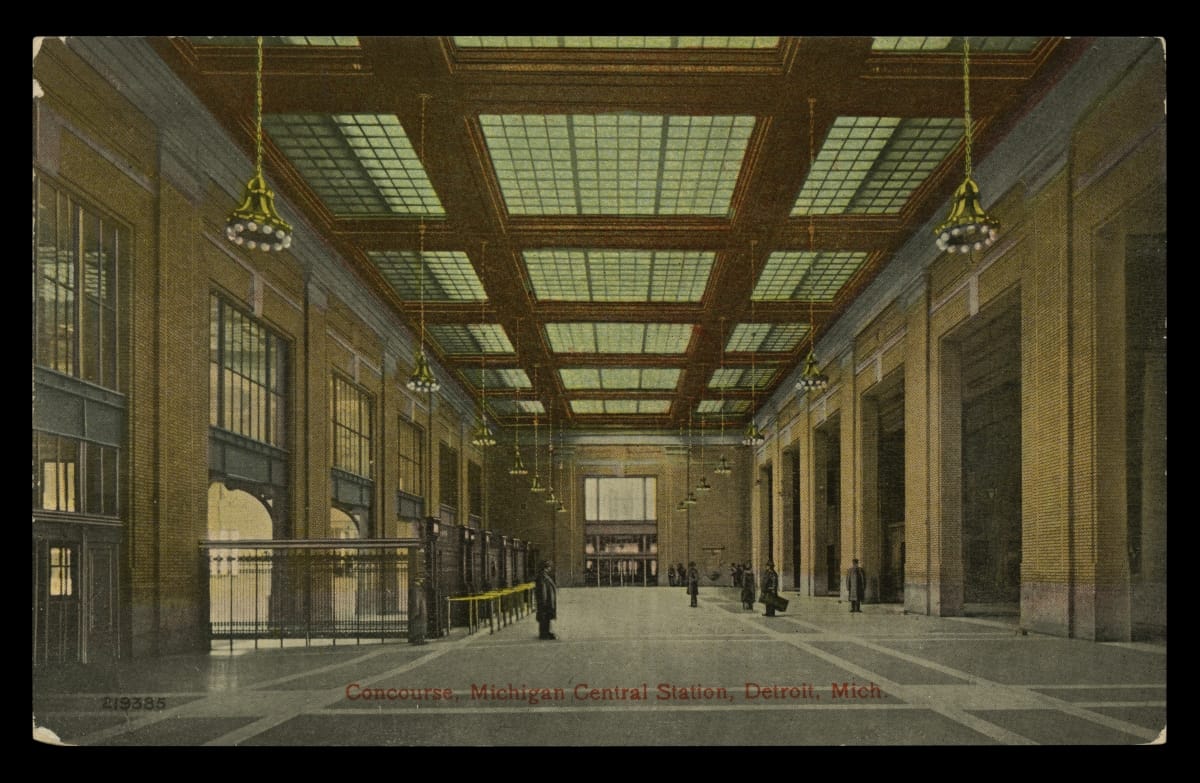
- "Concourse, Michigan Central Station, Detroit, Mich.," 1914 - In December 1913, the Michigan Central Railroad opened a new $2.5 million passenger station in Detroit's Corktown neighborhood. Its grand concourse included women's and men's waiting rooms, a barbershop, a reading room, a drug store, and three restaurants. The station's fortunes declined with those of railroad passenger service following World War II. It hosted its last passenger train in 1988.
- 1914
- Collections - Artifact
"Concourse, Michigan Central Station, Detroit, Mich.," 1914
In December 1913, the Michigan Central Railroad opened a new $2.5 million passenger station in Detroit's Corktown neighborhood. Its grand concourse included women's and men's waiting rooms, a barbershop, a reading room, a drug store, and three restaurants. The station's fortunes declined with those of railroad passenger service following World War II. It hosted its last passenger train in 1988.
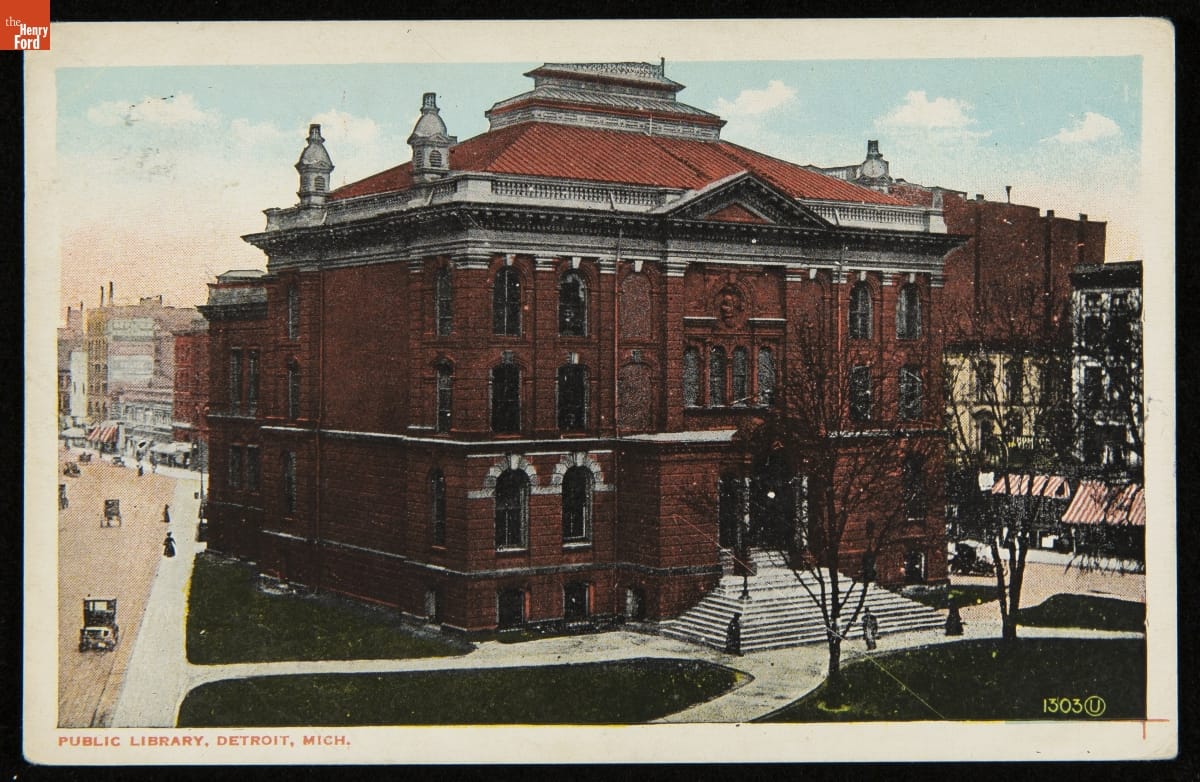
- Postcard, "Public Library, Detroit, Mich.," circa 1905 - Until the 20th century, most book collections were not available to everyday Americans. They were either privately owned, accessible only by paid subscription, or stored away haphazardly. For communities with dedicated public library buildings (often among the most imposing structures in town), they were sources of civic pride. Built to house the Detroit, Michigan, library, this structure opened in 1877.
- circa 1905
- Collections - Artifact
Postcard, "Public Library, Detroit, Mich.," circa 1905
Until the 20th century, most book collections were not available to everyday Americans. They were either privately owned, accessible only by paid subscription, or stored away haphazardly. For communities with dedicated public library buildings (often among the most imposing structures in town), they were sources of civic pride. Built to house the Detroit, Michigan, library, this structure opened in 1877.
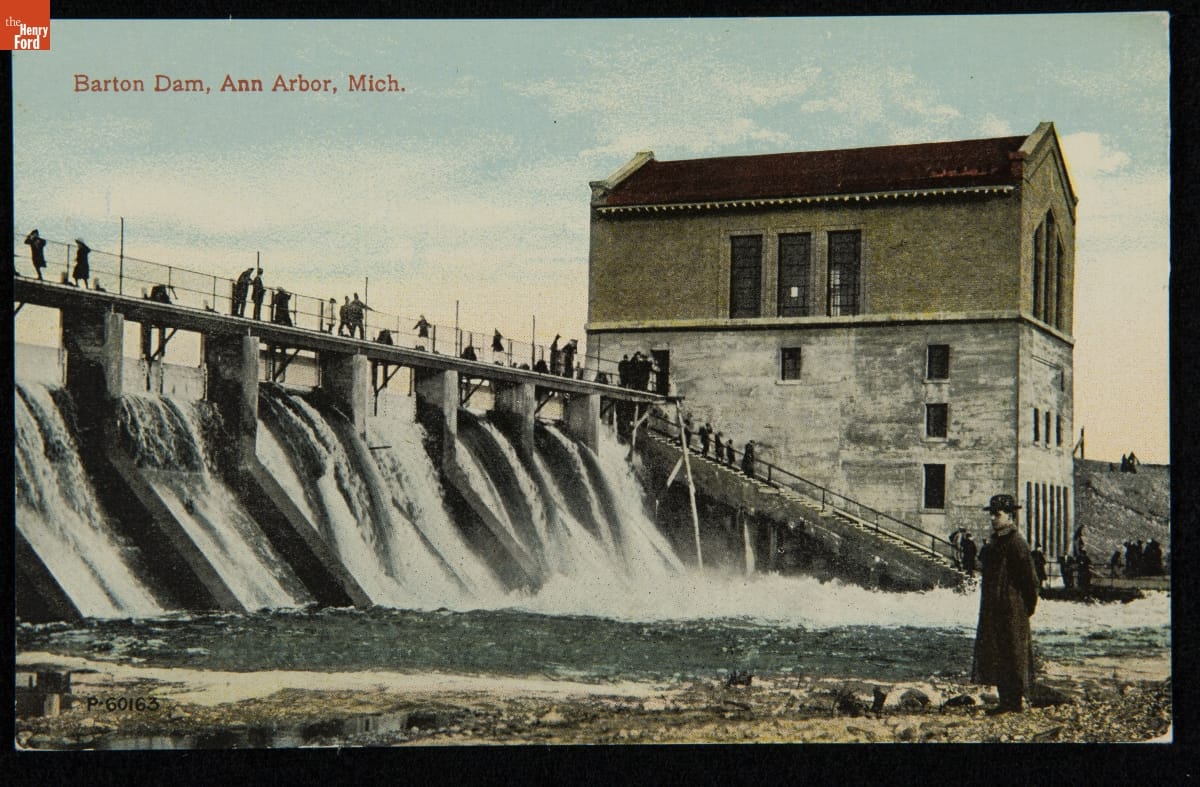
- "Barton Dam, Ann Arbor, Michigan," 1914 -
- 1914
- Collections - Artifact
"Barton Dam, Ann Arbor, Michigan," 1914
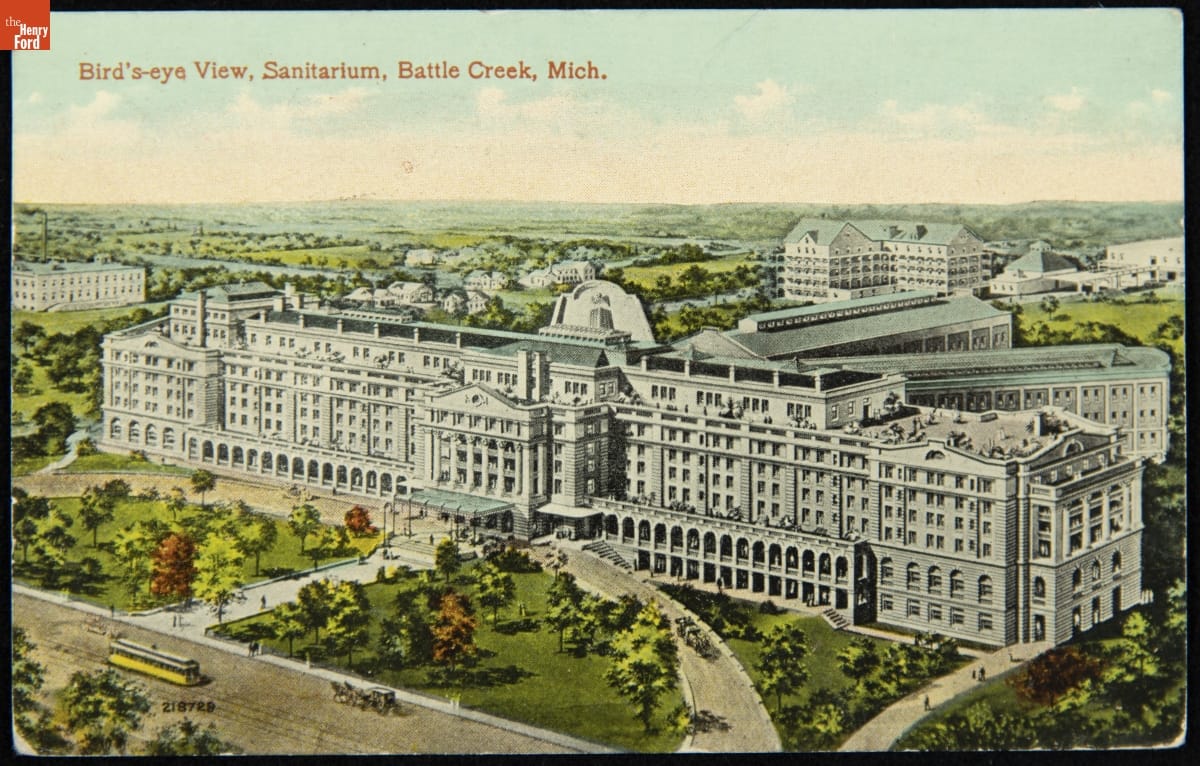
- Battle Creek Sanitarium, Battle Creek, Michigan, circa 1915 - Dr. John Harvey Kellogg became director of the Battle Creek Sanitarium in 1876. Under his leadership, the "San" grew into a leading health resort with treatment programs focused on vegetarianism, hydrotherapy, exercise, and fresh air. The facility survived a 1902 fire, but it couldn't endure the decline in its well-to-do clientele begun by the Great Depression.
- October 26, 1915
- Collections - Artifact
Battle Creek Sanitarium, Battle Creek, Michigan, circa 1915
Dr. John Harvey Kellogg became director of the Battle Creek Sanitarium in 1876. Under his leadership, the "San" grew into a leading health resort with treatment programs focused on vegetarianism, hydrotherapy, exercise, and fresh air. The facility survived a 1902 fire, but it couldn't endure the decline in its well-to-do clientele begun by the Great Depression.
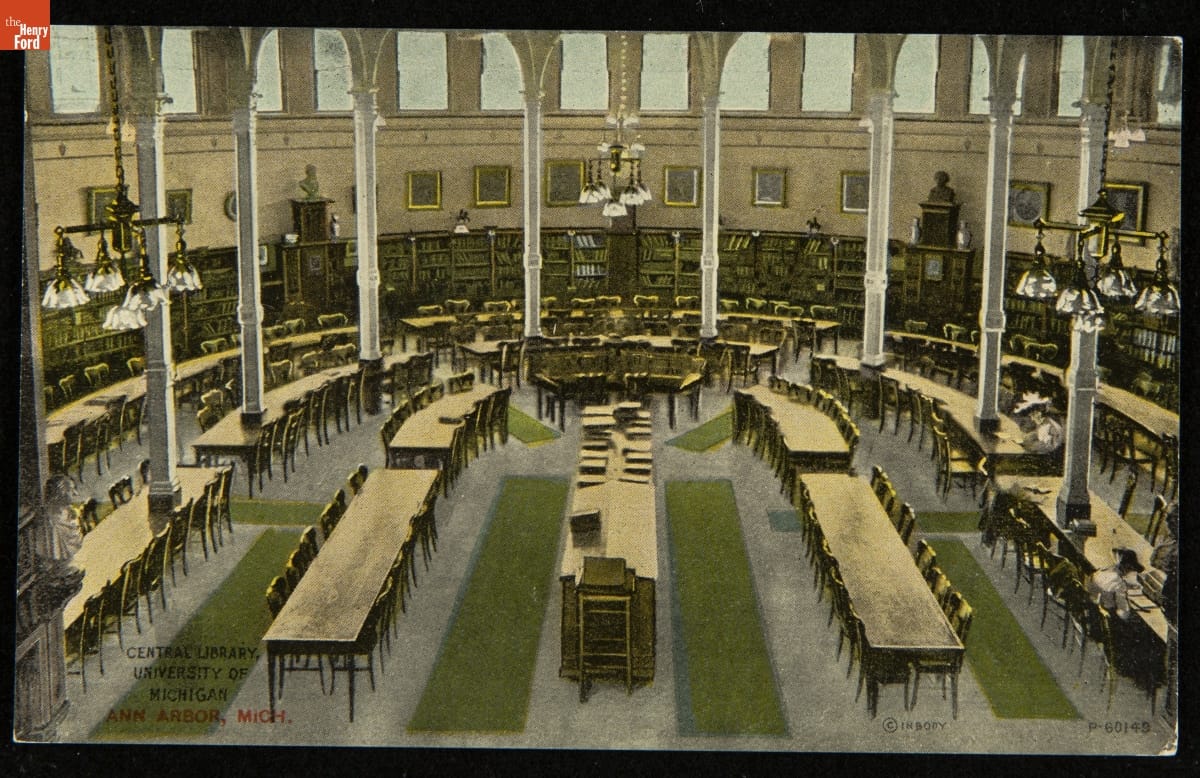
- Postcard, "Central Library, Univeristy of Michigan, Ann Arbor, Mich.," 1914 -
- 1914
- Collections - Artifact
Postcard, "Central Library, Univeristy of Michigan, Ann Arbor, Mich.," 1914
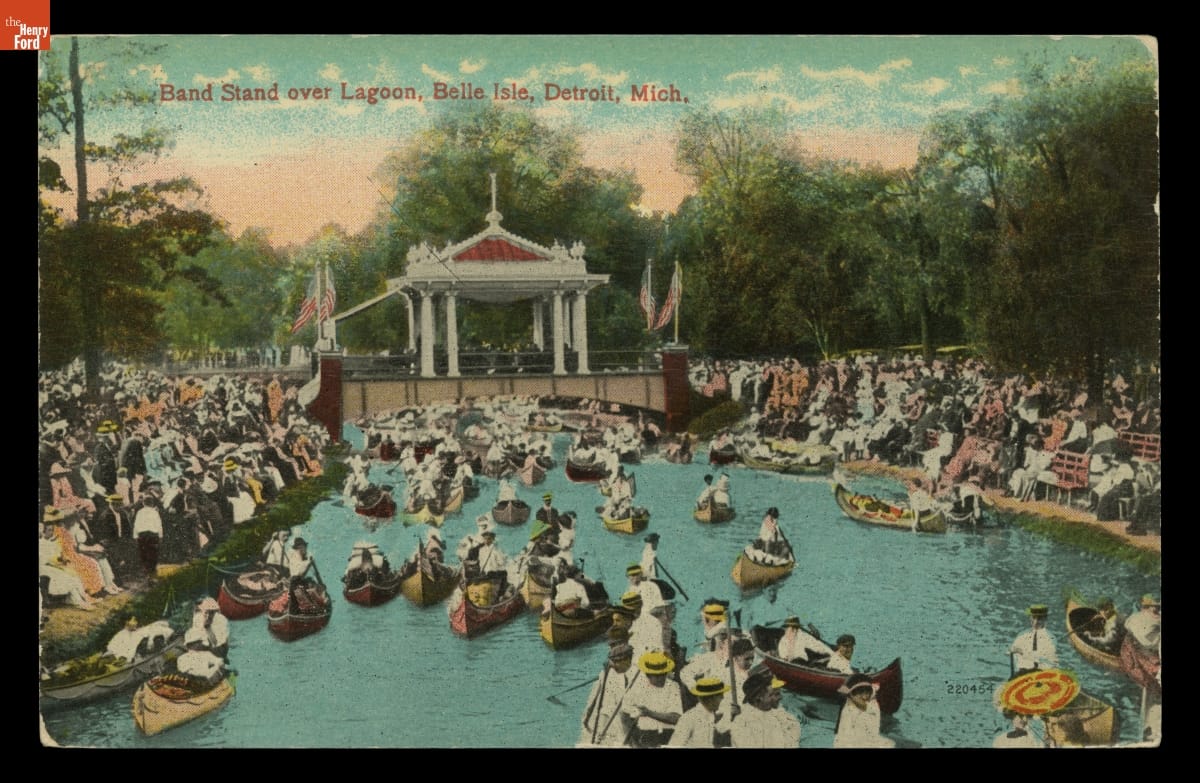
- "Band Stand over Lagoon, Belle Isle, Detroit, Mich.," circa 1915 - Belle Isle is the largest municipal island park in the United States. Fredrick Law Olmsted, the father of landscape architecture, designed portions of the park. The City of Detroit opened Belle Isle to the public in 1880; over 260,000 people visited the park in the summer of 1882, proving its immediate popularity. It has remained among Michigan's most visited parks.
- circa 1915
- Collections - Artifact
"Band Stand over Lagoon, Belle Isle, Detroit, Mich.," circa 1915
Belle Isle is the largest municipal island park in the United States. Fredrick Law Olmsted, the father of landscape architecture, designed portions of the park. The City of Detroit opened Belle Isle to the public in 1880; over 260,000 people visited the park in the summer of 1882, proving its immediate popularity. It has remained among Michigan's most visited parks.