
Search
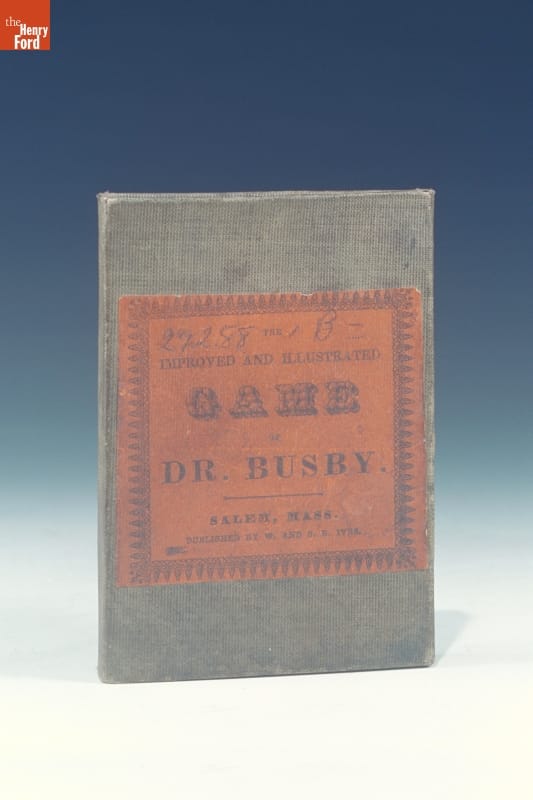
- Dr. Busby Game, 1843-1850 - Anne Abbott created the card game Dr. Busby in the 1840s. Produced by W. & S. B. Ives, it became one of the most popular card games of the mid-1800s. Hand-colored cards illustrate various people and scenes. Players used their memories to capture these cards from other players. When one player had all the cards they won.
- 1843-1850
- Collections - Artifact
Dr. Busby Game, 1843-1850
Anne Abbott created the card game Dr. Busby in the 1840s. Produced by W. & S. B. Ives, it became one of the most popular card games of the mid-1800s. Hand-colored cards illustrate various people and scenes. Players used their memories to capture these cards from other players. When one player had all the cards they won.
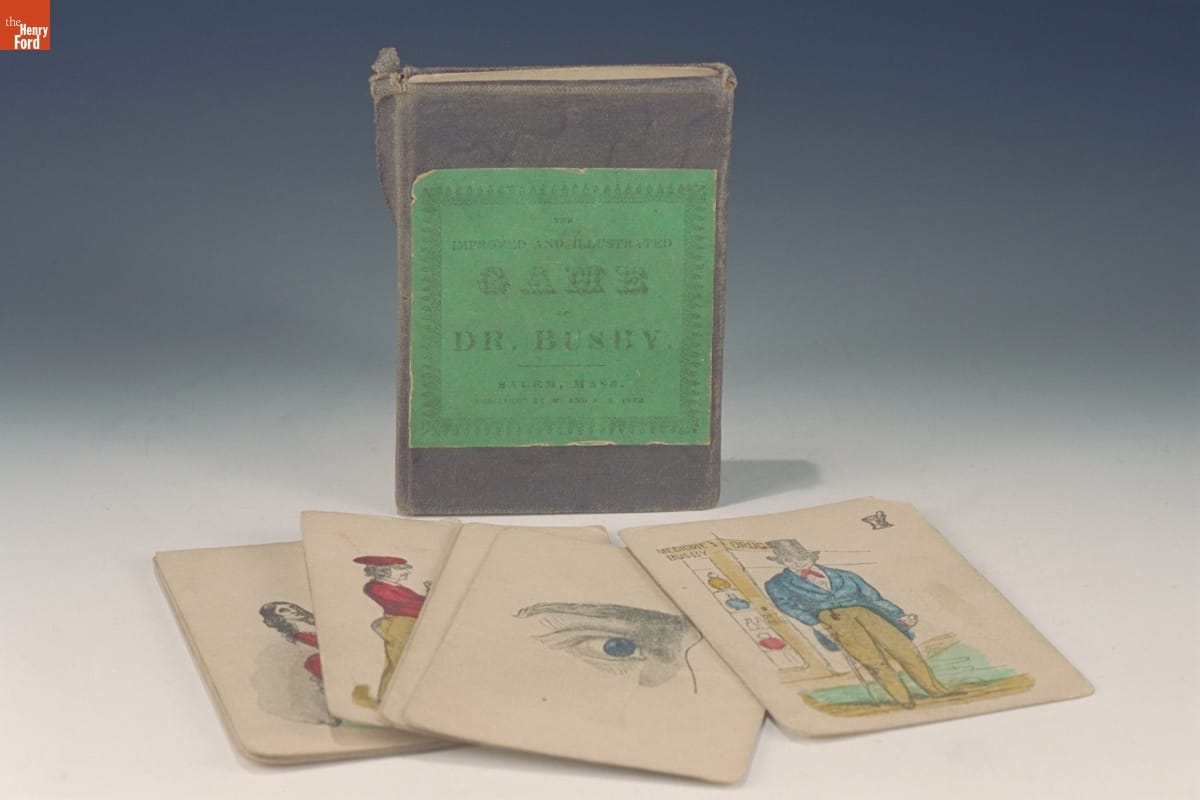
- The Improved and Illustrated Game of Dr. Busby, 1843-1850 - Anne Abbott created the card game Dr. Busby in the 1840s. Produced by W. & S. B. Ives, it became one of the most popular card games of the mid-1800s. Hand-colored cards illustrate various people and scenes. Players used their memories to capture these cards from other players. When one player had all the cards they won.
- 1843-1850
- Collections - Artifact
The Improved and Illustrated Game of Dr. Busby, 1843-1850
Anne Abbott created the card game Dr. Busby in the 1840s. Produced by W. & S. B. Ives, it became one of the most popular card games of the mid-1800s. Hand-colored cards illustrate various people and scenes. Players used their memories to capture these cards from other players. When one player had all the cards they won.
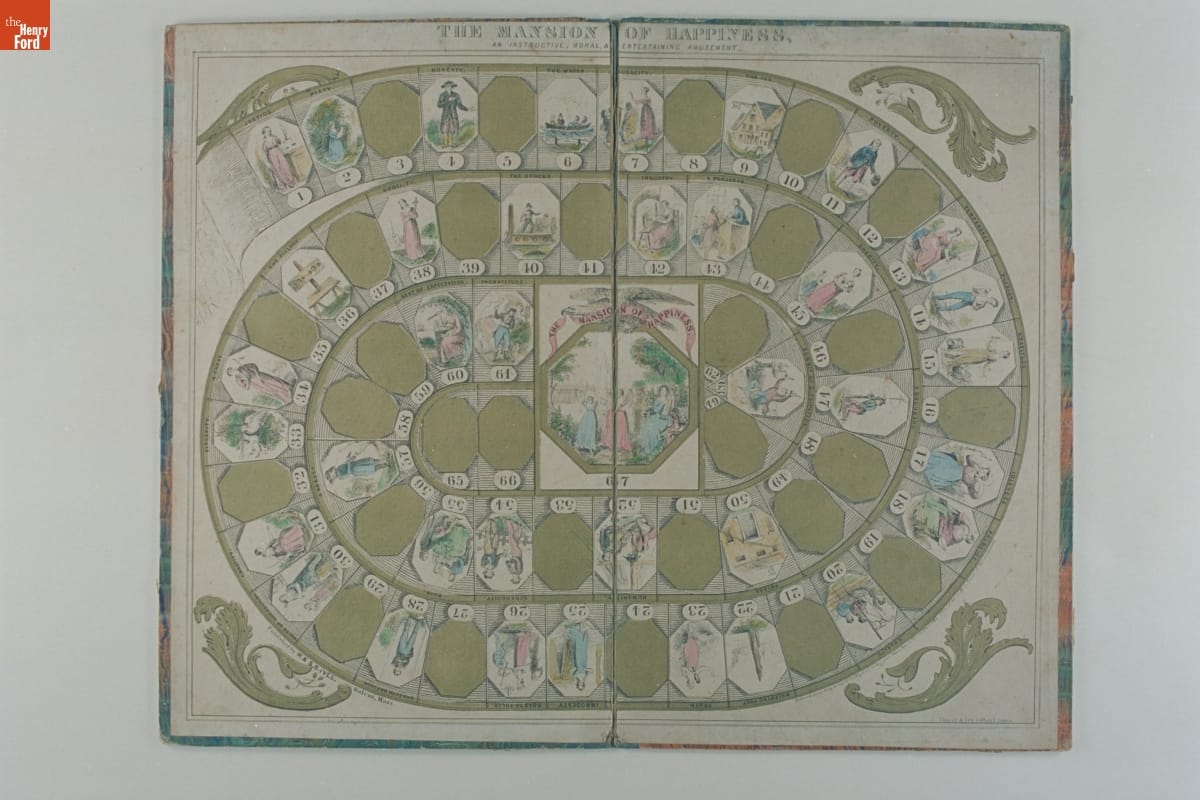
- Mansion of Happiness Gameboard, 1845-1880 - The 19th-century game "The Mansion of Happiness" taught children moral lessons and instilled values of thrift, honesty and industry as they journeyed around the board. Developed in the 1840s by Anne W. Abbott, a daughter of a New England clergyman, the game remained popular throughout the 1800s. Versions and copies of this moral-lessons game were made well into the 1900s.
- 1845-1880
- Collections - Artifact
Mansion of Happiness Gameboard, 1845-1880
The 19th-century game "The Mansion of Happiness" taught children moral lessons and instilled values of thrift, honesty and industry as they journeyed around the board. Developed in the 1840s by Anne W. Abbott, a daughter of a New England clergyman, the game remained popular throughout the 1800s. Versions and copies of this moral-lessons game were made well into the 1900s.