
Search
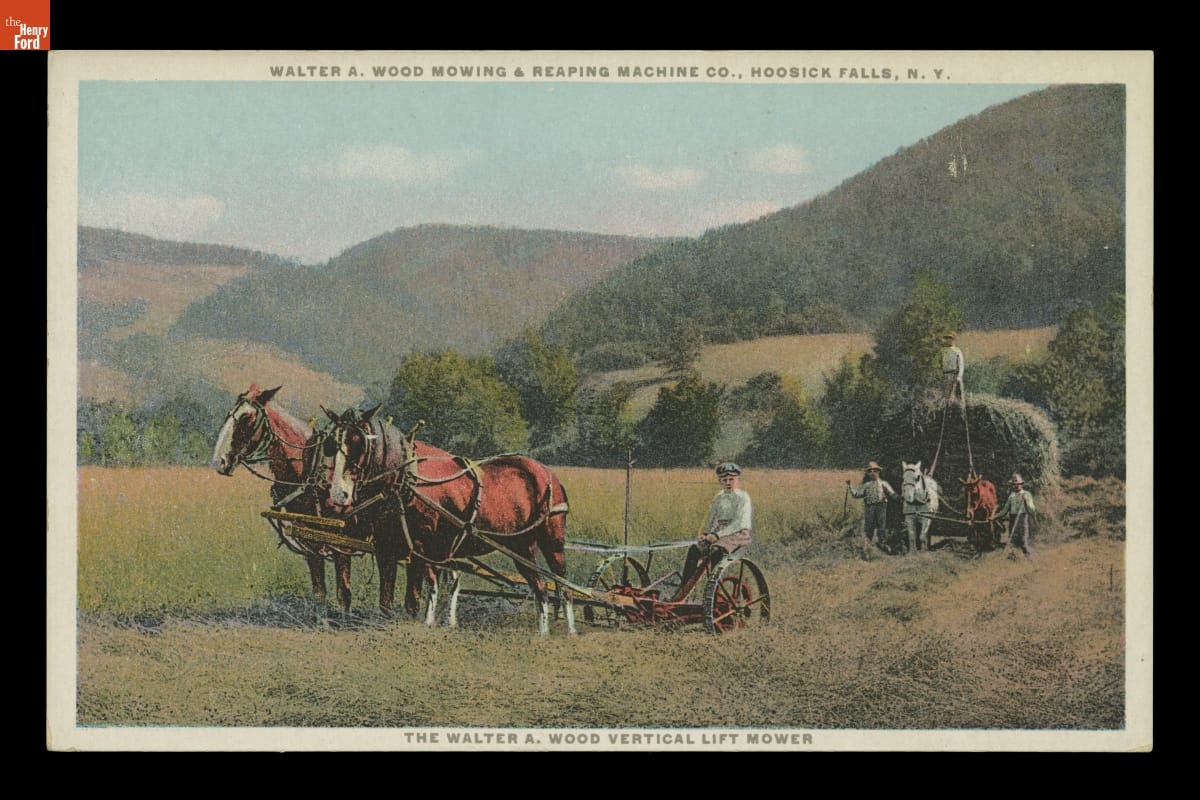
- "The Walter A. Wood Vertical Lift Mower," circa 1905 - From 1895 to 1924, the Detroit Publishing Company was one of the major image publishers in the world. It had a wide-ranging stock of original photographs, many of which were colored using the company's patented "Phostint" process. Popular "Phostint" postcards, the Detroit Publishing Company claimed, were delicately "executed in Nature's Coloring" to be truthful, tasteful, beautiful, and educational.
- circa 1905
- Collections - Artifact
"The Walter A. Wood Vertical Lift Mower," circa 1905
From 1895 to 1924, the Detroit Publishing Company was one of the major image publishers in the world. It had a wide-ranging stock of original photographs, many of which were colored using the company's patented "Phostint" process. Popular "Phostint" postcards, the Detroit Publishing Company claimed, were delicately "executed in Nature's Coloring" to be truthful, tasteful, beautiful, and educational.
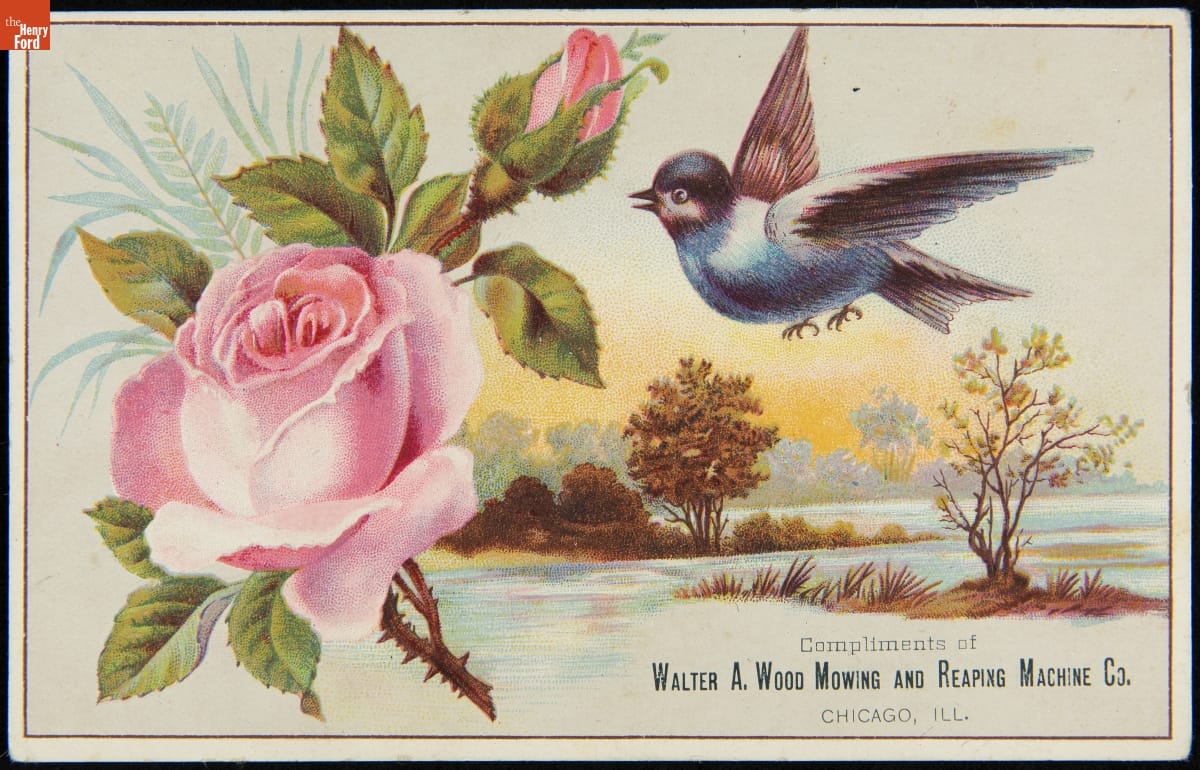
- Trade Card for the Binding Harvester, Walter A. Wood Mowing and Reaping Machine Co., 1887-1900 - In the last third of the nineteenth century, an unprecedented variety of consumer goods and services flooded the American market. Advertisers, armed with new methods of color printing, bombarded potential customers with trade cards. Americans enjoyed and often saved the vibrant little advertisements found in product packages or distributed by local merchants. Many survive as historical records of commercialism in the United States.
- 1887-1900
- Collections - Artifact
Trade Card for the Binding Harvester, Walter A. Wood Mowing and Reaping Machine Co., 1887-1900
In the last third of the nineteenth century, an unprecedented variety of consumer goods and services flooded the American market. Advertisers, armed with new methods of color printing, bombarded potential customers with trade cards. Americans enjoyed and often saved the vibrant little advertisements found in product packages or distributed by local merchants. Many survive as historical records of commercialism in the United States.
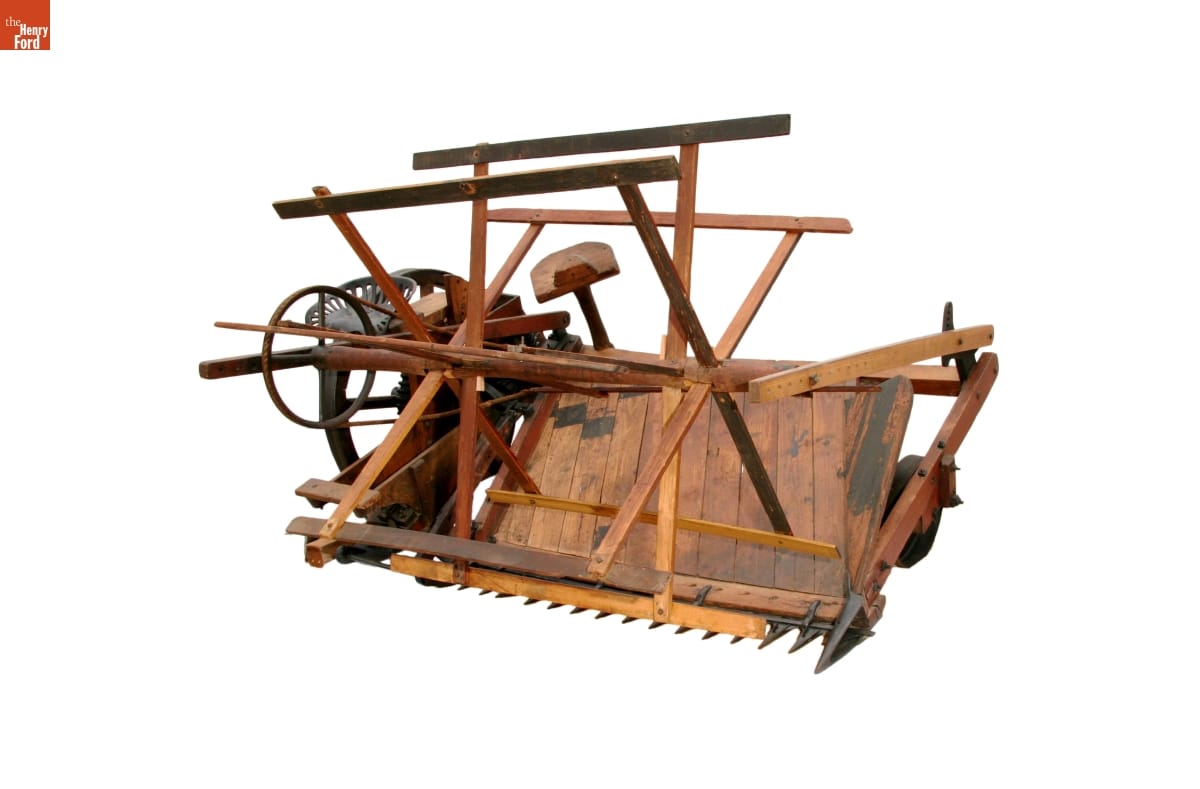
- Manny's Combined Reaper and Mower, circa 1854 - John Manny developed this reaper in 1853 in Rockford, Illinois. It was the first to successfully challenge the Cyrus McCormick Company's dominance in reaper manufacture. Sued for patent infringement by McCormick in 1854, Manny won, paving the way for other manufacturers, and a broad expansion of the industry. Included in Manny's legal team was a young Illinois lawyer, Abraham Lincoln.
- circa 1854
- Collections - Artifact
Manny's Combined Reaper and Mower, circa 1854
John Manny developed this reaper in 1853 in Rockford, Illinois. It was the first to successfully challenge the Cyrus McCormick Company's dominance in reaper manufacture. Sued for patent infringement by McCormick in 1854, Manny won, paving the way for other manufacturers, and a broad expansion of the industry. Included in Manny's legal team was a young Illinois lawyer, Abraham Lincoln.
- Twine Binder, circa 1880 -
- circa 1880
- Collections - Artifact
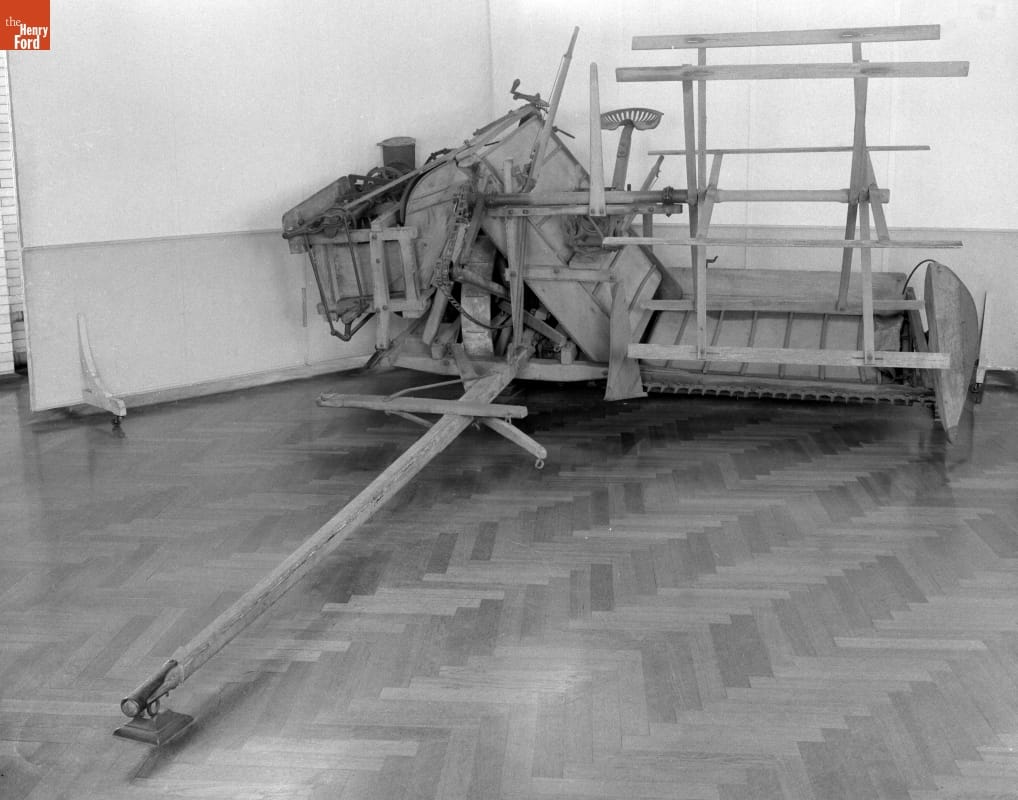
Twine Binder, circa 1880
- Trade Card for the Binding Harvester, Walter A. Wood Mowing and Reaping Machine Co., 1887-1900 - In the last third of the nineteenth century, an unprecedented variety of consumer goods and services flooded the American market. Advertisers, armed with new methods of color printing, bombarded potential customers with trade cards. Americans enjoyed and often saved the vibrant little advertisements found in product packages or distributed by local merchants. Many survive as historical records of commercialism in the United States.
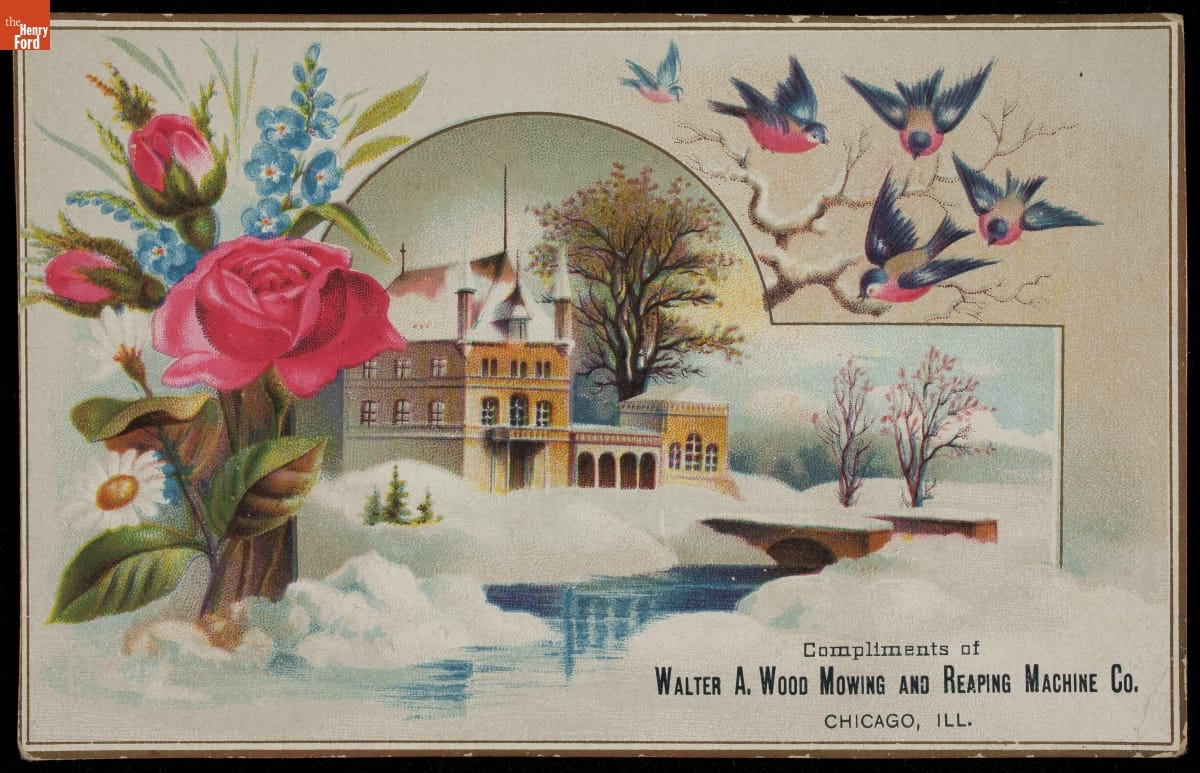
- 1887-1900
- Collections - Artifact
Trade Card for the Binding Harvester, Walter A. Wood Mowing and Reaping Machine Co., 1887-1900
In the last third of the nineteenth century, an unprecedented variety of consumer goods and services flooded the American market. Advertisers, armed with new methods of color printing, bombarded potential customers with trade cards. Americans enjoyed and often saved the vibrant little advertisements found in product packages or distributed by local merchants. Many survive as historical records of commercialism in the United States.
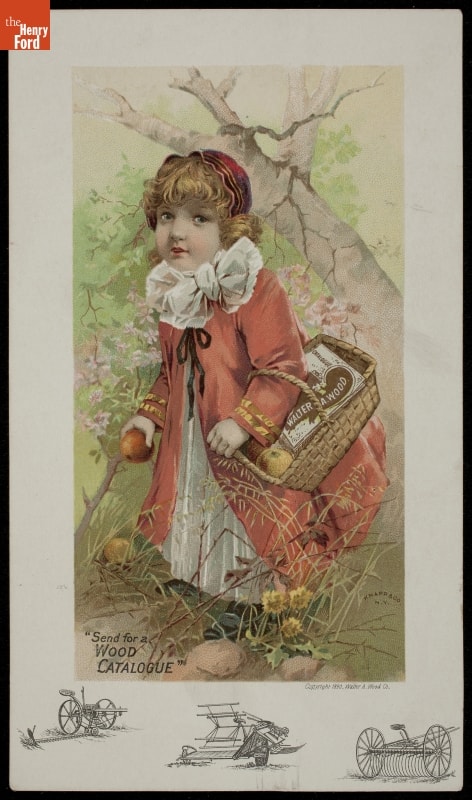
- Trade Card for Walter A. Wood Mowers and Reapers, Walter A. Wood Mowing and Reaping Machine Co., 1890 - In the last third of the nineteenth century, an unprecedented variety of consumer goods and services flooded the American market. Advertisers, armed with new methods of color printing, bombarded potential customers with trade cards. Americans enjoyed and often saved the vibrant little advertisements found in product packages or distributed by local merchants. Many survive as historical records of commercialism in the United States.
- 1890
- Collections - Artifact
Trade Card for Walter A. Wood Mowers and Reapers, Walter A. Wood Mowing and Reaping Machine Co., 1890
In the last third of the nineteenth century, an unprecedented variety of consumer goods and services flooded the American market. Advertisers, armed with new methods of color printing, bombarded potential customers with trade cards. Americans enjoyed and often saved the vibrant little advertisements found in product packages or distributed by local merchants. Many survive as historical records of commercialism in the United States.
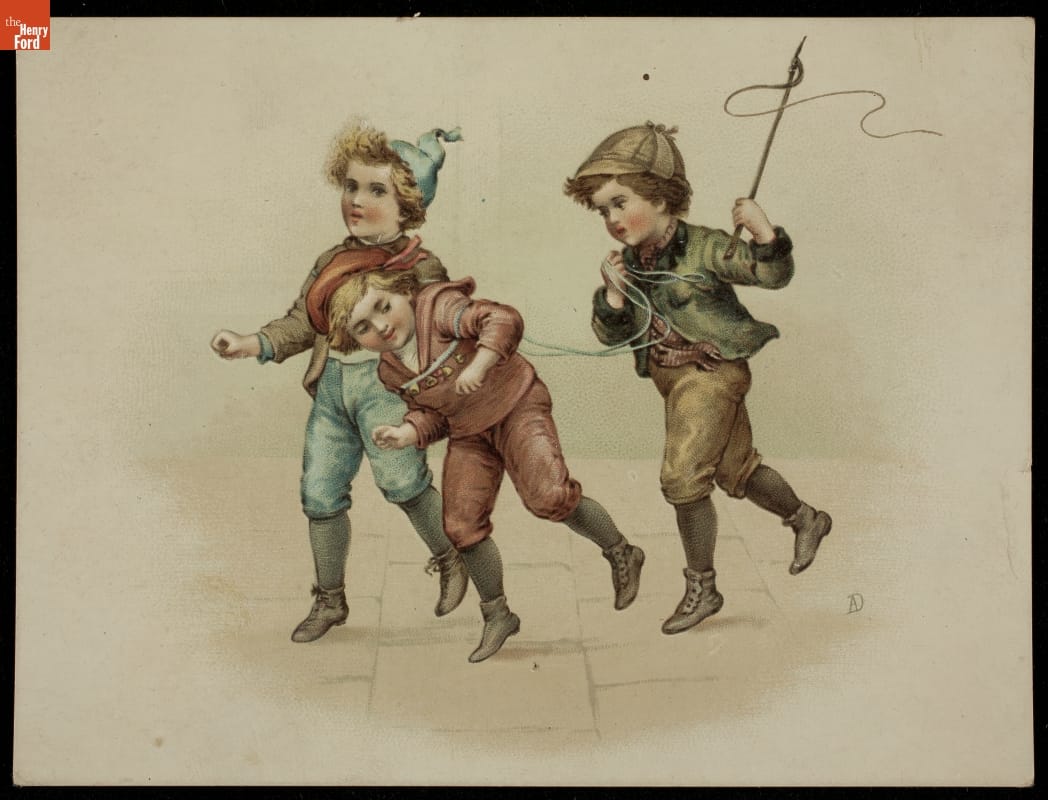
- Trade Card for Machinery, Walter A. Wood Mowing and Reaping Machine Co., 1880-1900 - In the last third of the nineteenth century, an unprecedented variety of consumer goods and services flooded the American market. Advertisers, armed with new methods of color printing, bombarded potential customers with trade cards. Americans enjoyed and often saved the vibrant little advertisements found in product packages or distributed by local merchants. Many survive as historical records of commercialism in the United States.
- 1880-1900
- Collections - Artifact
Trade Card for Machinery, Walter A. Wood Mowing and Reaping Machine Co., 1880-1900
In the last third of the nineteenth century, an unprecedented variety of consumer goods and services flooded the American market. Advertisers, armed with new methods of color printing, bombarded potential customers with trade cards. Americans enjoyed and often saved the vibrant little advertisements found in product packages or distributed by local merchants. Many survive as historical records of commercialism in the United States.