
Search
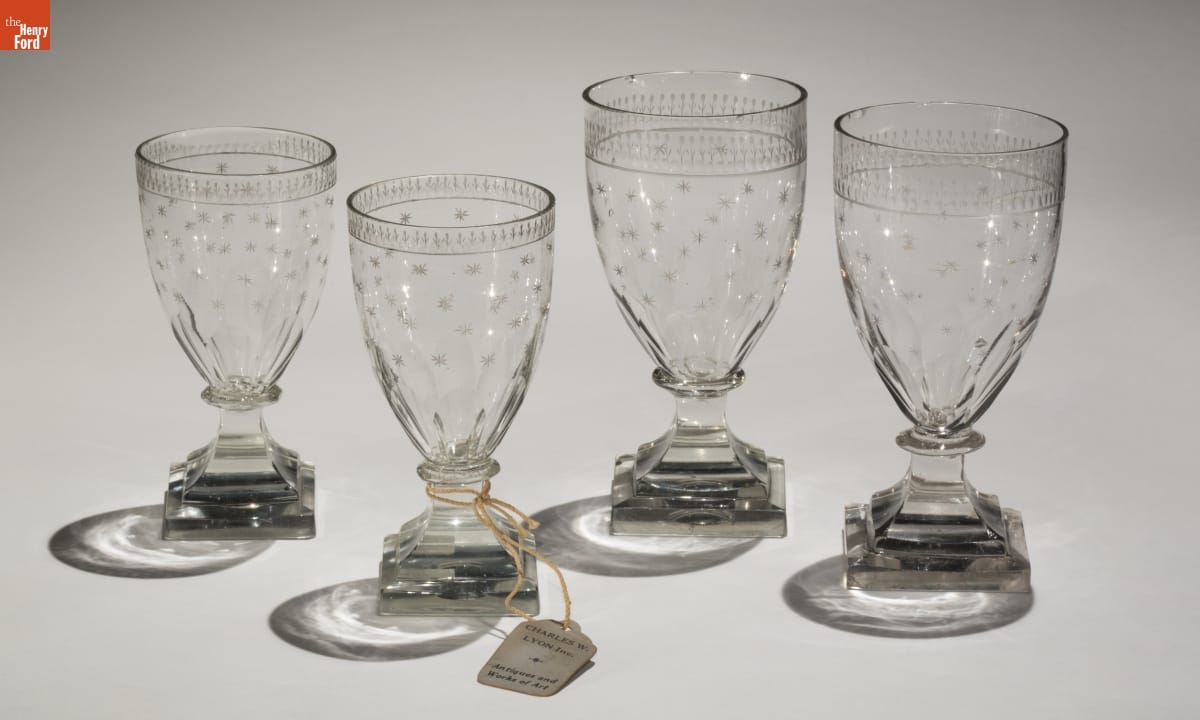
- Footed Drinking Glasses, 1790-1820 - This group of four, square-footed drinking glasses was part of a large set used at a dining table of an elegant American home around 1800. The incised stars surmounted by a horizontal band, above which is a single row of carefully incised botanical forms are typical of the work of Irish glass houses. These details are intended to capture and refract candlelight, creating a dazzling effect.
- 1790-1820
- Collections - Artifact
Footed Drinking Glasses, 1790-1820
This group of four, square-footed drinking glasses was part of a large set used at a dining table of an elegant American home around 1800. The incised stars surmounted by a horizontal band, above which is a single row of carefully incised botanical forms are typical of the work of Irish glass houses. These details are intended to capture and refract candlelight, creating a dazzling effect.
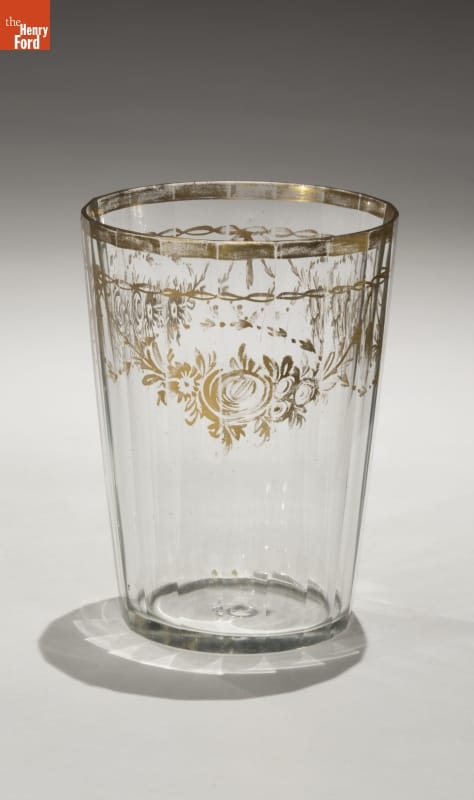
- Tumbler, Waterford Glass Works, circa 1780 - With its faceted sides ribbed rim and delicate gilt overlay decoration this tumbler was created to impress diners at an elegant dinner in the late 18th century. The gold was particularly delicate -- this piece is remarkable in that nearly all survives intact. Tumblers of this sort would have held water, wine or other alcoholic beverages served to America's upper crust.
- circa 1780
- Collections - Artifact
Tumbler, Waterford Glass Works, circa 1780
With its faceted sides ribbed rim and delicate gilt overlay decoration this tumbler was created to impress diners at an elegant dinner in the late 18th century. The gold was particularly delicate -- this piece is remarkable in that nearly all survives intact. Tumblers of this sort would have held water, wine or other alcoholic beverages served to America's upper crust.
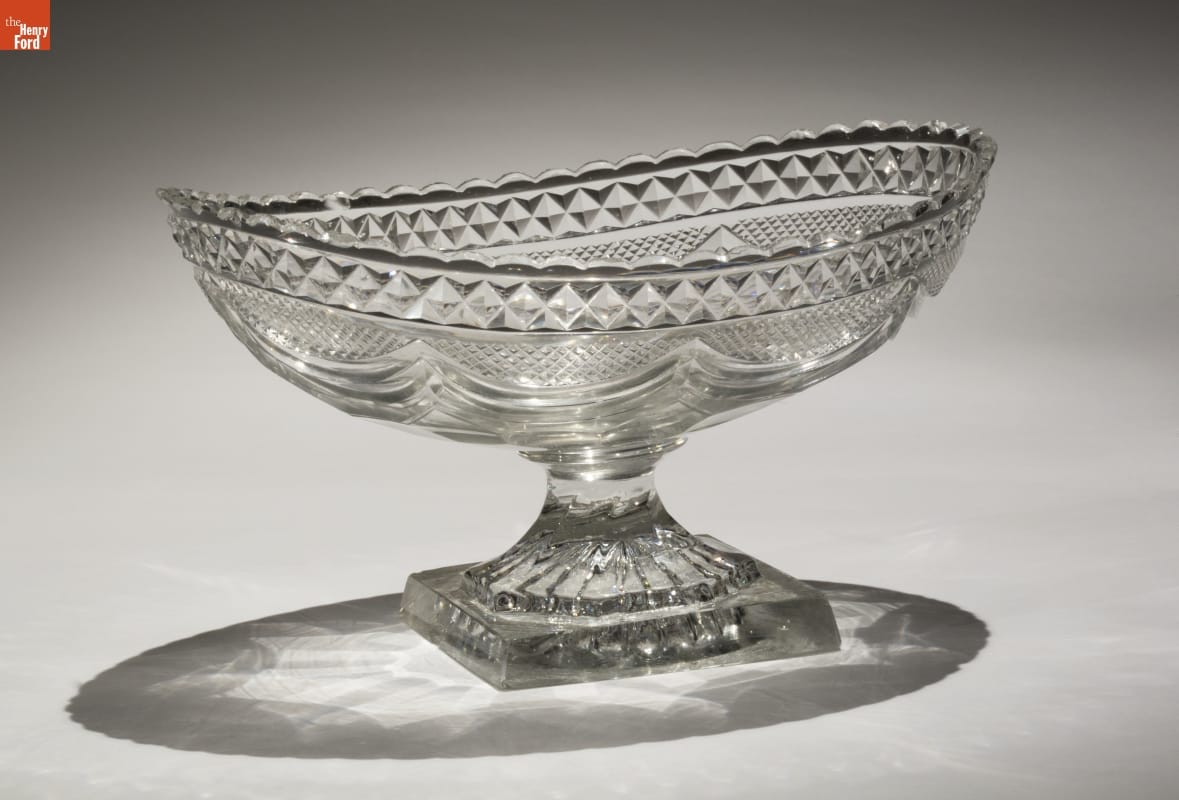
- Compote, 1800-1820 - Oval compotes were used as centerpieces on elaborately laid dining room tables in the late 18th and early 19th centuries. They were usually filled to overflowing with fruit or flowers to underscore the bounty that dinner guests were about to receive. The glass is cut in diamond patterns to capture and disperse the prismatic patterns of light in a candle lit room.
- 1800-1820
- Collections - Artifact
Compote, 1800-1820
Oval compotes were used as centerpieces on elaborately laid dining room tables in the late 18th and early 19th centuries. They were usually filled to overflowing with fruit or flowers to underscore the bounty that dinner guests were about to receive. The glass is cut in diamond patterns to capture and disperse the prismatic patterns of light in a candle lit room.
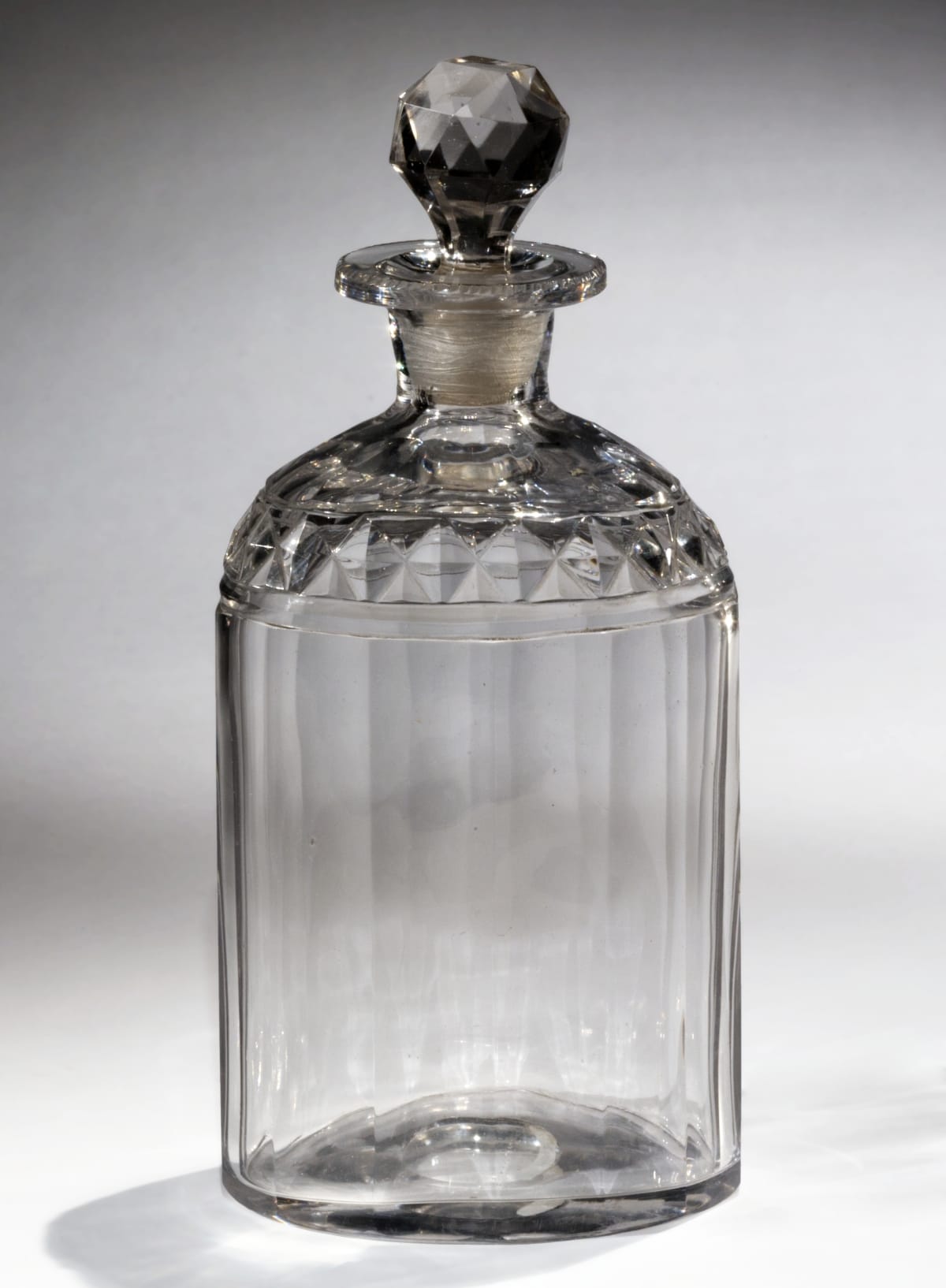
- Pint Bottle, 1750-1780 - In the early 18th century, glassmakers in England and Ireland created exquisite translucent cut glassware known as Anglo-Irish glass. Beginning in the 1780s, Anglo-Irish glassmakers found a ready market in America -- now independent from Britain. Americans loved the dazzling interplay of candlelight and glass in their homes, which showed that Americans could attain interiors as fashionable as those in London.
- 1750-1780
- Collections - Artifact
Pint Bottle, 1750-1780
In the early 18th century, glassmakers in England and Ireland created exquisite translucent cut glassware known as Anglo-Irish glass. Beginning in the 1780s, Anglo-Irish glassmakers found a ready market in America -- now independent from Britain. Americans loved the dazzling interplay of candlelight and glass in their homes, which showed that Americans could attain interiors as fashionable as those in London.
- Epergne, 1807-1808 - Epergnes were used as centerpieces on formal dining room tables. During a meal they could hold sweetmeats or fruit. At other times the epergne may be festooned with flowers as a decorative piece. This object descended through the Wichicote family of Britain, whose motto, "Juste et Droite" meaning just and correct, is engraved on the base.
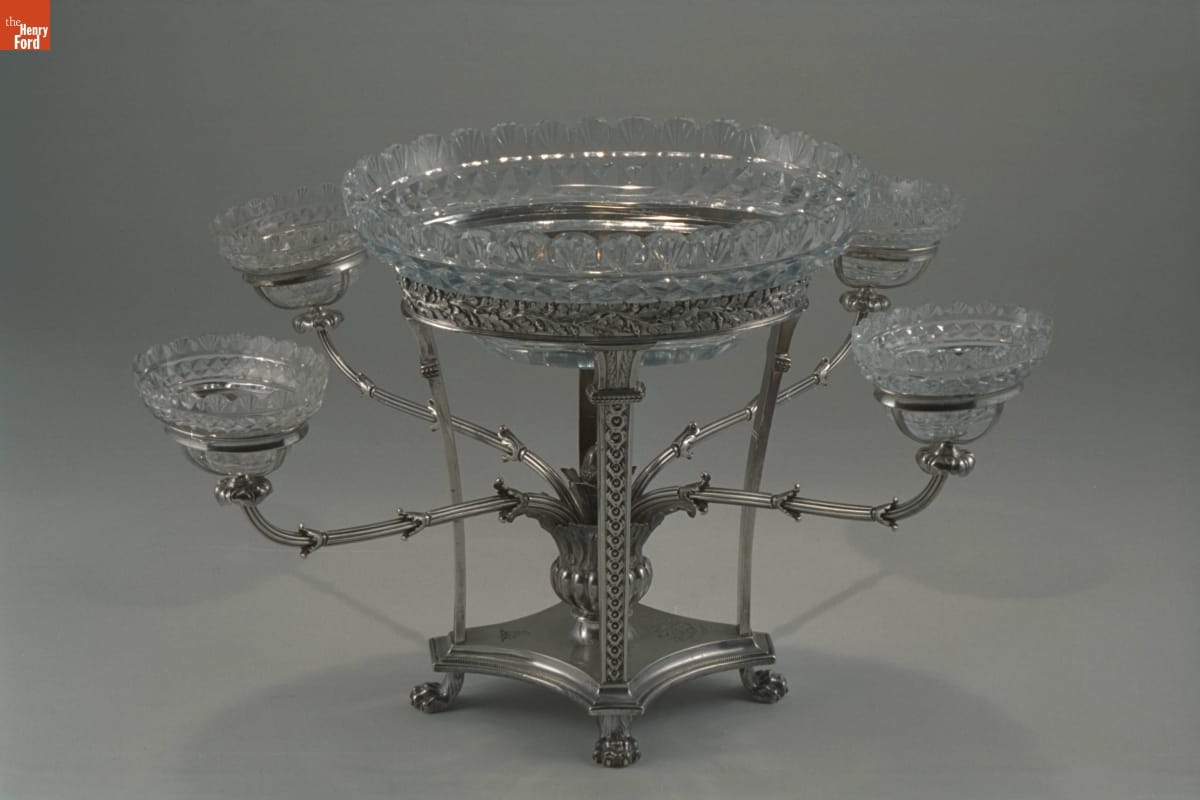
- 1807-1808
- Collections - Artifact
Epergne, 1807-1808
Epergnes were used as centerpieces on formal dining room tables. During a meal they could hold sweetmeats or fruit. At other times the epergne may be festooned with flowers as a decorative piece. This object descended through the Wichicote family of Britain, whose motto, "Juste et Droite" meaning just and correct, is engraved on the base.
- Flask, 1865-1875 - Glass factories in America began producing inexpensive, mold-formed flasks in the early 1800s. These figured flasks, often decorated with symbols of national pride or political or cultural affiliation, appealed to America's common man. The clasping hands, shield and eagle represent the Union -- a cause many Americans fought to uphold during the Civil War.
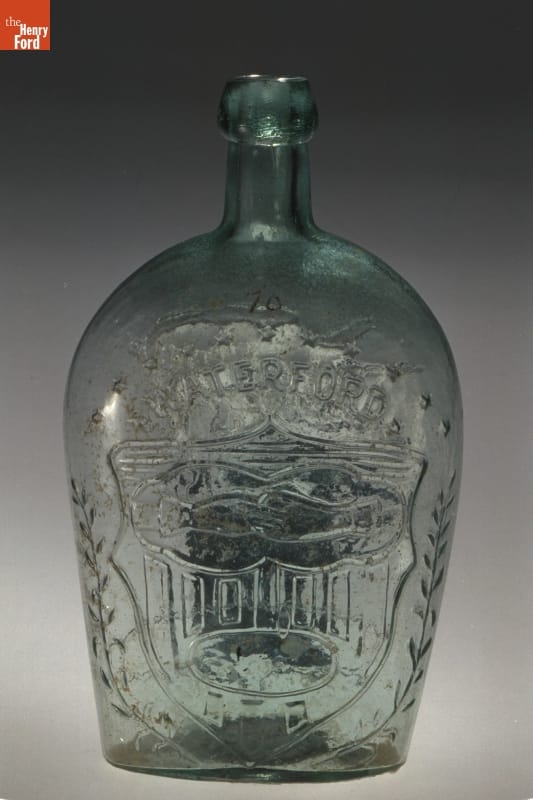
- 1865-1875
- Collections - Artifact
Flask, 1865-1875
Glass factories in America began producing inexpensive, mold-formed flasks in the early 1800s. These figured flasks, often decorated with symbols of national pride or political or cultural affiliation, appealed to America's common man. The clasping hands, shield and eagle represent the Union -- a cause many Americans fought to uphold during the Civil War.