
Search
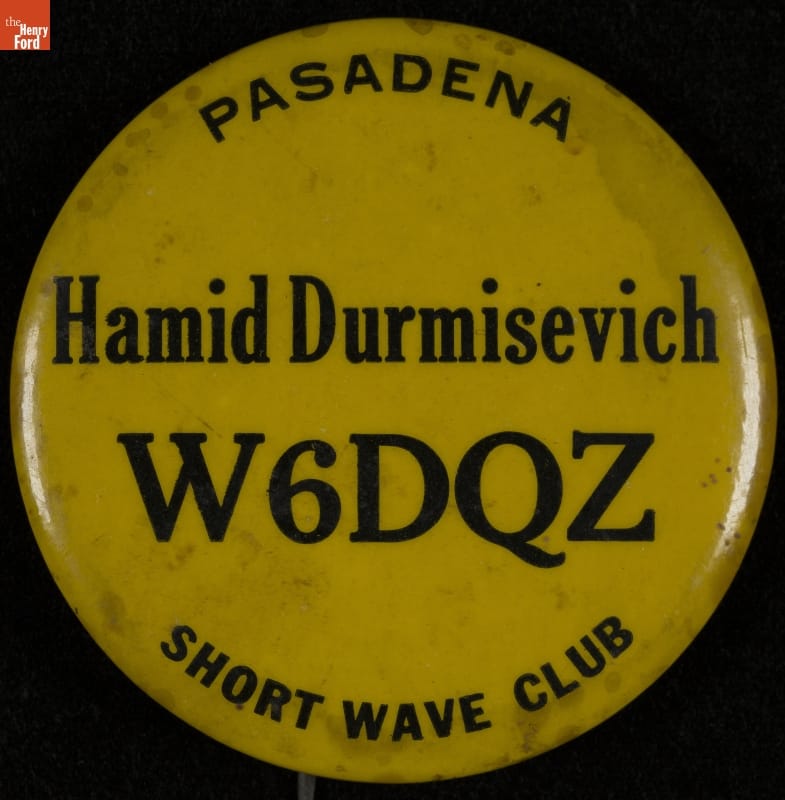
- Identification Button, Worn by Hamid Durmisevich, 1930-1969 - Hamid (Charlie) Durmisevich, call sign W6DQZ, connected to the world from his ham radio station in Los Angeles. Amateur radio operators use two-way radios to talk to global networks of other "hams" about technology, weather, emergency preparedness and daily life. This ham, who emigrated from Eastern Europe in 1920, was active in amateur radio communities from the 1930s to 1990s.
- 1930-1969
- Collections - Artifact
Identification Button, Worn by Hamid Durmisevich, 1930-1969
Hamid (Charlie) Durmisevich, call sign W6DQZ, connected to the world from his ham radio station in Los Angeles. Amateur radio operators use two-way radios to talk to global networks of other "hams" about technology, weather, emergency preparedness and daily life. This ham, who emigrated from Eastern Europe in 1920, was active in amateur radio communities from the 1930s to 1990s.
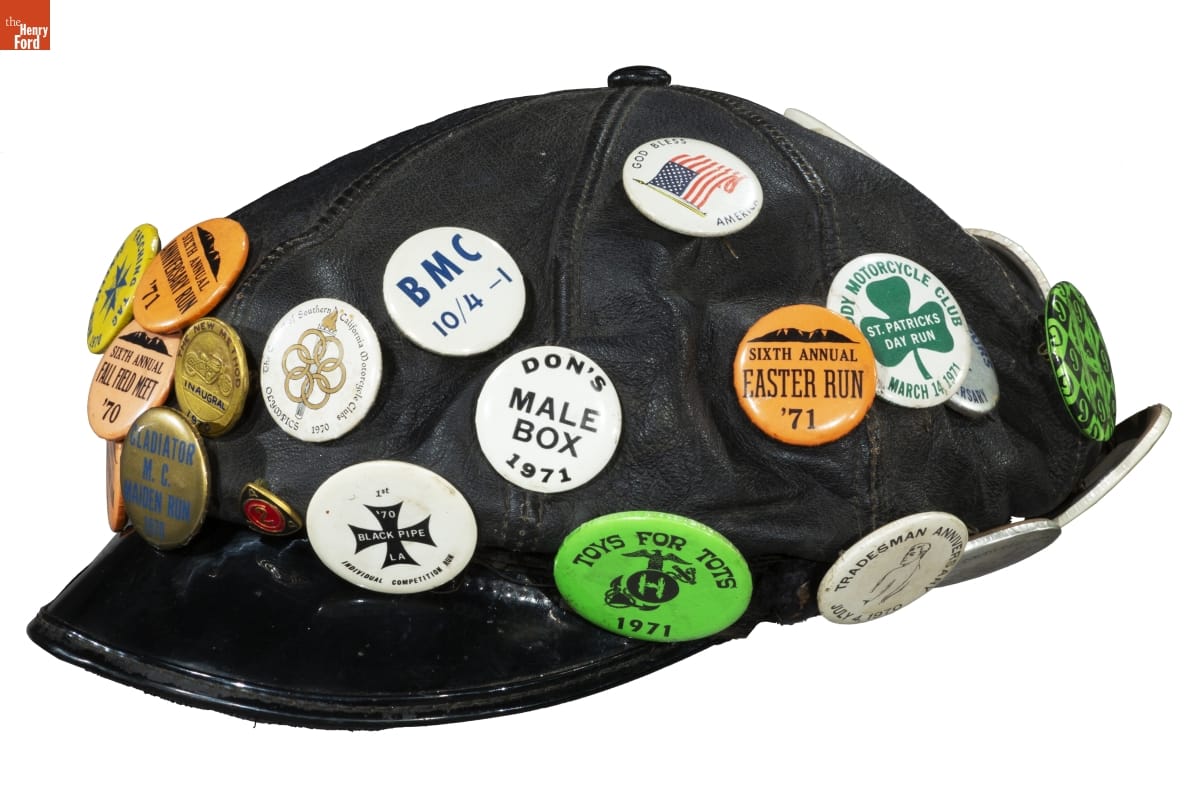
- Motorcycle Cap with Buttons Commemorating LGBTQ+ Events and Places, 1969-1971 - Gay motorcycle clubs began to form in California just after World War II, and leather was the staple material of their uniforms. This counterculture movement prioritized the hyper masculine, which appealed to many gay men who had long been stereotyped as effeminate. Biker clubs also provided a mobile social network when persecution and the threat of police raids were ever-present at established gay locales.
- 1969-1971
- Collections - Artifact
Motorcycle Cap with Buttons Commemorating LGBTQ+ Events and Places, 1969-1971
Gay motorcycle clubs began to form in California just after World War II, and leather was the staple material of their uniforms. This counterculture movement prioritized the hyper masculine, which appealed to many gay men who had long been stereotyped as effeminate. Biker clubs also provided a mobile social network when persecution and the threat of police raids were ever-present at established gay locales.