
Search
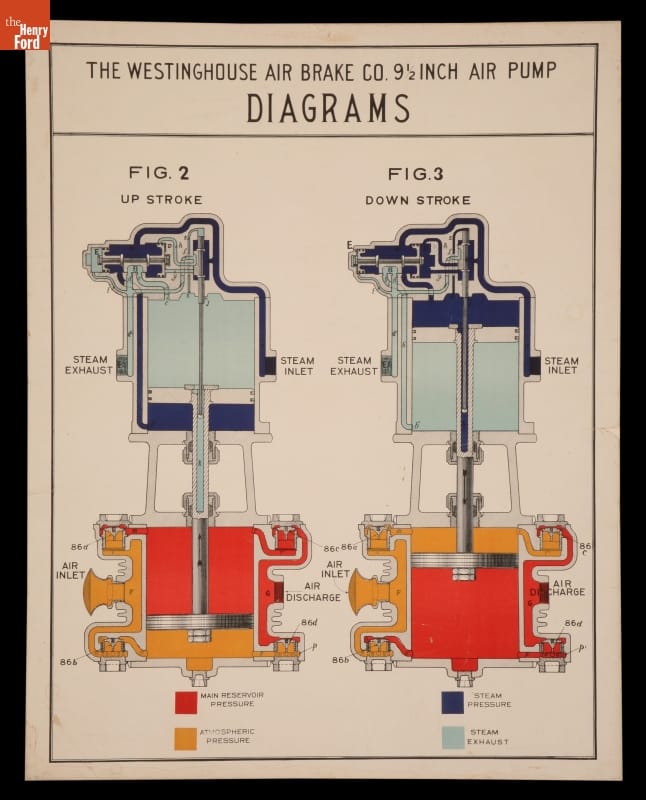
- Poster, "The Westinghouse Air Brake Company 9-1/2 Inch Air Pump Diagrams," circa 1910 - Before the air brake's introduction, brakemen stopped trains by scrambling from car to car and setting individual brake mechanisms on each one. It was dangerous even in fair weather, let alone in wet or icy conditions. George Westinghouse's brake used air pumped from the locomotive, through an airline running the train's length, to operate brakes on each car automatically.
- circa 1910
- Collections - Artifact
Poster, "The Westinghouse Air Brake Company 9-1/2 Inch Air Pump Diagrams," circa 1910
Before the air brake's introduction, brakemen stopped trains by scrambling from car to car and setting individual brake mechanisms on each one. It was dangerous even in fair weather, let alone in wet or icy conditions. George Westinghouse's brake used air pumped from the locomotive, through an airline running the train's length, to operate brakes on each car automatically.
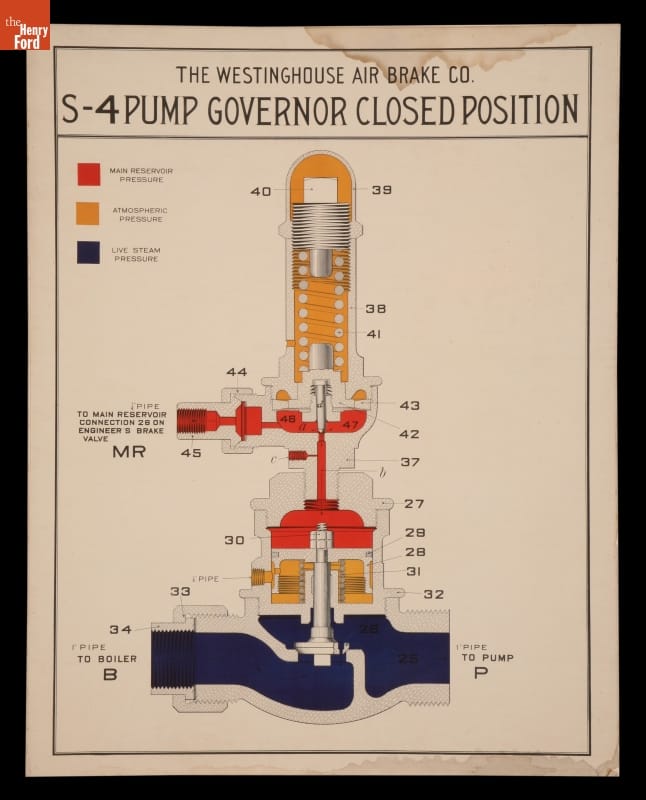
- Poster, "The Westinghouse Air Brake Company S-4 Governor Closed Position," circa 1910 - Before the air brake's introduction, brakemen stopped trains by scrambling from car to car and setting individual brake mechanisms on each one. It was dangerous even in fair weather, let alone in wet or icy conditions. George Westinghouse's brake used air pumped from the locomotive, through an airline running the train's length, to operate brakes on each car automatically.
- circa 1910
- Collections - Artifact
Poster, "The Westinghouse Air Brake Company S-4 Governor Closed Position," circa 1910
Before the air brake's introduction, brakemen stopped trains by scrambling from car to car and setting individual brake mechanisms on each one. It was dangerous even in fair weather, let alone in wet or icy conditions. George Westinghouse's brake used air pumped from the locomotive, through an airline running the train's length, to operate brakes on each car automatically.