
Search
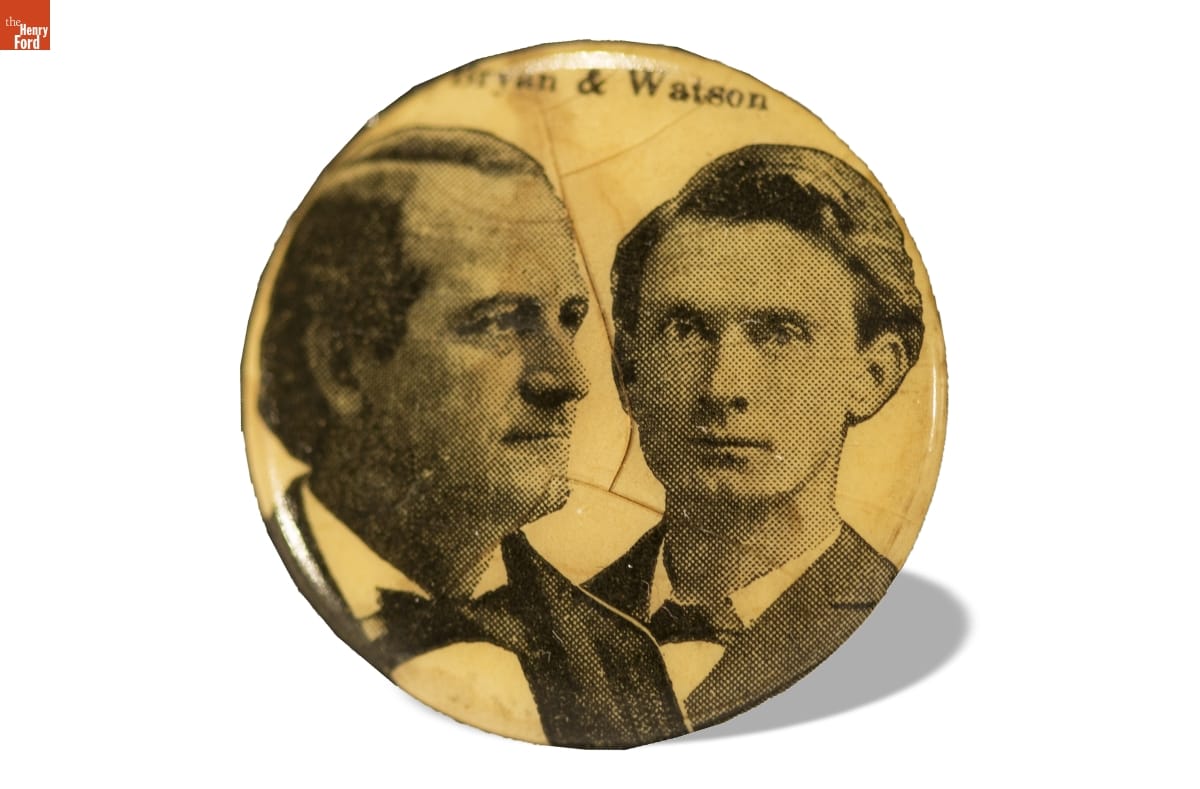
- Bryan-Watson Campaign Button, 1896 - In 1896, William Jennings Bryan captured both the Democratic and Populist Party's presidential nominations. Each party, however, nominated their own vice presidential candidates. The Democrats chose Arthur Sewall. The Populists chose Thomas E. Watson--pictured with Bryan on this campaign button. Neither ticket won. Bryan lost to the Republican nominee, William McKinley.
- 1896
- Collections - Artifact
Bryan-Watson Campaign Button, 1896
In 1896, William Jennings Bryan captured both the Democratic and Populist Party's presidential nominations. Each party, however, nominated their own vice presidential candidates. The Democrats chose Arthur Sewall. The Populists chose Thomas E. Watson--pictured with Bryan on this campaign button. Neither ticket won. Bryan lost to the Republican nominee, William McKinley.
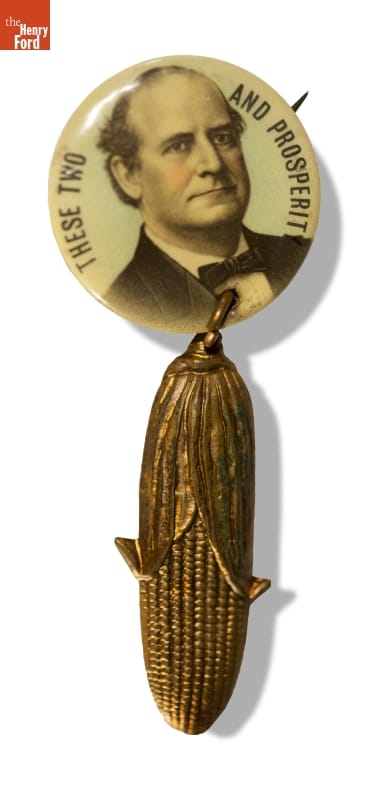
- William Bryan Campaign Button, 1908 - William Jennings Bryan made his third and last attempt to become president in 1908. Bryan and his running mate, Indiana Senator John Kern, tried to distinguish themselves from their Republican opponents by championing a variety of domestic reforms. It didn't work. Voters chose the safe, well-qualified William Howard Taft -- President Roosevelt's hand-picked successor.
- 1908
- Collections - Artifact
William Bryan Campaign Button, 1908
William Jennings Bryan made his third and last attempt to become president in 1908. Bryan and his running mate, Indiana Senator John Kern, tried to distinguish themselves from their Republican opponents by championing a variety of domestic reforms. It didn't work. Voters chose the safe, well-qualified William Howard Taft -- President Roosevelt's hand-picked successor.
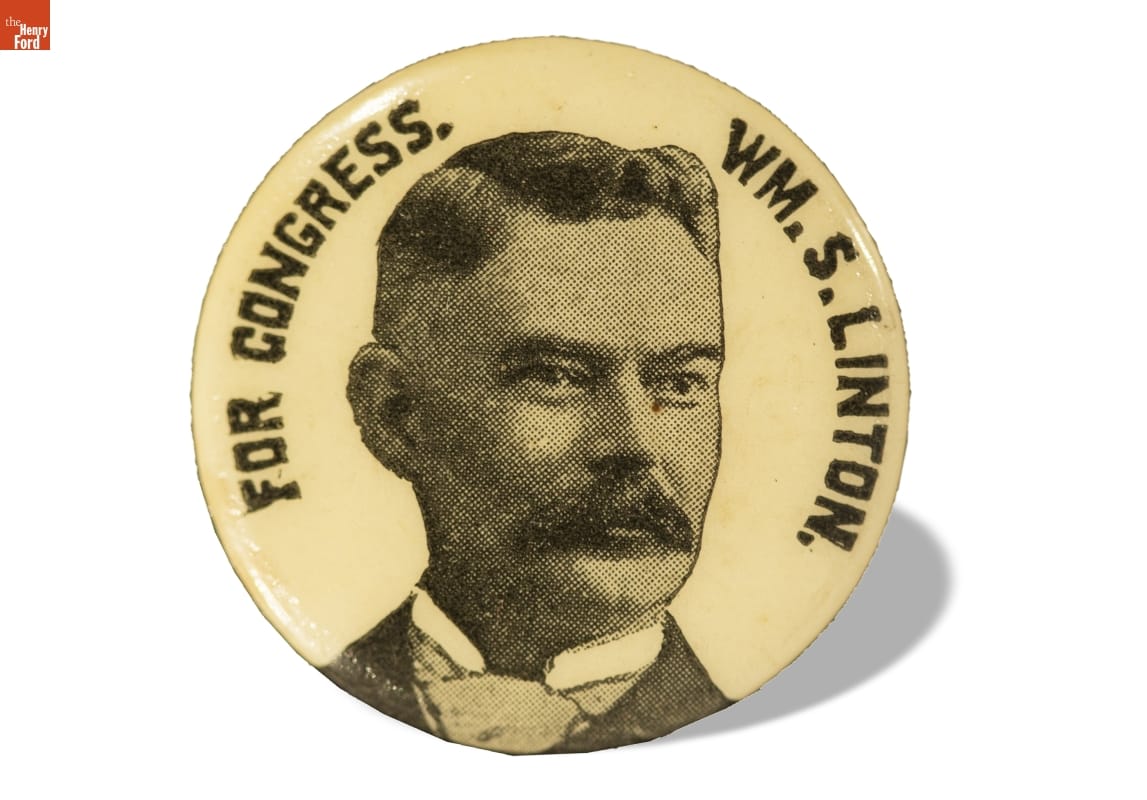
- William Linton Campaign Button, 1896 -
- 1896
- Collections - Artifact
William Linton Campaign Button, 1896
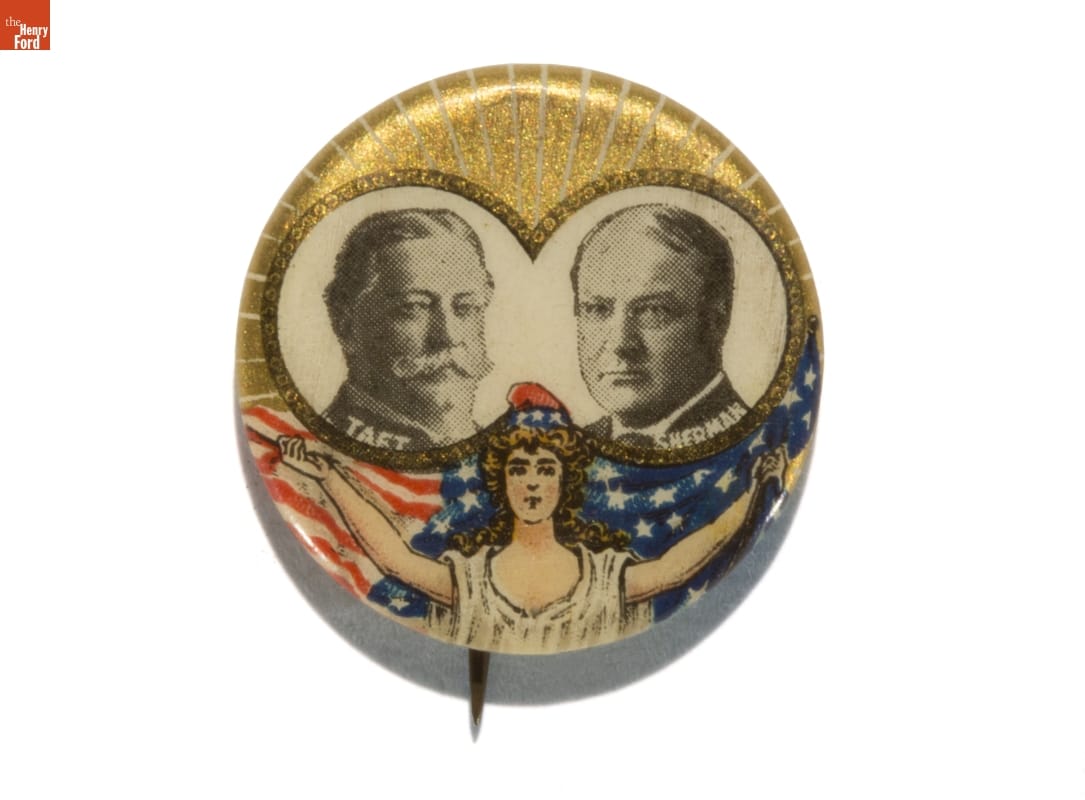
- Taft-Sherman Campaign Button, 1908-1912 - Republican William Howard Taft ran for president twice, in 1908 and 1912. Taft had the support of his friend President Theodore Roosevelt in 1908 and easily won. But by 1912 their friendship had ended. Roosevelt challenged Taft for the Republican nomination, then bolted from the Party after Taft secured enough delegates. The rift allowed Democrat Woodrow Wilson to sweep into the White House.
- 1908-1912
- Collections - Artifact
Taft-Sherman Campaign Button, 1908-1912
Republican William Howard Taft ran for president twice, in 1908 and 1912. Taft had the support of his friend President Theodore Roosevelt in 1908 and easily won. But by 1912 their friendship had ended. Roosevelt challenged Taft for the Republican nomination, then bolted from the Party after Taft secured enough delegates. The rift allowed Democrat Woodrow Wilson to sweep into the White House.
- Parker-Davis Campaign Button, 1904 - The Democrats nominated New Yorker Alton B. Parker for president in 1904. Parker never distinguished his political views from those of his Republican opponent during the campaign. This did not bode well for the virtually unknown Democratic candidate. Parker and his running mate, Henry Davis, lost to Theodore Roosevelt, the popular and energetic incumbent.
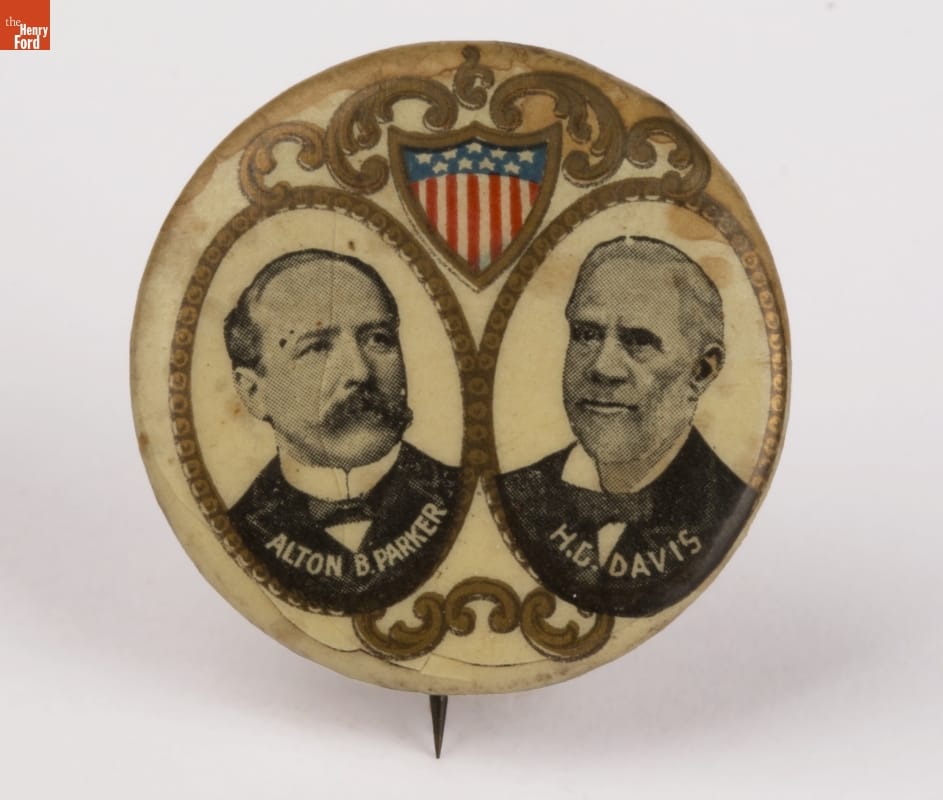
- 1904
- Collections - Artifact
Parker-Davis Campaign Button, 1904
The Democrats nominated New Yorker Alton B. Parker for president in 1904. Parker never distinguished his political views from those of his Republican opponent during the campaign. This did not bode well for the virtually unknown Democratic candidate. Parker and his running mate, Henry Davis, lost to Theodore Roosevelt, the popular and energetic incumbent.
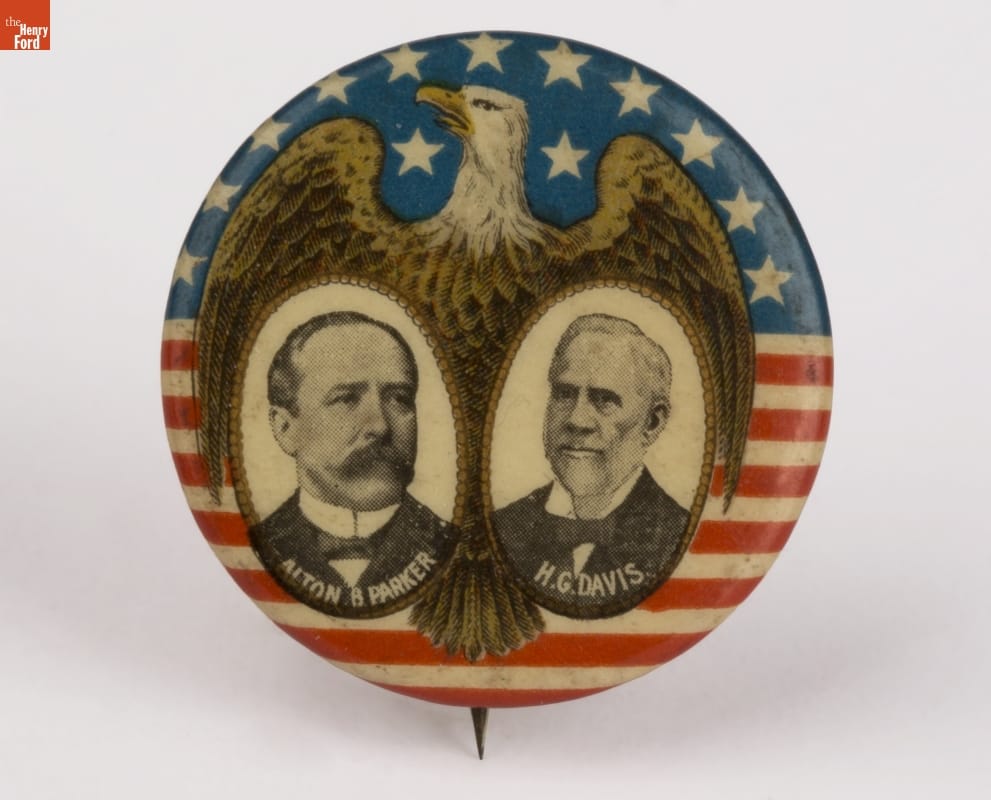
- Parker-Davis Campaign Button, 1904 - The Democrats nominated New Yorker Alton B. Parker for president in 1904. Parker never distinguished his political views from those of his Republican opponent during the campaign. This did not bode well for the virtually unknown Democratic candidate. Parker and his running mate, Henry Davis, lost to Theodore Roosevelt, the popular and energetic incumbent.
- 1904
- Collections - Artifact
Parker-Davis Campaign Button, 1904
The Democrats nominated New Yorker Alton B. Parker for president in 1904. Parker never distinguished his political views from those of his Republican opponent during the campaign. This did not bode well for the virtually unknown Democratic candidate. Parker and his running mate, Henry Davis, lost to Theodore Roosevelt, the popular and energetic incumbent.
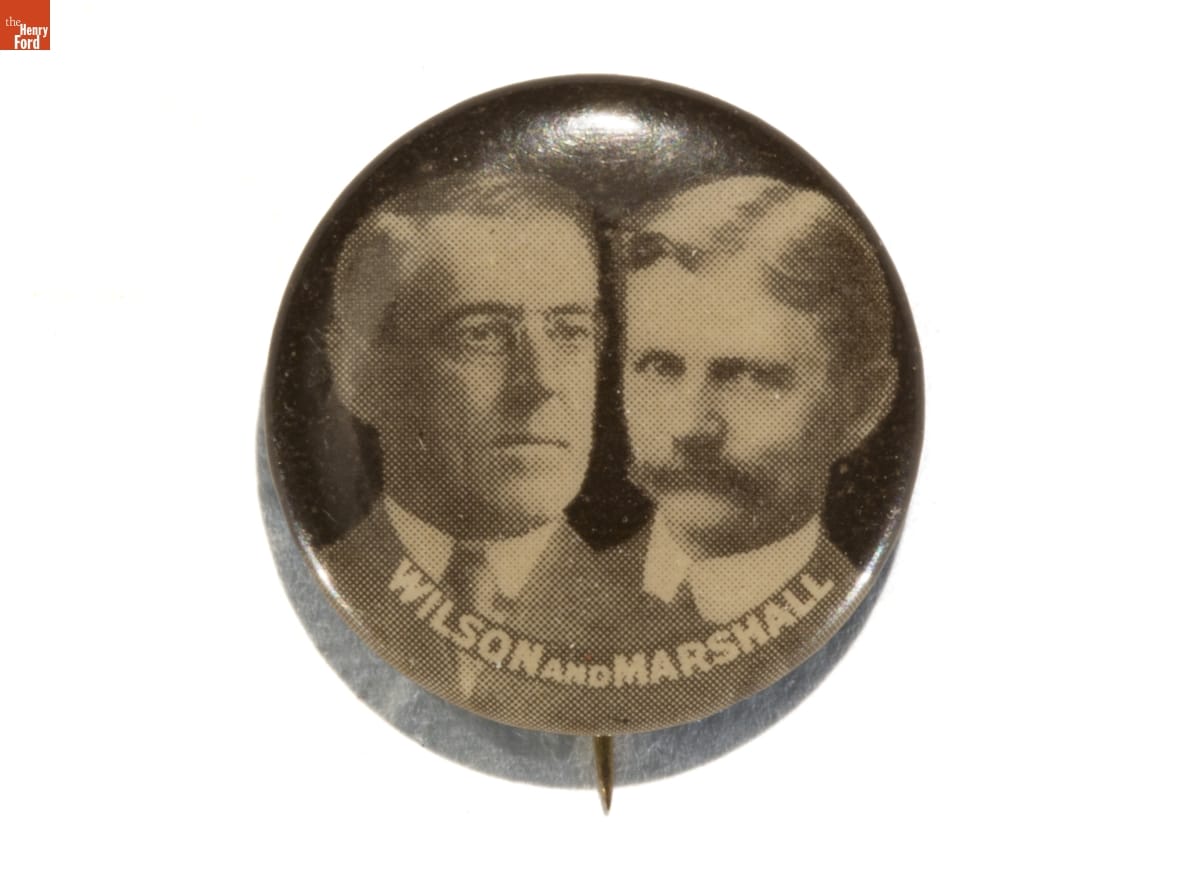
- Wilson-Marshall Campaign Button, 1912-1916 - Democrat Woodrow Wilson was elected president in 1912 and 1916. Party officials chose Indiana governor Thomas Marshall as his running mate each time. The pair did not work well together. The intellectual, activist Wilson rarely consulted with his unassuming yet genial vice president. Marshall remained distant from the White House throughout Wilson's term in office, even after the president suffered a debilitating stroke.
- 1912-1916
- Collections - Artifact
Wilson-Marshall Campaign Button, 1912-1916
Democrat Woodrow Wilson was elected president in 1912 and 1916. Party officials chose Indiana governor Thomas Marshall as his running mate each time. The pair did not work well together. The intellectual, activist Wilson rarely consulted with his unassuming yet genial vice president. Marshall remained distant from the White House throughout Wilson's term in office, even after the president suffered a debilitating stroke.
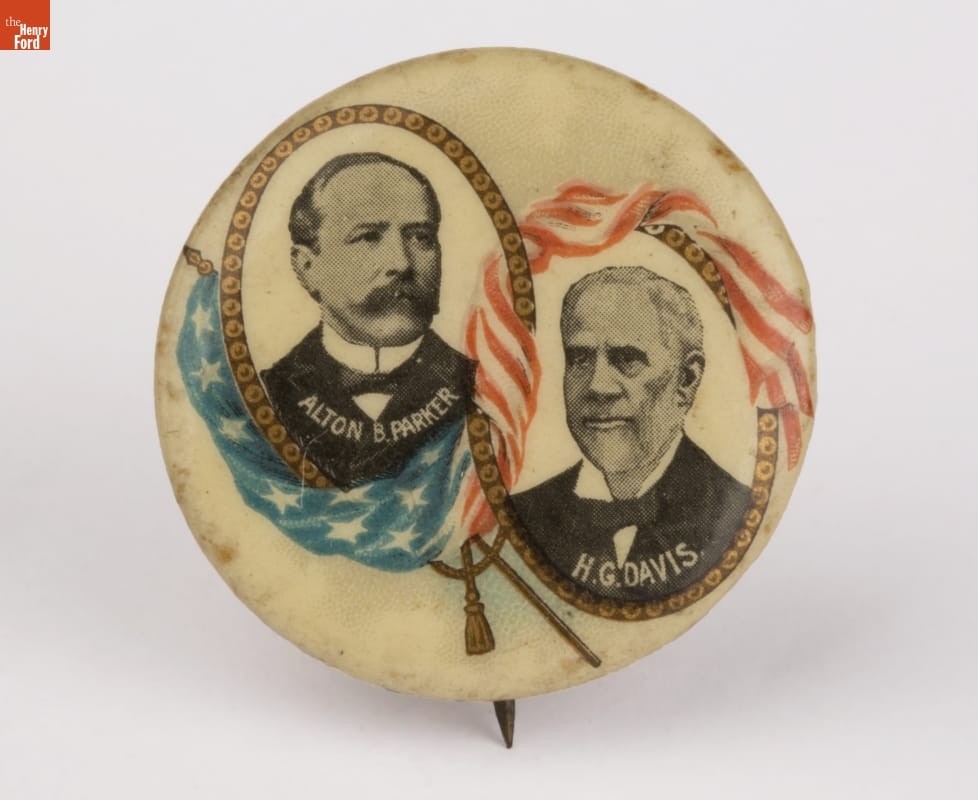
- Parker-Davis Campaign Button, 1904 - The Democrats nominated New Yorker Alton B. Parker for president in 1904. Parker never distinguished his political views from those of his Republican opponent during the campaign. This did not bode well for the virtually unknown Democratic candidate. Parker and his running mate, Henry Davis, lost to Theodore Roosevelt, the popular and energetic incumbent.
- 1904
- Collections - Artifact
Parker-Davis Campaign Button, 1904
The Democrats nominated New Yorker Alton B. Parker for president in 1904. Parker never distinguished his political views from those of his Republican opponent during the campaign. This did not bode well for the virtually unknown Democratic candidate. Parker and his running mate, Henry Davis, lost to Theodore Roosevelt, the popular and energetic incumbent.
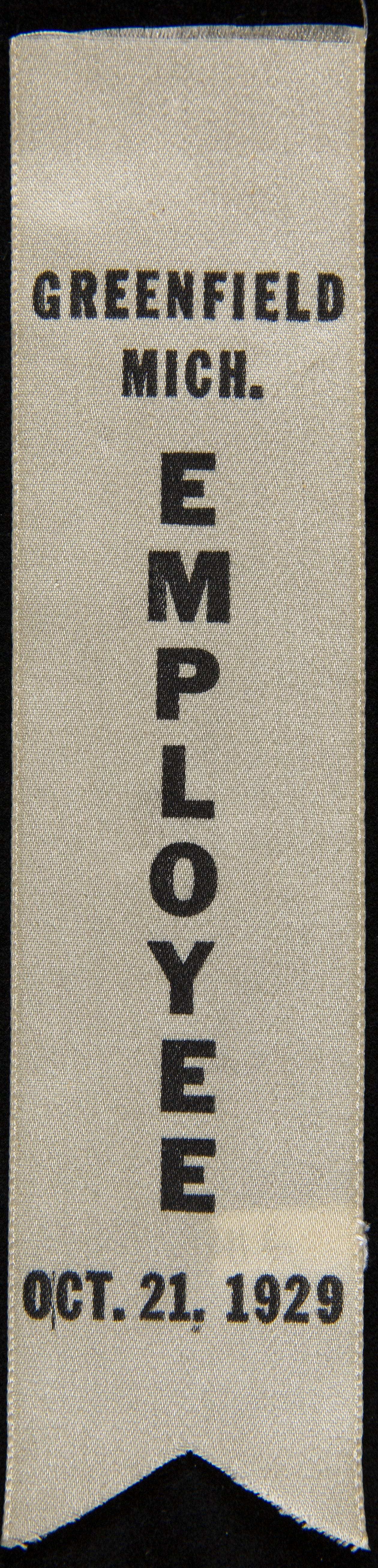
- "Light's Golden Jubilee" Employee Badge, 1929 - On October 21, 1929, Henry Ford hosted an event, Light's Golden Jubilee, which celebrated the 50th anniversary of Thomas Edison's invention of a practical incandescent lamp. The event also served as the official dedication of The Edison Institute, Ford's museum complex named in honor of his friend. Ford employees were on hand to assist guests during the day's events at Greenfield Village and the evening banquet.
- October 21, 1929
- Collections - Artifact
"Light's Golden Jubilee" Employee Badge, 1929
On October 21, 1929, Henry Ford hosted an event, Light's Golden Jubilee, which celebrated the 50th anniversary of Thomas Edison's invention of a practical incandescent lamp. The event also served as the official dedication of The Edison Institute, Ford's museum complex named in honor of his friend. Ford employees were on hand to assist guests during the day's events at Greenfield Village and the evening banquet.
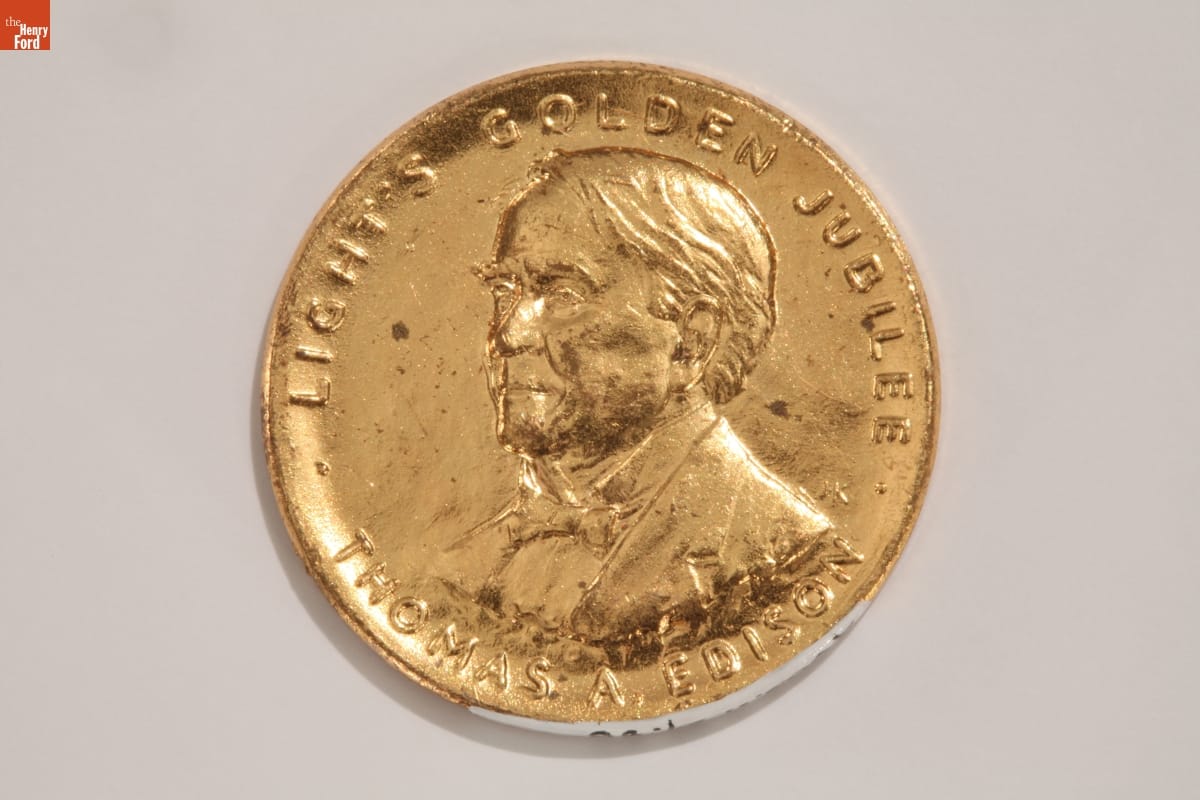
- Light's Golden Jubilee Medallion, 1929 - In 1929, communities throughout the United States celebrated the 50th anniversary of the incandescent electric lamp and honored its creator, Thomas Alva Edison. Organizers planned Light's Golden Jubilee events and issued commemorative souvenirs, like this medallion designed by artist Julio Kilenyi.
- 1929
- Collections - Artifact
Light's Golden Jubilee Medallion, 1929
In 1929, communities throughout the United States celebrated the 50th anniversary of the incandescent electric lamp and honored its creator, Thomas Alva Edison. Organizers planned Light's Golden Jubilee events and issued commemorative souvenirs, like this medallion designed by artist Julio Kilenyi.