
Search
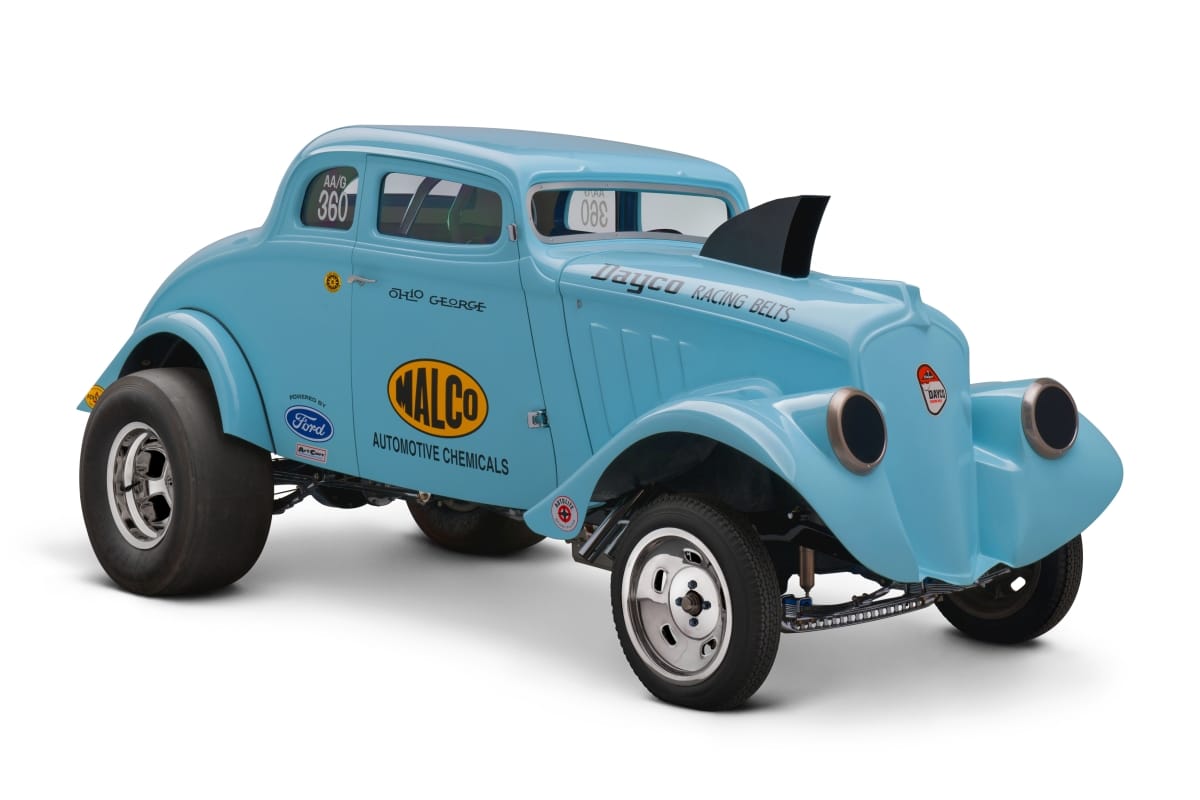
- 1933 Willys Drag Racer - When machinist George Montgomery started racing in 1953, all drag racers were amateurs with "real jobs" supporting their hobby. This car helped change all that. Montgomery bought an old Willys in 1958 and built a dragster so successful that promoters started paying him to run at drag strips nationwide. In 1966, Montgomery became one of drag racing's first full-time professional drivers.
- 1933
- Collections - Artifact
1933 Willys Drag Racer
When machinist George Montgomery started racing in 1953, all drag racers were amateurs with "real jobs" supporting their hobby. This car helped change all that. Montgomery bought an old Willys in 1958 and built a dragster so successful that promoters started paying him to run at drag strips nationwide. In 1966, Montgomery became one of drag racing's first full-time professional drivers.
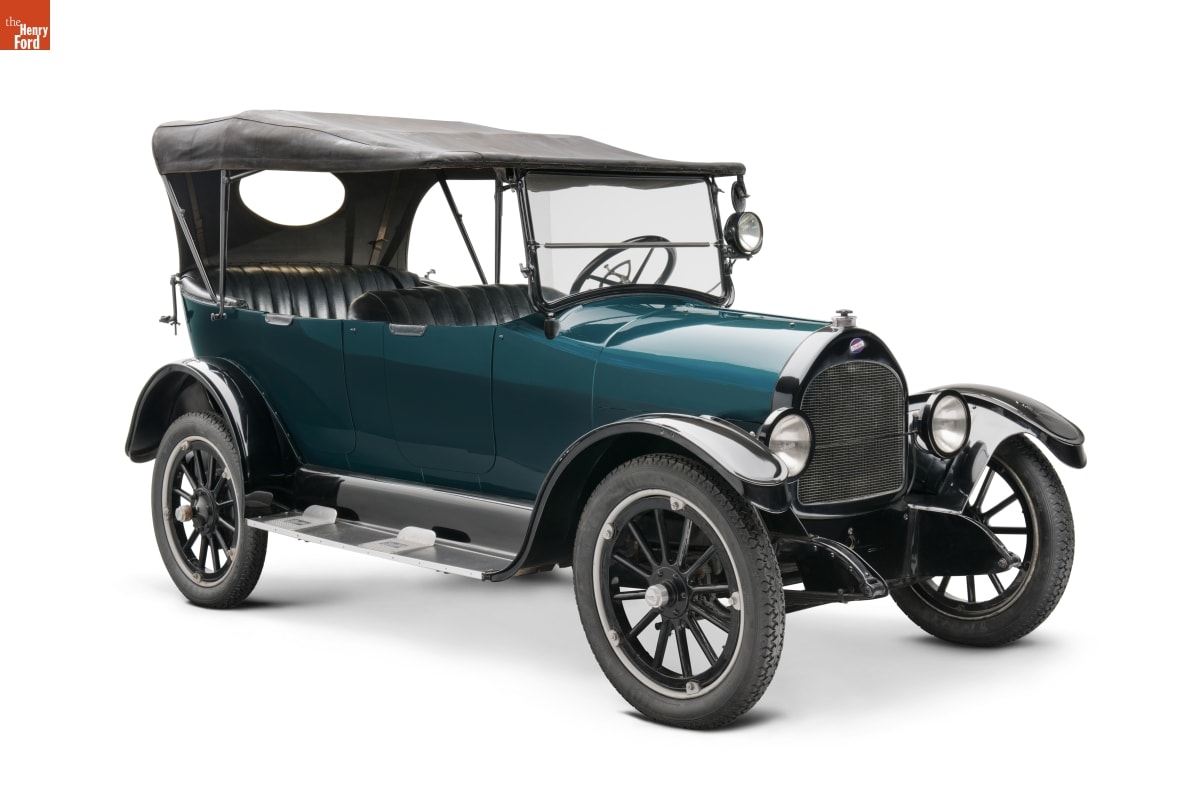
- 1918 Overland Model 90 B Touring Car - Overland was one of the most successful early car companies. Founded in 1903, Overland had by 1912 become the second-bestselling American car behind Ford. This Model 90 Overland was more stylish, comfortable, and powerful than a Ford Model T, with a six-inch-longer wheelbase and 12 more horsepower. It also cost $345 more.
- 1918
- Collections - Artifact
1918 Overland Model 90 B Touring Car
Overland was one of the most successful early car companies. Founded in 1903, Overland had by 1912 become the second-bestselling American car behind Ford. This Model 90 Overland was more stylish, comfortable, and powerful than a Ford Model T, with a six-inch-longer wheelbase and 12 more horsepower. It also cost $345 more.
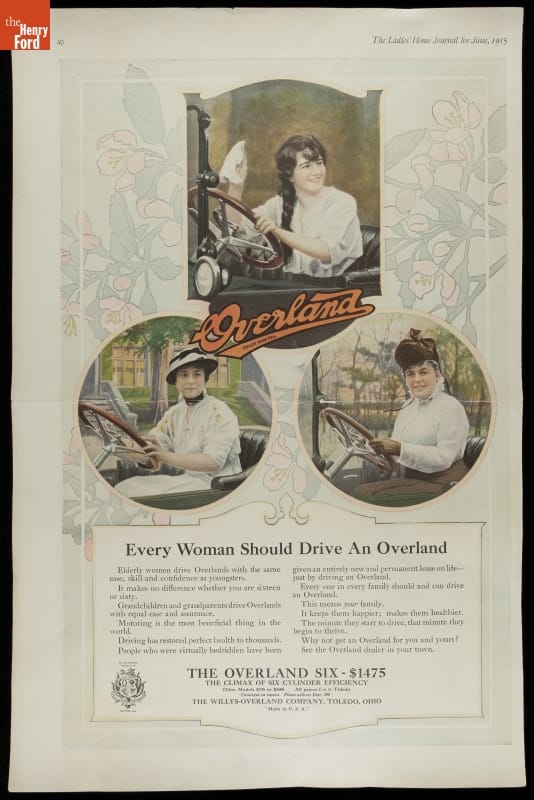
- "Every Woman Should Drive an Overland" Willys-Overland Advertisement, 1915 - Willys-Overland made a direct appeal to women in this advertisement from the June 1915 issue of <em>Ladies' Home Journal</em>. The ad boasted the ease with which Overland cars could be operated by drivers of all ages. It also described driving as a tonic for wellbeing, making the extravagant claim that "driving has restored perfect health to thousands."
- June 01, 1915
- Collections - Artifact
"Every Woman Should Drive an Overland" Willys-Overland Advertisement, 1915
Willys-Overland made a direct appeal to women in this advertisement from the June 1915 issue of Ladies' Home Journal. The ad boasted the ease with which Overland cars could be operated by drivers of all ages. It also described driving as a tonic for wellbeing, making the extravagant claim that "driving has restored perfect health to thousands."
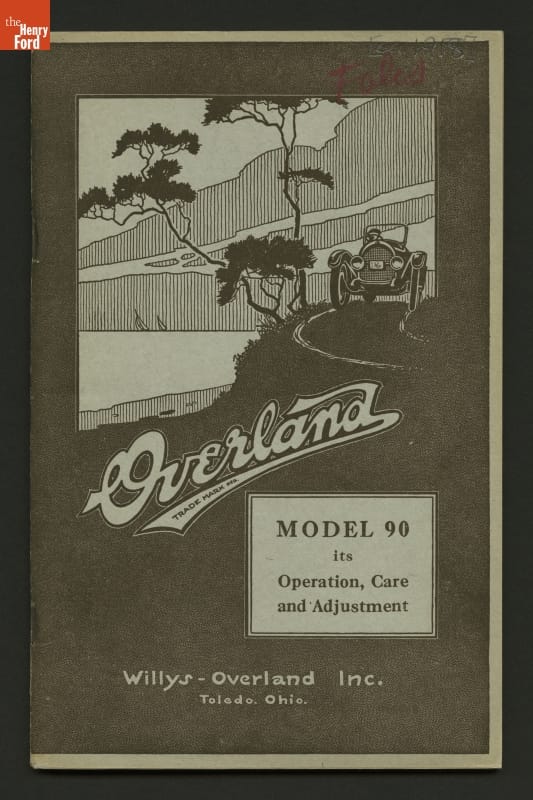
- Owner's Manual for Overland Model 90, Its Operation, Care and Adjustment, Willys-Overland Inc., Toledo, Ohio, circa 1918 - If you wanted a bit more than the basic Ford Model T, the 1918 Willys-Overland offered it. The car had more room, more style, more power, and it had an electric starter and a sliding-gear transmission -- but it also cost a bit more. This 1918 owner's manual laid out the features that owners would find when purchasing an Overland.
- circa 1918
- Collections - Artifact
Owner's Manual for Overland Model 90, Its Operation, Care and Adjustment, Willys-Overland Inc., Toledo, Ohio, circa 1918
If you wanted a bit more than the basic Ford Model T, the 1918 Willys-Overland offered it. The car had more room, more style, more power, and it had an electric starter and a sliding-gear transmission -- but it also cost a bit more. This 1918 owner's manual laid out the features that owners would find when purchasing an Overland.
- 1917 Overland Light Four Touring Car - The Overland Automobile Company was founded by Claude Cox in Terre Haute, Indiana, in 1903 and moved to Indianapolis in 1905. John North Willys bought the failing firm in 1908, turned its fortunes around, and relocated the company to Toledo, Ohio. At $665, this four-cylinder Overland cost more than a Ford Model T, but it offered more style and comfort.
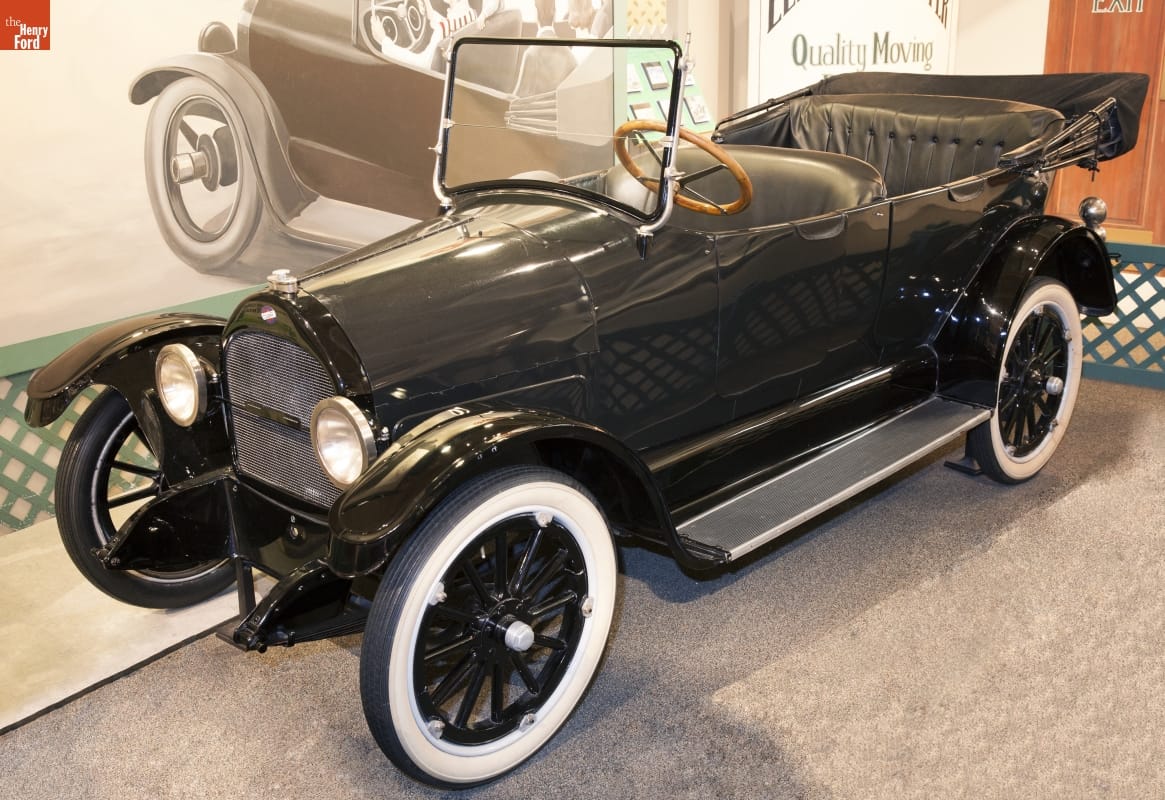
- 1917
- Collections - Artifact
1917 Overland Light Four Touring Car
The Overland Automobile Company was founded by Claude Cox in Terre Haute, Indiana, in 1903 and moved to Indianapolis in 1905. John North Willys bought the failing firm in 1908, turned its fortunes around, and relocated the company to Toledo, Ohio. At $665, this four-cylinder Overland cost more than a Ford Model T, but it offered more style and comfort.
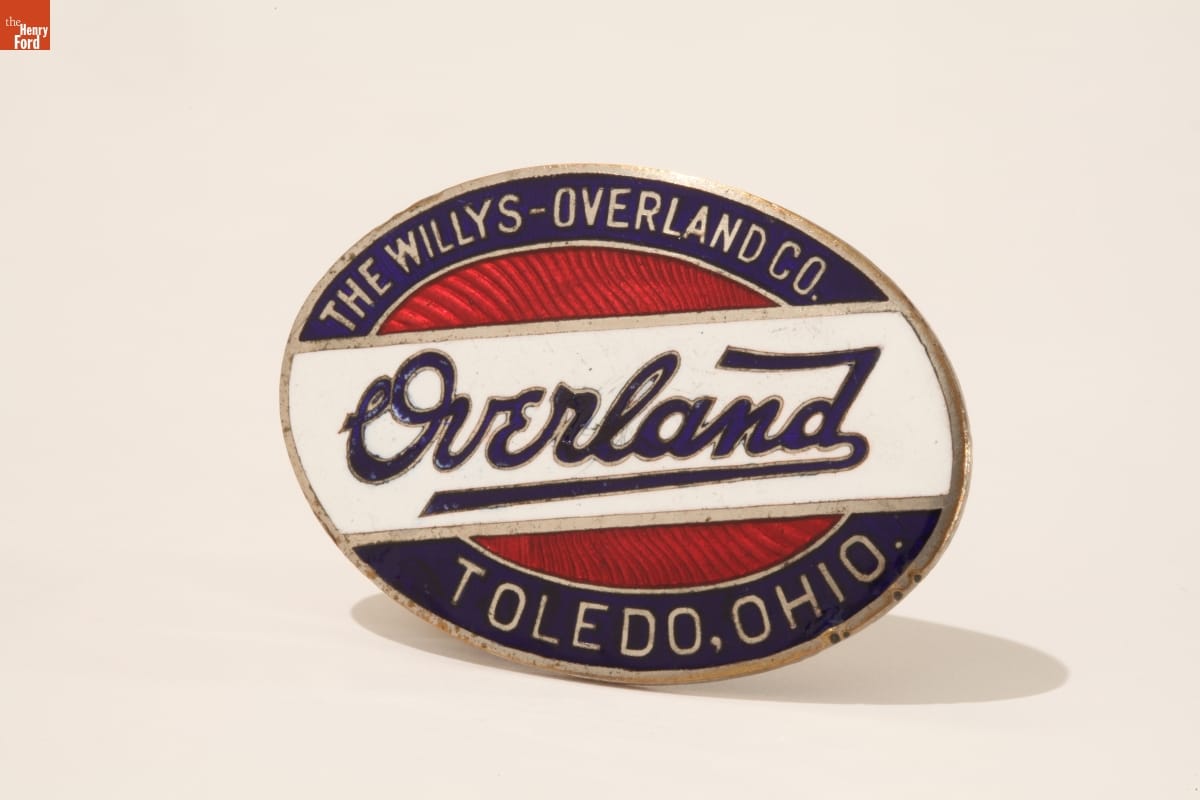
- Overland Automobile Emblem, circa 1925 - An automobile manufacturer's badge is fundamental to the company's brand identity -- just as the maker's name is often important to <EM>our</EM> identity as consumers and drivers. Early automobile badges tended to be small and often discreetly located; today they have evolved into enlarged, prominently placed, and frequently symmetrical logos -- easy to recognize, even at a glance in a rear-view mirror.
- circa 1925
- Collections - Artifact
Overland Automobile Emblem, circa 1925
An automobile manufacturer's badge is fundamental to the company's brand identity -- just as the maker's name is often important to our identity as consumers and drivers. Early automobile badges tended to be small and often discreetly located; today they have evolved into enlarged, prominently placed, and frequently symmetrical logos -- easy to recognize, even at a glance in a rear-view mirror.
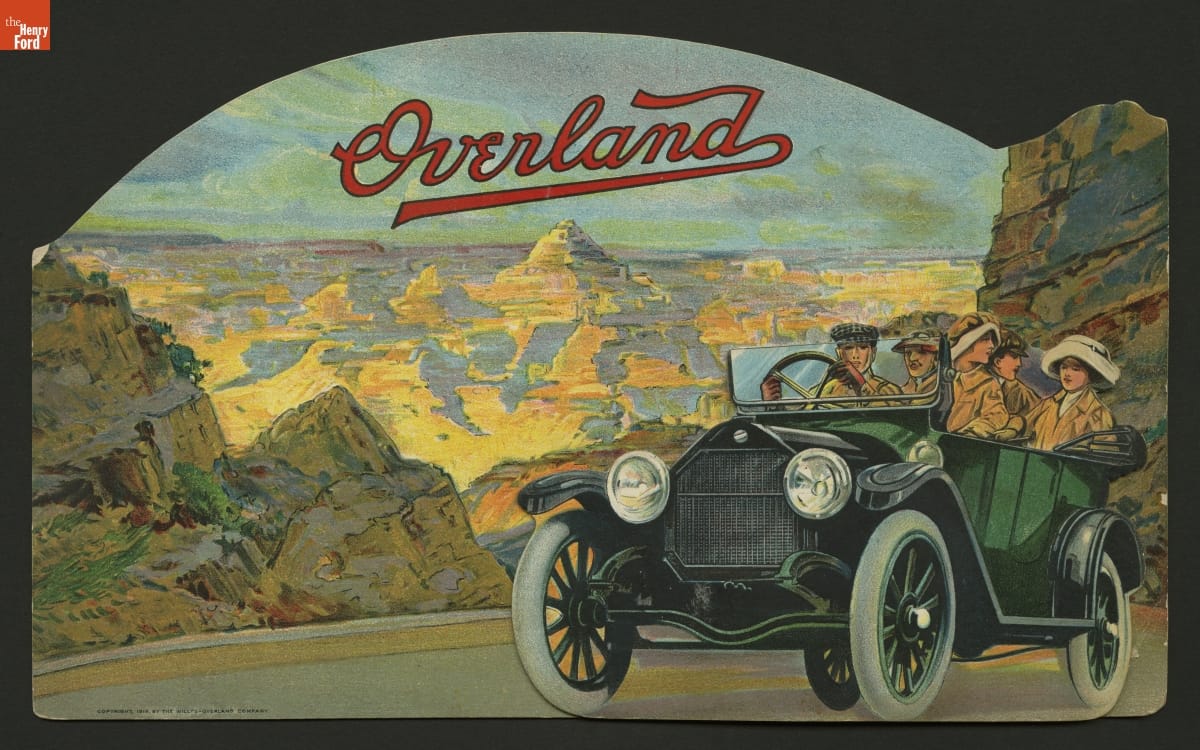
- Advertising Display Card for Overland Automobiles, 1914 - As cars became more affordable, people began to use them for touring as well as for daily transportation. This 1914 Willys-Overland display card shows a group of tourists traveling through America.
- 1914
- Collections - Artifact
Advertising Display Card for Overland Automobiles, 1914
As cars became more affordable, people began to use them for touring as well as for daily transportation. This 1914 Willys-Overland display card shows a group of tourists traveling through America.
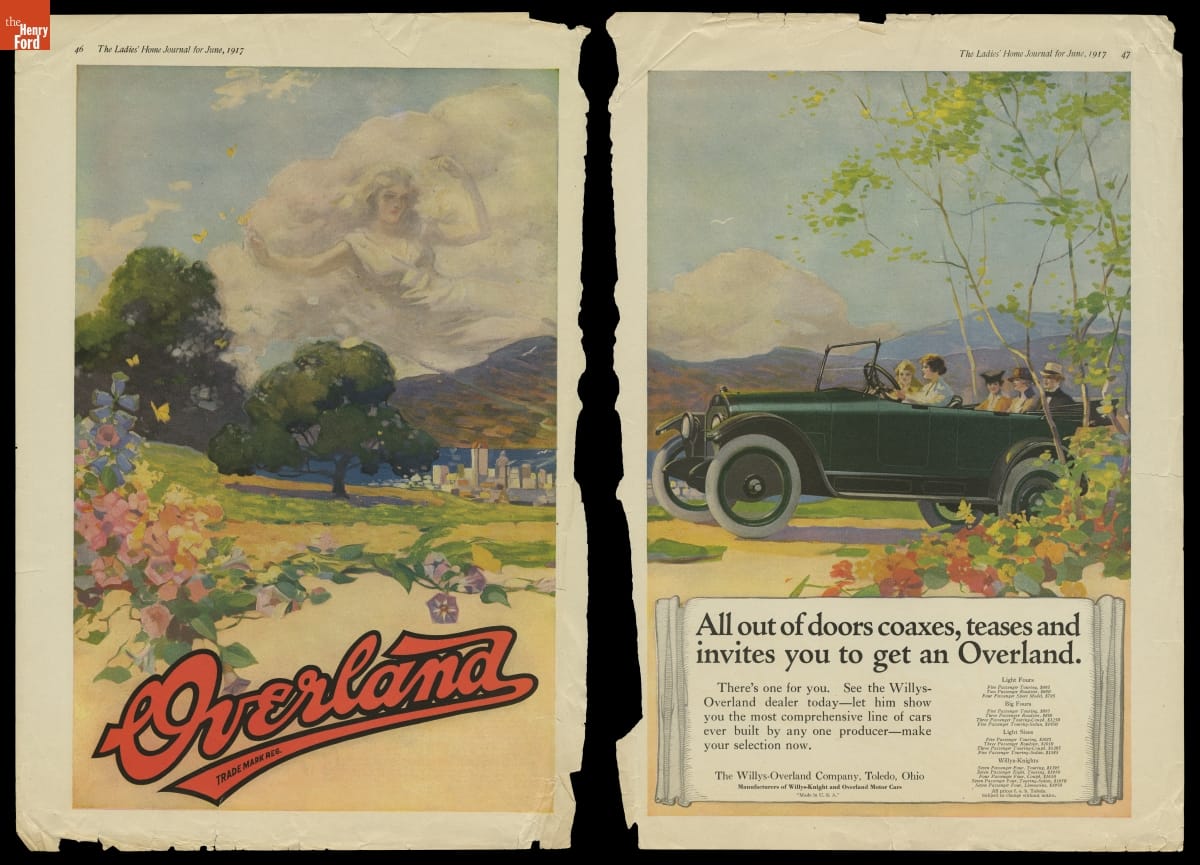
- Advertisement, "All out of doors coaxes, teases and invites you to get an Overland," June 1917 - Claude Cox formed Overland Automobile Company in Terre Haute, Indiana, in 1903 and moved it to Indianapolis two years later. John North Willys bought the failing firm in 1908, turned its fortunes around, and relocated the company to Toledo, Ohio. This summertime advertisement from 1917 promoted Overland automobiles as a way for people to explore the great outdoors.
- June 01, 1917
- Collections - Artifact
Advertisement, "All out of doors coaxes, teases and invites you to get an Overland," June 1917
Claude Cox formed Overland Automobile Company in Terre Haute, Indiana, in 1903 and moved it to Indianapolis two years later. John North Willys bought the failing firm in 1908, turned its fortunes around, and relocated the company to Toledo, Ohio. This summertime advertisement from 1917 promoted Overland automobiles as a way for people to explore the great outdoors.
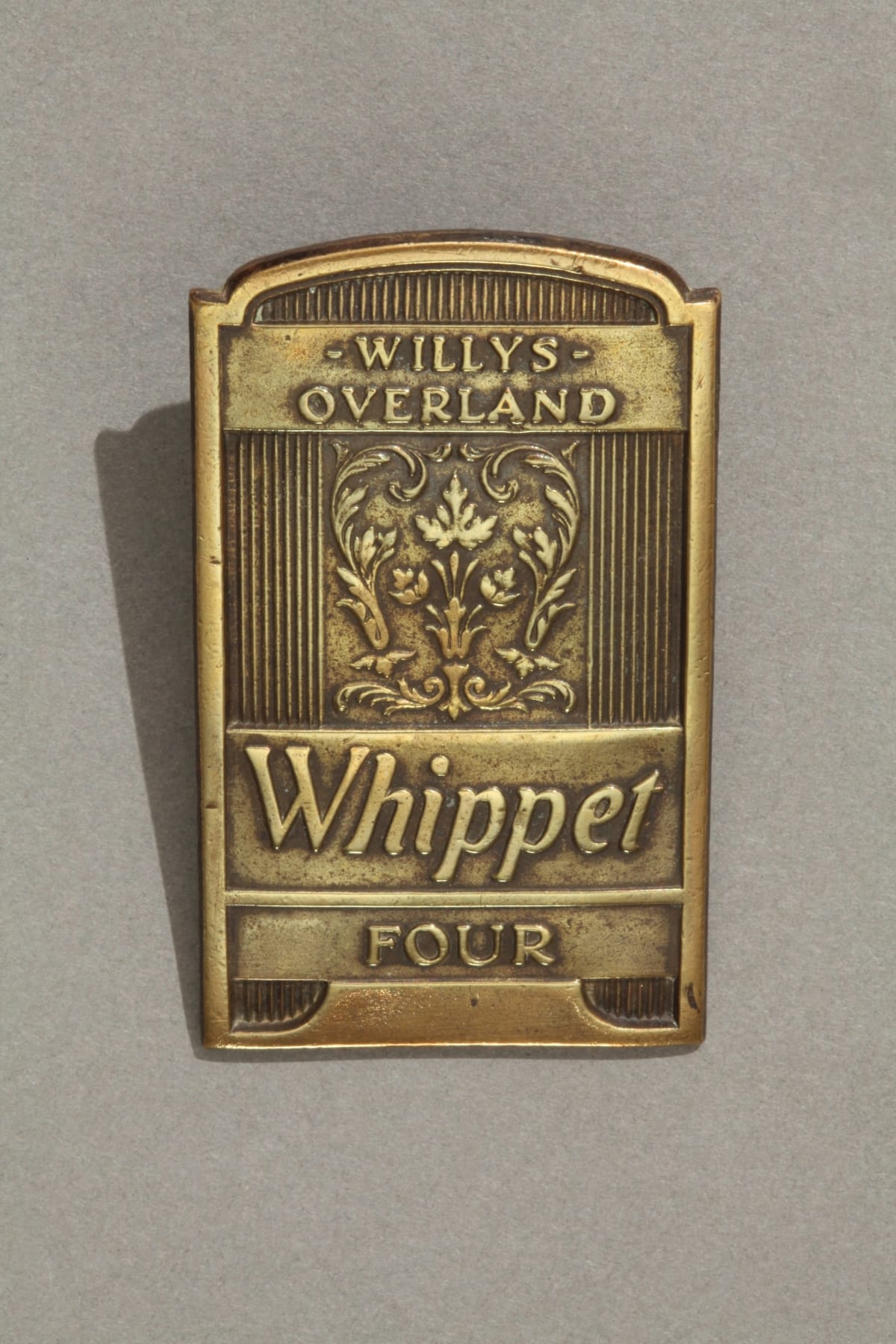
- Willys-Overland Whippet Radiator Emblem, circa 1928 - Willys-Overland of Toledo, Ohio, introduced its low-priced Whippet car for 1926. Generally marketed as its own make, the Whippet was slim but quick -- like the breed of dogs for which it was named. The car boasted four-wheel brakes and full-pressure lubrication, and prices started around $525. The Great Depression ended Whippet production in 1931.
- circa 1928
- Collections - Artifact
Willys-Overland Whippet Radiator Emblem, circa 1928
Willys-Overland of Toledo, Ohio, introduced its low-priced Whippet car for 1926. Generally marketed as its own make, the Whippet was slim but quick -- like the breed of dogs for which it was named. The car boasted four-wheel brakes and full-pressure lubrication, and prices started around $525. The Great Depression ended Whippet production in 1931.
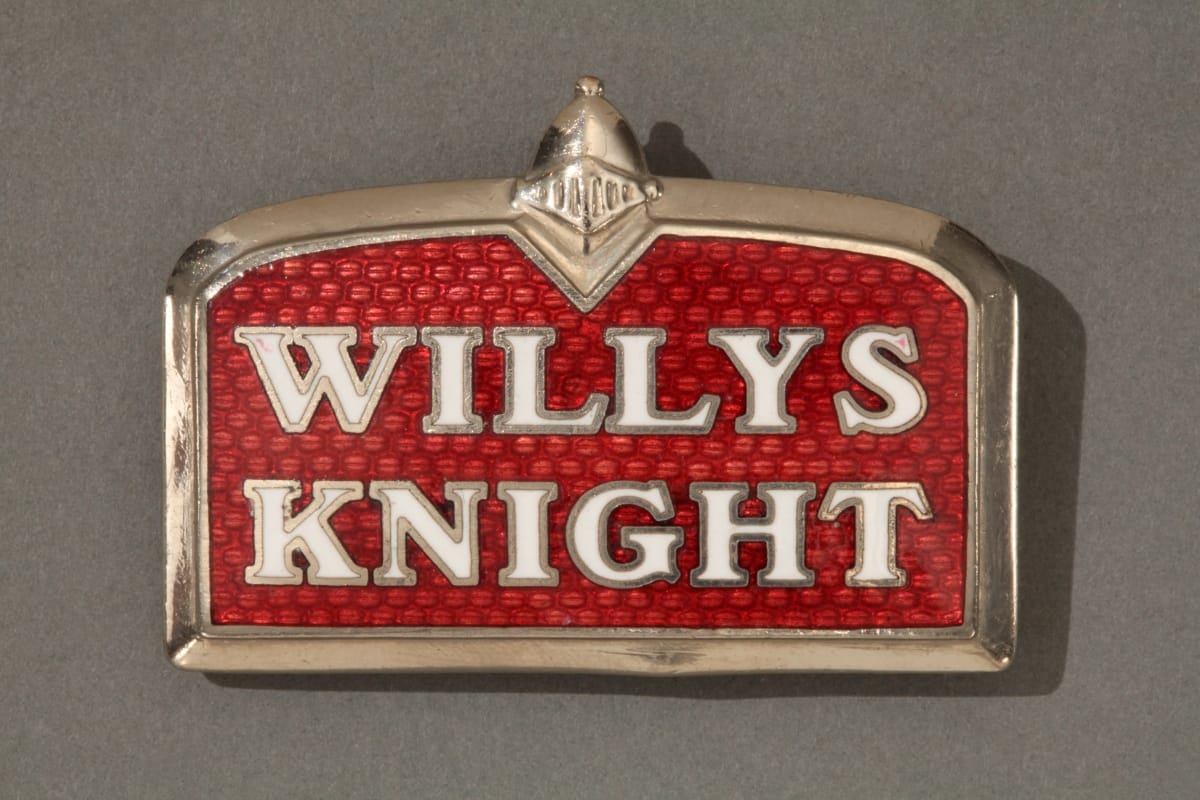
- Willys-Knight Radiator Emblem, circa 1928 - Willys-Overland introduced the mid-priced Willys-Knight for 1914. Willys-Knight cars used sleeve-valve engines throughout their 19-year production run. Unlike common poppet valves operated by cams and springs, sleeve valves sit inside the cylinders -- forming "sleeves" around the pistons -- and work via sliding or rotating motion. They make for a quieter engine, but they consume more oil.
- circa 1928
- Collections - Artifact
Willys-Knight Radiator Emblem, circa 1928
Willys-Overland introduced the mid-priced Willys-Knight for 1914. Willys-Knight cars used sleeve-valve engines throughout their 19-year production run. Unlike common poppet valves operated by cams and springs, sleeve valves sit inside the cylinders -- forming "sleeves" around the pistons -- and work via sliding or rotating motion. They make for a quieter engine, but they consume more oil.