
Search
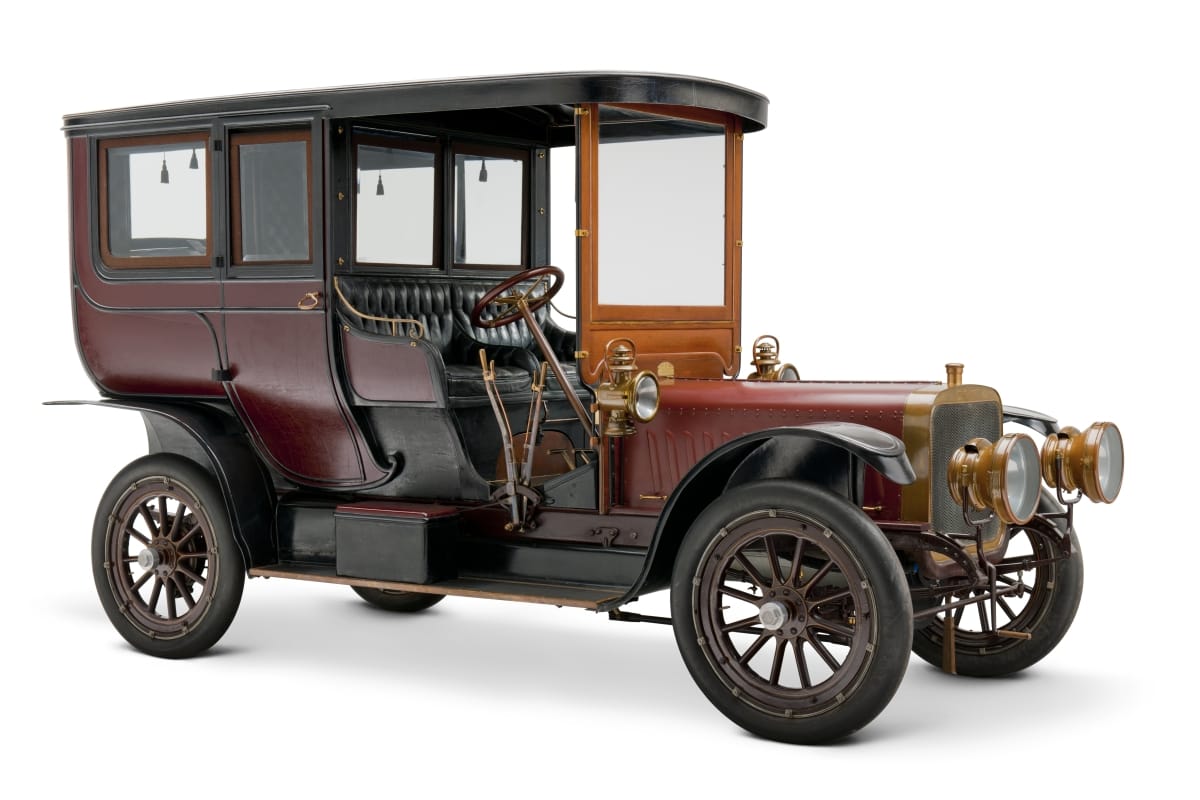
- 1908 Stevens-Duryea Model U Limousine - Early car buyers knew what motor vehicles should look like -- carriages, of course! But automobiles need things carriages don't: radiators, windshields, controls, horns, and hoods. Early automakers developed simple solutions. Brass, often used for carriage trim, was adopted for radiators, levers, and horns. Windshields were glass plates in wood frames. Rectangular sheet metal covers hid engines. The result? A surprisingly attractive mix of materials, colors, and shapes.
- 1908
- Collections - Artifact
1908 Stevens-Duryea Model U Limousine
Early car buyers knew what motor vehicles should look like -- carriages, of course! But automobiles need things carriages don't: radiators, windshields, controls, horns, and hoods. Early automakers developed simple solutions. Brass, often used for carriage trim, was adopted for radiators, levers, and horns. Windshields were glass plates in wood frames. Rectangular sheet metal covers hid engines. The result? A surprisingly attractive mix of materials, colors, and shapes.
- 1900 Winton Touring Car - Industry pioneer Alexander Winton formed his Cleveland-based automobile company in 1897. Winton made national headlines driving one of his single-cylinder vehicles from Cleveland to New York City in 47 hours -- a record time for 1899. Declining sales prompted Winton to refocus his efforts on manufacturing diesel engines in 1924. He sold his engine company to General Motors in 1930.

- 1900
- Collections - Artifact
1900 Winton Touring Car
Industry pioneer Alexander Winton formed his Cleveland-based automobile company in 1897. Winton made national headlines driving one of his single-cylinder vehicles from Cleveland to New York City in 47 hours -- a record time for 1899. Declining sales prompted Winton to refocus his efforts on manufacturing diesel engines in 1924. He sold his engine company to General Motors in 1930.