
Search
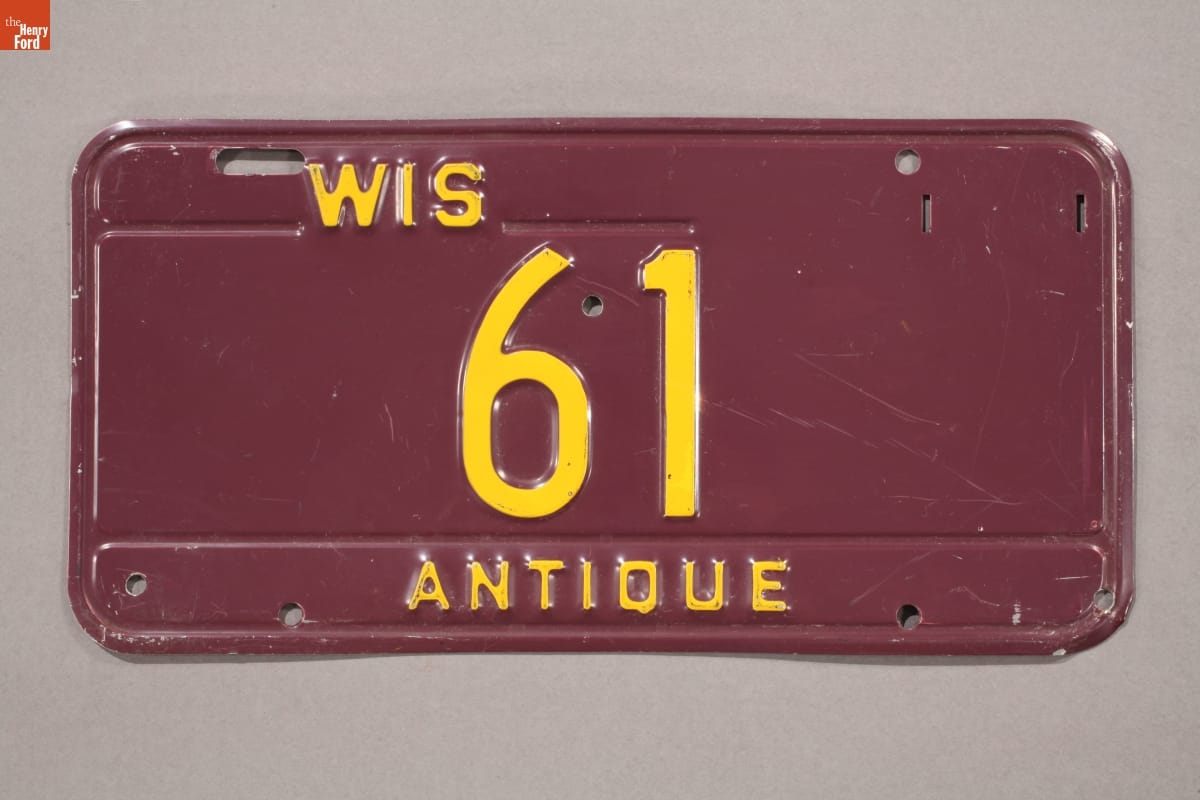
- Wisconsin License Plate, 1961 - In Wisconsin in 1961, historic vehicle owners received an "Antique" license plate, like this one, for qualifying automobiles. Many states have set definitions of what an "Antique" or "Historic" vehicle is. These qualifications usually include cars over a certain age and ones used for specific, limited purposes and not as a main source of transportation.
- 1961
- Collections - Artifact
Wisconsin License Plate, 1961
In Wisconsin in 1961, historic vehicle owners received an "Antique" license plate, like this one, for qualifying automobiles. Many states have set definitions of what an "Antique" or "Historic" vehicle is. These qualifications usually include cars over a certain age and ones used for specific, limited purposes and not as a main source of transportation.
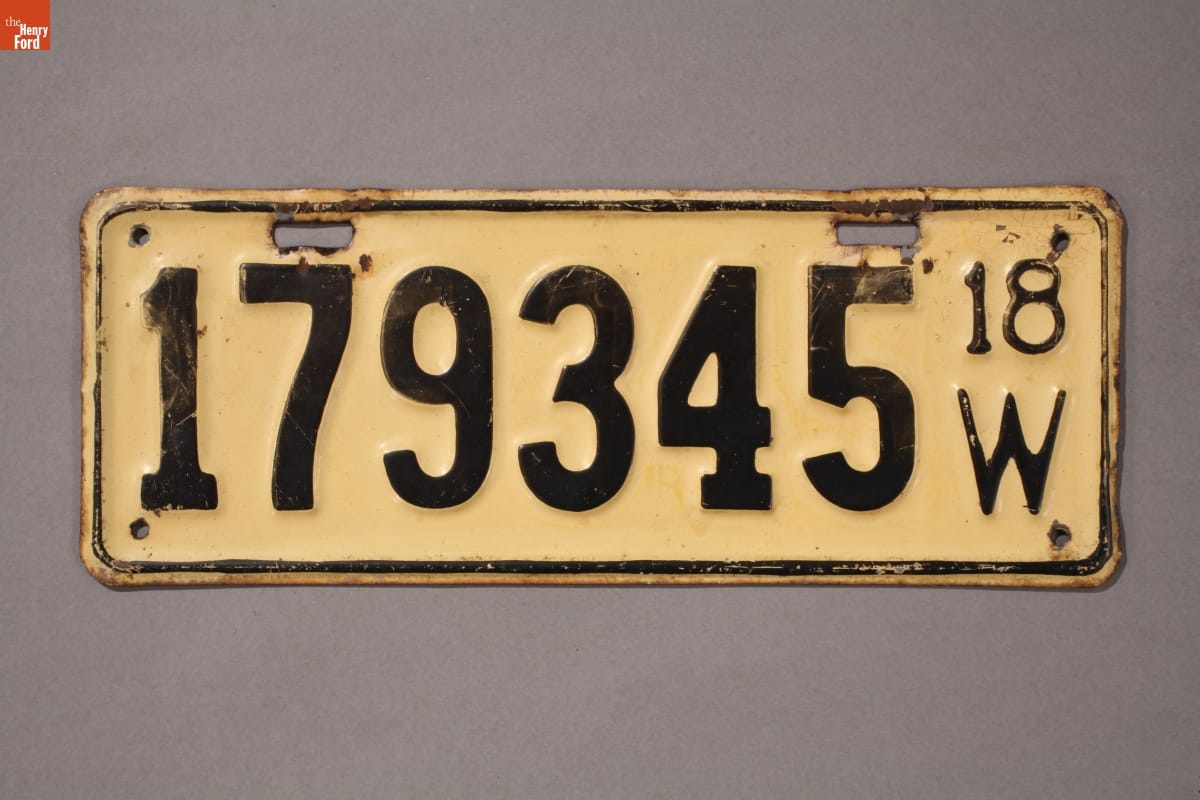
- Wisconsin License Plate, 1918 - Early state-issued license plates were made of porcelain-coated iron. Later, states stamped tin, steel, or even copper to make plates. During the Second World War several states used fiberboard. Plate colors varied and some states added symbols, mottoes, or other design elements. Today, states use reflective sheeting to coat a standard-sized aluminum blank which is then stamped and decorated.
- 1918
- Collections - Artifact
Wisconsin License Plate, 1918
Early state-issued license plates were made of porcelain-coated iron. Later, states stamped tin, steel, or even copper to make plates. During the Second World War several states used fiberboard. Plate colors varied and some states added symbols, mottoes, or other design elements. Today, states use reflective sheeting to coat a standard-sized aluminum blank which is then stamped and decorated.
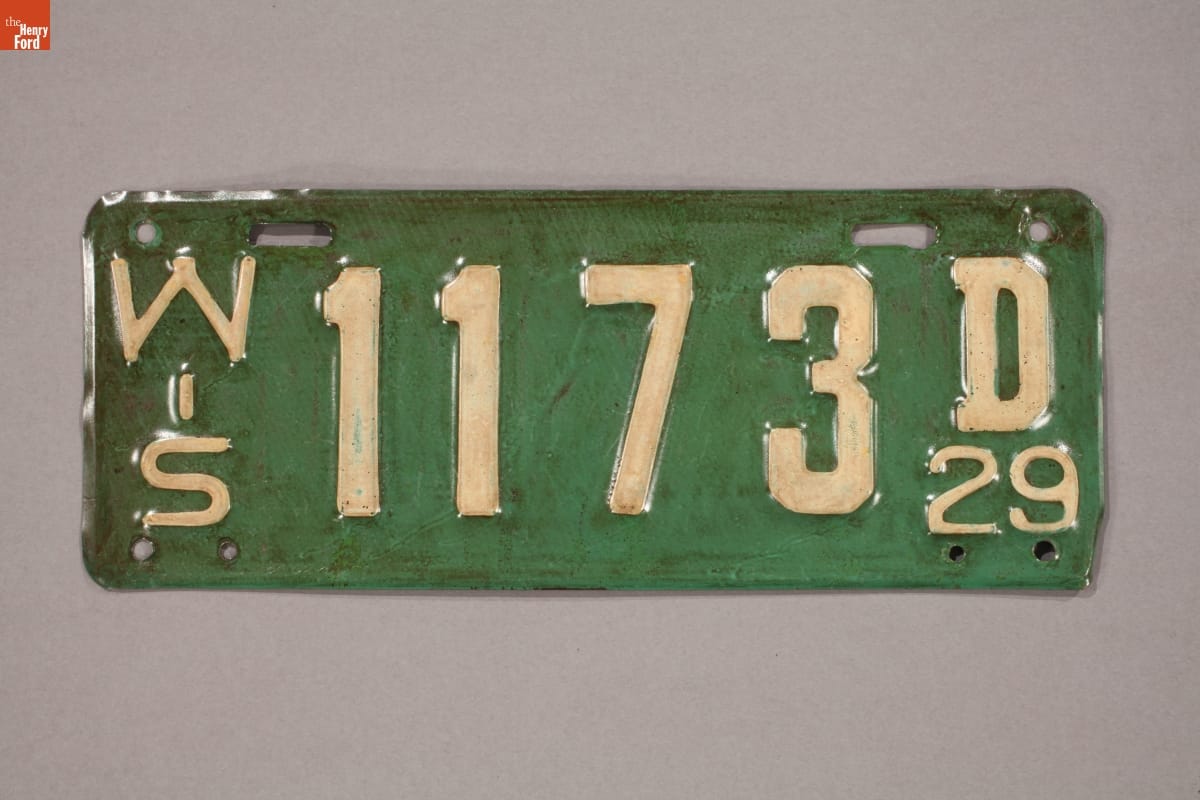
- Wisconsin License Plate, 1929 - Early state-issued license plates were made of porcelain-coated iron. Later, states stamped tin, steel, or even copper to make plates. During the Second World War several states used fiberboard. Plate colors varied and some states added symbols, mottoes, or other design elements. Today, states use reflective sheeting to coat a standard-sized aluminum blank which is then stamped and decorated.
- 1929
- Collections - Artifact
Wisconsin License Plate, 1929
Early state-issued license plates were made of porcelain-coated iron. Later, states stamped tin, steel, or even copper to make plates. During the Second World War several states used fiberboard. Plate colors varied and some states added symbols, mottoes, or other design elements. Today, states use reflective sheeting to coat a standard-sized aluminum blank which is then stamped and decorated.
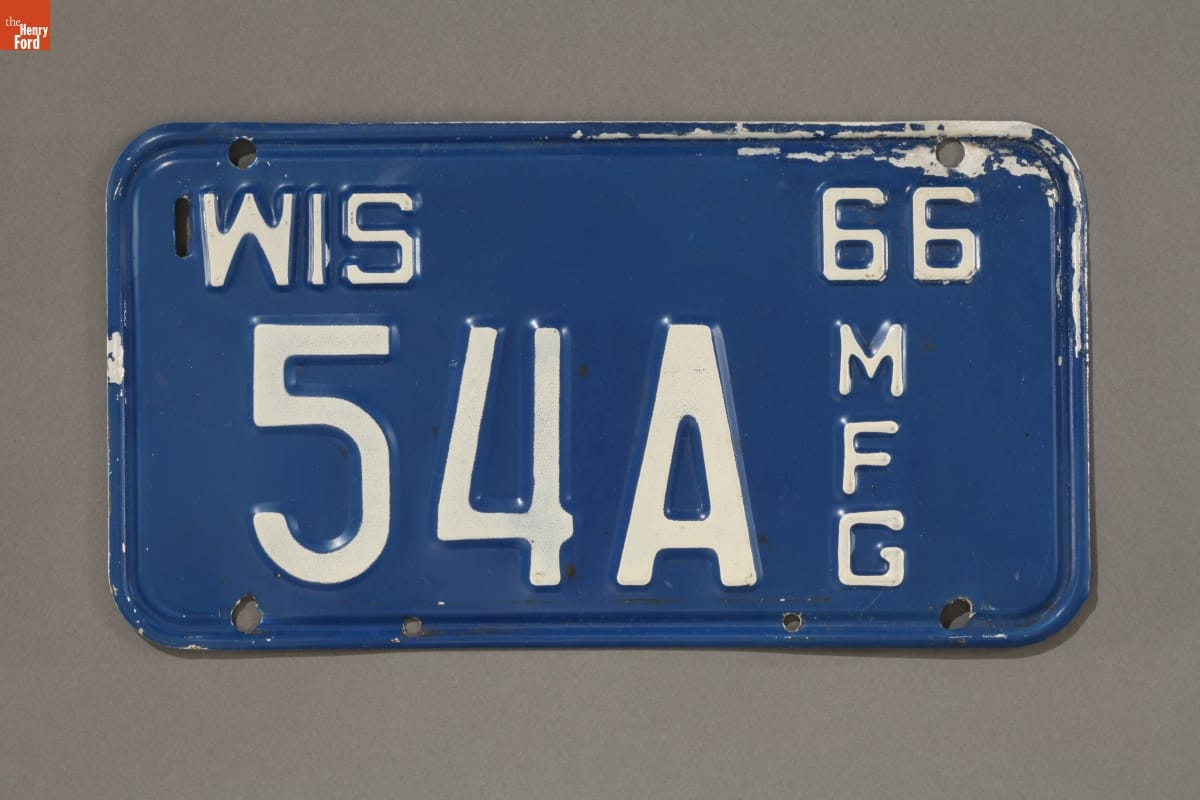
- Wisconsin License Plate, 1966 - Early state-issued license plates were made of porcelain-coated iron. Later, states stamped tin, steel, or even copper to make plates. During the Second World War several states used fiberboard. Plate colors varied and some states added symbols, mottoes, or other design elements. Today, states use reflective sheeting to coat a standard-sized aluminum blank which is then stamped and decorated.
- 1966
- Collections - Artifact
Wisconsin License Plate, 1966
Early state-issued license plates were made of porcelain-coated iron. Later, states stamped tin, steel, or even copper to make plates. During the Second World War several states used fiberboard. Plate colors varied and some states added symbols, mottoes, or other design elements. Today, states use reflective sheeting to coat a standard-sized aluminum blank which is then stamped and decorated.