
Search
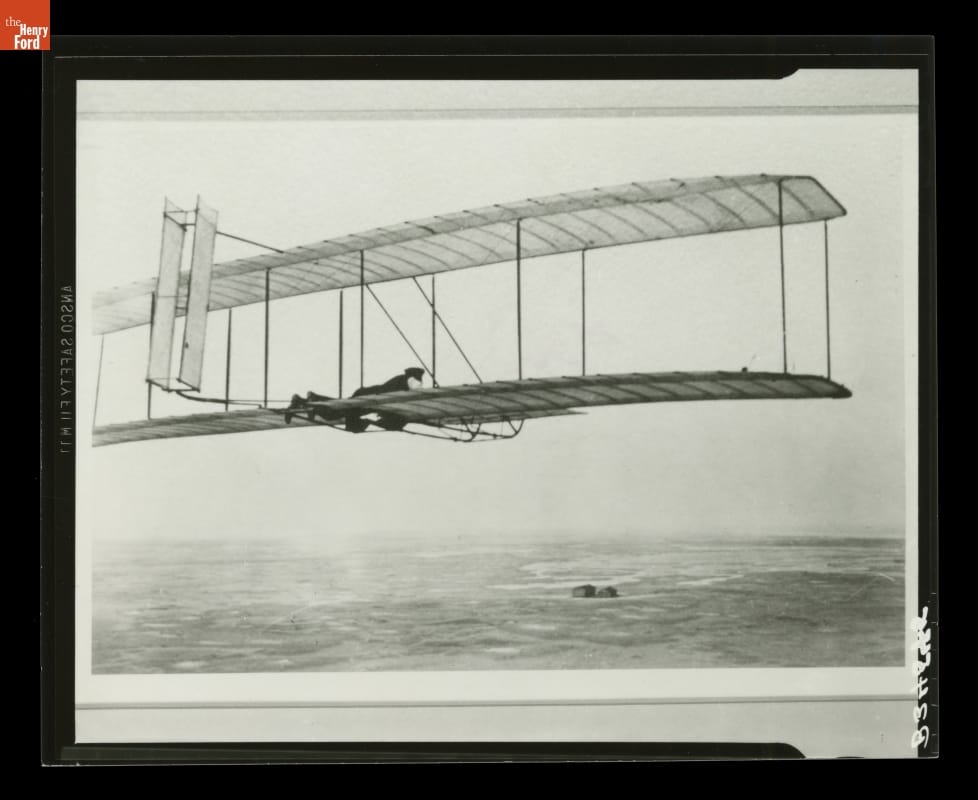
- Wright Brothers Piloting Their 1902 Glider in 1903, Kill Devil Hills, North Carolina - The Wright brothers' 1902 glider was their third aircraft tested at Kill Devil Hills in as many years. It was also the first built with aerodynamic calculations based on the Wrights' own wind tunnel tests. The improvements in performance were stunning. The brothers made more than 700 glides in 1902. Many were over 500 feet long, and some exceeded 600 feet.
- October 21, 1903
- Collections - Artifact
Wright Brothers Piloting Their 1902 Glider in 1903, Kill Devil Hills, North Carolina
The Wright brothers' 1902 glider was their third aircraft tested at Kill Devil Hills in as many years. It was also the first built with aerodynamic calculations based on the Wrights' own wind tunnel tests. The improvements in performance were stunning. The brothers made more than 700 glides in 1902. Many were over 500 feet long, and some exceeded 600 feet.
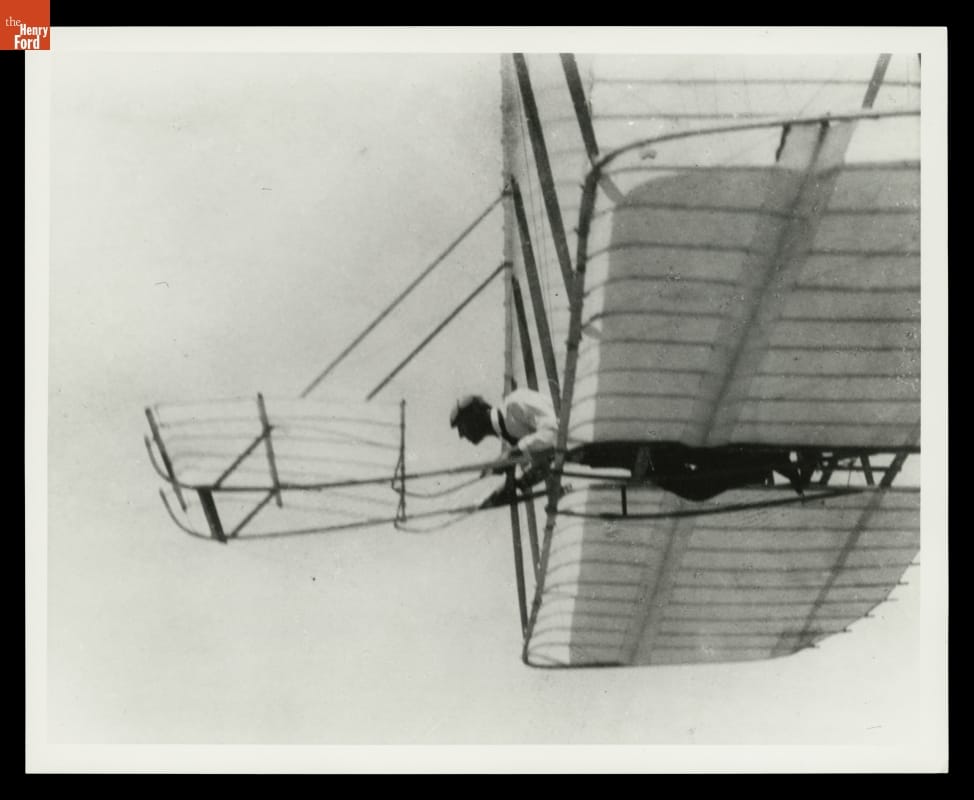
- Wilbur Wright Piloting the 1901 Glider, Kill Devil Hills, North Carolina, July 1901 - Before the Wright brothers' famous first flight in a powered, heavier-than-air craft, they experimented with piloted gliders. Here, Wilbur Wright pilots the second glider at Kitty Hawk, North Carolina. Though the brothers achieved glides of more than 300 feet with this glider, the craft was problematic. Major issues with lift and control sent them back to the drawing board.
- July 01, 1901
- Collections - Artifact
Wilbur Wright Piloting the 1901 Glider, Kill Devil Hills, North Carolina, July 1901
Before the Wright brothers' famous first flight in a powered, heavier-than-air craft, they experimented with piloted gliders. Here, Wilbur Wright pilots the second glider at Kitty Hawk, North Carolina. Though the brothers achieved glides of more than 300 feet with this glider, the craft was problematic. Major issues with lift and control sent them back to the drawing board.
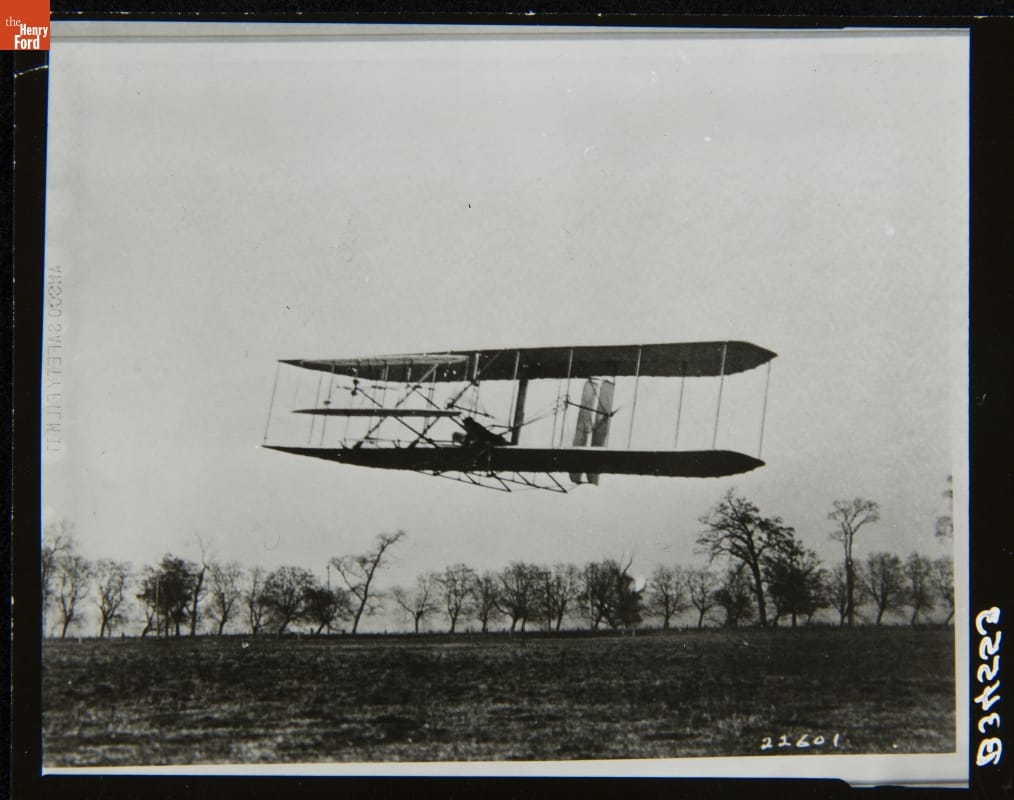
- Wright Brothers 1904 Flyer over Huffman Prairie near Dayton, Ohio, November 15, 1904 - Following their successful flights at Kill Devil Hills, North Carolina, in December 1903, the Wright brothers made further test flights closer to home. They flew at Huffman Prairie, an open field some eight miles northeast of their bicycle shop in Dayton, Ohio. The Wrights devised a catapult system to help launch their airplanes in the field's comparatively calm winds.
- November 15, 1904
- Collections - Artifact
Wright Brothers 1904 Flyer over Huffman Prairie near Dayton, Ohio, November 15, 1904
Following their successful flights at Kill Devil Hills, North Carolina, in December 1903, the Wright brothers made further test flights closer to home. They flew at Huffman Prairie, an open field some eight miles northeast of their bicycle shop in Dayton, Ohio. The Wrights devised a catapult system to help launch their airplanes in the field's comparatively calm winds.
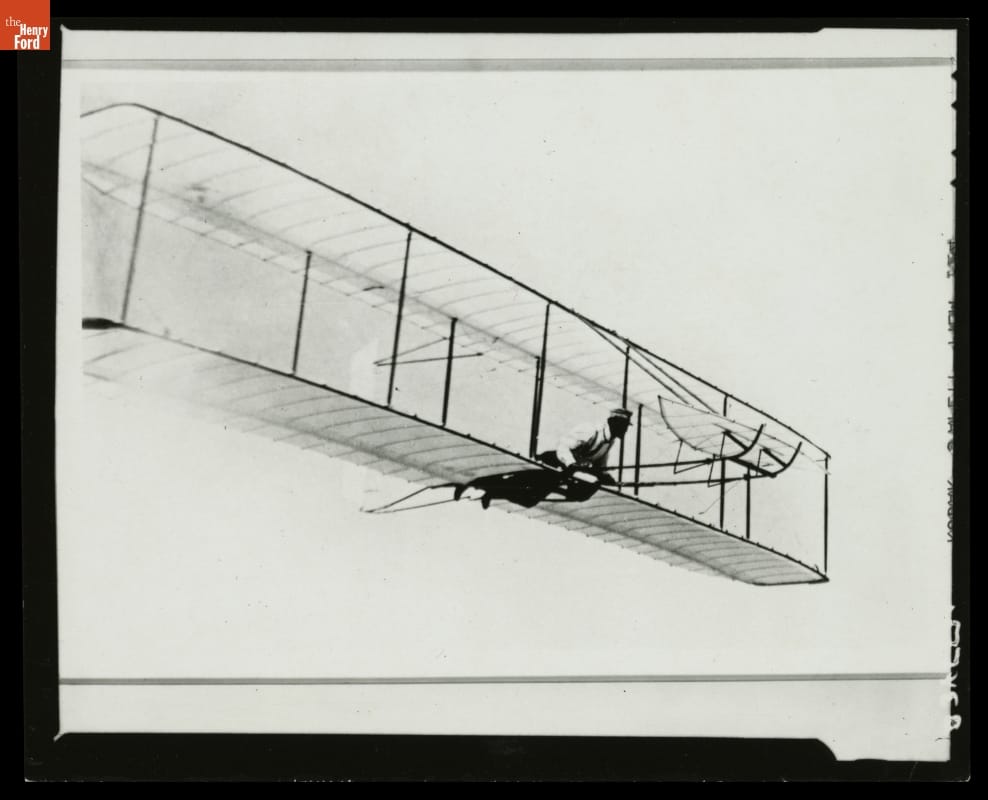
- Wilbur Wright Piloting the 1902 Glider, Kill Devil Hills, North Carolina, October 10, 1902 - Before the Wright brothers' famous first flight in a powered, heavier-than-air craft, they experimented with piloted gliders. Combining previous designs with data from wind tunnel and model wing testing, the Wrights built their third glider in 1902. Here, Wilbur Wright pilots the craft at Kitty Hawk, North Carolina. The brothers had created the world's first fully controllable aircraft.
- October 10, 1902
- Collections - Artifact
Wilbur Wright Piloting the 1902 Glider, Kill Devil Hills, North Carolina, October 10, 1902
Before the Wright brothers' famous first flight in a powered, heavier-than-air craft, they experimented with piloted gliders. Combining previous designs with data from wind tunnel and model wing testing, the Wrights built their third glider in 1902. Here, Wilbur Wright pilots the craft at Kitty Hawk, North Carolina. The brothers had created the world's first fully controllable aircraft.
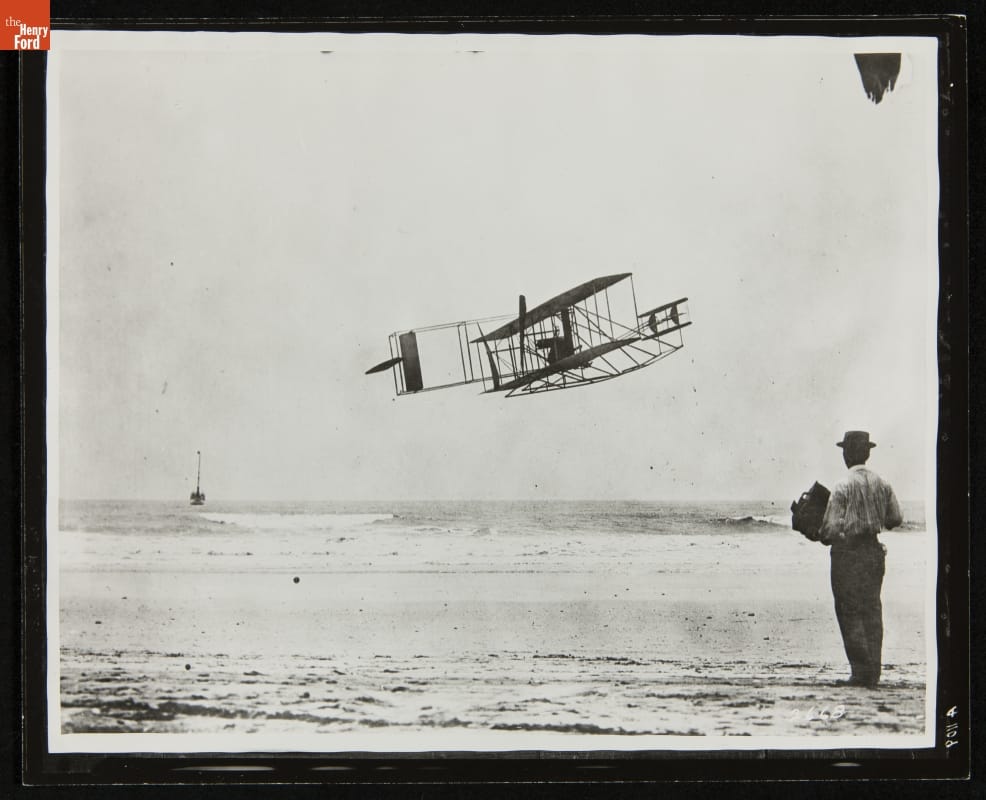
- Wright Flyer at Kill Devil Hills, North Carolina, circa 1903 - Wilbur and Orville Wright made a total of four flights on December 17, 1903. While the famous first flight, by Orville, lasted all of 12 seconds and covered just 120 feet, each subsequent attempt bettered those marks. The fourth flight, with Wilbur at the controls, traveled 852 feet and lasted a full 59 seconds.
- circa 1903
- Collections - Artifact
Wright Flyer at Kill Devil Hills, North Carolina, circa 1903
Wilbur and Orville Wright made a total of four flights on December 17, 1903. While the famous first flight, by Orville, lasted all of 12 seconds and covered just 120 feet, each subsequent attempt bettered those marks. The fourth flight, with Wilbur at the controls, traveled 852 feet and lasted a full 59 seconds.
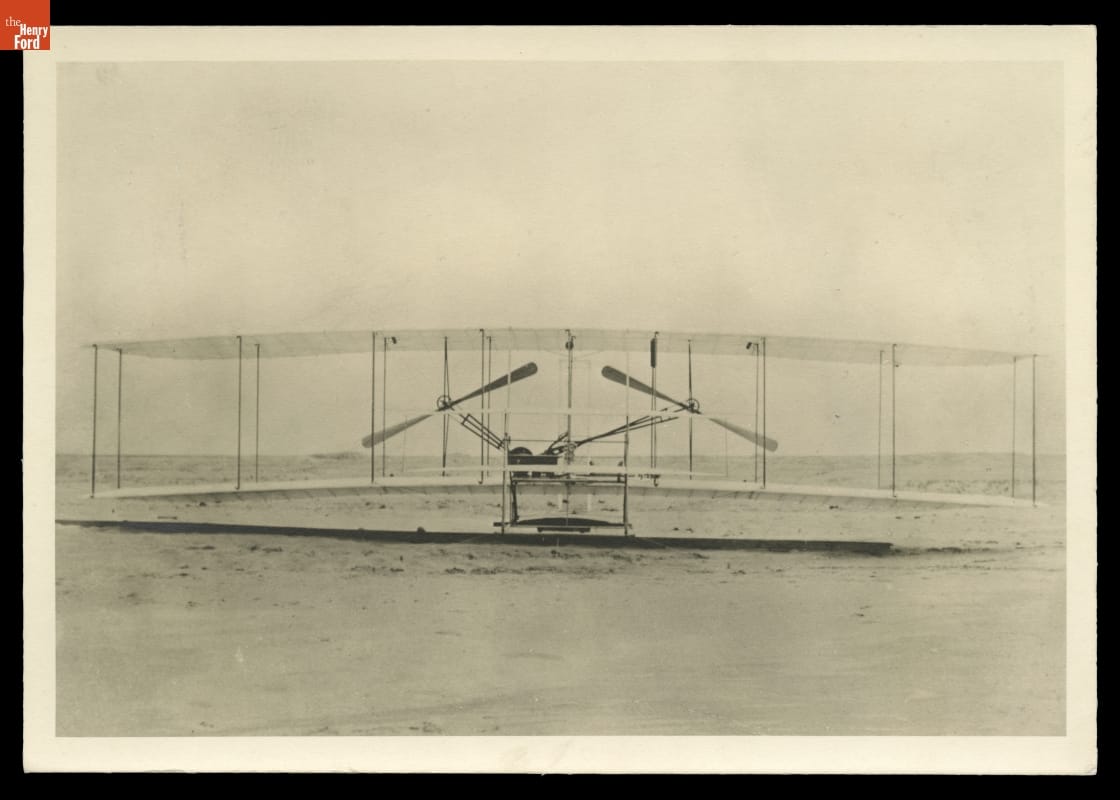
- Wright Flyer at Kill Devil Hills, North Carolina, November 24, 1903 - Orville and Wilbur Wright were both enthusiastic photographers. They took a camera with them to the Kill Devil Hills near Kitty Hawk, North Carolina, and carefully documented their aviation experiments with it. This photo shows the 1903 Wright Flyer at Kill Devil Hills on November 24, 1903. Three weeks later, it made the first successful controlled, powered, heavier-than-air flight.
- December 01, 1903
- Collections - Artifact
Wright Flyer at Kill Devil Hills, North Carolina, November 24, 1903
Orville and Wilbur Wright were both enthusiastic photographers. They took a camera with them to the Kill Devil Hills near Kitty Hawk, North Carolina, and carefully documented their aviation experiments with it. This photo shows the 1903 Wright Flyer at Kill Devil Hills on November 24, 1903. Three weeks later, it made the first successful controlled, powered, heavier-than-air flight.