
Search
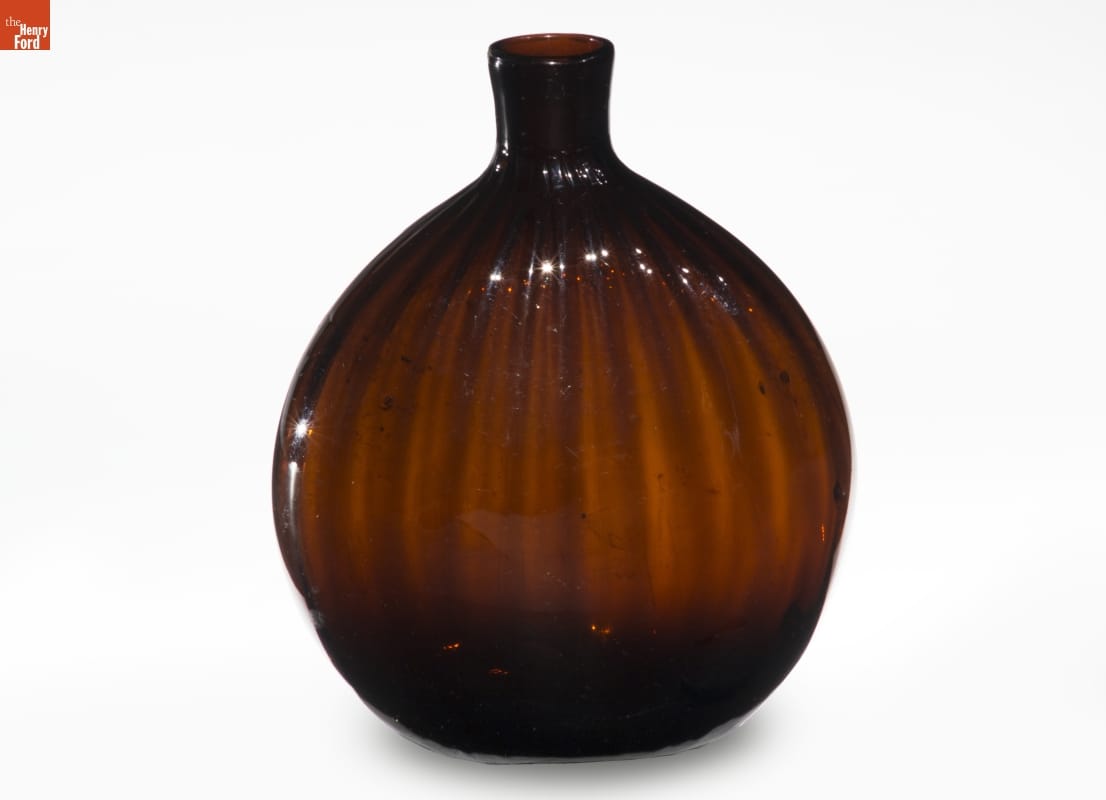
- Flask, 1815-1840 - American glass factories produced flasks, like this one, from the late 1700s well into the mid-1800s. The pint-sized flask could hold water but more likely contained alcoholic beverages. Its textured decorative exterior -- formed when the hot glass was dipped into a pattern mold before it was blown -- made the flask easier to grasp. And its flattened shape fit nicely into pockets providing ready access to the liquid refreshment.
- 1815-1840
- Collections - Artifact
Flask, 1815-1840
American glass factories produced flasks, like this one, from the late 1700s well into the mid-1800s. The pint-sized flask could hold water but more likely contained alcoholic beverages. Its textured decorative exterior -- formed when the hot glass was dipped into a pattern mold before it was blown -- made the flask easier to grasp. And its flattened shape fit nicely into pockets providing ready access to the liquid refreshment.
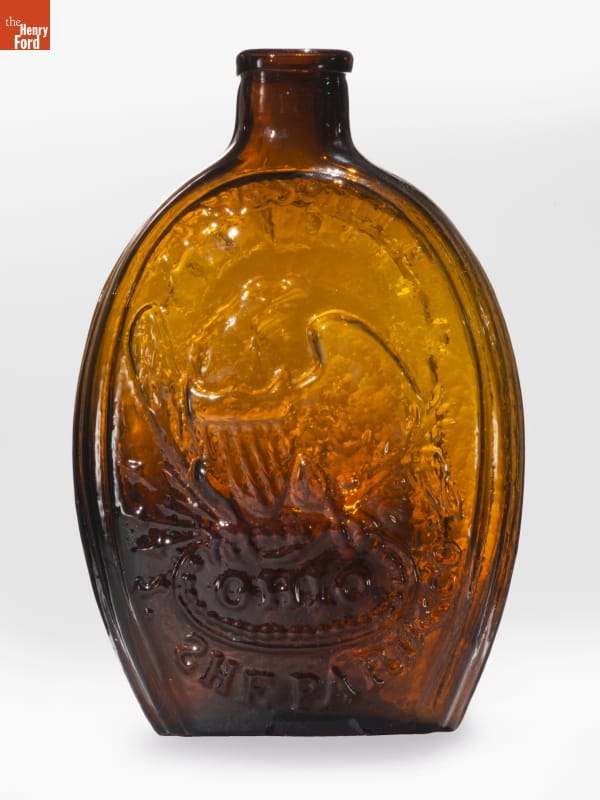
- Flask, 1822-1835 - Glass factories in America began producing inexpensive, mold-formed flasks in the early 1800s. These figured flasks, often decorated with symbols of national pride or political or cultural affiliation, appealed to America's common man. Membership in the Freemasons grew in the early decades of the 1800s. This flask combines Masonic imagery (arch and pavement) with an emblem of America's agrarian roots (farm tools and grain).
- 1822-1835
- Collections - Artifact
Flask, 1822-1835
Glass factories in America began producing inexpensive, mold-formed flasks in the early 1800s. These figured flasks, often decorated with symbols of national pride or political or cultural affiliation, appealed to America's common man. Membership in the Freemasons grew in the early decades of the 1800s. This flask combines Masonic imagery (arch and pavement) with an emblem of America's agrarian roots (farm tools and grain).
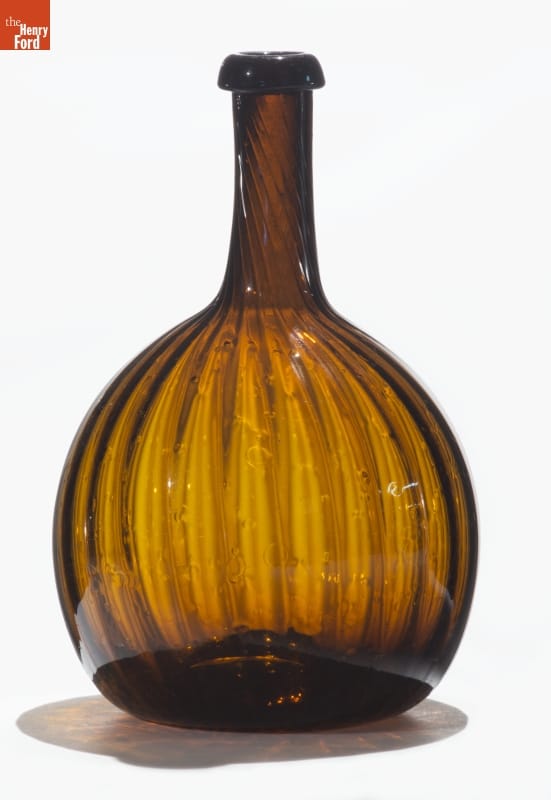
- Bottle, 1815-1840 -
- 1815-1840
- Collections - Artifact
Bottle, 1815-1840
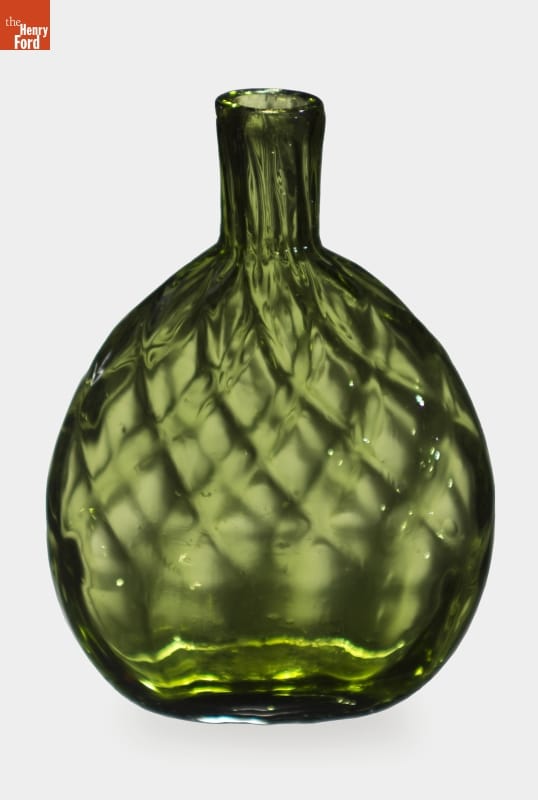
- Flask, 1815-1840 - American glass factories produced flasks, like this one, from the late 1700s well into the mid-1800s. The pint-sized flask could hold water but more likely contained alcoholic beverages. Its textured decorative exterior -- formed when the hot glass was dipped into a pattern mold before it was blown -- made the flask easier to grasp. And its flattened shape fit nicely into pockets providing ready access to the liquid refreshment.
- 1815-1840
- Collections - Artifact
Flask, 1815-1840
American glass factories produced flasks, like this one, from the late 1700s well into the mid-1800s. The pint-sized flask could hold water but more likely contained alcoholic beverages. Its textured decorative exterior -- formed when the hot glass was dipped into a pattern mold before it was blown -- made the flask easier to grasp. And its flattened shape fit nicely into pockets providing ready access to the liquid refreshment.
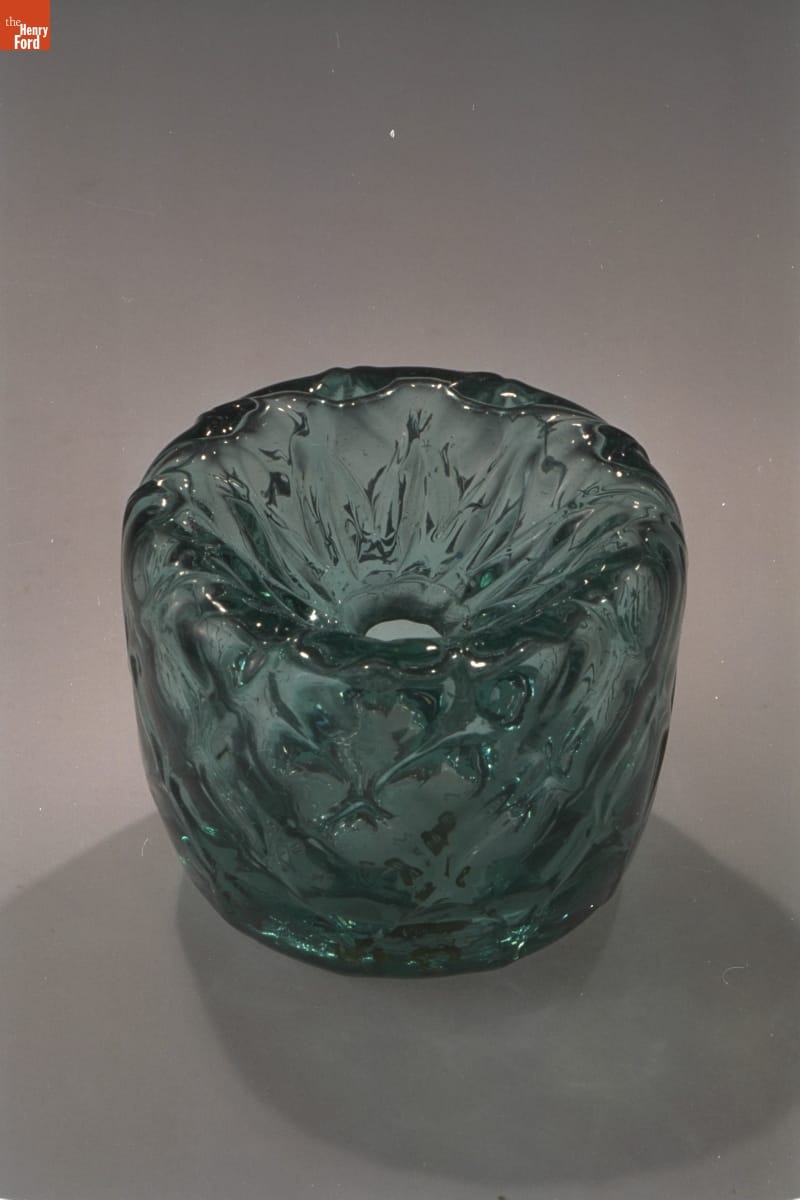
- Inkwell, 1815-1835 - America glass factories produced a variety of inexpensive glass products for the early-nineteenth-century consumer. Glass manufacturers turned out bottles, flasks, tableware and other household items such as this inkwell. This small decorative item adorned writing tables or desks and held ink used to sign documents, tally ledger columns or pen letters to family and friends.
- 1815-1835
- Collections - Artifact
Inkwell, 1815-1835
America glass factories produced a variety of inexpensive glass products for the early-nineteenth-century consumer. Glass manufacturers turned out bottles, flasks, tableware and other household items such as this inkwell. This small decorative item adorned writing tables or desks and held ink used to sign documents, tally ledger columns or pen letters to family and friends.
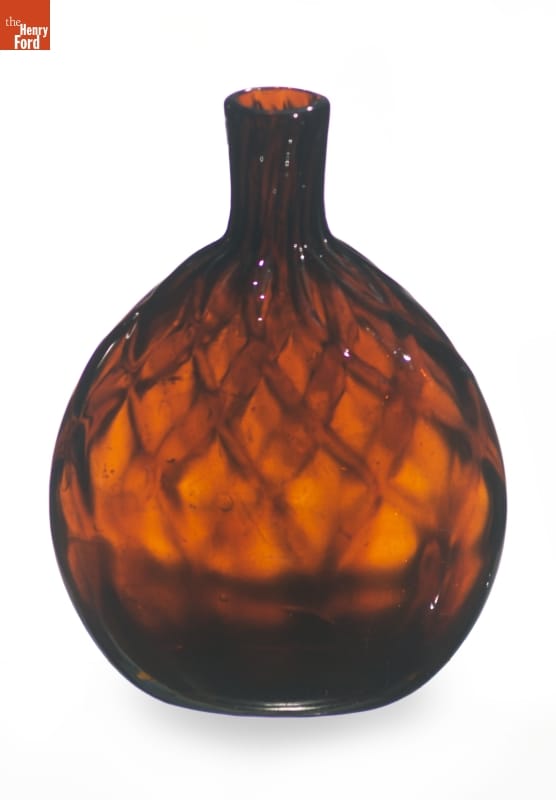
- Pocket Flask, 1815-1840 - American glass factories produced flasks, like this one, from the late 1700s well into the mid-1800s. The pint-sized flask could hold water but more likely contained alcoholic beverages. Its textured decorative exterior -- formed when the hot glass was dipped into a pattern mold before it was blown -- made the flask easier to grasp. And its flattened shape fit nicely into pockets providing ready access to the liquid refreshment.
- 1815-1840
- Collections - Artifact
Pocket Flask, 1815-1840
American glass factories produced flasks, like this one, from the late 1700s well into the mid-1800s. The pint-sized flask could hold water but more likely contained alcoholic beverages. Its textured decorative exterior -- formed when the hot glass was dipped into a pattern mold before it was blown -- made the flask easier to grasp. And its flattened shape fit nicely into pockets providing ready access to the liquid refreshment.
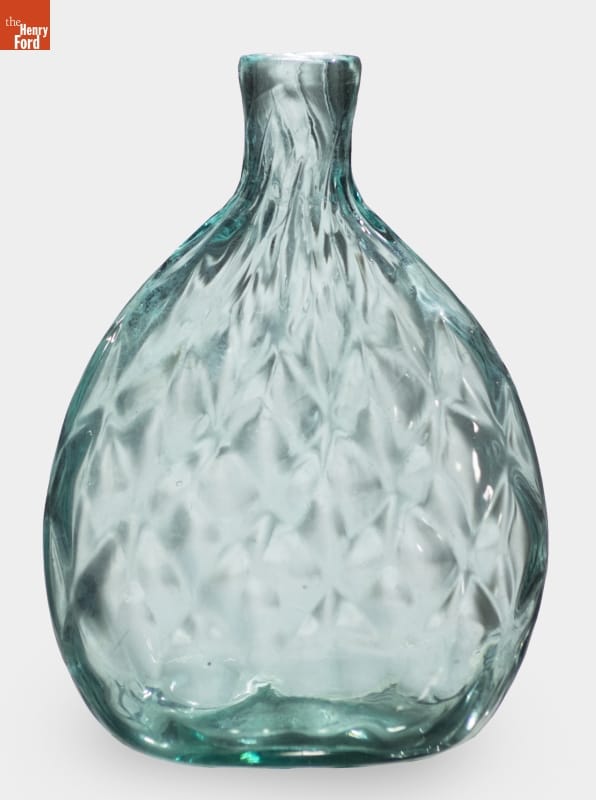
- Flask, 1815-1840 - American glass factories produced flasks, like this one, from the late 1700s well into the mid-1800s. The pint-sized flask could hold water but more likely contained alcoholic beverages. Its textured decorative exterior -- formed when the hot glass was dipped into a pattern mold before it was blown -- made the flask easier to grasp. And its flattened shape fit nicely into pockets providing ready access to the liquid refreshment.
- 1815-1840
- Collections - Artifact
Flask, 1815-1840
American glass factories produced flasks, like this one, from the late 1700s well into the mid-1800s. The pint-sized flask could hold water but more likely contained alcoholic beverages. Its textured decorative exterior -- formed when the hot glass was dipped into a pattern mold before it was blown -- made the flask easier to grasp. And its flattened shape fit nicely into pockets providing ready access to the liquid refreshment.
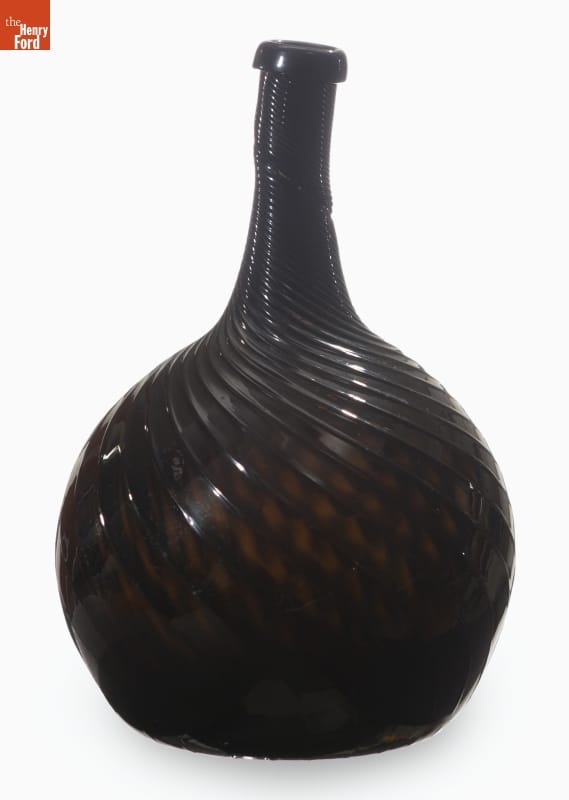
- Bottle, 1815-1840 -
- 1815-1840
- Collections - Artifact
Bottle, 1815-1840
- Flask, 1815-1840 - American glass factories produced flasks, like this one, from the late 1700s well into the mid-1800s. The pint-sized flask could hold water but more likely contained alcoholic beverages. Its textured decorative exterior -- formed when the hot glass was dipped into a pattern mold before it was blown -- made the flask easier to grasp. And its flattened shape fit nicely into pockets providing ready access to the liquid refreshment.
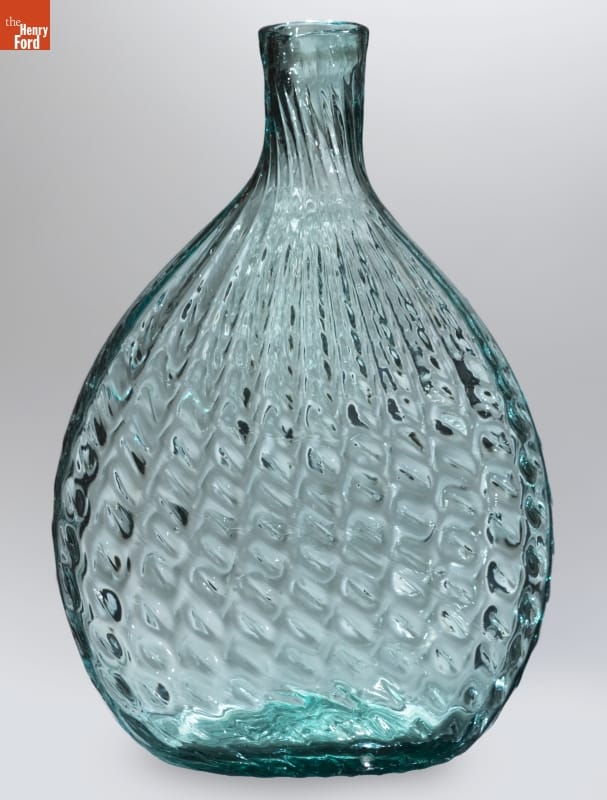
- 1815-1840
- Collections - Artifact
Flask, 1815-1840
American glass factories produced flasks, like this one, from the late 1700s well into the mid-1800s. The pint-sized flask could hold water but more likely contained alcoholic beverages. Its textured decorative exterior -- formed when the hot glass was dipped into a pattern mold before it was blown -- made the flask easier to grasp. And its flattened shape fit nicely into pockets providing ready access to the liquid refreshment.
- Flask, 1815-1840 - American glass factories produced flasks, like this one, from the late 1700s well into the mid-1800s. The pint-sized flask could hold water but more likely contained alcoholic beverages. Its textured decorative exterior -- formed when the hot glass was dipped into a pattern mold before it was blown -- made the flask easier to grasp. And its flattened shape fit nicely into pockets providing ready access to the liquid refreshment.
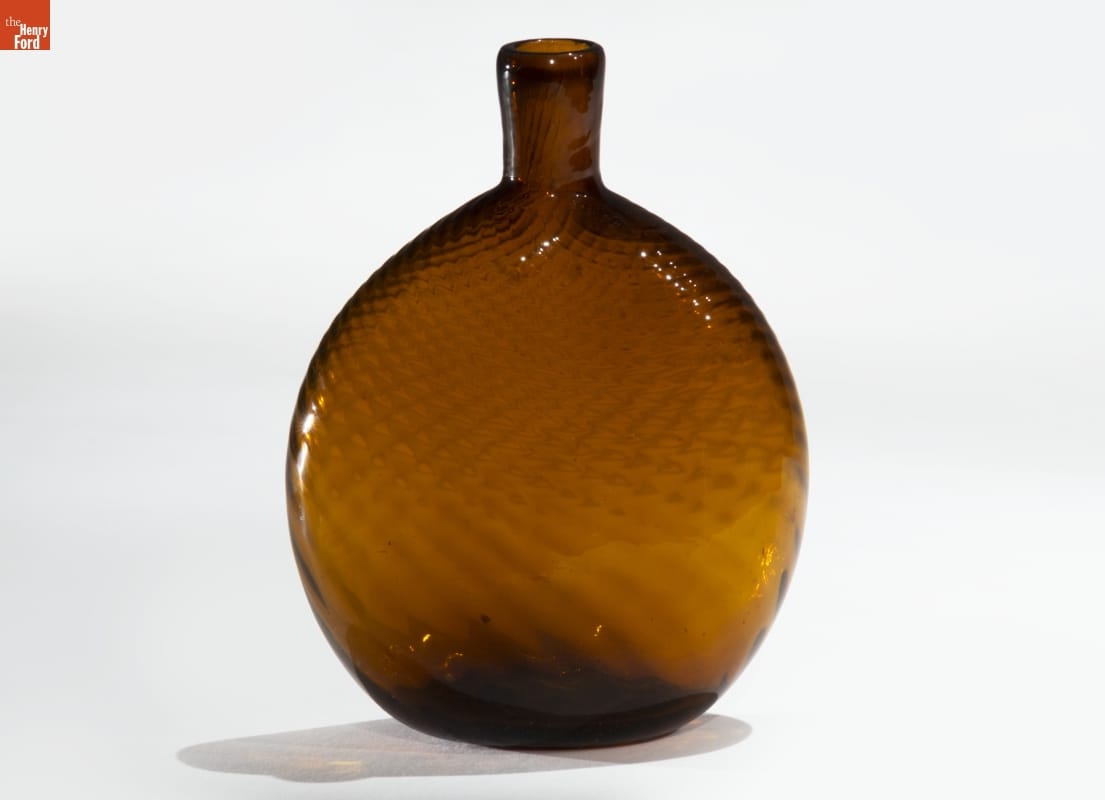
- 1815-1840
- Collections - Artifact
Flask, 1815-1840
American glass factories produced flasks, like this one, from the late 1700s well into the mid-1800s. The pint-sized flask could hold water but more likely contained alcoholic beverages. Its textured decorative exterior -- formed when the hot glass was dipped into a pattern mold before it was blown -- made the flask easier to grasp. And its flattened shape fit nicely into pockets providing ready access to the liquid refreshment.