
Search
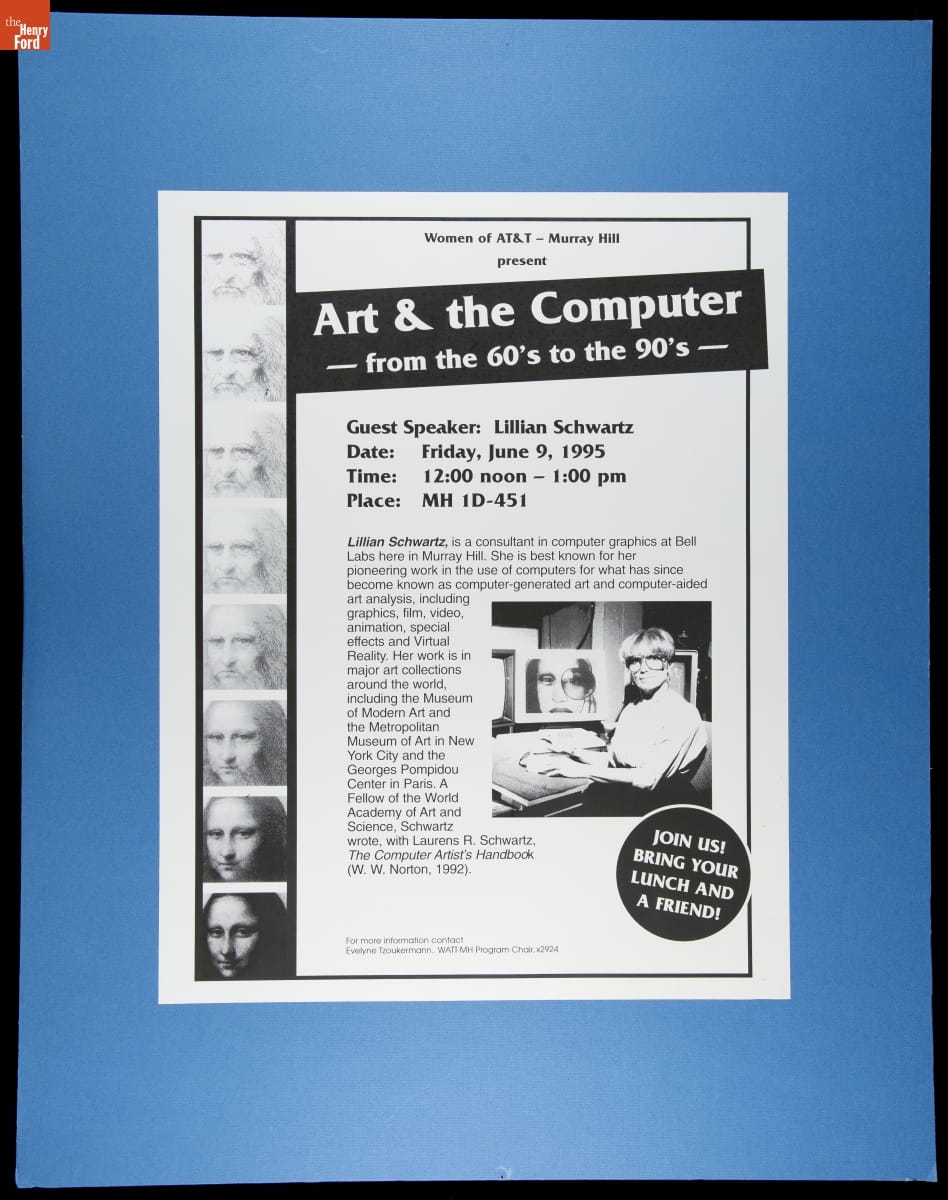
- Poster, "Art & the Computer: From the 60's to the 90's," 1995 - Lillian Schwartz is a pioneer of computer-generated art. From 1969-2002, she was a "resident visitor" at Bell Laboratories, producing groundbreaking films, videos, and multimedia works. The Schwartz Collection spans Lillian's childhood into her late career, documenting an expansive mindset, mastery over traditional and experimental mediums alike--and above all--an ability to create inspirational connections between science, art, and technology.
- 1995
- Collections - Artifact
Poster, "Art & the Computer: From the 60's to the 90's," 1995
Lillian Schwartz is a pioneer of computer-generated art. From 1969-2002, she was a "resident visitor" at Bell Laboratories, producing groundbreaking films, videos, and multimedia works. The Schwartz Collection spans Lillian's childhood into her late career, documenting an expansive mindset, mastery over traditional and experimental mediums alike--and above all--an ability to create inspirational connections between science, art, and technology.
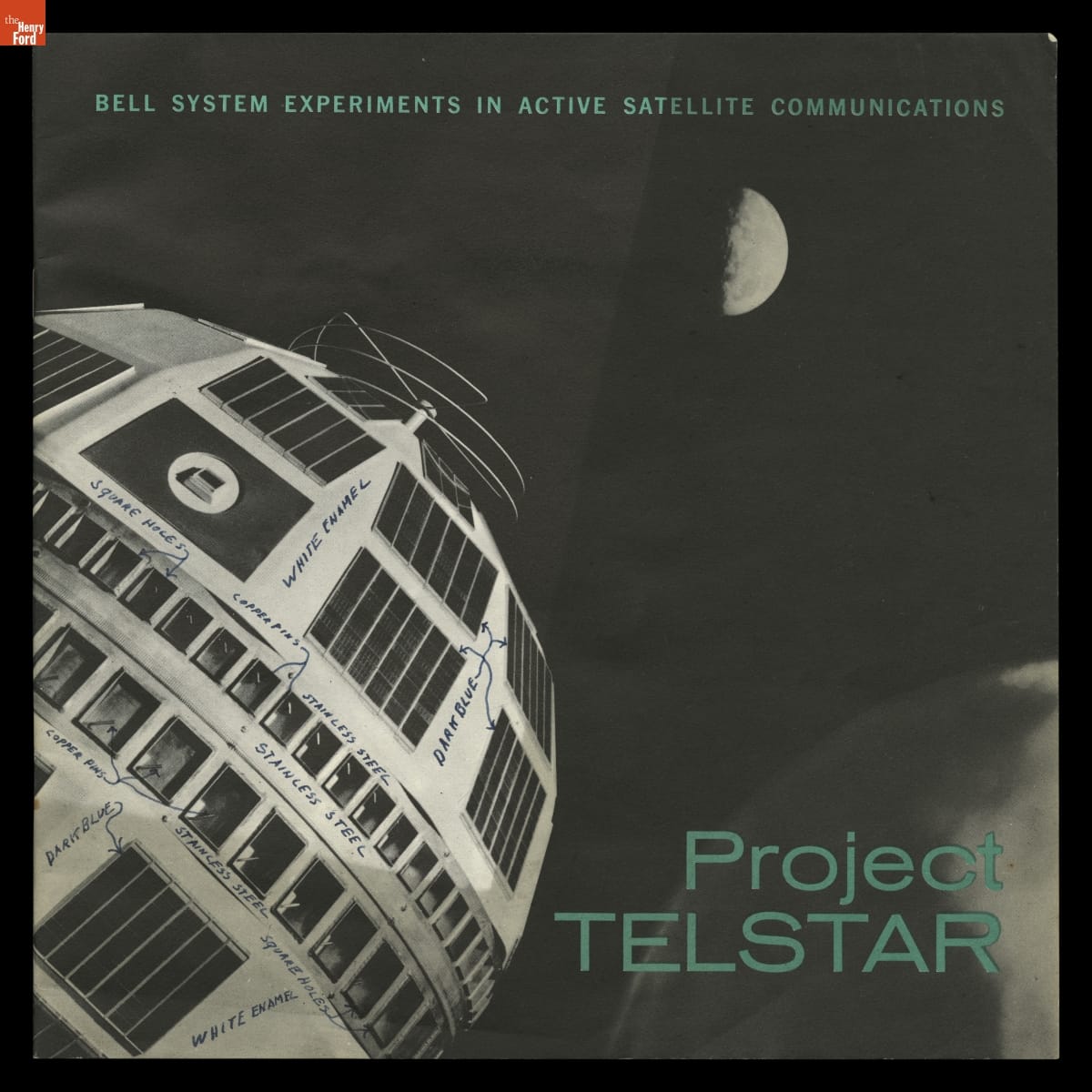
- Brochure, "Project Telstar: Bell System Experiments in Active Satellite Communications," 1962 -
- 1962
- Collections - Artifact
Brochure, "Project Telstar: Bell System Experiments in Active Satellite Communications," 1962
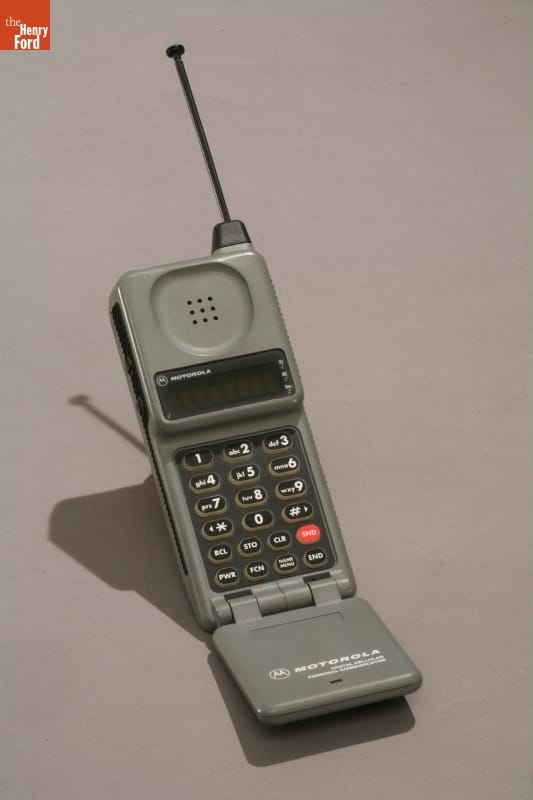
- Motorola Digital Personal Communicator Cellular Telephone, 1989 - With this 1989 Digital Personal Communicator (DPC) and the other phones in the MicroTAC line, Motorola set the standard for technology and design in the new cellular phone market. The DPC was lighter and cheaper than previous cellphones--it weighed 12 ounces, and cost only a few thousand dollars. The long plastic antenna is just for show; the phone has an internal antenna.
- 1989
- Collections - Artifact
Motorola Digital Personal Communicator Cellular Telephone, 1989
With this 1989 Digital Personal Communicator (DPC) and the other phones in the MicroTAC line, Motorola set the standard for technology and design in the new cellular phone market. The DPC was lighter and cheaper than previous cellphones--it weighed 12 ounces, and cost only a few thousand dollars. The long plastic antenna is just for show; the phone has an internal antenna.
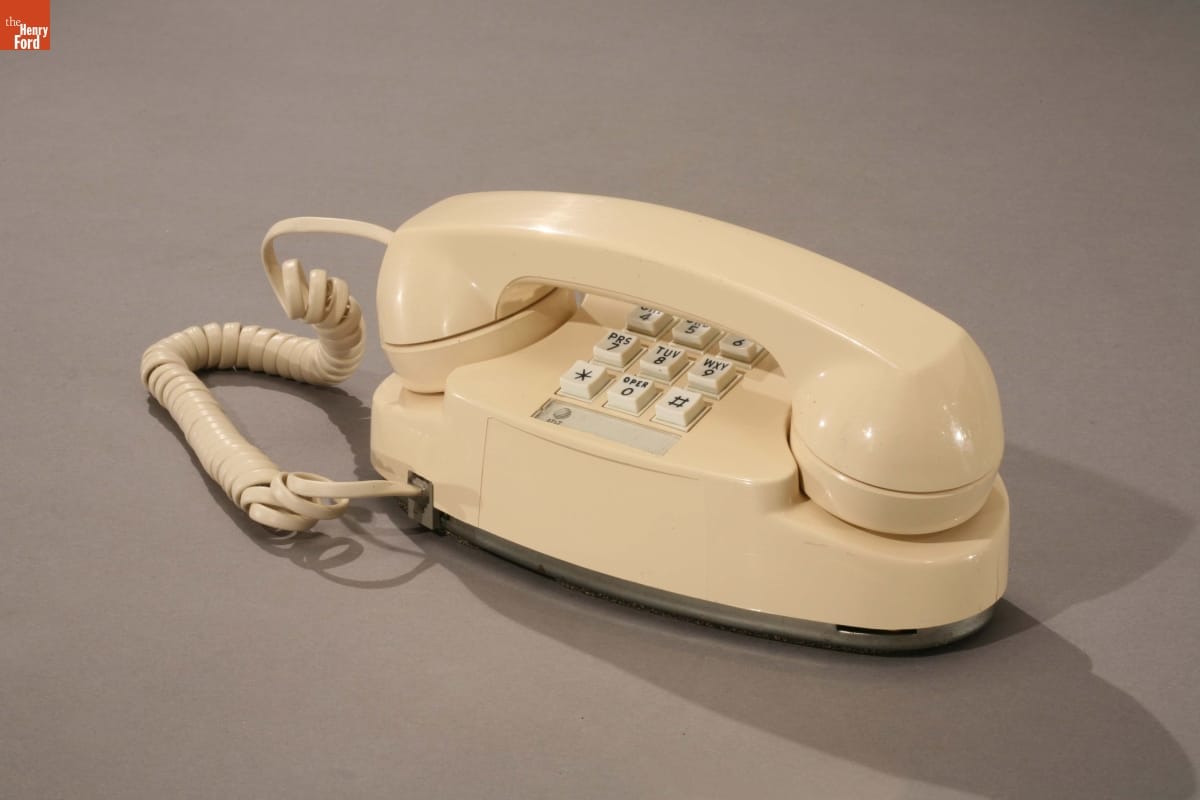
- Touchtone Princess Phone, 1976-1980 - The Princess telephone was designed by Henry Dreyfuss in 1959. It's a great example of the transition of the telephone from a strictly utilitarian device to a fashionable home accessory for middle class America. Compact and featuring a backlit dial, it was originally marketed to women as a bedroom phone; the slogan was, "It's little...It's lovely...It lights." It stayed in production from 1959-1994.
- 1976-1980
- Collections - Artifact
Touchtone Princess Phone, 1976-1980
The Princess telephone was designed by Henry Dreyfuss in 1959. It's a great example of the transition of the telephone from a strictly utilitarian device to a fashionable home accessory for middle class America. Compact and featuring a backlit dial, it was originally marketed to women as a bedroom phone; the slogan was, "It's little...It's lovely...It lights." It stayed in production from 1959-1994.
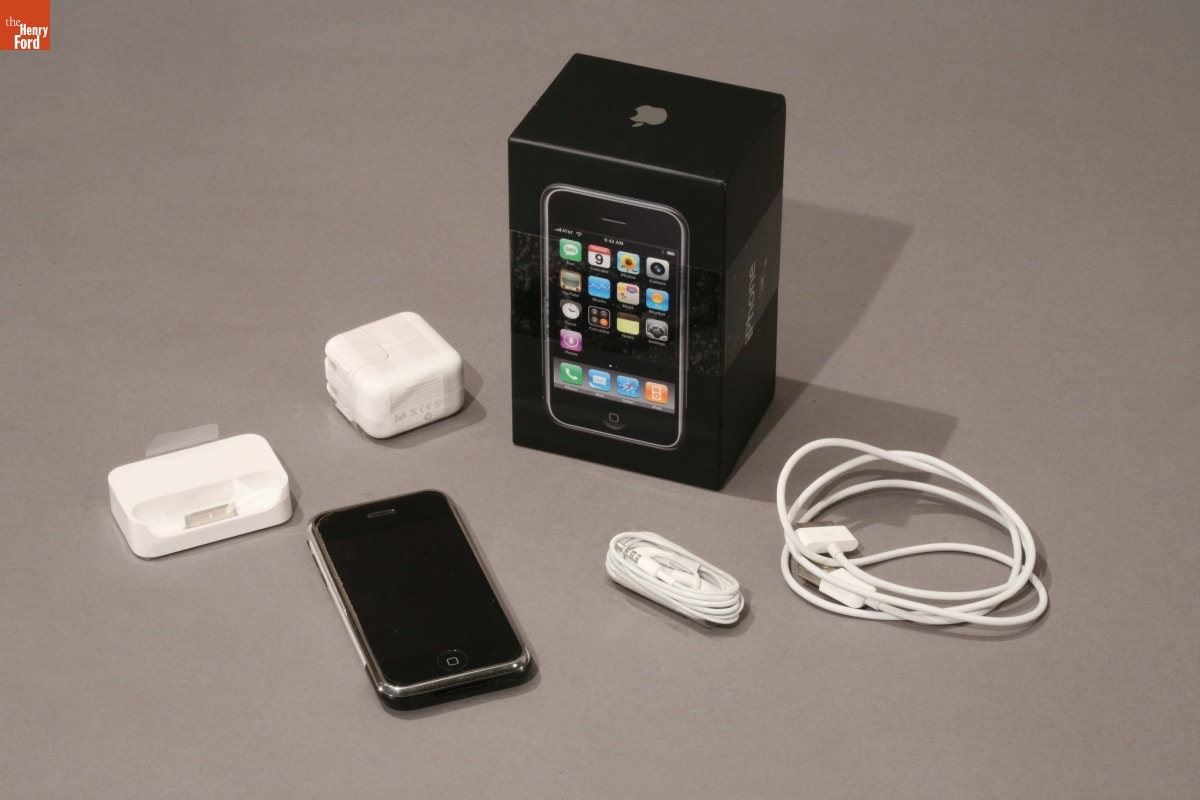
- iPhone, 2007 - The iPhone was the apotheosis of the cellphone as pocket computer--powerful technology in a sleek package. This handheld is a music player, a mobile phone, and an internet-enabled device in one, with a trendsetting touchscreen interface. The iPhone's release in 2007 was a well-choreographed media event, with potential buyers waiting in lines for hours at Apple stores across the country.
- 2007
- Collections - Artifact
iPhone, 2007
The iPhone was the apotheosis of the cellphone as pocket computer--powerful technology in a sleek package. This handheld is a music player, a mobile phone, and an internet-enabled device in one, with a trendsetting touchscreen interface. The iPhone's release in 2007 was a well-choreographed media event, with potential buyers waiting in lines for hours at Apple stores across the country.