
Search
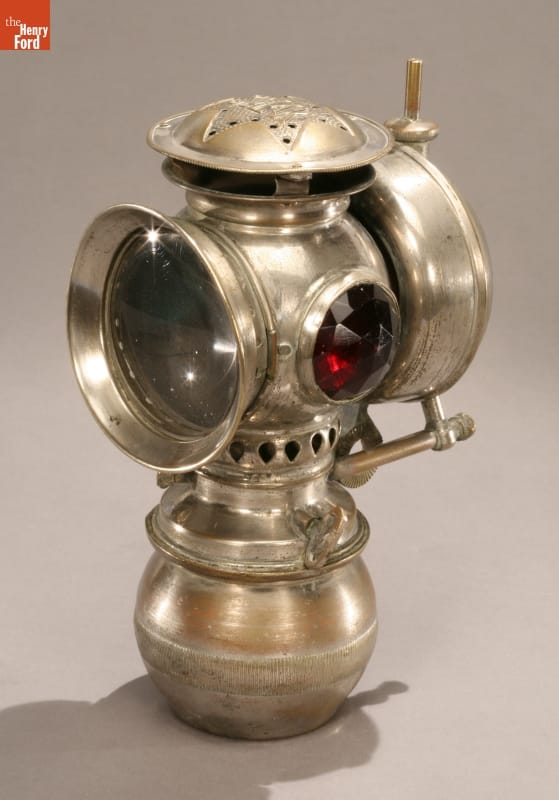
- Solar Carbide Bicycle Lamp, circa 1905 - The Badger Brass Manufacturing Company made this carbide lamp to help a cyclist navigate in the dark. The lamp could be attached to the bicycle's handlebars or other front frame parts. The lamp burned acetylene gas and gave off a powerful white light. Early automobiles also used carbide lamps to light their ways at night.
- 1900-1910
- Collections - Artifact
Solar Carbide Bicycle Lamp, circa 1905
The Badger Brass Manufacturing Company made this carbide lamp to help a cyclist navigate in the dark. The lamp could be attached to the bicycle's handlebars or other front frame parts. The lamp burned acetylene gas and gave off a powerful white light. Early automobiles also used carbide lamps to light their ways at night.
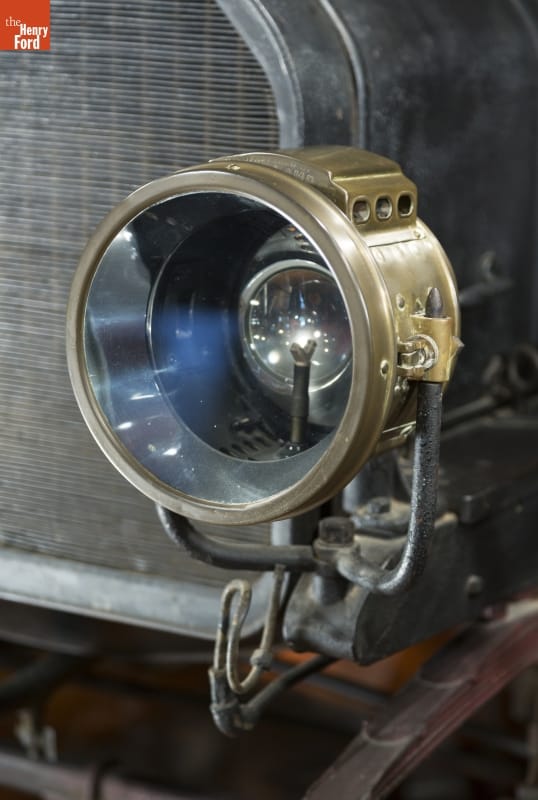
- C. M. Hall Lamp Company Headlamps, circa 1910 - Automotive headlamps evolved alongside the automobile. Kerosene-fueled lamps were replaced by acetylene units in the first decade of the 20th century. Acetylene-fueled lamps were, in turn, replaced by electric units in the 1910s. Headlamp lenses improved as well. Optical lenses, also introduced in the 1910s, focused the headlamp's beam and increased its intensity.
- circa 1910
- Collections - Artifact
C. M. Hall Lamp Company Headlamps, circa 1910
Automotive headlamps evolved alongside the automobile. Kerosene-fueled lamps were replaced by acetylene units in the first decade of the 20th century. Acetylene-fueled lamps were, in turn, replaced by electric units in the 1910s. Headlamp lenses improved as well. Optical lenses, also introduced in the 1910s, focused the headlamp's beam and increased its intensity.