
Search
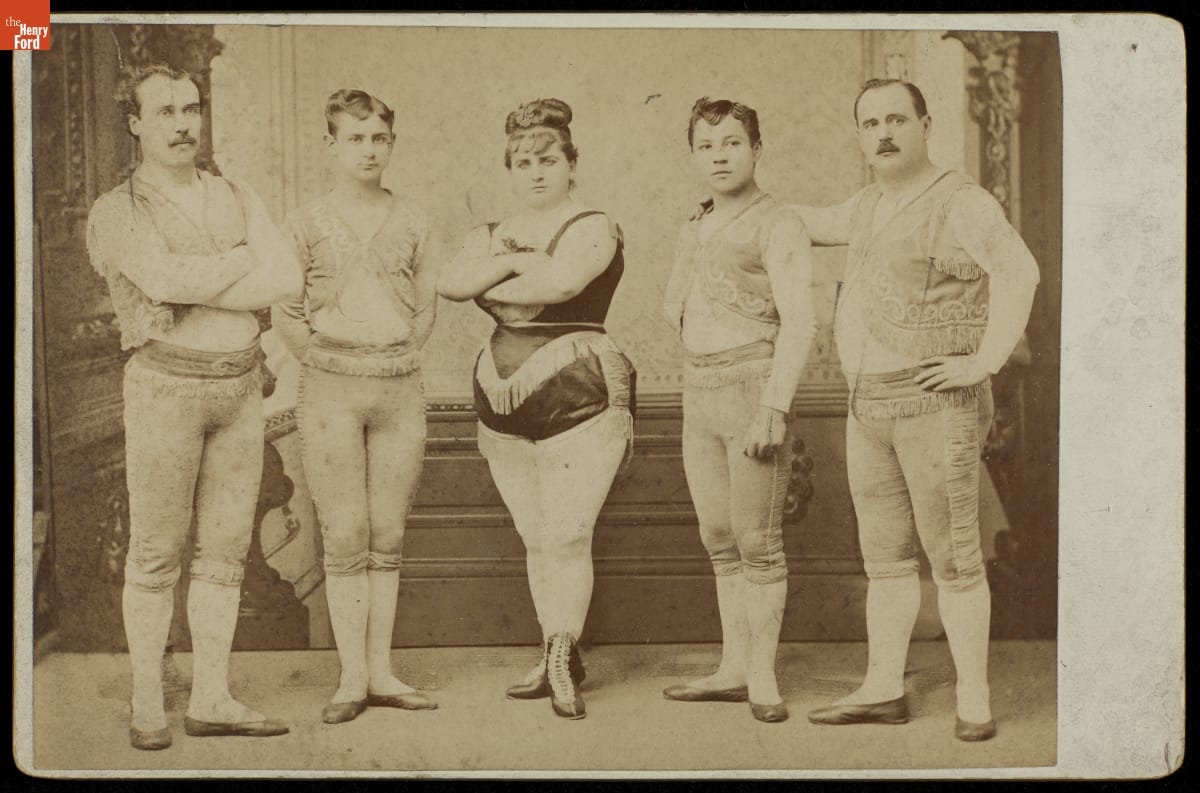
- Hasselback Family Acrobats, 1882 - Professional photographers began producing cabinet cards in 1867. Consumers quickly preferred them over earlier cartes-de-visite, which were mounted on smaller cardboard stock. Through the early 1900s, Americans commonly exchanged and collected cabinet photographs of family, friends and celebrities. This 1882 example features the Hasselbacks, a family of acrobatic performers.
- 1882
- Collections - Artifact
Hasselback Family Acrobats, 1882
Professional photographers began producing cabinet cards in 1867. Consumers quickly preferred them over earlier cartes-de-visite, which were mounted on smaller cardboard stock. Through the early 1900s, Americans commonly exchanged and collected cabinet photographs of family, friends and celebrities. This 1882 example features the Hasselbacks, a family of acrobatic performers.
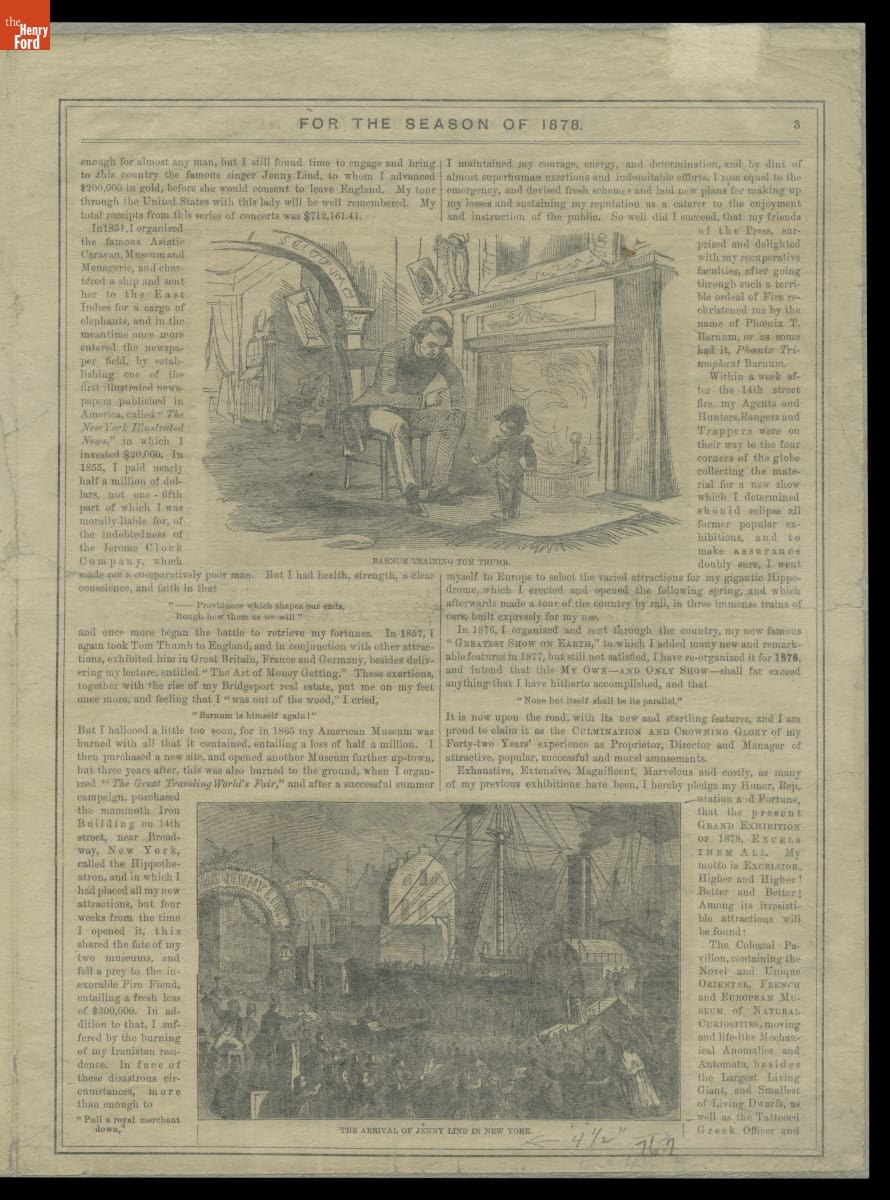
- "P.T. Barnum's Own Illustrated News for the Season of 1878" - Phineas Taylor (P.T.) Barnum (1810-1891) entered the circus business in 1876 after a 40-year career as a showman. In this presumably self-published newspaper, Barnum highlighted his past entertainment endeavor and announced his lineup for the 1878 "Greatest Show on Earth" circus. Barnum's circus featured animal menageries, clowns, automata, acrobatic horse-riders, and human "curiosities" such as Captain George Costentenus--a heavily tattooed man.
- 1878
- Collections - Artifact
"P.T. Barnum's Own Illustrated News for the Season of 1878"
Phineas Taylor (P.T.) Barnum (1810-1891) entered the circus business in 1876 after a 40-year career as a showman. In this presumably self-published newspaper, Barnum highlighted his past entertainment endeavor and announced his lineup for the 1878 "Greatest Show on Earth" circus. Barnum's circus featured animal menageries, clowns, automata, acrobatic horse-riders, and human "curiosities" such as Captain George Costentenus--a heavily tattooed man.
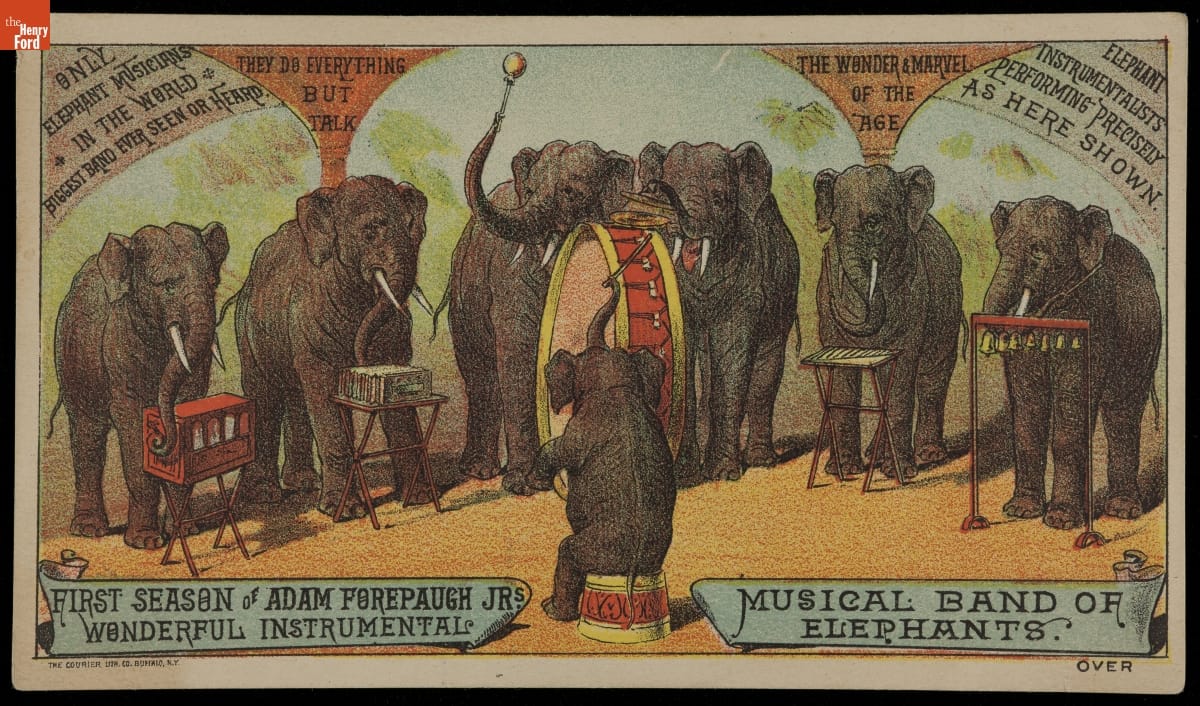
- Trade Card for Adam Forepaugh & Sells Bros. Circus, "Musical Band of Elephants," 1870-1890 - In the last third of the nineteenth century, an unprecedented variety of consumer goods and services flooded the American market. Advertisers, armed with new methods of color printing, bombarded potential customers with trade cards. Americans enjoyed and often saved the vibrant little advertisements found in product packages or distributed by local merchants. Many survive as historical records of commercialism in the United States.
- 1870-1890
- Collections - Artifact
Trade Card for Adam Forepaugh & Sells Bros. Circus, "Musical Band of Elephants," 1870-1890
In the last third of the nineteenth century, an unprecedented variety of consumer goods and services flooded the American market. Advertisers, armed with new methods of color printing, bombarded potential customers with trade cards. Americans enjoyed and often saved the vibrant little advertisements found in product packages or distributed by local merchants. Many survive as historical records of commercialism in the United States.
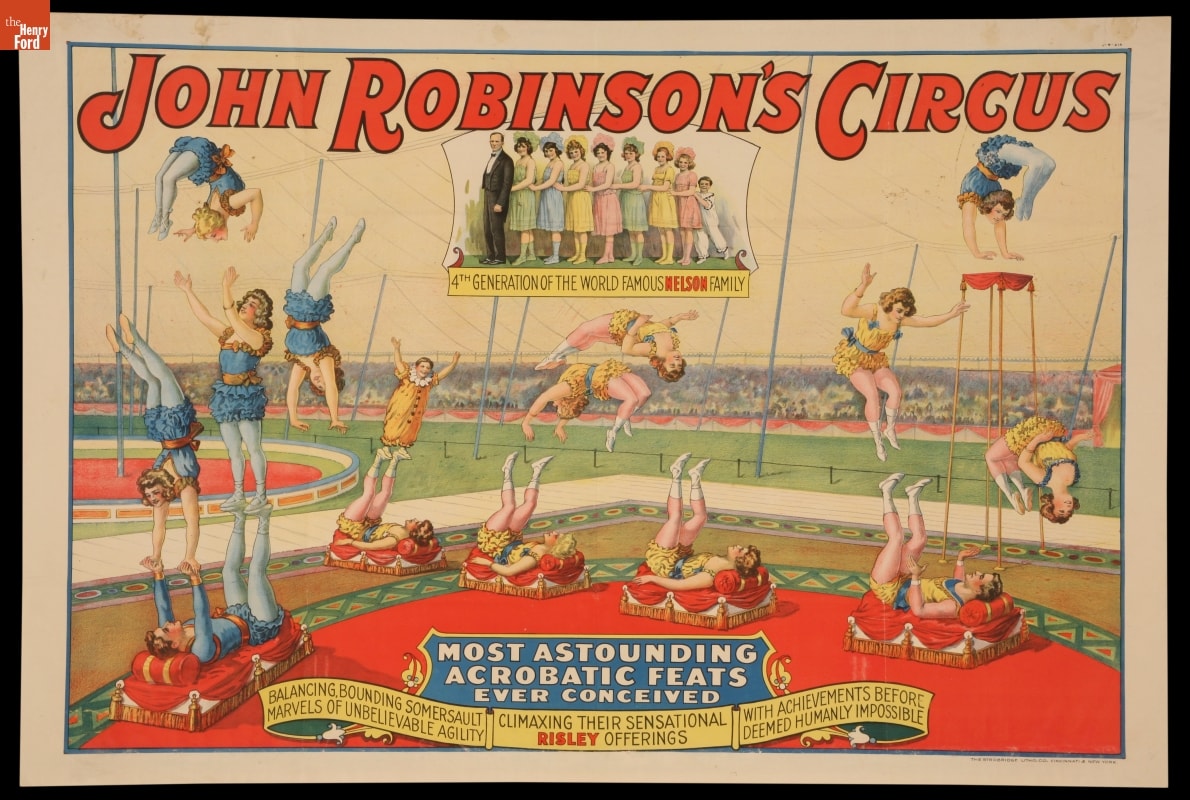
- Circus Poster, "John Robinson's Circus," circa 1925 - In the late nineteenth century, printers developed a lithograph method that produced brightly colored posters. In advance of a circus coming to town, general agents glued these eye-catching generic posters to building walls, fences, and in window displays. To announce when and where the performances would happen, local printers sometimes provided letterpress paper date strips to paste onto the posters' lower margin.
- circa 1925
- Collections - Artifact
Circus Poster, "John Robinson's Circus," circa 1925
In the late nineteenth century, printers developed a lithograph method that produced brightly colored posters. In advance of a circus coming to town, general agents glued these eye-catching generic posters to building walls, fences, and in window displays. To announce when and where the performances would happen, local printers sometimes provided letterpress paper date strips to paste onto the posters' lower margin.
- Circus Poster, "Sells Brothers Enormous United Shows," 1893 - In the late nineteenth century, printers developed a lithograph method that produced brightly colored posters. In advance of a circus coming to town, general agents glued these eye-catching generic posters to building walls, fences, and in window displays. To announce when and where the performances would happen, local printers sometimes provided letterpress paper date strips to paste onto the posters' lower margin.
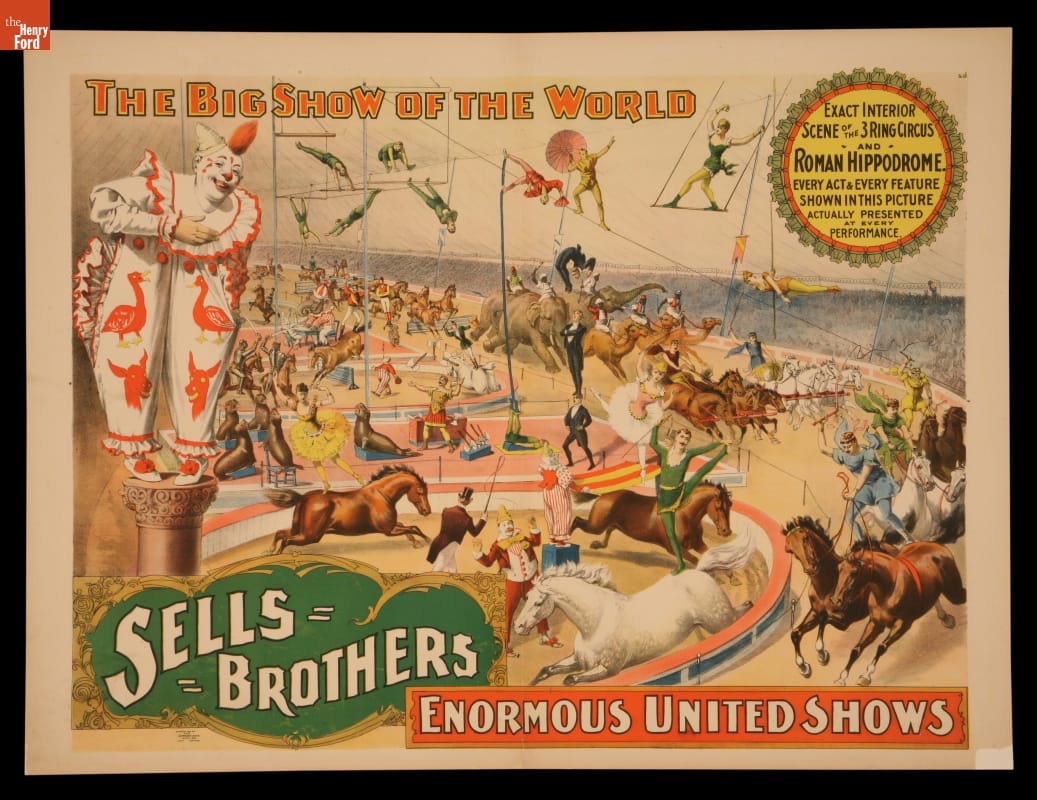
- 1893
- Collections - Artifact
Circus Poster, "Sells Brothers Enormous United Shows," 1893
In the late nineteenth century, printers developed a lithograph method that produced brightly colored posters. In advance of a circus coming to town, general agents glued these eye-catching generic posters to building walls, fences, and in window displays. To announce when and where the performances would happen, local printers sometimes provided letterpress paper date strips to paste onto the posters' lower margin.
- Circus Poster, Barnum and Bailey Circus Presents "The World-Famous Silbons, The Masterly Monarchs of the Air," 1896 - In the late nineteenth century, printers developed a lithograph method that produced brightly colored posters. In advance of a circus coming to town, general agents glued these eye-catching generic posters to building walls, fences, and in window displays. To announce when and where the performances would happen, local printers sometimes provided letterpress paper date strips to paste onto the posters' lower margin.
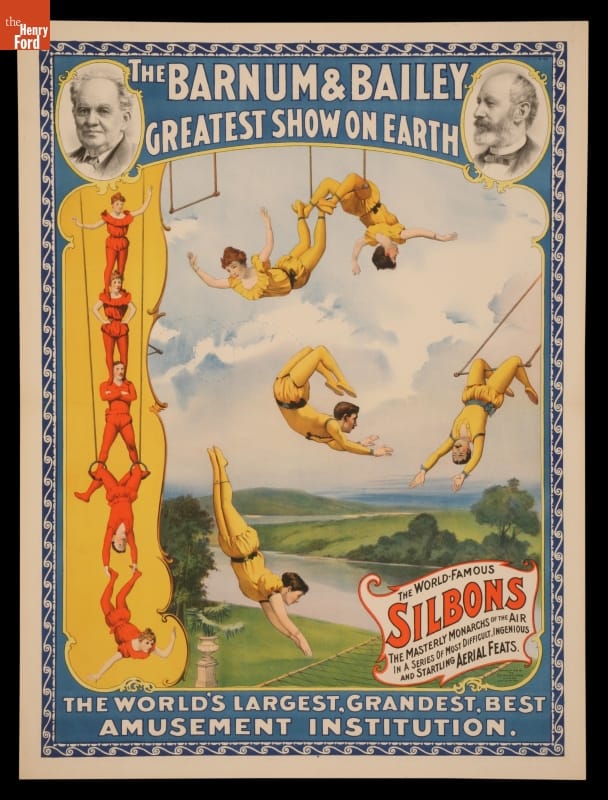
- 1896
- Collections - Artifact
Circus Poster, Barnum and Bailey Circus Presents "The World-Famous Silbons, The Masterly Monarchs of the Air," 1896
In the late nineteenth century, printers developed a lithograph method that produced brightly colored posters. In advance of a circus coming to town, general agents glued these eye-catching generic posters to building walls, fences, and in window displays. To announce when and where the performances would happen, local printers sometimes provided letterpress paper date strips to paste onto the posters' lower margin.
- Circus Poster, Sells Brothers Circus Presents "The Wonderful Silbons, Greatest Aerial Artists on Earth," circa 1892 - In the late nineteenth century, printers developed a lithograph method that produced brightly colored posters. In advance of a circus coming to town, general agents glued these eye-catching generic posters to building walls, fences, and in window displays. To announce when and where the performances would happen, local printers sometimes provided letterpress paper date strips to paste onto the posters' lower margin.
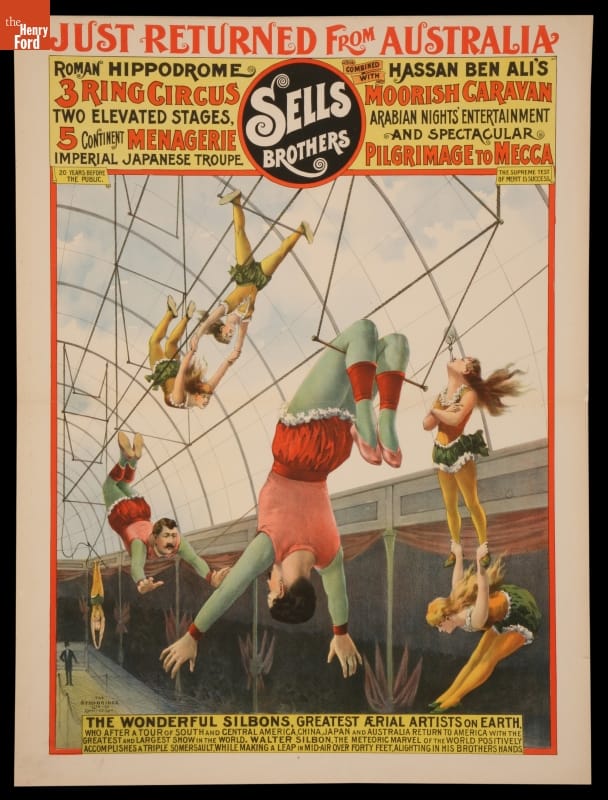
- circa 1892
- Collections - Artifact
Circus Poster, Sells Brothers Circus Presents "The Wonderful Silbons, Greatest Aerial Artists on Earth," circa 1892
In the late nineteenth century, printers developed a lithograph method that produced brightly colored posters. In advance of a circus coming to town, general agents glued these eye-catching generic posters to building walls, fences, and in window displays. To announce when and where the performances would happen, local printers sometimes provided letterpress paper date strips to paste onto the posters' lower margin.
- Circus Poster, Forepaugh & Sells Brothers, "The Most Graceful and Artistic Acrobats," circa 1900 -
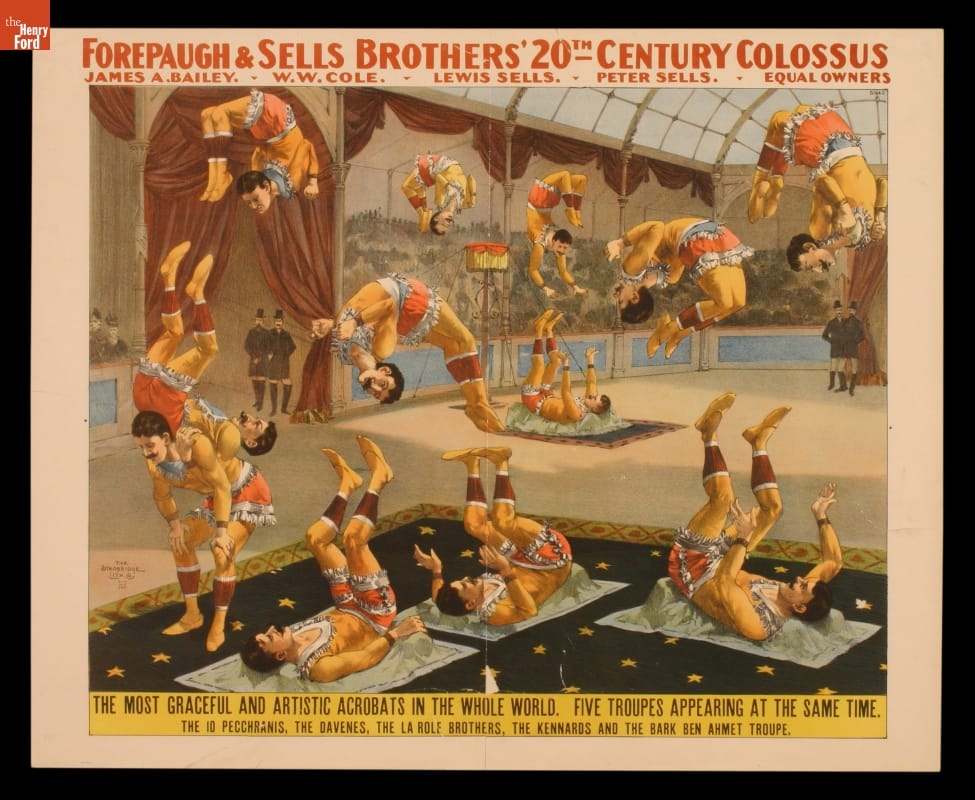
- circa 1900
- Collections - Artifact
Circus Poster, Forepaugh & Sells Brothers, "The Most Graceful and Artistic Acrobats," circa 1900
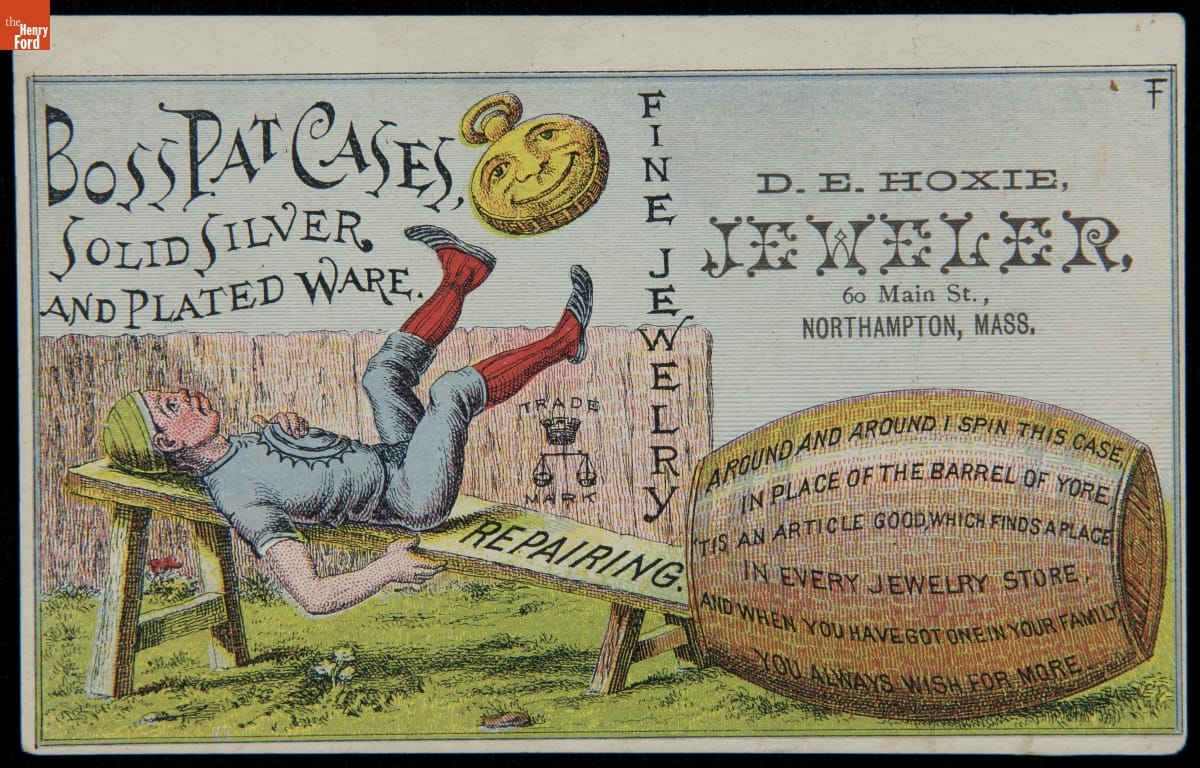
- Trade Card for Boss Pat. Watch Cases by D. E. Hoxie, Northhampton, Massachusetts, 1870-1890 - In the last third of the nineteenth century, an unprecedented variety of consumer goods and services flooded the American market. Advertisers, armed with new methods of color printing, bombarded potential customers with trade cards. Americans enjoyed and often saved the vibrant little advertisements found in product packages or distributed by local merchants. Many survive as historical records of commercialism in the United States.
- 1870-1890
- Collections - Artifact
Trade Card for Boss Pat. Watch Cases by D. E. Hoxie, Northhampton, Massachusetts, 1870-1890
In the last third of the nineteenth century, an unprecedented variety of consumer goods and services flooded the American market. Advertisers, armed with new methods of color printing, bombarded potential customers with trade cards. Americans enjoyed and often saved the vibrant little advertisements found in product packages or distributed by local merchants. Many survive as historical records of commercialism in the United States.
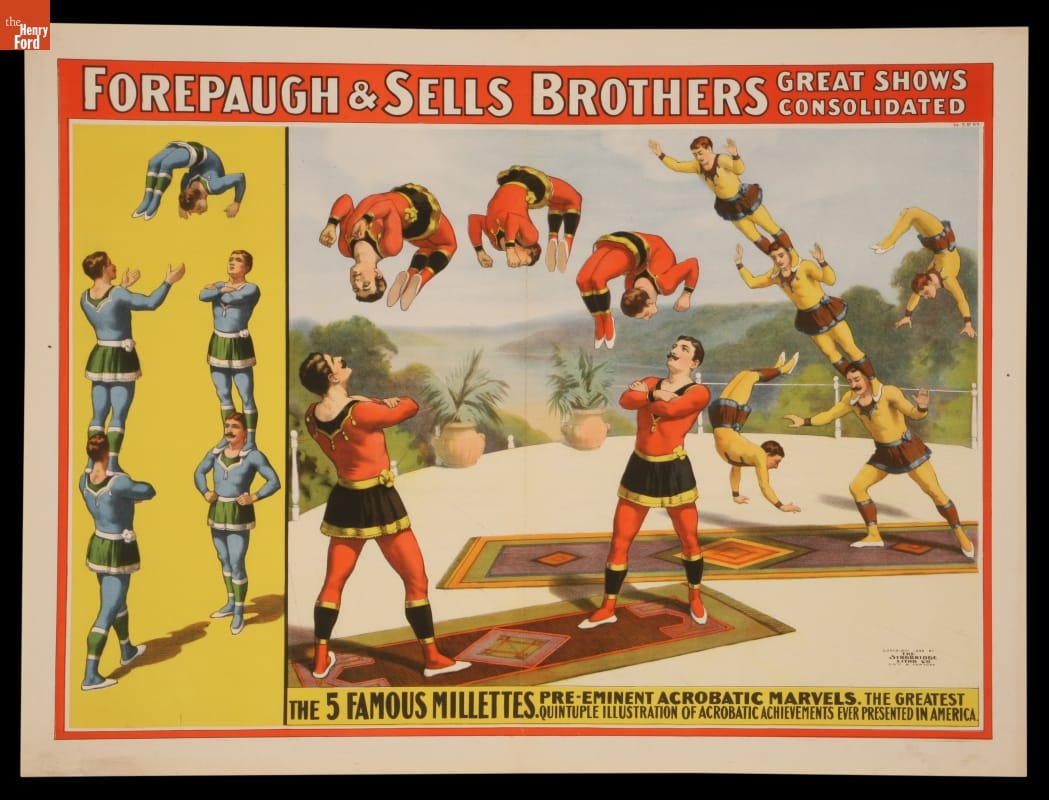
- Circus Poster, Adam Forepaugh & Sells Brothers Circus Presents The Five Millettes, 1899 - In the late nineteenth century, printers developed a lithograph method that produced brightly colored posters. In advance of a circus coming to town, general agents glued these eye-catching generic posters to building walls, fences, and in window displays. To announce when and where the performances would happen, local printers sometimes provided letterpress paper date strips to paste onto the posters' lower margin.
- 1899
- Collections - Artifact
Circus Poster, Adam Forepaugh & Sells Brothers Circus Presents The Five Millettes, 1899
In the late nineteenth century, printers developed a lithograph method that produced brightly colored posters. In advance of a circus coming to town, general agents glued these eye-catching generic posters to building walls, fences, and in window displays. To announce when and where the performances would happen, local printers sometimes provided letterpress paper date strips to paste onto the posters' lower margin.