
Search
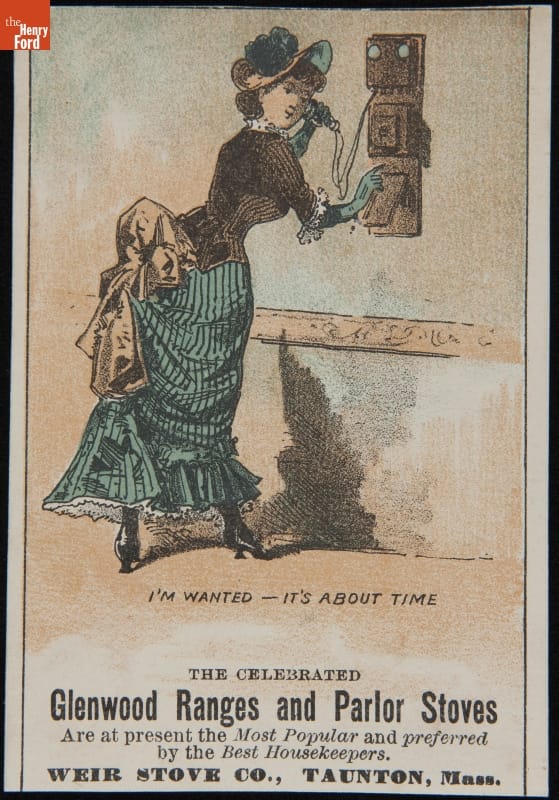
- Trade Card for Glenwood Ranges and Parlor Stoves, Taunton, Massachusetts, circa 1882 - In the last third of the nineteenth century, an unprecedented variety of consumer goods and services flooded the American market. Advertisers, armed with new methods of color printing, bombarded potential customers with trade cards. Americans enjoyed and often saved the vibrant little advertisements found in product packages or distributed by local merchants. Many survive as historical records of commercialism in the United States.
- circa 1882
- Collections - Artifact
Trade Card for Glenwood Ranges and Parlor Stoves, Taunton, Massachusetts, circa 1882
In the last third of the nineteenth century, an unprecedented variety of consumer goods and services flooded the American market. Advertisers, armed with new methods of color printing, bombarded potential customers with trade cards. Americans enjoyed and often saved the vibrant little advertisements found in product packages or distributed by local merchants. Many survive as historical records of commercialism in the United States.
- I Got My COVID-19 Vaccine, Bronson Healthcare, December 2020 - Starting in March 2020, the COVID-19 pandemic spread throughout the United States. As infections and deaths grew, hospitals were overwhelmed. Parts of the U.S. economy substantially shut down to contain the virus's spread. Medical researchers and government health officials worked tirelessly for a vaccine. By the end of the year, several vaccines were authorized to help slow the infection rate and save lives.

- December 01, 2020
- Collections - Artifact
I Got My COVID-19 Vaccine, Bronson Healthcare, December 2020
Starting in March 2020, the COVID-19 pandemic spread throughout the United States. As infections and deaths grew, hospitals were overwhelmed. Parts of the U.S. economy substantially shut down to contain the virus's spread. Medical researchers and government health officials worked tirelessly for a vaccine. By the end of the year, several vaccines were authorized to help slow the infection rate and save lives.
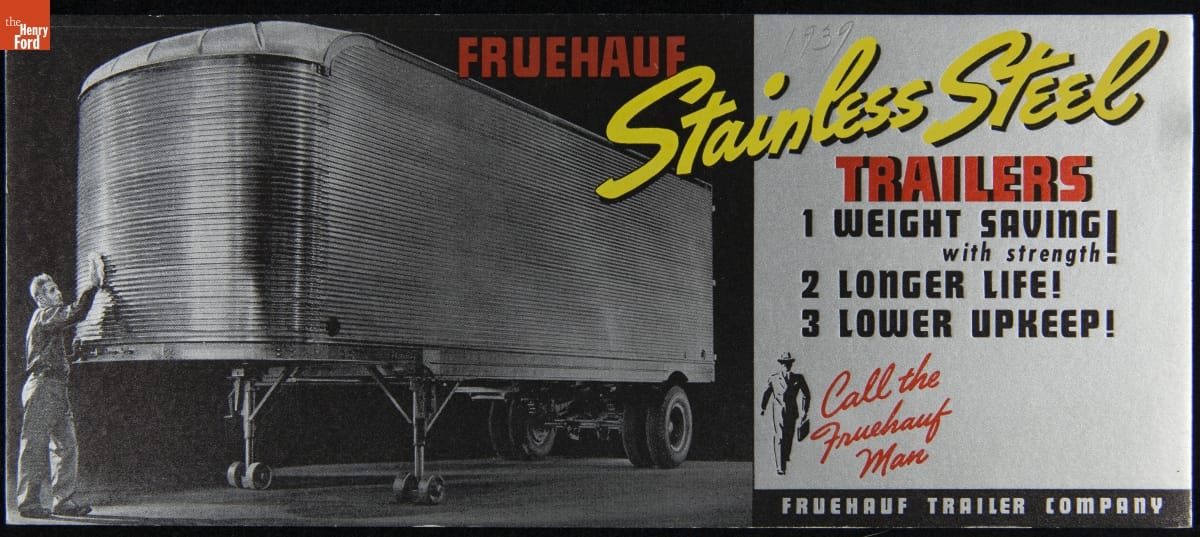
- Fruehauf Trailer Co. Advertising Blotter, "Fruehauf Stainless Steel Trailers," 1931-1941 - Founded in Detroit in 1918, the Fruehauf Trailer Company built and sold fifth-wheel semi-trailers that became the prototype for the big freight-hauling trailers seen on American highways today. At its peak, Fruehauf had 16 plants and more than 80 distributors, and it manufactured trailers for civilian and military uses. The company ceased independent operations in 1997.
- 1931-1941
- Collections - Artifact
Fruehauf Trailer Co. Advertising Blotter, "Fruehauf Stainless Steel Trailers," 1931-1941
Founded in Detroit in 1918, the Fruehauf Trailer Company built and sold fifth-wheel semi-trailers that became the prototype for the big freight-hauling trailers seen on American highways today. At its peak, Fruehauf had 16 plants and more than 80 distributors, and it manufactured trailers for civilian and military uses. The company ceased independent operations in 1997.
- Fruehauf Trailer Co. Advertising Card, "Warehousemen's Van," 1931-1941 - Founded in Detroit in 1918, the Fruehauf Trailer Company built and sold fifth-wheel semi-trailers that became the prototype for the big freight-hauling trailers seen on American highways today. At its peak, Fruehauf had 16 plants and more than 80 distributors, and it manufactured trailers for civilian and military uses. The company ceased independent operations in 1997.

- 1931-1941
- Collections - Artifact
Fruehauf Trailer Co. Advertising Card, "Warehousemen's Van," 1931-1941
Founded in Detroit in 1918, the Fruehauf Trailer Company built and sold fifth-wheel semi-trailers that became the prototype for the big freight-hauling trailers seen on American highways today. At its peak, Fruehauf had 16 plants and more than 80 distributors, and it manufactured trailers for civilian and military uses. The company ceased independent operations in 1997.
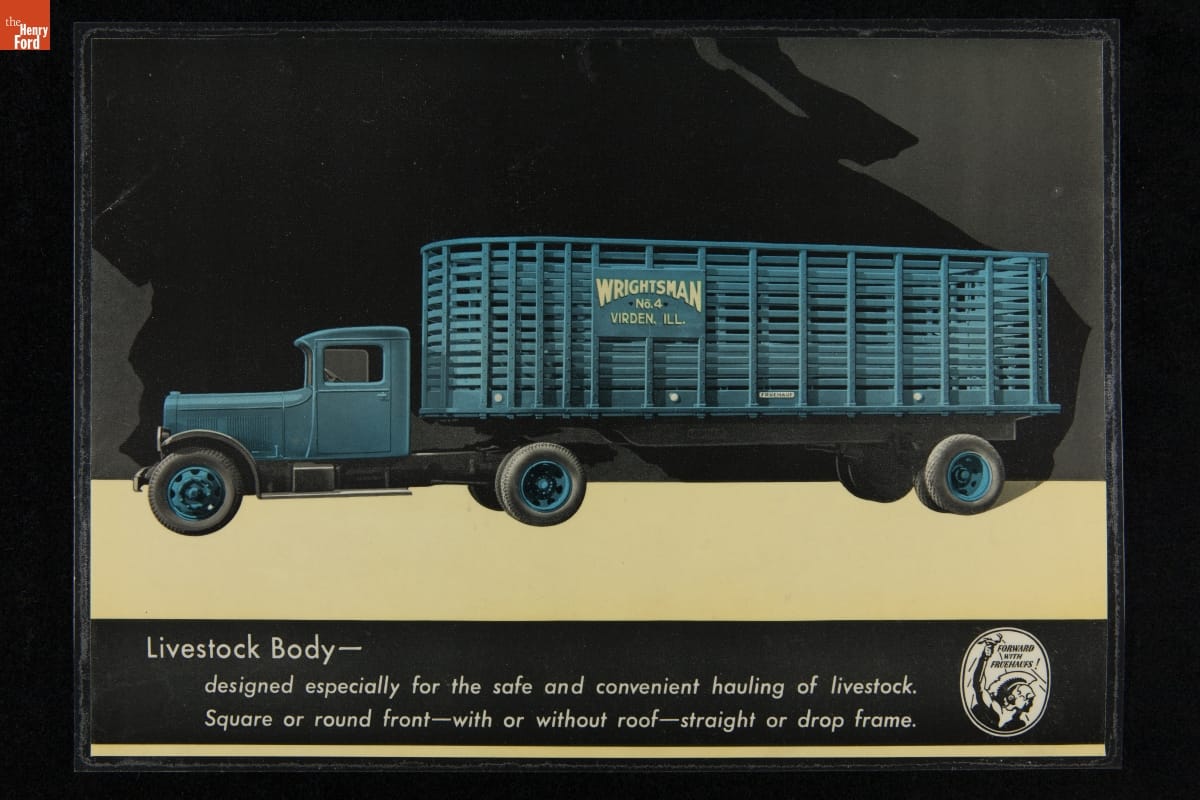
- Fruehauf Trailer Co. Advertising Card, "Livestock Body," 1931-1941 - Founded in Detroit in 1918, the Fruehauf Trailer Company built and sold fifth-wheel semi-trailers that became the prototype for the big freight-hauling trailers seen on American highways today. At its peak, Fruehauf had 16 plants and more than 80 distributors, and it manufactured trailers for civilian and military uses. The company ceased independent operations in 1997.
- 1931-1941
- Collections - Artifact
Fruehauf Trailer Co. Advertising Card, "Livestock Body," 1931-1941
Founded in Detroit in 1918, the Fruehauf Trailer Company built and sold fifth-wheel semi-trailers that became the prototype for the big freight-hauling trailers seen on American highways today. At its peak, Fruehauf had 16 plants and more than 80 distributors, and it manufactured trailers for civilian and military uses. The company ceased independent operations in 1997.
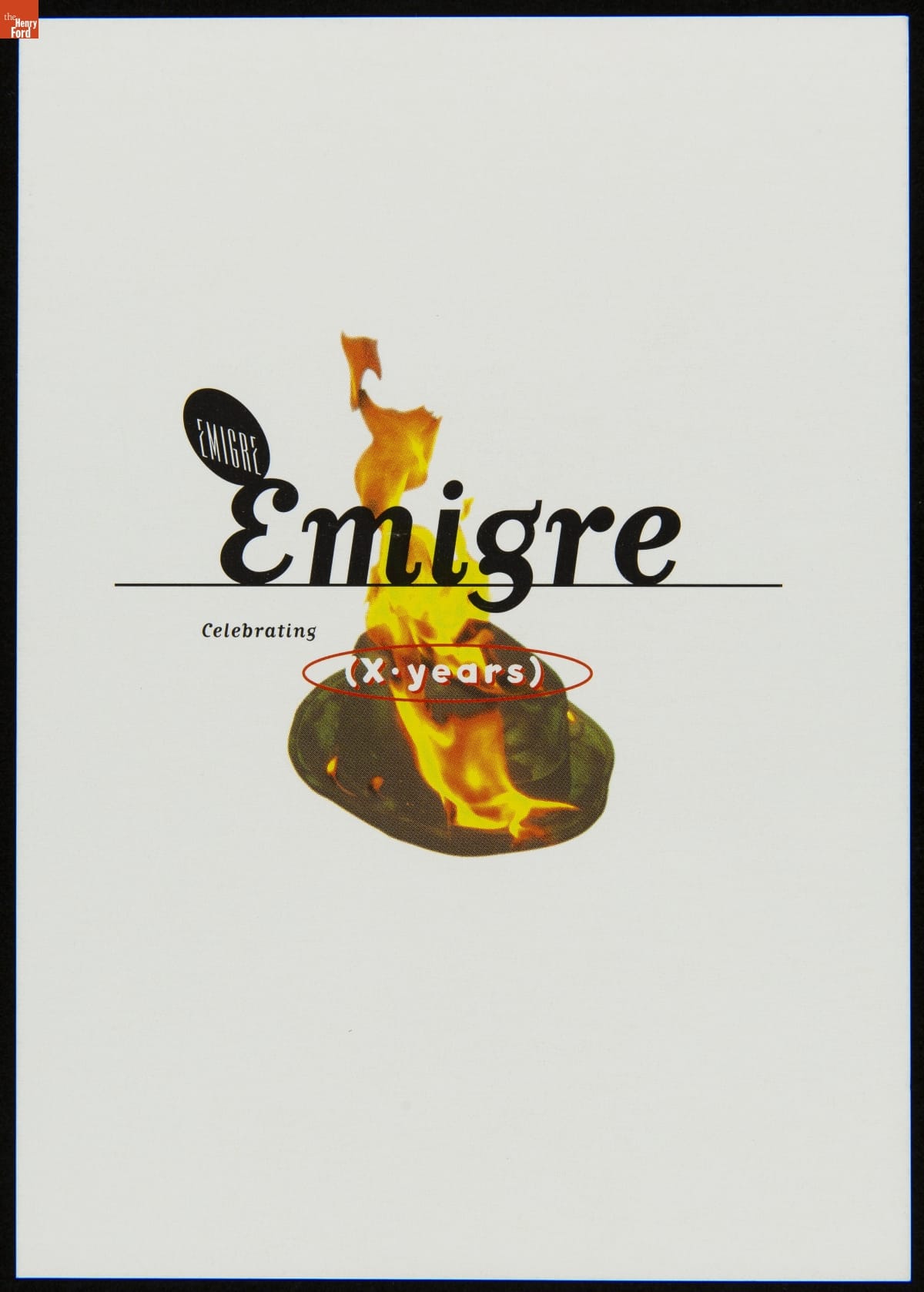
- Advertising Card, "Emigre: Graphic Design into the Digital Realm (Book)," 1994 - Emigre is a digital type foundry established by Rudy VanderLans and Zuzana Licko. The company's history is linked with the introduction of the 1984 Macintosh computer, used to design their early bitmapped typefaces. Emigre's digital work gained notoriety -- defying visual communication standards with fractured, layered combinations of text and image. This item advertised fonts or other items available for purchase.
- 1994
- Collections - Artifact
Advertising Card, "Emigre: Graphic Design into the Digital Realm (Book)," 1994
Emigre is a digital type foundry established by Rudy VanderLans and Zuzana Licko. The company's history is linked with the introduction of the 1984 Macintosh computer, used to design their early bitmapped typefaces. Emigre's digital work gained notoriety -- defying visual communication standards with fractured, layered combinations of text and image. This item advertised fonts or other items available for purchase.
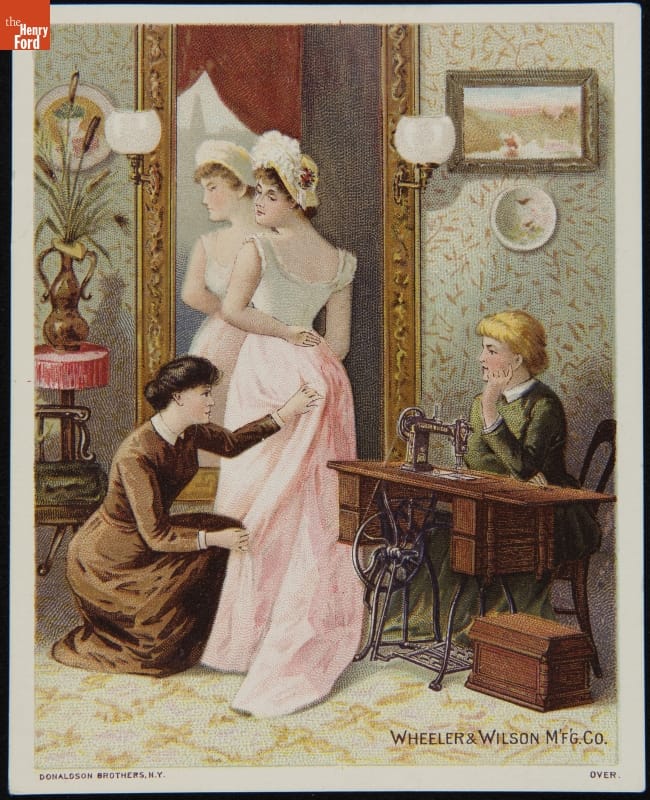
- Trade Card for Wheeler & Wilson's New High-Arm Family Sewing Machine, the "No. 9," circa 1890 - As color printing gained momentum in the late 19th century, trade cards became a major means of advertising goods and services. Americans enjoyed and often saved the little advertisements found in product packages or distributed by local merchants. This trade card advertises products available from Wheeler & Wilson Manufacturing Company.
- circa 1890
- Collections - Artifact
Trade Card for Wheeler & Wilson's New High-Arm Family Sewing Machine, the "No. 9," circa 1890
As color printing gained momentum in the late 19th century, trade cards became a major means of advertising goods and services. Americans enjoyed and often saved the little advertisements found in product packages or distributed by local merchants. This trade card advertises products available from Wheeler & Wilson Manufacturing Company.
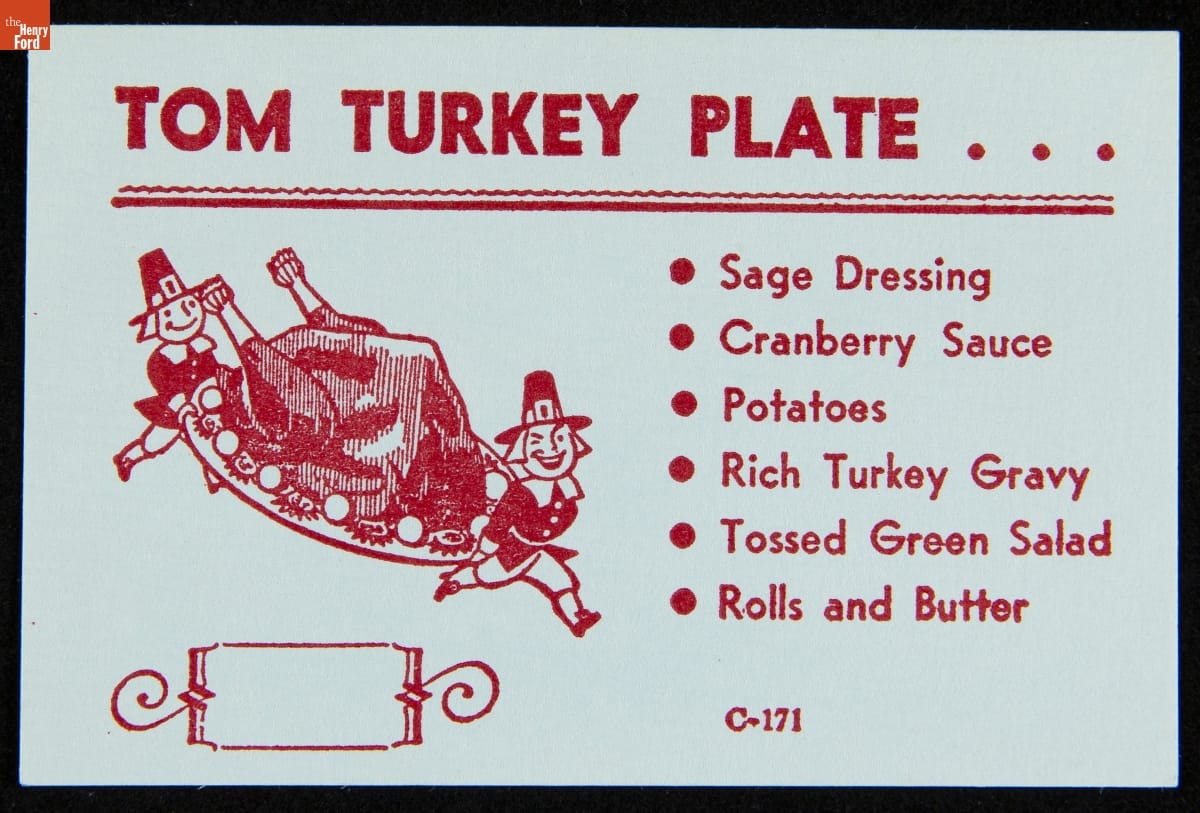
- Menu-Insert Card, "Tom Turkey Plate...," 1950-1970 - Diner owners provided additional meal options for customers with menu cards like this one. While customers could order from the standard menu, this card's snappy graphics and alluring price offered an easy culinary decision. Owners could also update their specials daily, changing out yesterday's cards for ones touting the meal planned for today.
- 1950-1970
- Collections - Artifact
Menu-Insert Card, "Tom Turkey Plate...," 1950-1970
Diner owners provided additional meal options for customers with menu cards like this one. While customers could order from the standard menu, this card's snappy graphics and alluring price offered an easy culinary decision. Owners could also update their specials daily, changing out yesterday's cards for ones touting the meal planned for today.
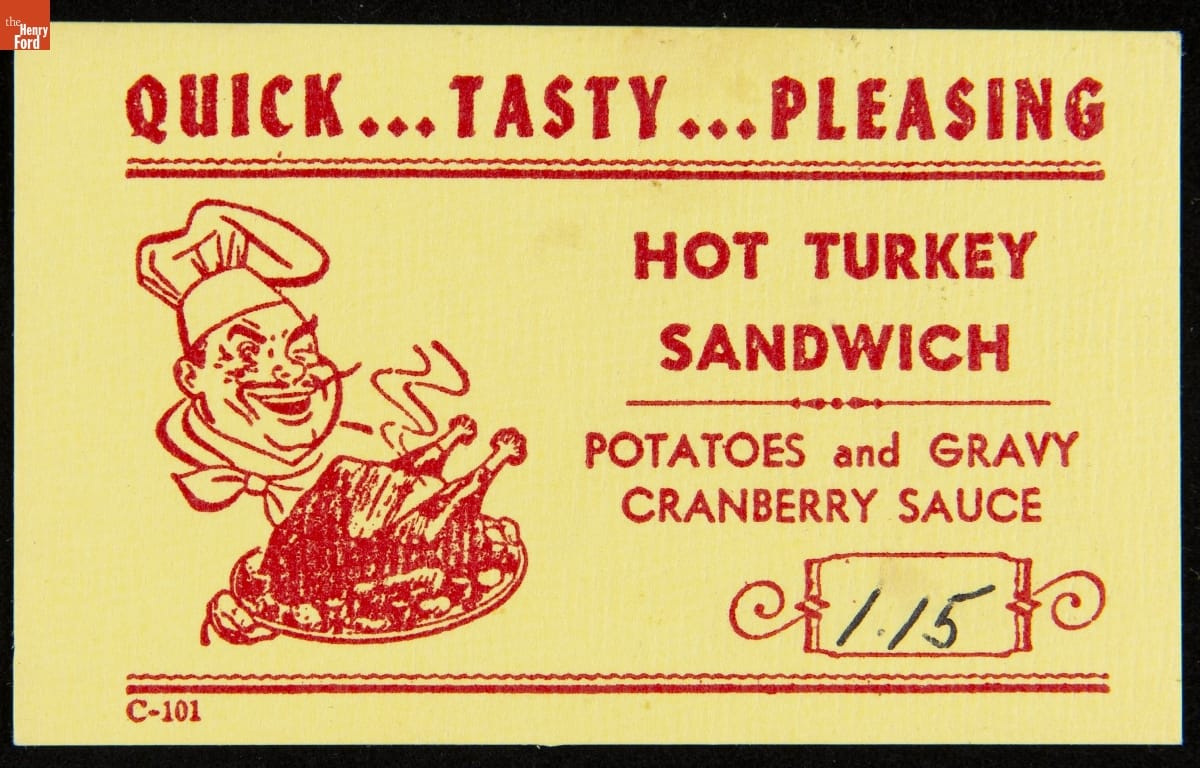
- Menu-Insert Card, "Quick... Tasty... Pleasing, Hot Turkey Sandwich," 1950-1970 - Diner owners provided additional meal options for customers with menu cards like this one. While customers could order from the standard menu, this card's snappy graphics and alluring price offered an easy culinary decision. Owners could also update their specials daily, changing out yesterday's cards for ones touting the meal planned for today.
- 1950-1970
- Collections - Artifact
Menu-Insert Card, "Quick... Tasty... Pleasing, Hot Turkey Sandwich," 1950-1970
Diner owners provided additional meal options for customers with menu cards like this one. While customers could order from the standard menu, this card's snappy graphics and alluring price offered an easy culinary decision. Owners could also update their specials daily, changing out yesterday's cards for ones touting the meal planned for today.
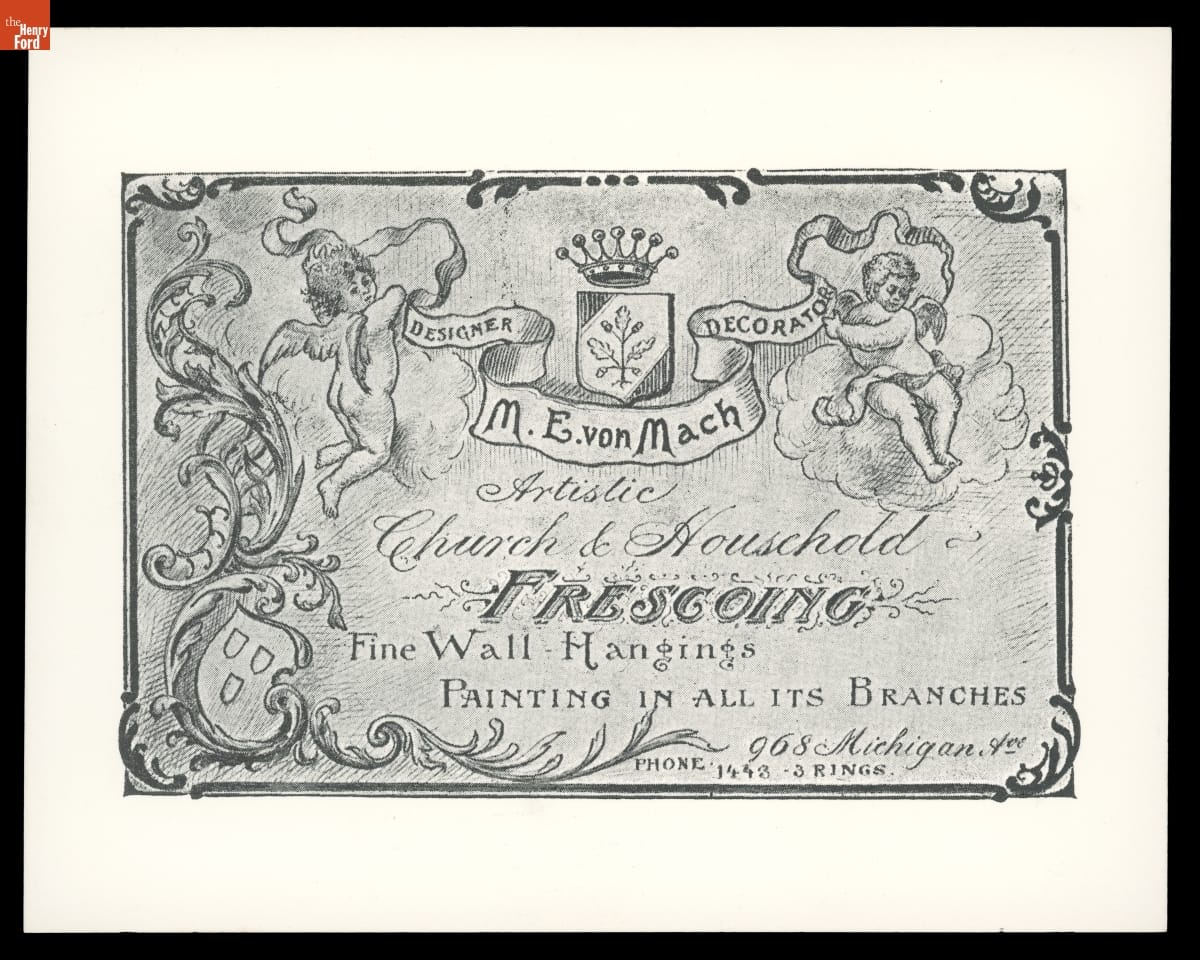
- Printing Plate Image of Advertising Card for M.E. Von Mach, Designer and Decorator, Detoit, Michigan -
- 1890-1910
- Collections - Artifact
Printing Plate Image of Advertising Card for M.E. Von Mach, Designer and Decorator, Detoit, Michigan