
Search
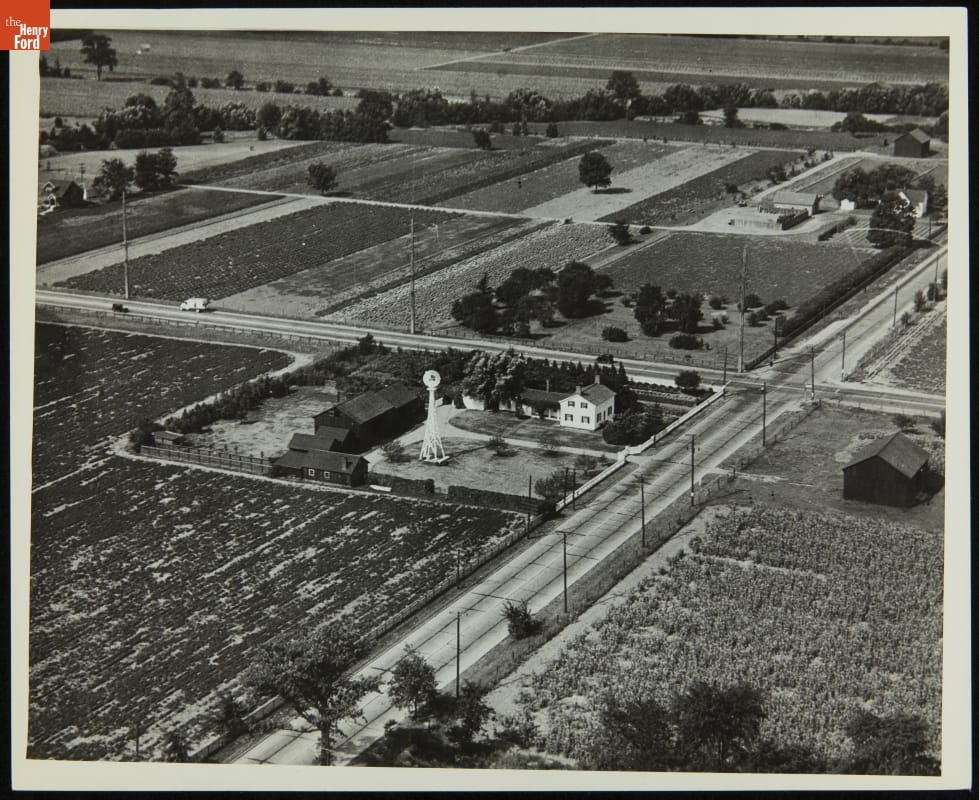
- Aerial View of Ford Home (Henry Ford's Birthplace) at Its Original Location, Dearborn, Michigan, 1931 - Henry Ford began restoration of his Dearborn, Michigan, birthplace in 1919. He repaired or replaced the farm buildings and filled the small, white clapboard house with original or similar furnishings he remembered from his boyhood. He dedicated the restoration to the memory of his beloved mother, Mary Litogot Ford, who died in 1876. In 1944, the house and outbuildings were moved to Greenfield Village.
- 1931
- Collections - Artifact
Aerial View of Ford Home (Henry Ford's Birthplace) at Its Original Location, Dearborn, Michigan, 1931
Henry Ford began restoration of his Dearborn, Michigan, birthplace in 1919. He repaired or replaced the farm buildings and filled the small, white clapboard house with original or similar furnishings he remembered from his boyhood. He dedicated the restoration to the memory of his beloved mother, Mary Litogot Ford, who died in 1876. In 1944, the house and outbuildings were moved to Greenfield Village.
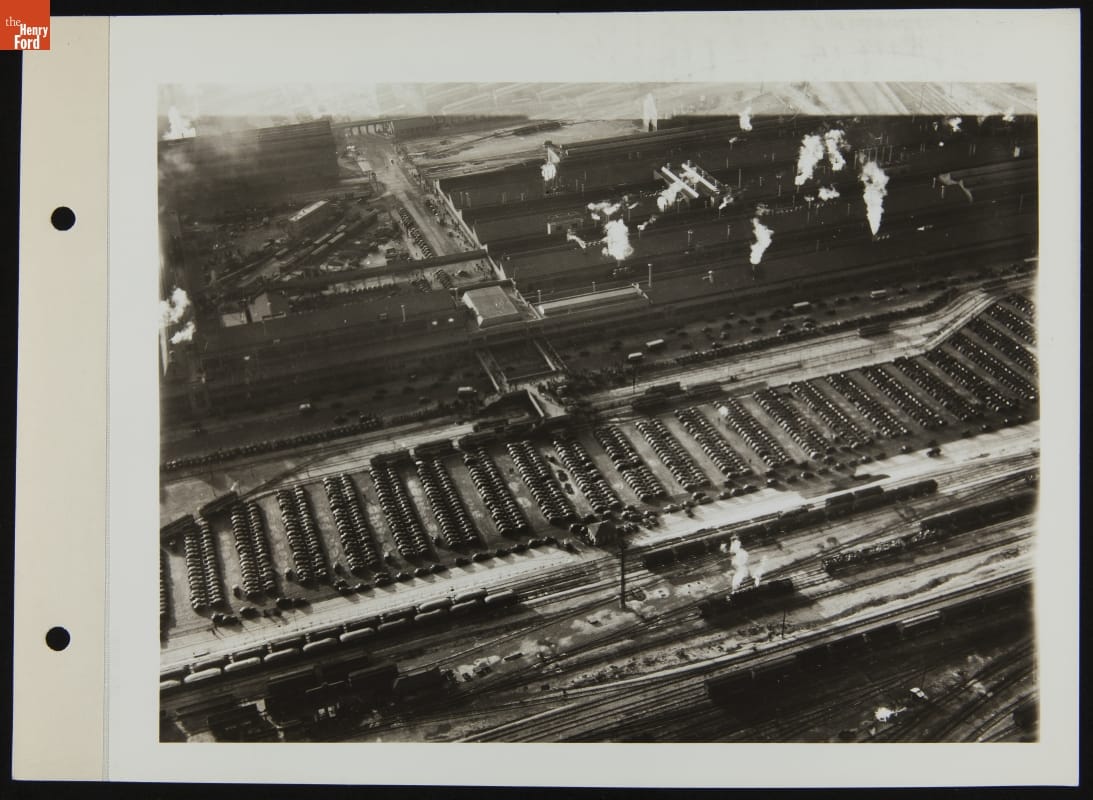
- Aerial View of Rouge Plant Showing UAW Activists, December 23, 1937 - The struggle to unionize Ford Motor Company workers was long and--at times--violent. This aerial photograph shows a United Auto Workers (UAW) demonstration at Ford's Rouge Plant in December 1937. Three and a half years later, following a turbulent ten-day strike in April 1941, Ford became the last major automotive manufacturer to recognize the UAW and agree to a union contract.
- December 23, 1937
- Collections - Artifact
Aerial View of Rouge Plant Showing UAW Activists, December 23, 1937
The struggle to unionize Ford Motor Company workers was long and--at times--violent. This aerial photograph shows a United Auto Workers (UAW) demonstration at Ford's Rouge Plant in December 1937. Three and a half years later, following a turbulent ten-day strike in April 1941, Ford became the last major automotive manufacturer to recognize the UAW and agree to a union contract.
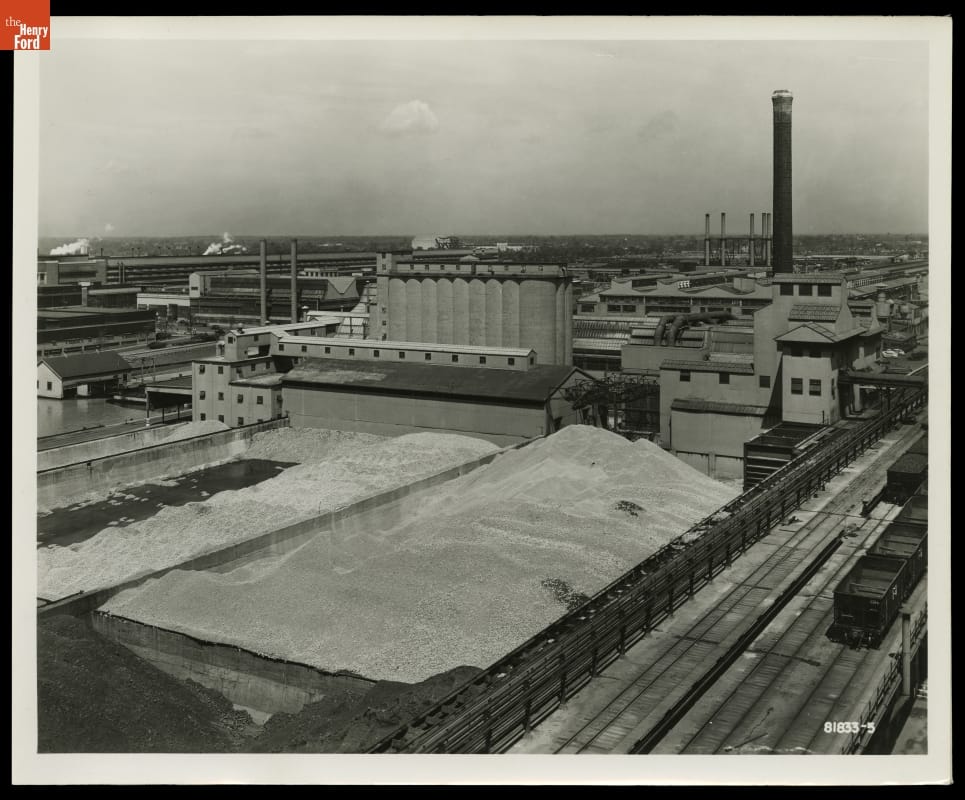
- Cement Plant at the Ford Rouge Plant, June 6, 1945 - Ford Motor Company's massive Rouge industrial complex near Dearborn, Michigan, included a cement plant. Slag from the Rouge's blast furnaces was mixed with lime and smaller amounts of silica, alumina, iron oxide, and magnesia to make Portland cement. The cement plant remained in operation for about 20 years, and it produced more than 2,000 barrels a day at its peak.
- June 06, 1945
- Collections - Artifact
Cement Plant at the Ford Rouge Plant, June 6, 1945
Ford Motor Company's massive Rouge industrial complex near Dearborn, Michigan, included a cement plant. Slag from the Rouge's blast furnaces was mixed with lime and smaller amounts of silica, alumina, iron oxide, and magnesia to make Portland cement. The cement plant remained in operation for about 20 years, and it produced more than 2,000 barrels a day at its peak.
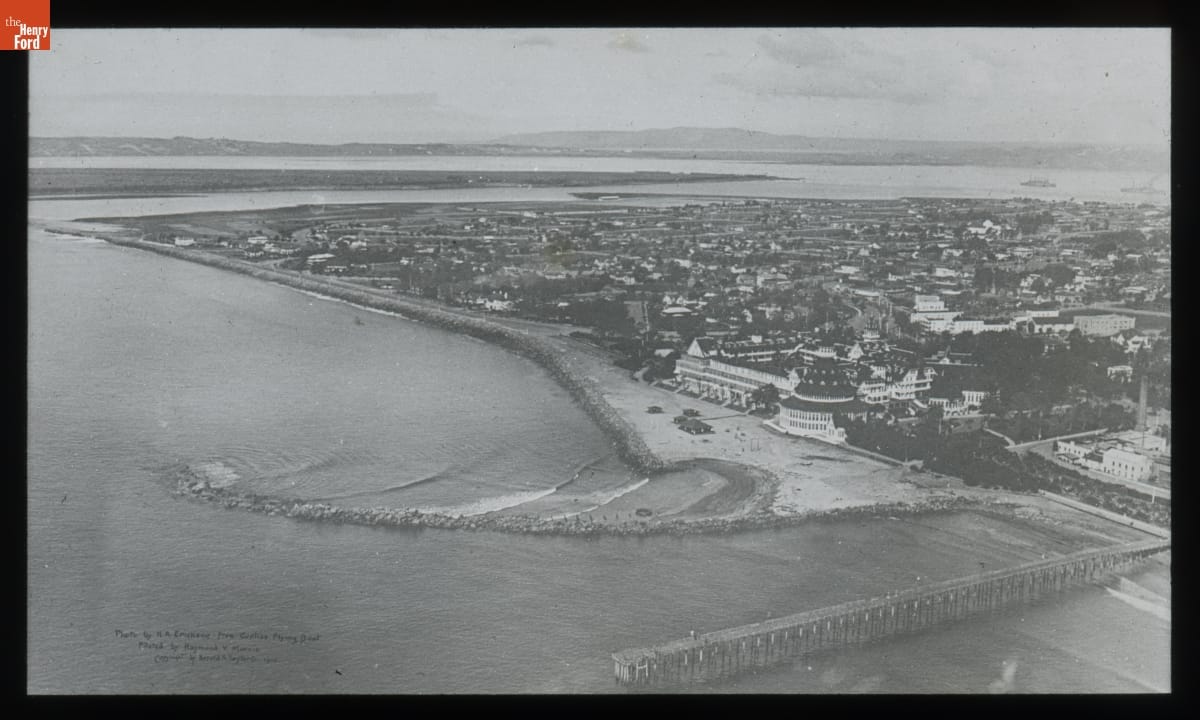
- Aerial View of San Diego Taken aboard a Curtiss Flying Boat - With its mild climate and proximity to the Pacific Ocean, San Diego, California, became an early center of America's aviation industry. Glenn Curtiss established a flying school there in 1911, and airplane manufacturers Convair and Ryan Aeronautical were both headquartered in the city. San Diego was also the birthplace of the U.S. Navy's aviation program.
- 1910-1919
- Collections - Artifact
Aerial View of San Diego Taken aboard a Curtiss Flying Boat
With its mild climate and proximity to the Pacific Ocean, San Diego, California, became an early center of America's aviation industry. Glenn Curtiss established a flying school there in 1911, and airplane manufacturers Convair and Ryan Aeronautical were both headquartered in the city. San Diego was also the birthplace of the U.S. Navy's aviation program.