
Search
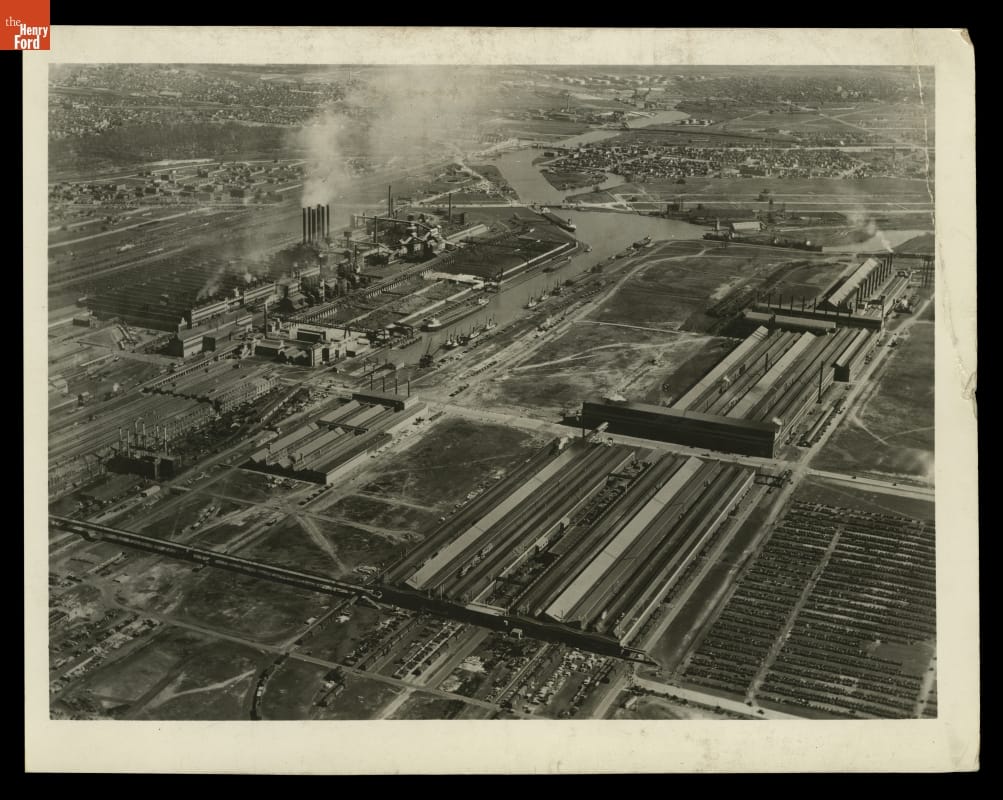
- Aerial View of Ford Motor Company Rouge Complex, Dearborn, Michigan, 1930 - This aerial view shows Ford Motor Company's sprawling Rouge plant--the largest, most efficient manufacturing complex of its time. Ford established its administrative headquarters here in 1928, around the same time the company began manufacturing automobiles from start to finish at the plant. The Rouge became not only central to Ford's operation but an icon of modern industrial efficiency.
- September 09, 1930
- Collections - Artifact
Aerial View of Ford Motor Company Rouge Complex, Dearborn, Michigan, 1930
This aerial view shows Ford Motor Company's sprawling Rouge plant--the largest, most efficient manufacturing complex of its time. Ford established its administrative headquarters here in 1928, around the same time the company began manufacturing automobiles from start to finish at the plant. The Rouge became not only central to Ford's operation but an icon of modern industrial efficiency.
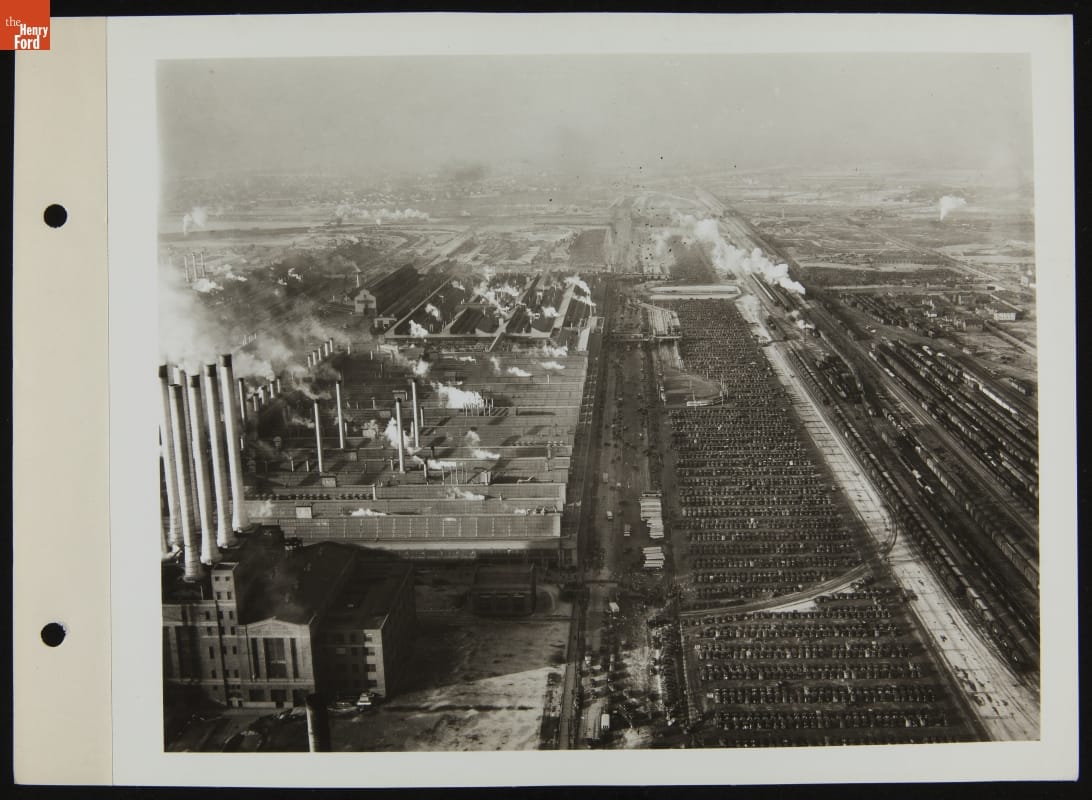
- Aerial View of Rouge Plant Showing UAW Activists, December 23, 1937 - The struggle to unionize Ford Motor Company workers was long and--at times--violent. This aerial photograph shows a United Auto Workers (UAW) demonstration at Ford's Rouge Plant in December 1937. Three and a half years later, following a turbulent ten-day strike in April 1941, Ford became the last major automotive manufacturer to recognize the UAW and agree to a union contract.
- December 23, 1937
- Collections - Artifact
Aerial View of Rouge Plant Showing UAW Activists, December 23, 1937
The struggle to unionize Ford Motor Company workers was long and--at times--violent. This aerial photograph shows a United Auto Workers (UAW) demonstration at Ford's Rouge Plant in December 1937. Three and a half years later, following a turbulent ten-day strike in April 1941, Ford became the last major automotive manufacturer to recognize the UAW and agree to a union contract.
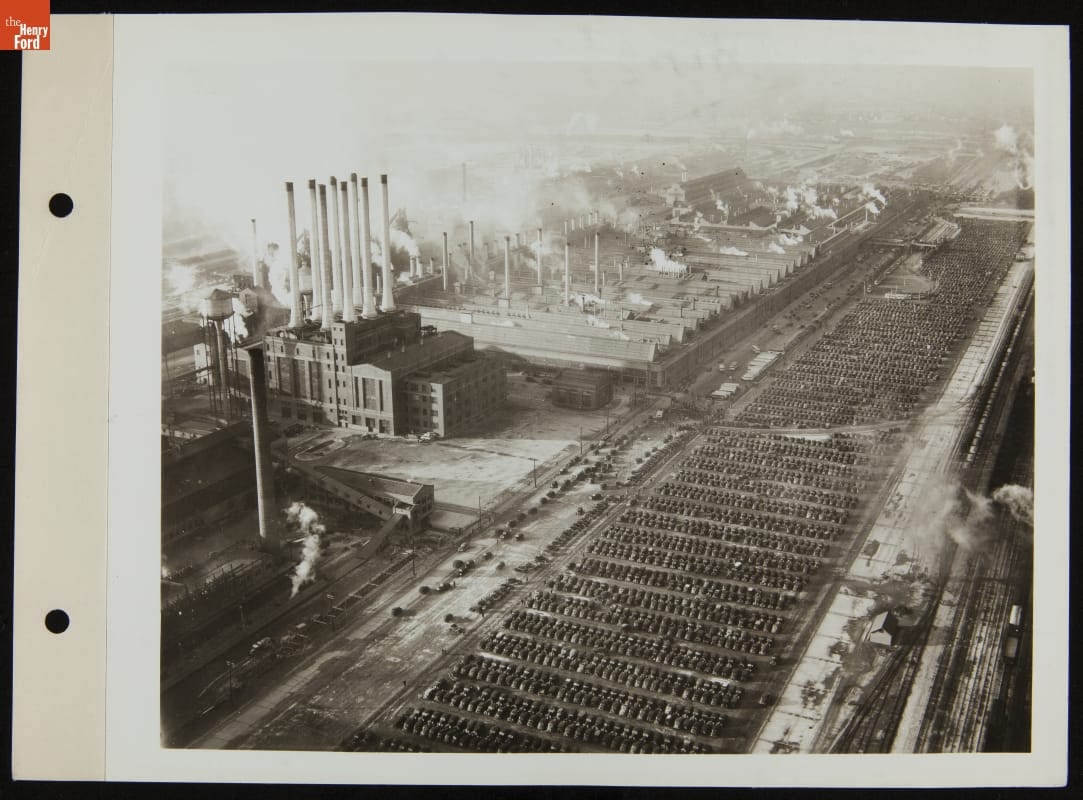
- Aerial View of Rouge Plant Showing UAW Activists, December 23, 1937 - The struggle to unionize Ford Motor Company workers was long and--at times--violent. This aerial photograph shows a United Auto Workers (UAW) demonstration at Ford's Rouge Plant in December 1937. Three and a half years later, following a turbulent ten-day strike in April 1941, Ford became the last major automotive manufacturer to recognize the UAW and agree to a union contract.
- December 23, 1937
- Collections - Artifact
Aerial View of Rouge Plant Showing UAW Activists, December 23, 1937
The struggle to unionize Ford Motor Company workers was long and--at times--violent. This aerial photograph shows a United Auto Workers (UAW) demonstration at Ford's Rouge Plant in December 1937. Three and a half years later, following a turbulent ten-day strike in April 1941, Ford became the last major automotive manufacturer to recognize the UAW and agree to a union contract.
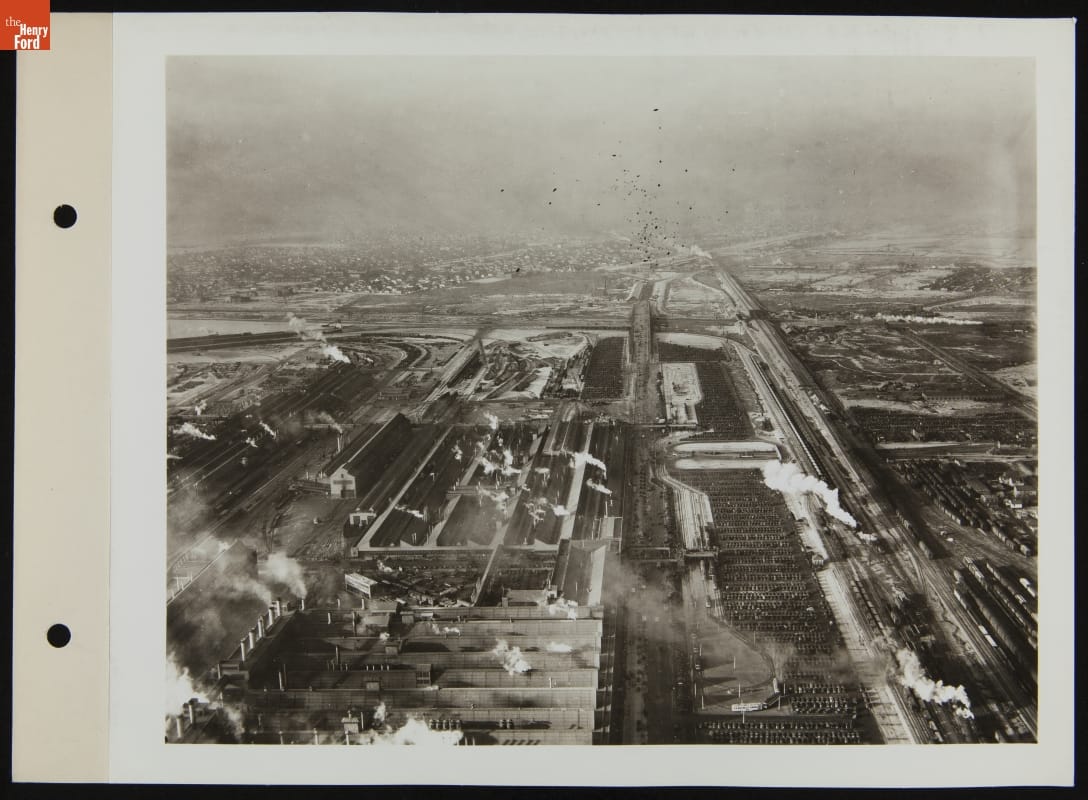
- Aerial View of Rouge Plant and Surrounding Area, December 23, 1937 - The struggle to unionize Ford Motor Company workers was long and--at times--violent. This aerial photograph shows Ford's Rouge Plant during a United Auto Workers (UAW) demonstration in December 1937. Three and a half years later, following a turbulent ten-day strike in April 1941, Ford became the last major automotive manufacturer to recognize the UAW and agree to a union contract.
- December 23, 1937
- Collections - Artifact
Aerial View of Rouge Plant and Surrounding Area, December 23, 1937
The struggle to unionize Ford Motor Company workers was long and--at times--violent. This aerial photograph shows Ford's Rouge Plant during a United Auto Workers (UAW) demonstration in December 1937. Three and a half years later, following a turbulent ten-day strike in April 1941, Ford became the last major automotive manufacturer to recognize the UAW and agree to a union contract.
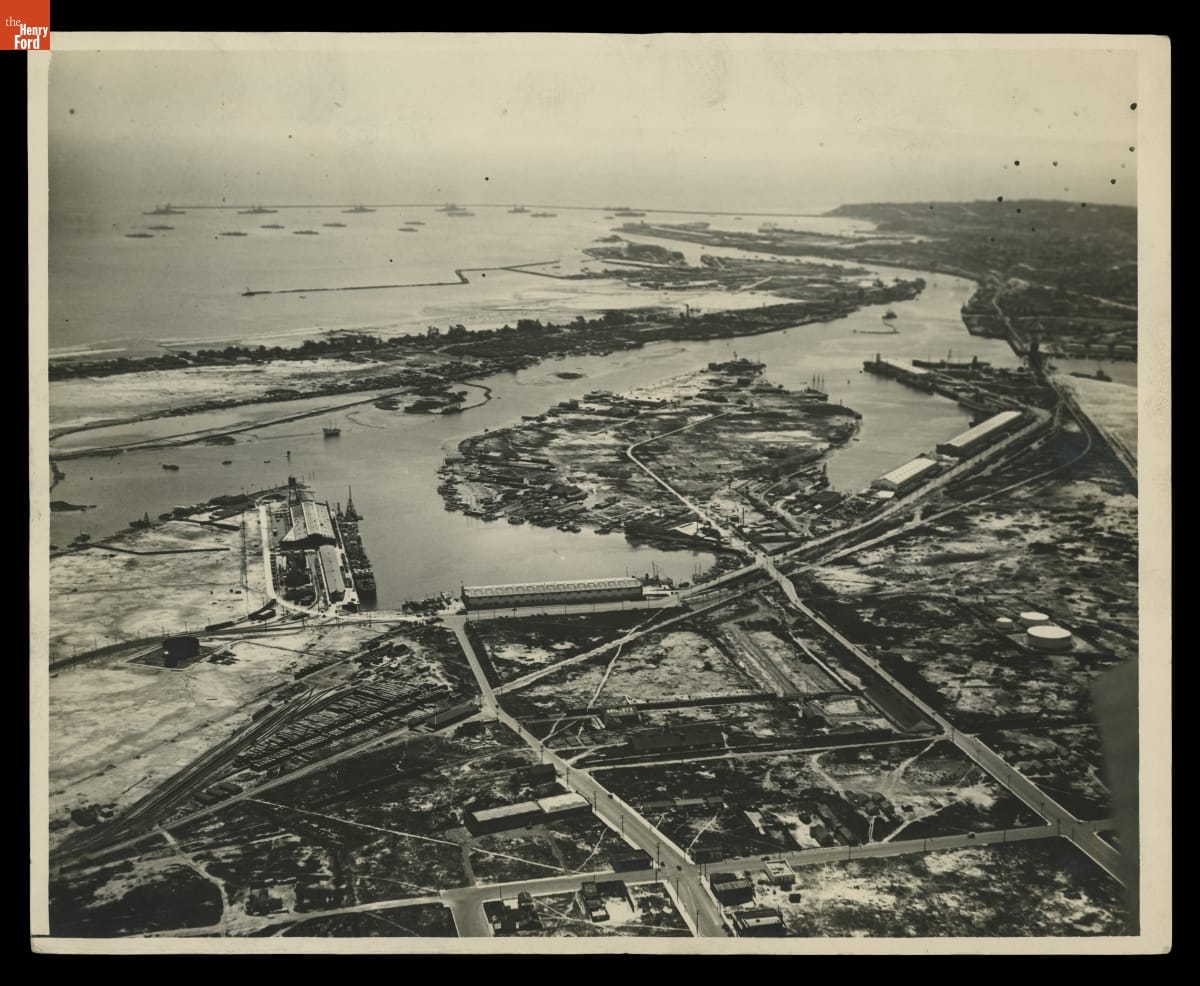
- Aerial View of Los Angeles Harbor and Part of the Pacific Fleet, circa 1922 - Military aerial reconnaissance during World War I accelerated the evolution of domestic aerial photography after the war. The sprawling city of Los Angeles became an important center for commercial aerial photography. Survey companies like Cross Aerial Photos, which captured this view, created images that remain important documents of the rapid urbanization of Southern California in the 1920s.
- circa 1922
- Collections - Artifact
Aerial View of Los Angeles Harbor and Part of the Pacific Fleet, circa 1922
Military aerial reconnaissance during World War I accelerated the evolution of domestic aerial photography after the war. The sprawling city of Los Angeles became an important center for commercial aerial photography. Survey companies like Cross Aerial Photos, which captured this view, created images that remain important documents of the rapid urbanization of Southern California in the 1920s.
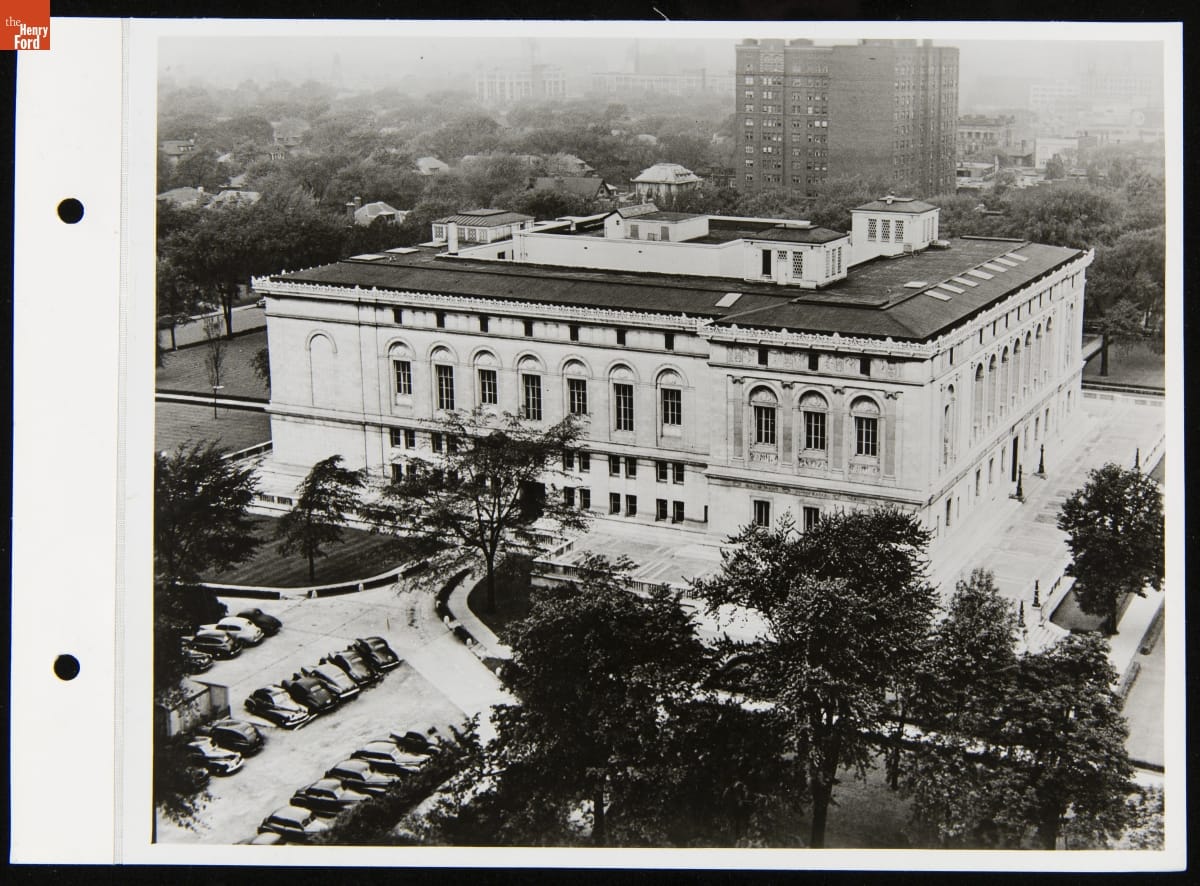
- Detroit Public Library, May 2, 1947 - Andrew Carnegie (1835-1919) amassed an immense fortune from railroads, oil, and steel. He devoted his later years to philanthropy. Between 1886 and 1919, Carnegie donated more than $40 million to build 1,679 new libraries in communities of all sizes across America. This library building, funded by a Carnegie grant and designed by New York City architect Cass Gilbert, opened in 1921 in Detroit, Michigan.
- May 02, 1947
- Collections - Artifact
Detroit Public Library, May 2, 1947
Andrew Carnegie (1835-1919) amassed an immense fortune from railroads, oil, and steel. He devoted his later years to philanthropy. Between 1886 and 1919, Carnegie donated more than $40 million to build 1,679 new libraries in communities of all sizes across America. This library building, funded by a Carnegie grant and designed by New York City architect Cass Gilbert, opened in 1921 in Detroit, Michigan.
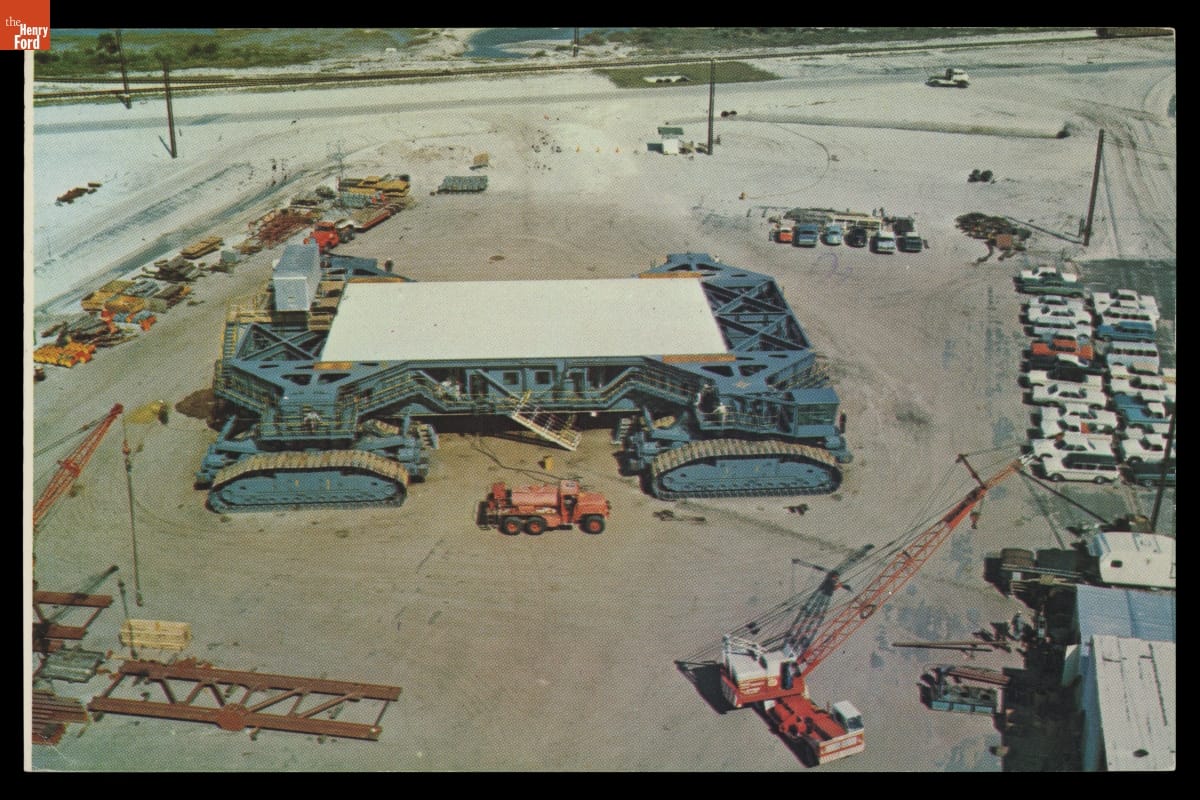
- NASA Crawler-Transporter #1, Used to Carry Apollo/Saturn V Launch Vehicle -
- 1967-1973
- Collections - Artifact
NASA Crawler-Transporter #1, Used to Carry Apollo/Saturn V Launch Vehicle
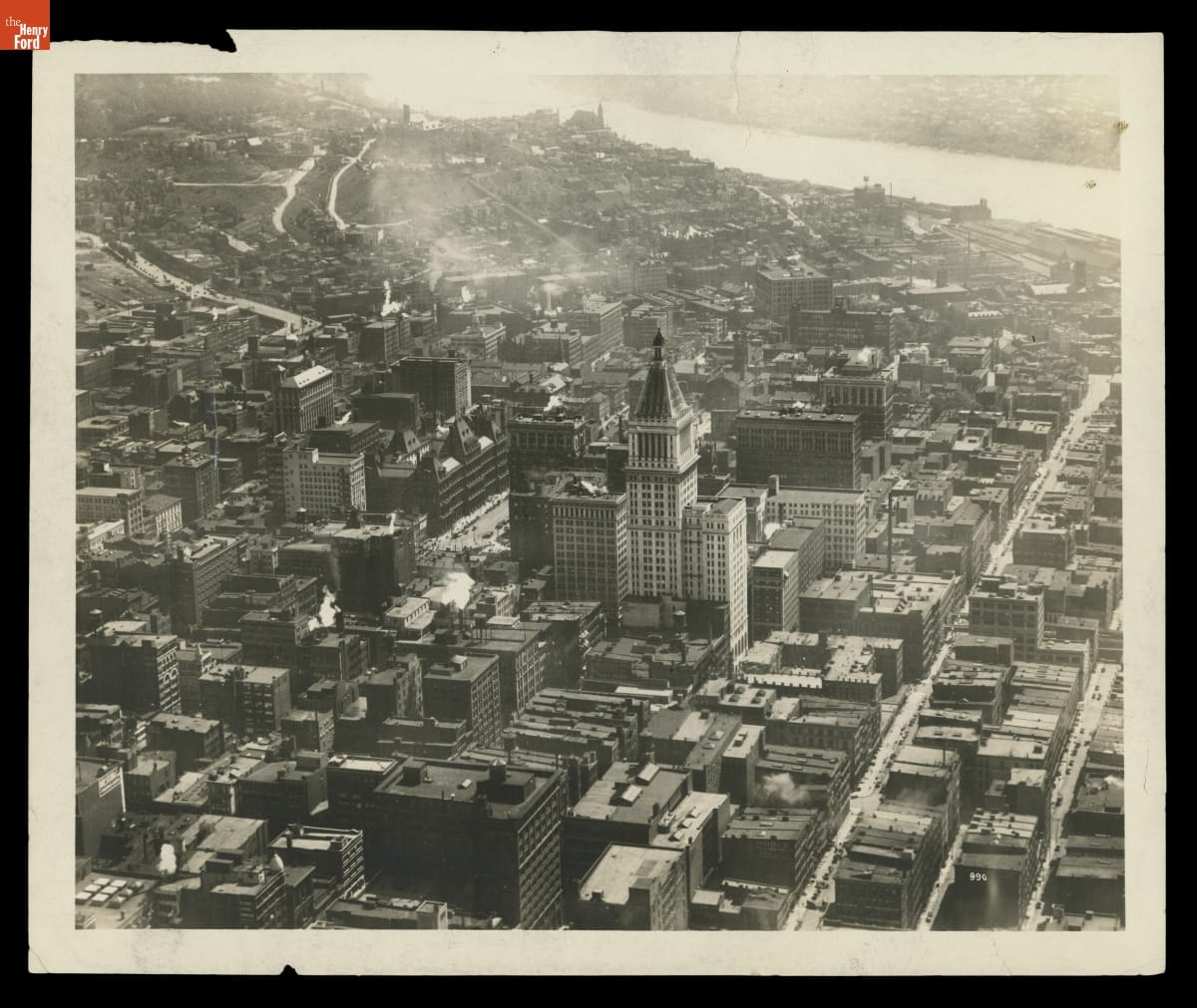
- Aerial View of Cincinnati, Ohio, circa 1923 - Military aerial reconnaissance during World War I accelerated the evolution of domestic aerial photography after the war. During the 1920s, aerial images like this one taken over Cincinnati by the U.S. Army Air Service helped document population shifts and environmental changes. They also informed urban planning, agricultural practices, and engineering projects.
- circa 1923
- Collections - Artifact
Aerial View of Cincinnati, Ohio, circa 1923
Military aerial reconnaissance during World War I accelerated the evolution of domestic aerial photography after the war. During the 1920s, aerial images like this one taken over Cincinnati by the U.S. Army Air Service helped document population shifts and environmental changes. They also informed urban planning, agricultural practices, and engineering projects.
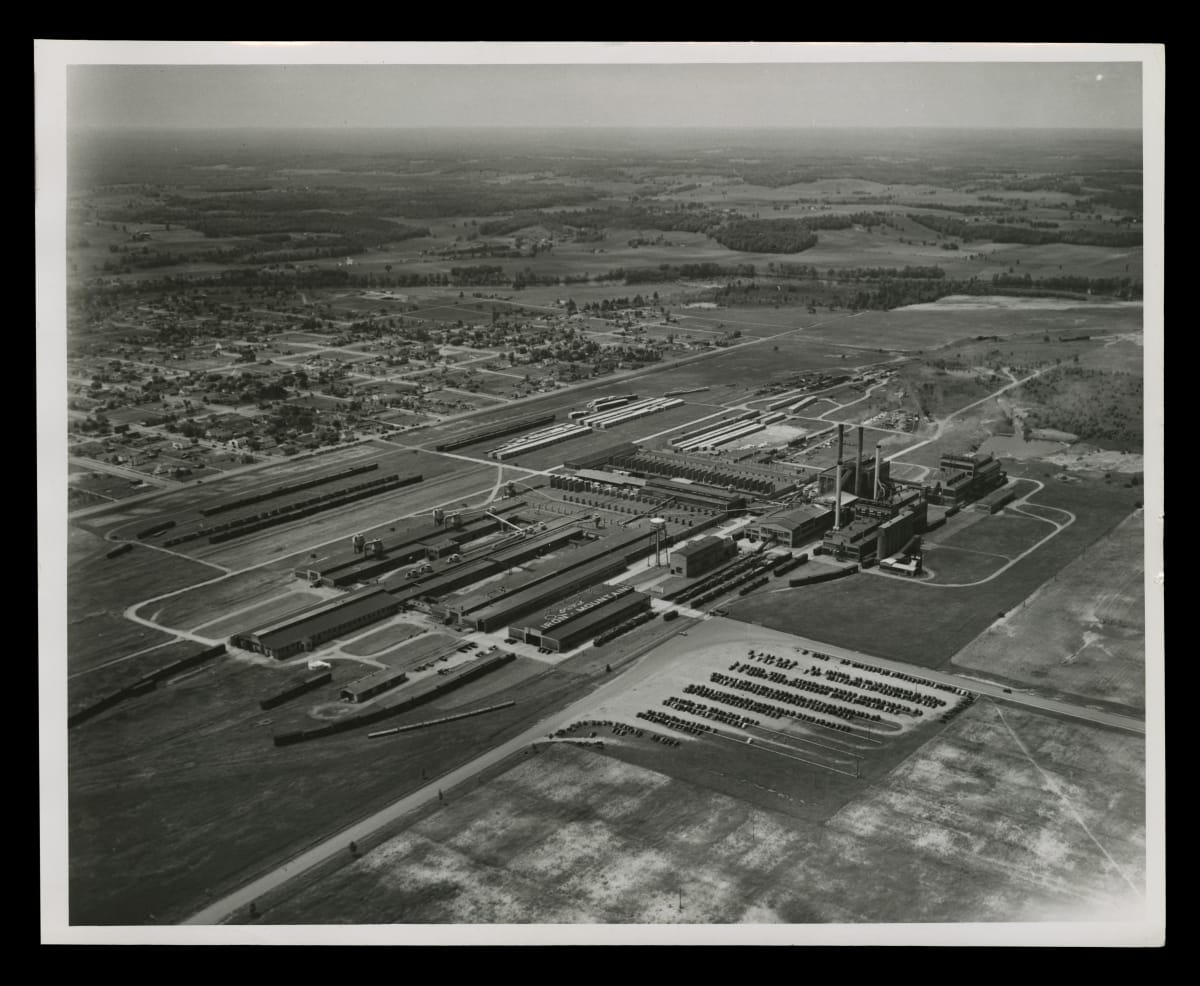
- Aerial View of Ford Motor Company Iron Mountain Plant, Upper Peninsula of Michigan, 1946 - Ford Motor Company's Iron Mountain plant, located in Michigan's Upper Peninsula, produced wood body frames and parts for the automaker's various models. After Ford adopted all-steel sedan bodies for the 1937 model year, Iron Mountain focused on station wagon bodies. Some 300 skilled craftspeople worked at the plant until 1952, when Ford wagons switched to all-steel bodies.
- August 06, 1946
- Collections - Artifact
Aerial View of Ford Motor Company Iron Mountain Plant, Upper Peninsula of Michigan, 1946
Ford Motor Company's Iron Mountain plant, located in Michigan's Upper Peninsula, produced wood body frames and parts for the automaker's various models. After Ford adopted all-steel sedan bodies for the 1937 model year, Iron Mountain focused on station wagon bodies. Some 300 skilled craftspeople worked at the plant until 1952, when Ford wagons switched to all-steel bodies.
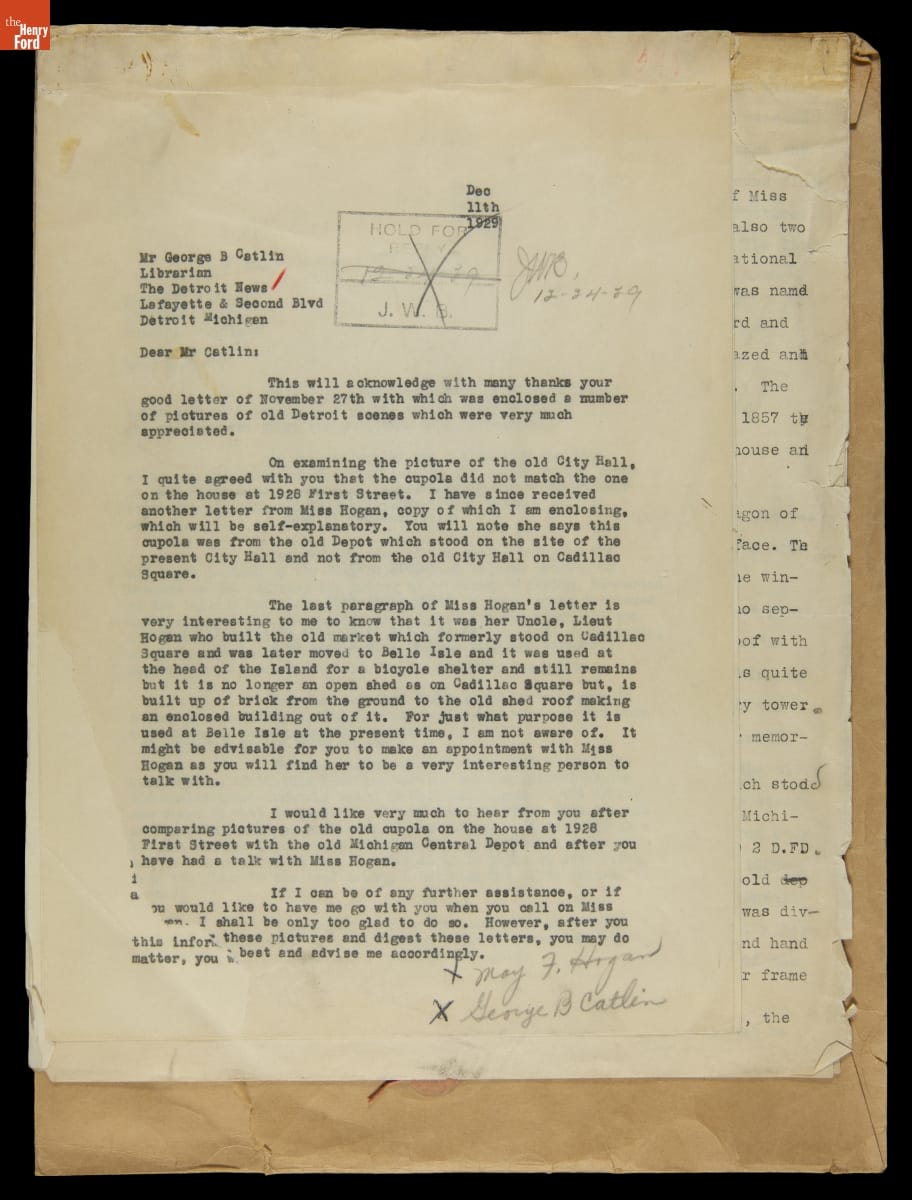
- May F. Hogan, George B. Catlin and James W. Bishop Correspondence and Photographs, November-December 1929 -
- November 1929-December 1929
- Collections - Artifact
May F. Hogan, George B. Catlin and James W. Bishop Correspondence and Photographs, November-December 1929