
Search
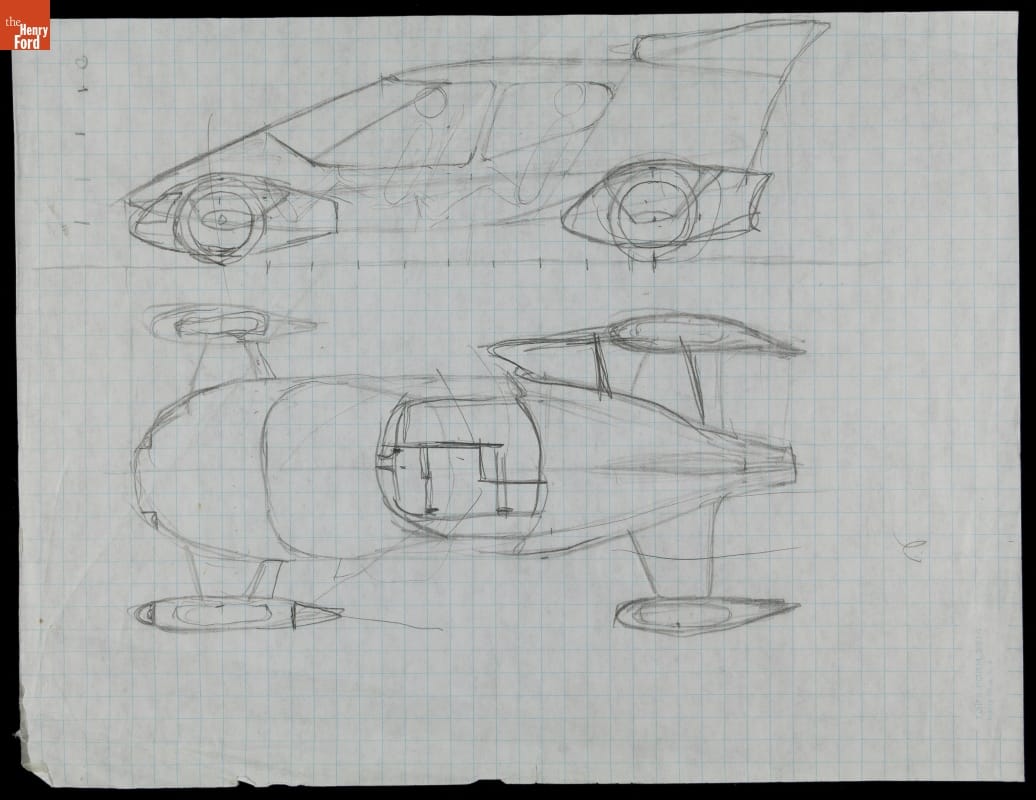
- Early Design Sketch of the Edison2 Very Light Car, 2008 - This sketch of the Edison2 was drawn freehand in a coffee shop; it might appear hasty, but its creator is an aerodynamics engineer -- an expert in stealth aircraft technology with decades of wind tunnel experience. While the next steps involved computer-aided design, rough explorations like this were crucial to the development -- and final shape -- of the Edison2.
- August 2008-September 2008
- Collections - Artifact
Early Design Sketch of the Edison2 Very Light Car, 2008
This sketch of the Edison2 was drawn freehand in a coffee shop; it might appear hasty, but its creator is an aerodynamics engineer -- an expert in stealth aircraft technology with decades of wind tunnel experience. While the next steps involved computer-aided design, rough explorations like this were crucial to the development -- and final shape -- of the Edison2.
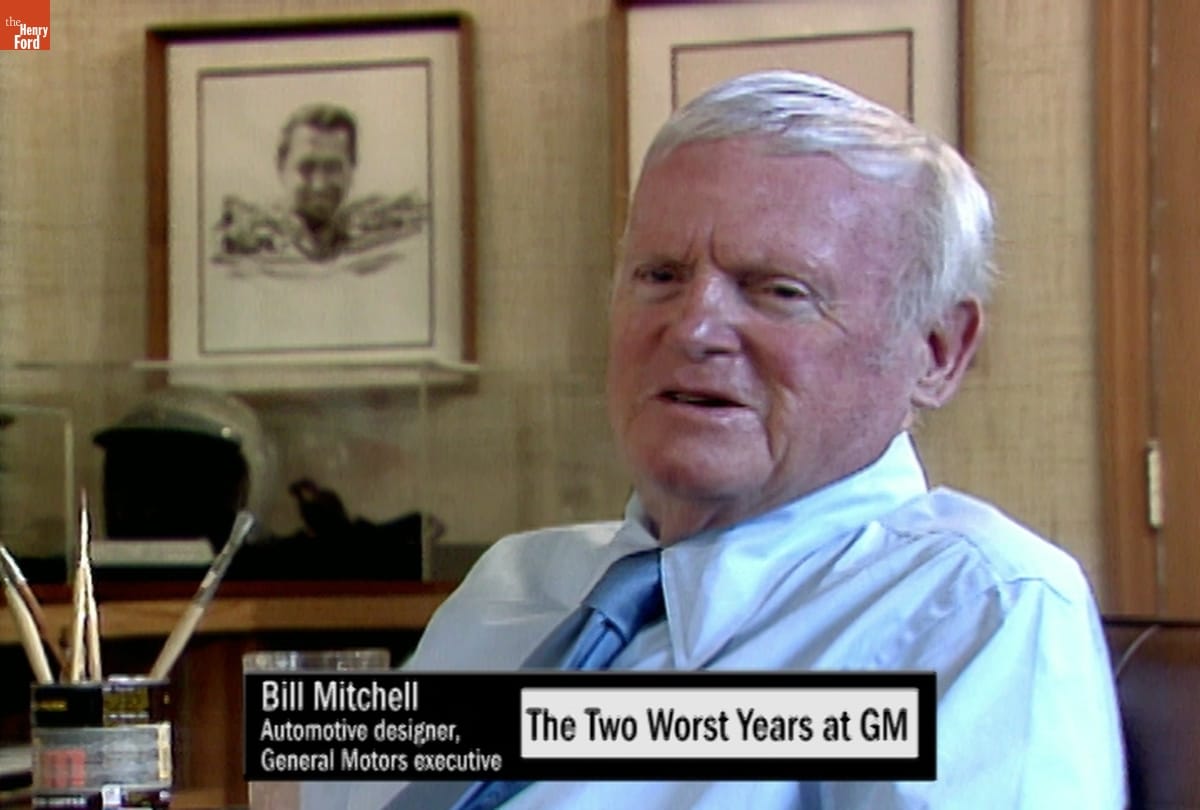
- "The Two Worst Years at GM" Clip from Interview with Bill Mitchell, 1984 - Bill Mitchell joined the Art and Colour Section at General Motors in 1935 under Harley Earl who put him in charge of the Cadillac Studio. After serving in World War II, Mitchell returned to GM in 1953. He became Vice President of Design in 1958 and served until his retirement in 1977. The Buick Riviera and the Chevrolet Corvette are among Mitchell's most iconic car designs.
- August 08, 1984
- Collections - Artifact
"The Two Worst Years at GM" Clip from Interview with Bill Mitchell, 1984
Bill Mitchell joined the Art and Colour Section at General Motors in 1935 under Harley Earl who put him in charge of the Cadillac Studio. After serving in World War II, Mitchell returned to GM in 1953. He became Vice President of Design in 1958 and served until his retirement in 1977. The Buick Riviera and the Chevrolet Corvette are among Mitchell's most iconic car designs.
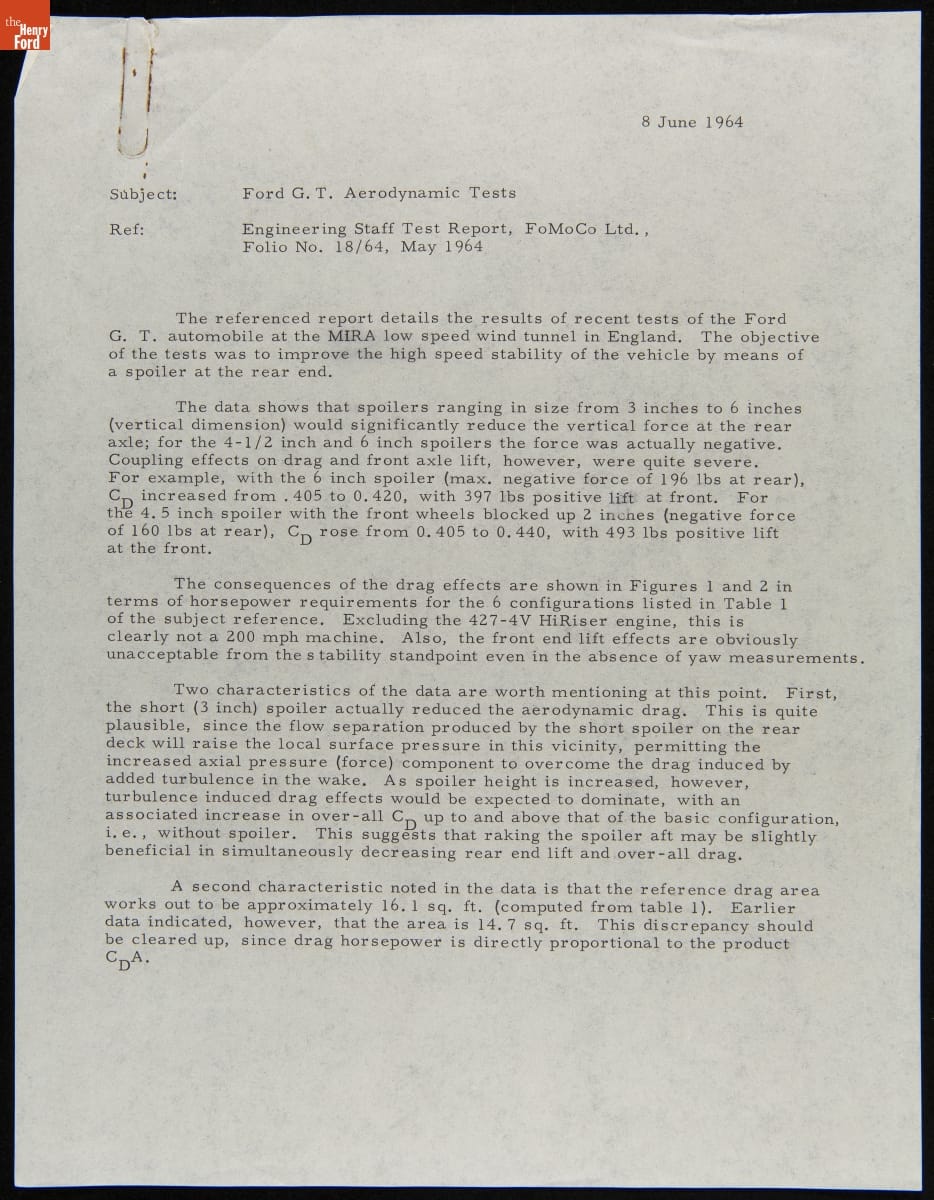
- "Ford GT Aerodynamic Tests," June 8, 1964 - In the mid-1960s, Ford Motor Company designed and built a new GT car for endurance races like France's 24 Hours of Le Mans. It was part of a larger effort to give the company a sportier image and attract younger customers. This memo detailed results from wind tunnel tests with a Ford GT car in Great Britain in 1964.
- June 08, 1964
- Collections - Artifact
"Ford GT Aerodynamic Tests," June 8, 1964
In the mid-1960s, Ford Motor Company designed and built a new GT car for endurance races like France's 24 Hours of Le Mans. It was part of a larger effort to give the company a sportier image and attract younger customers. This memo detailed results from wind tunnel tests with a Ford GT car in Great Britain in 1964.
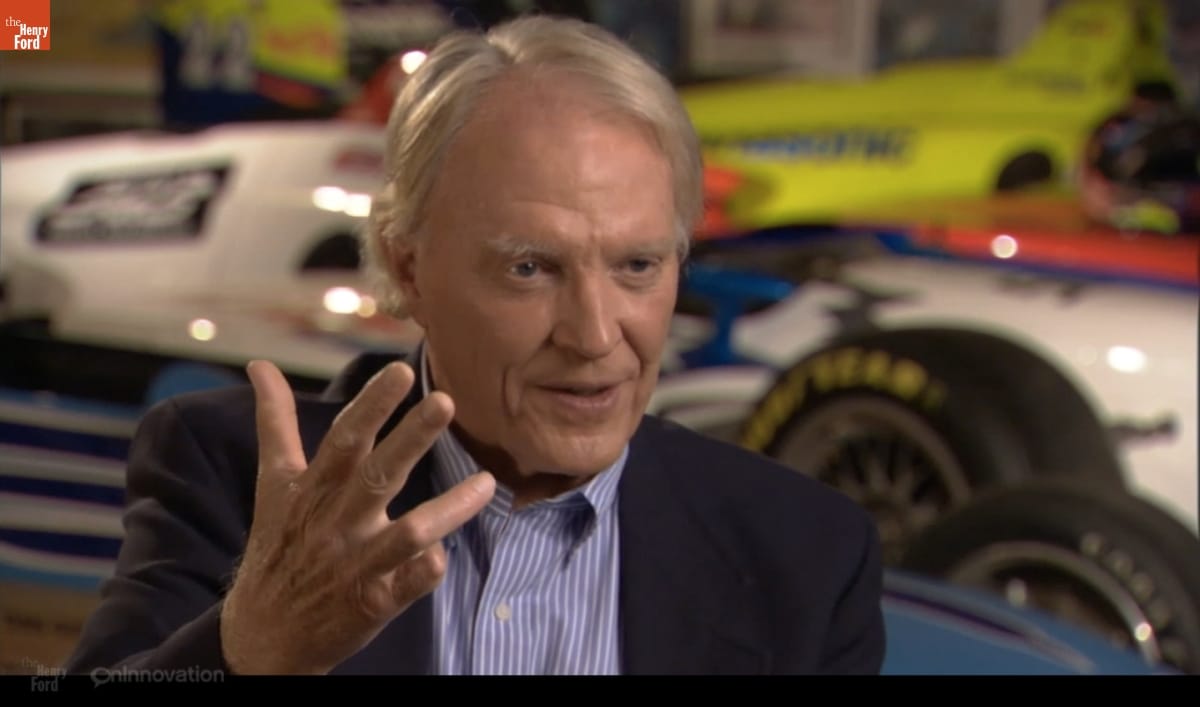
- "What Is BLAT?" Clip from Interview with Dan Gurney, August 20, 2008 - Dan Gurney built one of the most versatile and successful careers in racing. His 51 wins as a driver included Grand Prix, Indy car, NASCAR, and sports car events. His achievements as a designer, builder, and team owner with his All American Racers continue to influence the sport. The Henry Ford interviewed Gurney at his AAR facility in 2008.
- August 20, 2008
- Collections - Artifact
"What Is BLAT?" Clip from Interview with Dan Gurney, August 20, 2008
Dan Gurney built one of the most versatile and successful careers in racing. His 51 wins as a driver included Grand Prix, Indy car, NASCAR, and sports car events. His achievements as a designer, builder, and team owner with his All American Racers continue to influence the sport. The Henry Ford interviewed Gurney at his AAR facility in 2008.
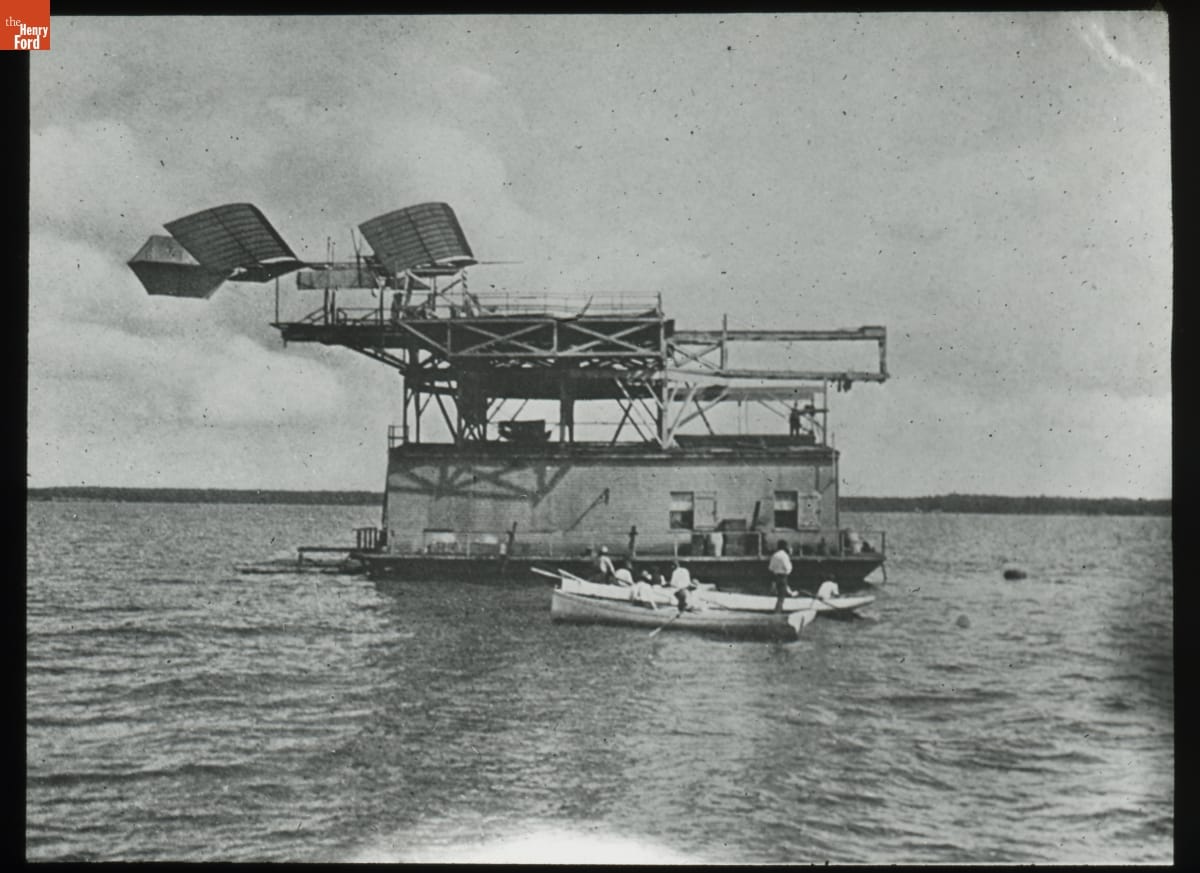
- "Langley Aerodrome," 1896 - Samuel Pierpont Langley, Secretary of the Smithsonian Institution, experimented successfully with unpiloted, steam-powered Aerodromes like the one seen here. He launched his aircraft from a houseboat on the Potomac River. Langley later designed a piloted, gasoline-powered version he called the Great Aerodrome, but two attempts to fly it in 1903 ended quickly with crashes into the river.
- 1896
- Collections - Artifact
"Langley Aerodrome," 1896
Samuel Pierpont Langley, Secretary of the Smithsonian Institution, experimented successfully with unpiloted, steam-powered Aerodromes like the one seen here. He launched his aircraft from a houseboat on the Potomac River. Langley later designed a piloted, gasoline-powered version he called the Great Aerodrome, but two attempts to fly it in 1903 ended quickly with crashes into the river.
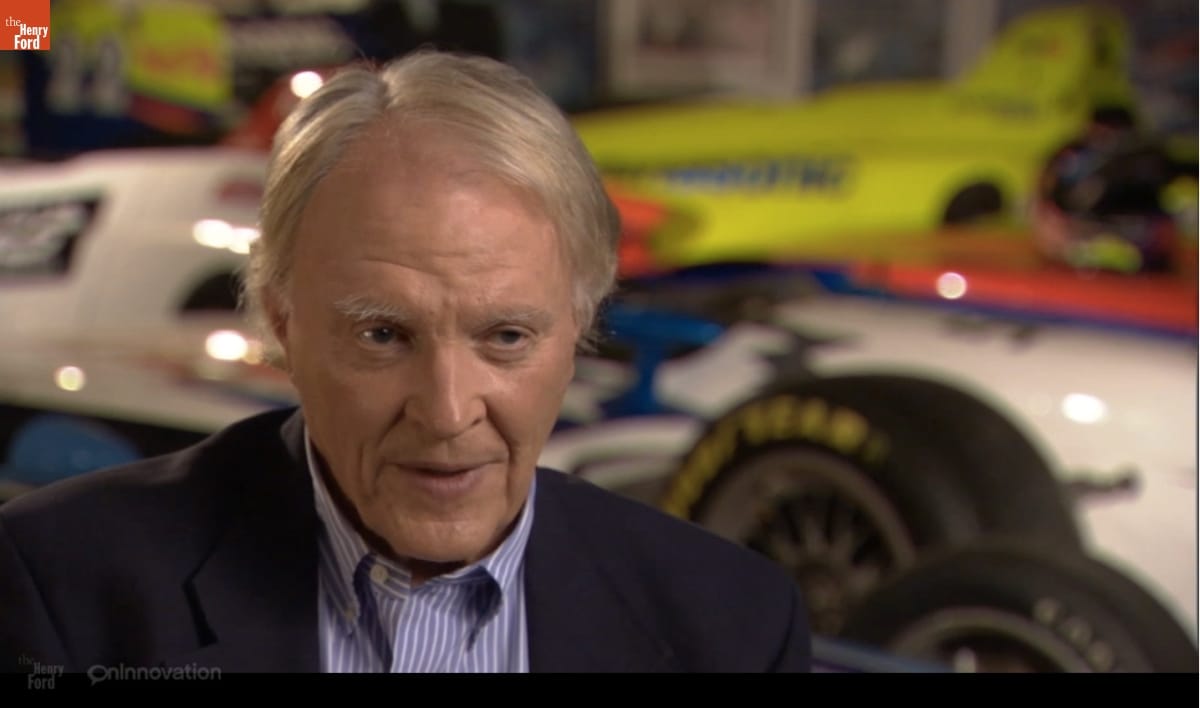
- "Eagle Racecars," Clip from Interview with Dan Gurney, August 20, 2008 - Dan Gurney built one of the most versatile and successful careers in racing. His 51 wins as a driver included Grand Prix, Indy car, NASCAR, and sports car events. His achievements as a designer, builder, and team owner with his All American Racers continue to influence the sport. The Henry Ford interviewed Gurney at his AAR facility in 2008.
- August 20, 2008
- Collections - Artifact
"Eagle Racecars," Clip from Interview with Dan Gurney, August 20, 2008
Dan Gurney built one of the most versatile and successful careers in racing. His 51 wins as a driver included Grand Prix, Indy car, NASCAR, and sports car events. His achievements as a designer, builder, and team owner with his All American Racers continue to influence the sport. The Henry Ford interviewed Gurney at his AAR facility in 2008.
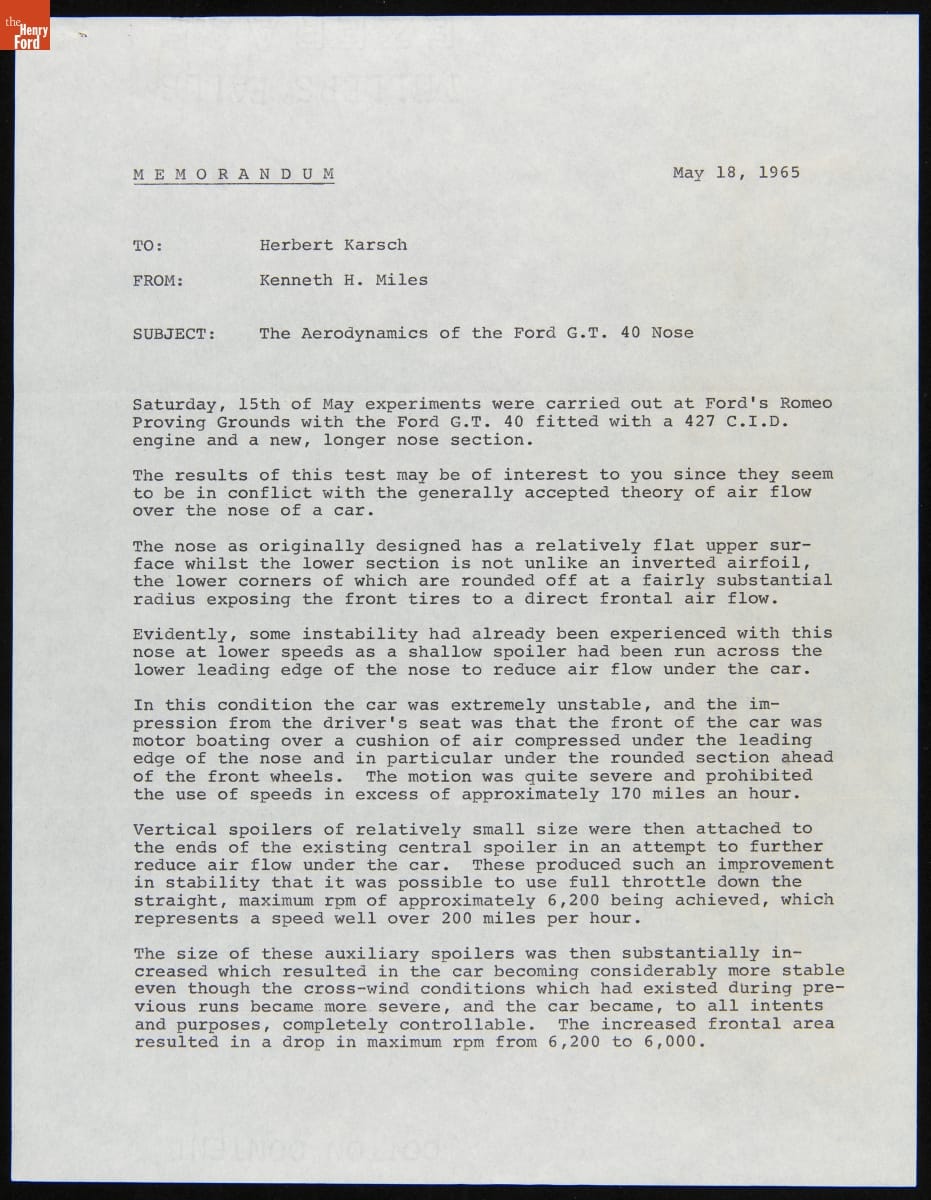
- Memorandum, "The Aerodynamics of the Ford GT40 Nose," May 18, 1965 - In the mid-1960s, Ford Motor Company competed in endurance races with its all-new GT40 car. Daily racing efforts were managed by the Shelby American team. This memo, written by Shelby engineer and driver Ken Miles, described instability in the GT40's handling due to the shape of the car's nose. Miles had tested the car himself at Ford's Romeo, Michigan, proving ground.
- May 18, 1965
- Collections - Artifact
Memorandum, "The Aerodynamics of the Ford GT40 Nose," May 18, 1965
In the mid-1960s, Ford Motor Company competed in endurance races with its all-new GT40 car. Daily racing efforts were managed by the Shelby American team. This memo, written by Shelby engineer and driver Ken Miles, described instability in the GT40's handling due to the shape of the car's nose. Miles had tested the car himself at Ford's Romeo, Michigan, proving ground.
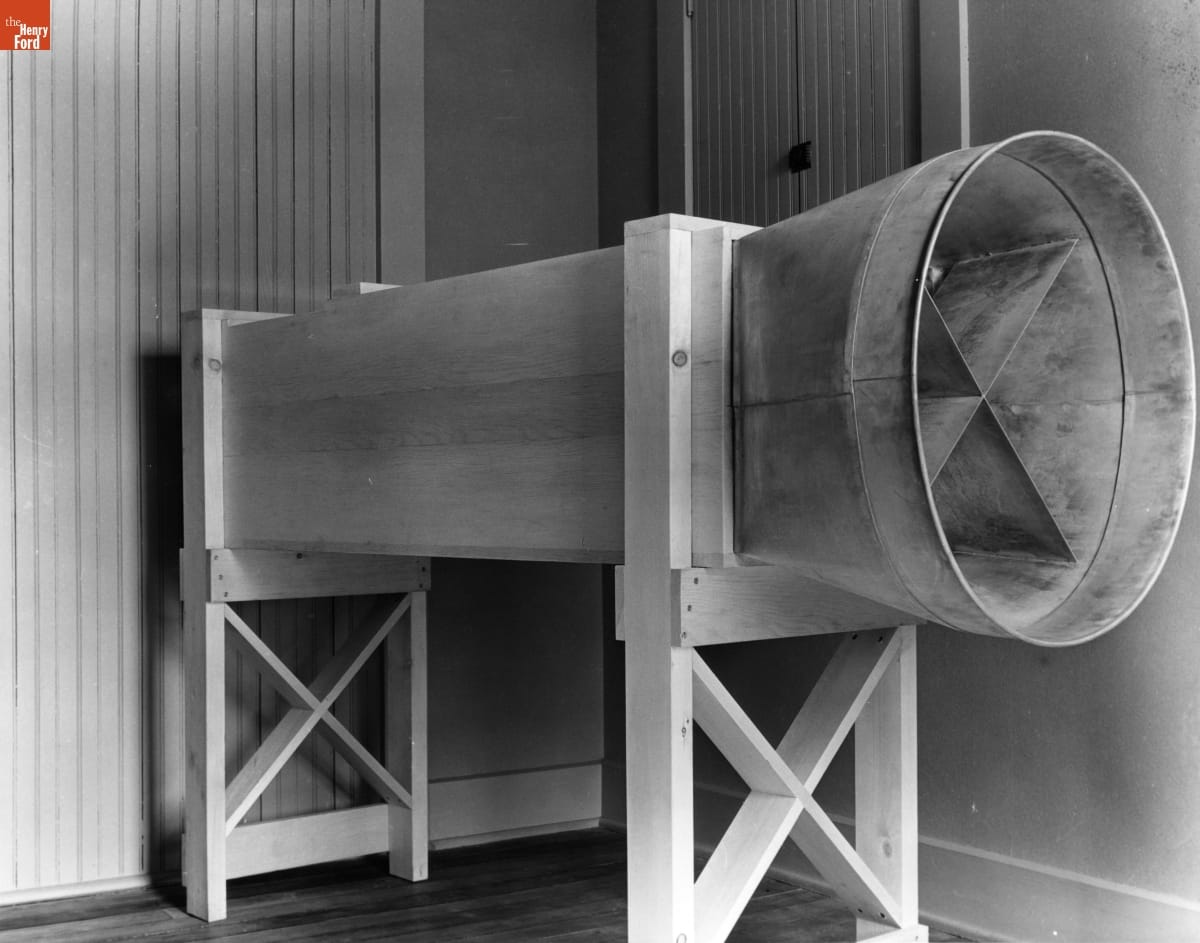
- Replica of the Wright Brothers 1901 Wind Tunnel, Constructed in 1938 - When their glider did not perform as expected in 1901, Wilbur and Orville Wright determined that the standard lift tables -- used to predict the lift generated by aircraft wings -- were incorrect. The Wrights built a wind tunnel in their Dayton bicycle shop and calculated their own tables. This new data led directly to their success with the 1903 Wright Flyer.
- 1901
- Collections - Artifact
Replica of the Wright Brothers 1901 Wind Tunnel, Constructed in 1938
When their glider did not perform as expected in 1901, Wilbur and Orville Wright determined that the standard lift tables -- used to predict the lift generated by aircraft wings -- were incorrect. The Wrights built a wind tunnel in their Dayton bicycle shop and calculated their own tables. This new data led directly to their success with the 1903 Wright Flyer.
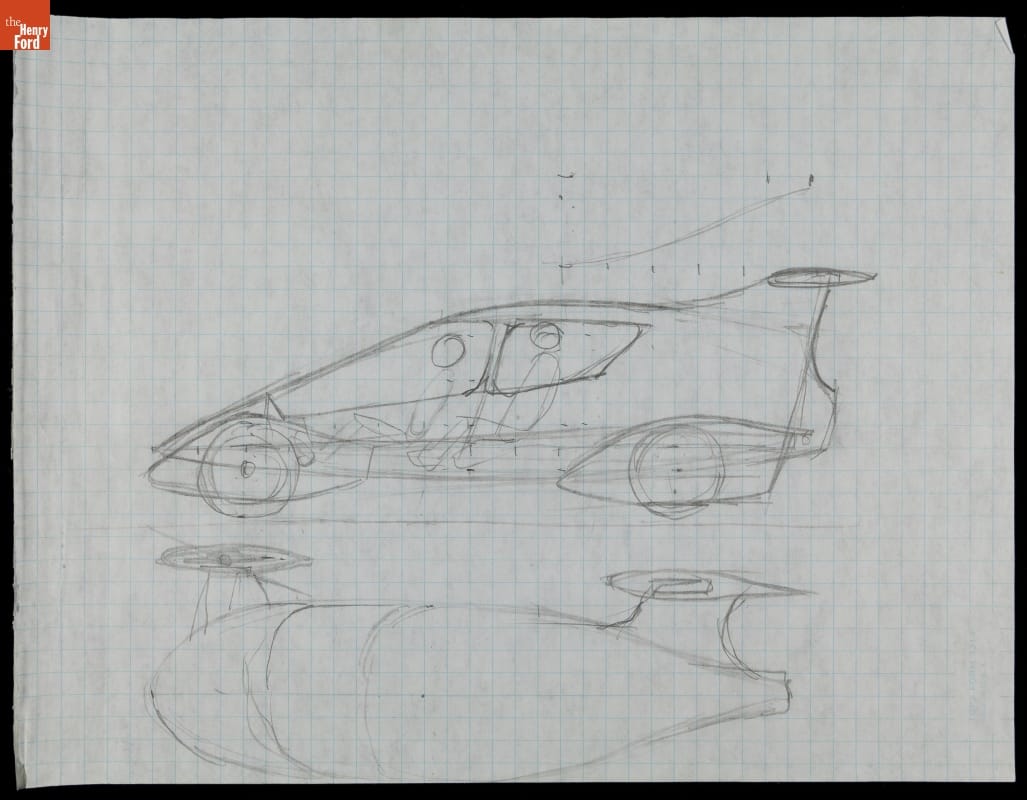
- Early Design Sketch of the Edison2 Very Light Car, 2008 - This sketch of the Edison2 was drawn freehand in a coffee shop; it might appear hasty, but its creator is an aerodynamics engineer -- an expert in stealth aircraft technology with decades of wind tunnel experience. While the next steps involved computer-aided design, rough explorations like this were crucial to the development -- and final shape -- of the Edison2.
- August 2008-September 2008
- Collections - Artifact
Early Design Sketch of the Edison2 Very Light Car, 2008
This sketch of the Edison2 was drawn freehand in a coffee shop; it might appear hasty, but its creator is an aerodynamics engineer -- an expert in stealth aircraft technology with decades of wind tunnel experience. While the next steps involved computer-aided design, rough explorations like this were crucial to the development -- and final shape -- of the Edison2.
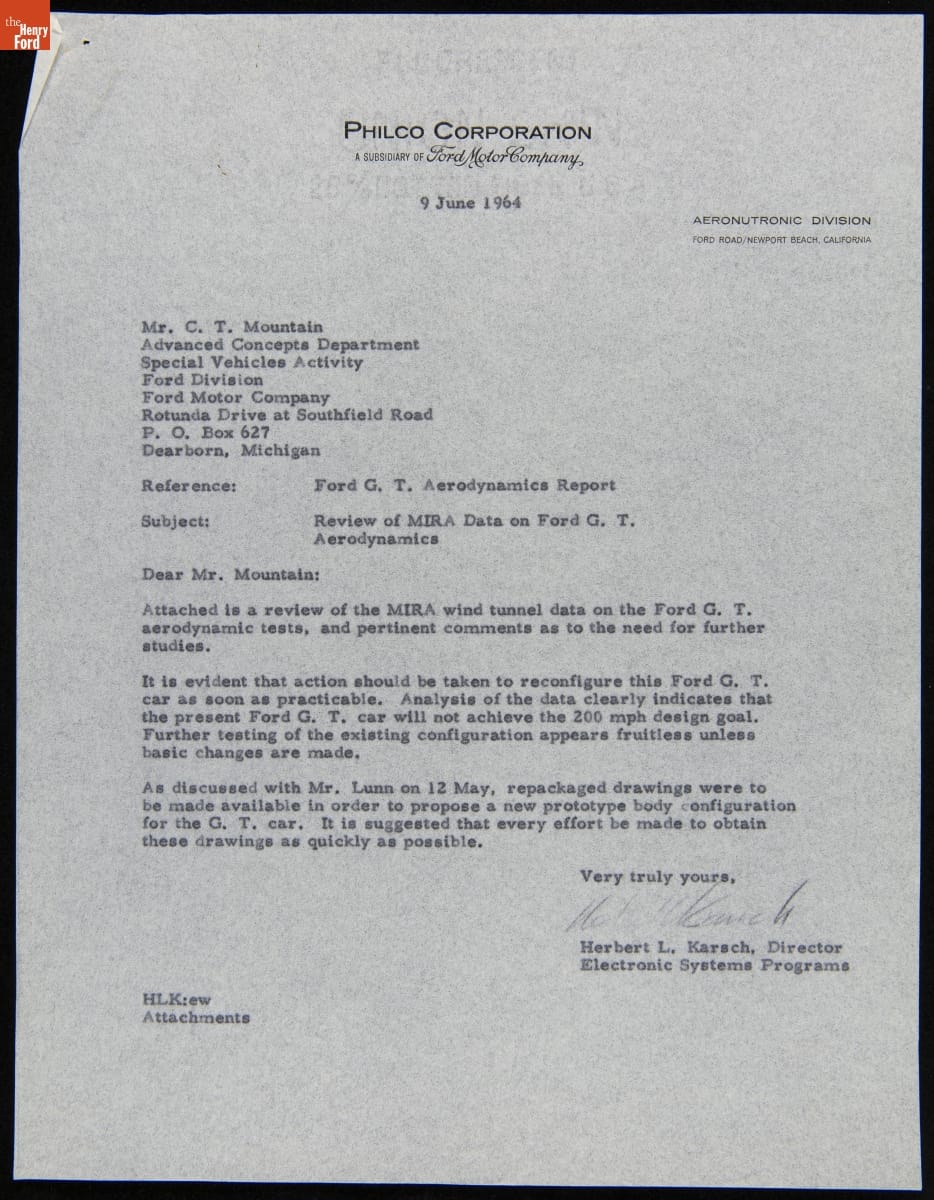
- Review of MIRA Data on Ford GT Aerodynamics, June 1964 - In the mid-1960s, Ford Motor Company designed and built a new GT car for endurance races like France's 24 Hours of Le Mans. It was part of a larger effort to give the company a sportier image and attract younger customers. This memo detailed results from wind tunnel tests with a Ford GT car in Great Britain in 1964.
- June 09, 1964
- Collections - Artifact
Review of MIRA Data on Ford GT Aerodynamics, June 1964
In the mid-1960s, Ford Motor Company designed and built a new GT car for endurance races like France's 24 Hours of Le Mans. It was part of a larger effort to give the company a sportier image and attract younger customers. This memo detailed results from wind tunnel tests with a Ford GT car in Great Britain in 1964.