
Search
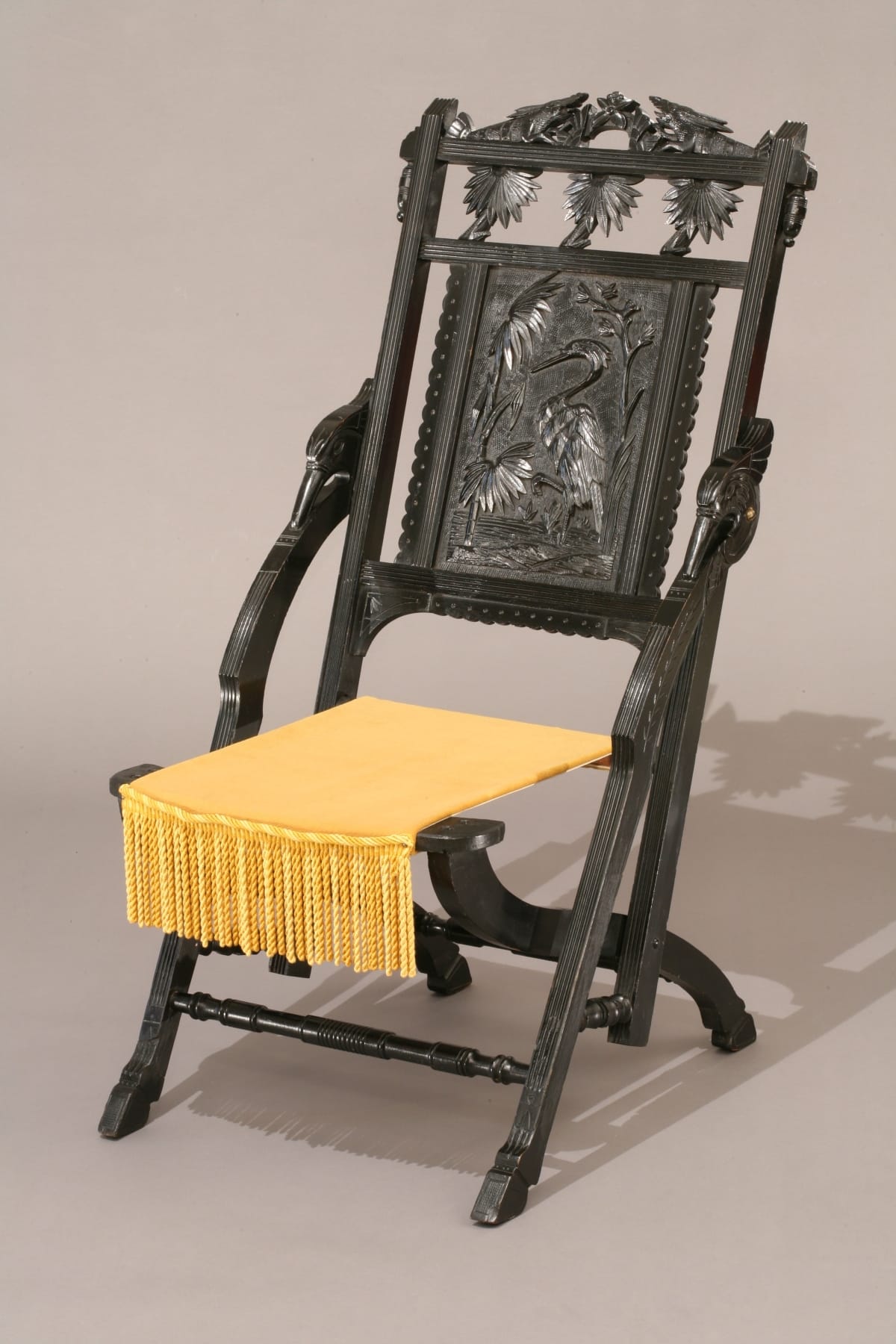
- Folding Side Chair, 1880-1885 - The elaborate machine carving on this factory-made chair is an interpretation of the exotic Far East. Popular in the 1880s, this sub-style of Victorian furniture is known as Anglo-Japanese. This folding chair could be used in a parlor or dining room, or outdoors for a picnic.
- 1880-1885
- Collections - Artifact
Folding Side Chair, 1880-1885
The elaborate machine carving on this factory-made chair is an interpretation of the exotic Far East. Popular in the 1880s, this sub-style of Victorian furniture is known as Anglo-Japanese. This folding chair could be used in a parlor or dining room, or outdoors for a picnic.
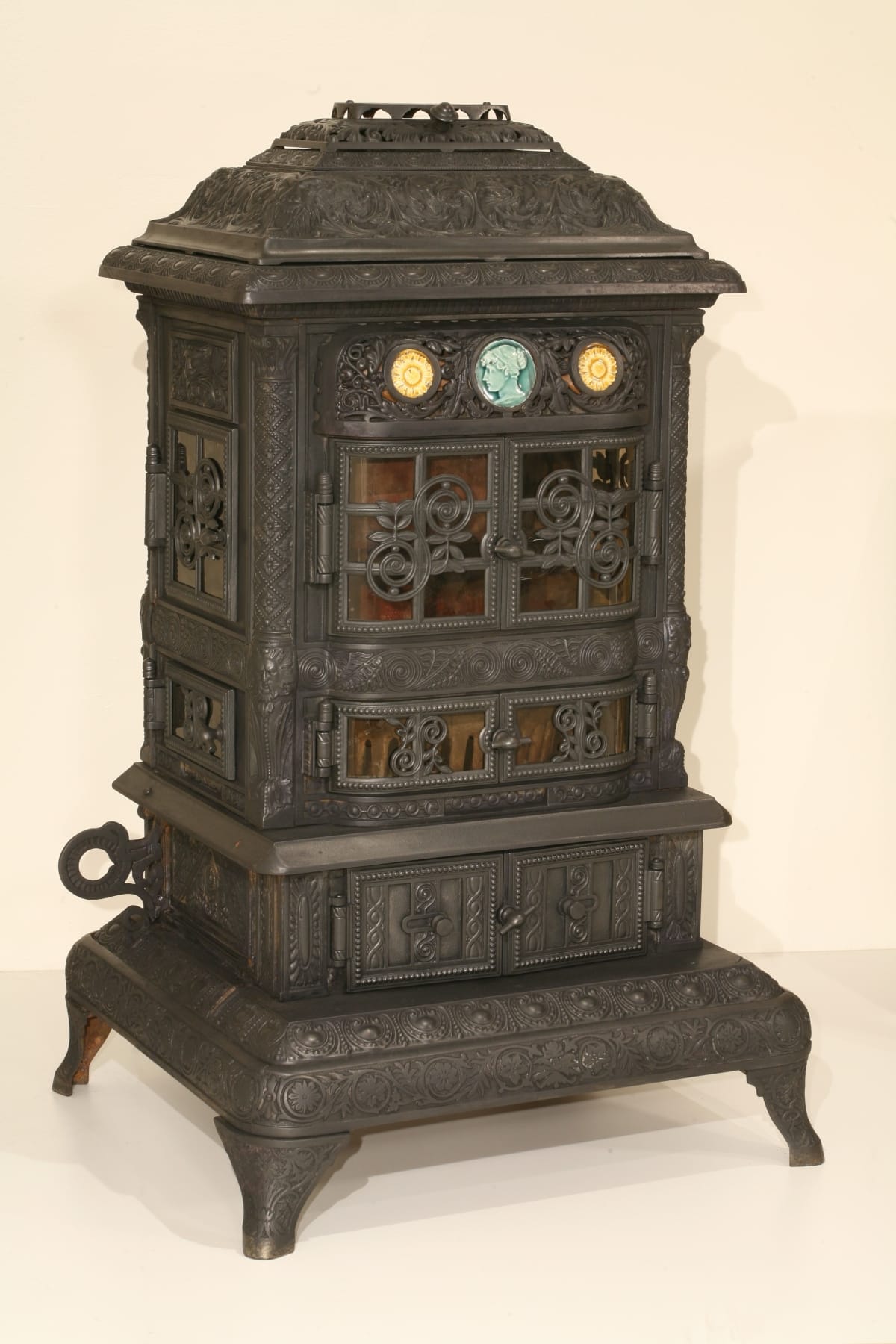
- Parlor Stove, 1886 - This heating stove was intended to blend with furnishings made in the Victorian Aesthetic Movement. Aesthetic designers sought to transform Victorian taste away from popular revival styles toward something new and elegant. There was no single Aesthetic style, rather a common set of design motifs, including stylized botanical forms, and an interest in elegant decorative tiles, which appear on this stove.
- 1886
- Collections - Artifact
Parlor Stove, 1886
This heating stove was intended to blend with furnishings made in the Victorian Aesthetic Movement. Aesthetic designers sought to transform Victorian taste away from popular revival styles toward something new and elegant. There was no single Aesthetic style, rather a common set of design motifs, including stylized botanical forms, and an interest in elegant decorative tiles, which appear on this stove.
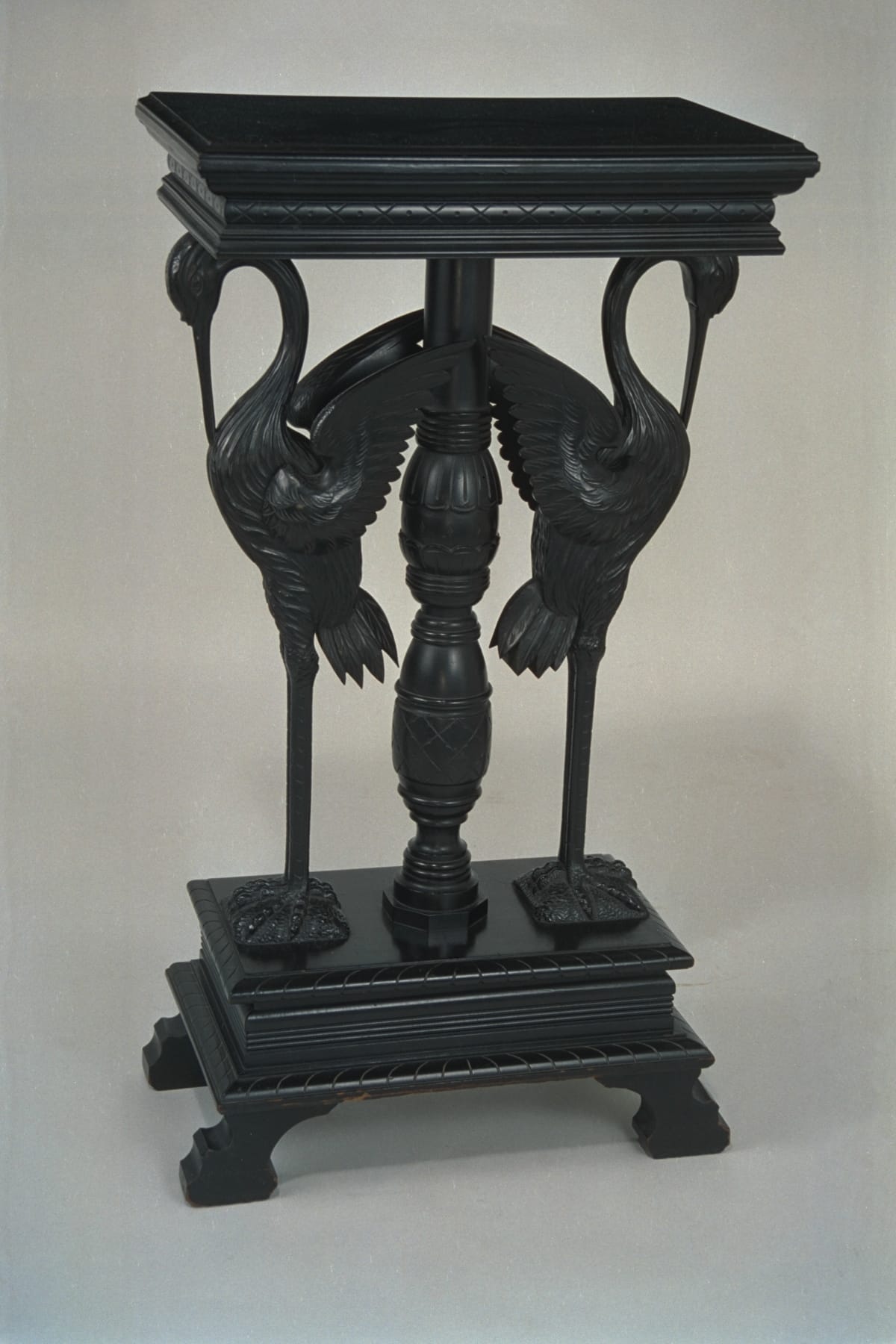
- Pedestal, 1875-1890 - This pedestal was made as a standout piece of sculpture for the hall or parlor in an American middle class home. The ebonized wood and the cranes are influences of far eastern decorative arts, popular in Britain and the United States through the last decades of the nineteenth century.
- 1875-1890
- Collections - Artifact
Pedestal, 1875-1890
This pedestal was made as a standout piece of sculpture for the hall or parlor in an American middle class home. The ebonized wood and the cranes are influences of far eastern decorative arts, popular in Britain and the United States through the last decades of the nineteenth century.