
Search
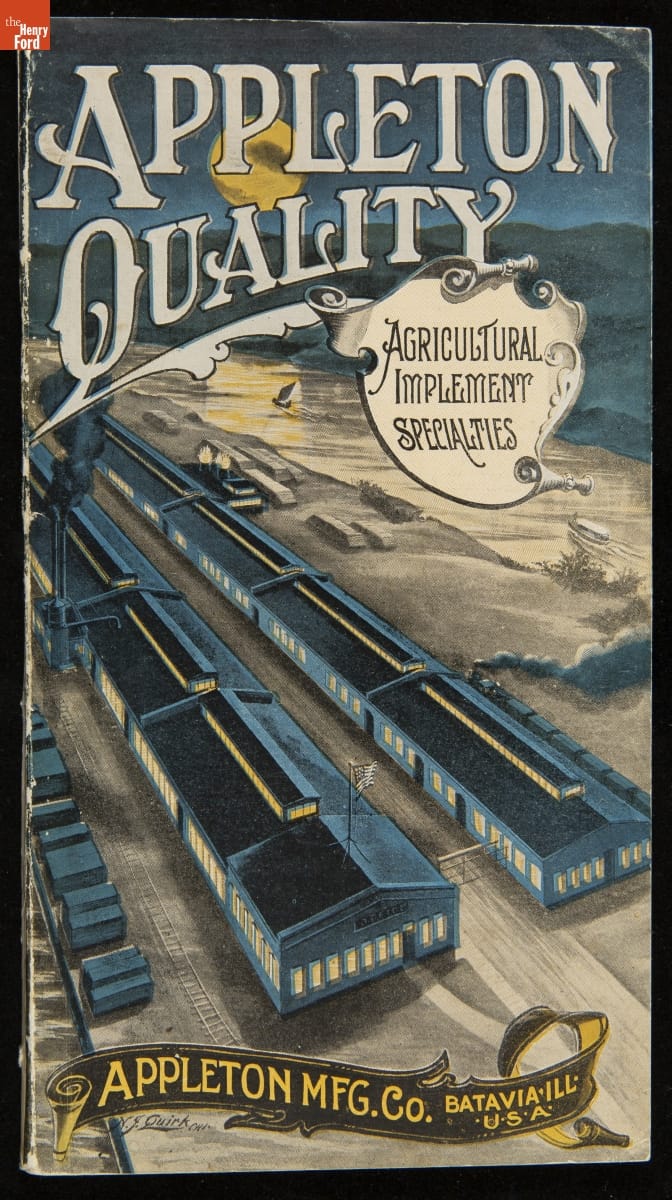
- Appleton Manufacturing Company Illustrated Catalogue of Farm Implements, 1905 -
- 1905
- Collections - Artifact
Appleton Manufacturing Company Illustrated Catalogue of Farm Implements, 1905
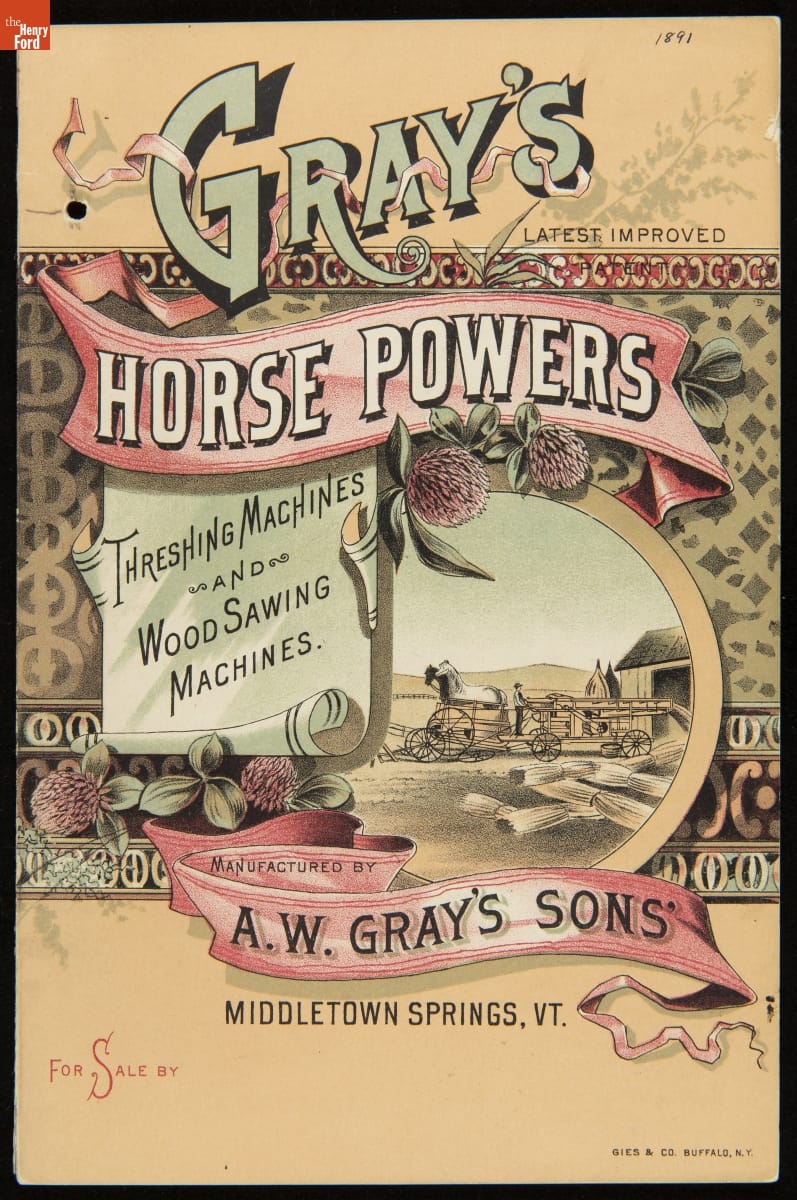
- Gray's Latest Improved Horse Powers Threshing Machines and Wood Sawing Machines, 1891 - As farmers mechanized barn and farmyard work in the nineteenth century, they began to use stationary power sources. These included devices such as treadmills that converted the movement of animals to drive a variety of agricultural machines. Enterprising manufacturers, like Vermont-based A.W. Gray's Sons, specialized in producing and selling these devices and the machines they were designed to power.
- 1891
- Collections - Artifact
Gray's Latest Improved Horse Powers Threshing Machines and Wood Sawing Machines, 1891
As farmers mechanized barn and farmyard work in the nineteenth century, they began to use stationary power sources. These included devices such as treadmills that converted the movement of animals to drive a variety of agricultural machines. Enterprising manufacturers, like Vermont-based A.W. Gray's Sons, specialized in producing and selling these devices and the machines they were designed to power.
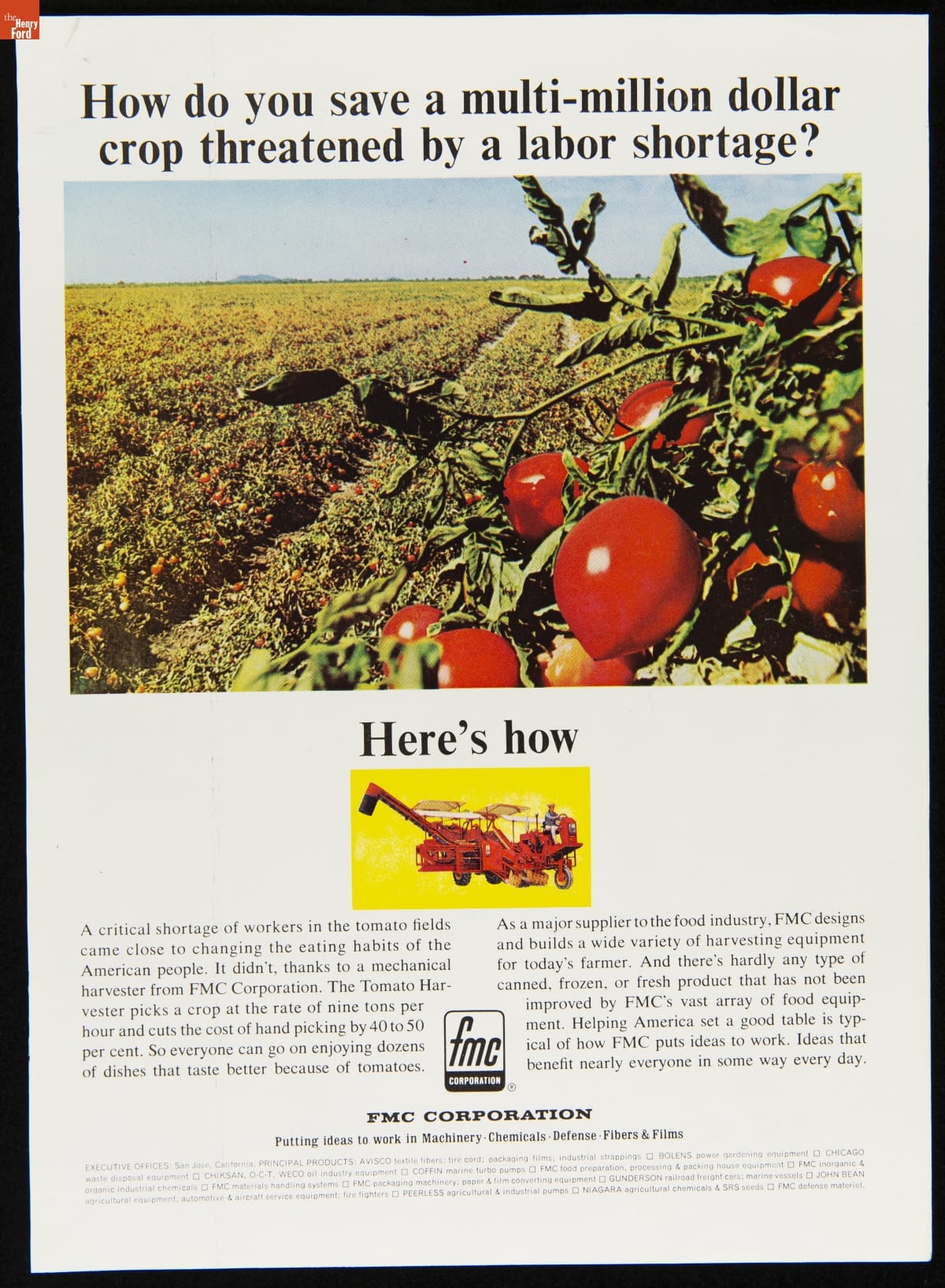
- Advertisement for FMC Corporation Tomato Harvester, circa 1966 -
- circa 1966
- Collections - Artifact
Advertisement for FMC Corporation Tomato Harvester, circa 1966
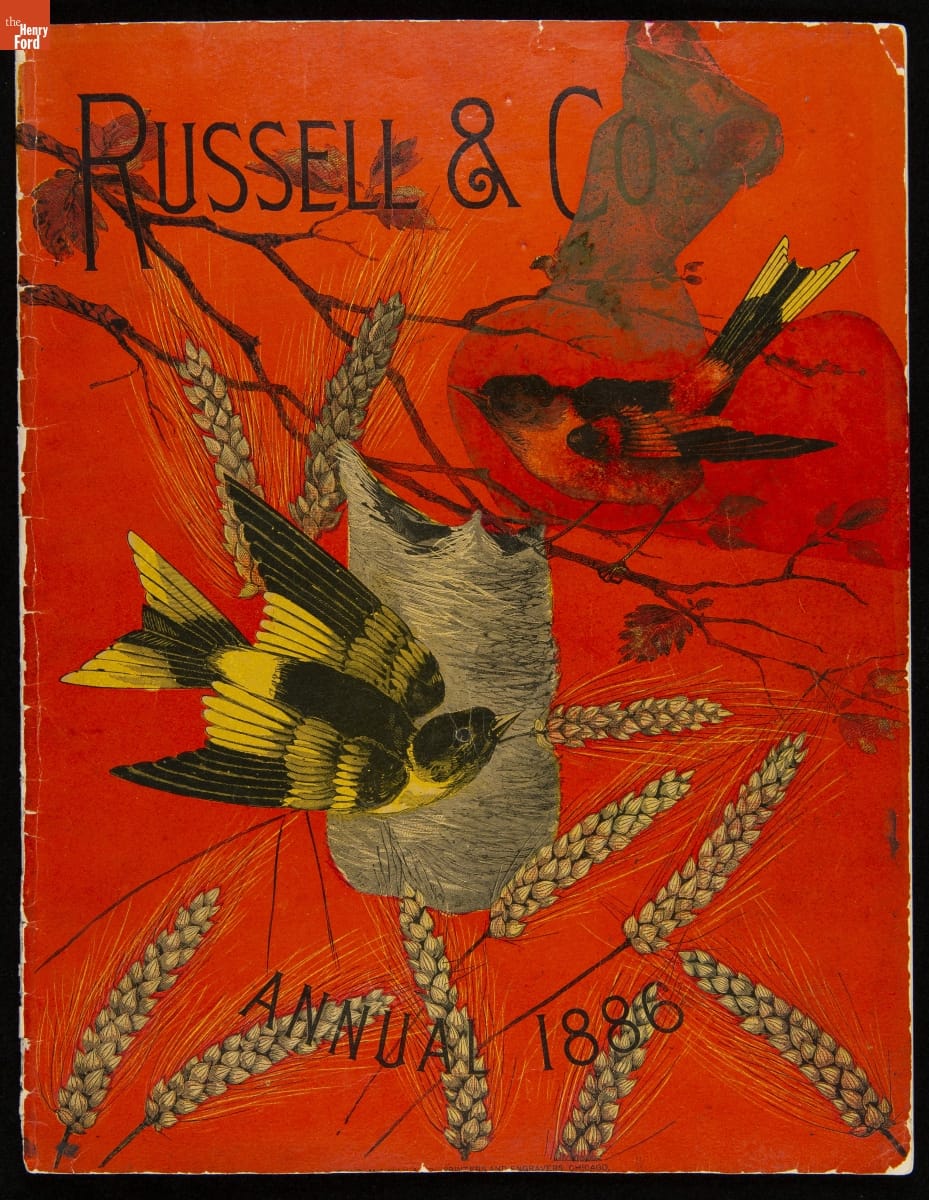
- Russell & Co. Trade Catalog, 1886 - As farmers mechanized barn and farmyard work in the nineteenth century, they began to use stationary power sources. These included portable steam engines and devices that converted animals' movement to drive a variety of agricultural machines. Enterprising manufacturers, like Ohio-based Russell & Co., specialized in producing and selling both power sources and the machines they were designed to run.
- 1886
- Collections - Artifact
Russell & Co. Trade Catalog, 1886
As farmers mechanized barn and farmyard work in the nineteenth century, they began to use stationary power sources. These included portable steam engines and devices that converted animals' movement to drive a variety of agricultural machines. Enterprising manufacturers, like Ohio-based Russell & Co., specialized in producing and selling both power sources and the machines they were designed to run.
- Massey-Harris 60 Combines: 3 models, Self-propelled, Power Take-off, Engine Driven, 1954 - For centuries, manufacturers worked to perfect machinery that could combine the three major steps of harvesting grain: reaping, or cutting the crop; threshing to loosen the grain from the chaff; and disposing of the straw while retaining the grain. Massey-Harris introduced self-propelled combines in 1938 that helped relieve labor shortages during World War II. This catalog advertised Massey-Harris combines to meet postwar farmers' wide-ranging needs.
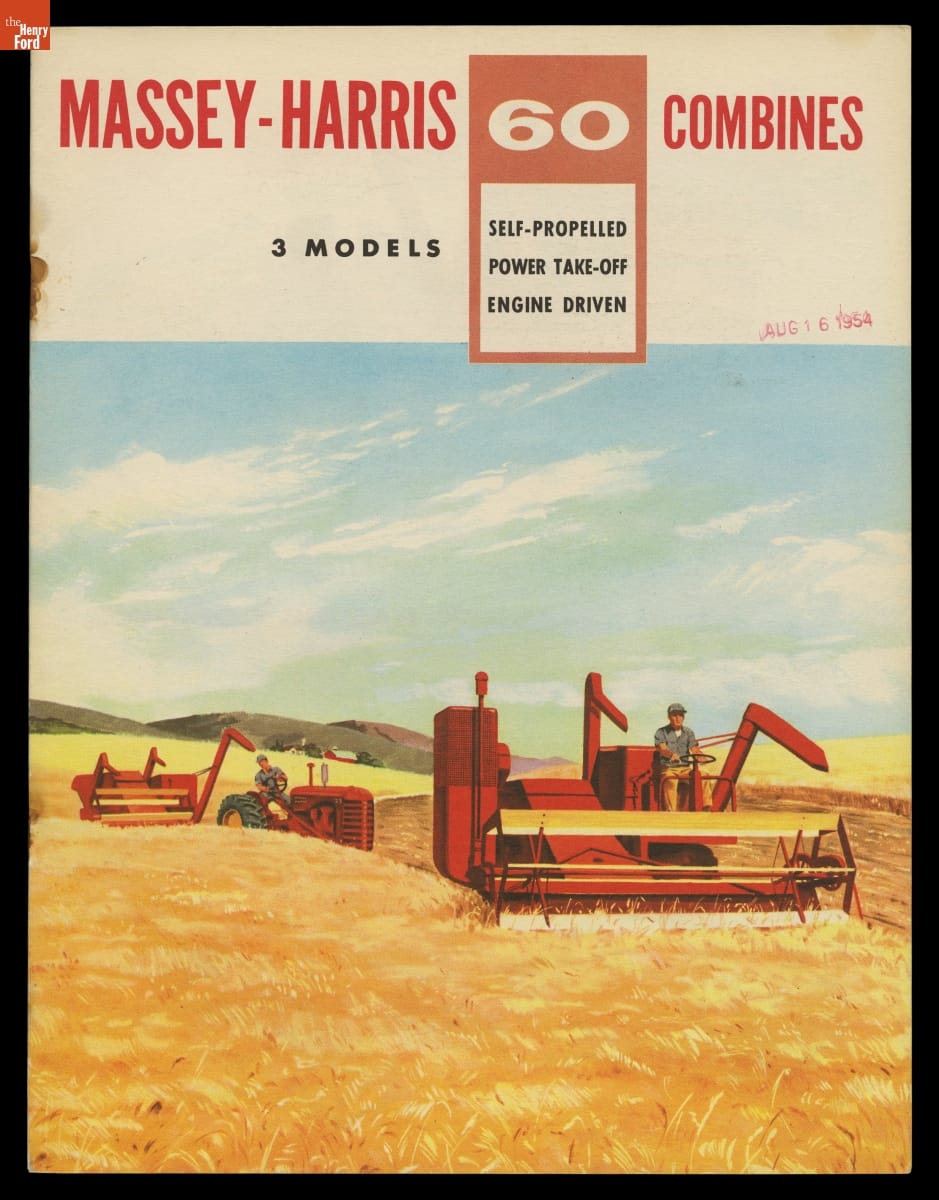
- 1954
- Collections - Artifact
Massey-Harris 60 Combines: 3 models, Self-propelled, Power Take-off, Engine Driven, 1954
For centuries, manufacturers worked to perfect machinery that could combine the three major steps of harvesting grain: reaping, or cutting the crop; threshing to loosen the grain from the chaff; and disposing of the straw while retaining the grain. Massey-Harris introduced self-propelled combines in 1938 that helped relieve labor shortages during World War II. This catalog advertised Massey-Harris combines to meet postwar farmers' wide-ranging needs.
- Sears, Roebuck and Company Trade Catalog for Farmers, Stockmen, Dairymen, Poultry Raisers, and Bee Keepers, 1915 -
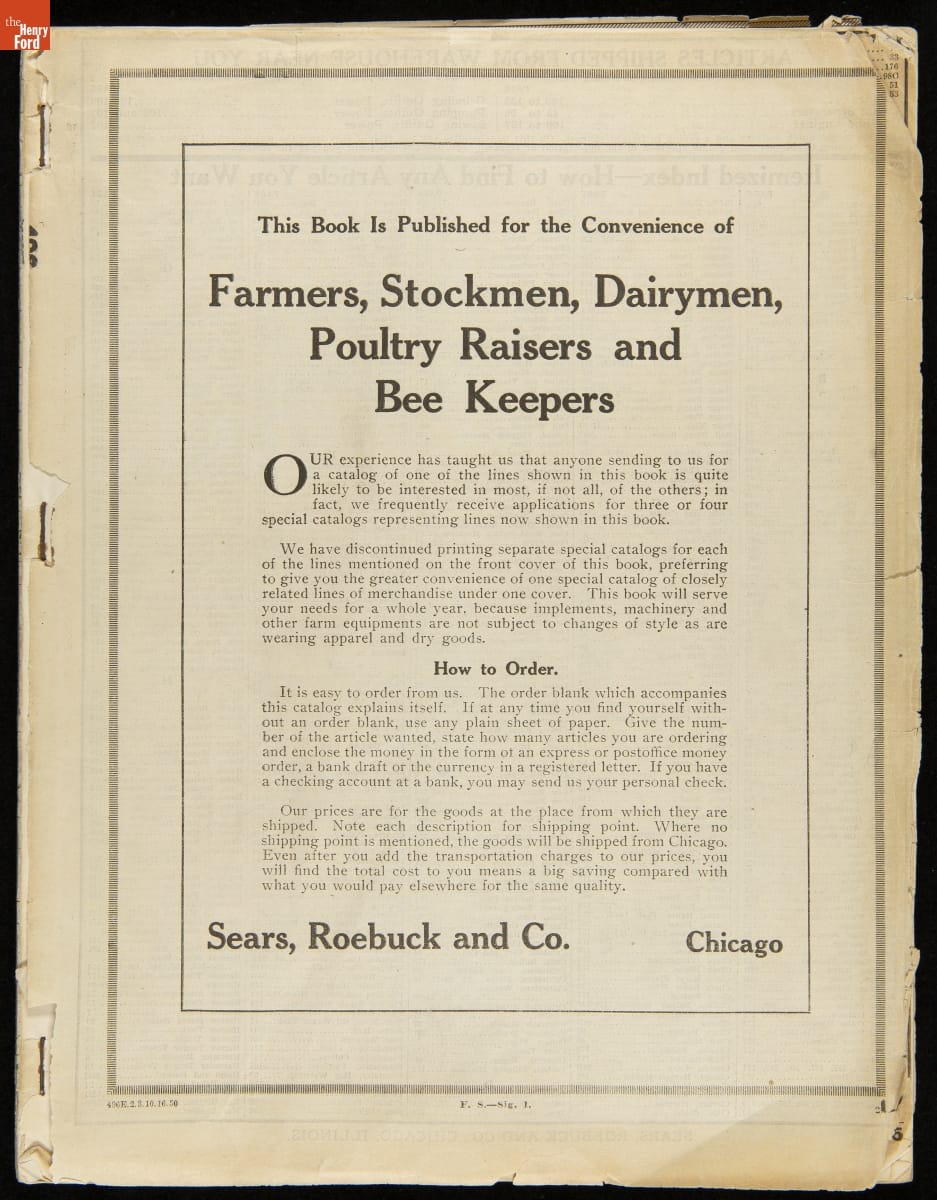
- 1915
- Collections - Artifact
Sears, Roebuck and Company Trade Catalog for Farmers, Stockmen, Dairymen, Poultry Raisers, and Bee Keepers, 1915
- A.B. Farquhar Trade Catalog, "Pennsylvania Agricultural Works," 1886 - As farmers mechanized barn and farmyard work in the nineteenth century, they began to use stationary power sources. These included portable steam engines and devices that converted animals' movement to drive a variety of agricultural machines. Enterprising manufacturers, like Pennsylvania-based A.B. Farquhar Co., specialized in producing and selling both power sources and the machines they were designed to run.
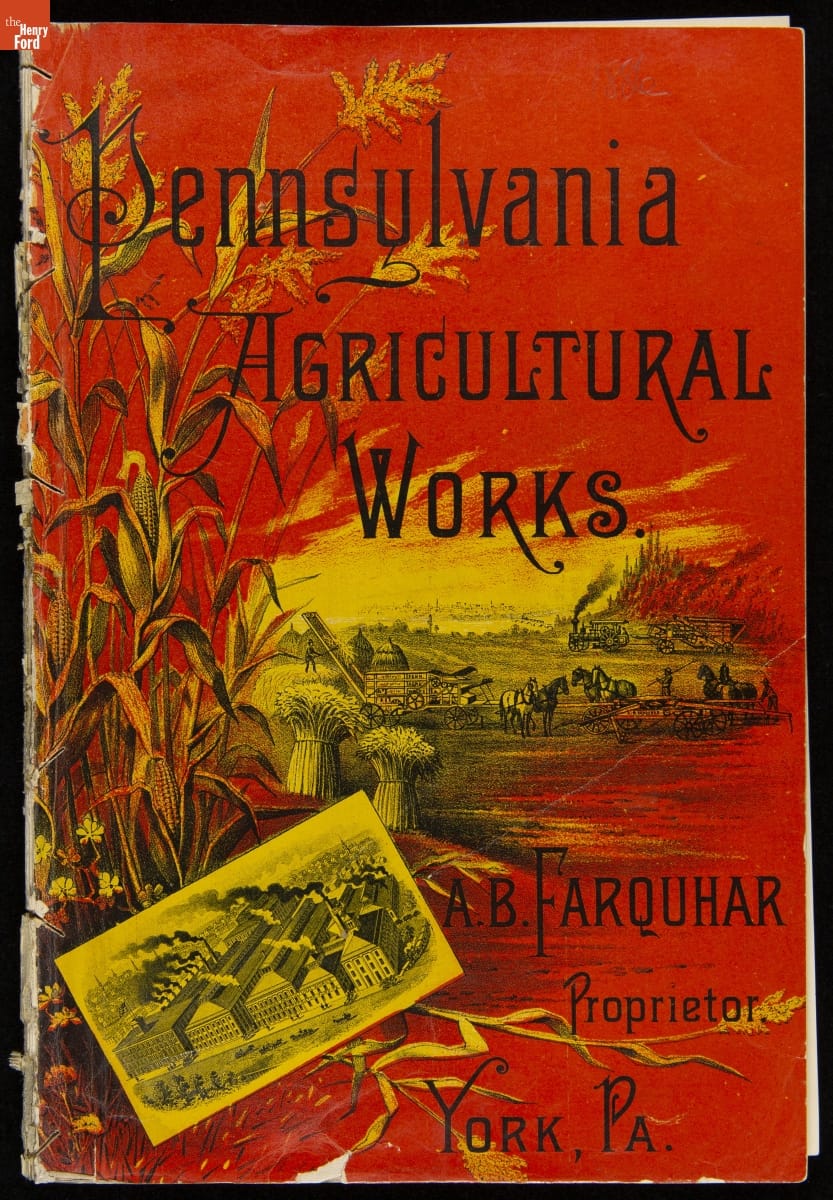
- 1886
- Collections - Artifact
A.B. Farquhar Trade Catalog, "Pennsylvania Agricultural Works," 1886
As farmers mechanized barn and farmyard work in the nineteenth century, they began to use stationary power sources. These included portable steam engines and devices that converted animals' movement to drive a variety of agricultural machines. Enterprising manufacturers, like Pennsylvania-based A.B. Farquhar Co., specialized in producing and selling both power sources and the machines they were designed to run.
- Emerson-Brantingham Implement Company Newsletter, Volume 1, Number 7, March 1913, "Emerson Enthusiasm" -
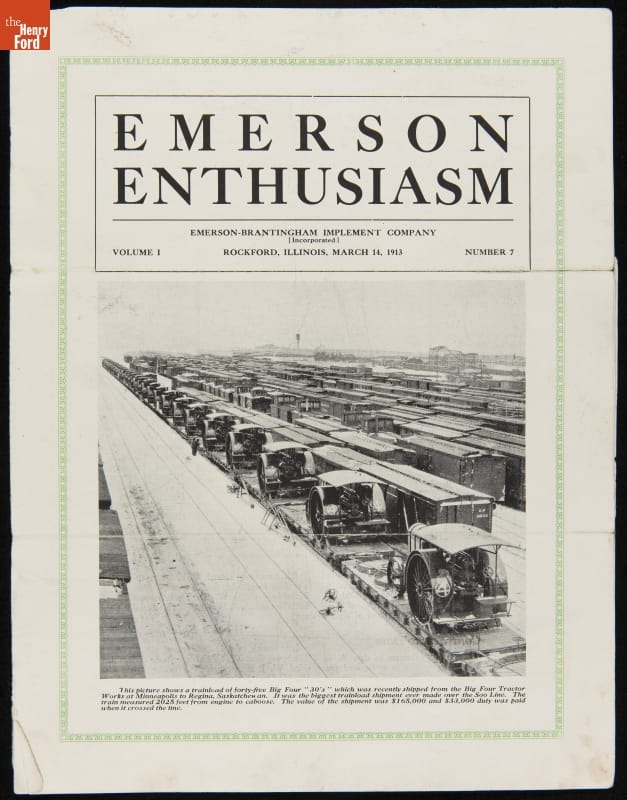
- March 14, 1913
- Collections - Artifact
Emerson-Brantingham Implement Company Newsletter, Volume 1, Number 7, March 1913, "Emerson Enthusiasm"
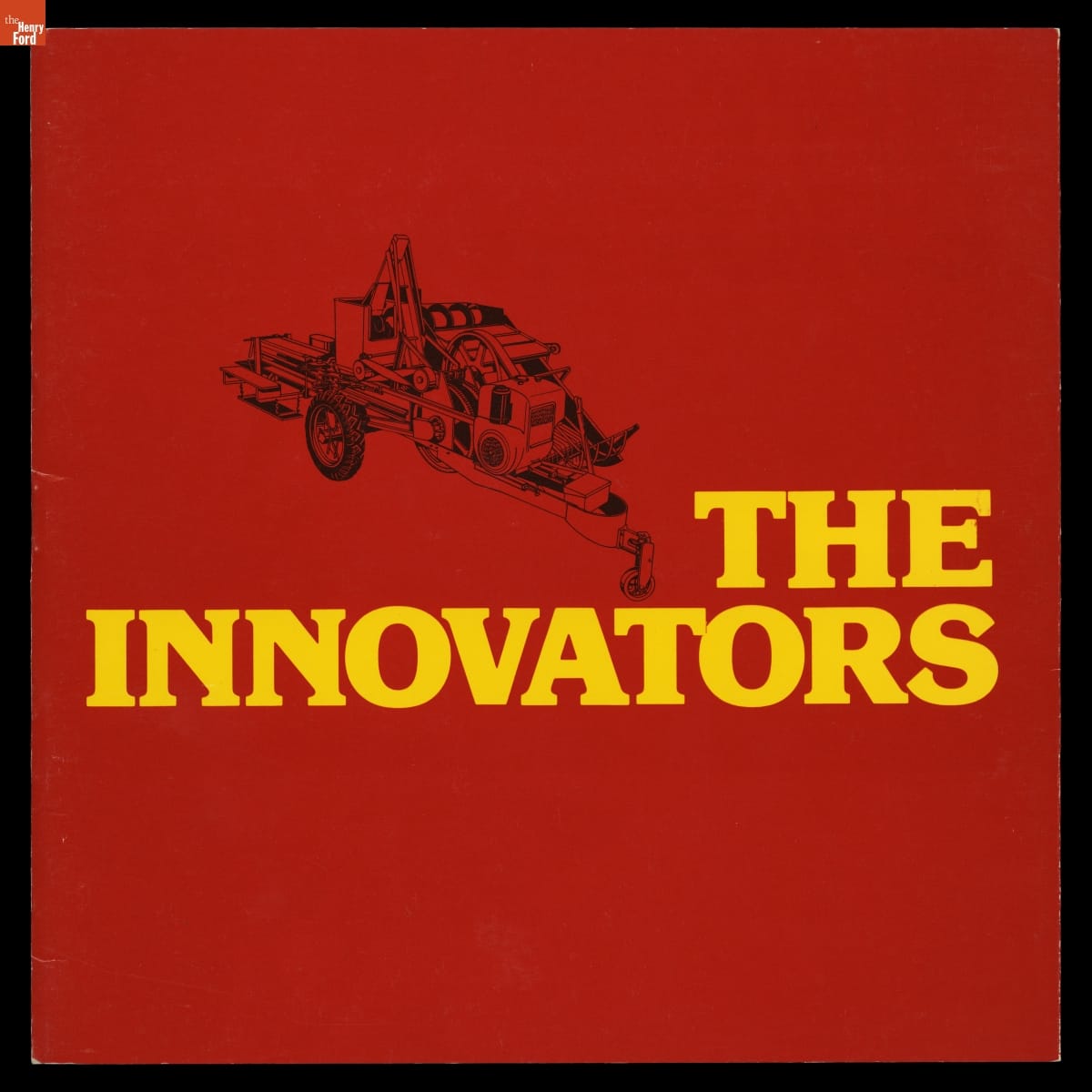
- Sperry-New Holland Catalog, "The Innovators," 1977 - For centuries, manufacturers have worked to perfect machinery that combines the three major steps of harvesting grain: reaping, or cutting the crop; threshing to loosen the grain from the chaff; and disposing of the straw while retaining the grain. Since self-propelled combines were introduced in the 1930s, competitors have produced ever-improving models. This catalog advertised a range of combines from Sperry Rand Corporation's New Holland Division.
- 1977
- Collections - Artifact
Sperry-New Holland Catalog, "The Innovators," 1977
For centuries, manufacturers have worked to perfect machinery that combines the three major steps of harvesting grain: reaping, or cutting the crop; threshing to loosen the grain from the chaff; and disposing of the straw while retaining the grain. Since self-propelled combines were introduced in the 1930s, competitors have produced ever-improving models. This catalog advertised a range of combines from Sperry Rand Corporation's New Holland Division.
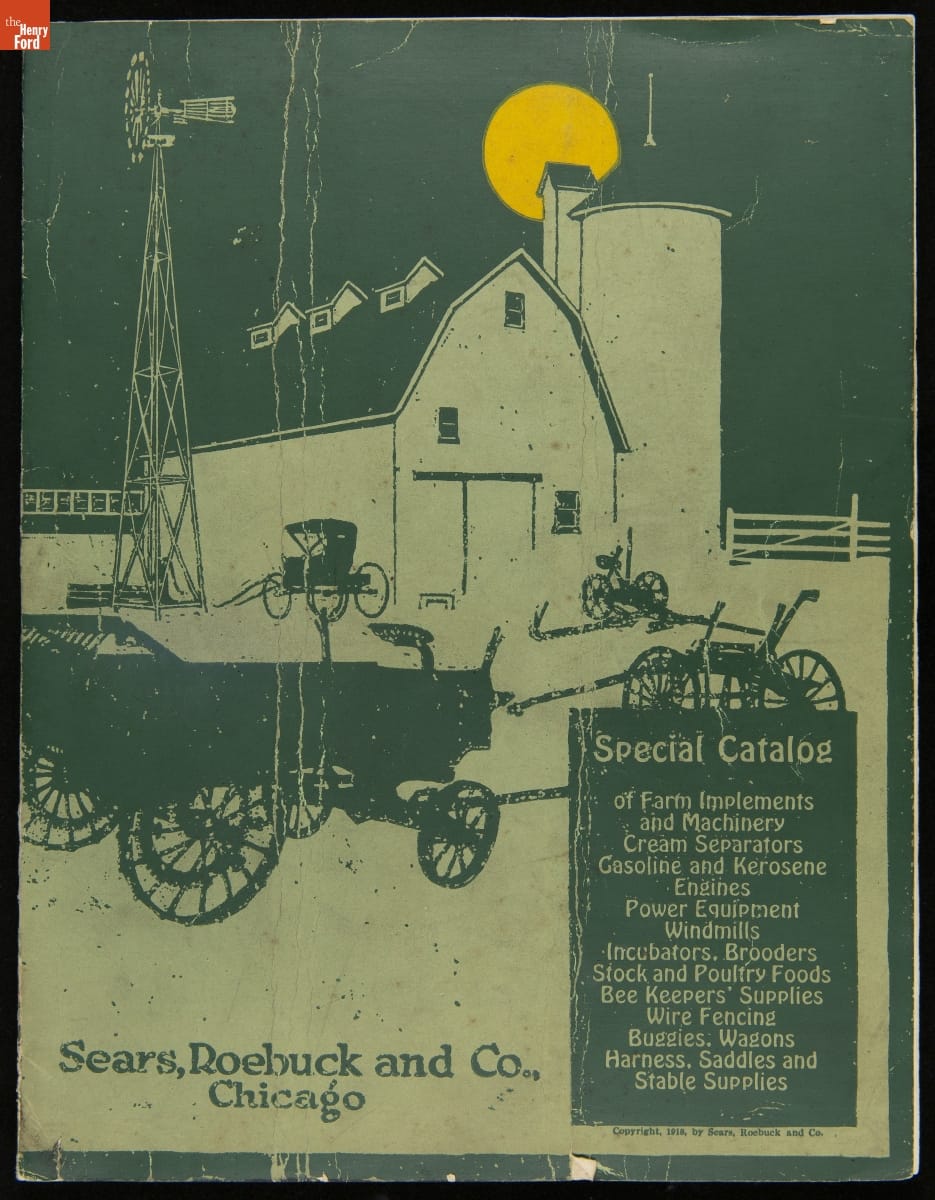
- Sears, Roebuck and Company Trade Catalog, "Special Catalog of Farm Implements and Machinery," circa 1918 -
- circa 1918
- Collections - Artifact
Sears, Roebuck and Company Trade Catalog, "Special Catalog of Farm Implements and Machinery," circa 1918