
Search
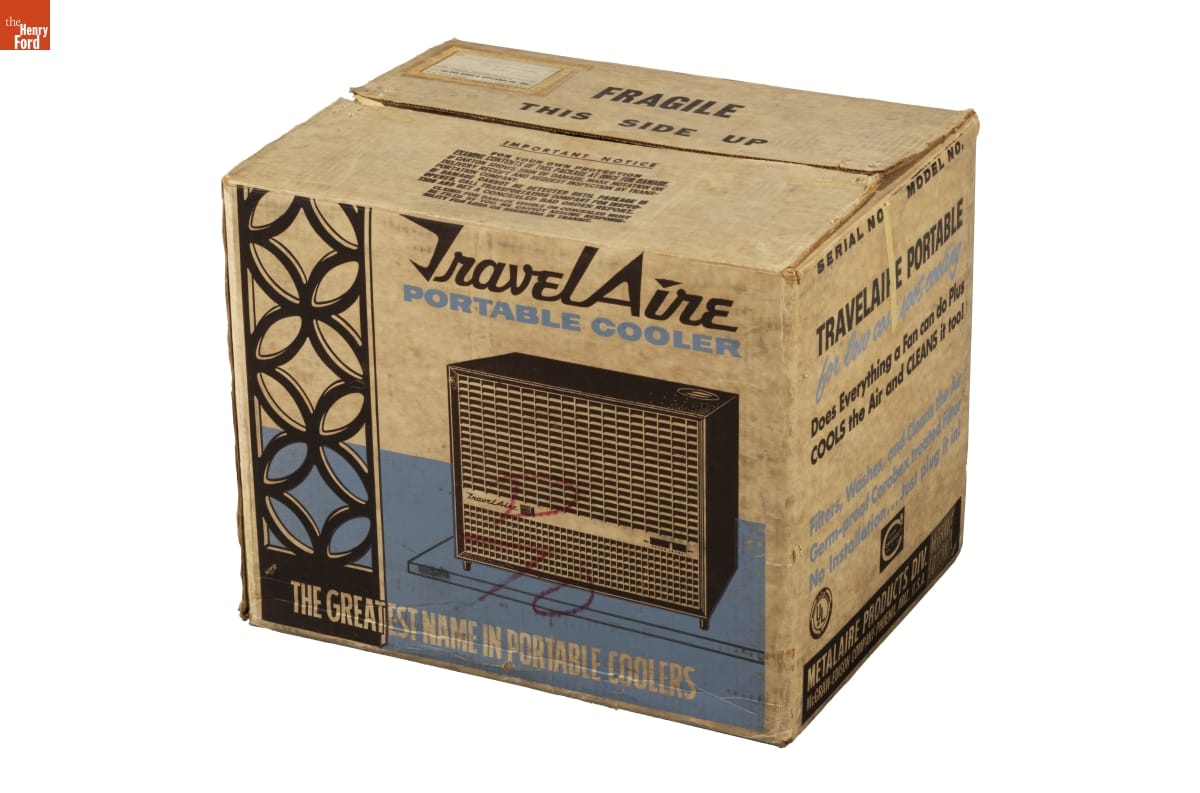
- TravelAire Model 833 Portable Air Cooler, 1960-1965 -
- 1960-1965
- Collections - Artifact
TravelAire Model 833 Portable Air Cooler, 1960-1965
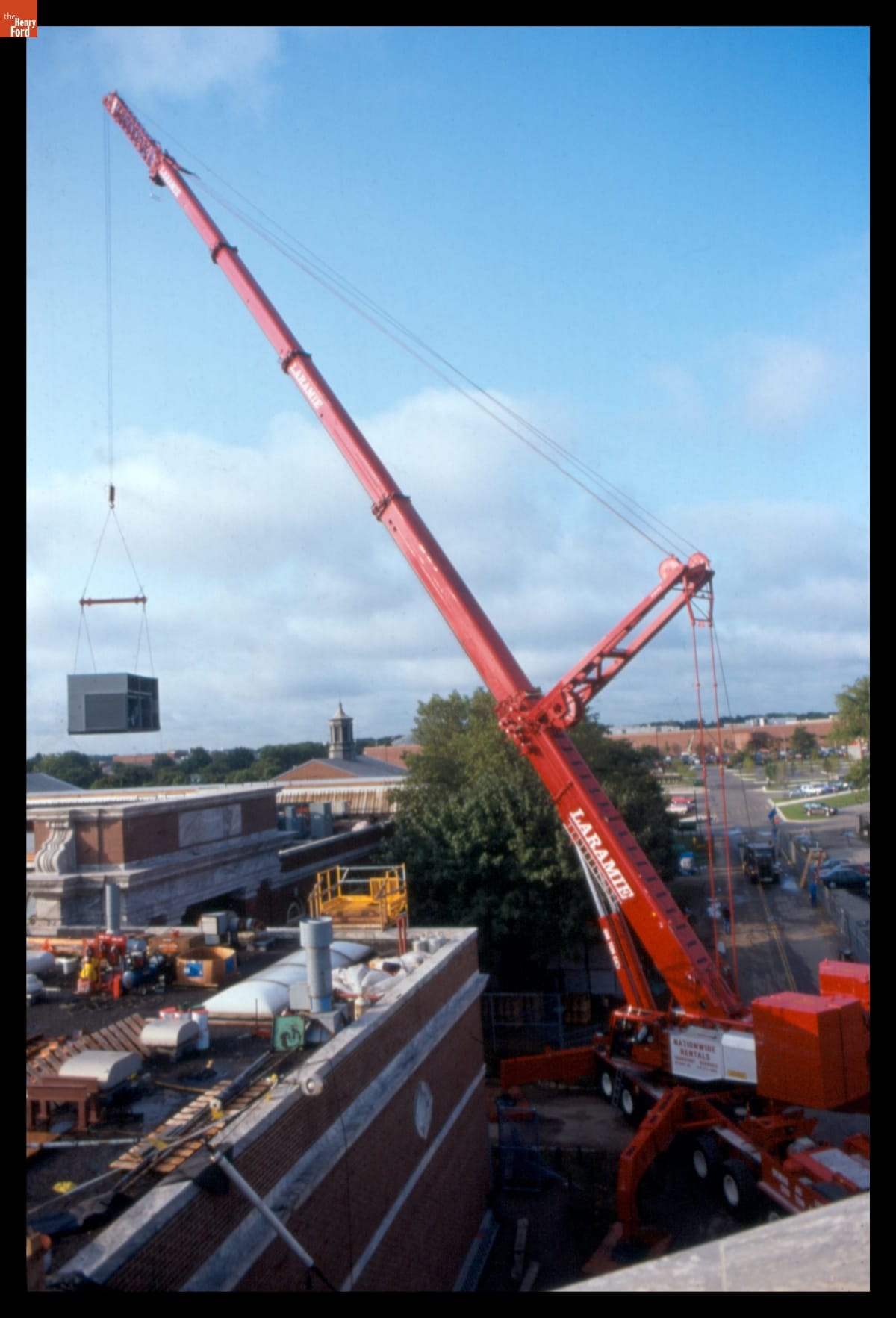
- Crane Moving Air-Handling Units onto Roof of Henry Ford Museum, 1998 -
- 31 August 1998 - 01 September 1998
- Collections - Artifact
Crane Moving Air-Handling Units onto Roof of Henry Ford Museum, 1998
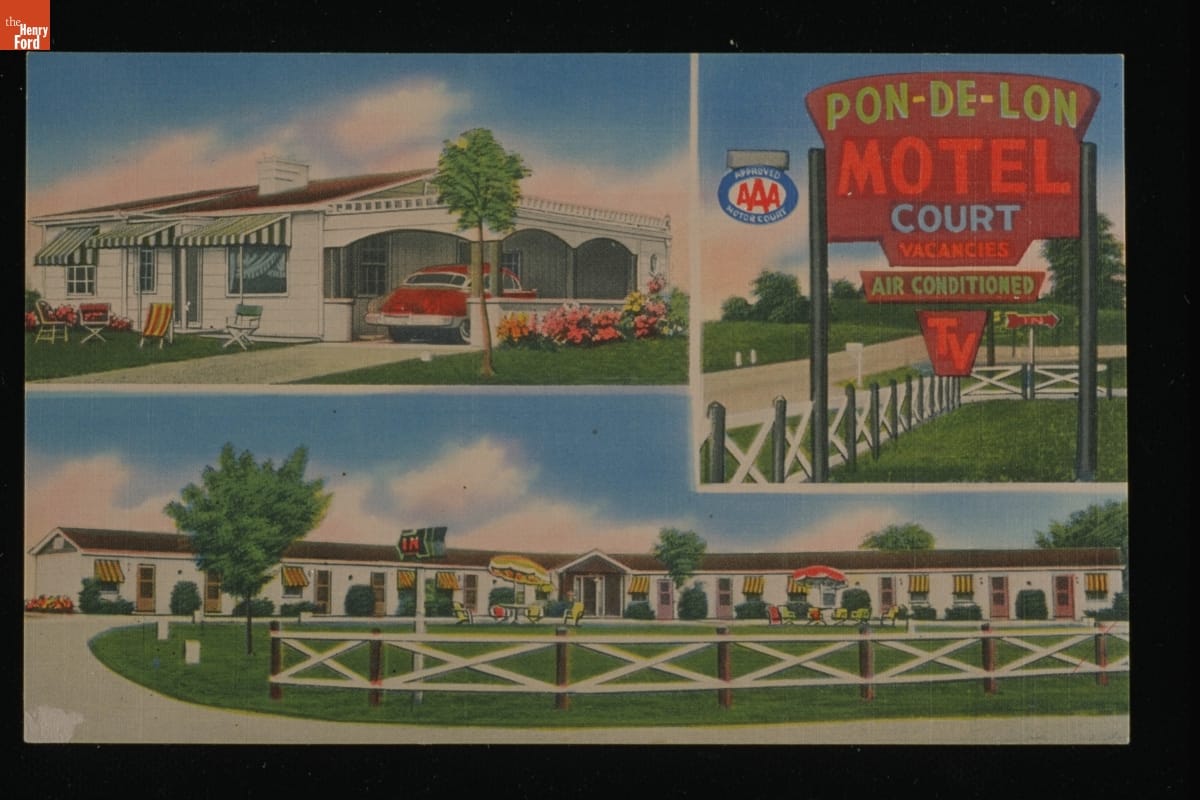
- Pon-De-Lon Motel, circa 1950 -
- circa 1950
- Collections - Artifact
Pon-De-Lon Motel, circa 1950
- "Unique Problems: Confetti and Cooling" Clip from Interview with Clint Hill, 2013 - Clint Hill was sworn in as a Special Agent with the United States Secret Service in 1958. Over the course of his 17-year career, Hill served Presidents Dwight D. Eisenhower, John F. Kennedy, Lyndon B. Johnson, Richard M. Nixon, and Gerald R. Ford. Hill retired as Assistant Director of the Secret Service, responsible for all protective forces, in 1975.

- November 19, 2013
- Collections - Artifact
"Unique Problems: Confetti and Cooling" Clip from Interview with Clint Hill, 2013
Clint Hill was sworn in as a Special Agent with the United States Secret Service in 1958. Over the course of his 17-year career, Hill served Presidents Dwight D. Eisenhower, John F. Kennedy, Lyndon B. Johnson, Richard M. Nixon, and Gerald R. Ford. Hill retired as Assistant Director of the Secret Service, responsible for all protective forces, in 1975.
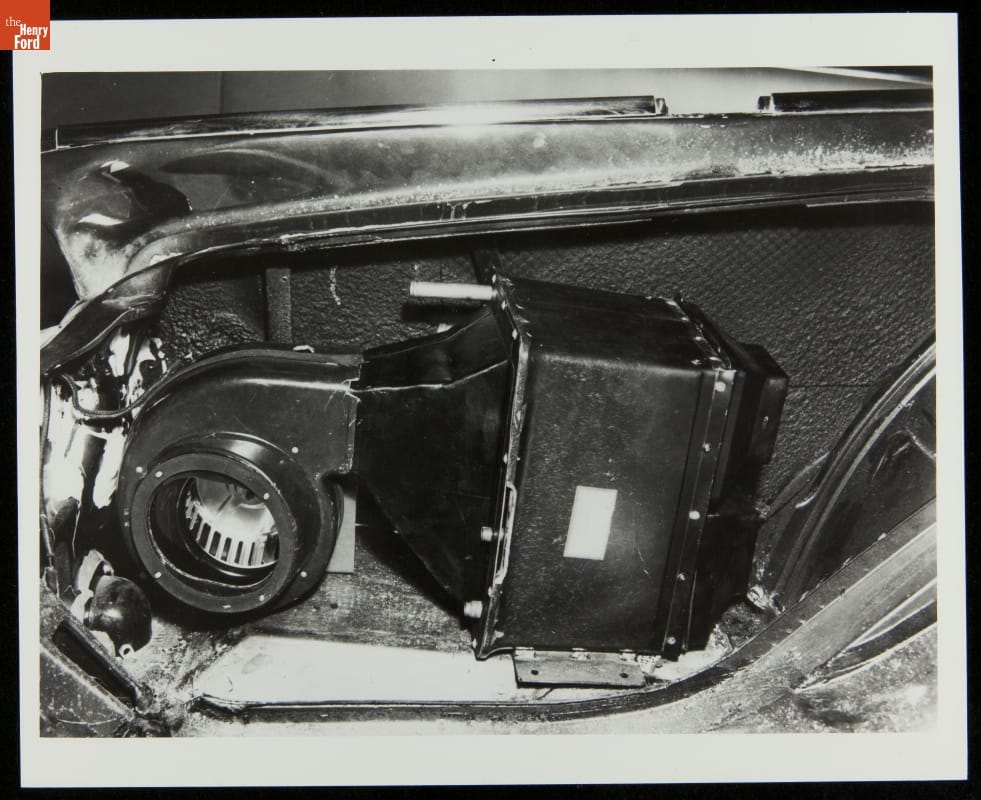
- 1961 Lincoln Continental Presidential Limousine Air Conditioning Unit after "Quick Fix," 1964 - After President John F. Kennedy's assassination on November 22, 1963, the Hess & Eisenhardt Company of Cincinnati, Ohio, rebuilt the 1961 Lincoln Continental Presidential Limousine into an armored car. The car's permanent top, fitted with several large bullet-resistant windows, caused the interior to get quite warm. An auxiliary air conditioning unit, installed in the trunk, helped keep temperatures comfortable.
- December 1963-May 1964
- Collections - Artifact
1961 Lincoln Continental Presidential Limousine Air Conditioning Unit after "Quick Fix," 1964
After President John F. Kennedy's assassination on November 22, 1963, the Hess & Eisenhardt Company of Cincinnati, Ohio, rebuilt the 1961 Lincoln Continental Presidential Limousine into an armored car. The car's permanent top, fitted with several large bullet-resistant windows, caused the interior to get quite warm. An auxiliary air conditioning unit, installed in the trunk, helped keep temperatures comfortable.
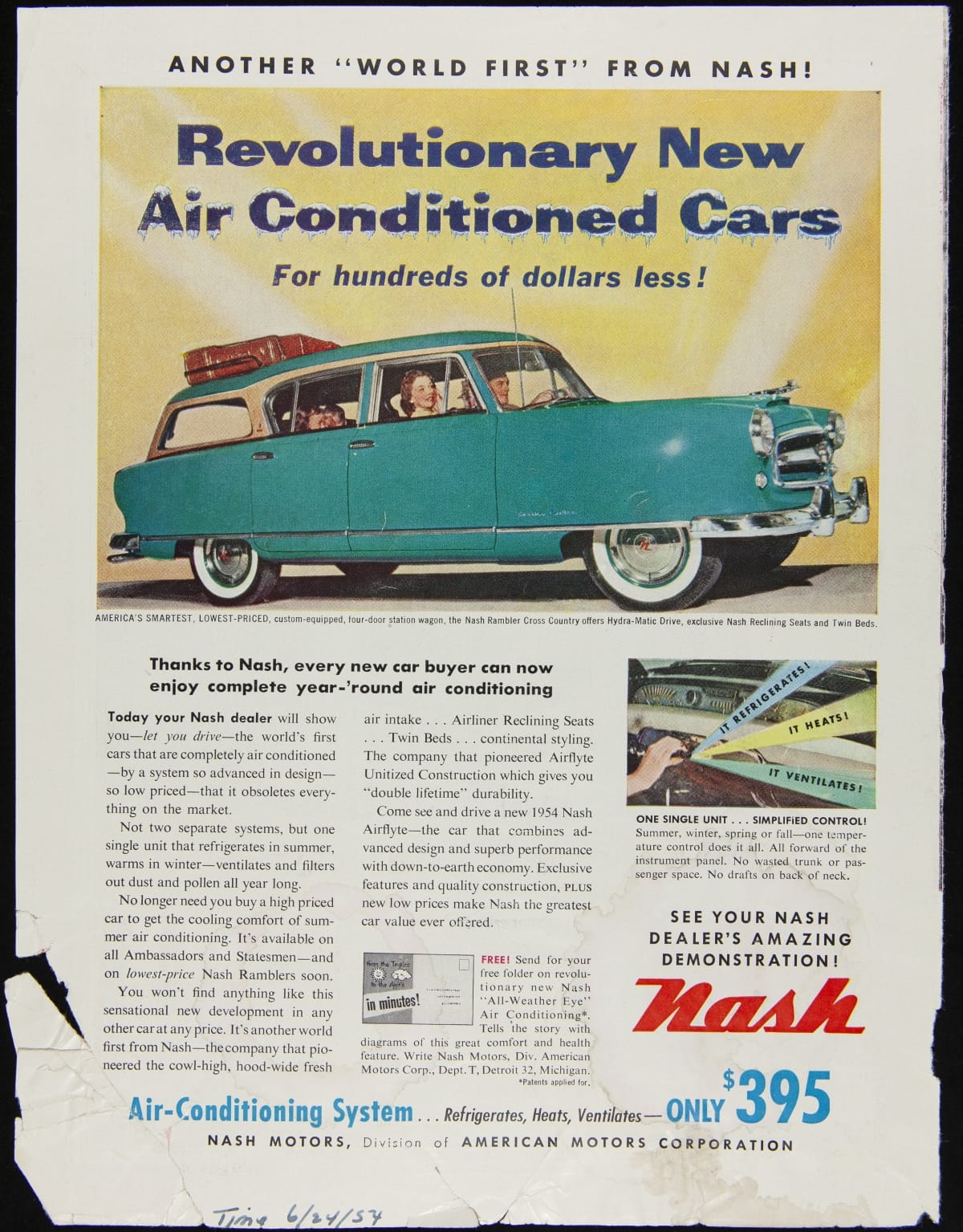
- Another "World First" from Nash! Revolutionary New Air Conditioned Cars for Hundreds of Dollars Less!, June 24, 1954 - Nash introduced a compact, practical air conditioning system for its cars in 1954. It was a $395 option -- substantial on a car that started around $2,000, but less expensive than earlier systems from other automakers. Customers liked the comfort and convenience, and within 15 years more than half of new American cars were equipped with air conditioning.
- June 24, 1954
- Collections - Artifact
Another "World First" from Nash! Revolutionary New Air Conditioned Cars for Hundreds of Dollars Less!, June 24, 1954
Nash introduced a compact, practical air conditioning system for its cars in 1954. It was a $395 option -- substantial on a car that started around $2,000, but less expensive than earlier systems from other automakers. Customers liked the comfort and convenience, and within 15 years more than half of new American cars were equipped with air conditioning.
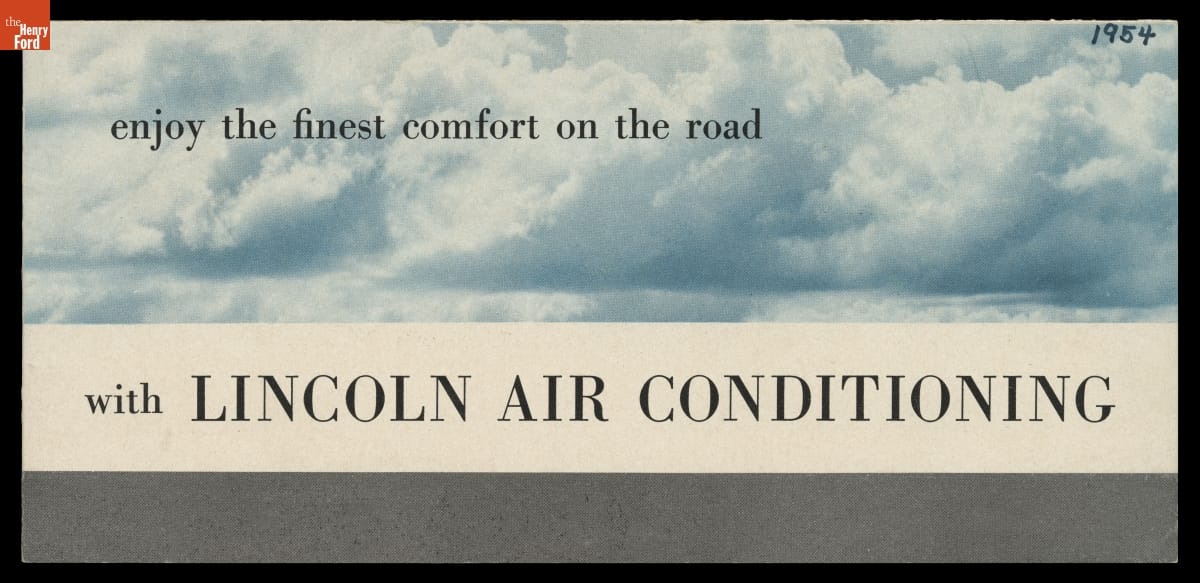
- 1954 Lincoln Automobile Sales Brochure, "Enjoy the Finest Comfort of the Road with Lincoln Air Conditioning..." - Air conditioning first appeared on Lincoln's options list in the 1955 model year. The unit was mounted in the trunk, with fresh air intakes on the rear fenders and cabin vents built into the ceiling. Lincoln listed the system's many benefits in this brochure, including cleaner cabin air, reduced humidity on damp days, and less tiring conditions for the driver.
- 1954
- Collections - Artifact
1954 Lincoln Automobile Sales Brochure, "Enjoy the Finest Comfort of the Road with Lincoln Air Conditioning..."
Air conditioning first appeared on Lincoln's options list in the 1955 model year. The unit was mounted in the trunk, with fresh air intakes on the rear fenders and cabin vents built into the ceiling. Lincoln listed the system's many benefits in this brochure, including cleaner cabin air, reduced humidity on damp days, and less tiring conditions for the driver.
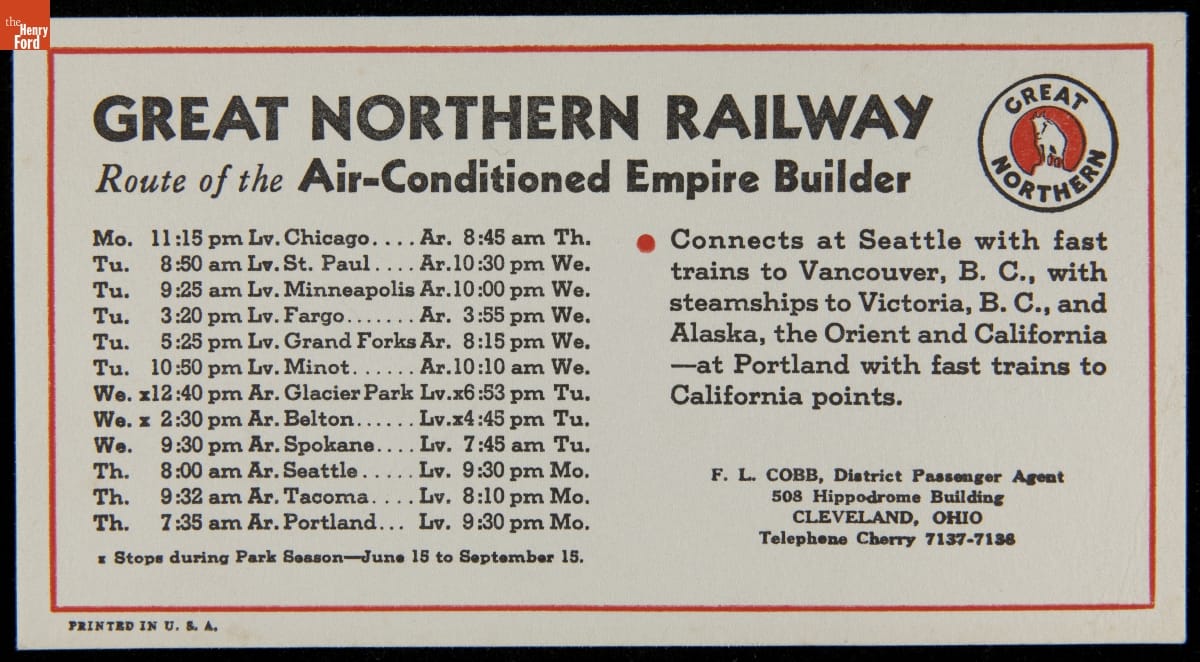
- Trade Card and Schedule for Great Northern Railway's Air-Conditioned Empire Builder, circa 1945 - In the last third of the nineteenth century, American consumers could choose from an unprecedented variety of goods and services. Seeking to distinguish certain products and businesses from the competition, advertisers began to print and distribute trade cards. Though the popularity of these cards diminished after 1900, some companies employed the informative, often vibrant little advertisements well into the twentieth century.
- circa 1945
- Collections - Artifact
Trade Card and Schedule for Great Northern Railway's Air-Conditioned Empire Builder, circa 1945
In the last third of the nineteenth century, American consumers could choose from an unprecedented variety of goods and services. Seeking to distinguish certain products and businesses from the competition, advertisers began to print and distribute trade cards. Though the popularity of these cards diminished after 1900, some companies employed the informative, often vibrant little advertisements well into the twentieth century.