
Search
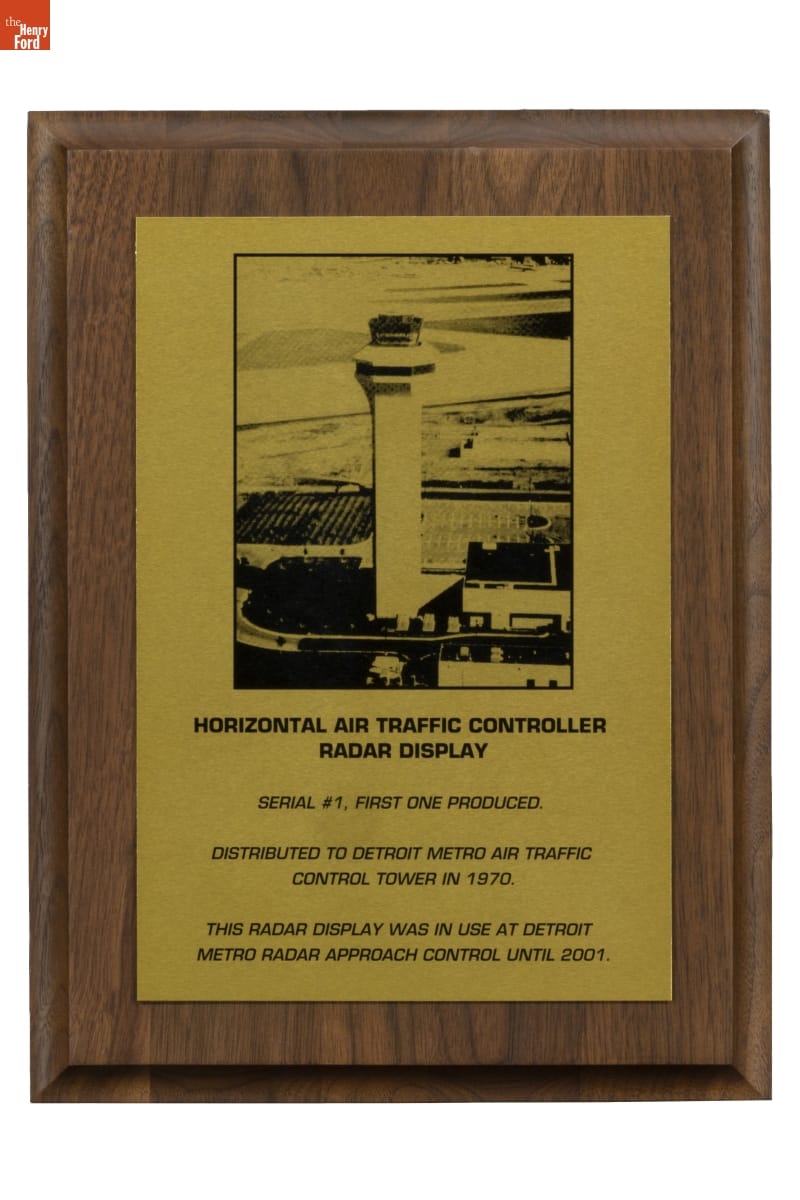
- Horizontal Air Traffic Controller Radar Display Plaque, circa 2001 - Federal oversight of air traffic control began in 1938, but radar technology -- greatly improved during World War II -- was not widely implemented until the late 1950s. Detroit Metro Airport received one of the first computer-integrated radar scopes capable of displaying an airplane's identification number and altitude directly on the screen. This plaque commemorates that unit, used from 1970 to 2001.
- circa 2001
- Collections - Artifact
Horizontal Air Traffic Controller Radar Display Plaque, circa 2001
Federal oversight of air traffic control began in 1938, but radar technology -- greatly improved during World War II -- was not widely implemented until the late 1950s. Detroit Metro Airport received one of the first computer-integrated radar scopes capable of displaying an airplane's identification number and altitude directly on the screen. This plaque commemorates that unit, used from 1970 to 2001.
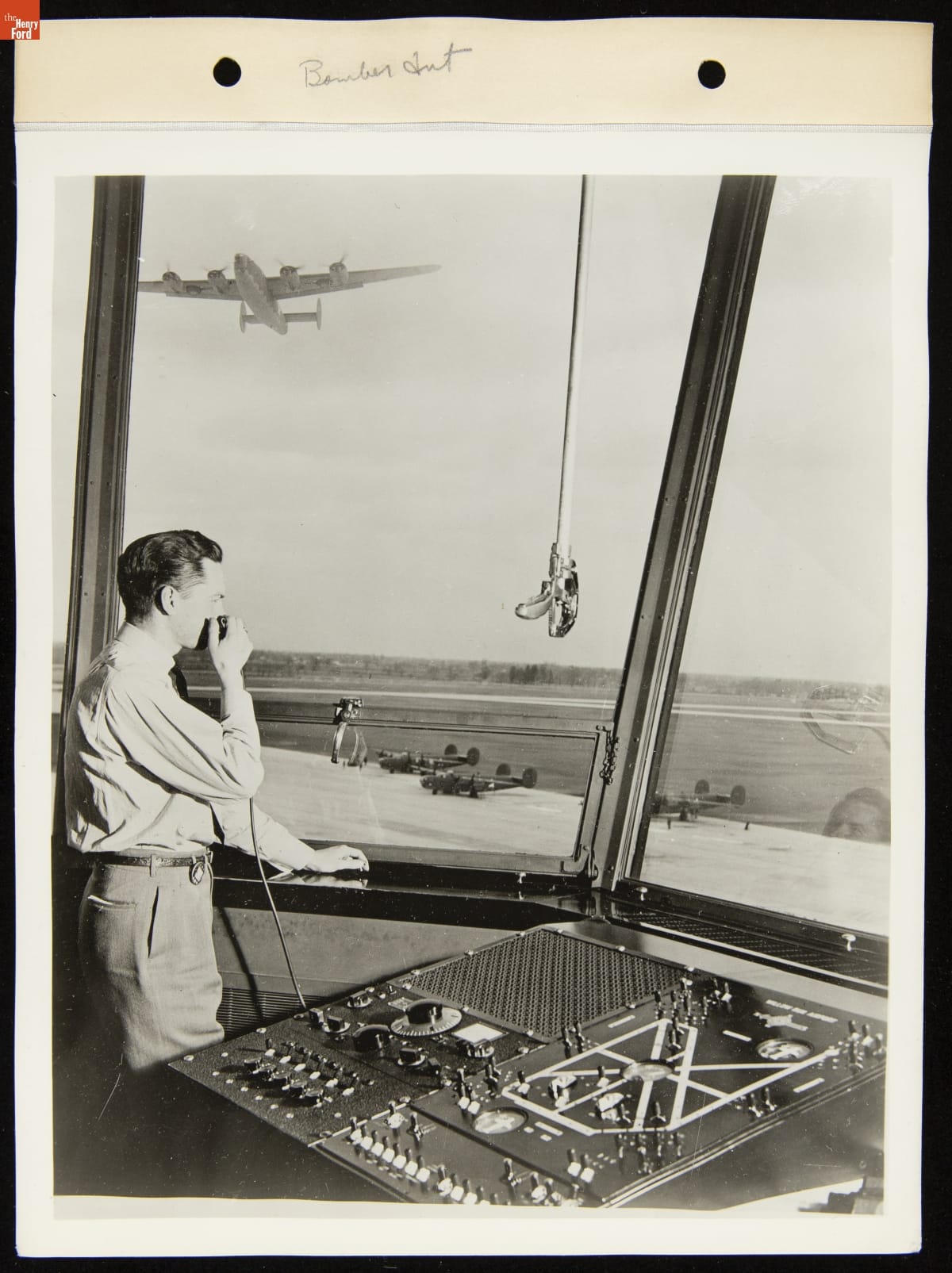
- Willow Run Airport Activity Viewed from the Control Tower, August 1943 - Ford Motor Company built 8,685 B-24 bomber airplanes at its Willow Run, Michigan, plant during World War II. At its peak in 1944, the factory produced one plane every 63 minutes. Most of the bombers left Willow Run under their own power from the on-site airport. The airport and its crew could accommodate up to 20 takeoffs per hour.
- August 01, 1943
- Collections - Artifact
Willow Run Airport Activity Viewed from the Control Tower, August 1943
Ford Motor Company built 8,685 B-24 bomber airplanes at its Willow Run, Michigan, plant during World War II. At its peak in 1944, the factory produced one plane every 63 minutes. Most of the bombers left Willow Run under their own power from the on-site airport. The airport and its crew could accommodate up to 20 takeoffs per hour.