
Search
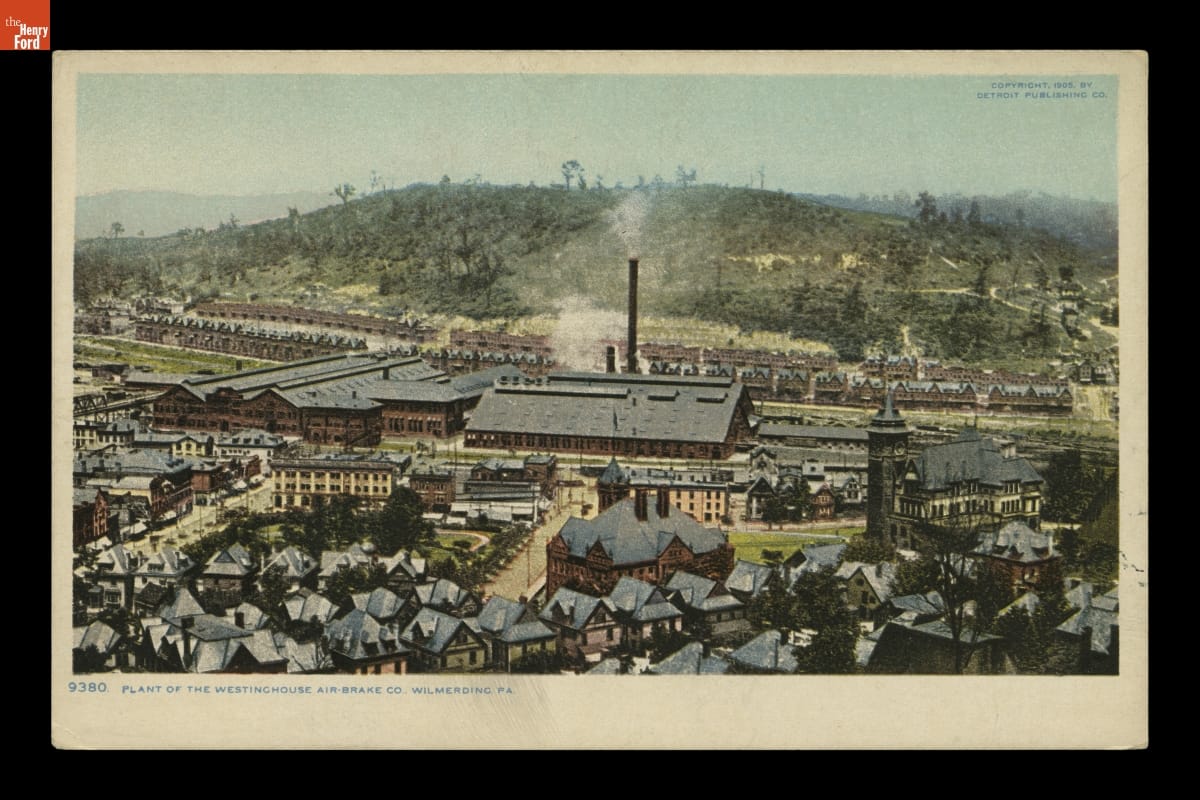
- "Plant of the Westinghouse Air-Brake Co., Wilmerding, Pennsylvania," 1910 - From 1895 to 1924, the Detroit Publishing Company was one of the major image publishers in the world. It had a wide-ranging stock of original photographs, many of which were colored using the company's patented "Phostint" process. Popular "Phostint" postcards, the Detroit Publishing Company claimed, were delicately "executed in Nature's Coloring" to be truthful, tasteful, beautiful, and educational.
- circa 1905
- Collections - Artifact
"Plant of the Westinghouse Air-Brake Co., Wilmerding, Pennsylvania," 1910
From 1895 to 1924, the Detroit Publishing Company was one of the major image publishers in the world. It had a wide-ranging stock of original photographs, many of which were colored using the company's patented "Phostint" process. Popular "Phostint" postcards, the Detroit Publishing Company claimed, were delicately "executed in Nature's Coloring" to be truthful, tasteful, beautiful, and educational.
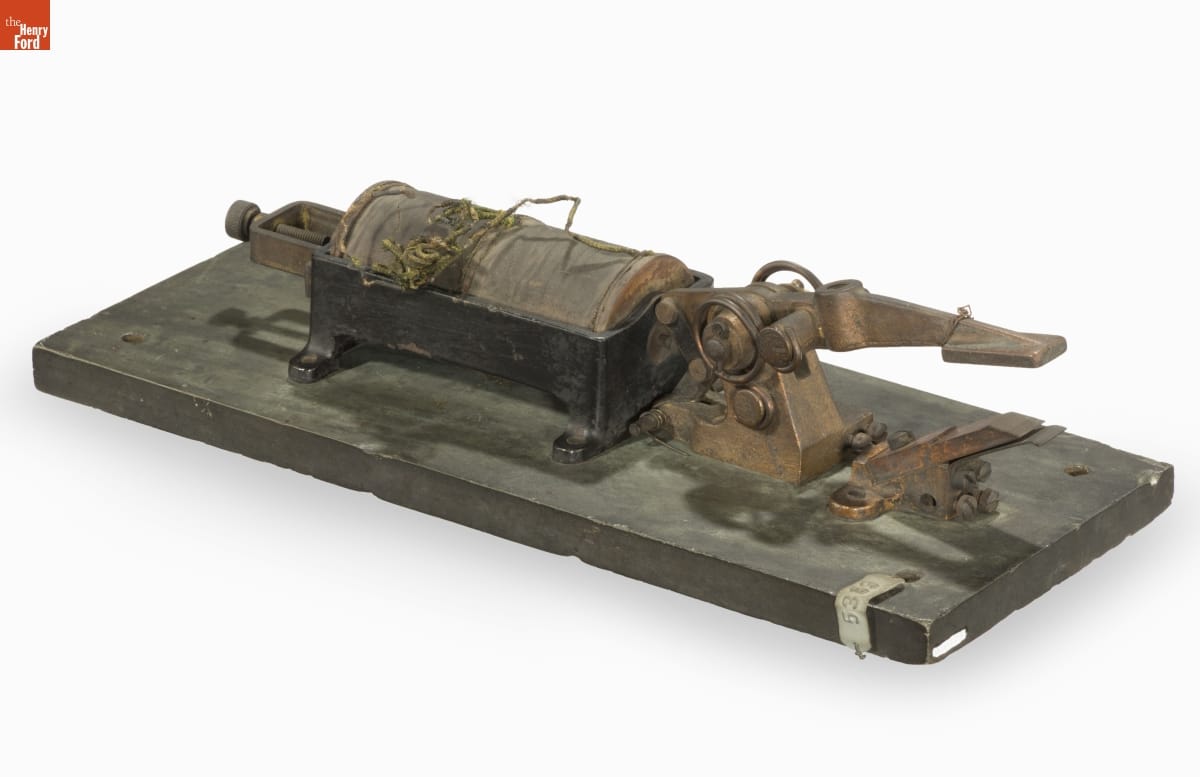
- Circuit Breaker - In the late 1800s, as companies began producing electricity to light cities, run streetcars, and power factories, homes and offices, new apparatus was needed to safely deliver and use electricity. Excess current in a circuit could damage electric lines and equipment. Circuit breakers protected electrical circuits by automatically interrupting the power flow during an event overload.
- Collections - Artifact
Circuit Breaker
In the late 1800s, as companies began producing electricity to light cities, run streetcars, and power factories, homes and offices, new apparatus was needed to safely deliver and use electricity. Excess current in a circuit could damage electric lines and equipment. Circuit breakers protected electrical circuits by automatically interrupting the power flow during an event overload.
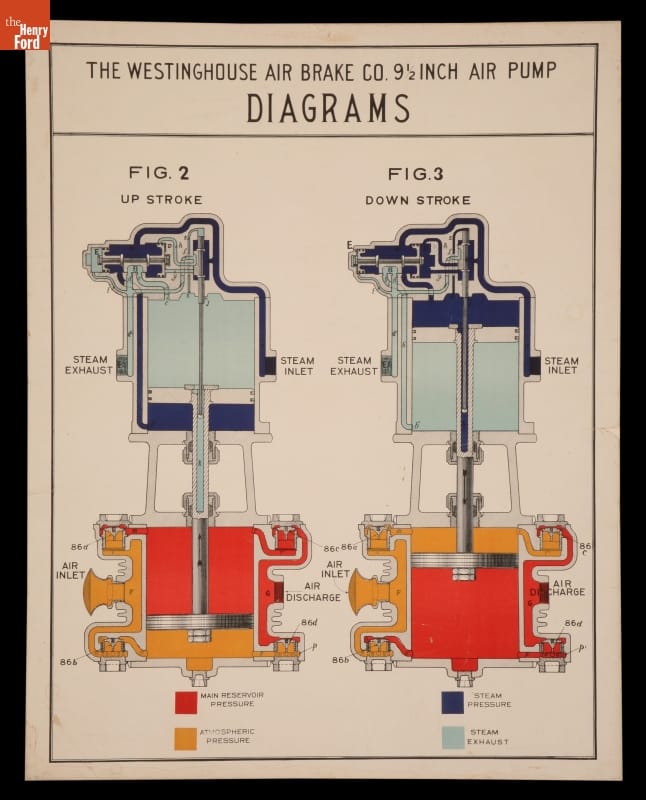
- Poster, "The Westinghouse Air Brake Company 9-1/2 Inch Air Pump Diagrams," circa 1910 - Before the air brake's introduction, brakemen stopped trains by scrambling from car to car and setting individual brake mechanisms on each one. It was dangerous even in fair weather, let alone in wet or icy conditions. George Westinghouse's brake used air pumped from the locomotive, through an airline running the train's length, to operate brakes on each car automatically.
- circa 1910
- Collections - Artifact
Poster, "The Westinghouse Air Brake Company 9-1/2 Inch Air Pump Diagrams," circa 1910
Before the air brake's introduction, brakemen stopped trains by scrambling from car to car and setting individual brake mechanisms on each one. It was dangerous even in fair weather, let alone in wet or icy conditions. George Westinghouse's brake used air pumped from the locomotive, through an airline running the train's length, to operate brakes on each car automatically.
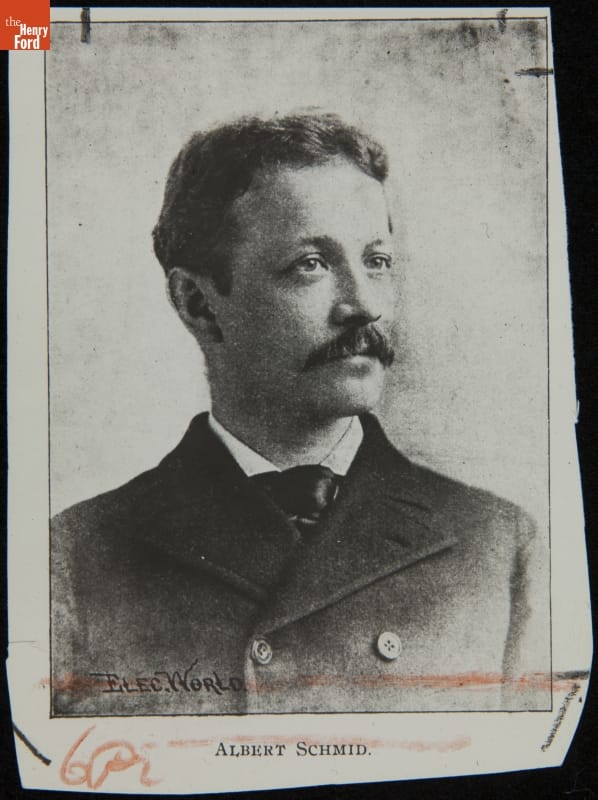
- Portrait of Albert Schmid, 1877-1910 -
- 1877-1910
- Collections - Artifact
Portrait of Albert Schmid, 1877-1910
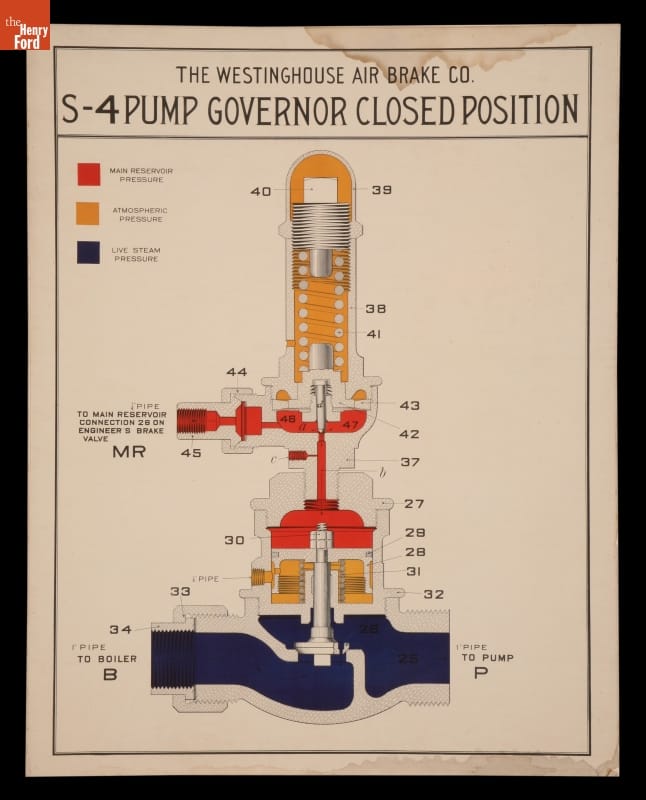
- Poster, "The Westinghouse Air Brake Company S-4 Governor Closed Position," circa 1910 - Before the air brake's introduction, brakemen stopped trains by scrambling from car to car and setting individual brake mechanisms on each one. It was dangerous even in fair weather, let alone in wet or icy conditions. George Westinghouse's brake used air pumped from the locomotive, through an airline running the train's length, to operate brakes on each car automatically.
- circa 1910
- Collections - Artifact
Poster, "The Westinghouse Air Brake Company S-4 Governor Closed Position," circa 1910
Before the air brake's introduction, brakemen stopped trains by scrambling from car to car and setting individual brake mechanisms on each one. It was dangerous even in fair weather, let alone in wet or icy conditions. George Westinghouse's brake used air pumped from the locomotive, through an airline running the train's length, to operate brakes on each car automatically.