
Search
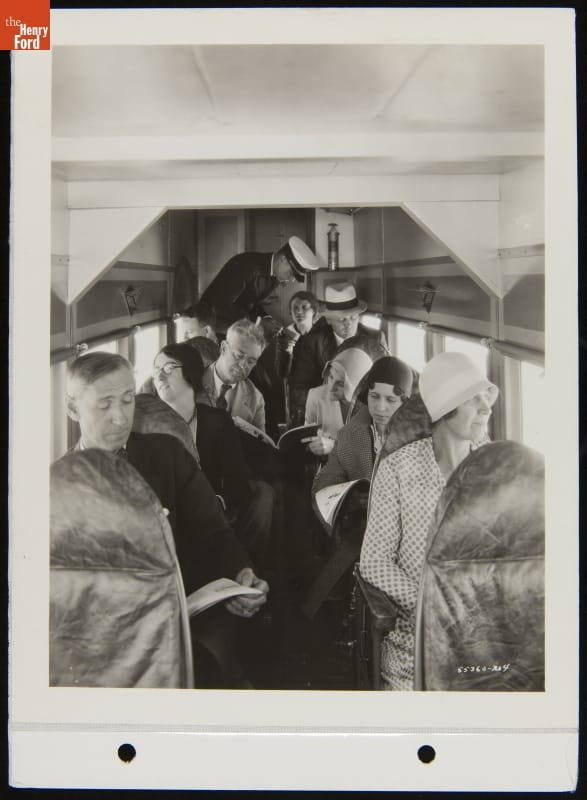
- Ford Tri-Motor Airplane, Interior Cabin Showing Steward Serving Passengers, September 1929 - Passenger air travel was a completely new -- and perhaps fearsome -- concept for most Americans in the 1920s. National advertisements for the Ford Tri-Motor promoted "roomy and comfortable" wicker passenger chairs -- one of the many advertised amenities used to convince a skeptical public of the appeal of flying in a Ford plane. Later models of the Ford Tri-Motor featured almuminum seats covered with leather.
- September 01, 1930
- Collections - Artifact
Ford Tri-Motor Airplane, Interior Cabin Showing Steward Serving Passengers, September 1929
Passenger air travel was a completely new -- and perhaps fearsome -- concept for most Americans in the 1920s. National advertisements for the Ford Tri-Motor promoted "roomy and comfortable" wicker passenger chairs -- one of the many advertised amenities used to convince a skeptical public of the appeal of flying in a Ford plane. Later models of the Ford Tri-Motor featured almuminum seats covered with leather.
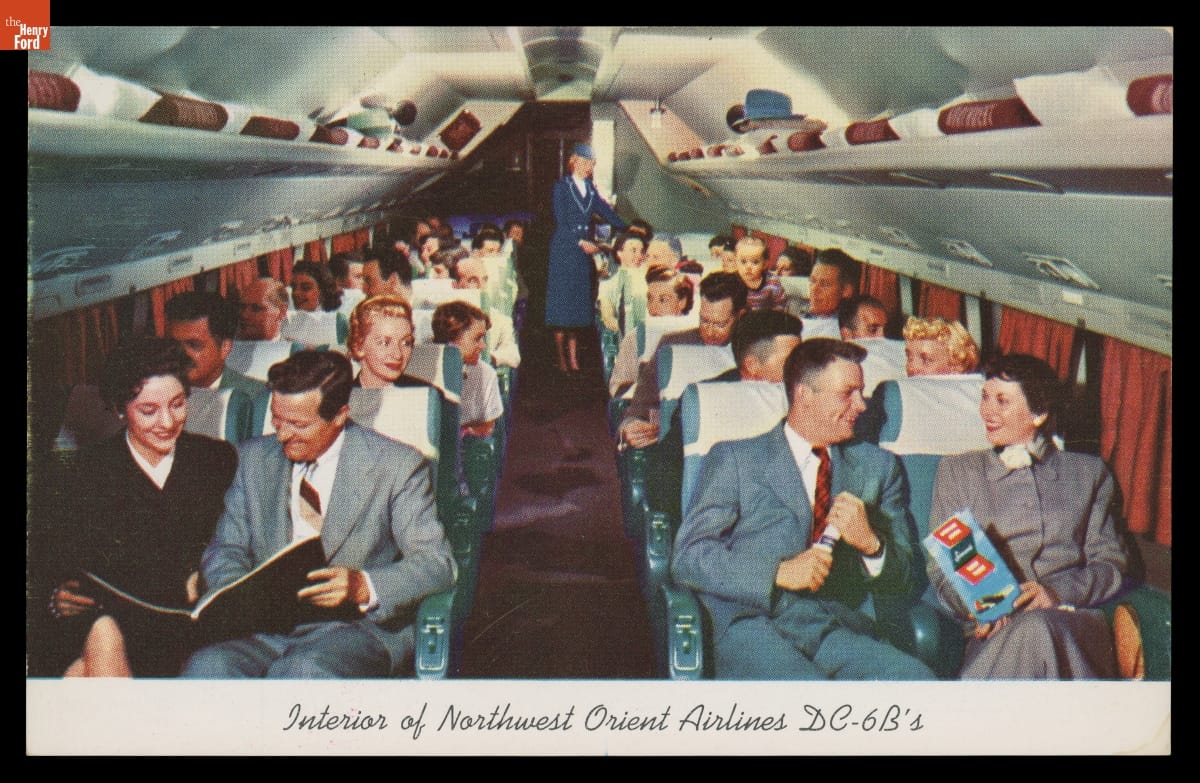
- "Interior of Northwest Orient Airlines DC-6B's," circa 1955 - Northwest Airlines was established in Detroit in 1926 and relocated to the Minneapolis-St. Paul area in 1933. The company grew to serve destinations around the world, especially through transpacific flights via a hub in Japan -- emphasized with "Northwest Orient" branding. Northwest merged with Delta Airlines in 2008 but continued to operate under its own name until 2010.
- circa 1955
- Collections - Artifact
"Interior of Northwest Orient Airlines DC-6B's," circa 1955
Northwest Airlines was established in Detroit in 1926 and relocated to the Minneapolis-St. Paul area in 1933. The company grew to serve destinations around the world, especially through transpacific flights via a hub in Japan -- emphasized with "Northwest Orient" branding. Northwest merged with Delta Airlines in 2008 but continued to operate under its own name until 2010.
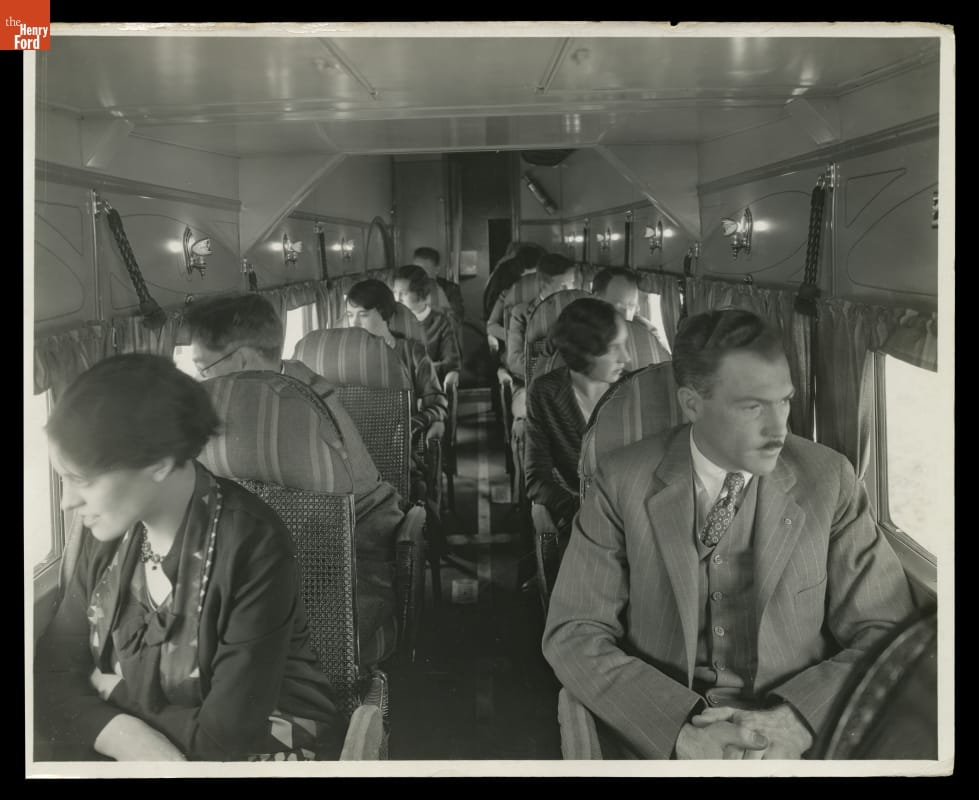
- Passengers aboard Ford Tri-Motor Airplane, 1929 - Americans initially wondered if air travel was safe. Fatal crashes by barnstorming pilots were well publicized, and wood and cloth airplanes did not inspire confidence. But when Henry Ford began making planes, the industrialist's solid reputation eased people's fears. Ford's all-metal Tri-Motors were rugged, dependable and safe. By the late 1920s these planes were the backbone of the budding airline industry.
- April 30, 1929
- Collections - Artifact
Passengers aboard Ford Tri-Motor Airplane, 1929
Americans initially wondered if air travel was safe. Fatal crashes by barnstorming pilots were well publicized, and wood and cloth airplanes did not inspire confidence. But when Henry Ford began making planes, the industrialist's solid reputation eased people's fears. Ford's all-metal Tri-Motors were rugged, dependable and safe. By the late 1920s these planes were the backbone of the budding airline industry.
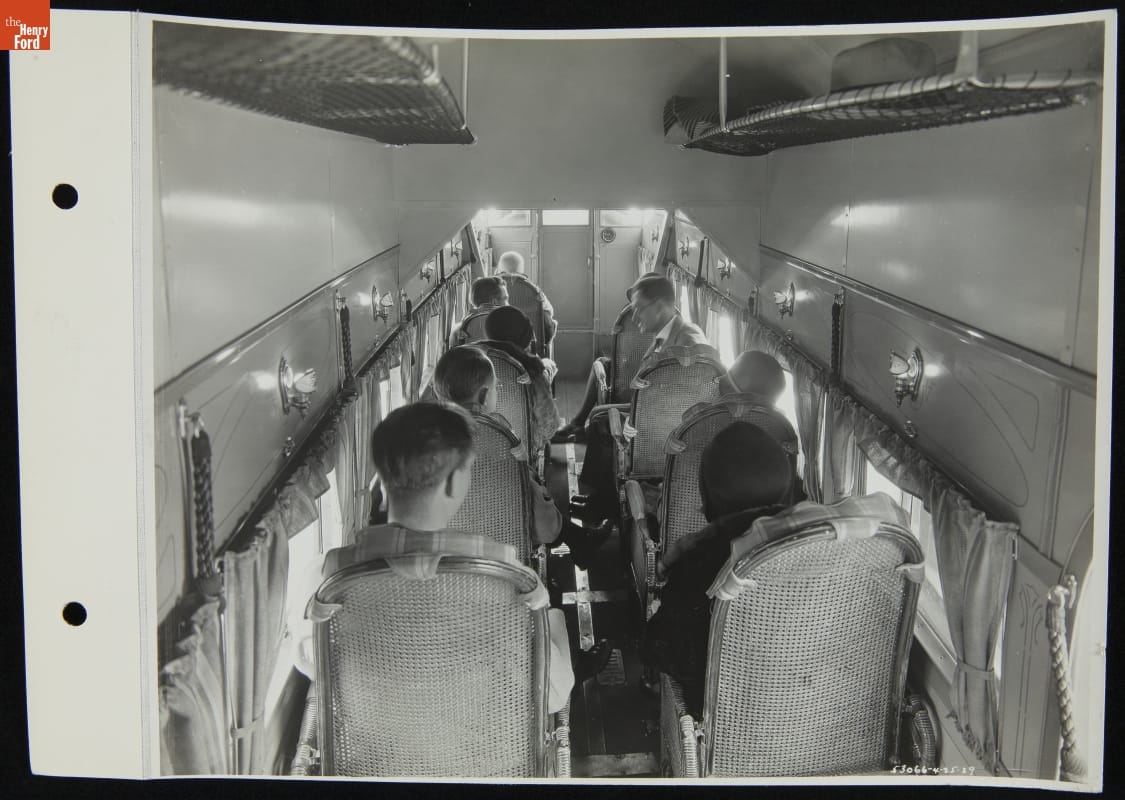
- Passengers Seated during Flight in Ford Tri-Motor Airplane, 1929 - The Ford Tri-Motors were designed and built by the Stout Metal Airplane Company, a division of Ford Motor Company. These rugged planes earned a reputation for being safe and dependable; and in the late 1920s and 1930s they were the backbone of the scheduled airline industry. This photograph shows the plane's interior equipped with lightweight wicker seats used for passenger service.
- April 26, 1929
- Collections - Artifact
Passengers Seated during Flight in Ford Tri-Motor Airplane, 1929
The Ford Tri-Motors were designed and built by the Stout Metal Airplane Company, a division of Ford Motor Company. These rugged planes earned a reputation for being safe and dependable; and in the late 1920s and 1930s they were the backbone of the scheduled airline industry. This photograph shows the plane's interior equipped with lightweight wicker seats used for passenger service.
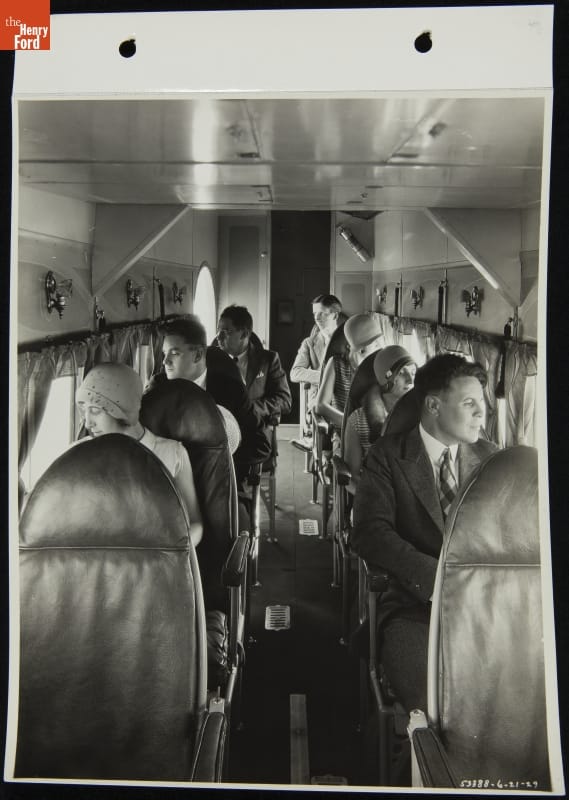
- Passengers Seated during a Ford Tri-Motor Airplane Flight, 1929 - The Ford Tri-Motors were designed and built by the Stout Metal Airplane Company, a division of Ford Motor Company. These rugged planes earned a reputation for being safe and dependable; and in the late 1920s and 1930s they were the backbone of the scheduled airline industry. Passengers on this tri-motor rode in comfort sitting on padded leather seats.
- June 21, 1929
- Collections - Artifact
Passengers Seated during a Ford Tri-Motor Airplane Flight, 1929
The Ford Tri-Motors were designed and built by the Stout Metal Airplane Company, a division of Ford Motor Company. These rugged planes earned a reputation for being safe and dependable; and in the late 1920s and 1930s they were the backbone of the scheduled airline industry. Passengers on this tri-motor rode in comfort sitting on padded leather seats.
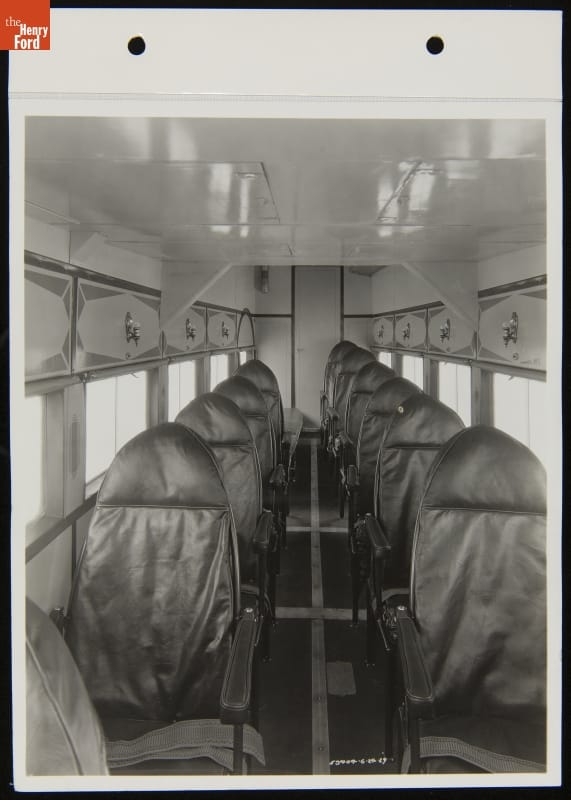
- Ford Tri-Motor Airplane, Interior Passenger Cabin, June 1929 - Passenger air travel was a completely new -- and perhaps fearsome -- concept for most Americans in the 1920s. National advertisements for the Ford Tri-Motor promoted "roomy and comfortable" wicker passenger chairs -- one of the many advertised amenities used to convince a skeptical public of the appeal of flying in a Ford plane. Later models of the Ford Tri-Motor featured almuminum seats covered with leather.
- June 01, 1929
- Collections - Artifact
Ford Tri-Motor Airplane, Interior Passenger Cabin, June 1929
Passenger air travel was a completely new -- and perhaps fearsome -- concept for most Americans in the 1920s. National advertisements for the Ford Tri-Motor promoted "roomy and comfortable" wicker passenger chairs -- one of the many advertised amenities used to convince a skeptical public of the appeal of flying in a Ford plane. Later models of the Ford Tri-Motor featured almuminum seats covered with leather.
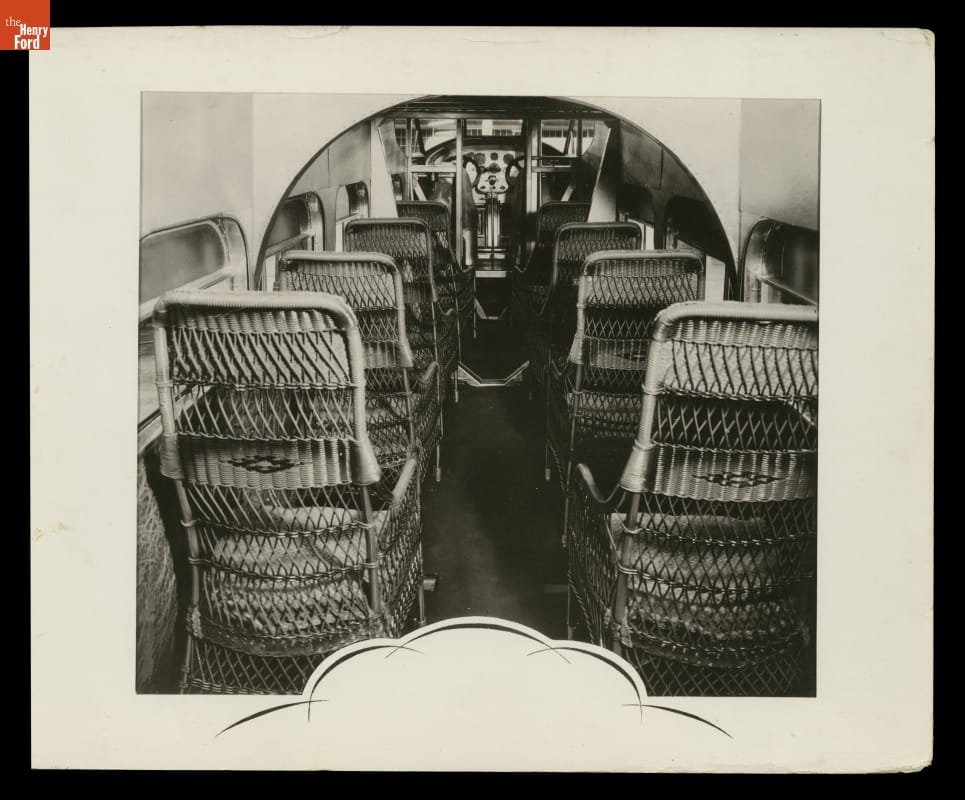
- Interior of Ford Tri-Motor Airplane, 1928 - The interior of a Ford Tri-Motor airplane is seen in this 1928 view. Lightweight wicker seats were provided for passengers. The less the airplane itself weighed, the more passengers or cargo it could carry.
- July 13, 1928
- Collections - Artifact
Interior of Ford Tri-Motor Airplane, 1928
The interior of a Ford Tri-Motor airplane is seen in this 1928 view. Lightweight wicker seats were provided for passengers. The less the airplane itself weighed, the more passengers or cargo it could carry.
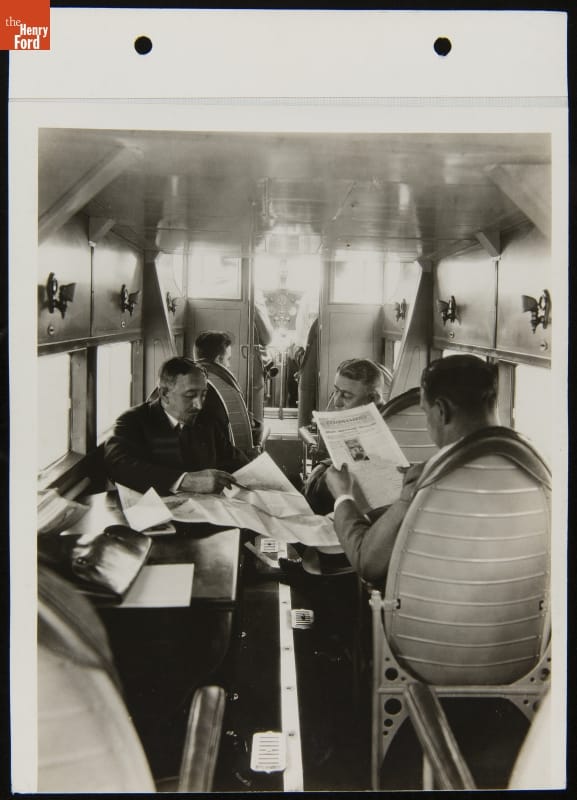
- Ford Tri-Motor Airplane, Interior View of Passenger Cabin, October 1929 - Passenger air travel was a completely new -- and perhaps fearsome -- concept for most Americans in the 1920s. Images like this, used in national advertisements for the Ford Tri-Motor, helped convince a skeptical public of the appeal of flying in a Ford plane. Airplane amenities included beautifully decorated interiors, food and refreshments served by an attendant, comfortable wicker chairs, and a toilet equipped with running water.
- October 01, 1929
- Collections - Artifact
Ford Tri-Motor Airplane, Interior View of Passenger Cabin, October 1929
Passenger air travel was a completely new -- and perhaps fearsome -- concept for most Americans in the 1920s. Images like this, used in national advertisements for the Ford Tri-Motor, helped convince a skeptical public of the appeal of flying in a Ford plane. Airplane amenities included beautifully decorated interiors, food and refreshments served by an attendant, comfortable wicker chairs, and a toilet equipped with running water.
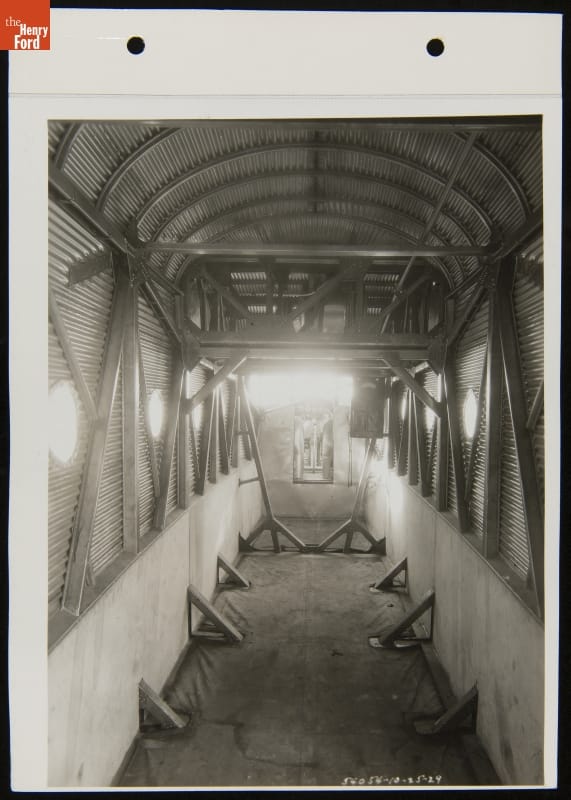
- Ford Tri-Motor 8-AT Airplane, Interior Cabin Designed to Transport Freight, October 1929 - Ford Motor Company's Tri-Motor, built from 1926-1933, flew in many early American airline fleets. The all-metal airplane was rugged, dependable, and equally adaptable to passenger and freight service. Tri-Motors were built with some of the same mass production techniques used in Ford's automobile plants. This version, the 8-AT was used to transport freight so did not have passenger seating. This photograph shows the 8-AT's cabin interior.
- October 01, 1929
- Collections - Artifact
Ford Tri-Motor 8-AT Airplane, Interior Cabin Designed to Transport Freight, October 1929
Ford Motor Company's Tri-Motor, built from 1926-1933, flew in many early American airline fleets. The all-metal airplane was rugged, dependable, and equally adaptable to passenger and freight service. Tri-Motors were built with some of the same mass production techniques used in Ford's automobile plants. This version, the 8-AT was used to transport freight so did not have passenger seating. This photograph shows the 8-AT's cabin interior.