
Search
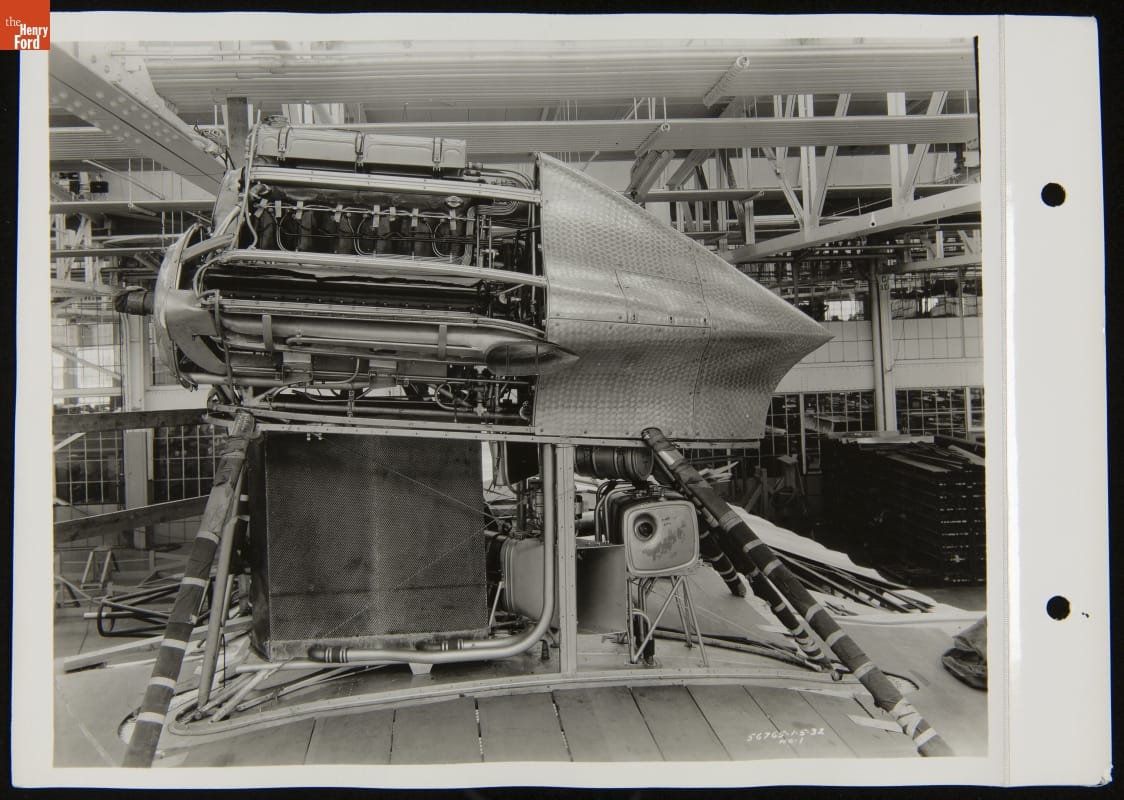
- Construction of Ford Tri-Motor 14-AT Showing Center Hispano Suiza Engine, January 1932 - Ford Motor Company's Tri-Motor, built from 1926-1933, flew in many early American airline fleets. The all-metal airplane was rugged, dependable, and equally adaptable to passenger and freight service. Tri-Motors were built with some of the same mass production techniques used in Ford's automobile plants. This version, the 14-AT, featured three Hispano-Suiza Engines. This photograph reveals the interior of the central engine.
- January 05, 1932
- Collections - Artifact
Construction of Ford Tri-Motor 14-AT Showing Center Hispano Suiza Engine, January 1932
Ford Motor Company's Tri-Motor, built from 1926-1933, flew in many early American airline fleets. The all-metal airplane was rugged, dependable, and equally adaptable to passenger and freight service. Tri-Motors were built with some of the same mass production techniques used in Ford's automobile plants. This version, the 14-AT, featured three Hispano-Suiza Engines. This photograph reveals the interior of the central engine.
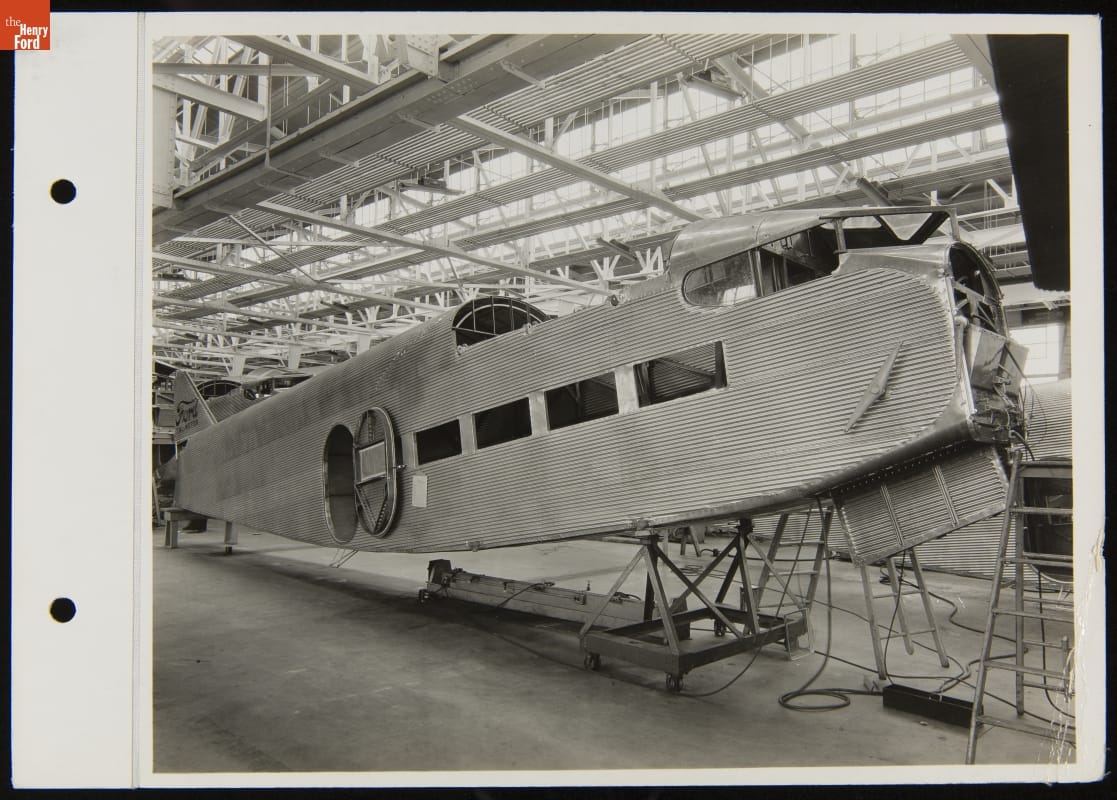
- Ford Tri-Motor Airplane Fuselage Being Constructed at the Stout Factory, Dearborn, Michigan, April 1929 - Ford Motor Company's Tri-Motor, built from 1926-1933, flew in many early American airline fleets. The all-metal airplane was rugged, dependable, and equally adaptable to passenger and freight service. Tri-Motors were built with some of the same mass production techniques used in Ford's automobile plants. The fuselage, or the main body of the airplane, is constructed in this photograph.
- April 30, 1929
- Collections - Artifact
Ford Tri-Motor Airplane Fuselage Being Constructed at the Stout Factory, Dearborn, Michigan, April 1929
Ford Motor Company's Tri-Motor, built from 1926-1933, flew in many early American airline fleets. The all-metal airplane was rugged, dependable, and equally adaptable to passenger and freight service. Tri-Motors were built with some of the same mass production techniques used in Ford's automobile plants. The fuselage, or the main body of the airplane, is constructed in this photograph.
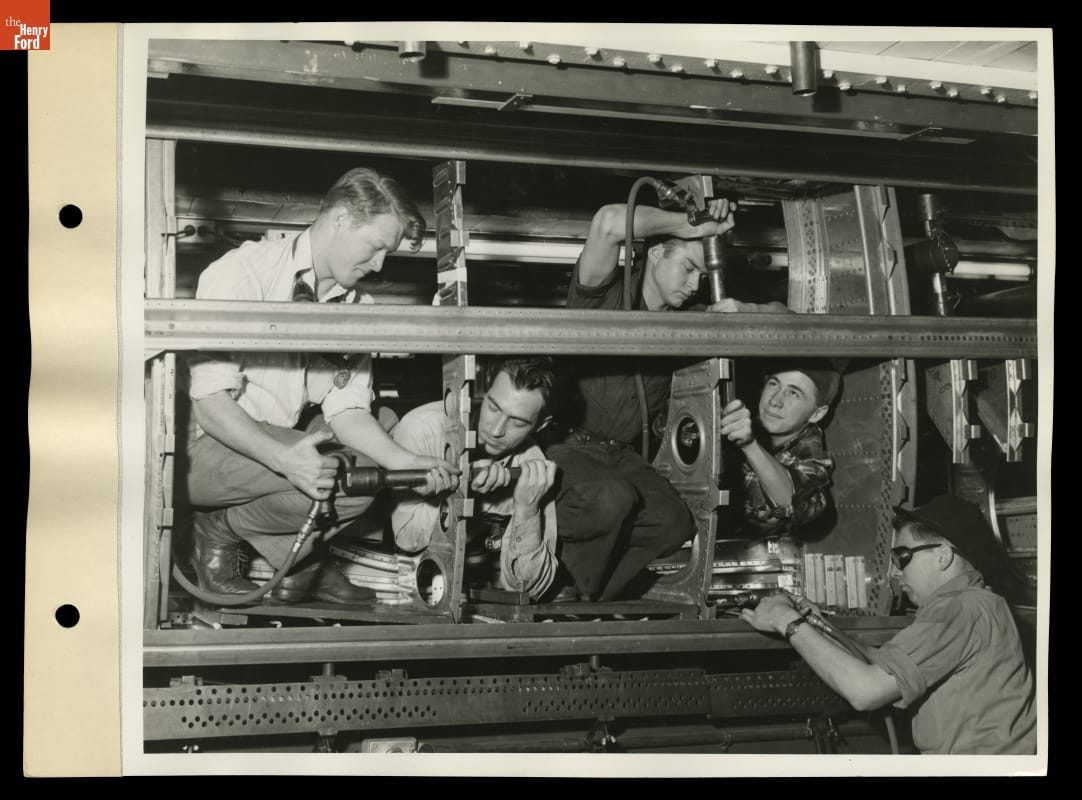
- Building the B-24 Center Wing in Record Time, Willow Run Bomber Plant, 1942 - At Willow Run, Ford Motor Company built B-24 bomber planes for World War II using automobile mass production techniques. Airplanes were much more complex than cars. They required constant design changes poorly suited to a standardized assembly line. Ford overcame these difficulties and, at the plant's peak, Willow Run crews produced an average of one bomber every 63 minutes.
- November 30, 1942
- Collections - Artifact
Building the B-24 Center Wing in Record Time, Willow Run Bomber Plant, 1942
At Willow Run, Ford Motor Company built B-24 bomber planes for World War II using automobile mass production techniques. Airplanes were much more complex than cars. They required constant design changes poorly suited to a standardized assembly line. Ford overcame these difficulties and, at the plant's peak, Willow Run crews produced an average of one bomber every 63 minutes.
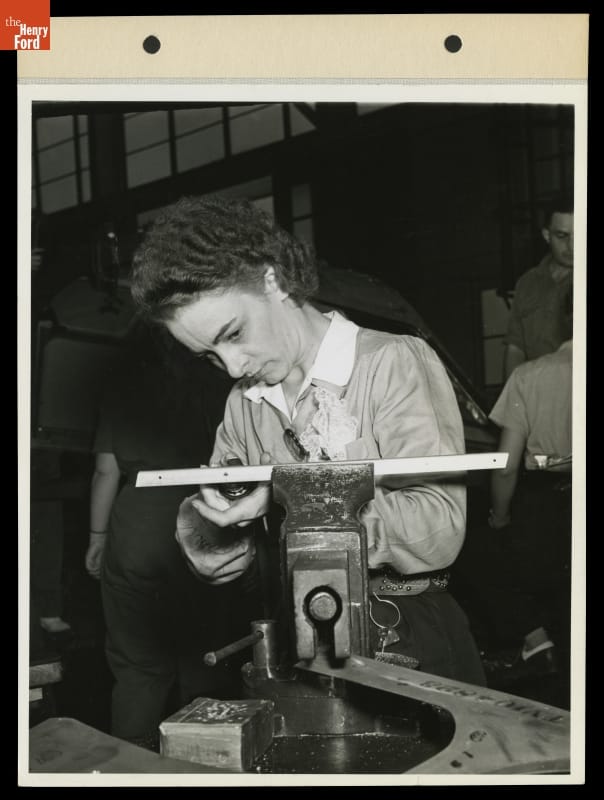
- Employee Florence Nightingale Working at Willow Run Bomber Plant, 1942 - At Willow Run, Ford Motor Company built B-24 bomber planes for World War II using automobile mass production techniques. Airplanes were much more complex than cars. They required constant design changes poorly suited to a standardized assembly line. Ford overcame these difficulties and, at the plant's peak, Willow Run crews produced an average of one bomber every 63 minutes.
- July 25, 1942
- Collections - Artifact
Employee Florence Nightingale Working at Willow Run Bomber Plant, 1942
At Willow Run, Ford Motor Company built B-24 bomber planes for World War II using automobile mass production techniques. Airplanes were much more complex than cars. They required constant design changes poorly suited to a standardized assembly line. Ford overcame these difficulties and, at the plant's peak, Willow Run crews produced an average of one bomber every 63 minutes.
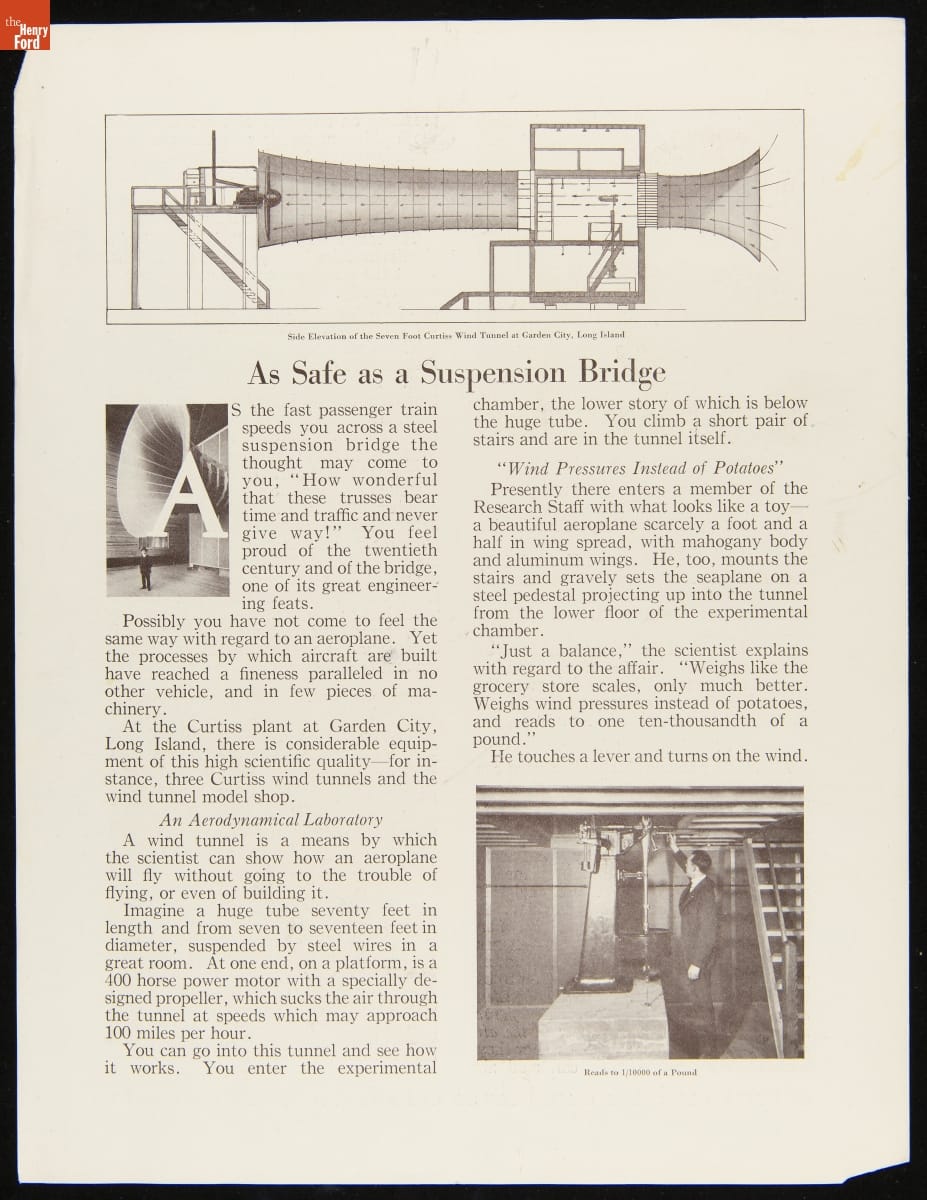
- As Safe as a Suspension Bridge, 1919-1920 - Glenn Curtiss, whose airplane business flourished during World War I, established a state-of-the-art research and experimentation facility on Long Island, New York, in 1917. At the Curtiss Engineering Corporation, a handpicked team built, tested, and refined propellers, engines, and airplanes. This brochure claimed a scientific approach made Curtiss airplanes as safe as the more established modes of transportation Americans already trusted.
- 1919-1920
- Collections - Artifact
As Safe as a Suspension Bridge, 1919-1920
Glenn Curtiss, whose airplane business flourished during World War I, established a state-of-the-art research and experimentation facility on Long Island, New York, in 1917. At the Curtiss Engineering Corporation, a handpicked team built, tested, and refined propellers, engines, and airplanes. This brochure claimed a scientific approach made Curtiss airplanes as safe as the more established modes of transportation Americans already trusted.
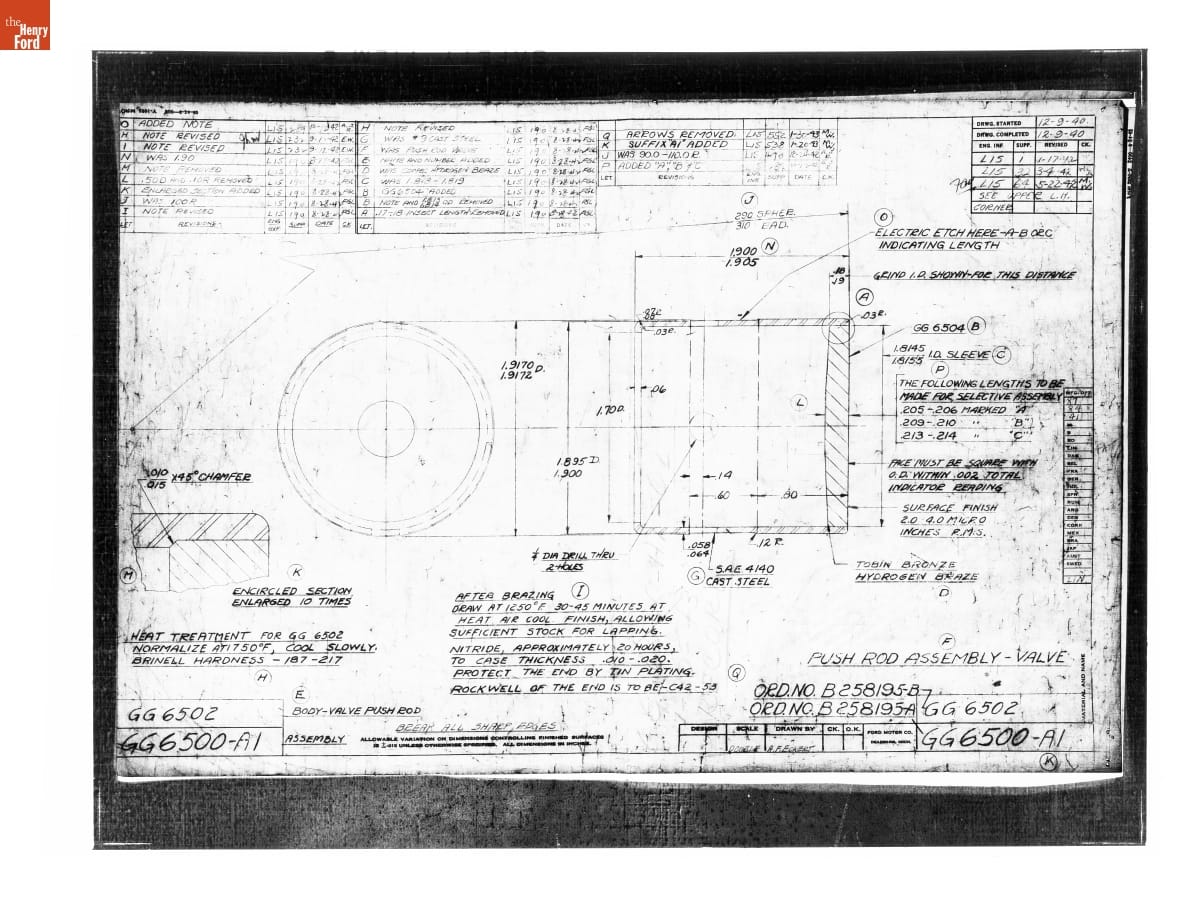
- Drawing, "Push Rod Assembly - Valve," Ford V-12 Aircraft Engine (GG Aero Engine), January 30, 1943 - The Ford Motor Company created over a million parts drawings from 1903 to 1957. Many of these drawings specify engineering requirements for the components of Ford-made vehicles--including automobiles, trucks, tractors, military vehicles and Tri-motor airplanes. Others document assembly components, stages of casting and forging, or experimental designs. Beginning in the 1940s, Ford transferred the drawings to microfilm.
- January 30, 1943
- Collections - Artifact
Drawing, "Push Rod Assembly - Valve," Ford V-12 Aircraft Engine (GG Aero Engine), January 30, 1943
The Ford Motor Company created over a million parts drawings from 1903 to 1957. Many of these drawings specify engineering requirements for the components of Ford-made vehicles--including automobiles, trucks, tractors, military vehicles and Tri-motor airplanes. Others document assembly components, stages of casting and forging, or experimental designs. Beginning in the 1940s, Ford transferred the drawings to microfilm.
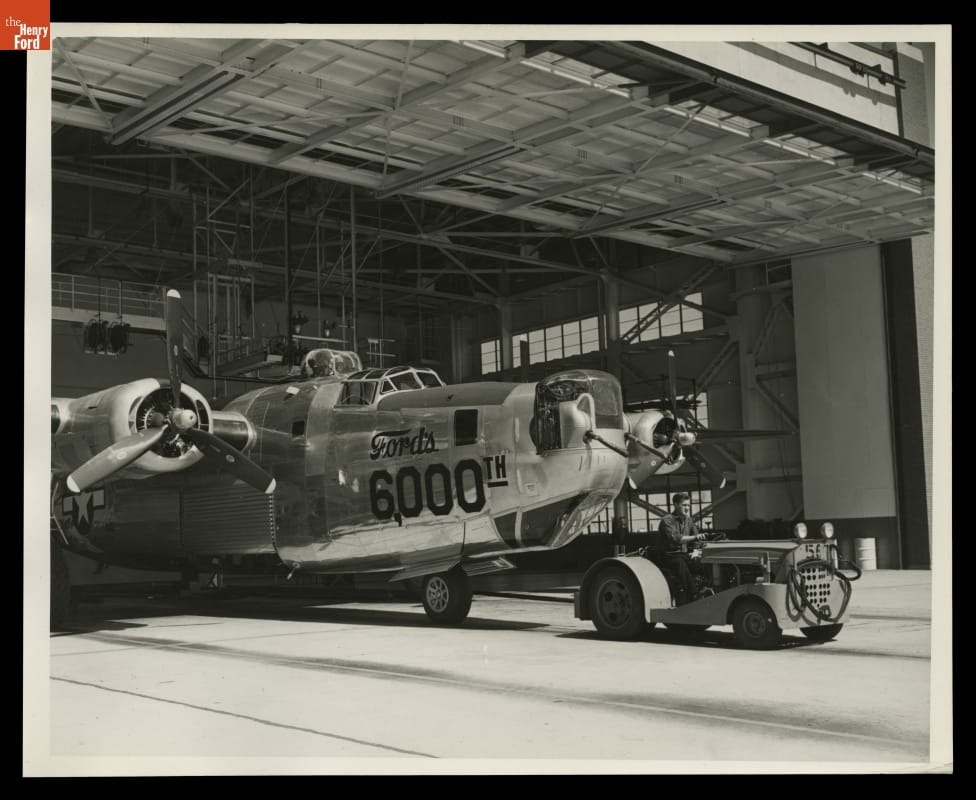
- 6,000th B-24 Bomber at Ford Motor Company Willow Run Plant, September 9, 1944 - Mass producing B-24 bombers during World War II was no easy feat -- not even for the company that invented modern mass production. But Ford Motor Company was building one airplane every 63 minutes at its Willow Run plant by March 1944. Ford produced its 6,000th B-24 that September. Another 2,685 were built before production ended in May 1945.
- September 09, 1944
- Collections - Artifact
6,000th B-24 Bomber at Ford Motor Company Willow Run Plant, September 9, 1944
Mass producing B-24 bombers during World War II was no easy feat -- not even for the company that invented modern mass production. But Ford Motor Company was building one airplane every 63 minutes at its Willow Run plant by March 1944. Ford produced its 6,000th B-24 that September. Another 2,685 were built before production ended in May 1945.
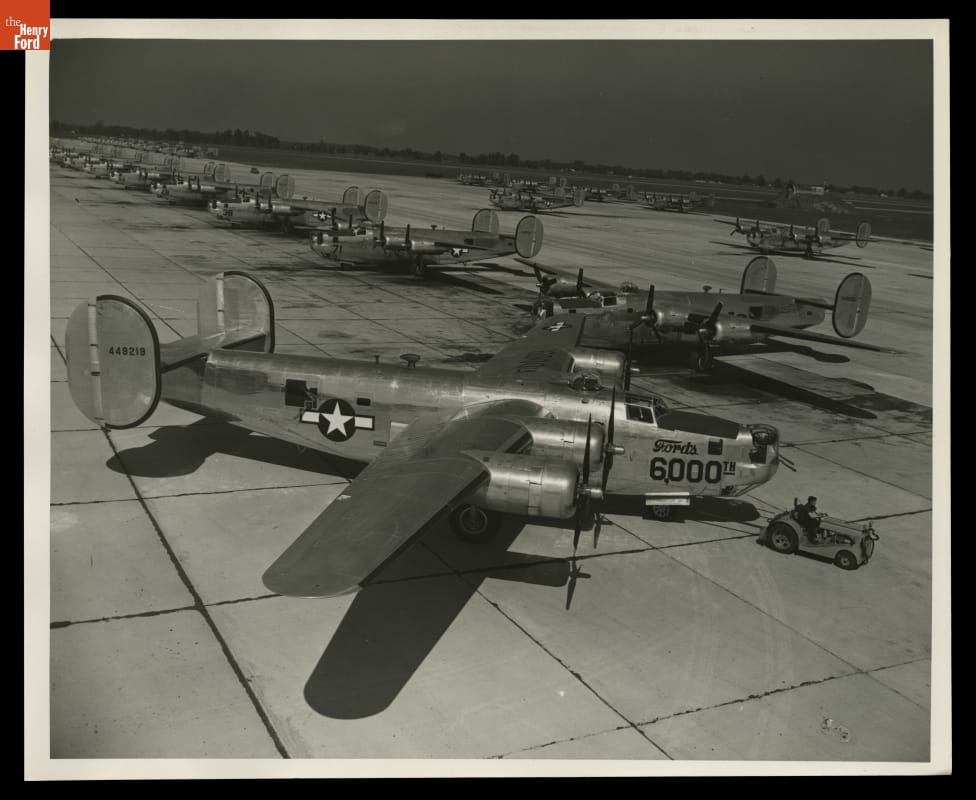
- 6,000th B-24 Bomber at Ford Motor Company Willow Run Plant, September 9, 1944 - Mass producing B-24 bombers during World War II was no easy feat -- not even for the company that invented modern mass production. But Ford Motor Company was building one airplane every 63 minutes at its Willow Run plant by March 1944. Ford produced its 6,000th B-24 that September. Another 2,685 were built before production ended in May 1945.
- September 09, 1944
- Collections - Artifact
6,000th B-24 Bomber at Ford Motor Company Willow Run Plant, September 9, 1944
Mass producing B-24 bombers during World War II was no easy feat -- not even for the company that invented modern mass production. But Ford Motor Company was building one airplane every 63 minutes at its Willow Run plant by March 1944. Ford produced its 6,000th B-24 that September. Another 2,685 were built before production ended in May 1945.
- 6,000th B-24 Bomber at Ford Motor Company Willow Run Plant, September 9, 1944 - Mass producing B-24 bombers during World War II was no easy feat -- not even for the company that invented modern mass production. But Ford Motor Company was building one airplane every 63 minutes at its Willow Run plant by March 1944. Ford produced its 6,000th B-24 that September. Another 2,685 were built before production ended in May 1945.
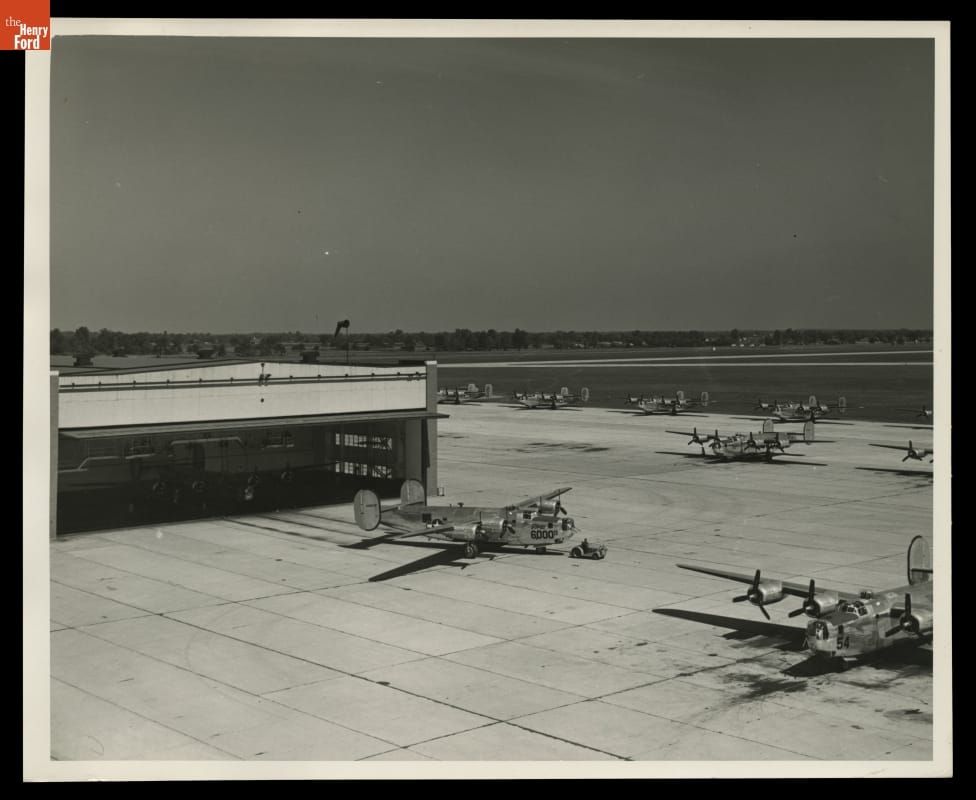
- September 09, 1944
- Collections - Artifact
6,000th B-24 Bomber at Ford Motor Company Willow Run Plant, September 9, 1944
Mass producing B-24 bombers during World War II was no easy feat -- not even for the company that invented modern mass production. But Ford Motor Company was building one airplane every 63 minutes at its Willow Run plant by March 1944. Ford produced its 6,000th B-24 that September. Another 2,685 were built before production ended in May 1945.
- 6,000th B-24 Bomber at Ford Motor Company Willow Run Plant, September 9, 1944 - Mass producing B-24 bombers during World War II was no easy feat -- not even for the company that invented modern mass production. But Ford Motor Company was building one airplane every 63 minutes at its Willow Run plant by March 1944. Ford produced its 6,000th B-24 that September. Another 2,685 were built before production ended in May 1945.
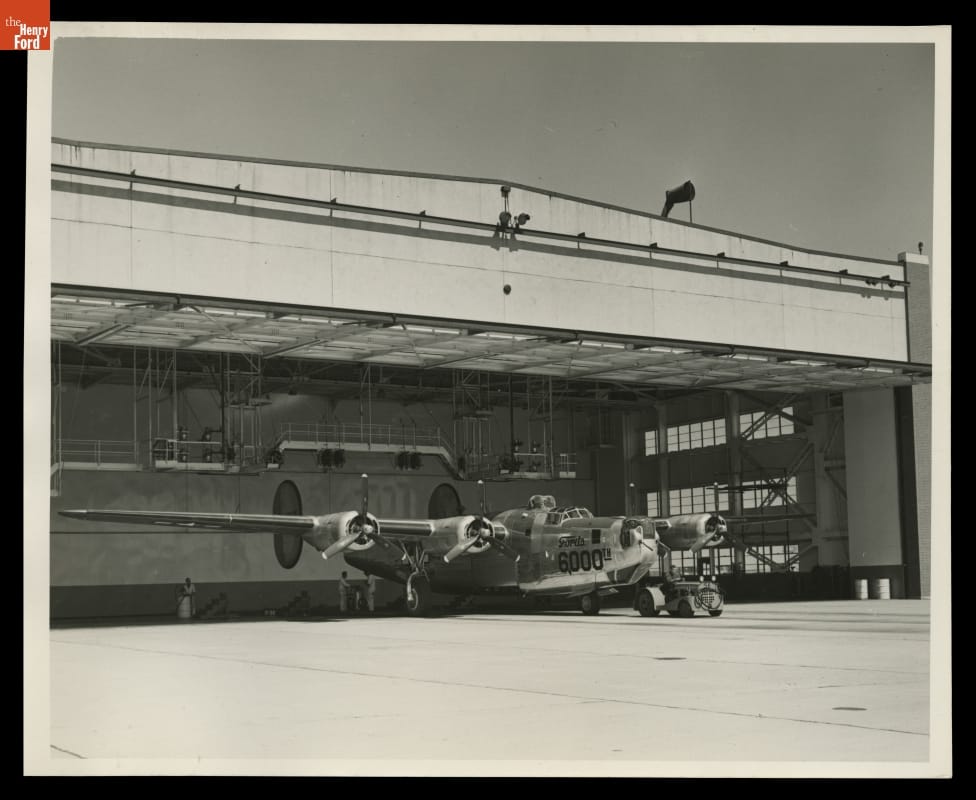
- September 09, 1944
- Collections - Artifact
6,000th B-24 Bomber at Ford Motor Company Willow Run Plant, September 9, 1944
Mass producing B-24 bombers during World War II was no easy feat -- not even for the company that invented modern mass production. But Ford Motor Company was building one airplane every 63 minutes at its Willow Run plant by March 1944. Ford produced its 6,000th B-24 that September. Another 2,685 were built before production ended in May 1945.