
Search
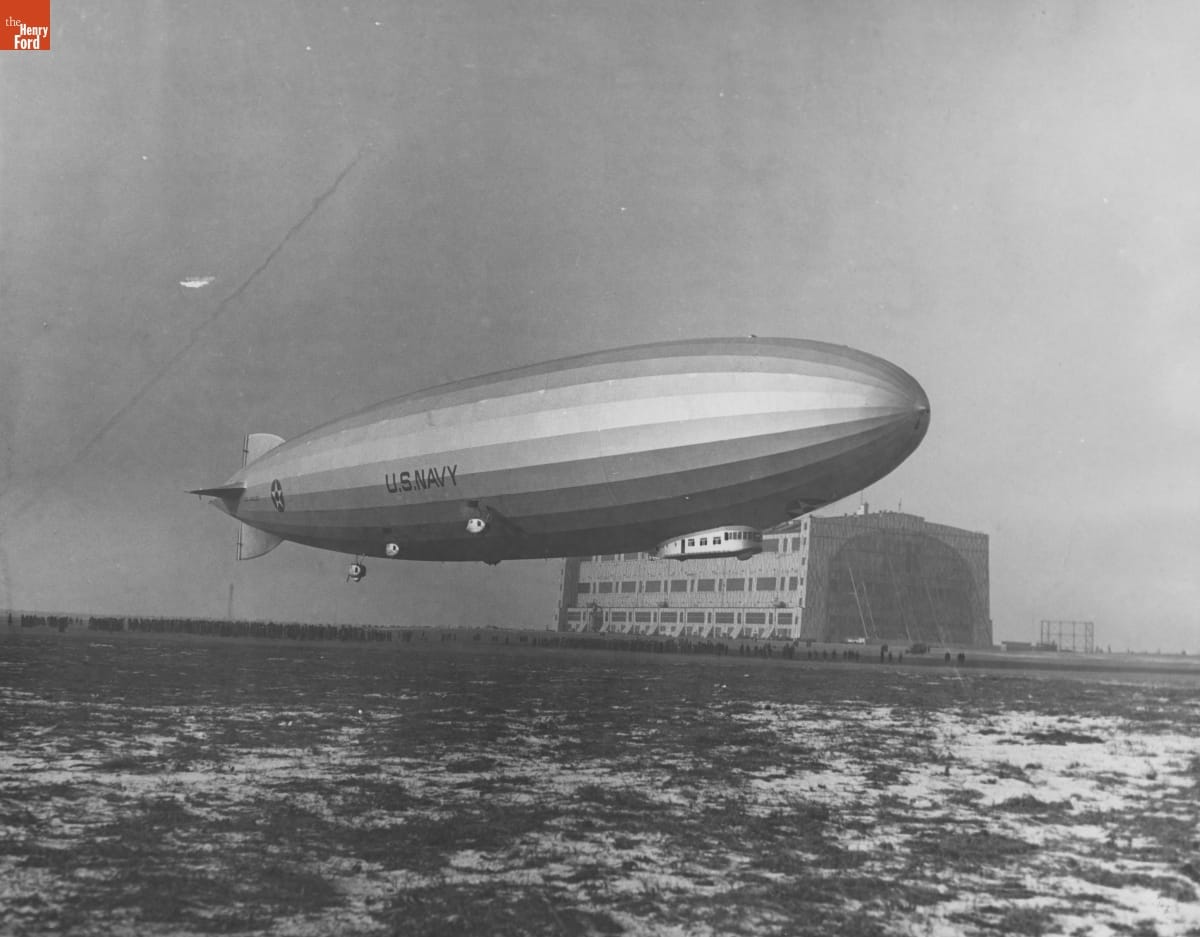
- Zeppelin "Los Angeles" Leaving Hangar at Lakehurst, New Jersey, 1926 - In the 1920s and 1930s, the U.S. Navy experimented with rigid airships both as reconnaissance craft and as flying aircraft carriers. The helium-lifted ships proved too fragile for military service as three of the four built were lost in storms. Only the USS <EM>Los Angeles</EM> avoided disaster. It was decommissioned and dismantled in 1939.
- 1926
- Collections - Artifact
Zeppelin "Los Angeles" Leaving Hangar at Lakehurst, New Jersey, 1926
In the 1920s and 1930s, the U.S. Navy experimented with rigid airships both as reconnaissance craft and as flying aircraft carriers. The helium-lifted ships proved too fragile for military service as three of the four built were lost in storms. Only the USS Los Angeles avoided disaster. It was decommissioned and dismantled in 1939.
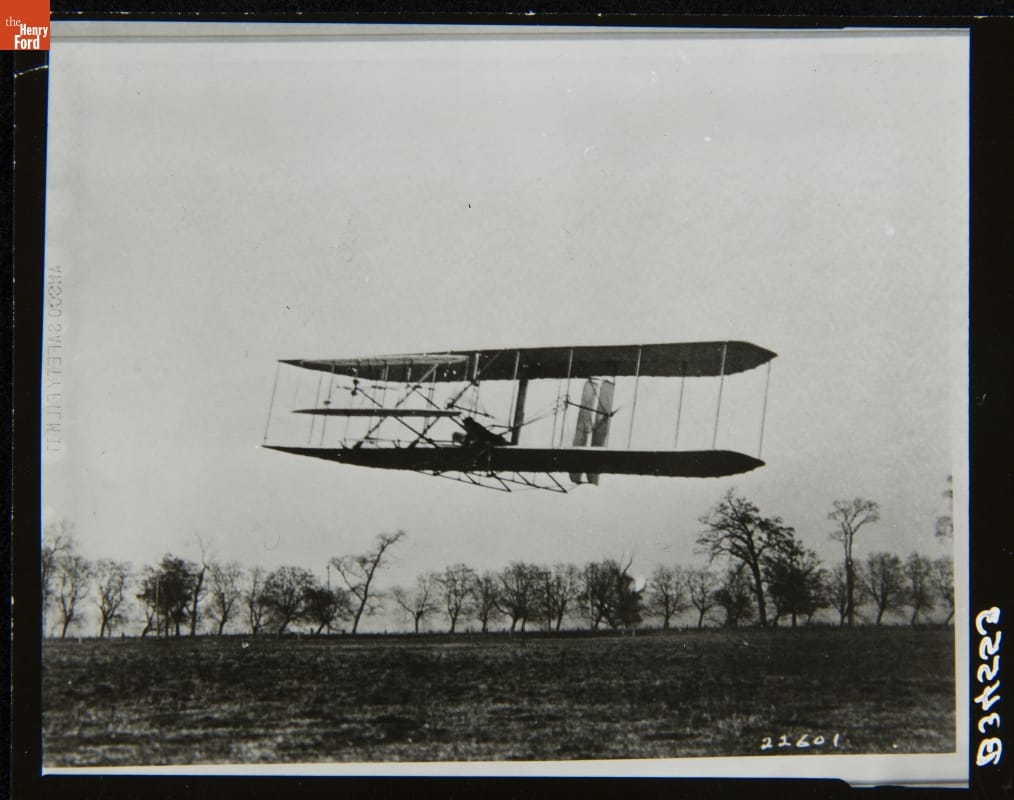
- Wright Brothers 1904 Flyer over Huffman Prairie near Dayton, Ohio, November 15, 1904 - Following their successful flights at Kill Devil Hills, North Carolina, in December 1903, the Wright brothers made further test flights closer to home. They flew at Huffman Prairie, an open field some eight miles northeast of their bicycle shop in Dayton, Ohio. The Wrights devised a catapult system to help launch their airplanes in the field's comparatively calm winds.
- November 15, 1904
- Collections - Artifact
Wright Brothers 1904 Flyer over Huffman Prairie near Dayton, Ohio, November 15, 1904
Following their successful flights at Kill Devil Hills, North Carolina, in December 1903, the Wright brothers made further test flights closer to home. They flew at Huffman Prairie, an open field some eight miles northeast of their bicycle shop in Dayton, Ohio. The Wrights devised a catapult system to help launch their airplanes in the field's comparatively calm winds.
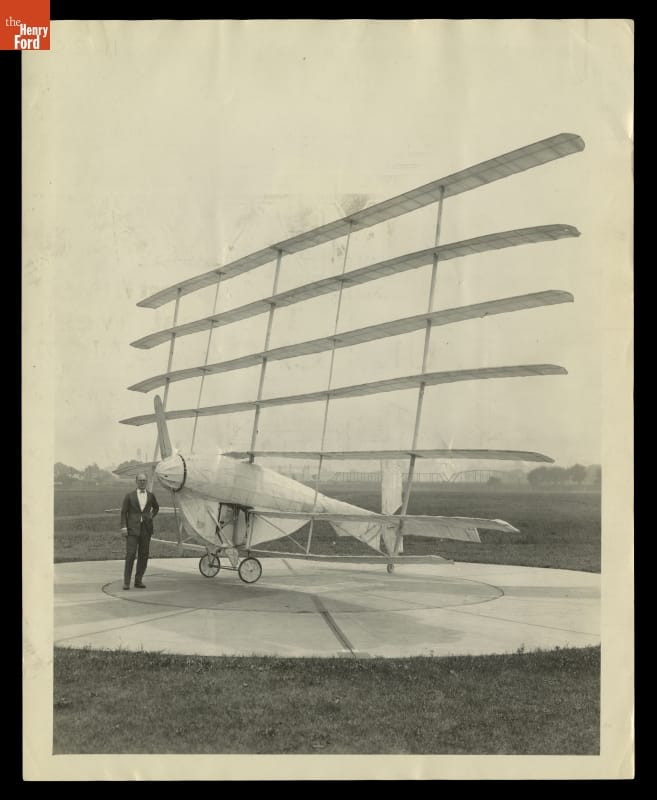
- W. F. Gerhardt and Cycleplane, McCook Field near Dayton, Ohio, 1923-1924 -
- 1923-1924
- Collections - Artifact
W. F. Gerhardt and Cycleplane, McCook Field near Dayton, Ohio, 1923-1924
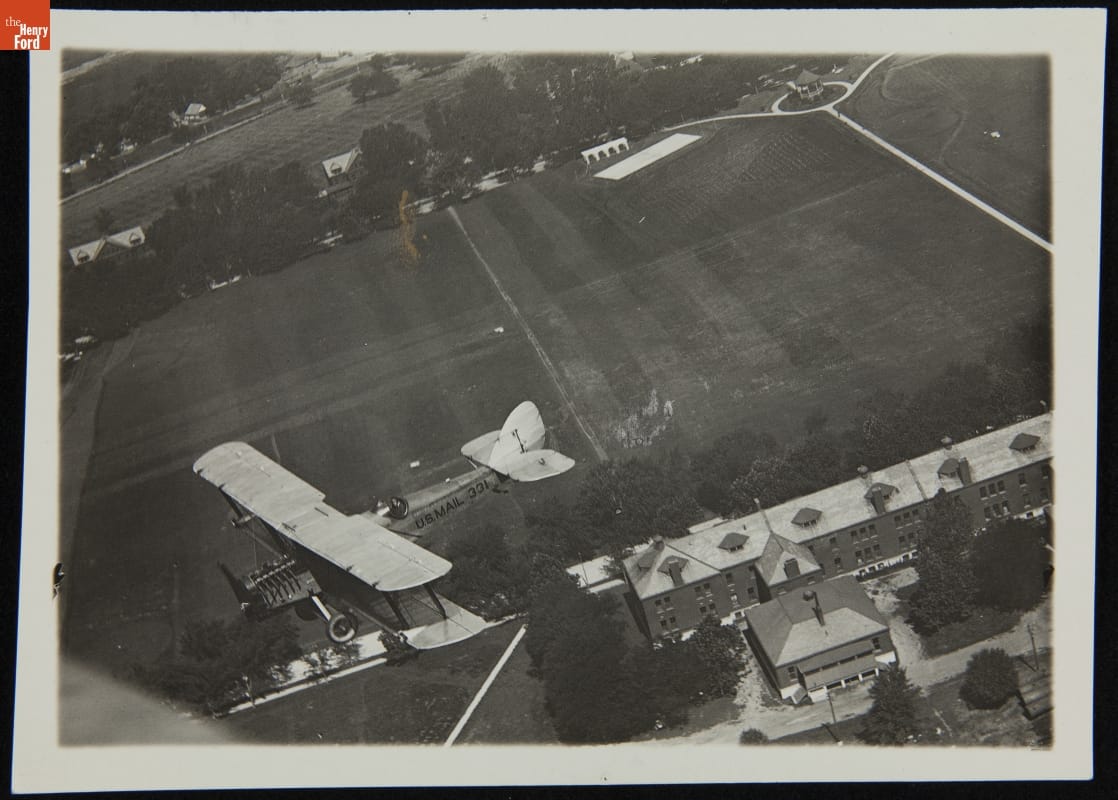
- Aerial View of U.S. Air Mail Plane above Fort Crook, Nebraska, circa 1923 - Regular air mail service in the United States started in 1918. Initial air mail stamps cost 24 cents -- eight times more than ground service. But those fees helped subsidize the development of America's airways. After operating air mail flights itself for eight years, the U.S. Post Office Department contracted with commercial air carriers in 1926.
- circa 1923
- Collections - Artifact
Aerial View of U.S. Air Mail Plane above Fort Crook, Nebraska, circa 1923
Regular air mail service in the United States started in 1918. Initial air mail stamps cost 24 cents -- eight times more than ground service. But those fees helped subsidize the development of America's airways. After operating air mail flights itself for eight years, the U.S. Post Office Department contracted with commercial air carriers in 1926.
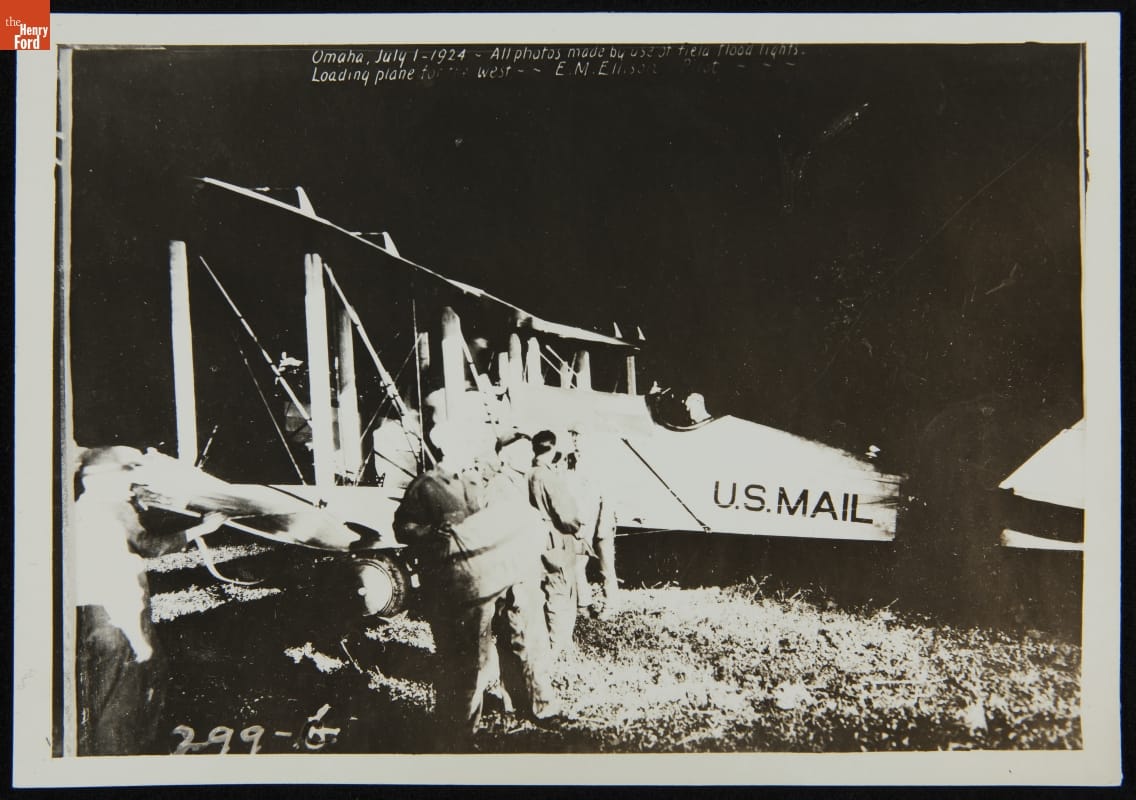
- Loading Air Mail Plane Using Floodlights, Fort Crook near Omaha, Nebraska, 1924 - Transcontinental air mail pilots relied on a string of powerful light beacons to navigate sections of the New York to San Francisco route at night. They flew night mail planes equipped with illuminated instrument panels, navigation lights, and landing lights. At airfields along the way, floodlights helped workers inspect the planes, refuel, and unload and load the mail.
- July 01, 1924
- Collections - Artifact
Loading Air Mail Plane Using Floodlights, Fort Crook near Omaha, Nebraska, 1924
Transcontinental air mail pilots relied on a string of powerful light beacons to navigate sections of the New York to San Francisco route at night. They flew night mail planes equipped with illuminated instrument panels, navigation lights, and landing lights. At airfields along the way, floodlights helped workers inspect the planes, refuel, and unload and load the mail.
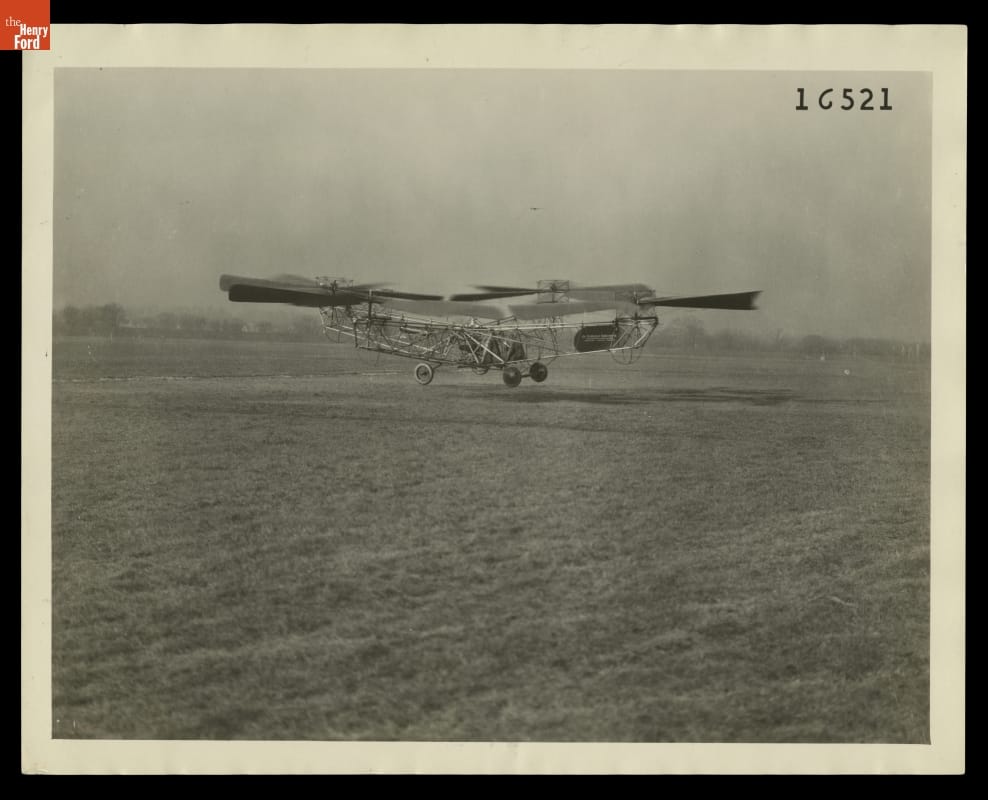
- Georges de Bothezat in His Helicopter at McCook Field, Dayton, Ohio, 1923-1924 - The search for a practical helicopter was difficult, particularly because of the challenges in controlling such an aircraft. In 1922 Russian-American inventor Georges de Bothezat, with funding from the U.S. Army, produced a four-rotor craft capable of vertical takeoff but limited in its horizontal motion. Convinced that de Bothezat's design was unworkable, the Army canceled the project in 1924.
- 1923-1924
- Collections - Artifact
Georges de Bothezat in His Helicopter at McCook Field, Dayton, Ohio, 1923-1924
The search for a practical helicopter was difficult, particularly because of the challenges in controlling such an aircraft. In 1922 Russian-American inventor Georges de Bothezat, with funding from the U.S. Army, produced a four-rotor craft capable of vertical takeoff but limited in its horizontal motion. Convinced that de Bothezat's design was unworkable, the Army canceled the project in 1924.
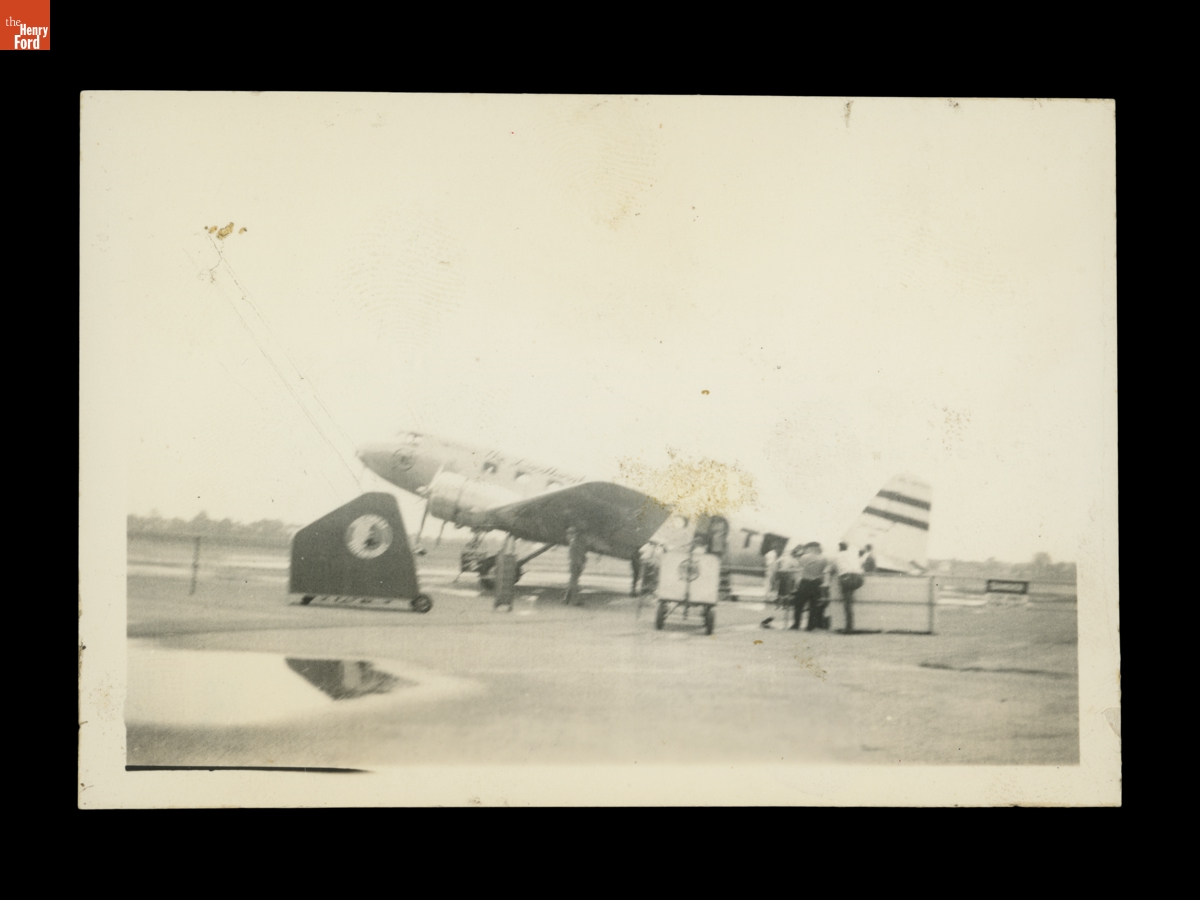
- People Standing near a Small Aircraft on an Airfield -
- Collections - Artifact
People Standing near a Small Aircraft on an Airfield