
Search
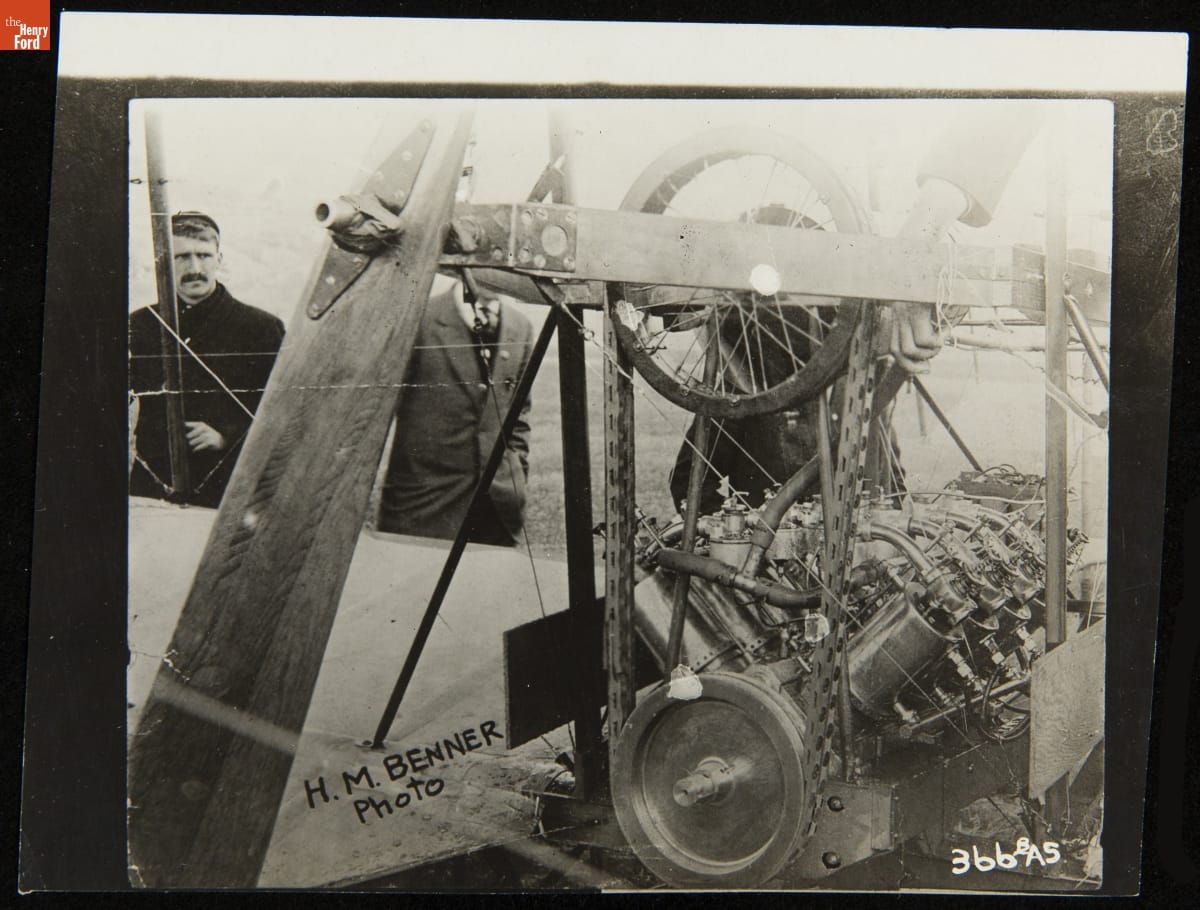
- Engine Designed by Glenn Curtiss for the Aerial Experiment Association's "Silver Dart" Airplane, 1908-1909 - In 1907, Alexander Graham Bell recruited a team of young aviation enthusiasts for his elite Aerial Experiment Association (AEA). The group produced a string of airplanes that ultimately achieved manned flight and contributed key developments to the fledgling field of aviation. AEA "motor expert" Glenn Curtiss designed this water-cooled engine to prevent overheating and allow for longer flights.
- 1908-1909
- Collections - Artifact
Engine Designed by Glenn Curtiss for the Aerial Experiment Association's "Silver Dart" Airplane, 1908-1909
In 1907, Alexander Graham Bell recruited a team of young aviation enthusiasts for his elite Aerial Experiment Association (AEA). The group produced a string of airplanes that ultimately achieved manned flight and contributed key developments to the fledgling field of aviation. AEA "motor expert" Glenn Curtiss designed this water-cooled engine to prevent overheating and allow for longer flights.
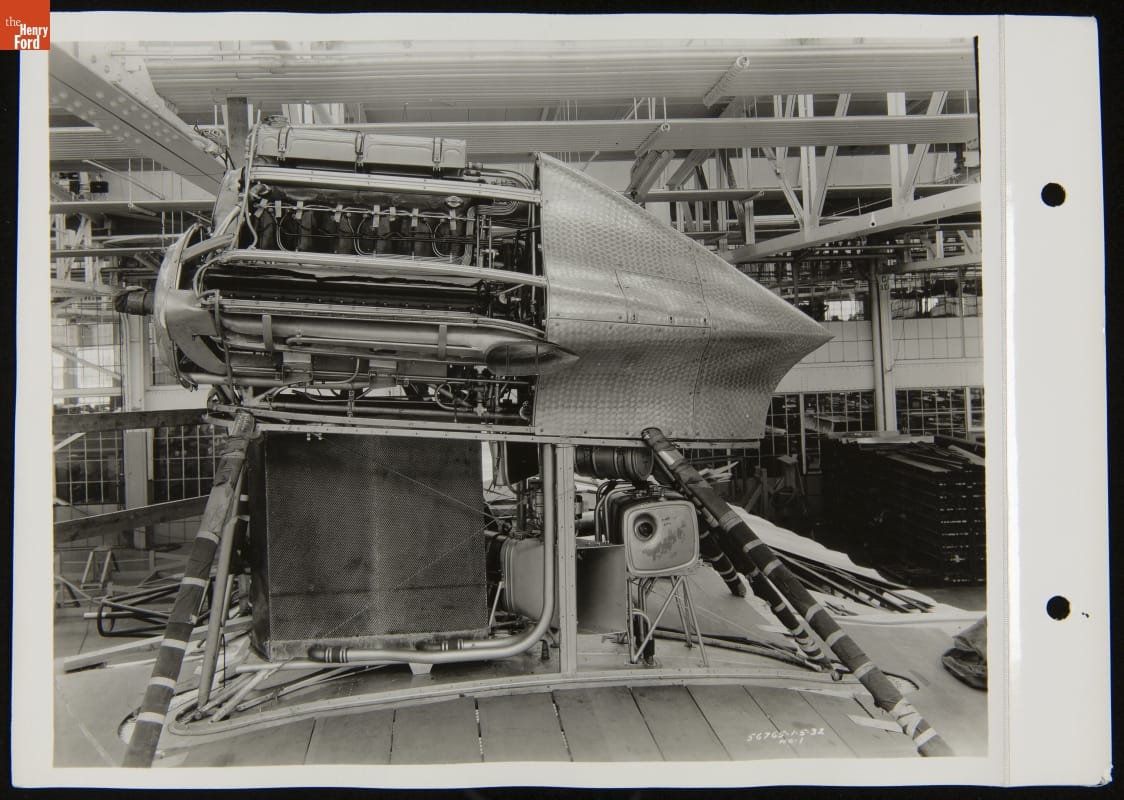
- Construction of Ford Tri-Motor 14-AT Showing Center Hispano Suiza Engine, January 1932 - Ford Motor Company's Tri-Motor, built from 1926-1933, flew in many early American airline fleets. The all-metal airplane was rugged, dependable, and equally adaptable to passenger and freight service. Tri-Motors were built with some of the same mass production techniques used in Ford's automobile plants. This version, the 14-AT, featured three Hispano-Suiza Engines. This photograph reveals the interior of the central engine.
- January 05, 1932
- Collections - Artifact
Construction of Ford Tri-Motor 14-AT Showing Center Hispano Suiza Engine, January 1932
Ford Motor Company's Tri-Motor, built from 1926-1933, flew in many early American airline fleets. The all-metal airplane was rugged, dependable, and equally adaptable to passenger and freight service. Tri-Motors were built with some of the same mass production techniques used in Ford's automobile plants. This version, the 14-AT, featured three Hispano-Suiza Engines. This photograph reveals the interior of the central engine.
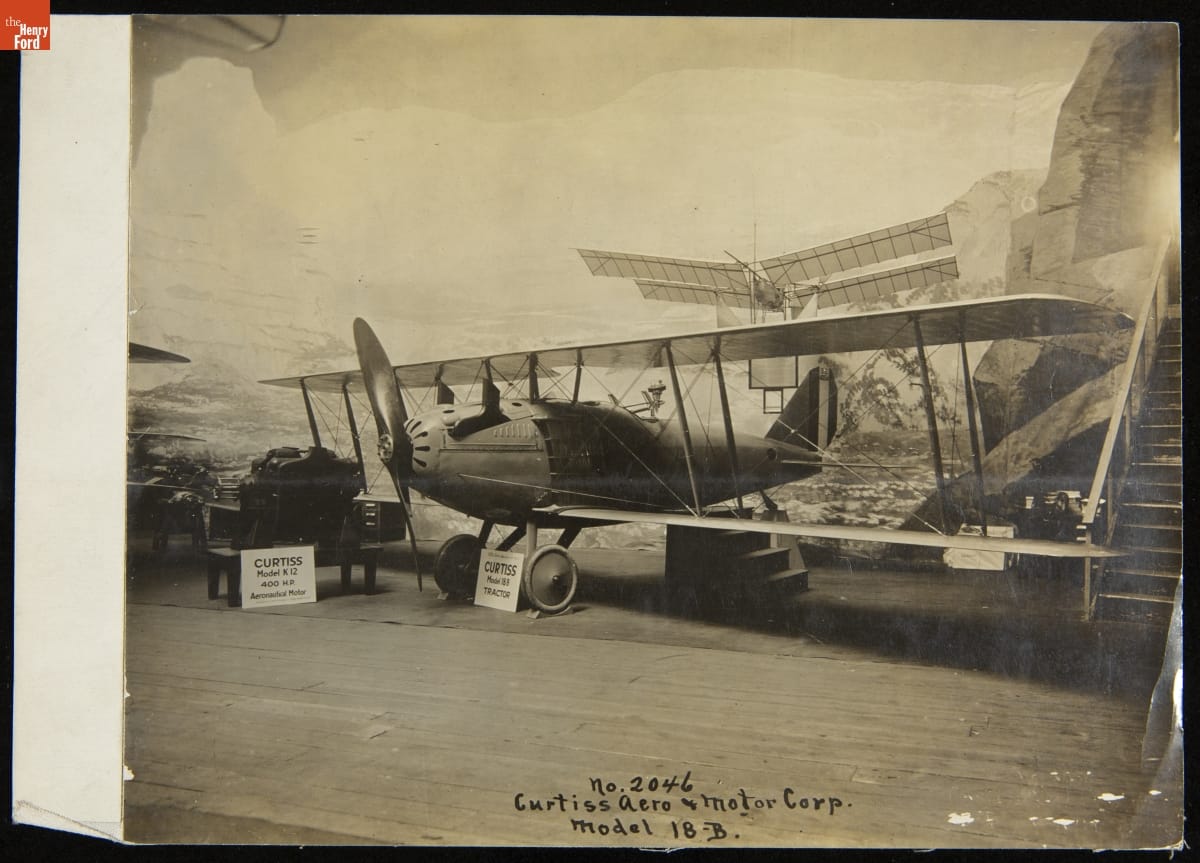
- Curtiss Model K-12 Engine and Model 18-B Airplane, circa 1919 - Glenn Curtiss established what would become the Curtiss Aeroplane and Motor Company in 1909. The company achieved success -- especially as military orders soared during World War I -- but Curtiss also endured failure. The promising 400-horsepower K-12 engine (pictured here, left) ultimately proved to be unreliable, and the model 18-B airplane (right) was never put into production.
- circa 1919
- Collections - Artifact
Curtiss Model K-12 Engine and Model 18-B Airplane, circa 1919
Glenn Curtiss established what would become the Curtiss Aeroplane and Motor Company in 1909. The company achieved success -- especially as military orders soared during World War I -- but Curtiss also endured failure. The promising 400-horsepower K-12 engine (pictured here, left) ultimately proved to be unreliable, and the model 18-B airplane (right) was never put into production.
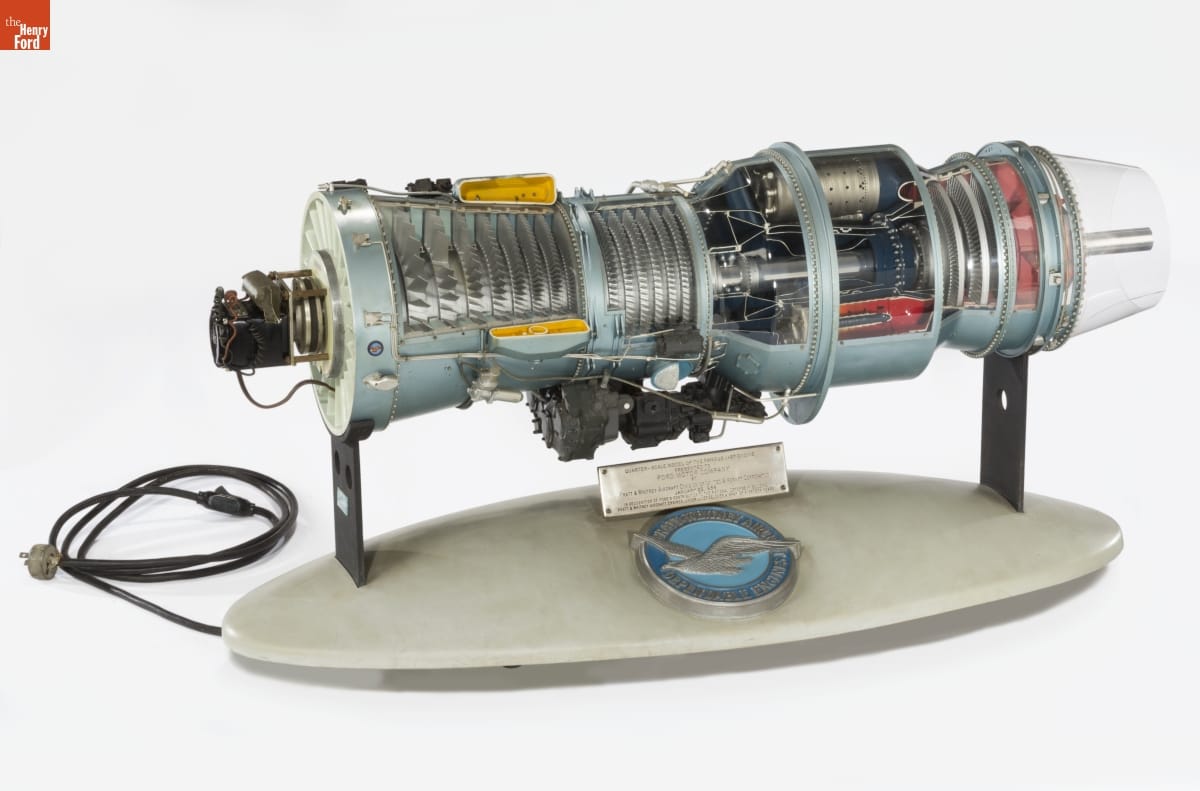
- Model of a Pratt & Whitney J-57 Turbojet Engine, circa 1958 - Pratt & Whitney introduced its J-57 turbojet engine in 1950. The versatile unit powered everything from Boeing 707 passenger airliners to B-52 bombers. Turbojets heat compressed air inside a gas turbine -- the turbine drives the compressor -- and expand the exhaust through a propelling nozzle, which provides thrust for the airplane. This electric-powered cutaway model illustrates the turbojet's operation.
- January 22, 1959
- Collections - Artifact
Model of a Pratt & Whitney J-57 Turbojet Engine, circa 1958
Pratt & Whitney introduced its J-57 turbojet engine in 1950. The versatile unit powered everything from Boeing 707 passenger airliners to B-52 bombers. Turbojets heat compressed air inside a gas turbine -- the turbine drives the compressor -- and expand the exhaust through a propelling nozzle, which provides thrust for the airplane. This electric-powered cutaway model illustrates the turbojet's operation.
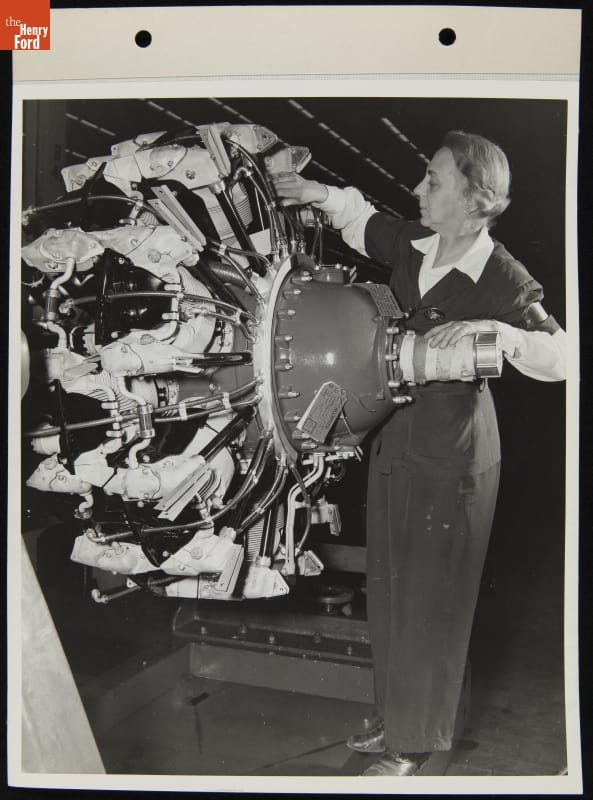
- Mary E. Von Mach Inspects Pratt & Whitney Engines While Working at the Willow Run Bomber Plant, November 30, 1942 - Mary E. Von Mach was Michigan's first licensed female pilot, earning her certificate in 1929. During World War II, Von Mach oversaw final inspection of the Pratt & Whitney engines installed in B-24 bomber airplanes at Ford's Willow Run plant. She was a charter member of the Ninety-Nines, an international organization that supported the work of women in aviation.
- August 26, 1942
- Collections - Artifact
Mary E. Von Mach Inspects Pratt & Whitney Engines While Working at the Willow Run Bomber Plant, November 30, 1942
Mary E. Von Mach was Michigan's first licensed female pilot, earning her certificate in 1929. During World War II, Von Mach oversaw final inspection of the Pratt & Whitney engines installed in B-24 bomber airplanes at Ford's Willow Run plant. She was a charter member of the Ninety-Nines, an international organization that supported the work of women in aviation.
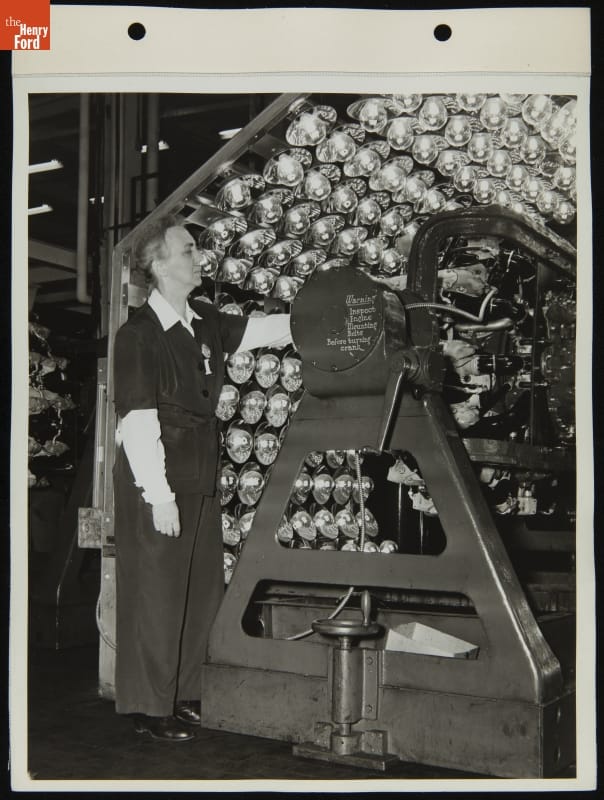
- Mary E. Von Mach Inspects Pratt & Whitney Engines While Working at the Willow Run Bomber Plant, November 30, 1942 - Mary E. Von Mach was Michigan's first licensed female pilot, earning her certificate in 1929. During World War II, Von Mach oversaw final inspection of the Pratt & Whitney engines installed in B-24 bomber airplanes at Ford's Willow Run plant. She was a charter member of the Ninety-Nines, an international organization that supported the work of women in aviation.
- November 30, 1942
- Collections - Artifact
Mary E. Von Mach Inspects Pratt & Whitney Engines While Working at the Willow Run Bomber Plant, November 30, 1942
Mary E. Von Mach was Michigan's first licensed female pilot, earning her certificate in 1929. During World War II, Von Mach oversaw final inspection of the Pratt & Whitney engines installed in B-24 bomber airplanes at Ford's Willow Run plant. She was a charter member of the Ninety-Nines, an international organization that supported the work of women in aviation.
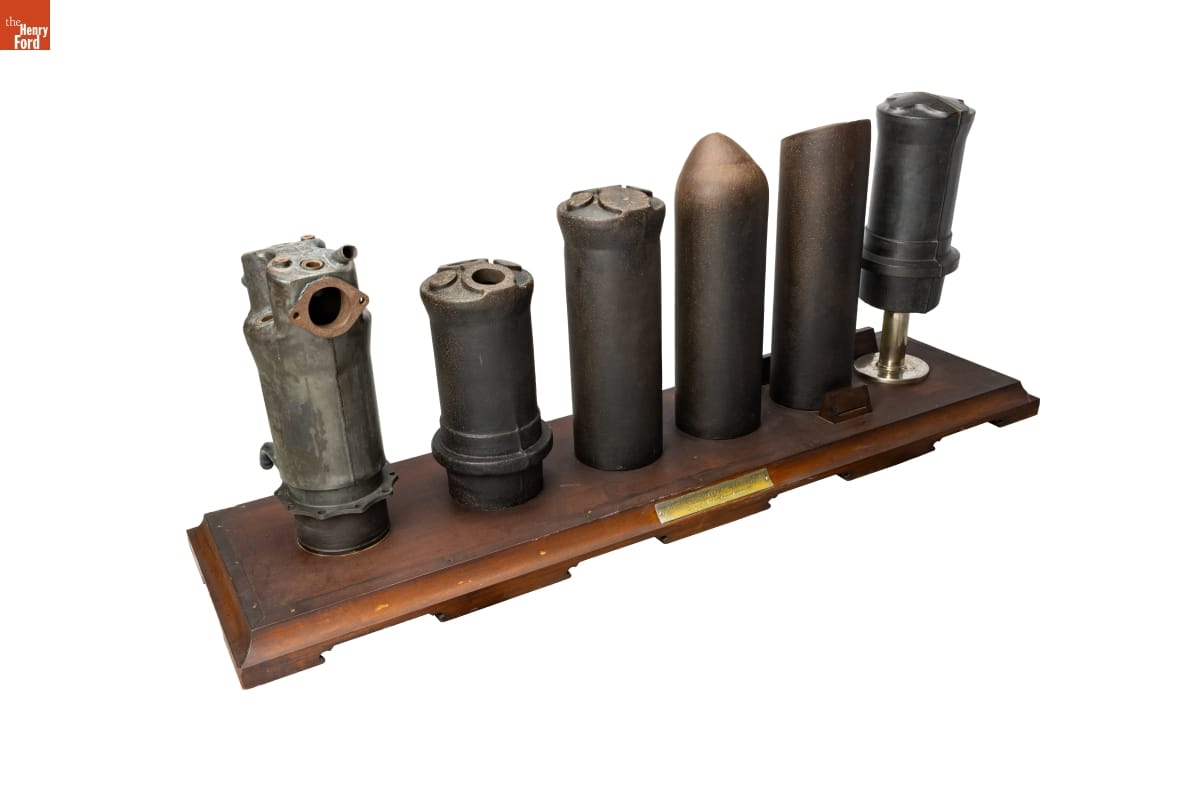
- Liberty Aircraft Engine Cylinders, circa 1918 - Ford, Buick, Cadillac, Lincoln, Marmon, and Packard built more than 20,000 Liberty V-12 aircraft engines for the Allied Powers during World War I. Ford produced the engine cylinders for all manufacturers. The company developed a new method for making cylinders from steel tubing rather than boring them from solid forgings. These examples contrast Ford's process with a forged cylinder.
- circa 1918
- Collections - Artifact
Liberty Aircraft Engine Cylinders, circa 1918
Ford, Buick, Cadillac, Lincoln, Marmon, and Packard built more than 20,000 Liberty V-12 aircraft engines for the Allied Powers during World War I. Ford produced the engine cylinders for all manufacturers. The company developed a new method for making cylinders from steel tubing rather than boring them from solid forgings. These examples contrast Ford's process with a forged cylinder.
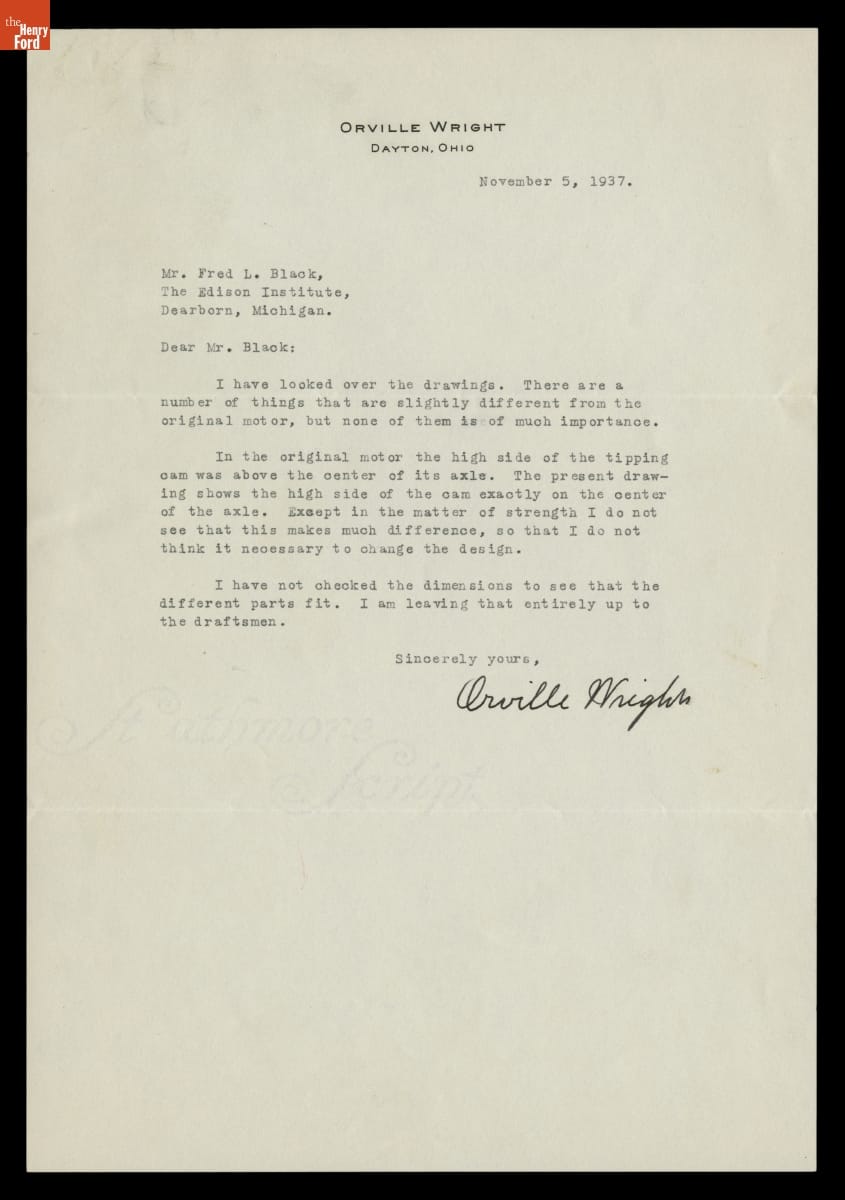
- Letter from Orville Wright to Fred Black about the 1903 Wright Flyer Engine, November 5, 1937 - Henry Ford acquired the Wright brothers' home and cycle shop in 1936, and he relocated the buildings from Dayton, Ohio, to Greenfield Village in Dearborn, Michigan. Orville Wright consulted on the project to ensure accuracy. In this letter to Ford's associate Fred Black, Wright commented on drawings for a replica of the engine used in the brothers' 1903 Flyer airplane.
- November 05, 1937
- Collections - Artifact
Letter from Orville Wright to Fred Black about the 1903 Wright Flyer Engine, November 5, 1937
Henry Ford acquired the Wright brothers' home and cycle shop in 1936, and he relocated the buildings from Dayton, Ohio, to Greenfield Village in Dearborn, Michigan. Orville Wright consulted on the project to ensure accuracy. In this letter to Ford's associate Fred Black, Wright commented on drawings for a replica of the engine used in the brothers' 1903 Flyer airplane.
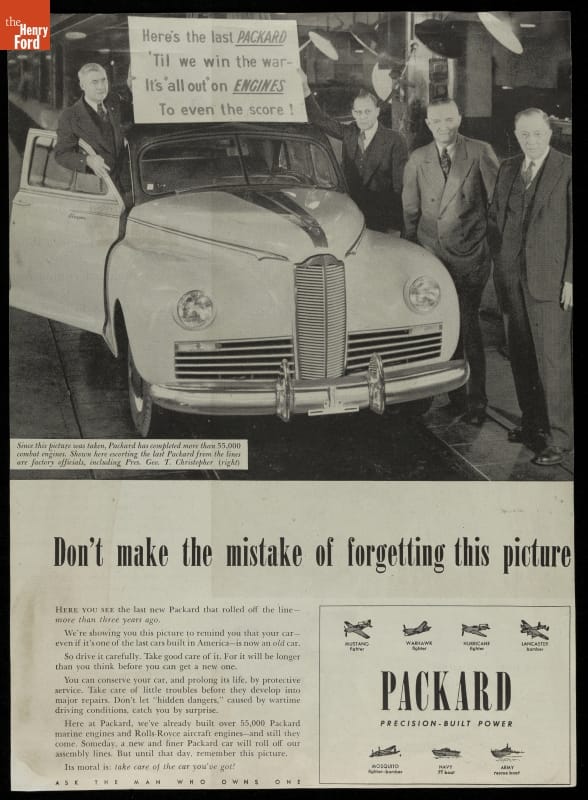
- "Don't Make the Mistake of Forgetting This Picture" Packard Motor Company Advertisement, 1945 - World War II paused all production of civilian automobiles in 1942. Packard published this ad in 1945, reminding readers that <EM>every</EM> car in the United States was an "old" car at the time. Drivers were advised to take good care of their vehicles until peace returned. Packard built engines for military boats and airplanes during the war.
- 1945
- Collections - Artifact
"Don't Make the Mistake of Forgetting This Picture" Packard Motor Company Advertisement, 1945
World War II paused all production of civilian automobiles in 1942. Packard published this ad in 1945, reminding readers that every car in the United States was an "old" car at the time. Drivers were advised to take good care of their vehicles until peace returned. Packard built engines for military boats and airplanes during the war.
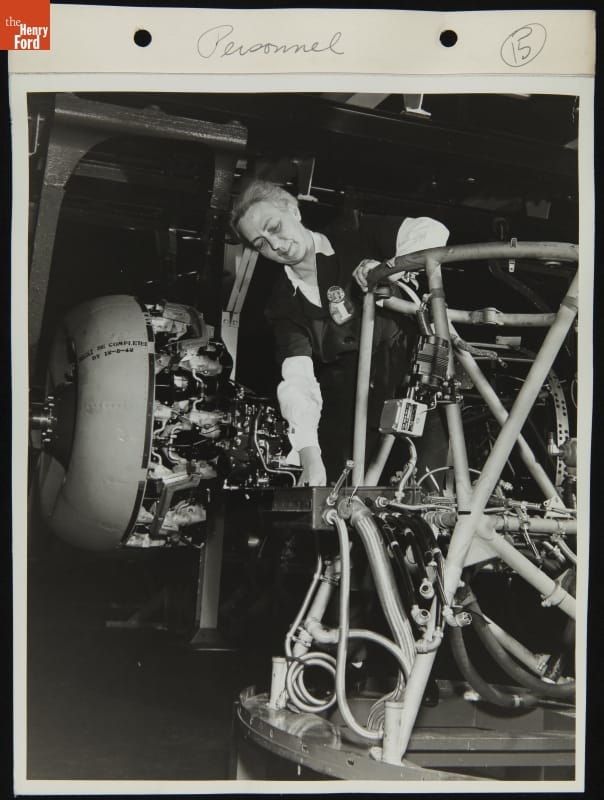
- Mary E. Von Mach Inspects Pratt & Whitney Engines While Working at the Willow Run Bomber Plant, November 30, 1942 - Mary E. Von Mach was Michigan's first licensed female pilot, earning her certificate in 1929. During World War II, Von Mach oversaw final inspection of the Pratt & Whitney engines installed in B-24 bomber airplanes at Ford's Willow Run plant. She was a charter member of the Ninety-Nines, an international organization that supported the work of women in aviation.
- November 30, 1942
- Collections - Artifact
Mary E. Von Mach Inspects Pratt & Whitney Engines While Working at the Willow Run Bomber Plant, November 30, 1942
Mary E. Von Mach was Michigan's first licensed female pilot, earning her certificate in 1929. During World War II, Von Mach oversaw final inspection of the Pratt & Whitney engines installed in B-24 bomber airplanes at Ford's Willow Run plant. She was a charter member of the Ninety-Nines, an international organization that supported the work of women in aviation.