
Search
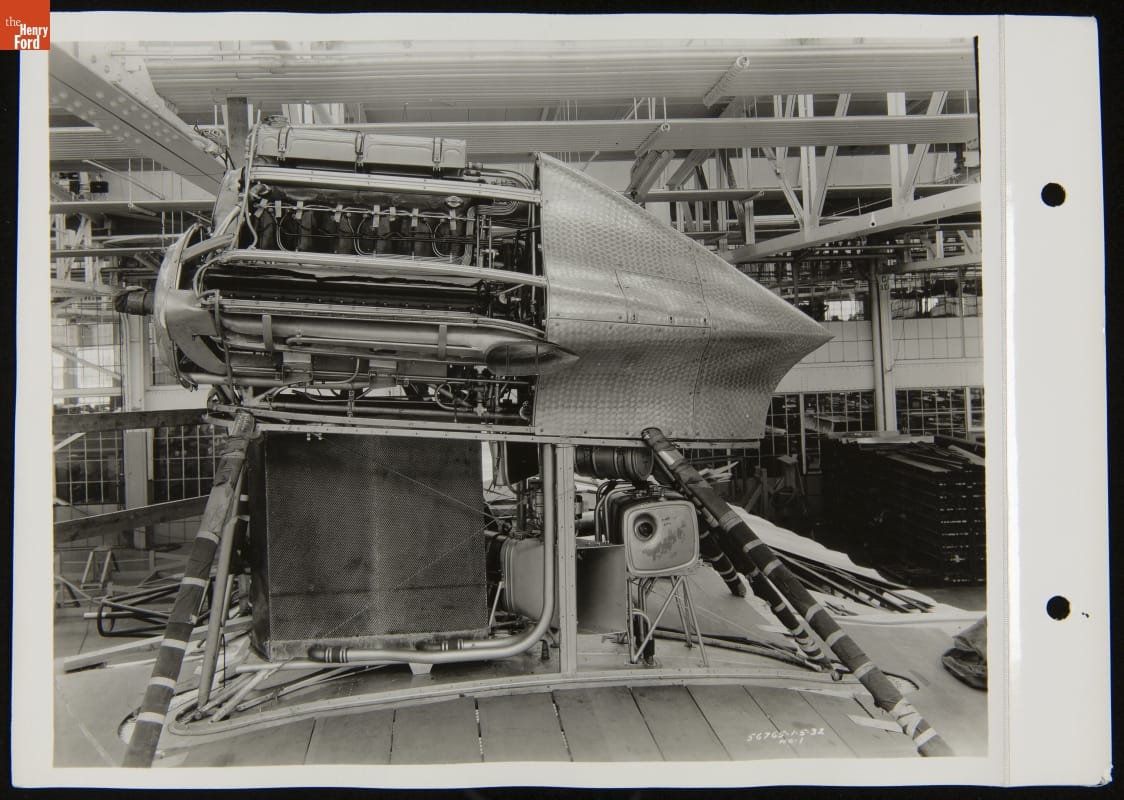
- Construction of Ford Tri-Motor 14-AT Showing Center Hispano Suiza Engine, January 1932 - Ford Motor Company's Tri-Motor, built from 1926-1933, flew in many early American airline fleets. The all-metal airplane was rugged, dependable, and equally adaptable to passenger and freight service. Tri-Motors were built with some of the same mass production techniques used in Ford's automobile plants. This version, the 14-AT, featured three Hispano-Suiza Engines. This photograph reveals the interior of the central engine.
- January 05, 1932
- Collections - Artifact
Construction of Ford Tri-Motor 14-AT Showing Center Hispano Suiza Engine, January 1932
Ford Motor Company's Tri-Motor, built from 1926-1933, flew in many early American airline fleets. The all-metal airplane was rugged, dependable, and equally adaptable to passenger and freight service. Tri-Motors were built with some of the same mass production techniques used in Ford's automobile plants. This version, the 14-AT, featured three Hispano-Suiza Engines. This photograph reveals the interior of the central engine.
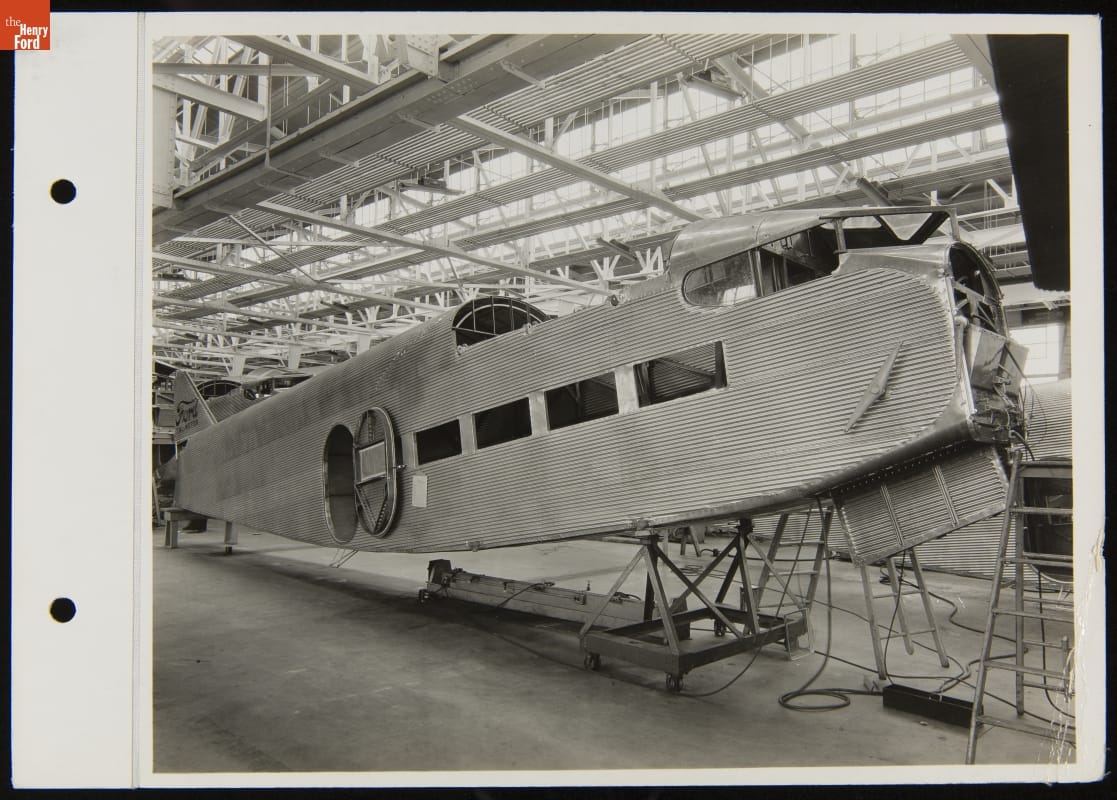
- Ford Tri-Motor Airplane Fuselage Being Constructed at the Stout Factory, Dearborn, Michigan, April 1929 - Ford Motor Company's Tri-Motor, built from 1926-1933, flew in many early American airline fleets. The all-metal airplane was rugged, dependable, and equally adaptable to passenger and freight service. Tri-Motors were built with some of the same mass production techniques used in Ford's automobile plants. The fuselage, or the main body of the airplane, is constructed in this photograph.
- April 30, 1929
- Collections - Artifact
Ford Tri-Motor Airplane Fuselage Being Constructed at the Stout Factory, Dearborn, Michigan, April 1929
Ford Motor Company's Tri-Motor, built from 1926-1933, flew in many early American airline fleets. The all-metal airplane was rugged, dependable, and equally adaptable to passenger and freight service. Tri-Motors were built with some of the same mass production techniques used in Ford's automobile plants. The fuselage, or the main body of the airplane, is constructed in this photograph.
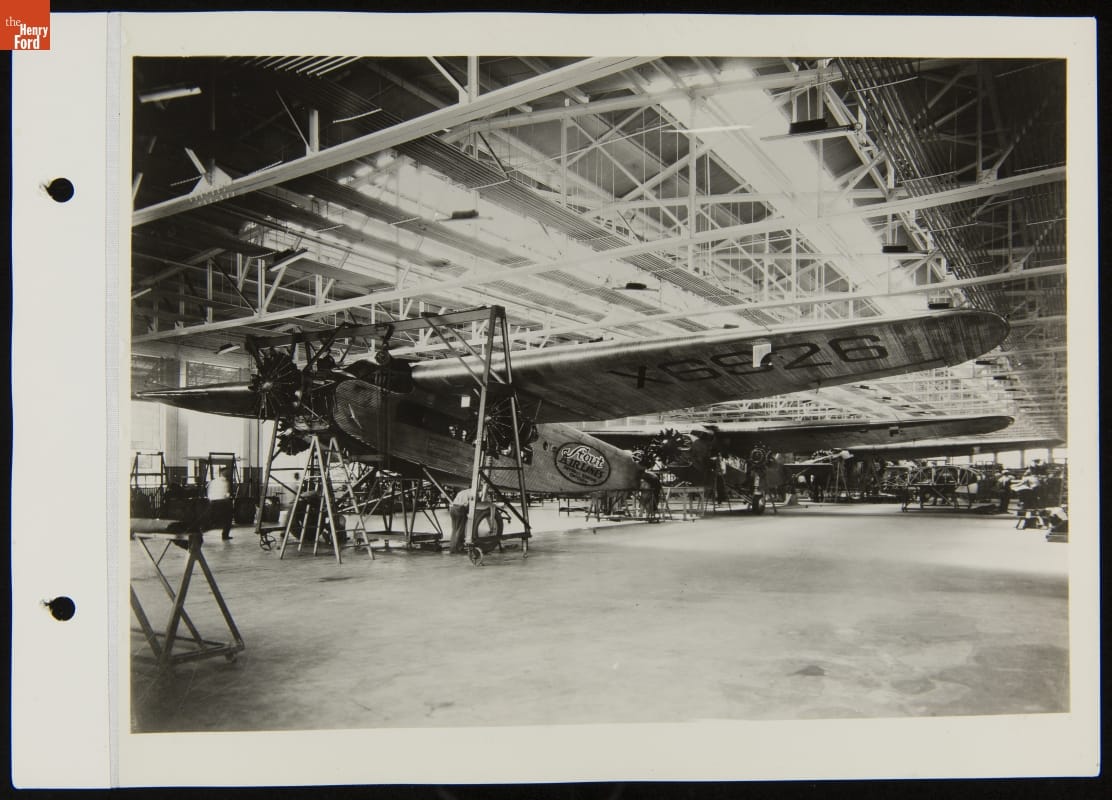
- Ford Tri-Motor Airplane Being Constructed at the Stout Factory, Dearborn, Michigan, February 1929 - Ford Motor Company's Tri-Motor, built from 1926-1933, flew in many early American airline fleets. The all-metal airplane was rugged, dependable, and equally adaptable to passenger and freight service. Tri-Motors were built with some of the same mass production techniques used in Ford's automobile plants. In this photo, the propellers are being connected to the fuselage or the main body of the airplane.
- February 19, 1929
- Collections - Artifact
Ford Tri-Motor Airplane Being Constructed at the Stout Factory, Dearborn, Michigan, February 1929
Ford Motor Company's Tri-Motor, built from 1926-1933, flew in many early American airline fleets. The all-metal airplane was rugged, dependable, and equally adaptable to passenger and freight service. Tri-Motors were built with some of the same mass production techniques used in Ford's automobile plants. In this photo, the propellers are being connected to the fuselage or the main body of the airplane.
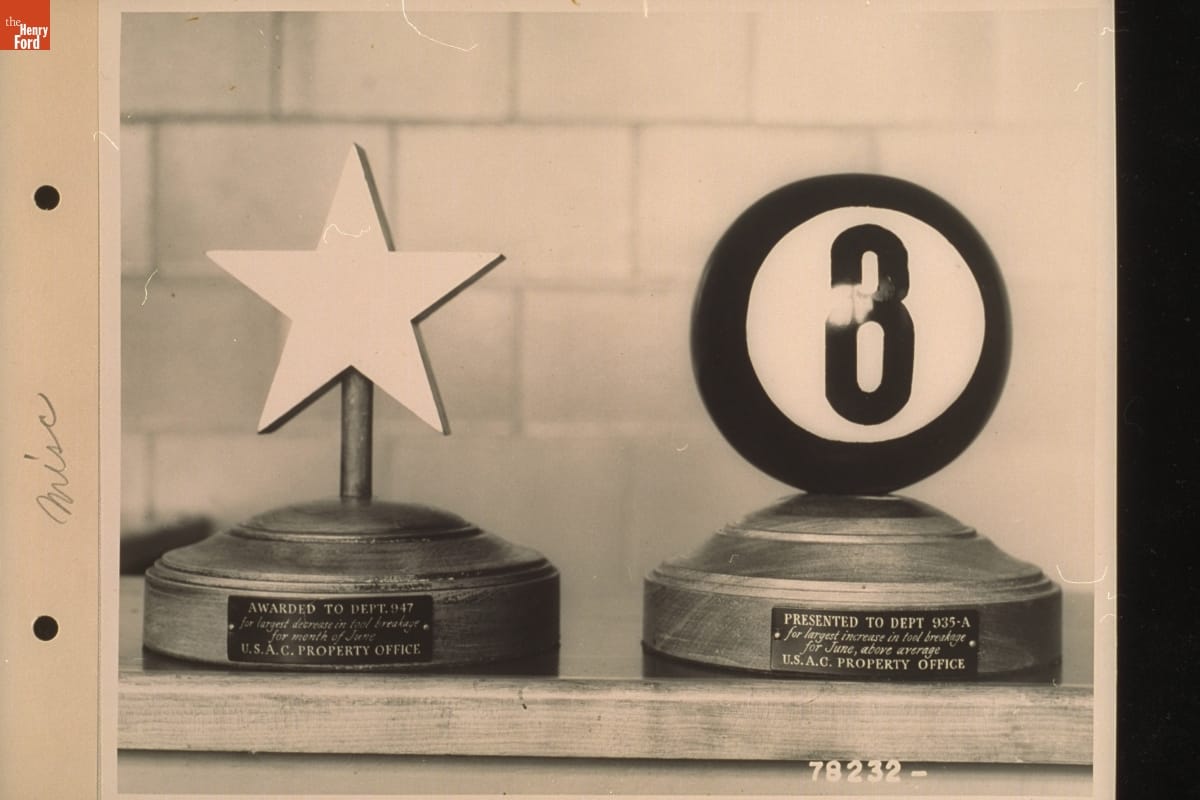
- Two Trophies Awarded as Part of the Willow Run Tool Breakage Campaign, July 1943 - At Willow Run's peak, the plant's more than 42,000 employees built one B-24 bomber airplane every 63 minutes. Ford encouraged workers with special productivity awards. This star-shaped trophy went to the department with the largest decrease in tool breakage during June 1943. The eight-ball prize went to the department with the largest increase in breakage.
- July 08, 1943
- Collections - Artifact
Two Trophies Awarded as Part of the Willow Run Tool Breakage Campaign, July 1943
At Willow Run's peak, the plant's more than 42,000 employees built one B-24 bomber airplane every 63 minutes. Ford encouraged workers with special productivity awards. This star-shaped trophy went to the department with the largest decrease in tool breakage during June 1943. The eight-ball prize went to the department with the largest increase in breakage.
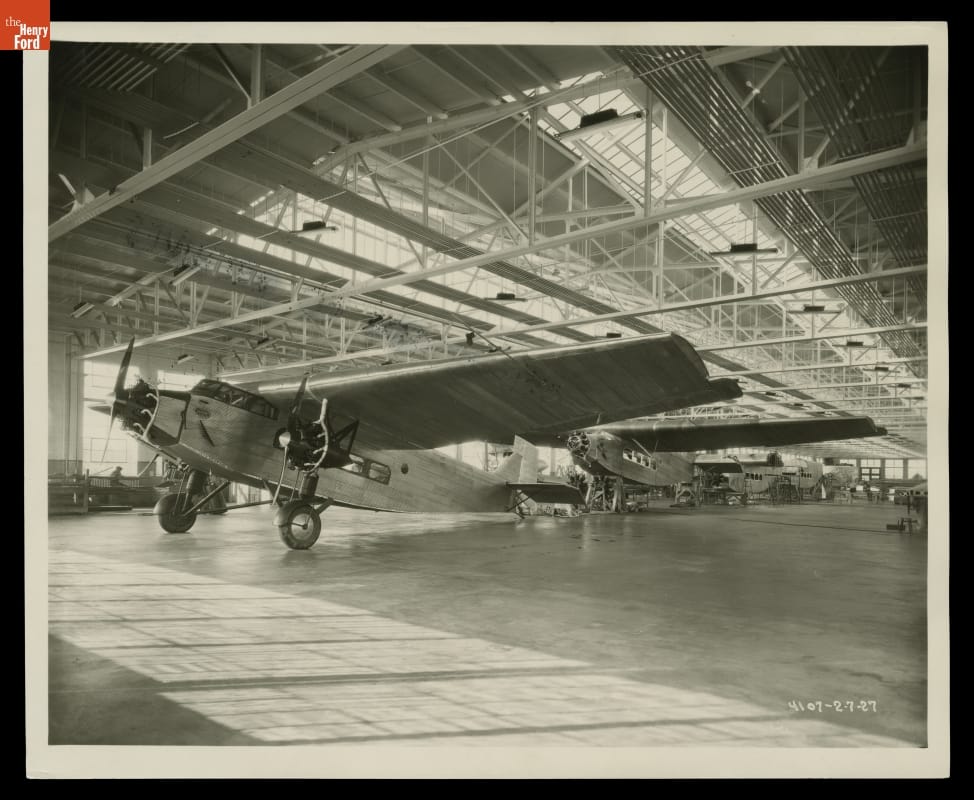
- Ford Tri-Motor Airplane Assembly Line, Dearborn, Michigan, 1927 - Henry Ford attempted to apply automobile assembly line techniques to the manufacture of airplanes, and to build them in large numbers. Monthly production peaked at 25 planes in June 1929. The Great Depression forced Ford to re-focus on his core auto business, and the company's commercial aircraft production ended in May 1933.
- February 07, 1927
- Collections - Artifact
Ford Tri-Motor Airplane Assembly Line, Dearborn, Michigan, 1927
Henry Ford attempted to apply automobile assembly line techniques to the manufacture of airplanes, and to build them in large numbers. Monthly production peaked at 25 planes in June 1929. The Great Depression forced Ford to re-focus on his core auto business, and the company's commercial aircraft production ended in May 1933.
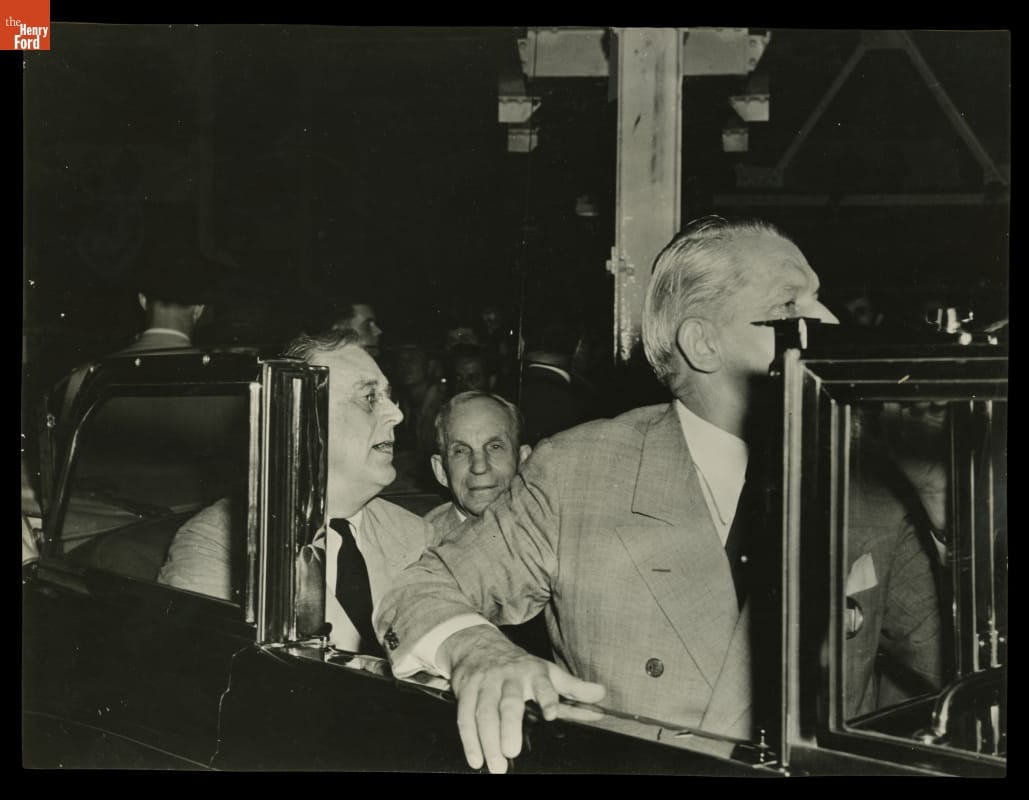
- President Franklin Roosevelt, Henry Ford and Charles Sorensen Touring the Ford Willow Run Bomber Plant, 1942 - President Franklin D. Roosevelt and First Lady Eleanor Roosevelt visited Ford Motor Company's Willow Run bomber plant on September 18, 1942. The Roosevelts, accompanied by Henry Ford, Edsel Ford, and Charles Sorensen -- the production manager behind Willow Run's success -- toured the plant's massive interior in "Sunshine Special," the president's 1939 Lincoln limousine.
- September 18, 1942
- Collections - Artifact
President Franklin Roosevelt, Henry Ford and Charles Sorensen Touring the Ford Willow Run Bomber Plant, 1942
President Franklin D. Roosevelt and First Lady Eleanor Roosevelt visited Ford Motor Company's Willow Run bomber plant on September 18, 1942. The Roosevelts, accompanied by Henry Ford, Edsel Ford, and Charles Sorensen -- the production manager behind Willow Run's success -- toured the plant's massive interior in "Sunshine Special," the president's 1939 Lincoln limousine.
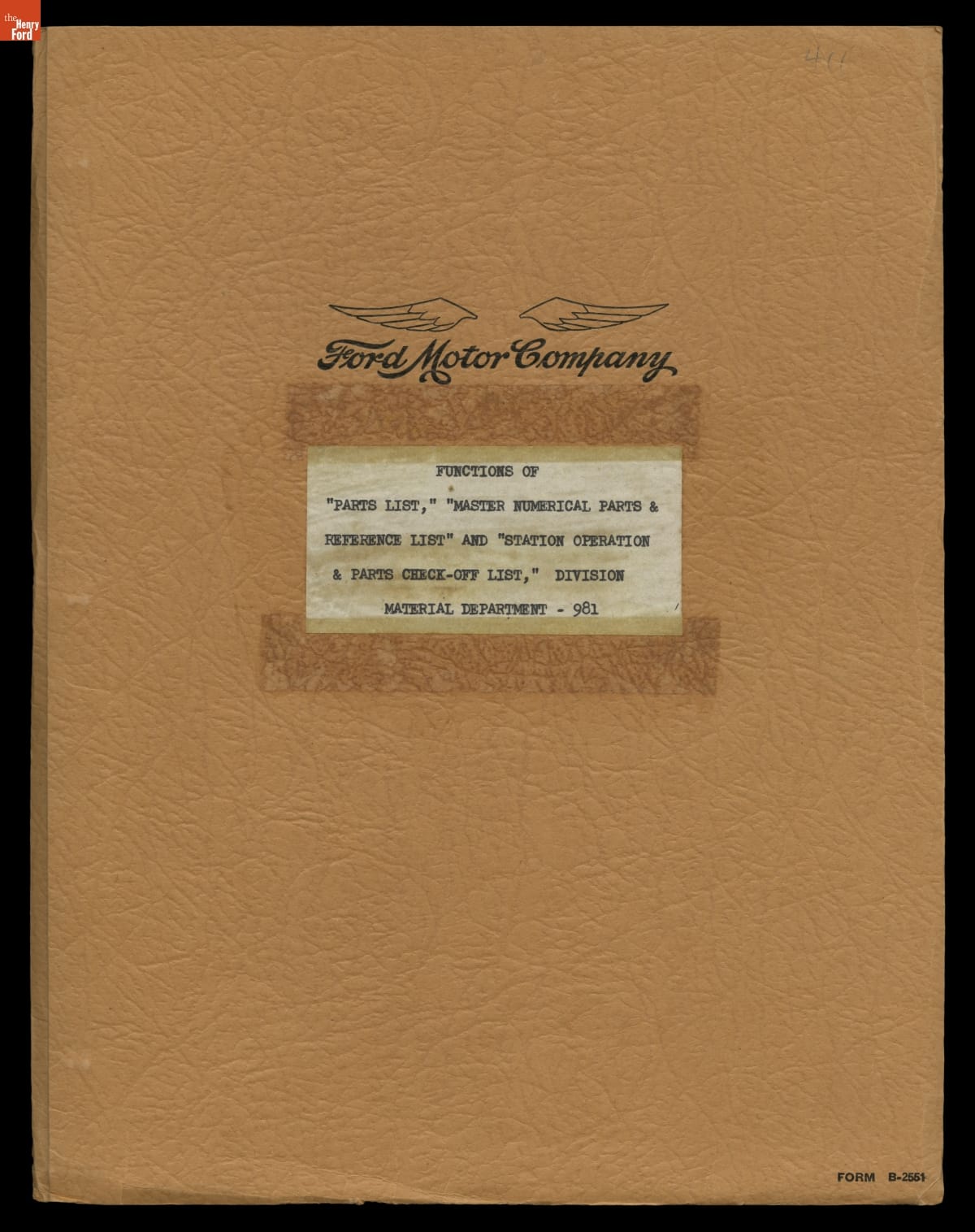
- Ford Motor Company Manual Containing Material Control Flow Chart for the Willow Run Bomber Plant, 1944 - Building something as complex as a B-24 bomber on an assembly line was no easy task. Ford Motor Company officials methodically divided the complicated airplane into 11 major assemblies, and then further split these into 69 subassemblies. By April 1944, Willow Run employees completed B-24 airplanes at the rate of one every 63 minutes.
- 1944
- Collections - Artifact
Ford Motor Company Manual Containing Material Control Flow Chart for the Willow Run Bomber Plant, 1944
Building something as complex as a B-24 bomber on an assembly line was no easy task. Ford Motor Company officials methodically divided the complicated airplane into 11 major assemblies, and then further split these into 69 subassemblies. By April 1944, Willow Run employees completed B-24 airplanes at the rate of one every 63 minutes.
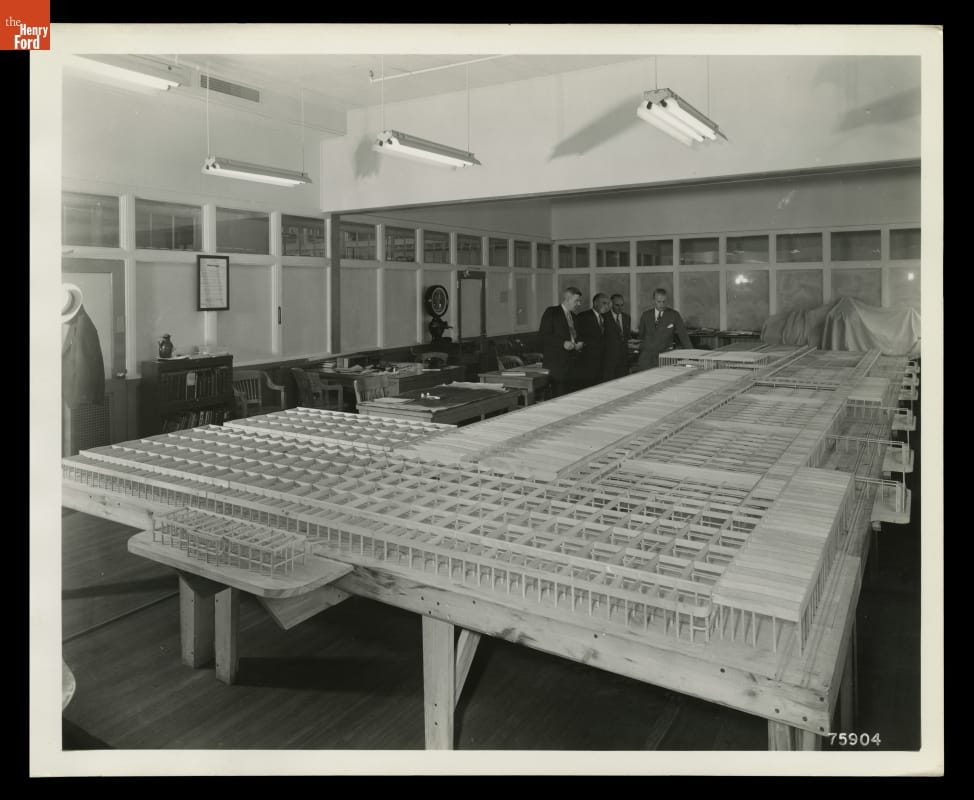
- Charles Sorensen and Others Viewing a Scale Model of the Willow Run Bomber Plant, July 1941 - Ford Motor Company's ambitious proposal to build B-24 bomber airplanes, for the Allied effort in World War II, required meticulous planning. Ford production head Charles Sorensen and his team laid out the Willow Run plant's machinery with the aid of a 1:98-scale model. Careful placement of equipment and work stations along the twin assembly lines ensured maximum efficiency.
- July 01, 1941
- Collections - Artifact
Charles Sorensen and Others Viewing a Scale Model of the Willow Run Bomber Plant, July 1941
Ford Motor Company's ambitious proposal to build B-24 bomber airplanes, for the Allied effort in World War II, required meticulous planning. Ford production head Charles Sorensen and his team laid out the Willow Run plant's machinery with the aid of a 1:98-scale model. Careful placement of equipment and work stations along the twin assembly lines ensured maximum efficiency.
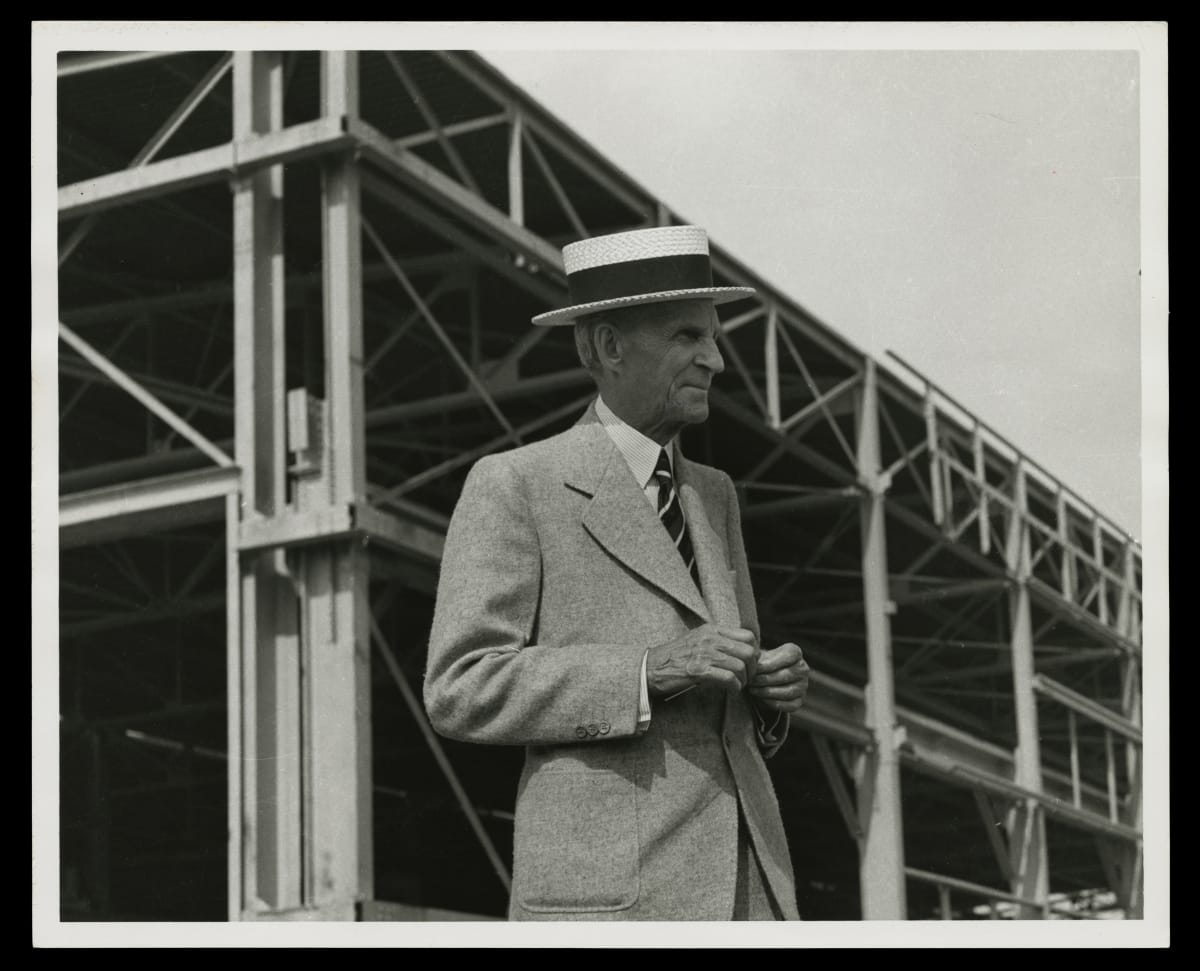
- Henry Ford at Willow Run Bomber Plant Construction Site, 1941 - Designed by renowned industrial architect Albert Kahn for Henry Ford's Ford Motor Company, Willow Run was built for the mass production of World War II B-24 bombers. By the end of 1944, the Ypsilanti, Michigan, factory was producing 650 B-24 Liberators every month. Willow Run closed in 1945, but only after adding 8,685 bombers to the war effort.
- July 30, 1941
- Collections - Artifact
Henry Ford at Willow Run Bomber Plant Construction Site, 1941
Designed by renowned industrial architect Albert Kahn for Henry Ford's Ford Motor Company, Willow Run was built for the mass production of World War II B-24 bombers. By the end of 1944, the Ypsilanti, Michigan, factory was producing 650 B-24 Liberators every month. Willow Run closed in 1945, but only after adding 8,685 bombers to the war effort.
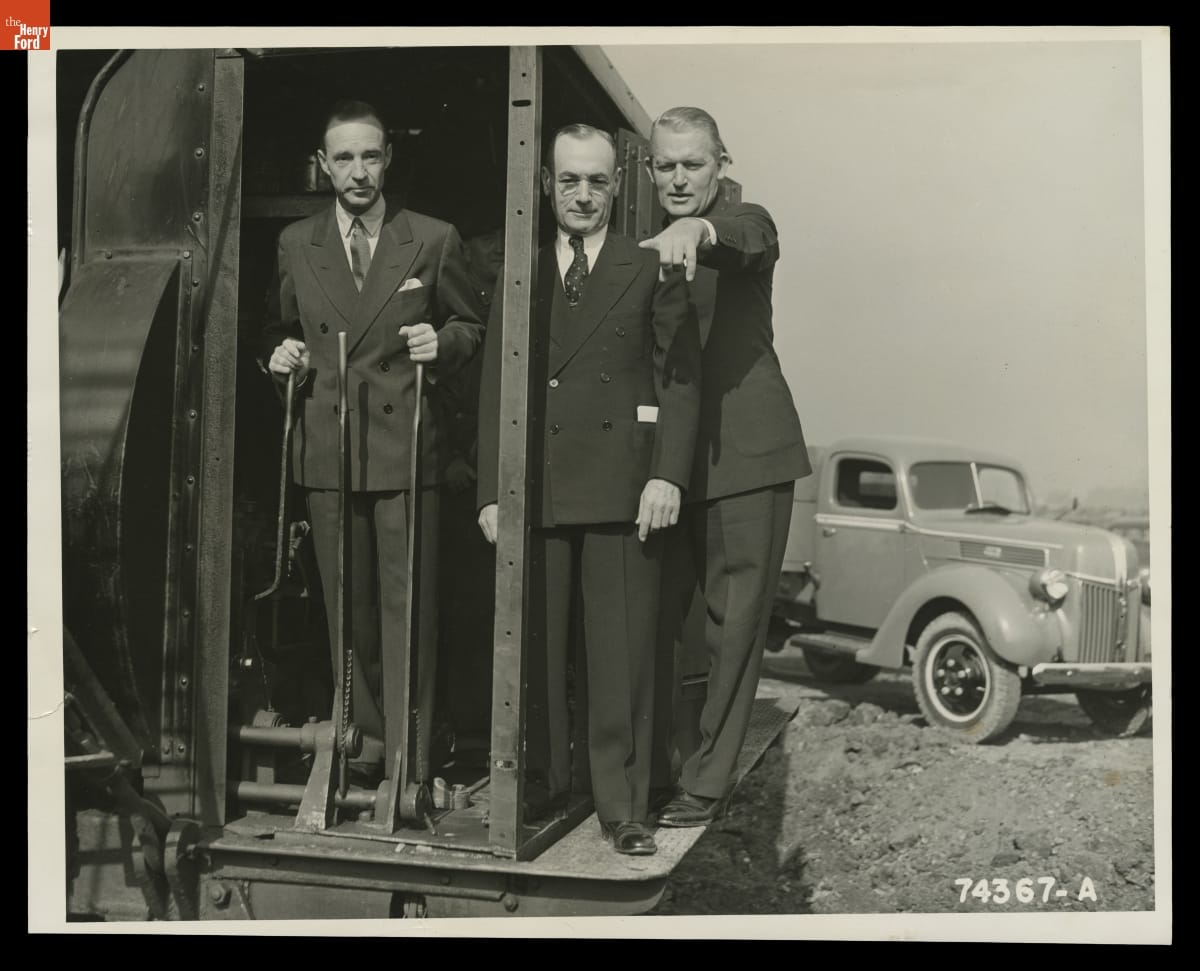
- Edsel Ford, P.E. Martin, and Charles Sorensen Breaking Ground at Ford Motor Company Willow Run Bomber Plant, September 17, 1940 - Ford Motor Company president Edsel Ford joined production managers P.E. Martin and Charles Sorensen in a September 1940 groundbreaking ceremony for the company's Willow Run bomber plant, 35 miles west of Detroit. When finished, the complex employed more than 42,000 people and included more than seven million square feet of floor space. Workers there built one B-24 bomber every 63 minutes.
- September 17, 1940
- Collections - Artifact
Edsel Ford, P.E. Martin, and Charles Sorensen Breaking Ground at Ford Motor Company Willow Run Bomber Plant, September 17, 1940
Ford Motor Company president Edsel Ford joined production managers P.E. Martin and Charles Sorensen in a September 1940 groundbreaking ceremony for the company's Willow Run bomber plant, 35 miles west of Detroit. When finished, the complex employed more than 42,000 people and included more than seven million square feet of floor space. Workers there built one B-24 bomber every 63 minutes.