
Search
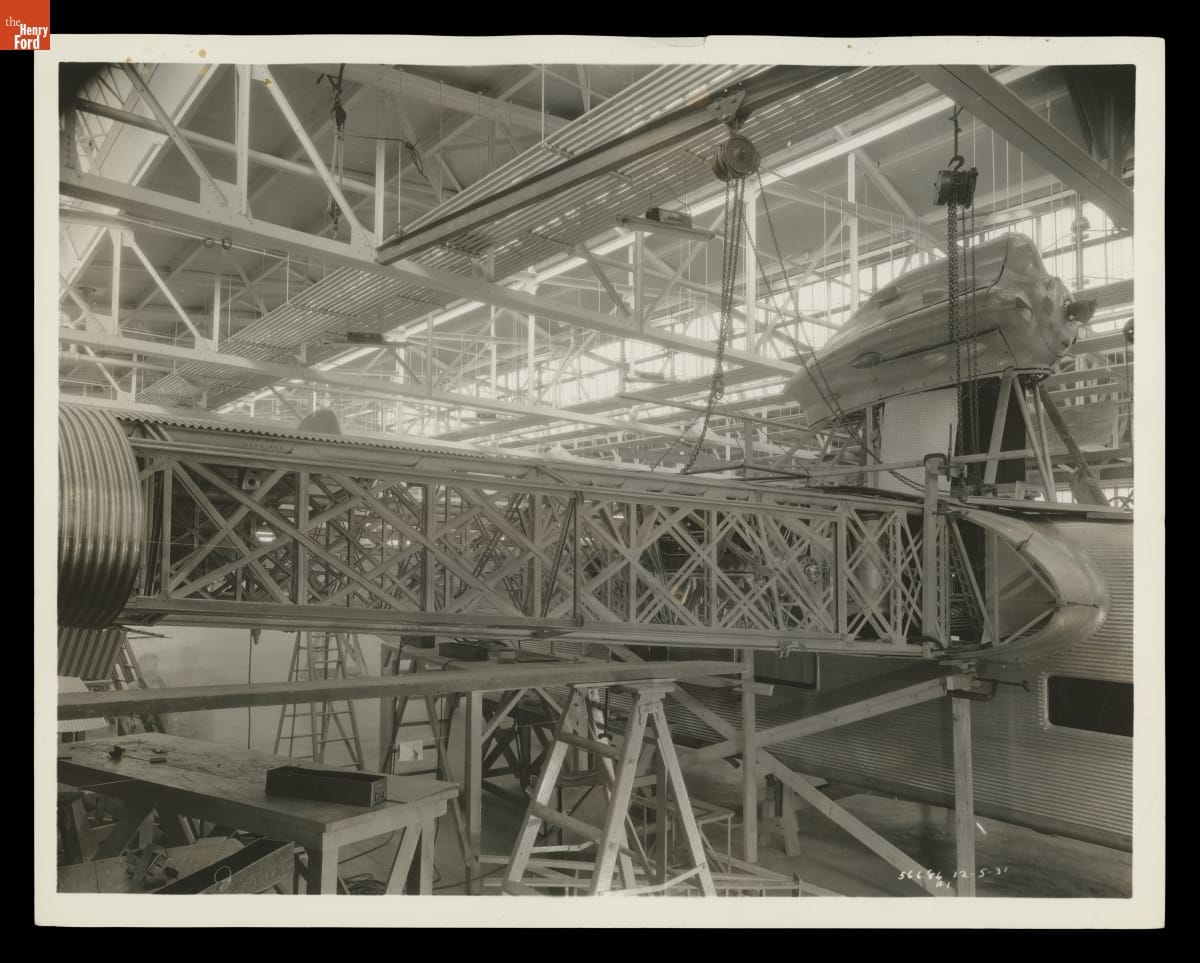
- Ford Tri-Motor 14-AT Airplane Wing Interior Structure, December 1931 - Ford Motor Company's Tri-Motor, built from 1926-1933, flew in many early American airline fleets. The all-metal airplane was rugged, dependable, and equally adaptable to passenger and freight service. Tri-Motors were built with some of the same mass production techniques used in Ford's automobile plants. In this photo, the interior of the 14-AT airplane wing structure is revealed.
- December 01, 1931
- Collections - Artifact
Ford Tri-Motor 14-AT Airplane Wing Interior Structure, December 1931
Ford Motor Company's Tri-Motor, built from 1926-1933, flew in many early American airline fleets. The all-metal airplane was rugged, dependable, and equally adaptable to passenger and freight service. Tri-Motors were built with some of the same mass production techniques used in Ford's automobile plants. In this photo, the interior of the 14-AT airplane wing structure is revealed.
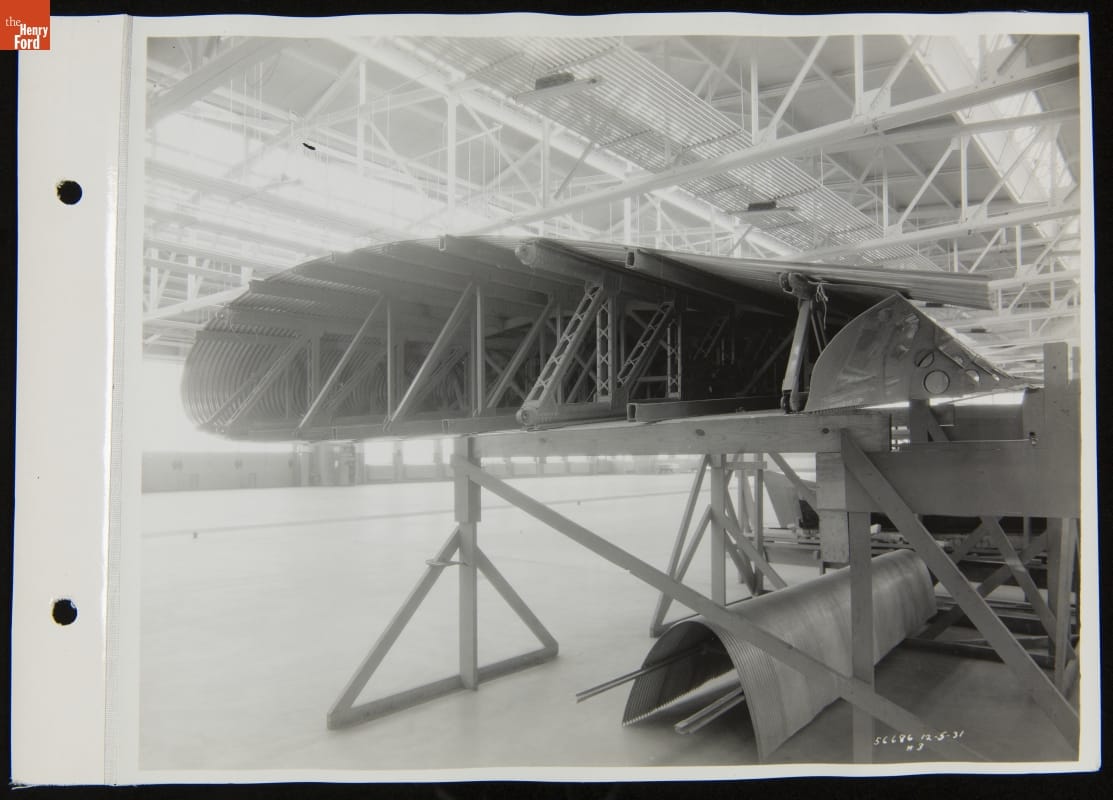
- Ford Tri-Motor 14-AT Airplane Wing before Being Joined to Fuselage, December 1931 - Ford Motor Company's Tri-Motor, built from 1926-1933, flew in many early American airline fleets. The all-metal airplane was rugged, dependable, and equally adaptable to passenger and freight service. Tri-Motors were built with some of the same mass production techniques used in Ford's automobile plants. This photo reveals the internal structure of a wing awaiting attachment to a fuselage.
- December 01, 1931
- Collections - Artifact
Ford Tri-Motor 14-AT Airplane Wing before Being Joined to Fuselage, December 1931
Ford Motor Company's Tri-Motor, built from 1926-1933, flew in many early American airline fleets. The all-metal airplane was rugged, dependable, and equally adaptable to passenger and freight service. Tri-Motors were built with some of the same mass production techniques used in Ford's automobile plants. This photo reveals the internal structure of a wing awaiting attachment to a fuselage.
- Report regarding Ford Motor Company Participation in B-47 Wing Program, January 1951 - December 1952 - Boeing developed the B-47 Stratojet as a high-speed, high-altitude bomber capable of carrying nuclear weapons. Boeing subcontracted Ford Motor Company to manufacture the B-47's swept wings, and Ford built a plant near Kansas City, Missouri, for this purpose. More than 2,000 B-47 bombers were built from 1951-1957. Ford converted the Kansas City plant to manufacture motor vehicles in 1956.
- January 1951 - December 1952
- Collections - Artifact
Report regarding Ford Motor Company Participation in B-47 Wing Program, January 1951 - December 1952
Boeing developed the B-47 Stratojet as a high-speed, high-altitude bomber capable of carrying nuclear weapons. Boeing subcontracted Ford Motor Company to manufacture the B-47's swept wings, and Ford built a plant near Kansas City, Missouri, for this purpose. More than 2,000 B-47 bombers were built from 1951-1957. Ford converted the Kansas City plant to manufacture motor vehicles in 1956.
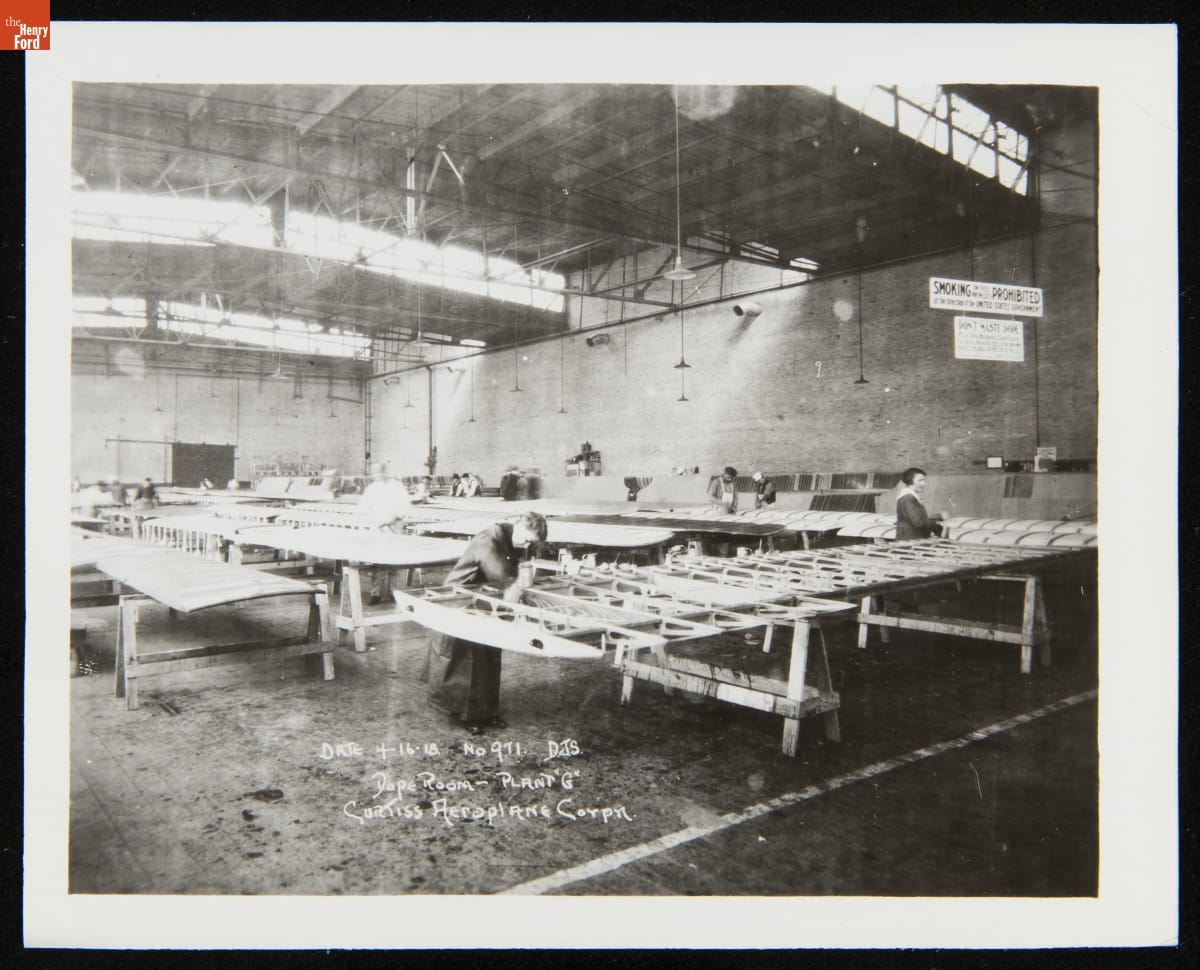
- Dope Room, Plant "G," Curtiss Aeroplane and Motor Company, April 1918 - Many early airplanes had wings and fuselages covered in lightweight fabric. Manufacturers coated the fabric with a lacquer commonly called dope. The coating increased the fabric's airtightness and weather resistance. This 1918 photograph shows a dope room at the Curtiss Aeroplane and Motor Company. In liquid form, dope could be highly flammable -- note the "Smoking Prohibited" sign.
- April 16, 1918
- Collections - Artifact
Dope Room, Plant "G," Curtiss Aeroplane and Motor Company, April 1918
Many early airplanes had wings and fuselages covered in lightweight fabric. Manufacturers coated the fabric with a lacquer commonly called dope. The coating increased the fabric's airtightness and weather resistance. This 1918 photograph shows a dope room at the Curtiss Aeroplane and Motor Company. In liquid form, dope could be highly flammable -- note the "Smoking Prohibited" sign.
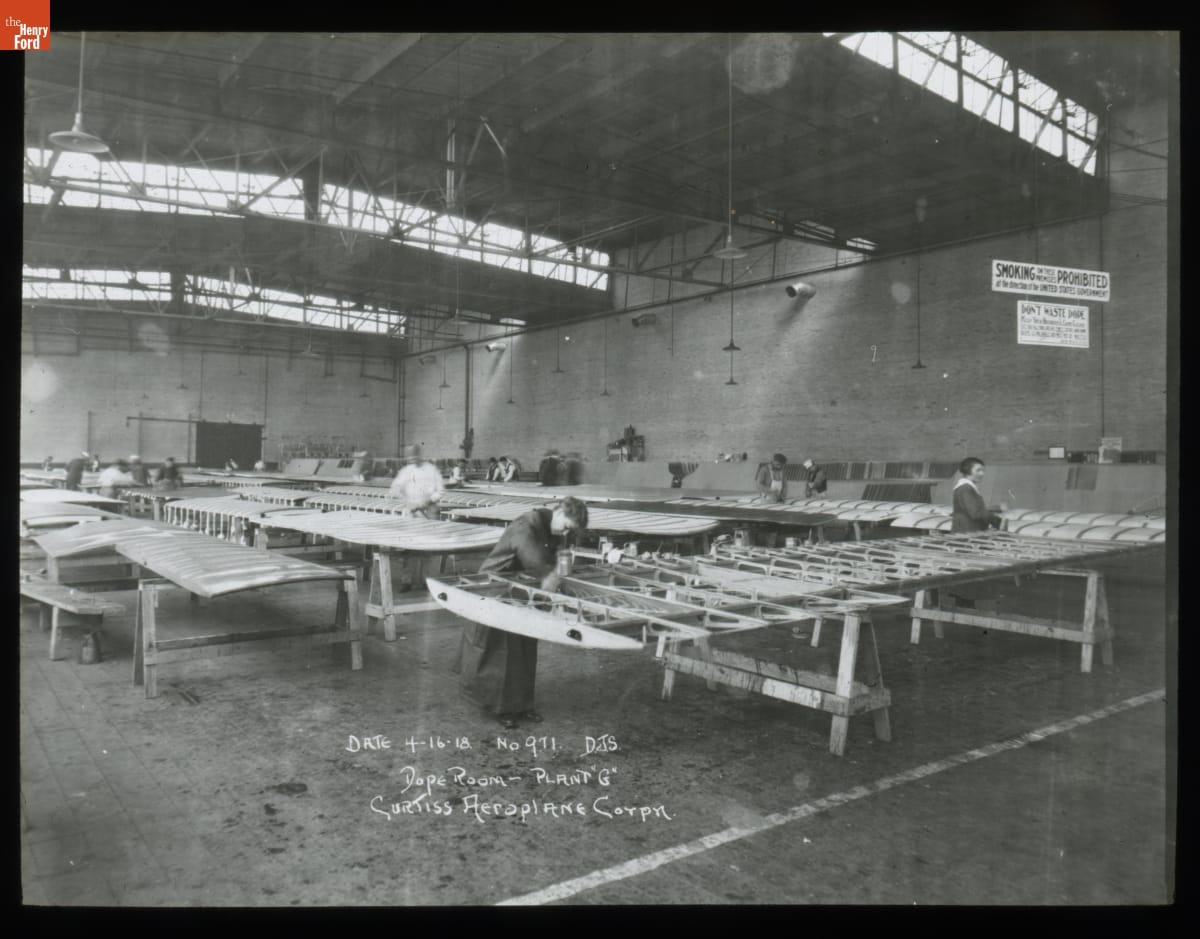
- Dope Room at Curtiss Aeroplane Plant "G," 1918 - Many early airplanes had wings and fuselages covered in lightweight fabric. Manufacturers coated the fabric with a lacquer commonly called dope. The coating increased the fabric's airtightness and weather resistance. This 1918 photograph shows a dope room at the Curtiss Aeroplane and Motor Company. In liquid form, dope could be highly flammable -- note the "Smoking Prohibited" sign.
- April 16, 1918
- Collections - Artifact
Dope Room at Curtiss Aeroplane Plant "G," 1918
Many early airplanes had wings and fuselages covered in lightweight fabric. Manufacturers coated the fabric with a lacquer commonly called dope. The coating increased the fabric's airtightness and weather resistance. This 1918 photograph shows a dope room at the Curtiss Aeroplane and Motor Company. In liquid form, dope could be highly flammable -- note the "Smoking Prohibited" sign.