
Search
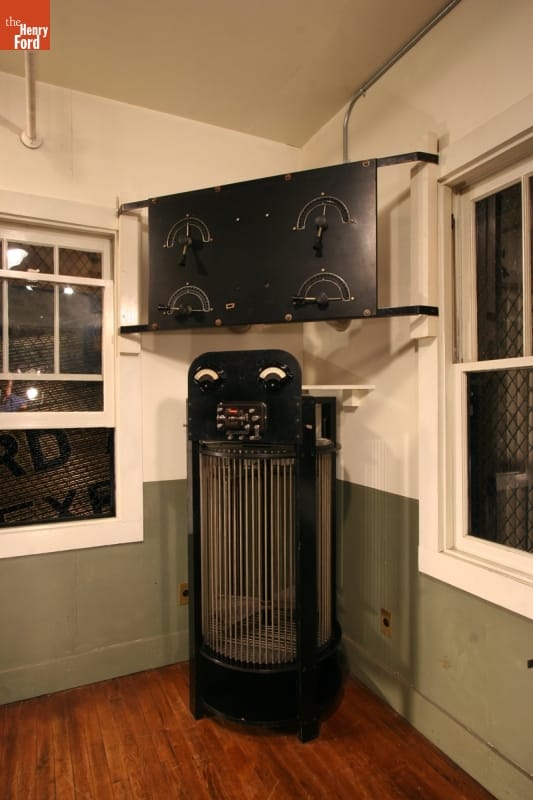
- Radio Goniometer Used at Ford Airport, circa 1927 - The radio beacon may be Henry Ford's most important contribution to aviation. Early pilots depended on landmarks, preventing reliable navigation in bad weather. Ford's engineers developed a radio beacon that simultaneously transmitted the Morse code letter "A" (dot-dash) in one direction and the letter "N" (dash-dot) in another. The pilot steered until the separate signals merged into a steady hum.
- circa 1927
- Collections - Artifact
Radio Goniometer Used at Ford Airport, circa 1927
The radio beacon may be Henry Ford's most important contribution to aviation. Early pilots depended on landmarks, preventing reliable navigation in bad weather. Ford's engineers developed a radio beacon that simultaneously transmitted the Morse code letter "A" (dot-dash) in one direction and the letter "N" (dash-dot) in another. The pilot steered until the separate signals merged into a steady hum.
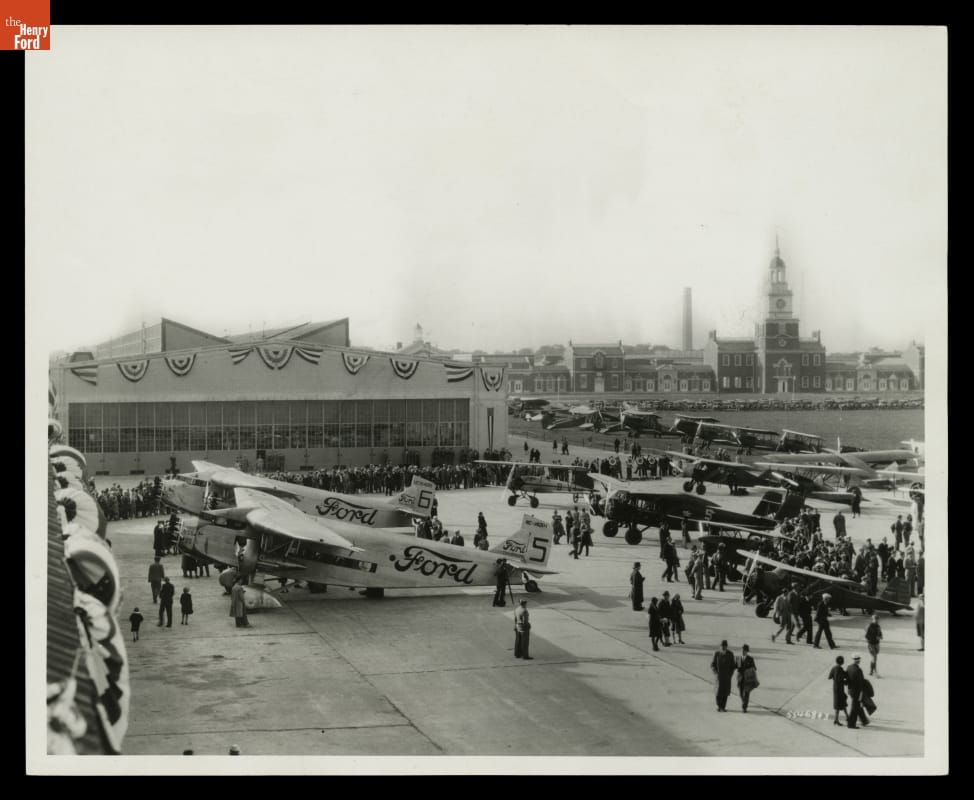
- Ford Reliability Tour at Ford Airport, Dearborn, Michigan, 1930 - From 1925-1931, Ford Motor Company sponsored annual air tours to promote reliability and safety in commercial aircraft. Pilots flew to pre-determined cities, and their airplanes were rated on the ability to take off and land quickly and maintain consistent speeds. The 1930 tour included 18 entries and visited 29 cities in the United States and Canada.
- September 27, 1930
- Collections - Artifact
Ford Reliability Tour at Ford Airport, Dearborn, Michigan, 1930
From 1925-1931, Ford Motor Company sponsored annual air tours to promote reliability and safety in commercial aircraft. Pilots flew to pre-determined cities, and their airplanes were rated on the ability to take off and land quickly and maintain consistent speeds. The 1930 tour included 18 entries and visited 29 cities in the United States and Canada.
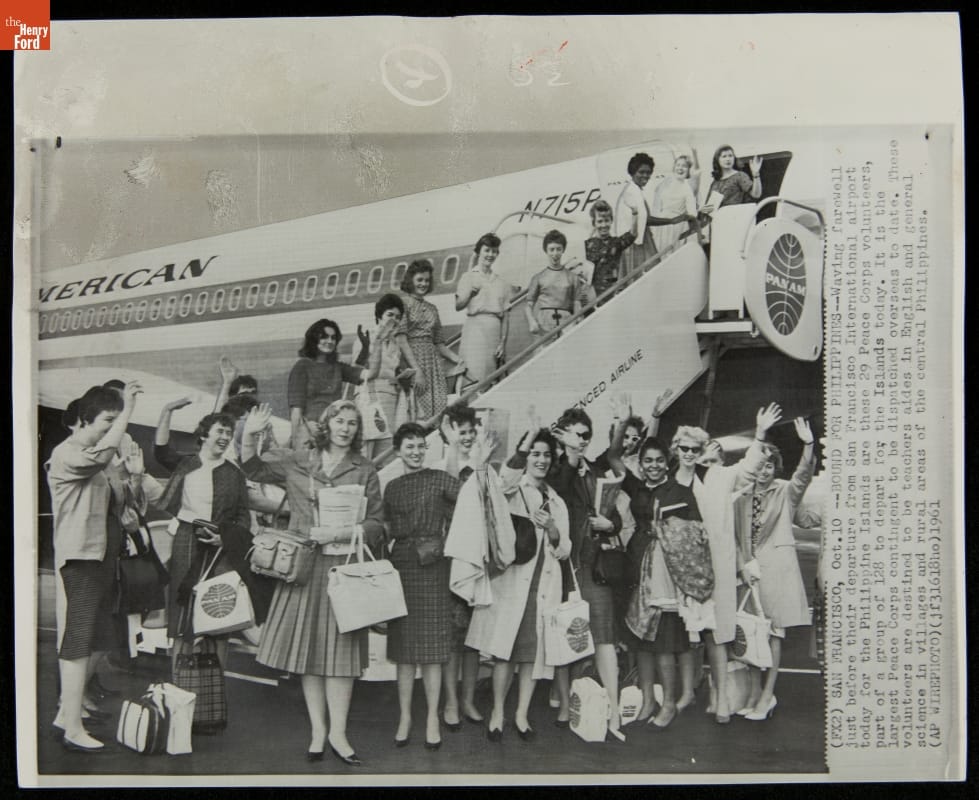
- Wire Photograph, Peace Corps Volunteers at San Francisco International Airport, "Bound for Philippines," 1961 - President John F. Kennedy recognized the Peace Corps as an opportunity to spread goodwill and as a positive weapon against the Cold War. Established March 1, 1961, by the end of the year, many Peace Corps volunteers had been trained and placed in overseas assignments. Here, a group leaves for the Philippines to serve as teachers' aides in country villages.
- October 12, 1961
- Collections - Artifact
Wire Photograph, Peace Corps Volunteers at San Francisco International Airport, "Bound for Philippines," 1961
President John F. Kennedy recognized the Peace Corps as an opportunity to spread goodwill and as a positive weapon against the Cold War. Established March 1, 1961, by the end of the year, many Peace Corps volunteers had been trained and placed in overseas assignments. Here, a group leaves for the Philippines to serve as teachers' aides in country villages.
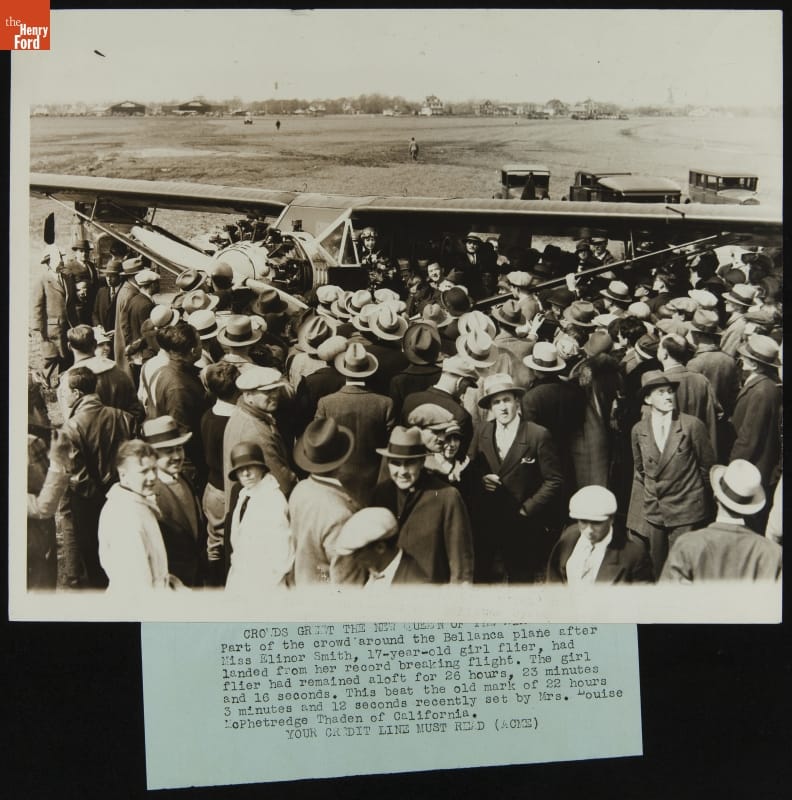
- Elinor Smith after Record-Breaking Women's Endurance Flight, 1929 - Elinor Smith took her first flight at age six and earned a pilot's license at 16. She made headlines flying under New York City bridges in 1928, but more serious pursuits earned Smith a series of endurance, speed, and altitude records for a female pilot. Smith piloted an airplane for the last time in 2001, at the age of 89.
- April 23, 1929
- Collections - Artifact
Elinor Smith after Record-Breaking Women's Endurance Flight, 1929
Elinor Smith took her first flight at age six and earned a pilot's license at 16. She made headlines flying under New York City bridges in 1928, but more serious pursuits earned Smith a series of endurance, speed, and altitude records for a female pilot. Smith piloted an airplane for the last time in 2001, at the age of 89.
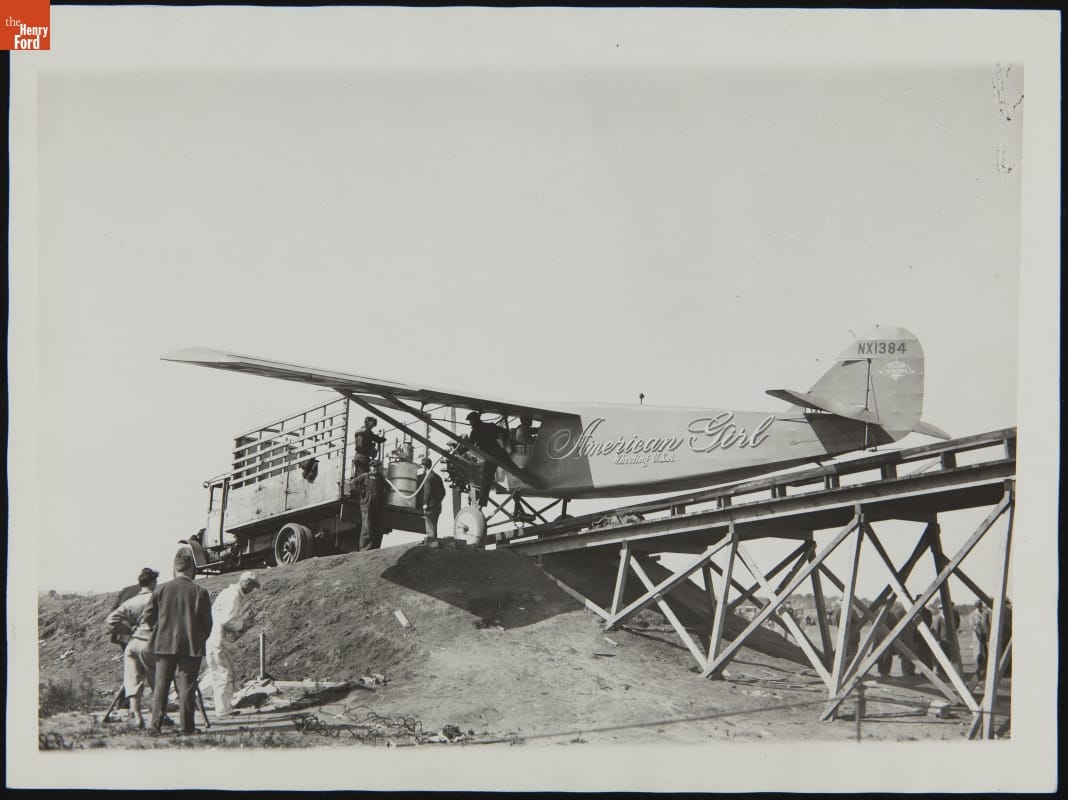
- Ruth Elder's Airplane, the "American Girl," Fueling up before Take-off, October 11, 1927 - Ruth Elder planned to be the first woman to fly across the Atlantic. On October 11, 1927, Elder and co-pilot George Haldeman took off in their Stinson Detroiter <EM>American Girl</EM>. An oil leak forced them to ditch in the ocean some 360 miles short of land. Still, the 2,623 miles Elder covered set a new distance record for a female pilot.
- October 11, 1927
- Collections - Artifact
Ruth Elder's Airplane, the "American Girl," Fueling up before Take-off, October 11, 1927
Ruth Elder planned to be the first woman to fly across the Atlantic. On October 11, 1927, Elder and co-pilot George Haldeman took off in their Stinson Detroiter American Girl. An oil leak forced them to ditch in the ocean some 360 miles short of land. Still, the 2,623 miles Elder covered set a new distance record for a female pilot.
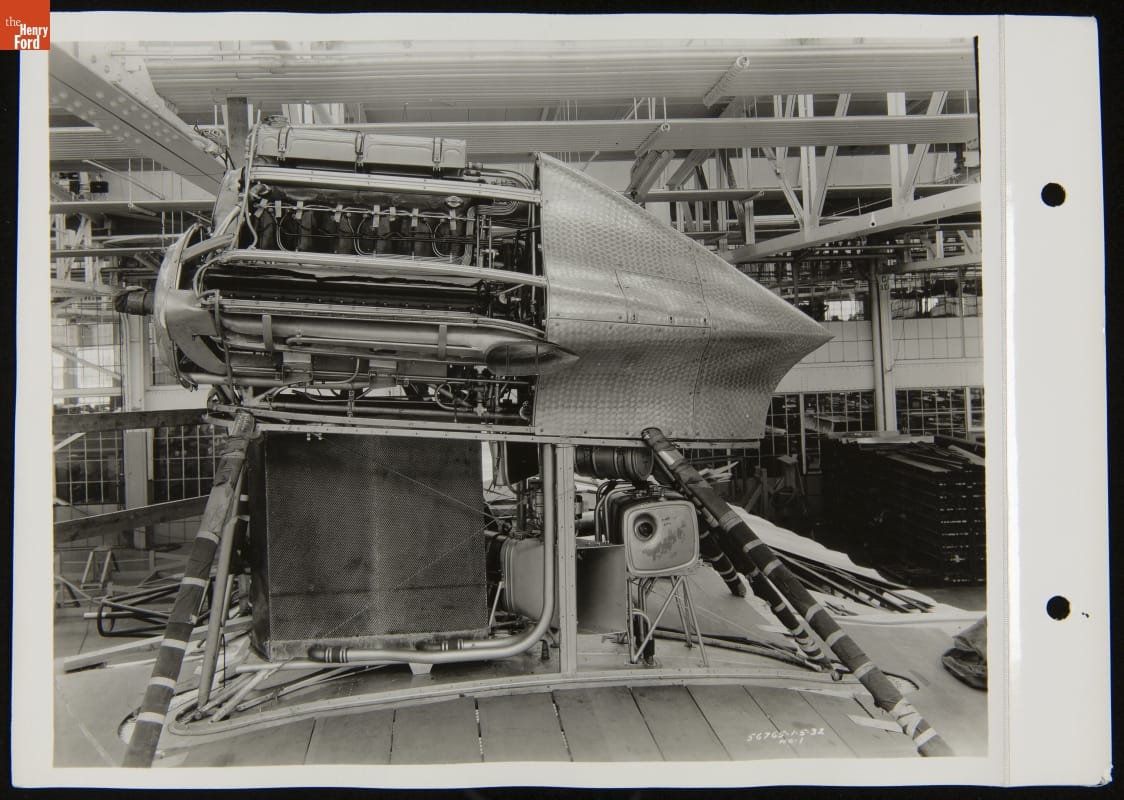
- Construction of Ford Tri-Motor 14-AT Showing Center Hispano Suiza Engine, January 1932 - Ford Motor Company's Tri-Motor, built from 1926-1933, flew in many early American airline fleets. The all-metal airplane was rugged, dependable, and equally adaptable to passenger and freight service. Tri-Motors were built with some of the same mass production techniques used in Ford's automobile plants. This version, the 14-AT, featured three Hispano-Suiza Engines. This photograph reveals the interior of the central engine.
- January 05, 1932
- Collections - Artifact
Construction of Ford Tri-Motor 14-AT Showing Center Hispano Suiza Engine, January 1932
Ford Motor Company's Tri-Motor, built from 1926-1933, flew in many early American airline fleets. The all-metal airplane was rugged, dependable, and equally adaptable to passenger and freight service. Tri-Motors were built with some of the same mass production techniques used in Ford's automobile plants. This version, the 14-AT, featured three Hispano-Suiza Engines. This photograph reveals the interior of the central engine.
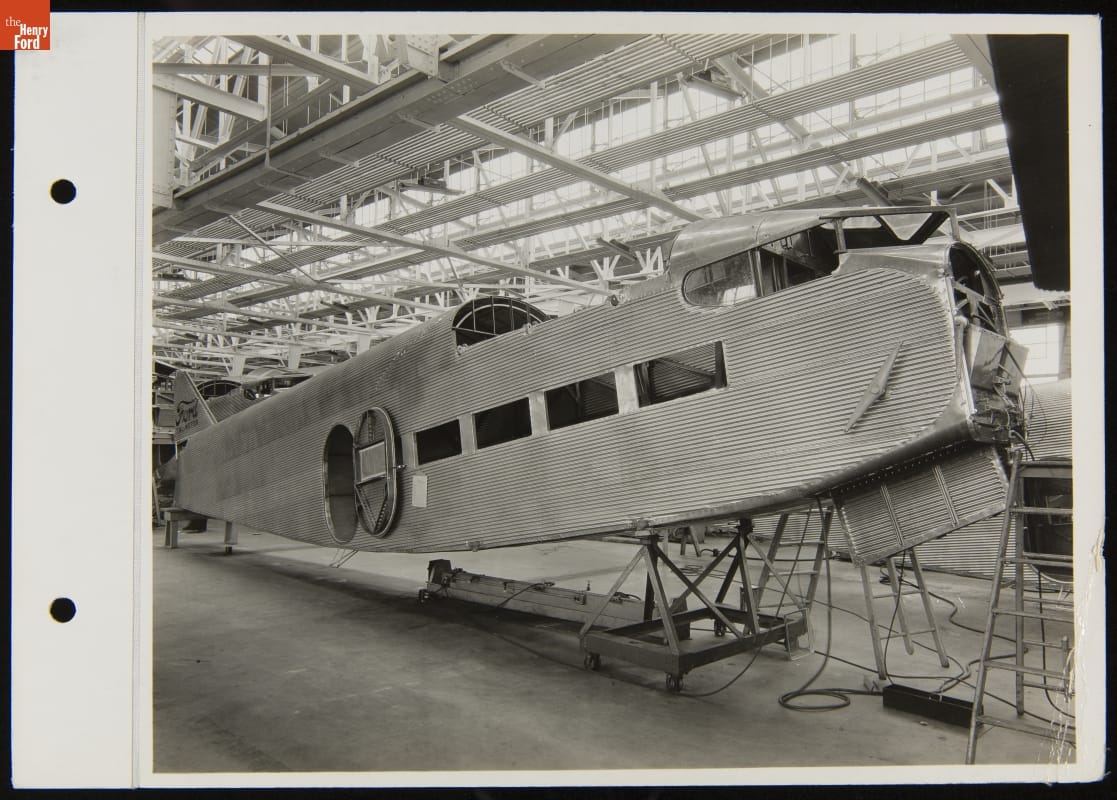
- Ford Tri-Motor Airplane Fuselage Being Constructed at the Stout Factory, Dearborn, Michigan, April 1929 - Ford Motor Company's Tri-Motor, built from 1926-1933, flew in many early American airline fleets. The all-metal airplane was rugged, dependable, and equally adaptable to passenger and freight service. Tri-Motors were built with some of the same mass production techniques used in Ford's automobile plants. The fuselage, or the main body of the airplane, is constructed in this photograph.
- April 30, 1929
- Collections - Artifact
Ford Tri-Motor Airplane Fuselage Being Constructed at the Stout Factory, Dearborn, Michigan, April 1929
Ford Motor Company's Tri-Motor, built from 1926-1933, flew in many early American airline fleets. The all-metal airplane was rugged, dependable, and equally adaptable to passenger and freight service. Tri-Motors were built with some of the same mass production techniques used in Ford's automobile plants. The fuselage, or the main body of the airplane, is constructed in this photograph.
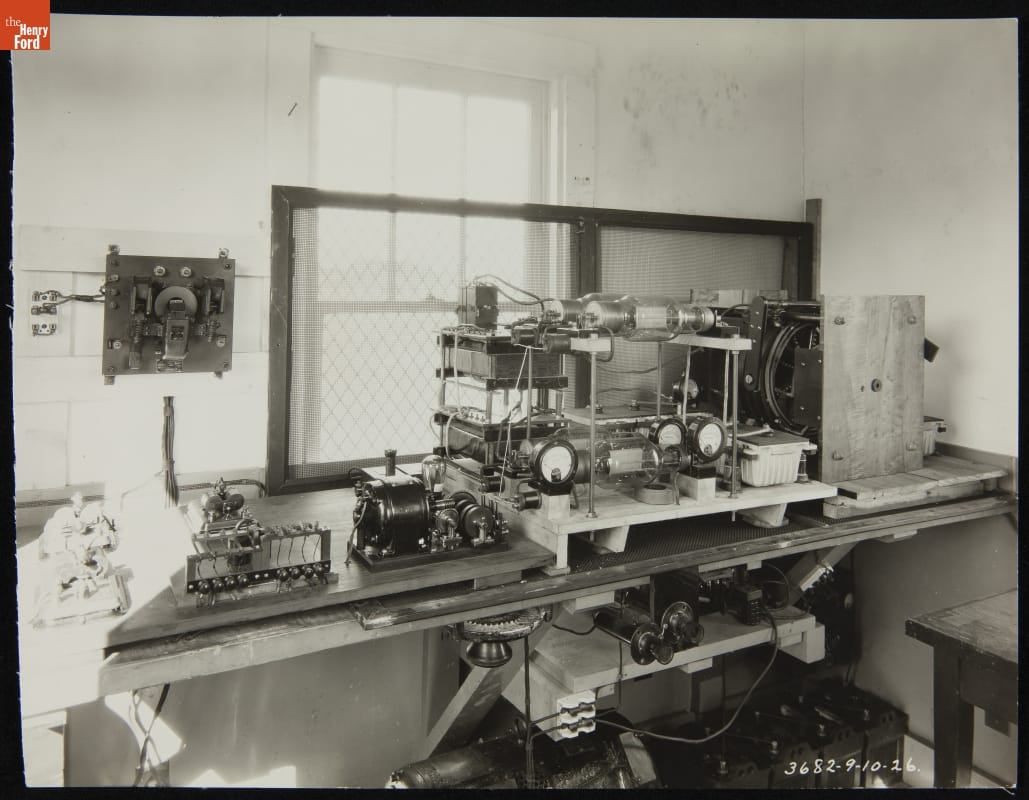
- Equipment Inside the Radio Beacon Station Building at Ford Airport, September 10, 1926 - Early pilots depended on landmarks, preventing reliable navigation in bad weather. Henry Ford's engineers developed a radio beacon that simultaneously transmitted two Morse code letters, allowing pilots to steer until the separate signals merged into a steady hum. The original beacon station at Ford Airport (shown here) was removed in 1933 and is now on display inside the museum.
- September 10, 1926
- Collections - Artifact
Equipment Inside the Radio Beacon Station Building at Ford Airport, September 10, 1926
Early pilots depended on landmarks, preventing reliable navigation in bad weather. Henry Ford's engineers developed a radio beacon that simultaneously transmitted two Morse code letters, allowing pilots to steer until the separate signals merged into a steady hum. The original beacon station at Ford Airport (shown here) was removed in 1933 and is now on display inside the museum.
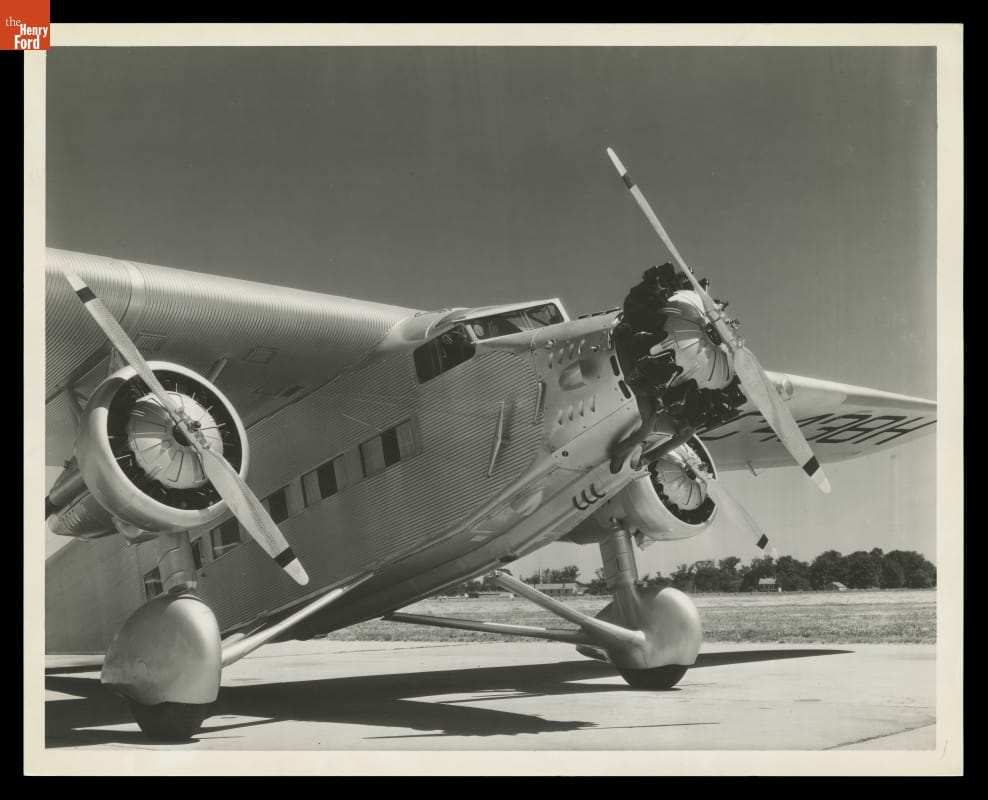
- Ford Tri-Motor 5-AT-112 Airplane at Ford Airport, 1932 - In 1928, the Stout Metal Airplane Company, a division of Ford Motor Company, introduced a new airliner. The 5-AT was faster and more powerful than its popular predecessor, the 4-AT. It had a longer wingspan and higher passenger capacity, and became the most successful all-metal, multi-engine passenger plane in the country. Virtually all existing airlines flew Ford 5-ATs.
- June 24, 1932
- Collections - Artifact
Ford Tri-Motor 5-AT-112 Airplane at Ford Airport, 1932
In 1928, the Stout Metal Airplane Company, a division of Ford Motor Company, introduced a new airliner. The 5-AT was faster and more powerful than its popular predecessor, the 4-AT. It had a longer wingspan and higher passenger capacity, and became the most successful all-metal, multi-engine passenger plane in the country. Virtually all existing airlines flew Ford 5-ATs.
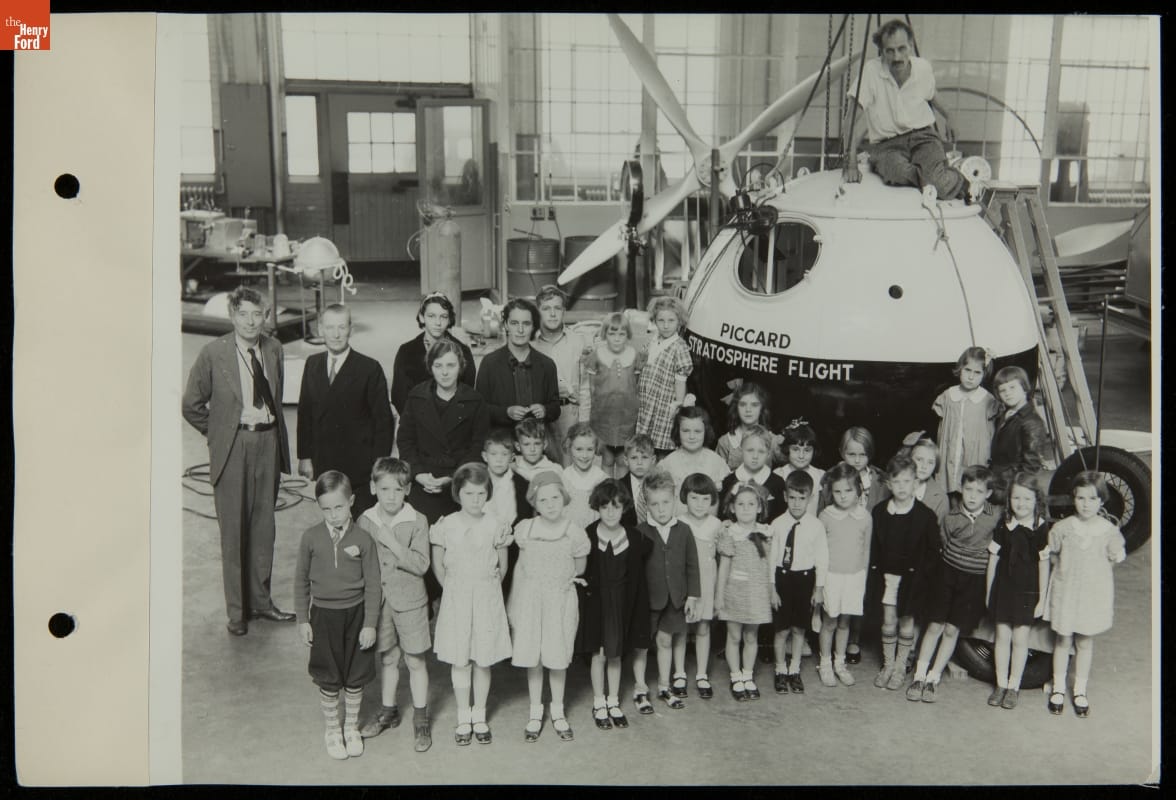
- Group from Edison Institute Schools Visit the Piccard Stratosphere Flight Balloon at Ford Airport, September 1934 - The Piccard stratosphere flight departed from Ford Airport field on October 23, 1934. Spouses Jean and Jeannette Piccard ascended 10.9 miles in a metal gondola carried by a hydrogen balloon. This image was taken at one of the airport's hangars in September of 1934, and depicts the Piccards with a group of visiting children from the Edison Institute School.
- September 17, 1934
- Collections - Artifact
Group from Edison Institute Schools Visit the Piccard Stratosphere Flight Balloon at Ford Airport, September 1934
The Piccard stratosphere flight departed from Ford Airport field on October 23, 1934. Spouses Jean and Jeannette Piccard ascended 10.9 miles in a metal gondola carried by a hydrogen balloon. This image was taken at one of the airport's hangars in September of 1934, and depicts the Piccards with a group of visiting children from the Edison Institute School.