
Search
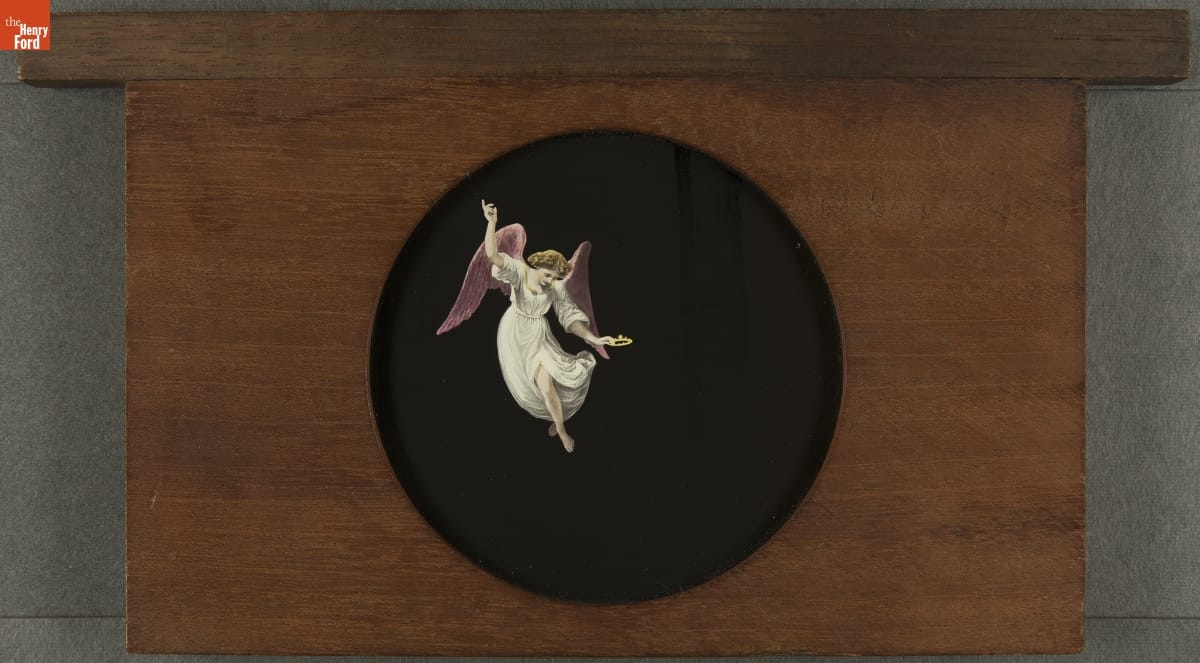
- Set of Two Lantern Slides Titled "Mercy's Dream," circa 1885 - Magic lanterns use a concave mirror and light source to project images on glass slides with painted or photographic scenes. Developed in the 17th century, magic lanterns predate slide projectors and motion pictures. In the hands of magicians, they became "lanterns of fright," projecting wondrous images and apparitions. Slide themes ranged widely: exotic travel, folklore, advertising, history, science, and art.
- circa 1885
- Collections - Artifact
Set of Two Lantern Slides Titled "Mercy's Dream," circa 1885
Magic lanterns use a concave mirror and light source to project images on glass slides with painted or photographic scenes. Developed in the 17th century, magic lanterns predate slide projectors and motion pictures. In the hands of magicians, they became "lanterns of fright," projecting wondrous images and apparitions. Slide themes ranged widely: exotic travel, folklore, advertising, history, science, and art.
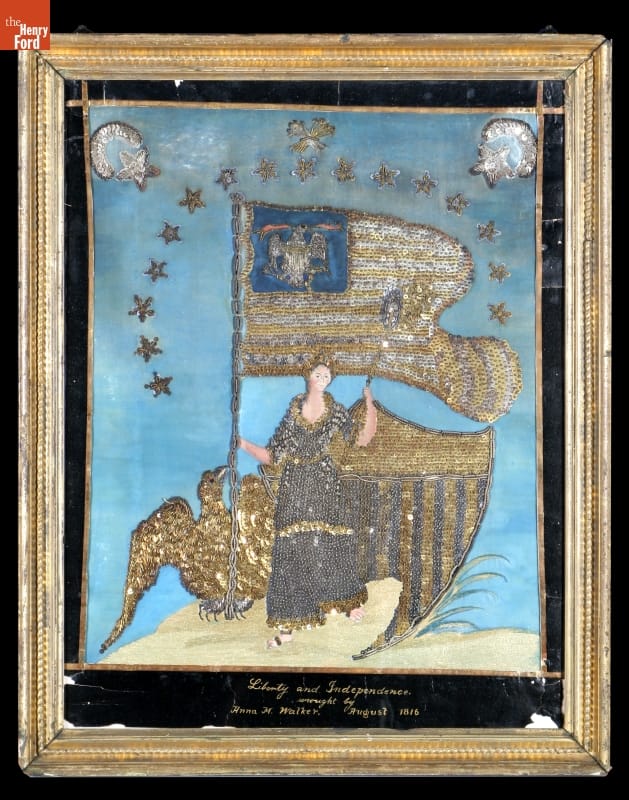
- Needlework, "Liberty and Independence," 1816 - Just after the War of 1812, Anna Moody Walker handmade this needlework depicting Lady Liberty amid symbols of American independence. Her delicate artwork incorporated watercolor, silk, sequins, and metallic thread from her grandfather's tailor shop. Walker may have selected this particular thread - used to repair British military uniforms in pre-Revolutionary Boston - to emphasize the piece's patriotic theme.
- August 01, 1816
- Collections - Artifact
Needlework, "Liberty and Independence," 1816
Just after the War of 1812, Anna Moody Walker handmade this needlework depicting Lady Liberty amid symbols of American independence. Her delicate artwork incorporated watercolor, silk, sequins, and metallic thread from her grandfather's tailor shop. Walker may have selected this particular thread - used to repair British military uniforms in pre-Revolutionary Boston - to emphasize the piece's patriotic theme.
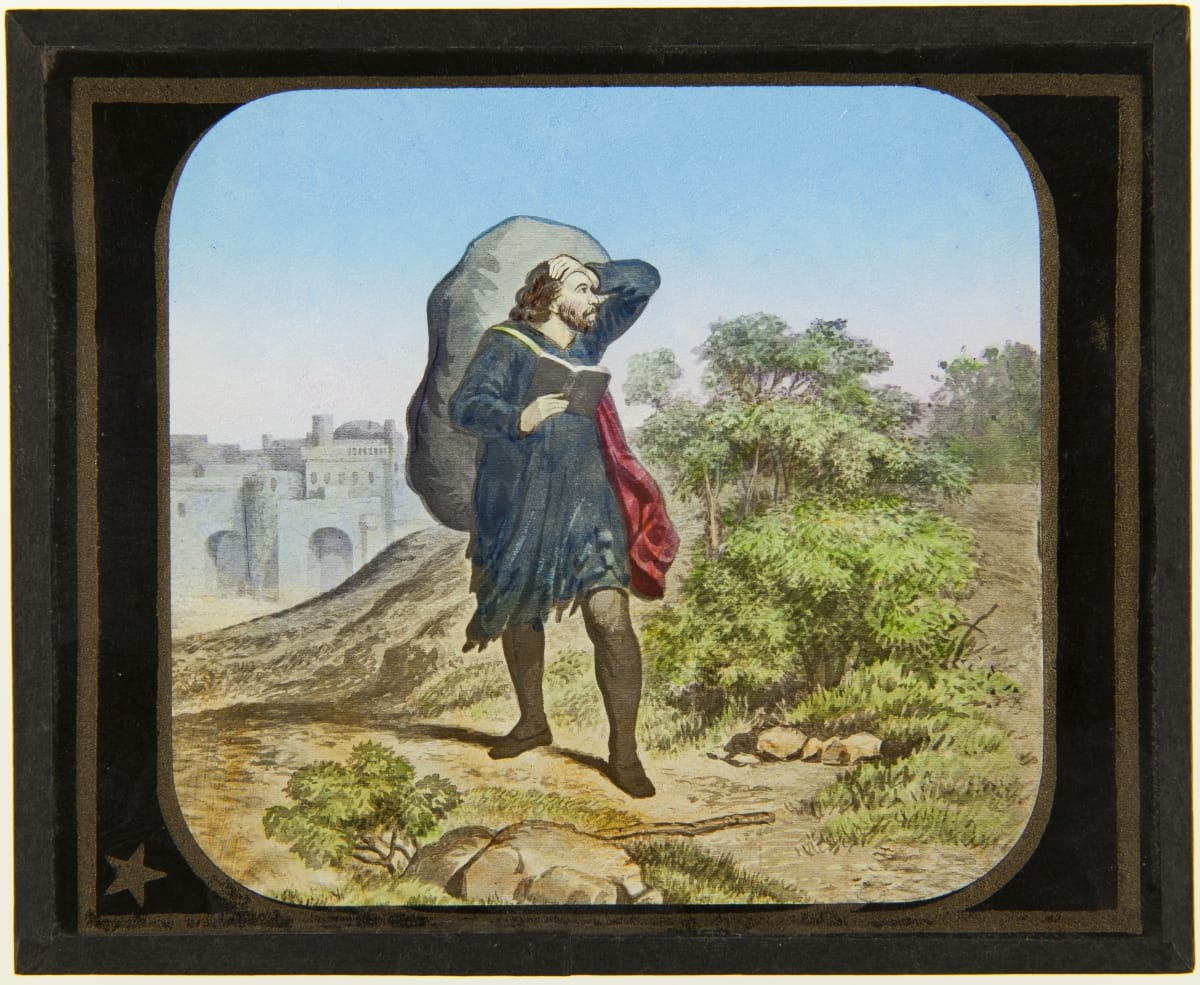
- Lantern Slide, "Pilgrim's Progress, Pilgrim and His Burden," 1896-1897 - Magic lanterns use a concave mirror and light source to project images on glass slides with painted or photographic scenes. Developed in the 17th century, magic lanterns predate slide projectors and motion pictures. In the hands of magicians, they became "lanterns of fright," projecting wondrous images and apparitions. Slide themes ranged widely: exotic travel, folklore, advertising, history, science, and art.
- circa 1700
- Collections - Artifact
Lantern Slide, "Pilgrim's Progress, Pilgrim and His Burden," 1896-1897
Magic lanterns use a concave mirror and light source to project images on glass slides with painted or photographic scenes. Developed in the 17th century, magic lanterns predate slide projectors and motion pictures. In the hands of magicians, they became "lanterns of fright," projecting wondrous images and apparitions. Slide themes ranged widely: exotic travel, folklore, advertising, history, science, and art.
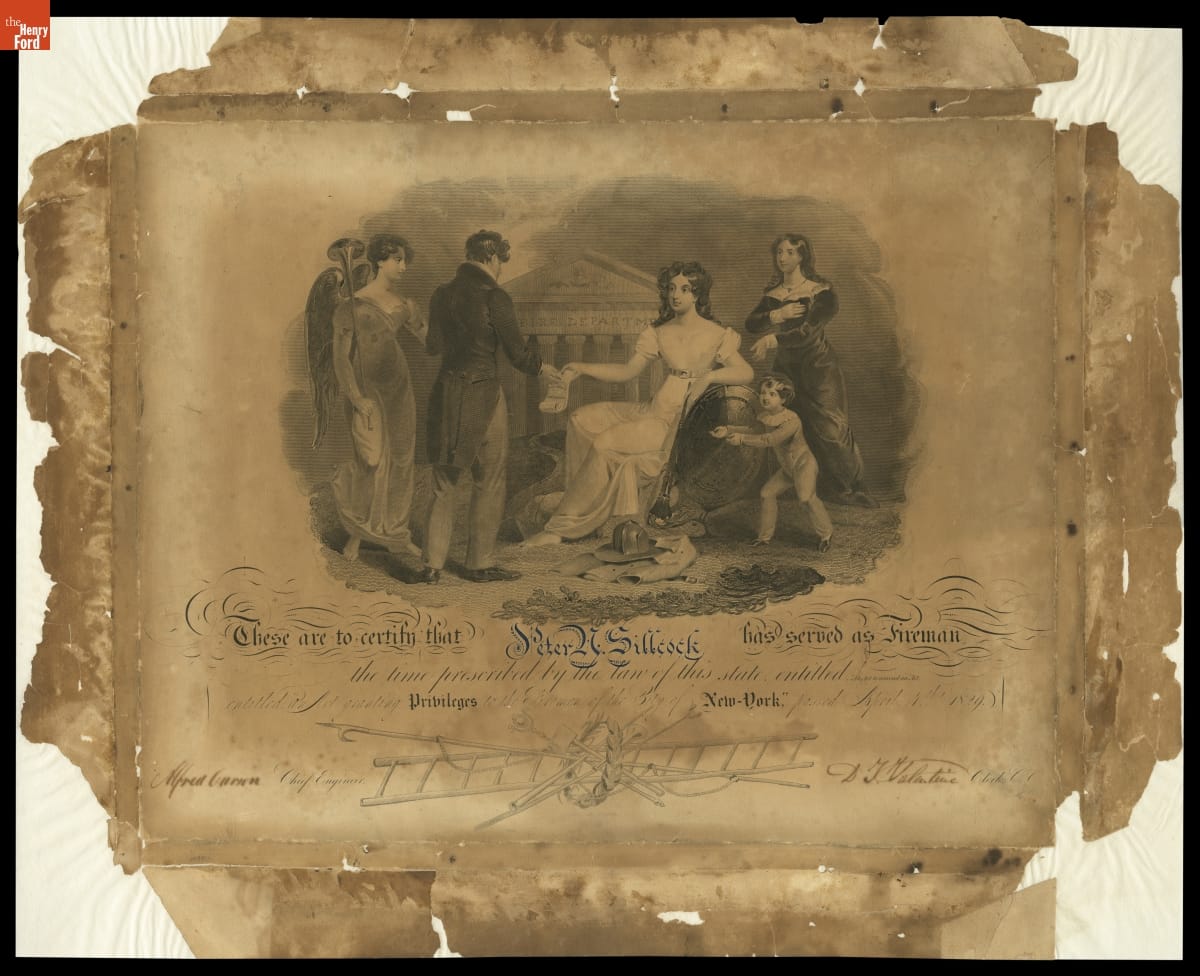
- Engraving, "These Are to Certifiy that Peter A. Sillcock Has Served as a Fireman," April 1829 - Firefighters took justifiable pride in their occupation. There was a spirit of camaraderie among the members of each fire department, and they found great satisfaction in working to be faster, stronger, and more efficient than their colleagues in other fire departments. This document from 1829 proudly certified the service of a firefighter in New York City.
- April 04, 1829
- Collections - Artifact
Engraving, "These Are to Certifiy that Peter A. Sillcock Has Served as a Fireman," April 1829
Firefighters took justifiable pride in their occupation. There was a spirit of camaraderie among the members of each fire department, and they found great satisfaction in working to be faster, stronger, and more efficient than their colleagues in other fire departments. This document from 1829 proudly certified the service of a firefighter in New York City.
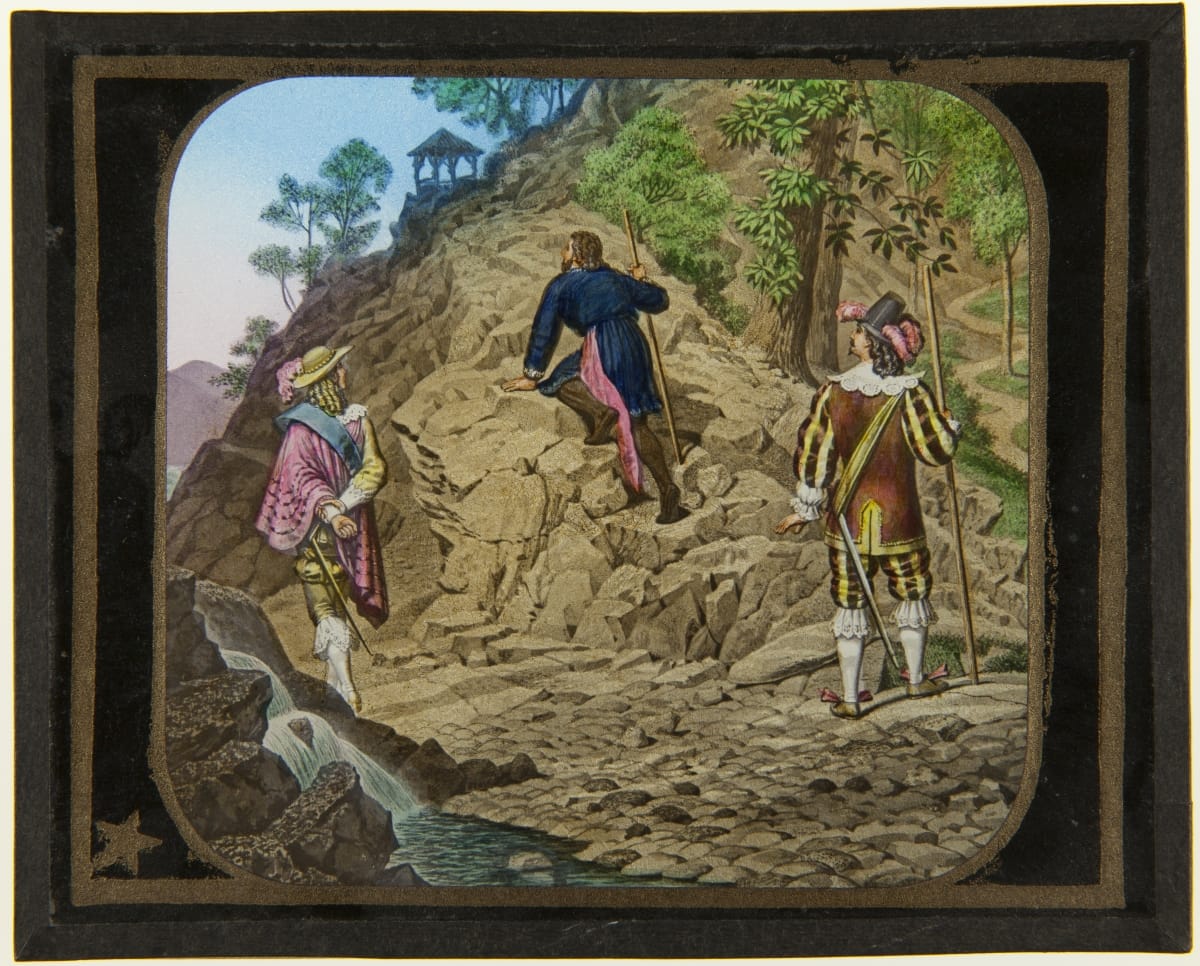
- Lantern Slide,"Pilgrim's Progress, Christian Climbing the Hill of Difficulty," 1896-1897 - Magic lanterns use a concave mirror and light source to project images on glass slides with painted or photographic scenes. Developed in the 17th century, magic lanterns predate slide projectors and motion pictures. In the hands of magicians, they became "lanterns of fright," projecting wondrous images and apparitions. Slide themes ranged widely: exotic travel, folklore, advertising, history, science, and art.
- circa 1700
- Collections - Artifact
Lantern Slide,"Pilgrim's Progress, Christian Climbing the Hill of Difficulty," 1896-1897
Magic lanterns use a concave mirror and light source to project images on glass slides with painted or photographic scenes. Developed in the 17th century, magic lanterns predate slide projectors and motion pictures. In the hands of magicians, they became "lanterns of fright," projecting wondrous images and apparitions. Slide themes ranged widely: exotic travel, folklore, advertising, history, science, and art.
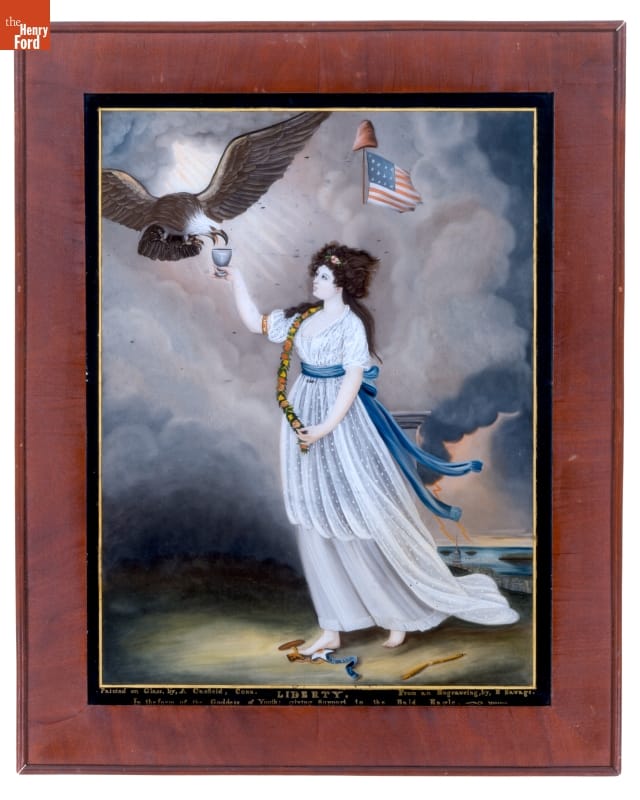
- Allegorical Painting of Miss Liberty, by Abijah Canfield After an Engraving by Edward Savage, 1800-1810 - This remarkable reverse painting on glass presents a female figure dressed in a classical Greek or Roman costume, representing the personification of the concept of liberty giving sustenance to the eagle, symbol of the new American republic. To reinforce this message, a "cap of liberty" also deriving its message from ancient Rome, rests atop a flagpole flying the stars and stripes.
- 1800-1810
- Collections - Artifact
Allegorical Painting of Miss Liberty, by Abijah Canfield After an Engraving by Edward Savage, 1800-1810
This remarkable reverse painting on glass presents a female figure dressed in a classical Greek or Roman costume, representing the personification of the concept of liberty giving sustenance to the eagle, symbol of the new American republic. To reinforce this message, a "cap of liberty" also deriving its message from ancient Rome, rests atop a flagpole flying the stars and stripes.