
Search
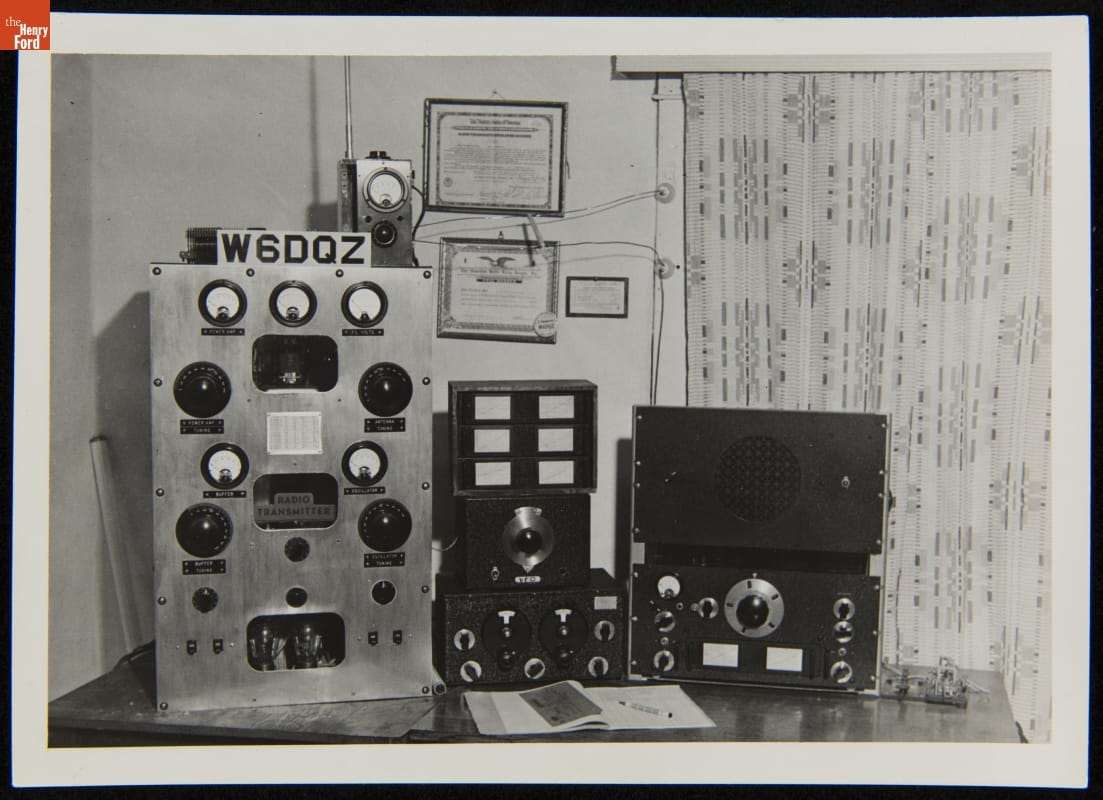
- Amateur Radio Station W6DQZ, 1931-1994 - Hamid (Charlie) Durmisevich, call sign W6DQZ, connected to the world from his ham radio station in Los Angeles. Amateur radio operators use two-way radios to talk to global networks of other "hams" about technology, weather, emergency preparedness and daily life. This ham, who emigrated from Eastern Europe in 1920, was active in amateur radio communities from the 1930s to 1990s.
- 1931-1994
- Collections - Artifact
Amateur Radio Station W6DQZ, 1931-1994
Hamid (Charlie) Durmisevich, call sign W6DQZ, connected to the world from his ham radio station in Los Angeles. Amateur radio operators use two-way radios to talk to global networks of other "hams" about technology, weather, emergency preparedness and daily life. This ham, who emigrated from Eastern Europe in 1920, was active in amateur radio communities from the 1930s to 1990s.
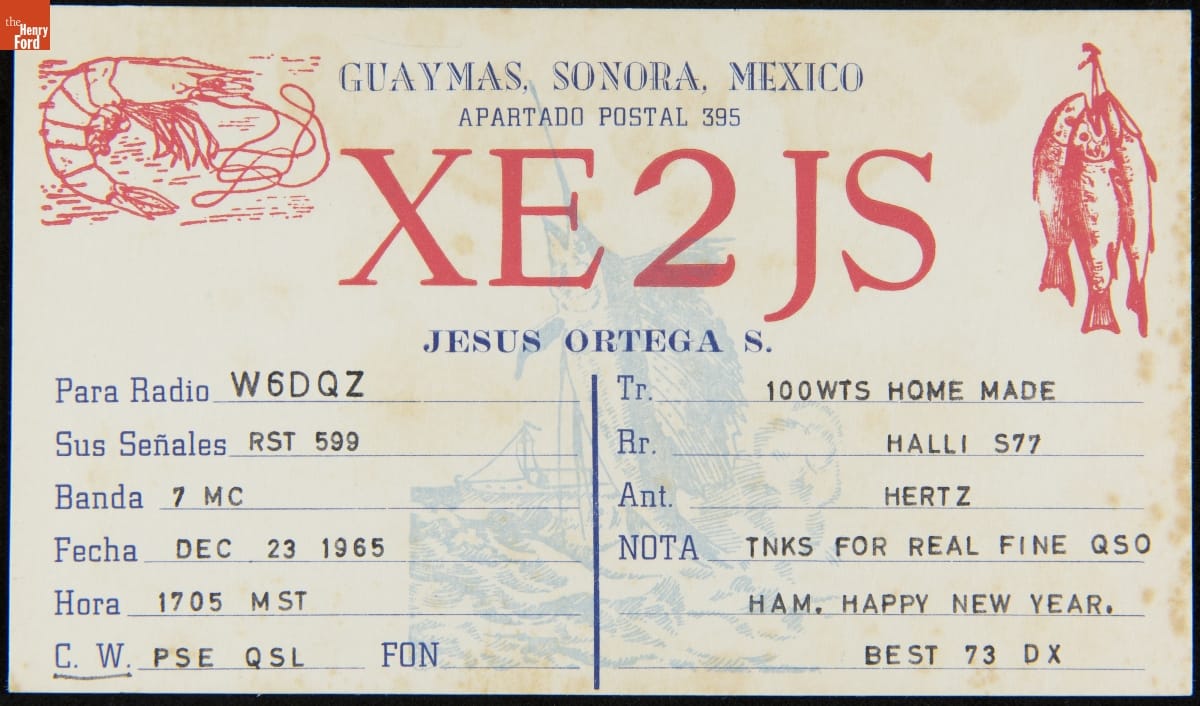
- QSL Card from XE2JS (Guaymas, Sonora, Mexico) to W6DQZ (Hamid Durmisevich, Los Angeles, California), December 23, 1965 - It was customary for ham radio operators (hams) to exchange these "QSL cards" with one another through the mail after their first conversation. Long-time hams amassed collections of thousands of cards, some from far-flung places. There is a story embedded in each example: the ham's call sign dominates the design, with additional details about location, reception reports, and weather conditions.
- Collections - Artifact
QSL Card from XE2JS (Guaymas, Sonora, Mexico) to W6DQZ (Hamid Durmisevich, Los Angeles, California), December 23, 1965
It was customary for ham radio operators (hams) to exchange these "QSL cards" with one another through the mail after their first conversation. Long-time hams amassed collections of thousands of cards, some from far-flung places. There is a story embedded in each example: the ham's call sign dominates the design, with additional details about location, reception reports, and weather conditions.
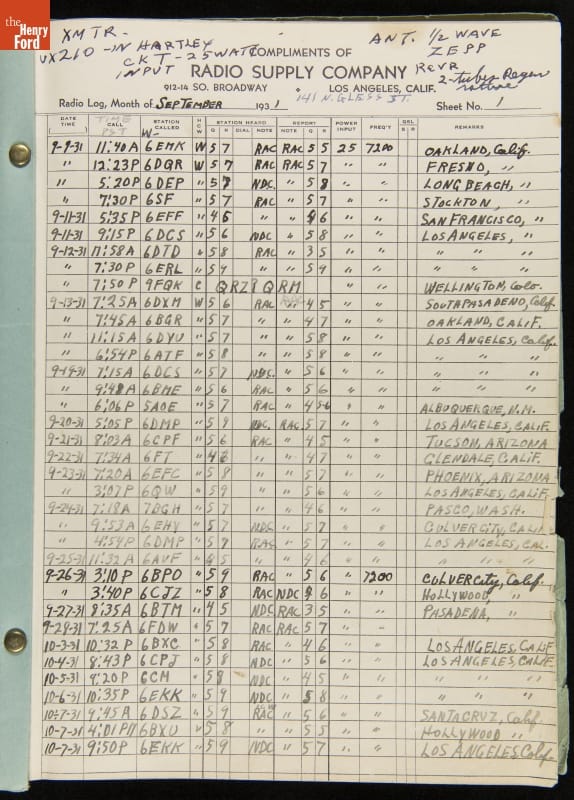
- Amateur Radio Station W6DQZ Log, September 9, 1931 - March 31, 1934 - Hamid (Charlie) Durmisevich, call sign W6DQZ, connected to the world from his ham radio station in Los Angeles. Amateur radio operators use two-way radios to talk to global networks of other "hams" about technology, weather, emergency preparedness and daily life. This ham, who emigrated from Eastern Europe in 1920, was active in amateur radio communities from the 1930s to 1990s.
- 09 September 1931 - 31 March 1934
- Collections - Artifact
Amateur Radio Station W6DQZ Log, September 9, 1931 - March 31, 1934
Hamid (Charlie) Durmisevich, call sign W6DQZ, connected to the world from his ham radio station in Los Angeles. Amateur radio operators use two-way radios to talk to global networks of other "hams" about technology, weather, emergency preparedness and daily life. This ham, who emigrated from Eastern Europe in 1920, was active in amateur radio communities from the 1930s to 1990s.
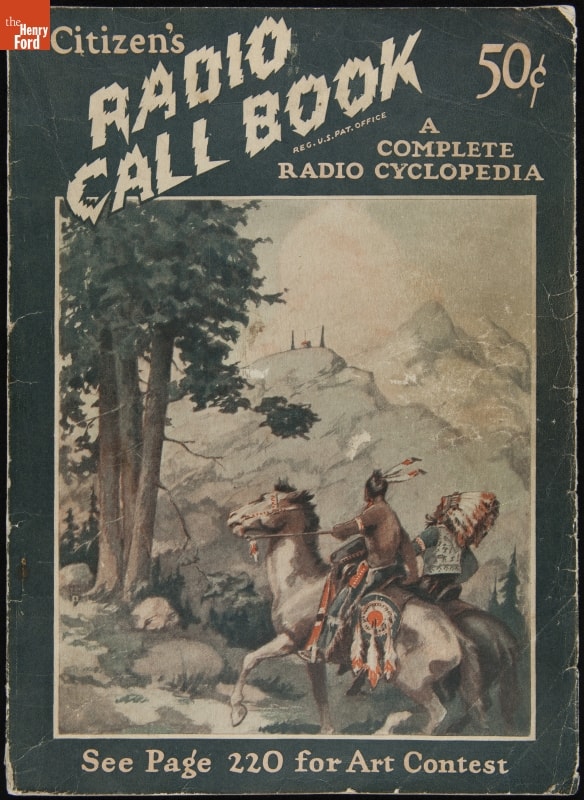
- "Citizen's Radio Call Book" Magazine for March 1927 - This book doubles as a trade publication and hobbyist manual. A mixture of advertisements, tuning information, and articles capture the rise of radio celebrity culture, international expansion, the new structures and themes of radio programming. Radio's impact is romanticized in the cover illustration, depicting Native Americans on horseback staring towards transmission towers perched on a distant hilltop.
- March 01, 1927
- Collections - Artifact
"Citizen's Radio Call Book" Magazine for March 1927
This book doubles as a trade publication and hobbyist manual. A mixture of advertisements, tuning information, and articles capture the rise of radio celebrity culture, international expansion, the new structures and themes of radio programming. Radio's impact is romanticized in the cover illustration, depicting Native Americans on horseback staring towards transmission towers perched on a distant hilltop.
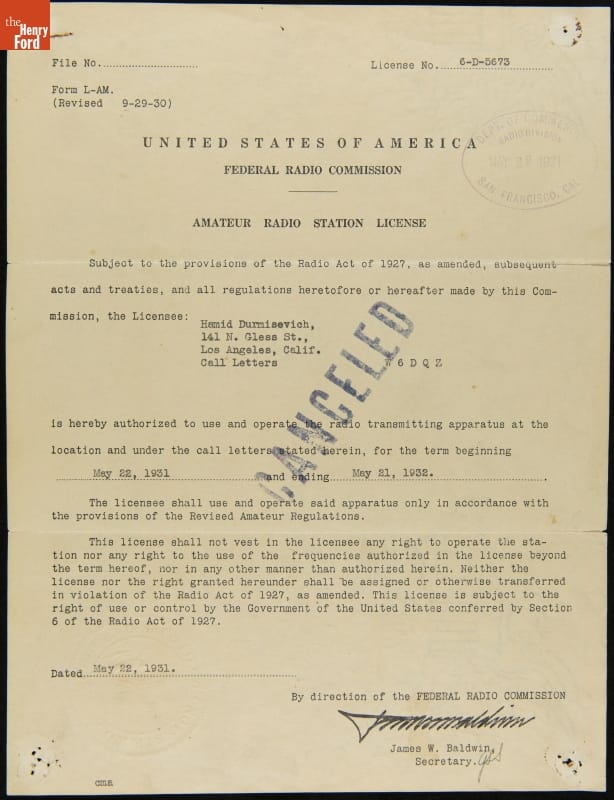
- Amateur Radio License for Hamid Durmisevich, Station W6DQZ, Issued May 22, 1931 - Hamid (Charlie) Durmisevich, call sign W6DQZ, connected to the world from his ham radio station in Los Angeles. Amateur radio operators use two-way radios to talk to global networks of other "hams" about technology, weather, emergency preparedness and daily life. This ham, who emigrated from Eastern Europe in 1920, was active in amateur radio communities from the 1930s to 1990s.
- May 22, 1931
- Collections - Artifact
Amateur Radio License for Hamid Durmisevich, Station W6DQZ, Issued May 22, 1931
Hamid (Charlie) Durmisevich, call sign W6DQZ, connected to the world from his ham radio station in Los Angeles. Amateur radio operators use two-way radios to talk to global networks of other "hams" about technology, weather, emergency preparedness and daily life. This ham, who emigrated from Eastern Europe in 1920, was active in amateur radio communities from the 1930s to 1990s.
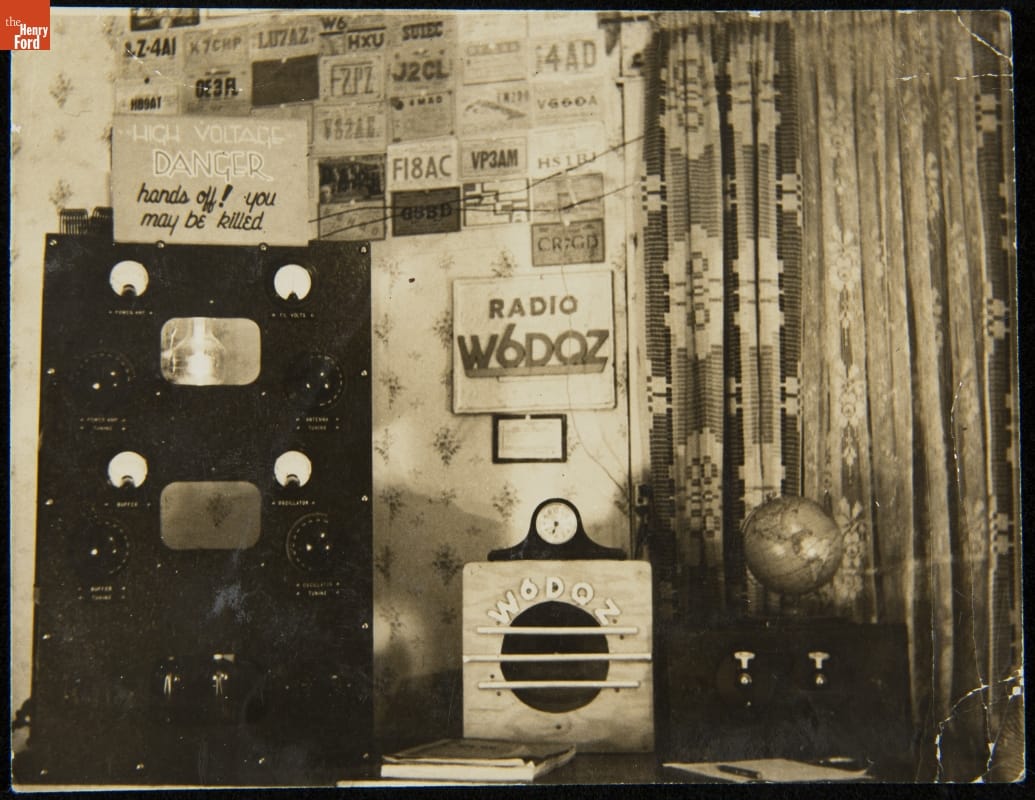
- Amateur Radio Station W6DQZ, September 1933 - Hamid (Charlie) Durmisevich, call sign W6DQZ, connected to the world from his ham radio station in Los Angeles. Amateur radio operators use two-way radios to talk to global networks of other "hams" about technology, weather, emergency preparedness and daily life. This ham, who emigrated from Eastern Europe in 1920, was active in amateur radio communities from the 1930s to 1990s.
- September 01, 1933
- Collections - Artifact
Amateur Radio Station W6DQZ, September 1933
Hamid (Charlie) Durmisevich, call sign W6DQZ, connected to the world from his ham radio station in Los Angeles. Amateur radio operators use two-way radios to talk to global networks of other "hams" about technology, weather, emergency preparedness and daily life. This ham, who emigrated from Eastern Europe in 1920, was active in amateur radio communities from the 1930s to 1990s.
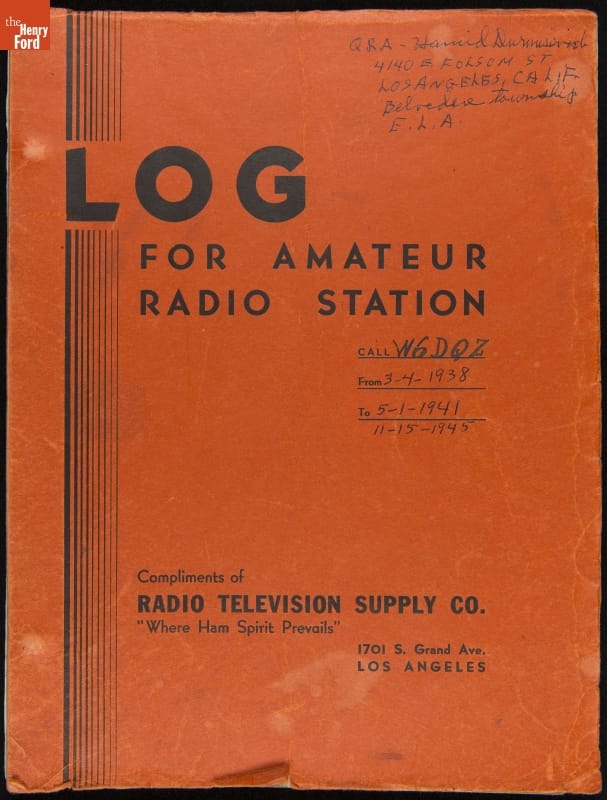
- Log for Amateur Radio Station W6DQZ, March 1938-November 1945 - Hamid (Charlie) Durmisevich, call sign W6DQZ, connected to the world from his ham radio station in Los Angeles. Amateur radio operators use two-way radios to talk to global networks of other "hams" about technology, weather, emergency preparedness and daily life. This ham, who emigrated from Eastern Europe in 1920, was active in amateur radio communities from the 1930s to 1990s.
- 04 March 1938-15 November 1945
- Collections - Artifact
Log for Amateur Radio Station W6DQZ, March 1938-November 1945
Hamid (Charlie) Durmisevich, call sign W6DQZ, connected to the world from his ham radio station in Los Angeles. Amateur radio operators use two-way radios to talk to global networks of other "hams" about technology, weather, emergency preparedness and daily life. This ham, who emigrated from Eastern Europe in 1920, was active in amateur radio communities from the 1930s to 1990s.
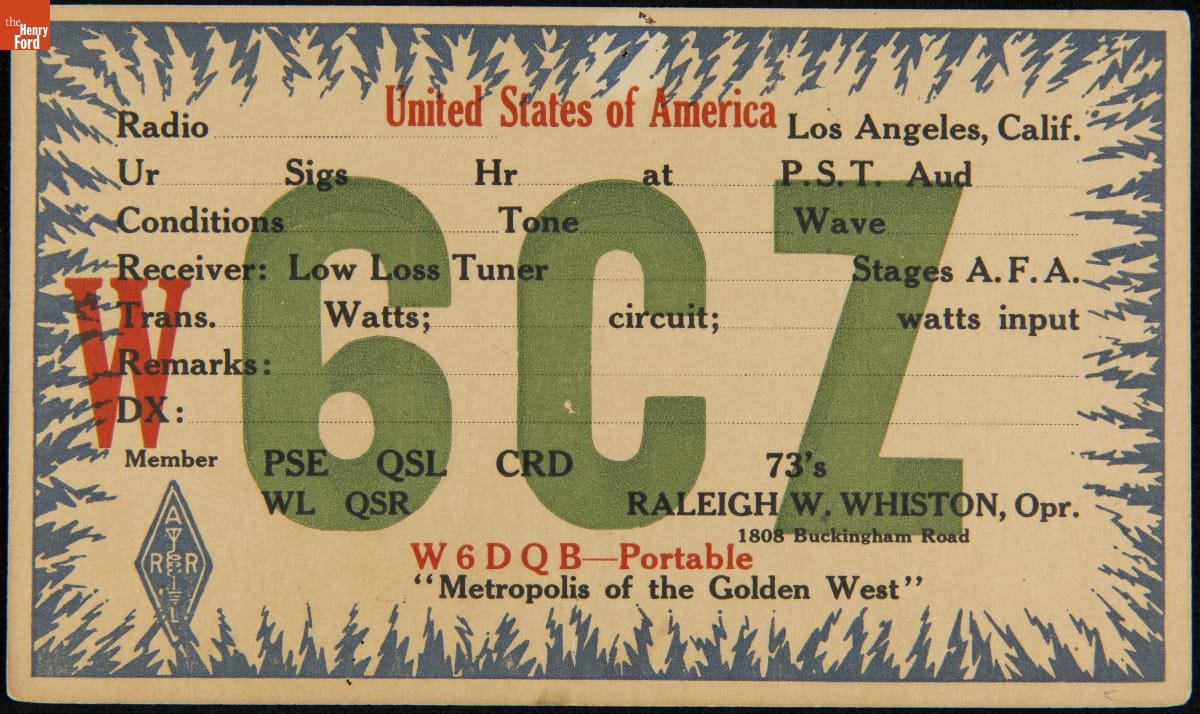
- QSL Card of W6CZ (Raleigh W. Wiston, Los Angeles, California), 1924-1943 - It was customary for ham radio operators (hams) to exchange these "QSL cards" with one another through the mail after their first conversation. Long-time hams amassed collections of thousands of cards, some from far-flung places. There is a story embedded in each example: the ham's call sign dominates the design, with additional details about location, reception reports, and weather conditions.
- 1924-1943
- Collections - Artifact
QSL Card of W6CZ (Raleigh W. Wiston, Los Angeles, California), 1924-1943
It was customary for ham radio operators (hams) to exchange these "QSL cards" with one another through the mail after their first conversation. Long-time hams amassed collections of thousands of cards, some from far-flung places. There is a story embedded in each example: the ham's call sign dominates the design, with additional details about location, reception reports, and weather conditions.
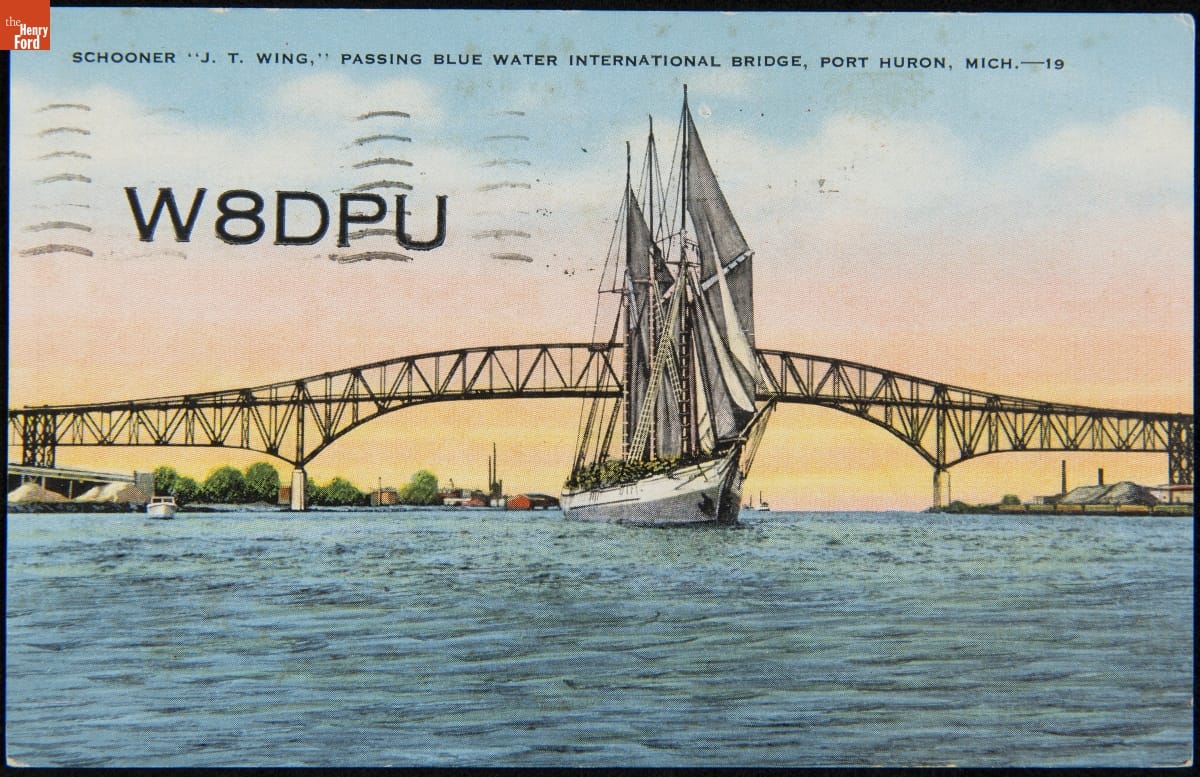
- Blue Water International Bridge Depicted on QSL Card from W8DPU to W6DQZ (Hamid Durmisevich), March 9, 1948 - It was customary for ham radio operators (hams) to exchange these "QSL cards" with one another through the mail after their first conversation. Long-time hams amassed collections of thousands of cards, some from far-flung places. There is a story embedded in each example: the ham's call sign dominates the design, with additional details about location, reception reports, and weather conditions.
- March 09, 1948
- Collections - Artifact
Blue Water International Bridge Depicted on QSL Card from W8DPU to W6DQZ (Hamid Durmisevich), March 9, 1948
It was customary for ham radio operators (hams) to exchange these "QSL cards" with one another through the mail after their first conversation. Long-time hams amassed collections of thousands of cards, some from far-flung places. There is a story embedded in each example: the ham's call sign dominates the design, with additional details about location, reception reports, and weather conditions.
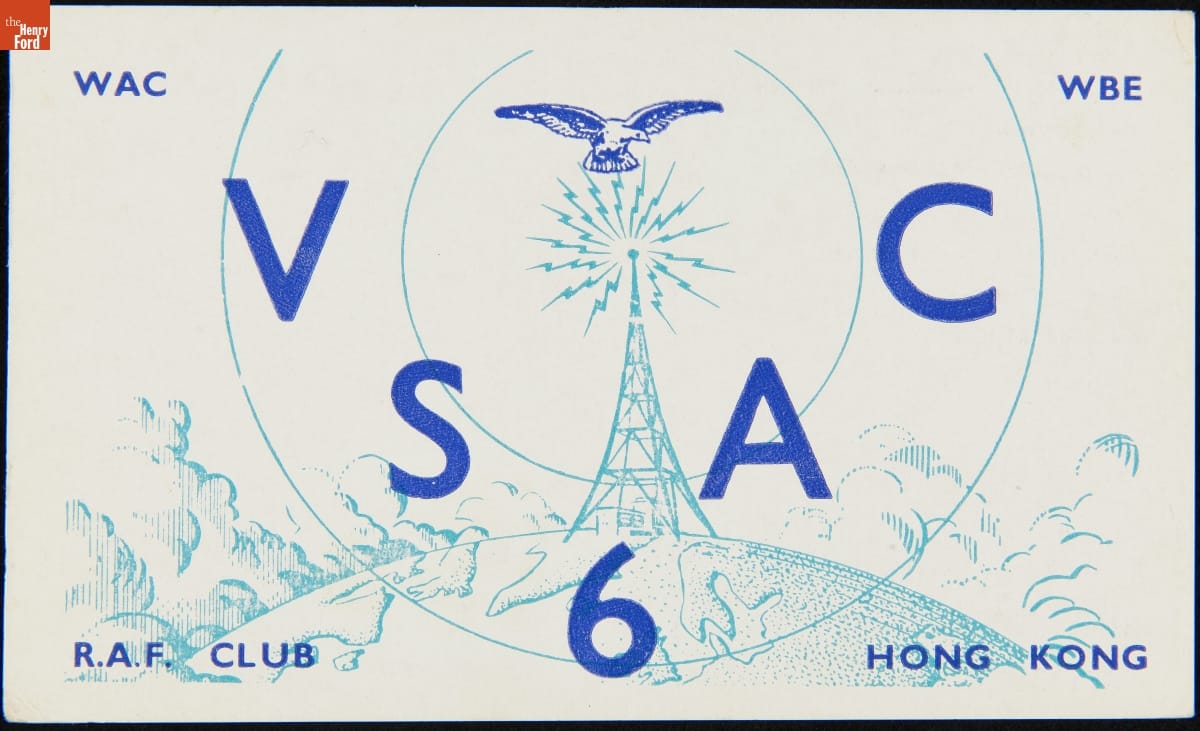
- QSL Card from VS6AC (Hong Kong, China) to W6DQZ (Hamid Durmisevich, Los Angeles, California), October 3, 1957 - It was customary for ham radio operators (hams) to exchange these "QSL cards" with one another through the mail after their first conversation. Long-time hams amassed collections of thousands of cards, some from far-flung places. There is a story embedded in each example: the ham's call sign dominates the design, with additional details about location, reception reports, and weather conditions.
- October 03, 1957
- Collections - Artifact
QSL Card from VS6AC (Hong Kong, China) to W6DQZ (Hamid Durmisevich, Los Angeles, California), October 3, 1957
It was customary for ham radio operators (hams) to exchange these "QSL cards" with one another through the mail after their first conversation. Long-time hams amassed collections of thousands of cards, some from far-flung places. There is a story embedded in each example: the ham's call sign dominates the design, with additional details about location, reception reports, and weather conditions.