
Search
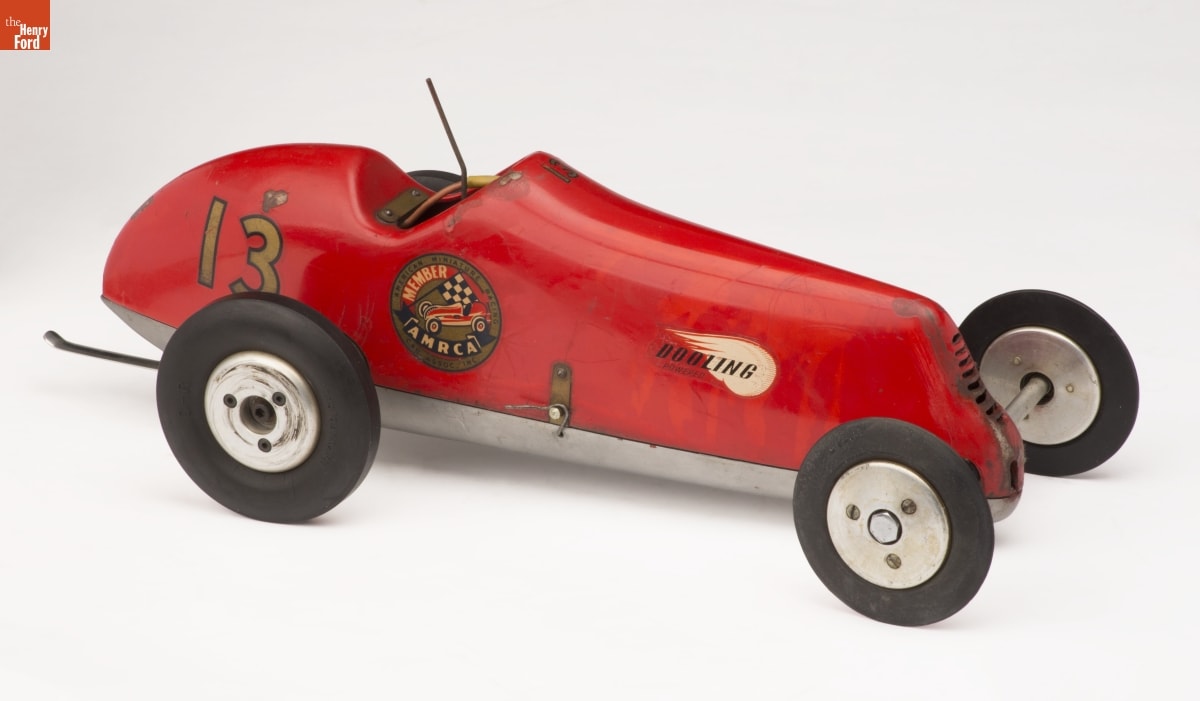
- Dooling "Arrow" Gas-Powered Racing Tether Car, 1948 - Tether cars, gas-powered model race cars, were popular in the 1930s and 1940s. They were raced individually while tethered to a central pivot, or against each other on a scaled-down board track. Dooling Brothers, of Los Angeles, California, manufactured a complete line of open-cockpit and streamliner models. Company owners Tom, Harris and Russell Dooling were successful tether car racers themselves.
- 1948
- Collections - Artifact
Dooling "Arrow" Gas-Powered Racing Tether Car, 1948
Tether cars, gas-powered model race cars, were popular in the 1930s and 1940s. They were raced individually while tethered to a central pivot, or against each other on a scaled-down board track. Dooling Brothers, of Los Angeles, California, manufactured a complete line of open-cockpit and streamliner models. Company owners Tom, Harris and Russell Dooling were successful tether car racers themselves.
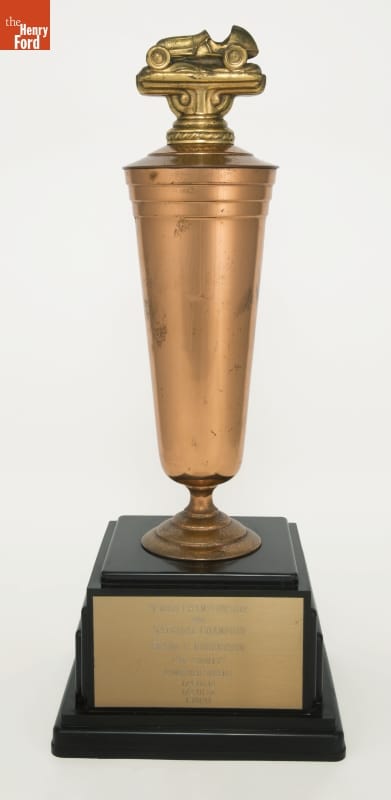
- AMRCA Nationals Trophy, Awarded to Frank Robertson, 1947 - Tether cars, gas-powered model race cars, were popular in the 1930s and 1940s. They were raced individually while tethered to a central pivot, or against each other on a scaled-down board track. Model builder and racer Frank Robertson won several trophies from the American Miniature Racing Car Association with a series of tether cars he named "Snuffy."
- August 17, 1947
- Collections - Artifact
AMRCA Nationals Trophy, Awarded to Frank Robertson, 1947
Tether cars, gas-powered model race cars, were popular in the 1930s and 1940s. They were raced individually while tethered to a central pivot, or against each other on a scaled-down board track. Model builder and racer Frank Robertson won several trophies from the American Miniature Racing Car Association with a series of tether cars he named "Snuffy."
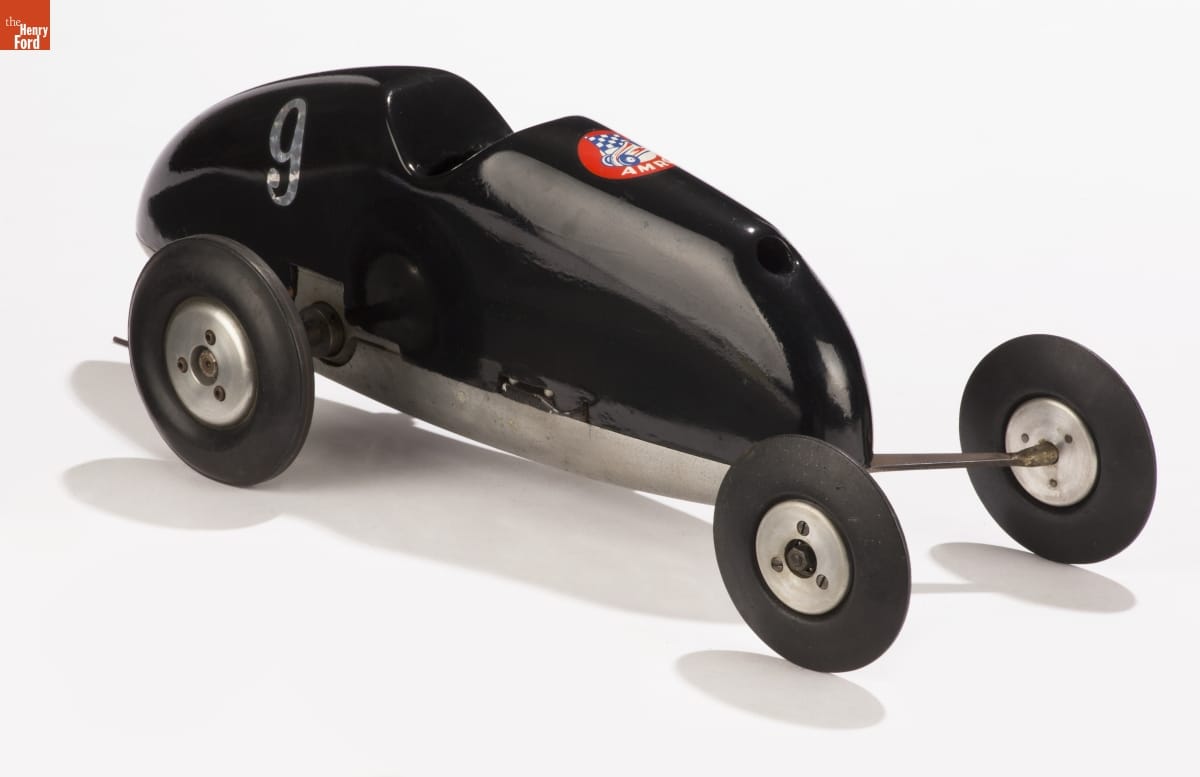
- Racing Tether Car Built by Frank Pawlikowski, 1945-1950 - Tether cars, gas-powered model race cars, were popular in the 1930s and 1940s. They were raced individually while tethered to a central pivot, or against each other on a scaled-down board track. Racer Frank Pawlikowski won two national championships and one international championship with his tether cars. He also set various track speed records.
- 1945-1950
- Collections - Artifact
Racing Tether Car Built by Frank Pawlikowski, 1945-1950
Tether cars, gas-powered model race cars, were popular in the 1930s and 1940s. They were raced individually while tethered to a central pivot, or against each other on a scaled-down board track. Racer Frank Pawlikowski won two national championships and one international championship with his tether cars. He also set various track speed records.
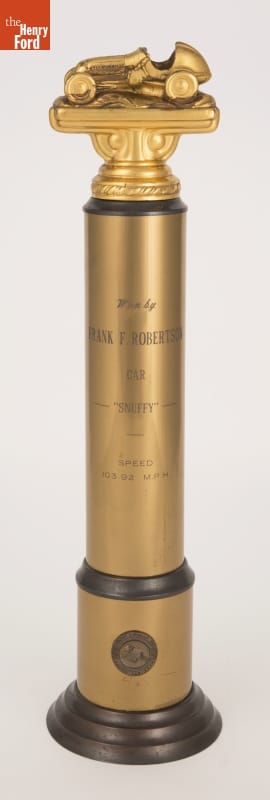
- AMRCA Trophy, Awarded to Frank Robertson, 1947 - Tether cars, gas-powered model race cars, were popular in the 1930s and 1940s. They were raced individually while tethered to a central pivot, or against each other on a scaled-down board track. Model builder and racer Frank Robertson won several trophies from the American Miniature Racing Car Association with a series of tether cars he named "Snuffy."
- circa 1945
- Collections - Artifact
AMRCA Trophy, Awarded to Frank Robertson, 1947
Tether cars, gas-powered model race cars, were popular in the 1930s and 1940s. They were raced individually while tethered to a central pivot, or against each other on a scaled-down board track. Model builder and racer Frank Robertson won several trophies from the American Miniature Racing Car Association with a series of tether cars he named "Snuffy."
- Fryco 5cc Gas-Powered Racing Tether Car, 1980-1989 - Tether cars, gas-powered model race cars, were popular in the 1930s and 1940s. They were raced individually while tethered to a central pivot, or against each other on a scaled-down board track. The models found new appreciation in the 1980s and 1990s. Garold Frymire built some 320 streamliners. The exhaust pipe on this one is tuned in length for maximum performance.

- 1980-1989
- Collections - Artifact
Fryco 5cc Gas-Powered Racing Tether Car, 1980-1989
Tether cars, gas-powered model race cars, were popular in the 1930s and 1940s. They were raced individually while tethered to a central pivot, or against each other on a scaled-down board track. The models found new appreciation in the 1980s and 1990s. Garold Frymire built some 320 streamliners. The exhaust pipe on this one is tuned in length for maximum performance.