
Search
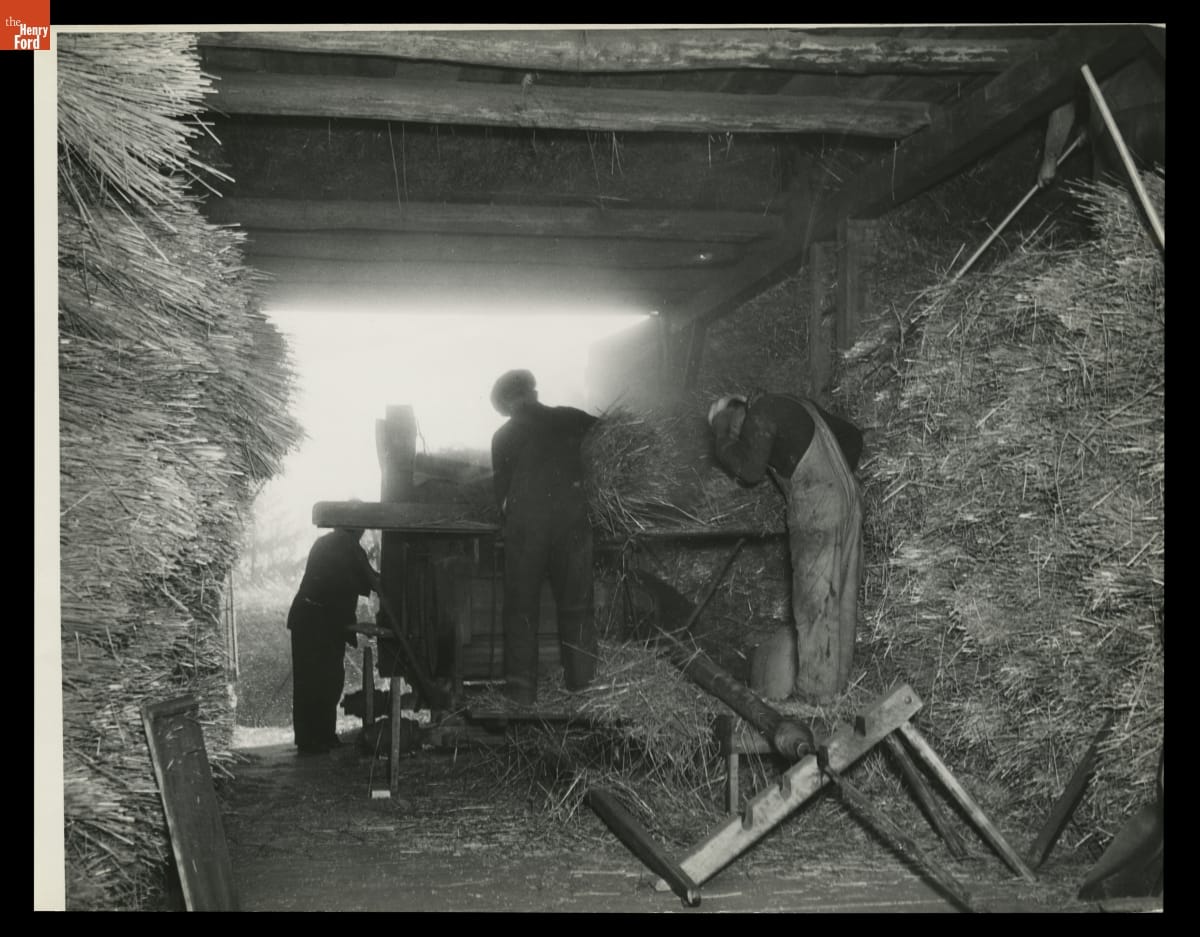
- Threshing at the Ford Homestead, Dearborn, Michigan, November 1936 -
- November 13, 1936
- Collections - Artifact
Threshing at the Ford Homestead, Dearborn, Michigan, November 1936
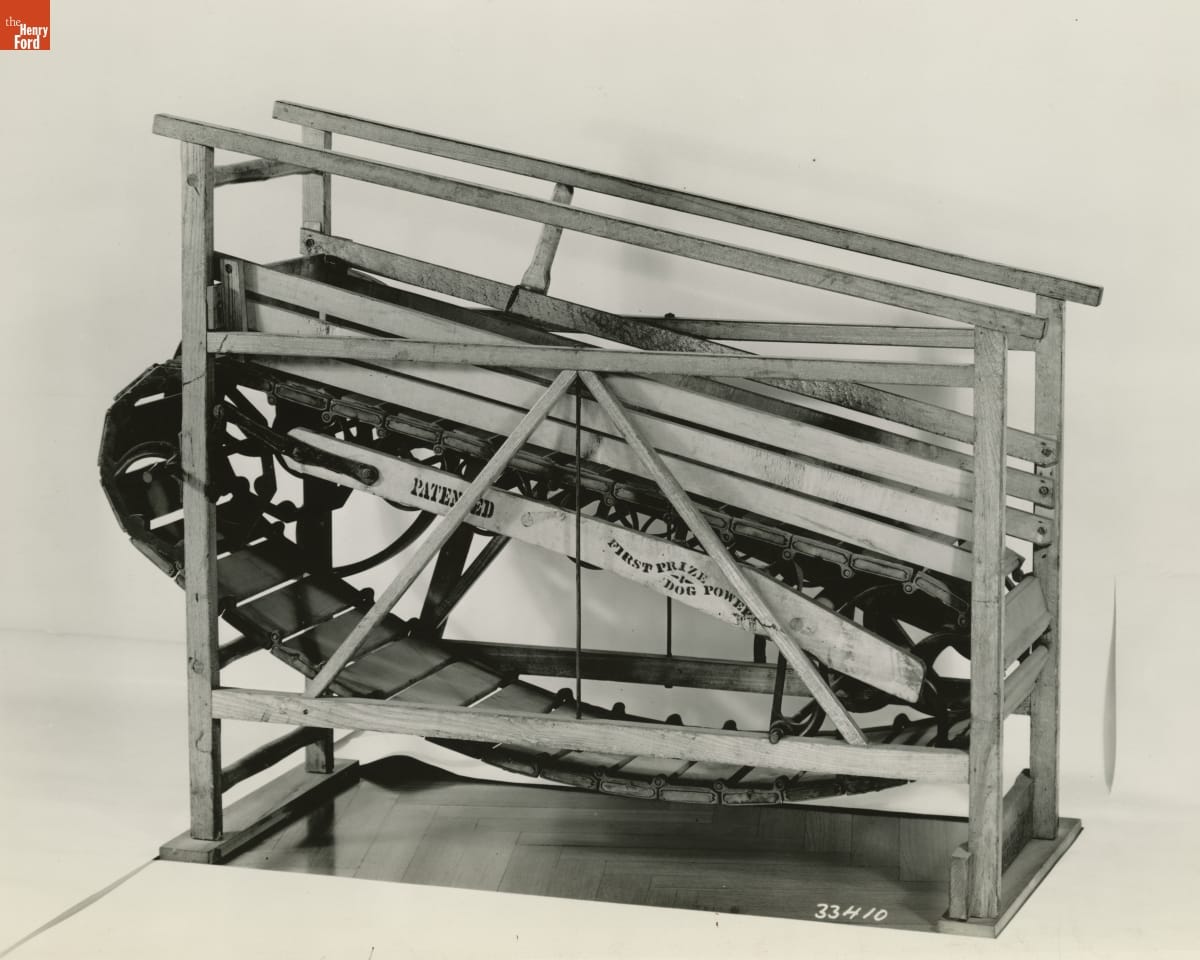
- Small Animal Tread Power, circa 1898 - As farmers mechanized barn and farmyard work in the nineteenth century, they began to use stationary power sources. Some invested in animal treadmills, which used the same "endless belt" concept as modern exercise treadmills to convert animals' movement into power for a range of agricultural machinery. This version, designed for dogs, goats, or sheep, could run small machines like butter churns or cream separators.
- circa 1898
- Collections - Artifact
Small Animal Tread Power, circa 1898
As farmers mechanized barn and farmyard work in the nineteenth century, they began to use stationary power sources. Some invested in animal treadmills, which used the same "endless belt" concept as modern exercise treadmills to convert animals' movement into power for a range of agricultural machinery. This version, designed for dogs, goats, or sheep, could run small machines like butter churns or cream separators.
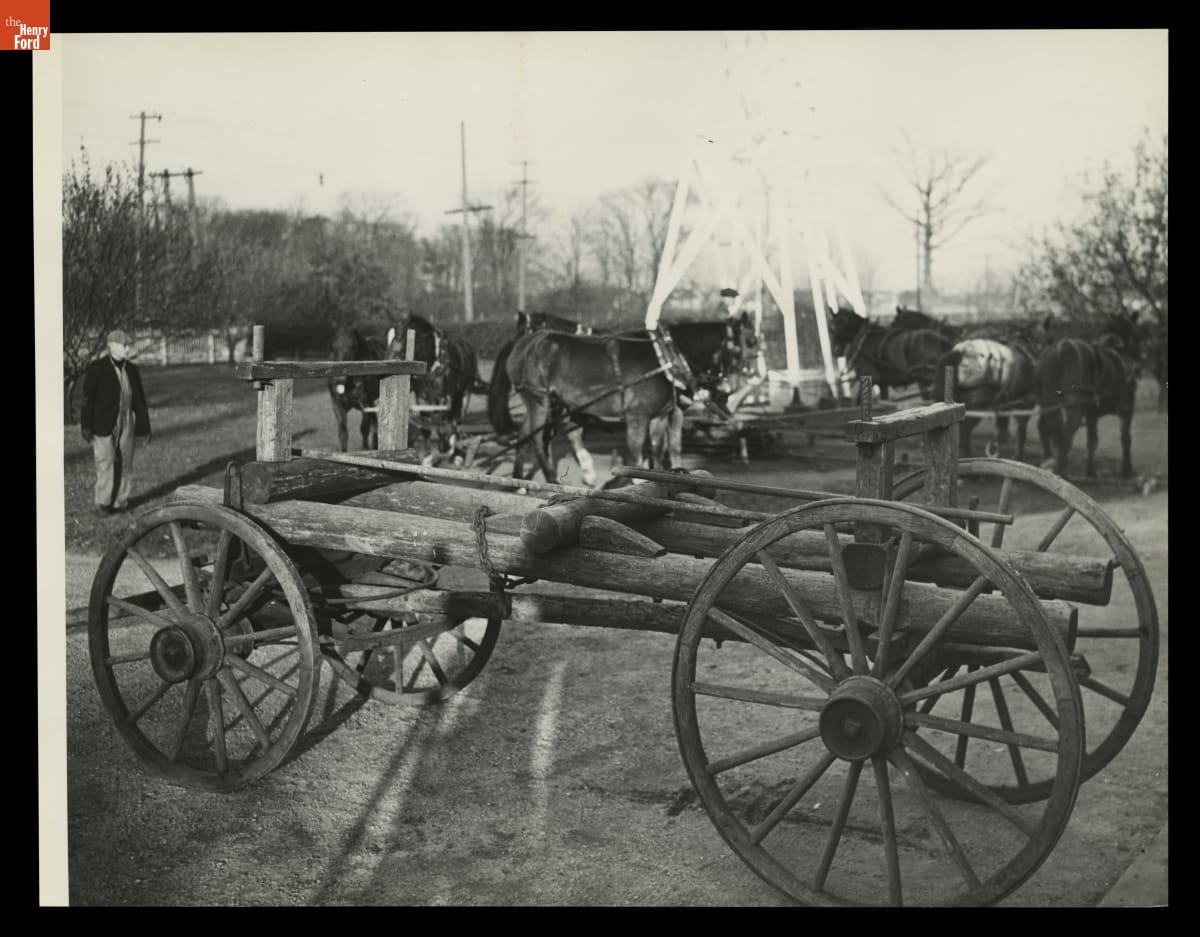
- Threshing at the Ford Homestead, Dearborn, Michigan, November 1936 - As farmers mechanized barn and farmyard work in the nineteenth century, they began to use stationary power sources. Some invested in "sweeps," which converted energy generated by horses walking in a circle into power to operate large machines like grain threshers or separators. Sweep operators hauled these devices on specially designed wagons from farm to farm during threshing season.
- November 13, 1936
- Collections - Artifact
Threshing at the Ford Homestead, Dearborn, Michigan, November 1936
As farmers mechanized barn and farmyard work in the nineteenth century, they began to use stationary power sources. Some invested in "sweeps," which converted energy generated by horses walking in a circle into power to operate large machines like grain threshers or separators. Sweep operators hauled these devices on specially designed wagons from farm to farm during threshing season.
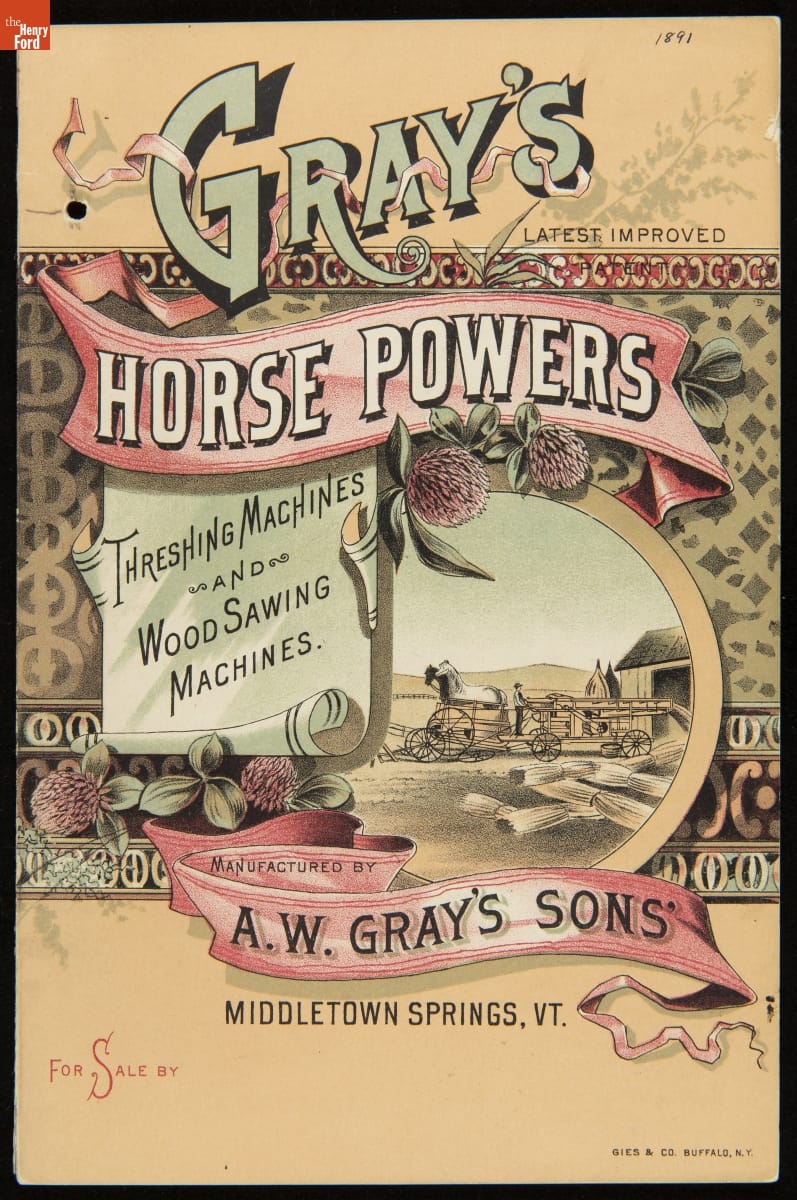
- Gray's Latest Improved Horse Powers Threshing Machines and Wood Sawing Machines, 1891 - As farmers mechanized barn and farmyard work in the nineteenth century, they began to use stationary power sources. These included devices such as treadmills that converted the movement of animals to drive a variety of agricultural machines. Enterprising manufacturers, like Vermont-based A.W. Gray's Sons, specialized in producing and selling these devices and the machines they were designed to power.
- 1891
- Collections - Artifact
Gray's Latest Improved Horse Powers Threshing Machines and Wood Sawing Machines, 1891
As farmers mechanized barn and farmyard work in the nineteenth century, they began to use stationary power sources. These included devices such as treadmills that converted the movement of animals to drive a variety of agricultural machines. Enterprising manufacturers, like Vermont-based A.W. Gray's Sons, specialized in producing and selling these devices and the machines they were designed to power.
- Threshing at the Ford Homestead, Dearborn, Michigan, November 1936 -
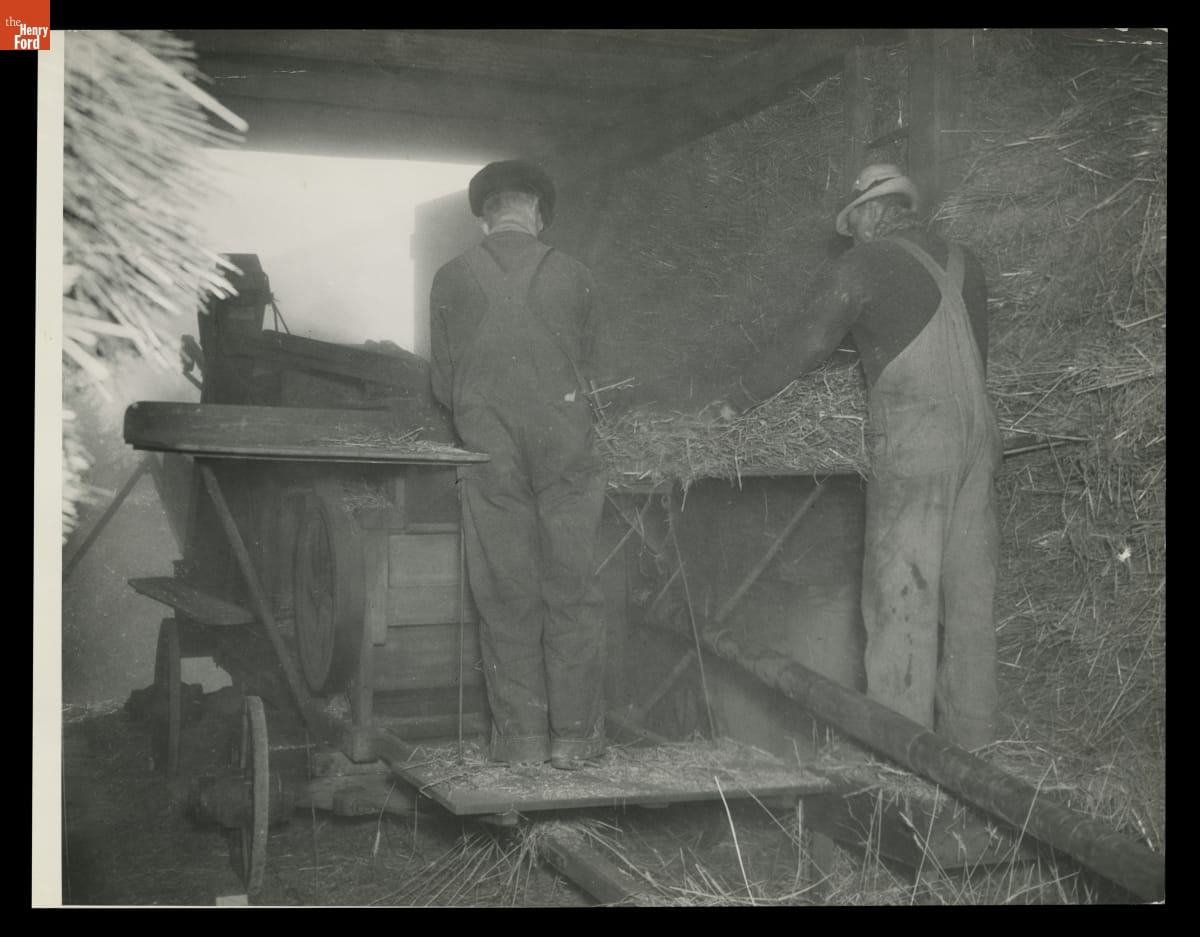
- November 13, 1936
- Collections - Artifact
Threshing at the Ford Homestead, Dearborn, Michigan, November 1936
- Treadmill Operated by Oxen on the Perkins Farm, Bethany, Connecticut, circa 1880 - Oxen were the main source of power on many American farms before the development of portable steam and internal combustion engines. Under yoke, they could haul a wide range of heavy objects: logs and boulders; vehicles, like wagons; or agricultural equipment, like plows. Using specially designed treadmills, as shown here, oxen could also power stationary machinery in barns or farmyards.
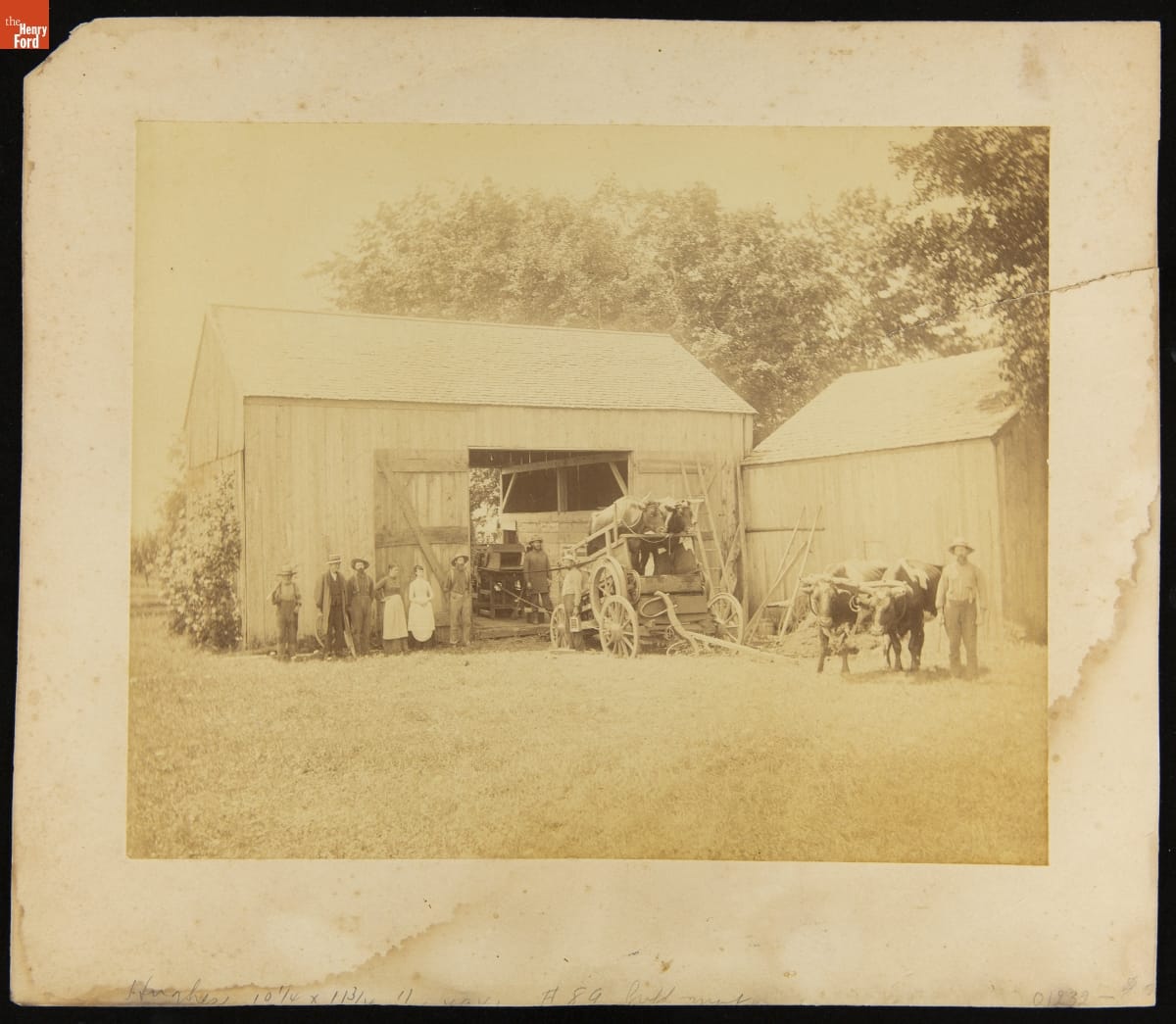
- circa 1880
- Collections - Artifact
Treadmill Operated by Oxen on the Perkins Farm, Bethany, Connecticut, circa 1880
Oxen were the main source of power on many American farms before the development of portable steam and internal combustion engines. Under yoke, they could haul a wide range of heavy objects: logs and boulders; vehicles, like wagons; or agricultural equipment, like plows. Using specially designed treadmills, as shown here, oxen could also power stationary machinery in barns or farmyards.
- Small Animal Tread Power, circa 1885 -
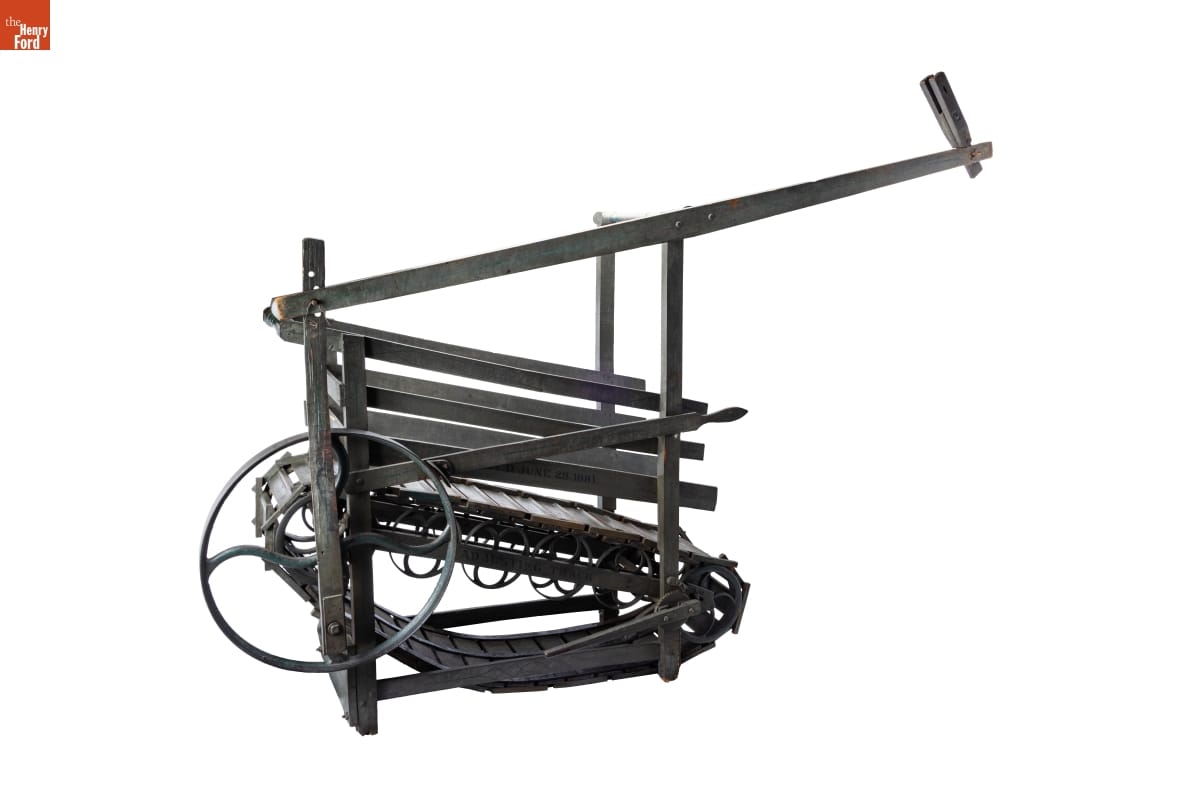
- circa 1885
- Collections - Artifact
Small Animal Tread Power, circa 1885
- A.B. Farquhar Trade Catalog, "Pennsylvania Agricultural Works," 1886 - As farmers mechanized barn and farmyard work in the nineteenth century, they began to use stationary power sources. These included portable steam engines and devices that converted animals' movement to drive a variety of agricultural machines. Enterprising manufacturers, like Pennsylvania-based A.B. Farquhar Co., specialized in producing and selling both power sources and the machines they were designed to run.
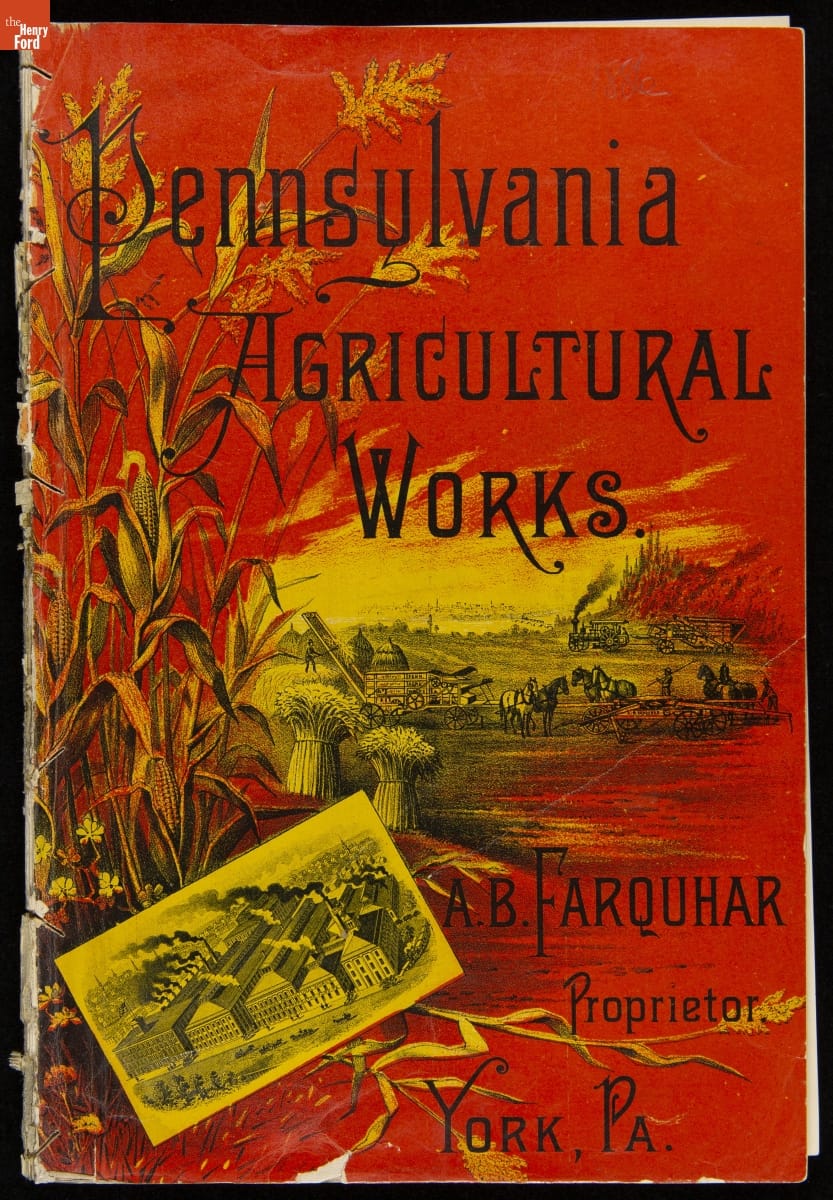
- 1886
- Collections - Artifact
A.B. Farquhar Trade Catalog, "Pennsylvania Agricultural Works," 1886
As farmers mechanized barn and farmyard work in the nineteenth century, they began to use stationary power sources. These included portable steam engines and devices that converted animals' movement to drive a variety of agricultural machines. Enterprising manufacturers, like Pennsylvania-based A.B. Farquhar Co., specialized in producing and selling both power sources and the machines they were designed to run.
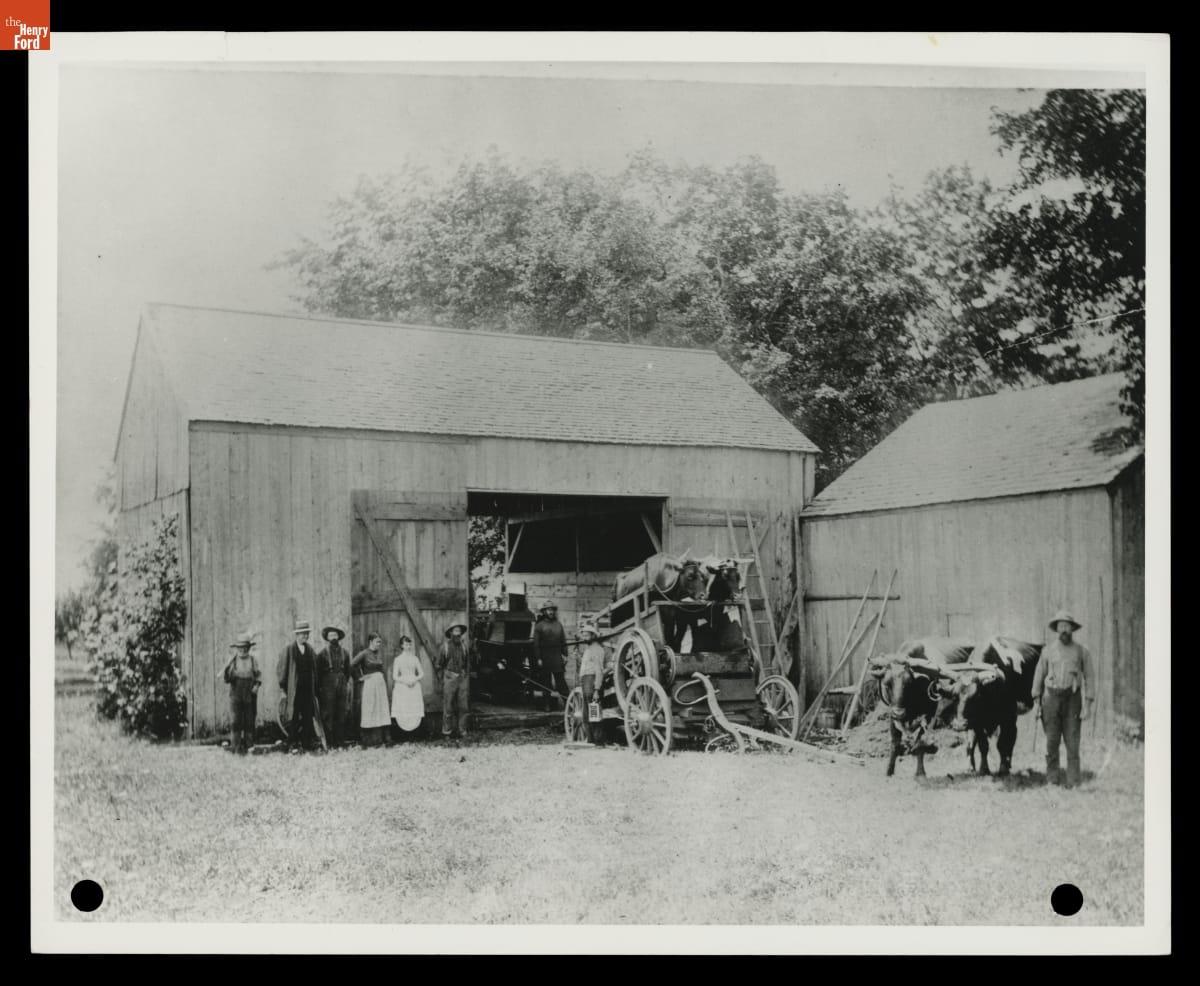
- Treadmill Operated by Oxen on the Perkins Farm, Bethany, Connecticut, circa 1880 - Oxen were the main source of power on many American farms before the development of portable steam and internal combustion engines. Under yoke, they could haul a wide range of heavy objects: logs and boulders; vehicles, like wagons; or agricultural equipment, like plows. Using specially designed treadmills, as shown here, oxen could also power stationary machinery in barns or farmyards.
- circa 1880
- Collections - Artifact
Treadmill Operated by Oxen on the Perkins Farm, Bethany, Connecticut, circa 1880
Oxen were the main source of power on many American farms before the development of portable steam and internal combustion engines. Under yoke, they could haul a wide range of heavy objects: logs and boulders; vehicles, like wagons; or agricultural equipment, like plows. Using specially designed treadmills, as shown here, oxen could also power stationary machinery in barns or farmyards.
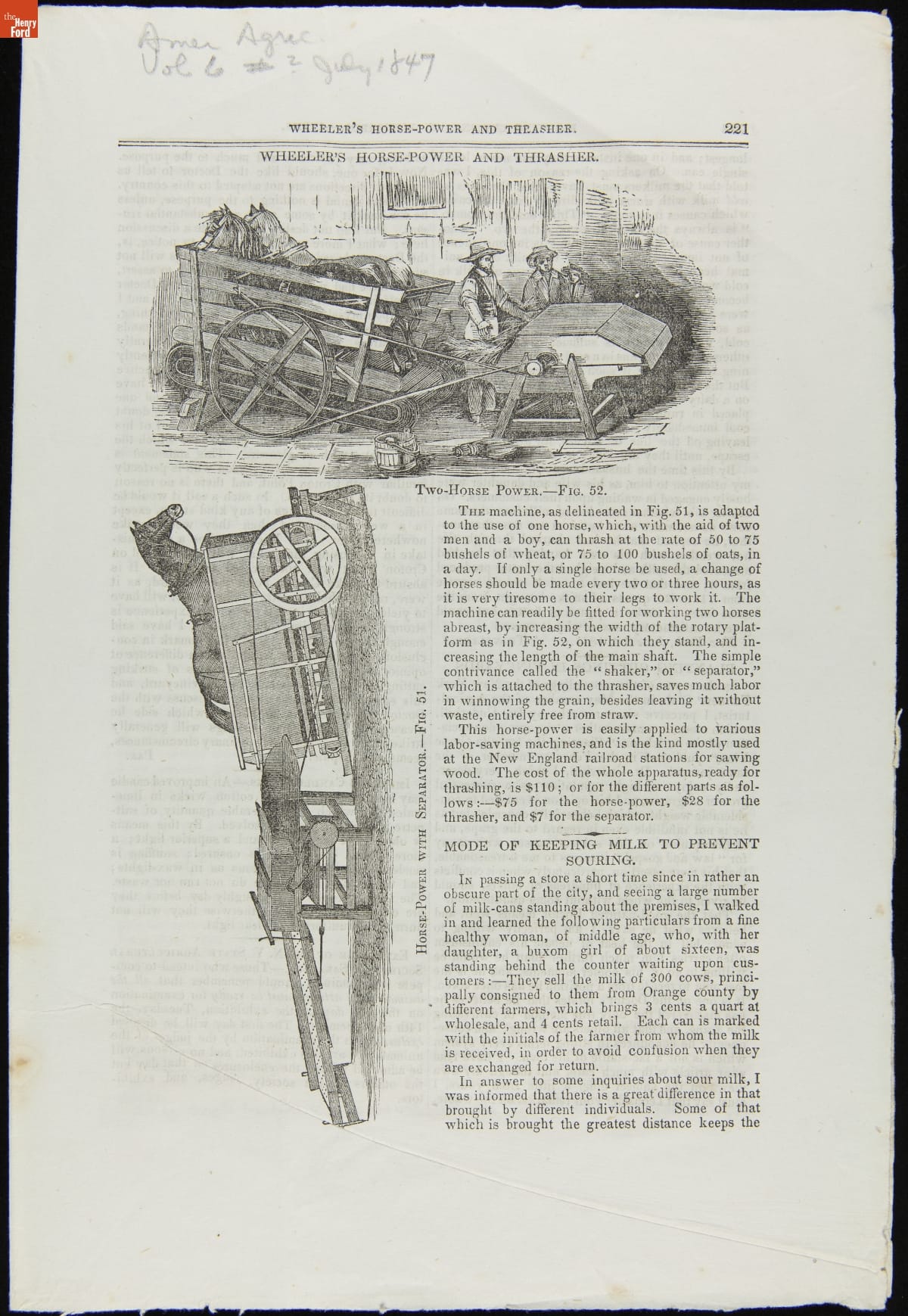
- Wheeler's Horse-Power and Thrasher, July 1847 - Farmers began to use stationary power sources in the nineteenth century as they mechanized barn or farmyard work like threshing, winnowing, or corn grinding. Some invested in animal treadmills like those advertised here. Animals walked on an "endless belt," a device similar to those on modern exercise treadmills. A wheel and belt converted the animals' movement to drive a variety of agricultural machinery.
- July 01, 1847
- Collections - Artifact
Wheeler's Horse-Power and Thrasher, July 1847
Farmers began to use stationary power sources in the nineteenth century as they mechanized barn or farmyard work like threshing, winnowing, or corn grinding. Some invested in animal treadmills like those advertised here. Animals walked on an "endless belt," a device similar to those on modern exercise treadmills. A wheel and belt converted the animals' movement to drive a variety of agricultural machinery.