
Search
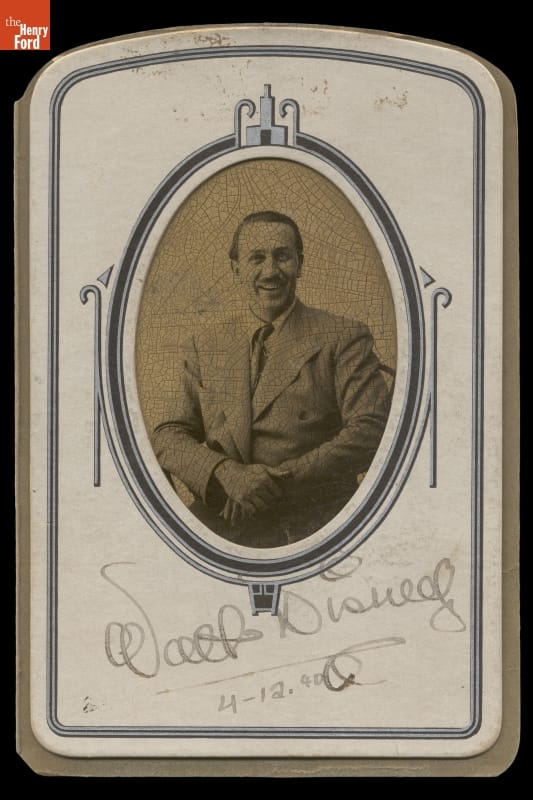
- Walt Disney Posing in the Greenfield Village Tintype Studio, 1940 - Walt Disney spent years imagining his ground-breaking theme park, Disneyland, before it opened in 1955. Disney visited many places to find inspiration, including Henry Ford's Greenfield Village. During a tour in 1940, he stopped in the village tintype studio. Disney posed for and autographed this portrait for display in the studio
- April 12, 1940
- Collections - Artifact
Walt Disney Posing in the Greenfield Village Tintype Studio, 1940
Walt Disney spent years imagining his ground-breaking theme park, Disneyland, before it opened in 1955. Disney visited many places to find inspiration, including Henry Ford's Greenfield Village. During a tour in 1940, he stopped in the village tintype studio. Disney posed for and autographed this portrait for display in the studio
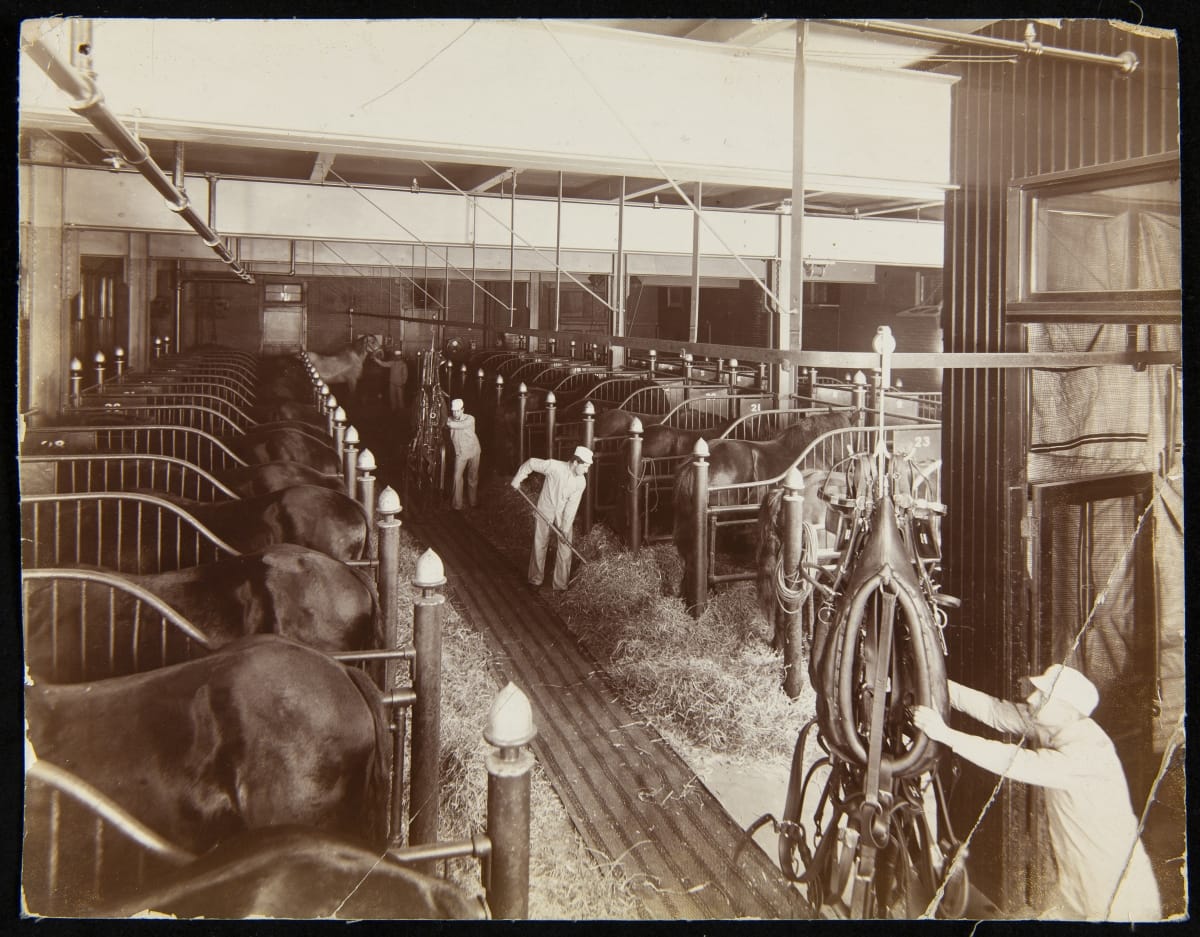
- Second Floor of H. J. Heinz Company Stables, Pittsburgh, Pennsylvania, circa 1910 - The H.J. Heinz Company spared no expense when caring for its Percheron horses. The processed food manufacturer stabled horses on the second floor of a three-story "equine palace" in Pittsburgh. Grooms spread high-quality bedding, as this photograph shows, to help keep their charges clean between shifts hitched to Heinz delivery wagons.
- circa 1910
- Collections - Artifact
Second Floor of H. J. Heinz Company Stables, Pittsburgh, Pennsylvania, circa 1910
The H.J. Heinz Company spared no expense when caring for its Percheron horses. The processed food manufacturer stabled horses on the second floor of a three-story "equine palace" in Pittsburgh. Grooms spread high-quality bedding, as this photograph shows, to help keep their charges clean between shifts hitched to Heinz delivery wagons.
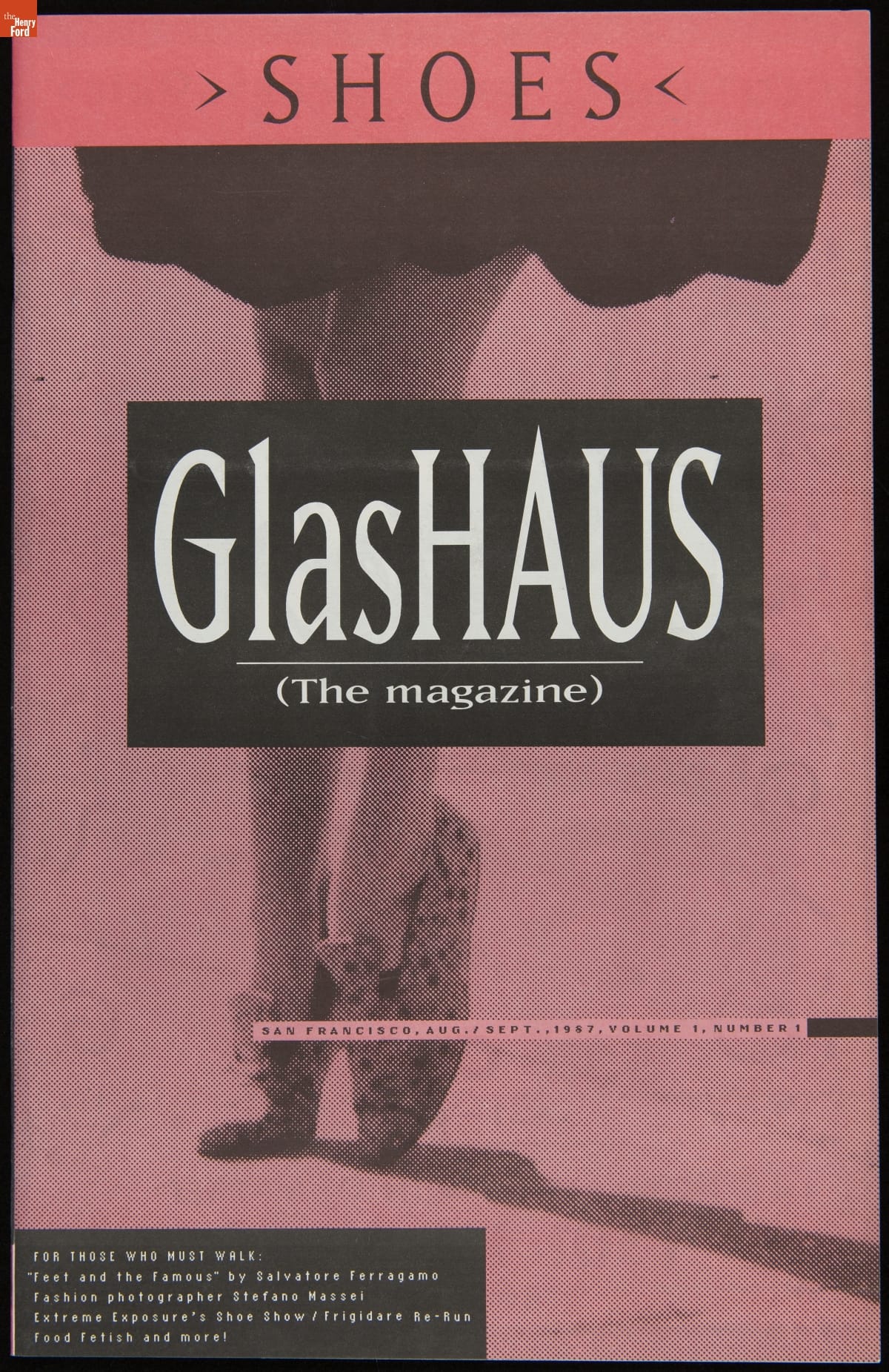
- Magazine, GlasHaus, Vol. 1, No. 1, "Shoes," August 8, 1987 - <em>GlasHaus</em> magazine was designed by Rudy VanderLans, co-founder of the digital type foundry, Emigre, Inc. VanderLans tested the limits of the Macintosh computer as a creative design tool, producing adventurous magazine layouts for several publications. <em>Glashaus</em> was a San Francisco "hot house for international style, fashion, and entertainment." This thematic magazine advertised their activities and the local fashion scene.
- August 08, 1987
- Collections - Artifact
Magazine, GlasHaus, Vol. 1, No. 1, "Shoes," August 8, 1987
GlasHaus magazine was designed by Rudy VanderLans, co-founder of the digital type foundry, Emigre, Inc. VanderLans tested the limits of the Macintosh computer as a creative design tool, producing adventurous magazine layouts for several publications. Glashaus was a San Francisco "hot house for international style, fashion, and entertainment." This thematic magazine advertised their activities and the local fashion scene.
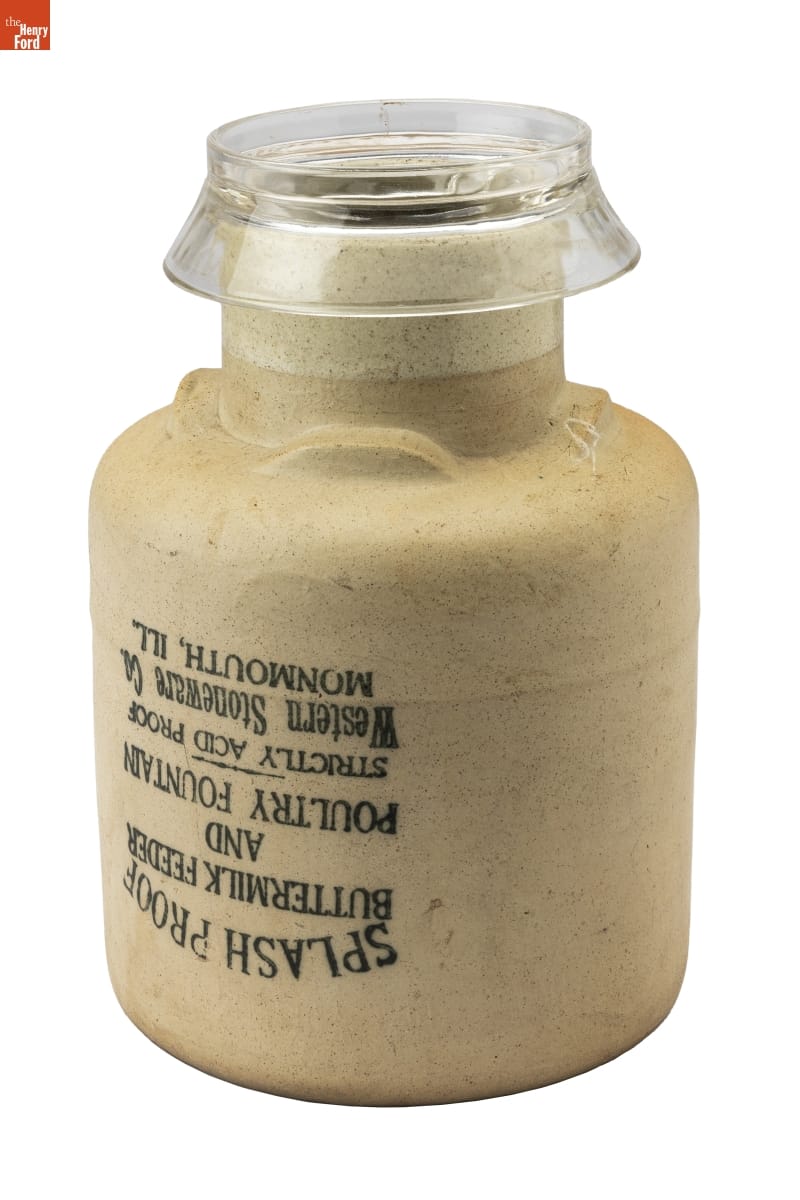
- Poultry Fountain -
- Collections - Artifact
Poultry Fountain
- Harp Seal Hand Puppet, circa 1980 -
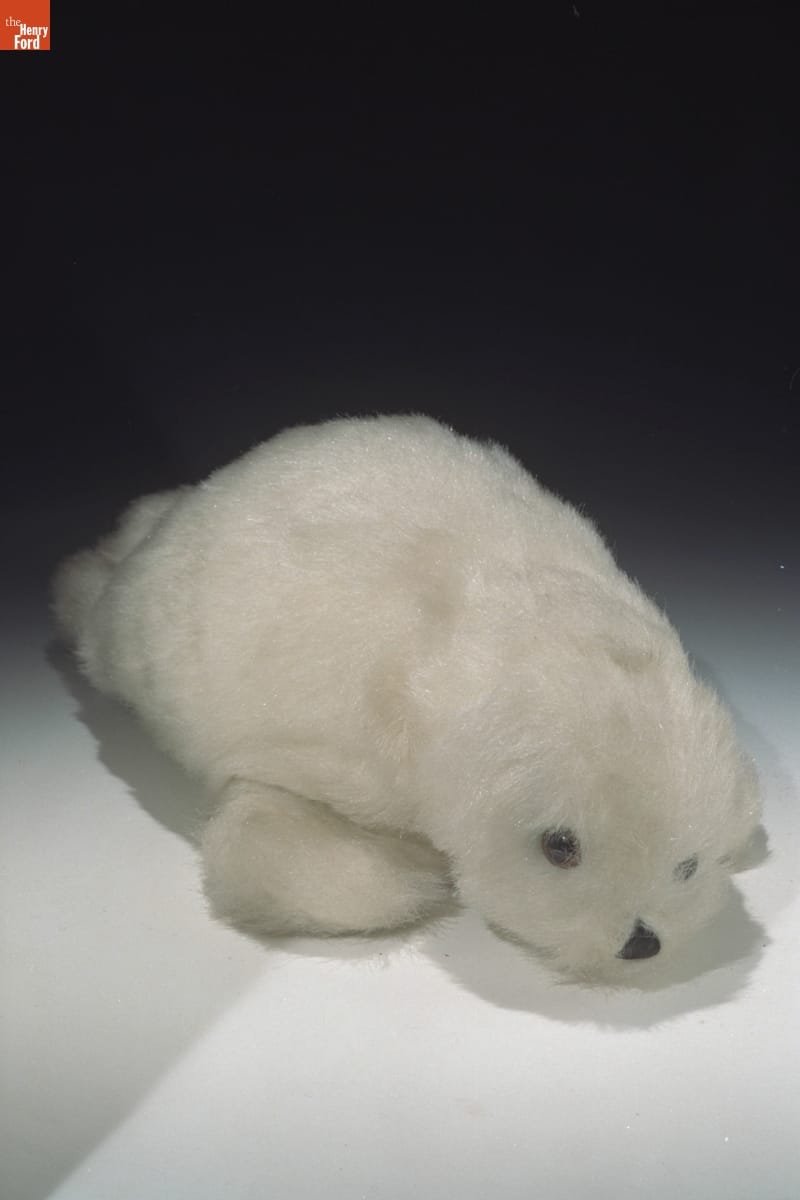
- circa 1980
- Collections - Artifact
Harp Seal Hand Puppet, circa 1980
- Employee Cyndi Scott Feeding a Racoon in Greenfield Village, 1977 -
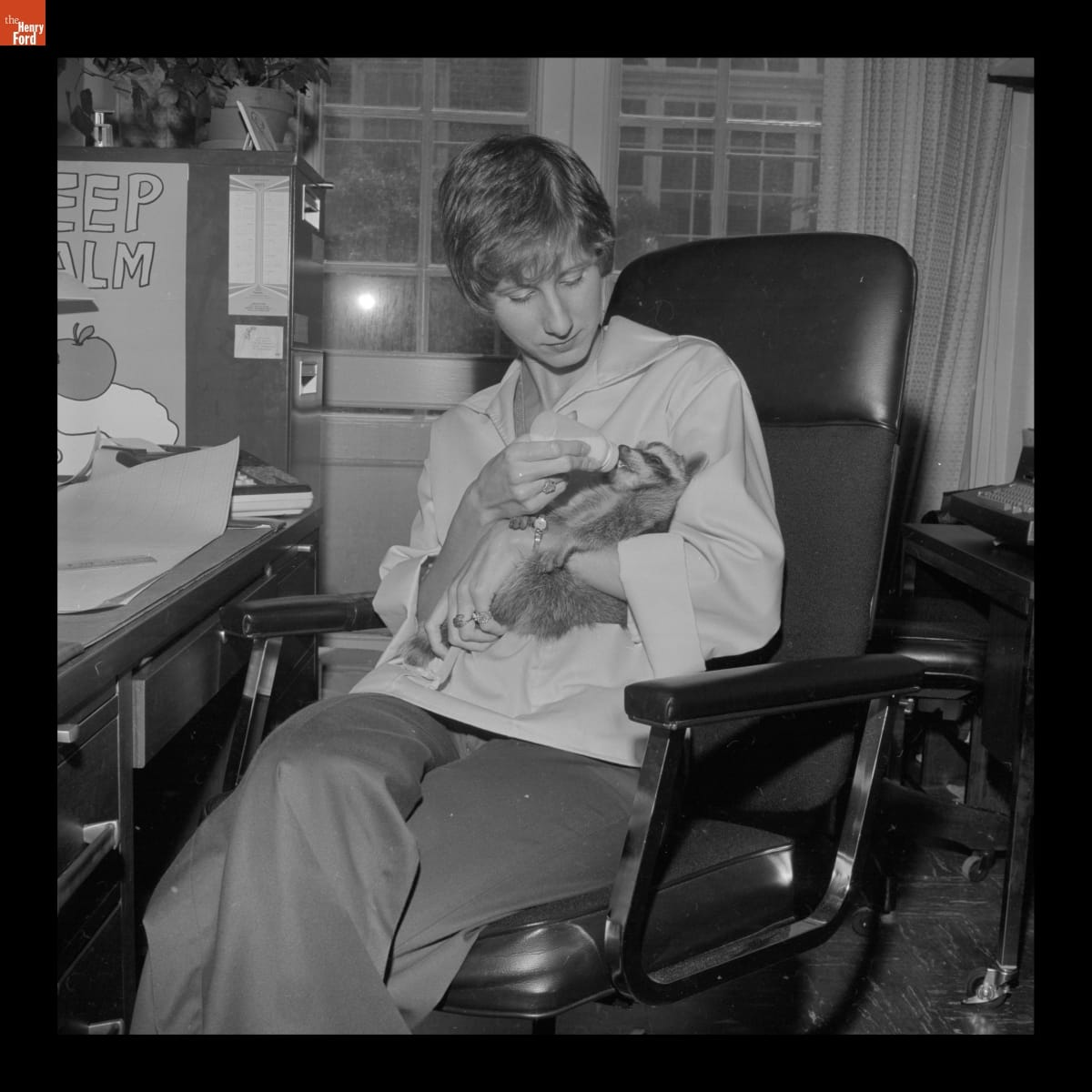
- 1977
- Collections - Artifact
Employee Cyndi Scott Feeding a Racoon in Greenfield Village, 1977
- Postcard, Cats with a Basket of Flowers, "A Happy Birthday," 1908 - Depictions of cats and kittens often appeared in art and folk art in the United States. Inexpensive lithograph prints made in the mid-19th century helped to make this topic popular. Starting in the late 1890s picture postcards included these types of popular illustrations of cats. Sending colorful postcards through the U.S. mail continued to be widespread well into the 1910s.
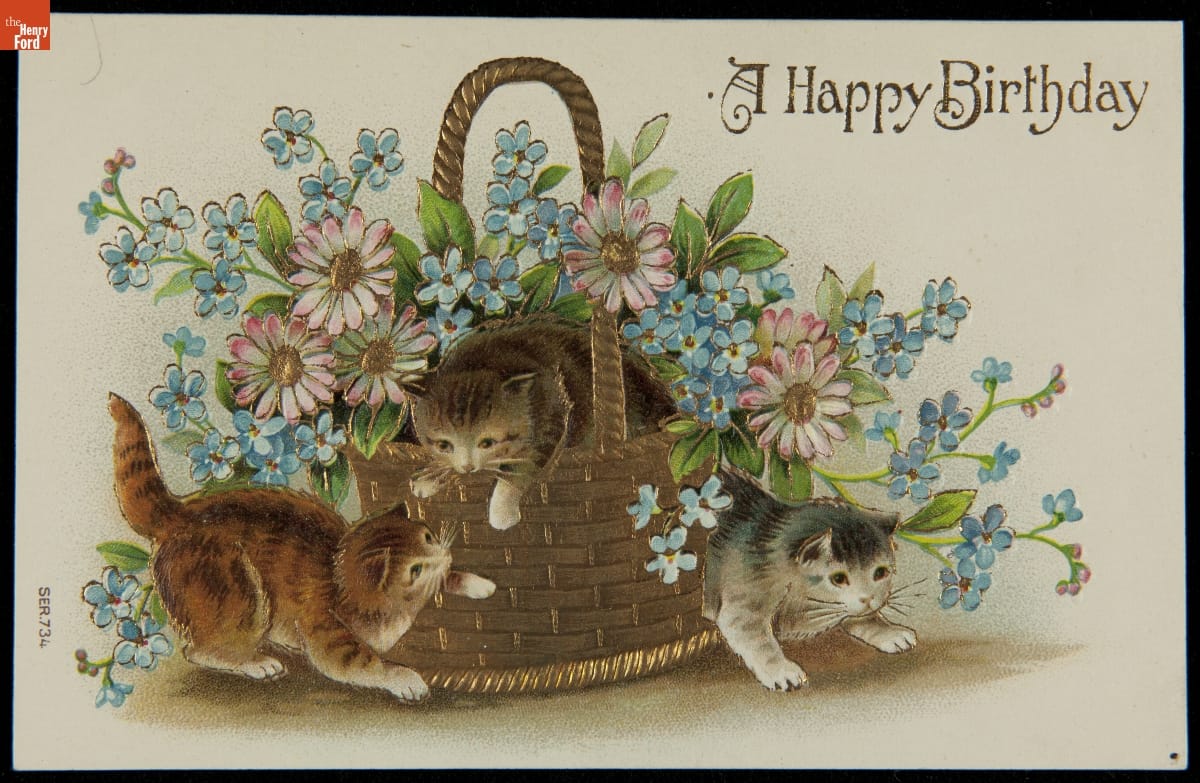
- 1908
- Collections - Artifact
Postcard, Cats with a Basket of Flowers, "A Happy Birthday," 1908
Depictions of cats and kittens often appeared in art and folk art in the United States. Inexpensive lithograph prints made in the mid-19th century helped to make this topic popular. Starting in the late 1890s picture postcards included these types of popular illustrations of cats. Sending colorful postcards through the U.S. mail continued to be widespread well into the 1910s.
- 1969 Renault Advertisement, "The Horse is Better than Most 1970 Cars" - French automaker Renault was formed in 1899 by brothers Louis, Marcel, and Fernand Renault. The company built its early reputation in part through racing, and it expanded into commercial vehicles as well. Following World War II, Renault's compact Dauphine sold well in the United States. Renault increased its American footprint through a partnership with American Motors Corporation launched in 1979.
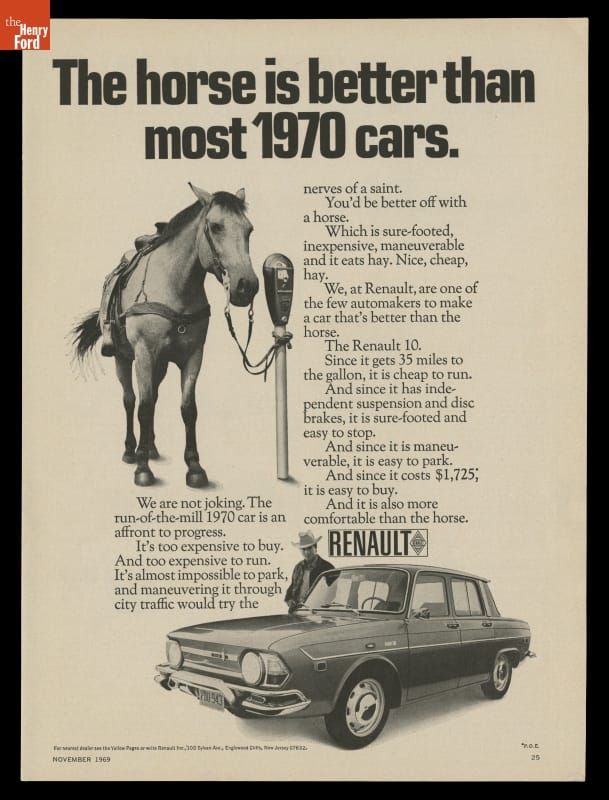
- 1969
- Collections - Artifact
1969 Renault Advertisement, "The Horse is Better than Most 1970 Cars"
French automaker Renault was formed in 1899 by brothers Louis, Marcel, and Fernand Renault. The company built its early reputation in part through racing, and it expanded into commercial vehicles as well. Following World War II, Renault's compact Dauphine sold well in the United States. Renault increased its American footprint through a partnership with American Motors Corporation launched in 1979.
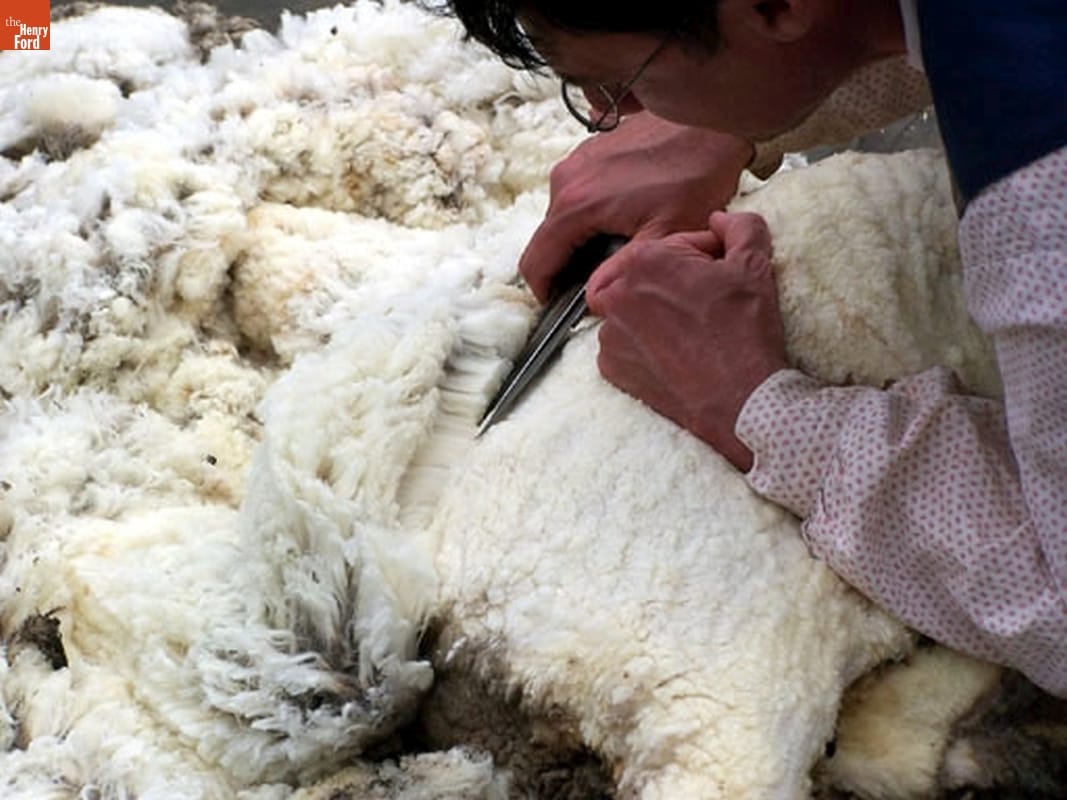
- Demonstrating Blade-Shearing of Merino Sheep in Greenfield Village, May 2005 - Heavy coats of fine wool made Merino sheep a popular breed among nineteenth-century wool producers. Every spring, shearers carefully navigated blade shears to remove each sheep's thick fleece -- a process that could take several hours. More than a century later, presenters demonstrate this labor-intensive blade-shearing process at Firestone Farm in Greenfield Village.
- May 01, 2005
- Collections - Artifact
Demonstrating Blade-Shearing of Merino Sheep in Greenfield Village, May 2005
Heavy coats of fine wool made Merino sheep a popular breed among nineteenth-century wool producers. Every spring, shearers carefully navigated blade shears to remove each sheep's thick fleece -- a process that could take several hours. More than a century later, presenters demonstrate this labor-intensive blade-shearing process at Firestone Farm in Greenfield Village.
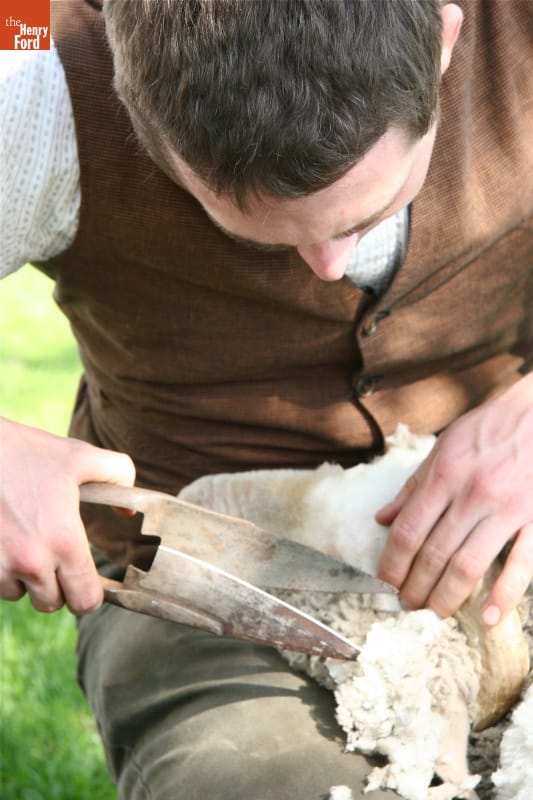
- Demonstrating Blade-Shearing of Merino Sheep in Greenfield Village, April 2010 - Heavy coats of fine wool made Merino sheep a popular breed among nineteenth-century wool producers. Every spring, shearers carefully navigated blade shears to remove each sheep's thick fleece -- a process that could take several hours. More than a century later, presenters demonstrate this labor-intensive blade-shearing process at Firestone Farm in Greenfield Village.
- April 29, 2010
- Collections - Artifact
Demonstrating Blade-Shearing of Merino Sheep in Greenfield Village, April 2010
Heavy coats of fine wool made Merino sheep a popular breed among nineteenth-century wool producers. Every spring, shearers carefully navigated blade shears to remove each sheep's thick fleece -- a process that could take several hours. More than a century later, presenters demonstrate this labor-intensive blade-shearing process at Firestone Farm in Greenfield Village.