
Search
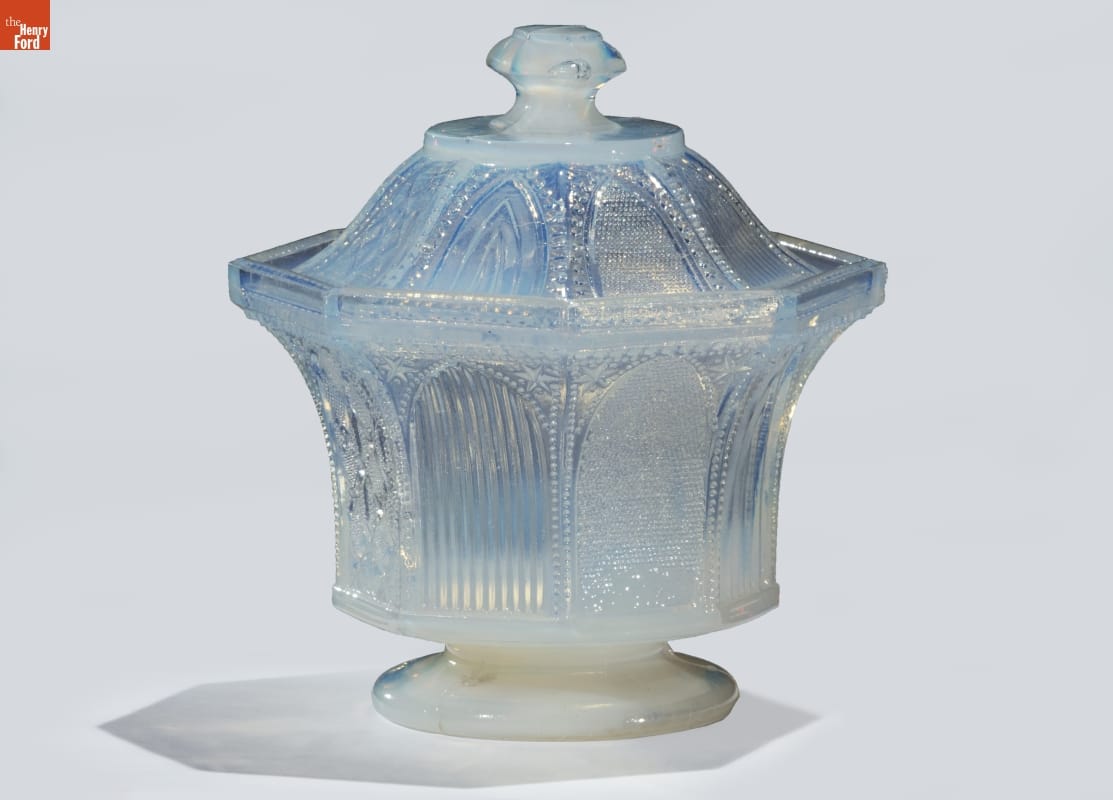
- Sugar Bowl, 1835-1850 - Mechanically pressed glass was an innovation in glass history, making decorative, "patterned" glass available to a broad audience. One of the earliest types of pressed glass, dating to the 1830s is known as "Lacy Glass". Complex stippled patterns were developed to help hide technical defects caused by early presses, when the glass gather was cut off and dropped into a mold.
- 1835-1850
- Collections - Artifact
Sugar Bowl, 1835-1850
Mechanically pressed glass was an innovation in glass history, making decorative, "patterned" glass available to a broad audience. One of the earliest types of pressed glass, dating to the 1830s is known as "Lacy Glass". Complex stippled patterns were developed to help hide technical defects caused by early presses, when the glass gather was cut off and dropped into a mold.
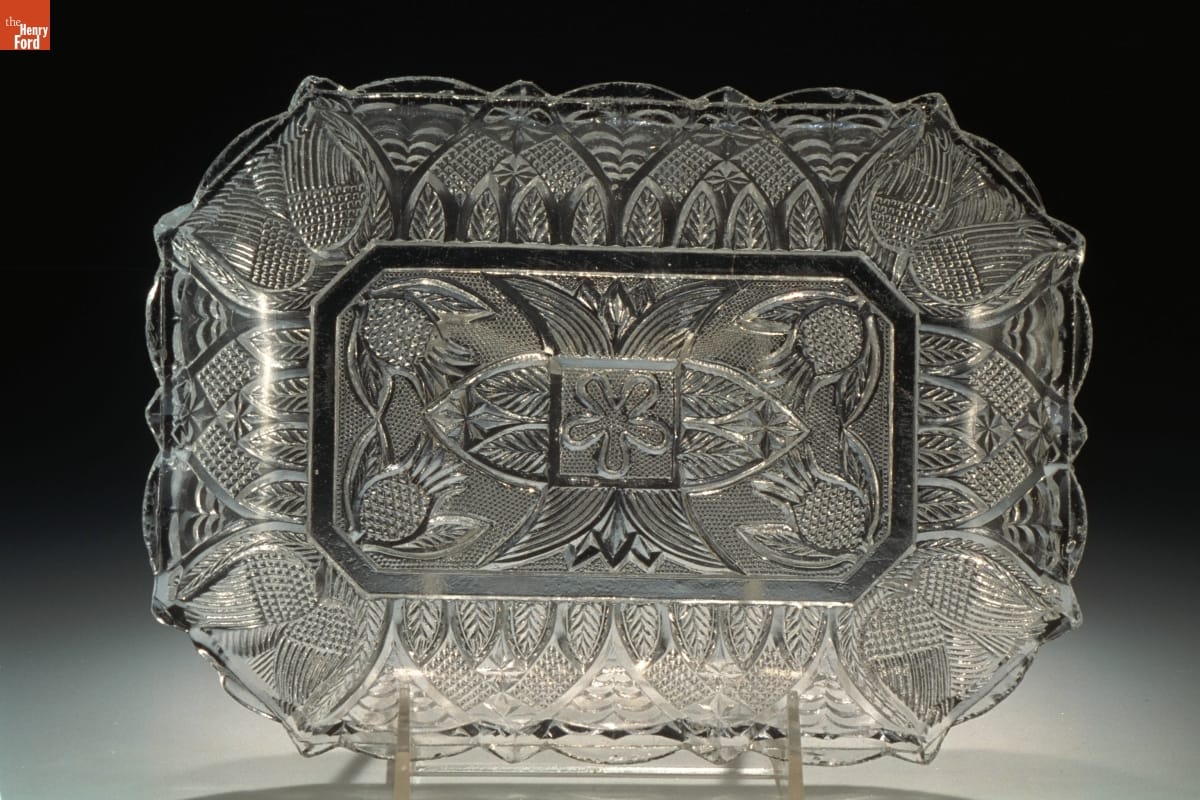
- Dish, 1835-1850 - Mechanically pressed glass was an innovation in glass history, making decorative, "patterned" glass available to a broad audience. One of the earliest types of pressed glass, dating to the 1830s is known as "Lacy Glass". Complex stippled patterns were developed to help hide technical defects caused by early presses, when the glass gather was cut off and dropped into a mold.
- 1835-1850
- Collections - Artifact
Dish, 1835-1850
Mechanically pressed glass was an innovation in glass history, making decorative, "patterned" glass available to a broad audience. One of the earliest types of pressed glass, dating to the 1830s is known as "Lacy Glass". Complex stippled patterns were developed to help hide technical defects caused by early presses, when the glass gather was cut off and dropped into a mold.
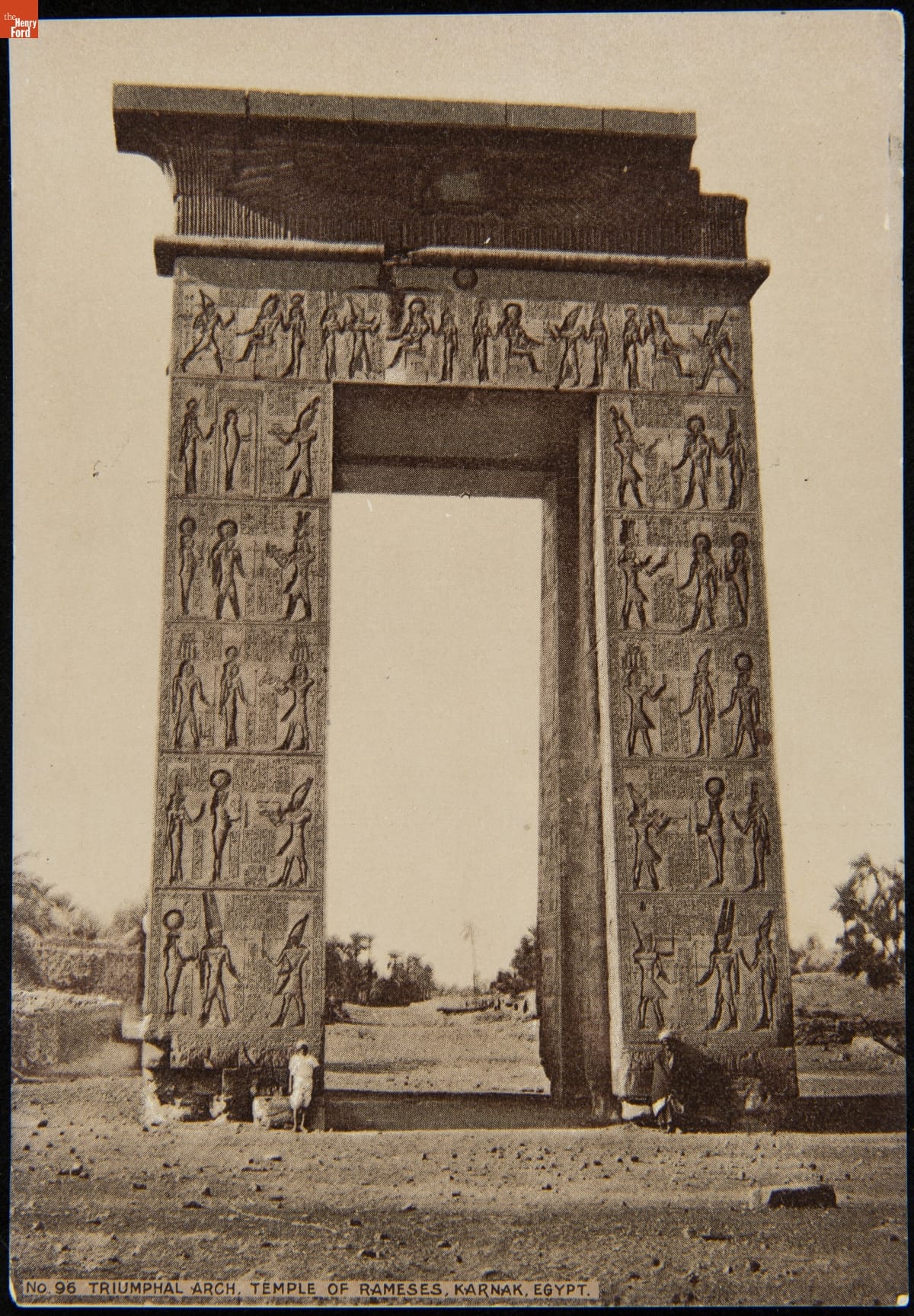
- Trade Card for C.I. Hood & Co. with Hood's Photos of the World, "Triumphal Arch, Karnak, Egypt," 1890-1910 - In the late 19th century, trade cards were a major means of advertising goods and services. Patent medicine producer, C.I. Hood & Co., had its own advertising department, creating cookbooks, calendars, and, most abundantly, trade cards. The trade card series, "Hood's Photos of the World," became popular among consumers, as it offered views of far-away places, providing a window to the broader world.
- 1890-1910
- Collections - Artifact
Trade Card for C.I. Hood & Co. with Hood's Photos of the World, "Triumphal Arch, Karnak, Egypt," 1890-1910
In the late 19th century, trade cards were a major means of advertising goods and services. Patent medicine producer, C.I. Hood & Co., had its own advertising department, creating cookbooks, calendars, and, most abundantly, trade cards. The trade card series, "Hood's Photos of the World," became popular among consumers, as it offered views of far-away places, providing a window to the broader world.
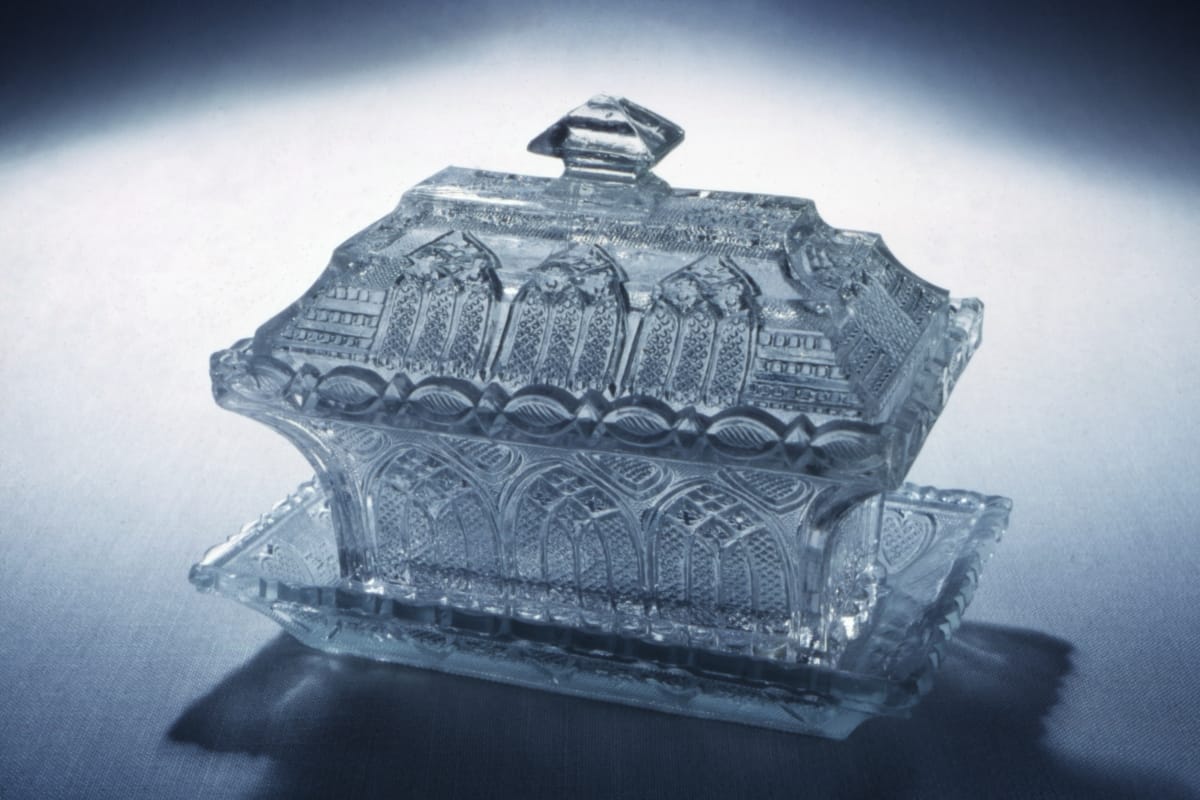
- Casket, 1830-1840 - This mold-made, pressed glass box was intended to hold a middle class lady's jewelry. It was made in the lacy glass technique, in which decoration covers the entire surface of the mold, and is raised against a background of small dots, to create a stippled appearance on the surface. The dots catch any ambient light, making the surface shimmer.
- 1830-1840
- Collections - Artifact
Casket, 1830-1840
This mold-made, pressed glass box was intended to hold a middle class lady's jewelry. It was made in the lacy glass technique, in which decoration covers the entire surface of the mold, and is raised against a background of small dots, to create a stippled appearance on the surface. The dots catch any ambient light, making the surface shimmer.
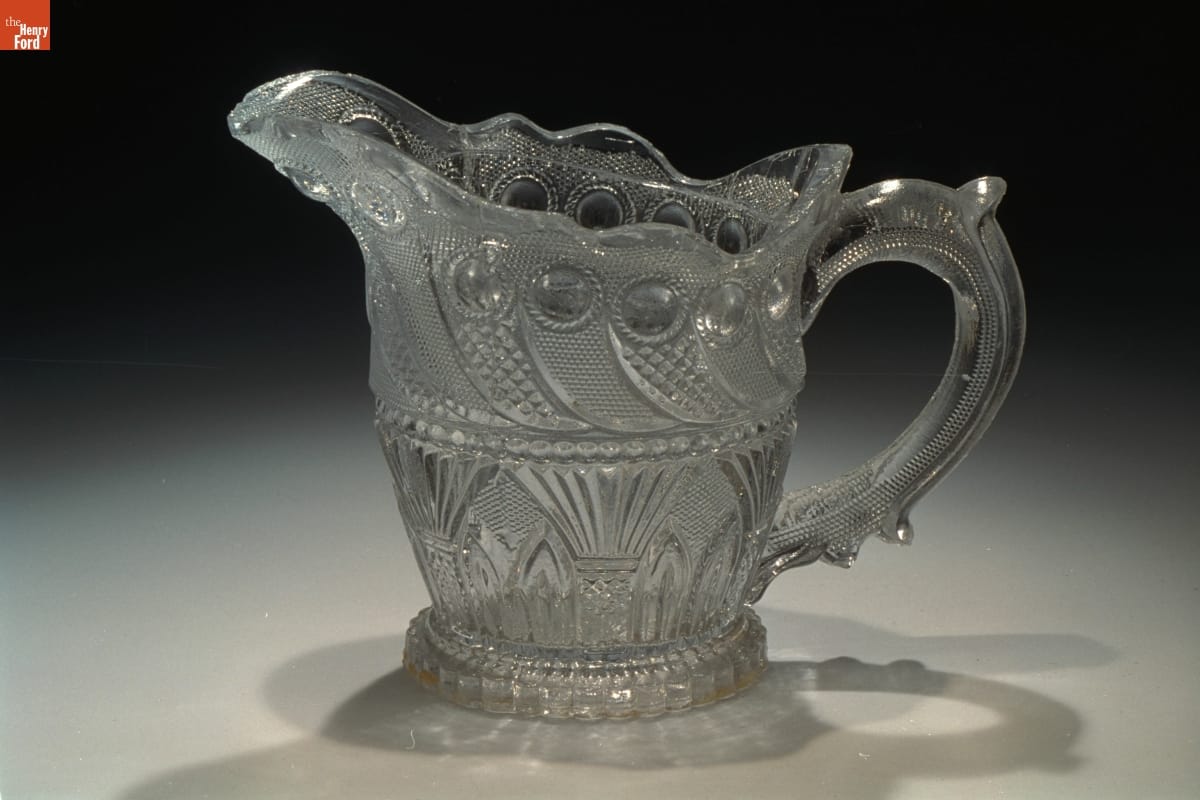
- Creamer, 1830-1840 - Mechanically pressed glass was an innovation in glass history, making decorative, "patterned" glass available to a broad audience. One of the earliest types of pressed glass, dating to the 1830s is known as "Lacy Glass". Complex stippled patterns were developed to help hide technical defects caused by early presses, when the glass gather was cut off and dropped into a mold.
- 1830-1840
- Collections - Artifact
Creamer, 1830-1840
Mechanically pressed glass was an innovation in glass history, making decorative, "patterned" glass available to a broad audience. One of the earliest types of pressed glass, dating to the 1830s is known as "Lacy Glass". Complex stippled patterns were developed to help hide technical defects caused by early presses, when the glass gather was cut off and dropped into a mold.
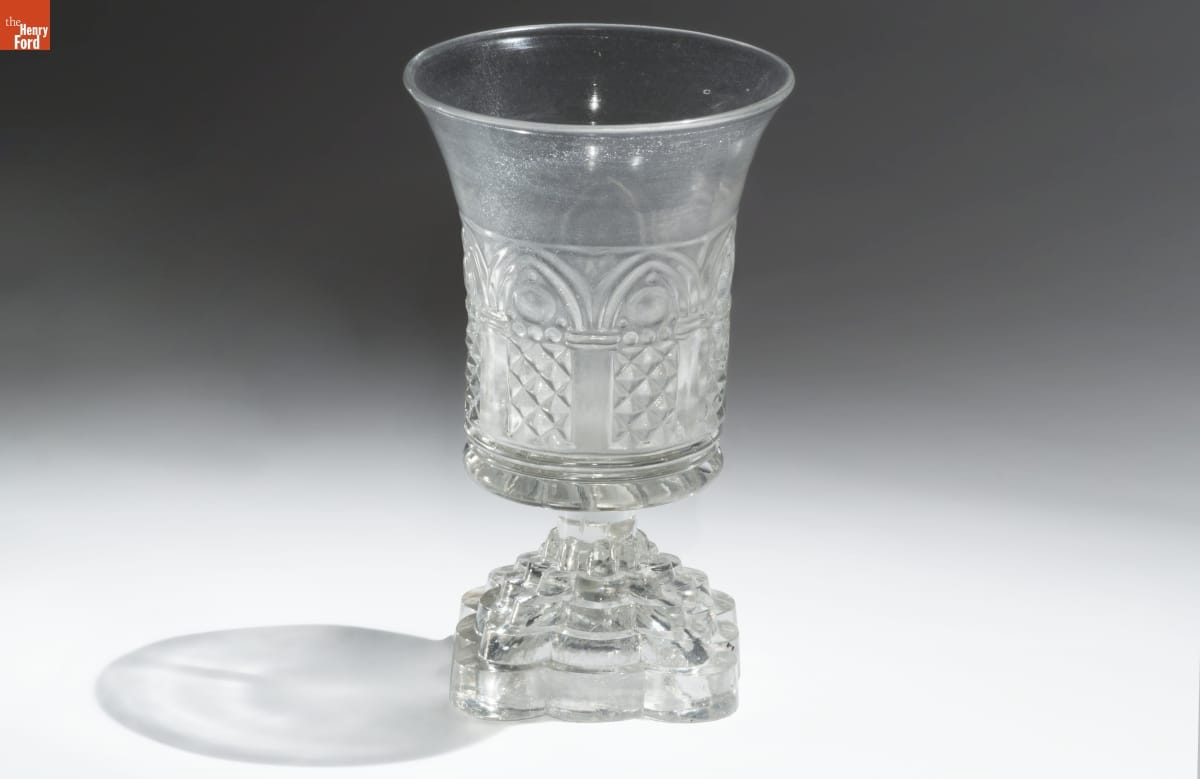
- Celery Vase, 1830-1840 -
- 1830-1840
- Collections - Artifact
Celery Vase, 1830-1840
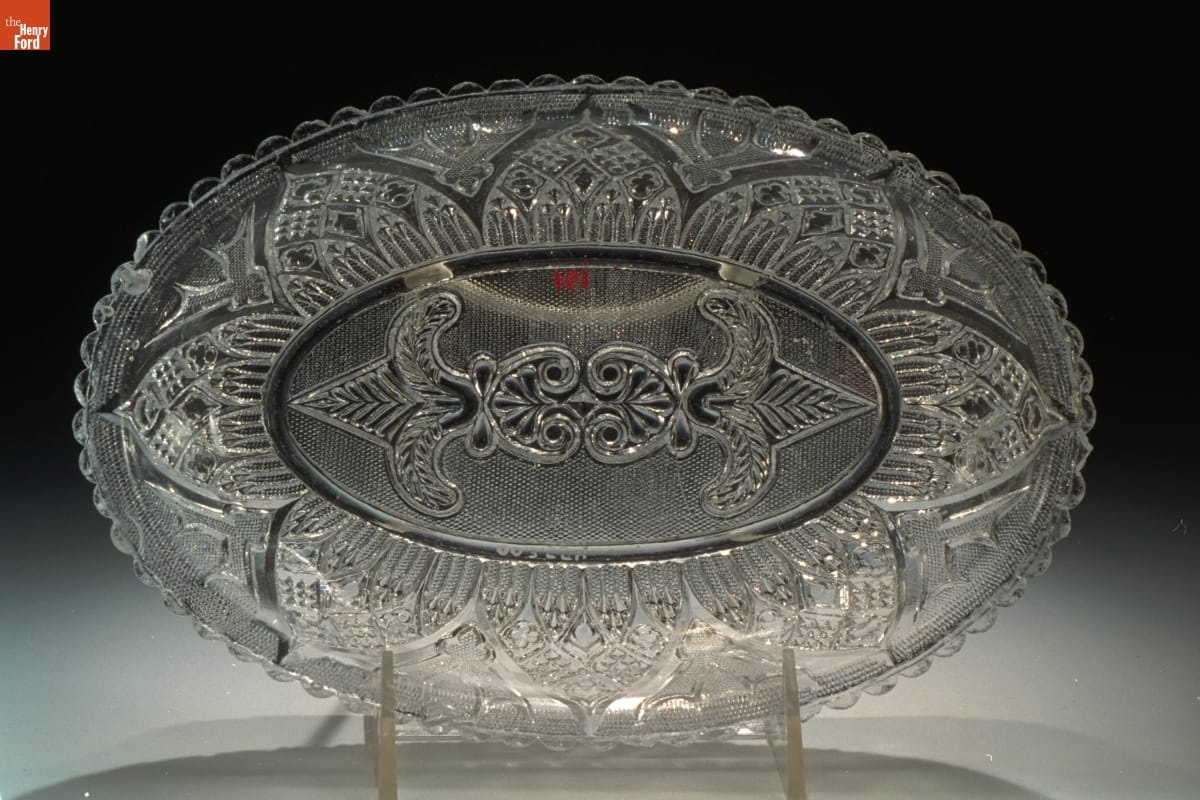
- Dish, 1825-1850 - Mechanically pressed glass was an innovation in glass history, making decorative, "patterned" glass available to a broad audience. One of the earliest types of pressed glass, dating to the 1830s is known as "Lacy Glass". Complex stippled patterns were developed to help hide technical defects caused by early presses, when the glass gather was cut off and dropped into a mold.
- 1825-1850
- Collections - Artifact
Dish, 1825-1850
Mechanically pressed glass was an innovation in glass history, making decorative, "patterned" glass available to a broad audience. One of the earliest types of pressed glass, dating to the 1830s is known as "Lacy Glass". Complex stippled patterns were developed to help hide technical defects caused by early presses, when the glass gather was cut off and dropped into a mold.
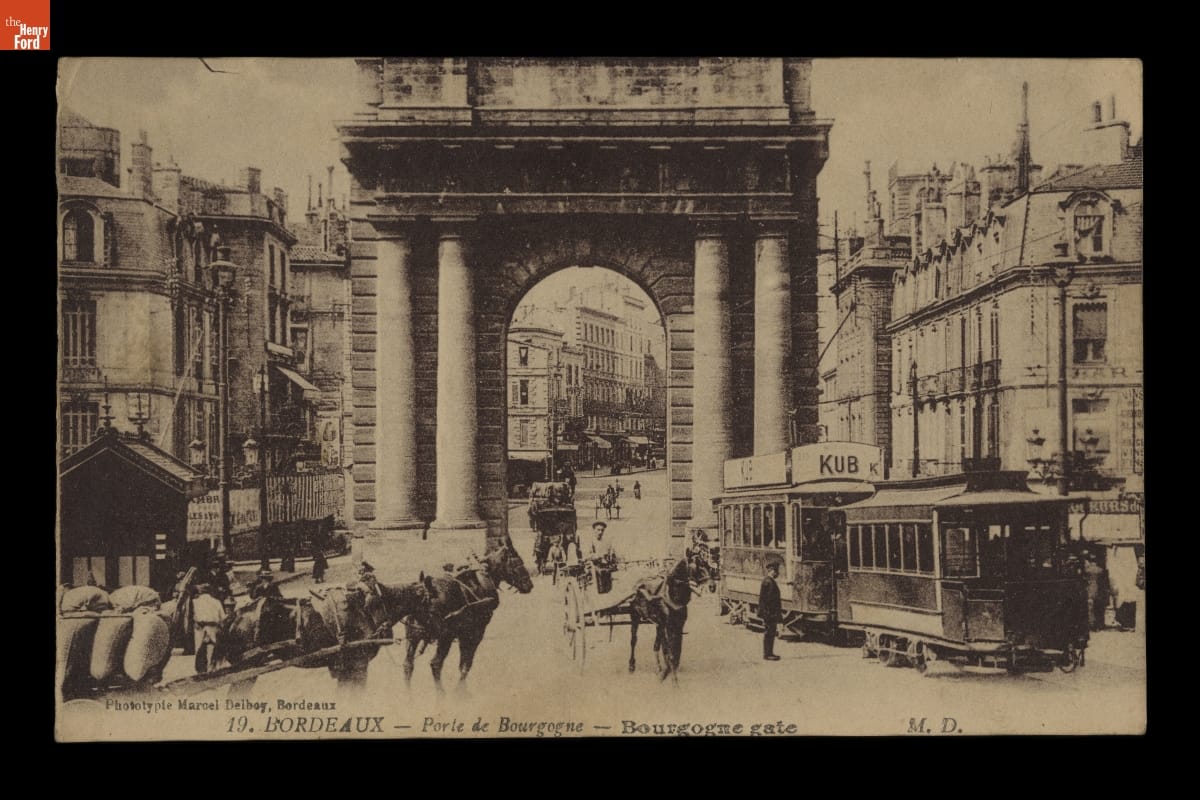
- "Bordeaux - Porte de Bourgogne - Bourgogne Gate" - Andrew Purnell Jr. (1898-1975) was born in Selma, Alabama. He joined the all-Black 303rd Stevedore Regiment (with later unit designations) in December 1917. Private Purnell was stationed in Bordeaux, France. He returned to the U.S. in 1919, married, and worked as a railroad freight handler. Like many service members, Purnell kept cards, letters, photographs, and souvenirs from his time in the military.
- Collections - Artifact
"Bordeaux - Porte de Bourgogne - Bourgogne Gate"
Andrew Purnell Jr. (1898-1975) was born in Selma, Alabama. He joined the all-Black 303rd Stevedore Regiment (with later unit designations) in December 1917. Private Purnell was stationed in Bordeaux, France. He returned to the U.S. in 1919, married, and worked as a railroad freight handler. Like many service members, Purnell kept cards, letters, photographs, and souvenirs from his time in the military.
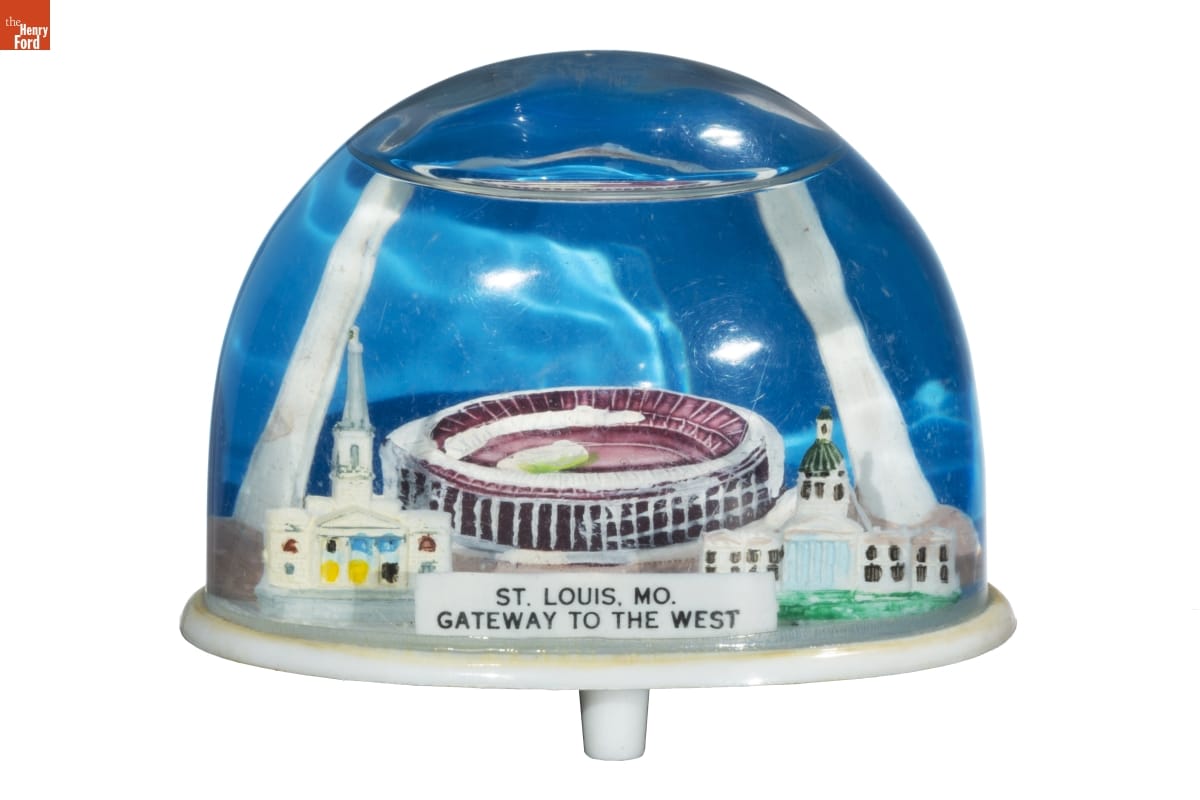
- "St. Louis: Gateway to the West" Snow Globe, circa 1970 - Tourist attractions offered souvenir seekers something new beginning in the 1950s: inexpensive plastic snow globes. These evolved from fancier versions through innovations in plastics and manufacturing technology, and they quickly became connected with travel. Snow globes were fun to collect, easy to transport, and served as both proof of the journey and a lasting representation of vacation memories.
- circa 1970
- Collections - Artifact
"St. Louis: Gateway to the West" Snow Globe, circa 1970
Tourist attractions offered souvenir seekers something new beginning in the 1950s: inexpensive plastic snow globes. These evolved from fancier versions through innovations in plastics and manufacturing technology, and they quickly became connected with travel. Snow globes were fun to collect, easy to transport, and served as both proof of the journey and a lasting representation of vacation memories.
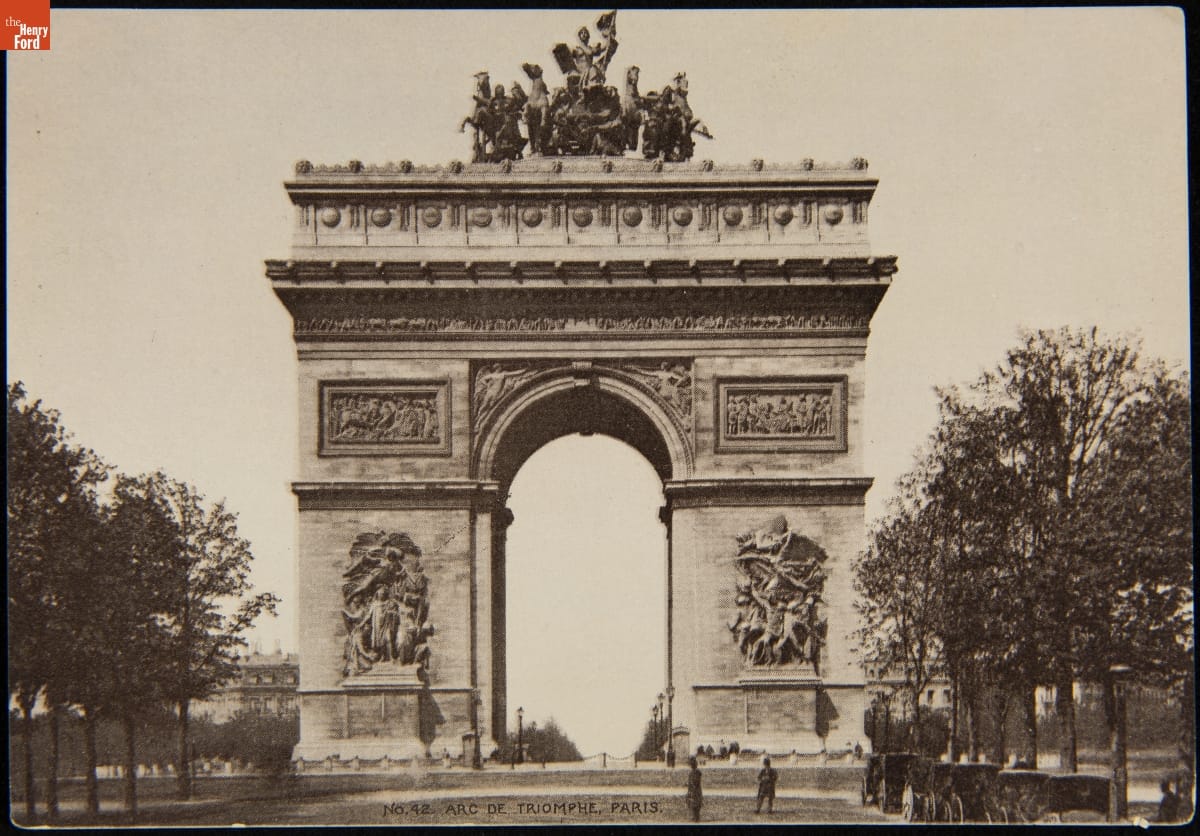
- Trade Card for C.I. Hood & Co. with Hood's Photos of the World, "Arc De Triomphe, Paris," 1890-1910 - In the late 19th century, trade cards were a major means of advertising goods and services. Patent medicine producer, C.I. Hood & Co., had its own advertising department, creating cookbooks, calendars, and, most abundantly, trade cards. The trade card series, "Hood's Photos of the World," became popular among consumers, as it offered views of far-away places, providing a window to the broader world.
- 1890-1910
- Collections - Artifact
Trade Card for C.I. Hood & Co. with Hood's Photos of the World, "Arc De Triomphe, Paris," 1890-1910
In the late 19th century, trade cards were a major means of advertising goods and services. Patent medicine producer, C.I. Hood & Co., had its own advertising department, creating cookbooks, calendars, and, most abundantly, trade cards. The trade card series, "Hood's Photos of the World," became popular among consumers, as it offered views of far-away places, providing a window to the broader world.