
Search
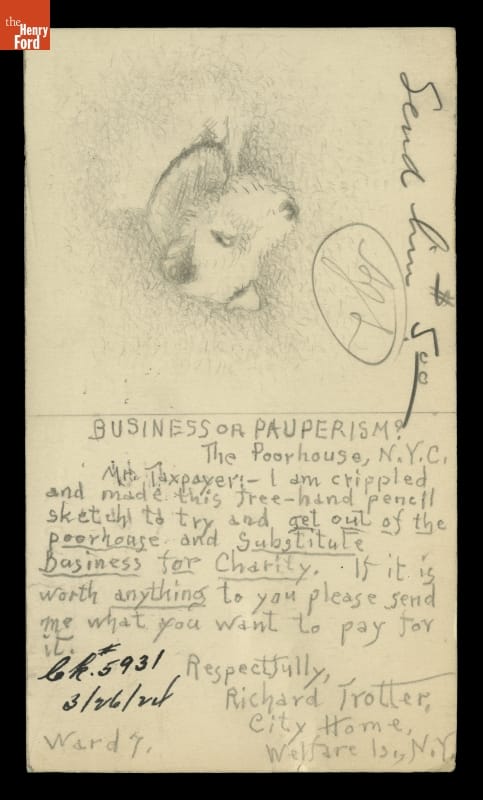
- Letter from Richard Trotter to Edsel Ford, Offering to Sell Drawings, March 20, 1924 -
- March 20, 1924
- Collections - Artifact
Letter from Richard Trotter to Edsel Ford, Offering to Sell Drawings, March 20, 1924
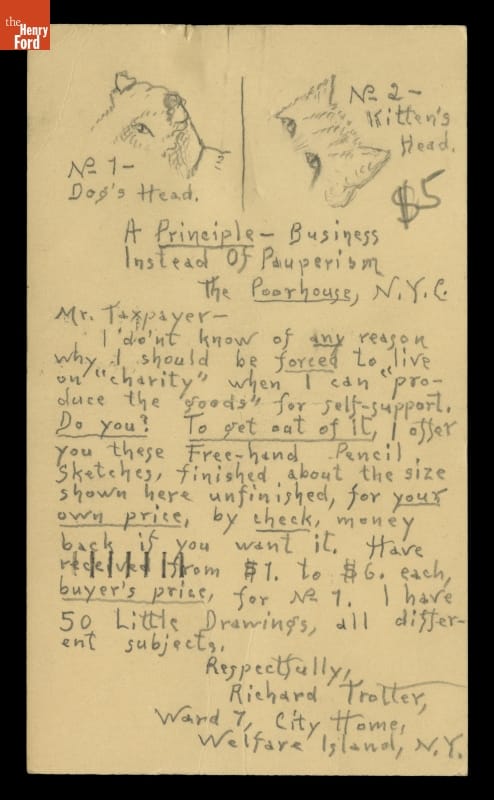
- Letter from Richard Trotter to Edsel Ford, Offering to Sell Drawings, December 18, 1924 -
- December 18, 1924
- Collections - Artifact
Letter from Richard Trotter to Edsel Ford, Offering to Sell Drawings, December 18, 1924
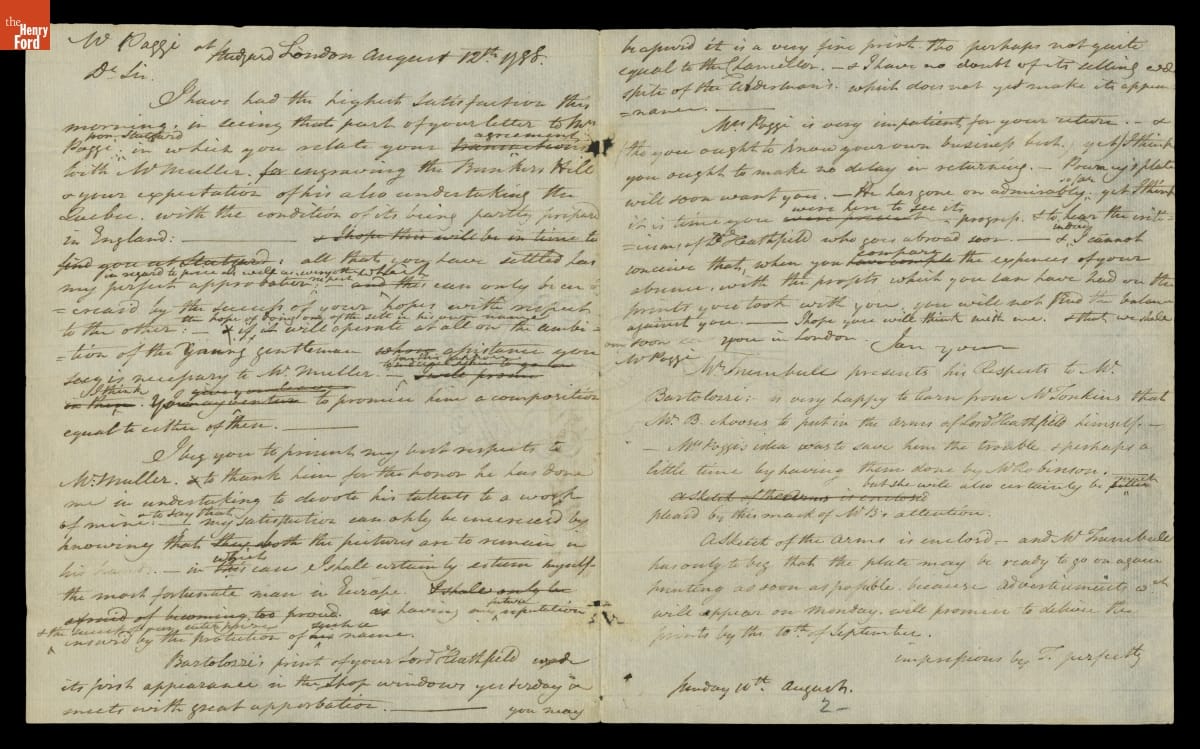
- Letter from John Trumbull to A. C. de Poggi, August 12, 1788 - American artist John Trumbull met Antonio Cesare Poggi while studying in Europe in the late 1700s. Poggi was an artist, art dealer and print publisher. The two became business associates and friends. In this letter from 1788, Trumbull is happy to hear that Poggi has entered an agreement with an engraver to create printing plates of Trumbull's paintings.
- August 12, 1788
- Collections - Artifact
Letter from John Trumbull to A. C. de Poggi, August 12, 1788
American artist John Trumbull met Antonio Cesare Poggi while studying in Europe in the late 1700s. Poggi was an artist, art dealer and print publisher. The two became business associates and friends. In this letter from 1788, Trumbull is happy to hear that Poggi has entered an agreement with an engraver to create printing plates of Trumbull's paintings.
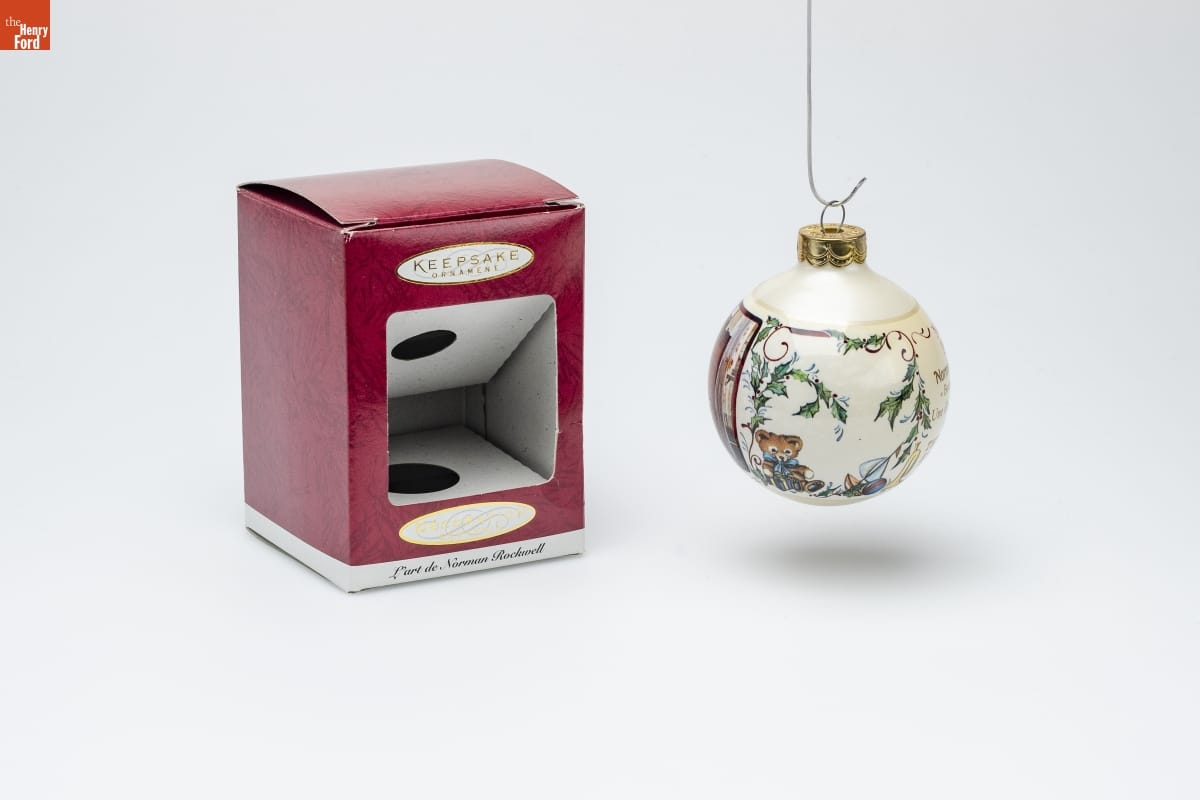
- Hallmark "L'art de Norman Rockwell: Bottom Drawer" Christmas Ornament, 1994 - Already known for greeting cards, Hallmark introduced a line of Christmas ornaments in 1973. The company's annual release of an increasing array of ornaments revolutionized Christmas decorating, appealing to customers' interest in marking memories and milestones as well as expressing one's personality and unique tastes.
- 1994
- Collections - Artifact
Hallmark "L'art de Norman Rockwell: Bottom Drawer" Christmas Ornament, 1994
Already known for greeting cards, Hallmark introduced a line of Christmas ornaments in 1973. The company's annual release of an increasing array of ornaments revolutionized Christmas decorating, appealing to customers' interest in marking memories and milestones as well as expressing one's personality and unique tastes.
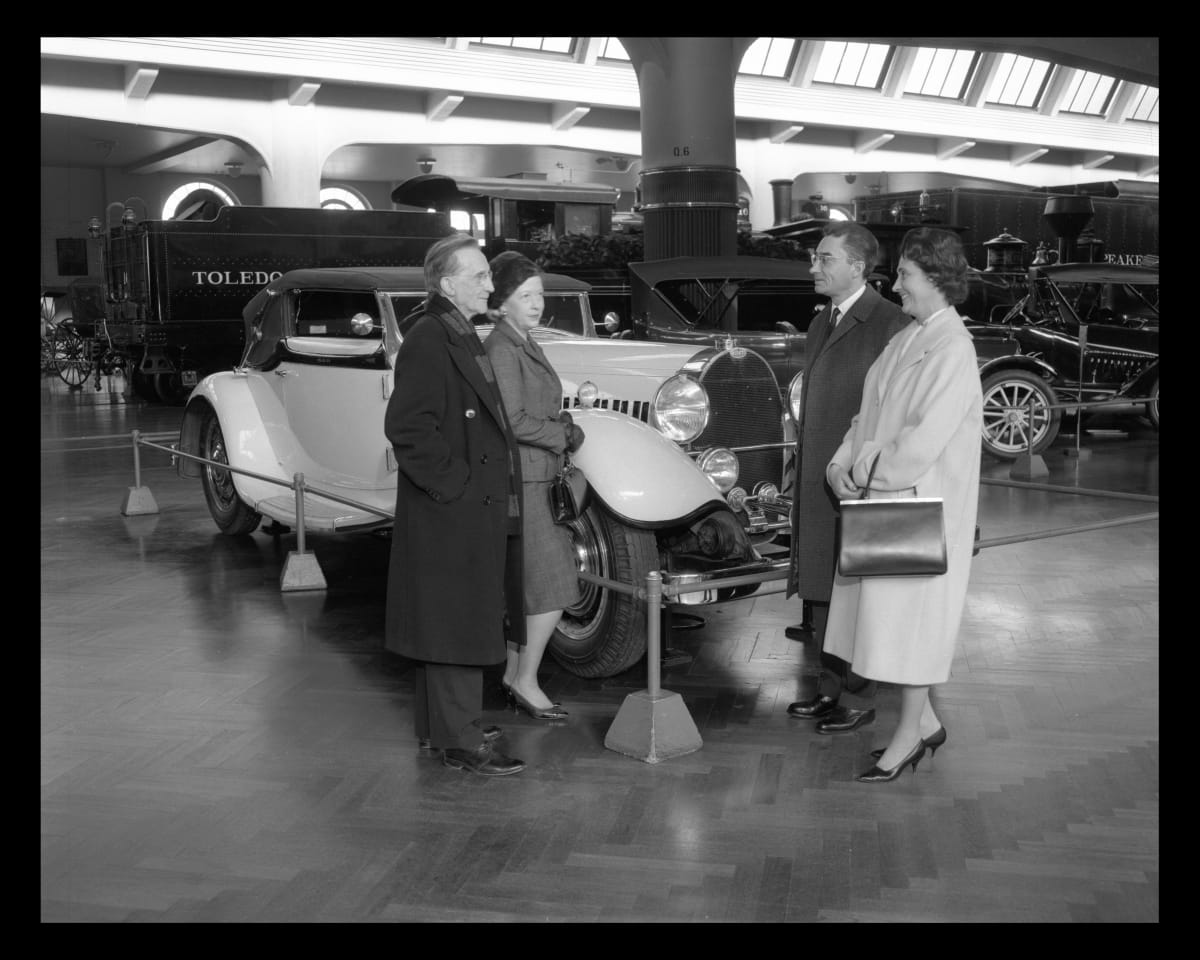
- Marcel and Alexina Duchamp Visiting Henry Ford Museum with Mr. and Mrs. Alain Chaillous, December 1, 1961 - Many famous individuals have visited Greenfield Village and Henry Ford Museum over the years. Actors, authors, and artists have passed through the entrance gates; business leaders, royalty, politicians, and a host of others have toured the exhibits. Photographs by the institution's photographer were taken if the celebrity allowed it. In 1961, Marcel Duchamp, the unconventional artist-turned-chess player, came to the museum.
- December 01, 1961
- Collections - Artifact
Marcel and Alexina Duchamp Visiting Henry Ford Museum with Mr. and Mrs. Alain Chaillous, December 1, 1961
Many famous individuals have visited Greenfield Village and Henry Ford Museum over the years. Actors, authors, and artists have passed through the entrance gates; business leaders, royalty, politicians, and a host of others have toured the exhibits. Photographs by the institution's photographer were taken if the celebrity allowed it. In 1961, Marcel Duchamp, the unconventional artist-turned-chess player, came to the museum.
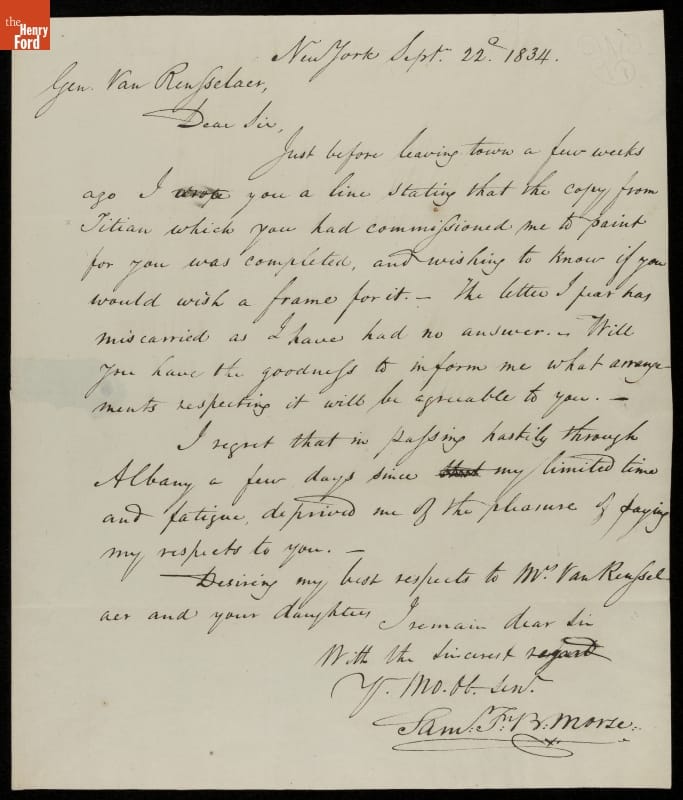
- Letter from Samuel Finley Breese Morse to Stephen Van Rensselaer, 1834 -
- September 22, 1834
- Collections - Artifact
Letter from Samuel Finley Breese Morse to Stephen Van Rensselaer, 1834
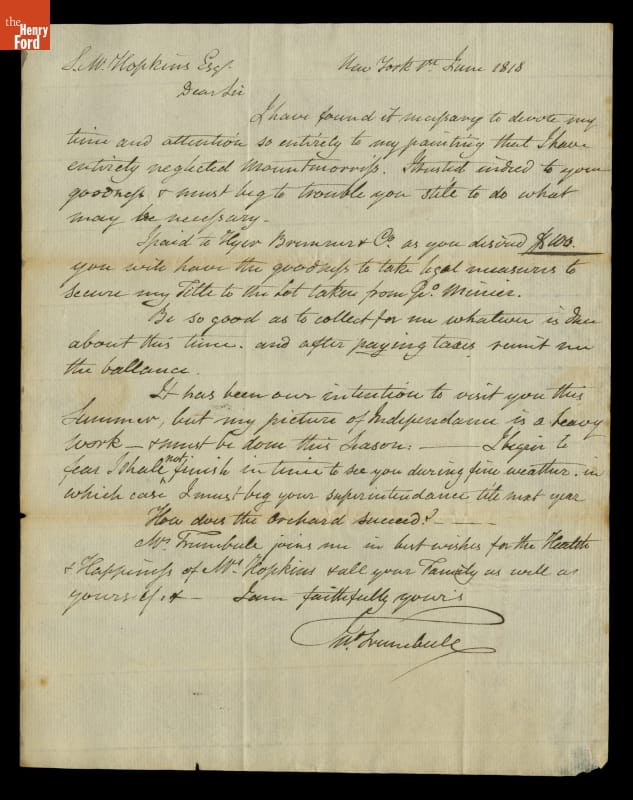
- Letter from John Trumbull to Samuel M. Hopkins, June 1, 1818 - John Trumbull worked tirelessly on his painting <EM>Declaration of Independence</EM> throughout 1818. The painting was one of four Revolutionary-era scenes commissioned by the U.S. Congress for the Capitol. In this letter to Samuel Hopkins, Trumbull apologized for his inattention to business matters and the failure to visit. Trumbull explained that his drive to complete his "picture of Independence" is "heavy work."
- June 01, 1818
- Collections - Artifact
Letter from John Trumbull to Samuel M. Hopkins, June 1, 1818
John Trumbull worked tirelessly on his painting Declaration of Independence throughout 1818. The painting was one of four Revolutionary-era scenes commissioned by the U.S. Congress for the Capitol. In this letter to Samuel Hopkins, Trumbull apologized for his inattention to business matters and the failure to visit. Trumbull explained that his drive to complete his "picture of Independence" is "heavy work."
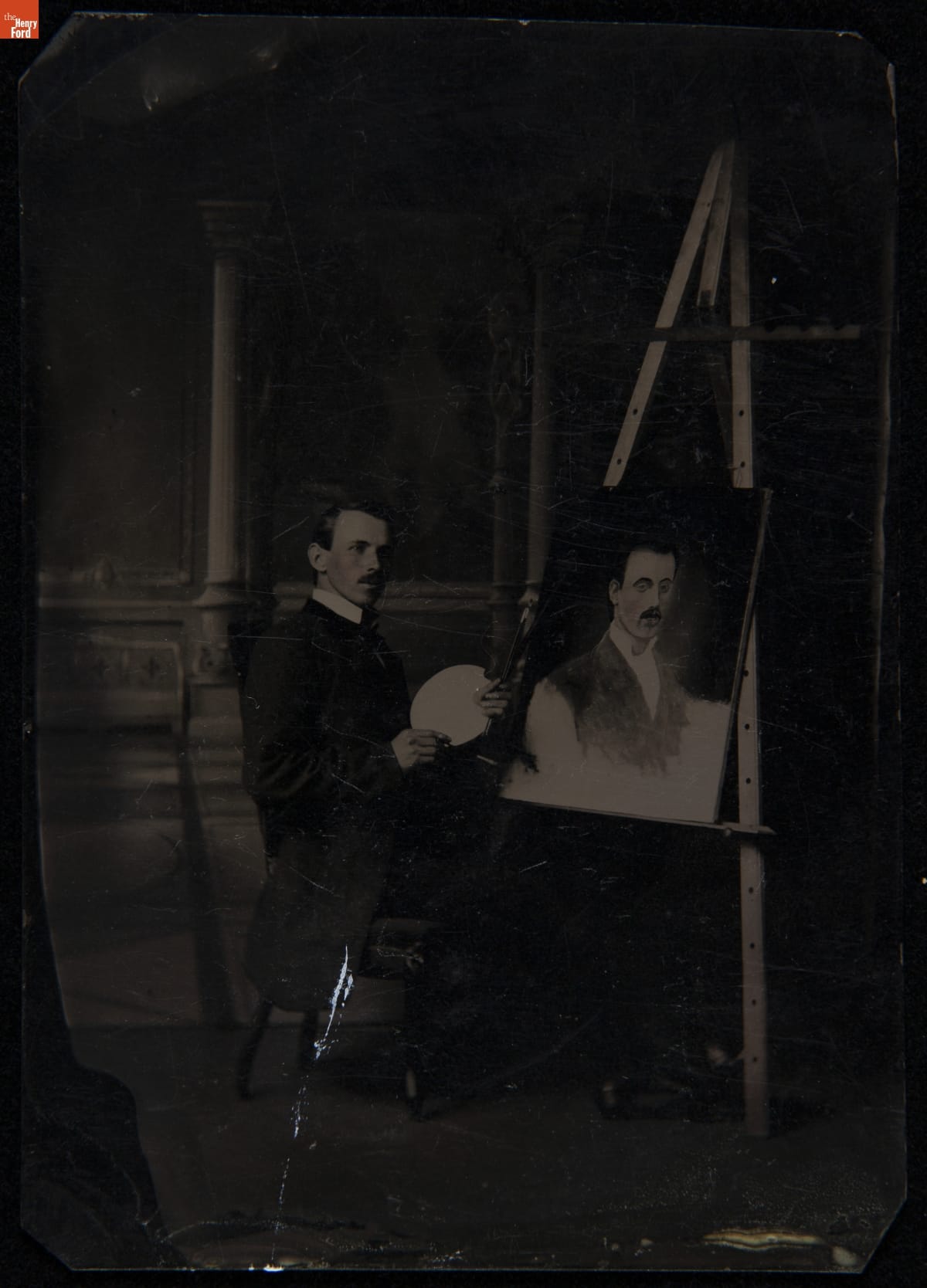
- Artist Painting a Self-Portrait, 1890-1910 - Tintypes, the popular "instant photographs" of the 19th century, could be produced in a matter of minutes at a price most people could afford. Tintypes democratized photography. Beginning in the mid-1850s, they gave more people than ever before the chance to have a real likeness of themselves--capturing unique glimpses of how everyday Americans looked and lived.
- 1890-1910
- Collections - Artifact
Artist Painting a Self-Portrait, 1890-1910
Tintypes, the popular "instant photographs" of the 19th century, could be produced in a matter of minutes at a price most people could afford. Tintypes democratized photography. Beginning in the mid-1850s, they gave more people than ever before the chance to have a real likeness of themselves--capturing unique glimpses of how everyday Americans looked and lived.
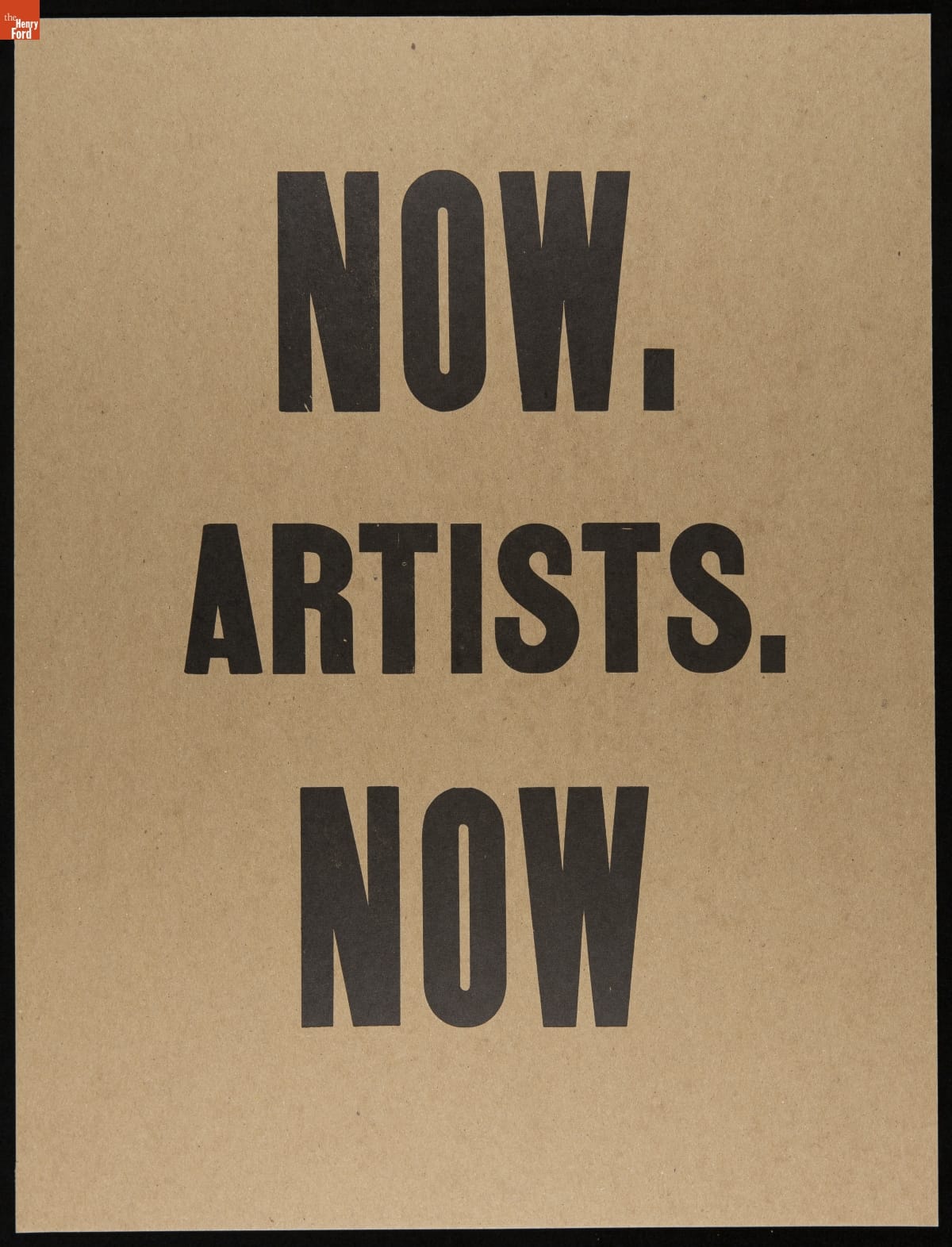
- Protest Poster, "Now, Artists. Now," 2020 - In June 2020, Detroit-based non-profit letterpress organization Signal-Return responded to the civil unrest that followed the death of George Floyd by producing free protest posters for the community. These posters were made in solidarity with the principles behind the Black Lives Matter movement and distributed with the intent that they be carried in local protests or displayed in visible places.
- 2020
- Collections - Artifact
Protest Poster, "Now, Artists. Now," 2020
In June 2020, Detroit-based non-profit letterpress organization Signal-Return responded to the civil unrest that followed the death of George Floyd by producing free protest posters for the community. These posters were made in solidarity with the principles behind the Black Lives Matter movement and distributed with the intent that they be carried in local protests or displayed in visible places.
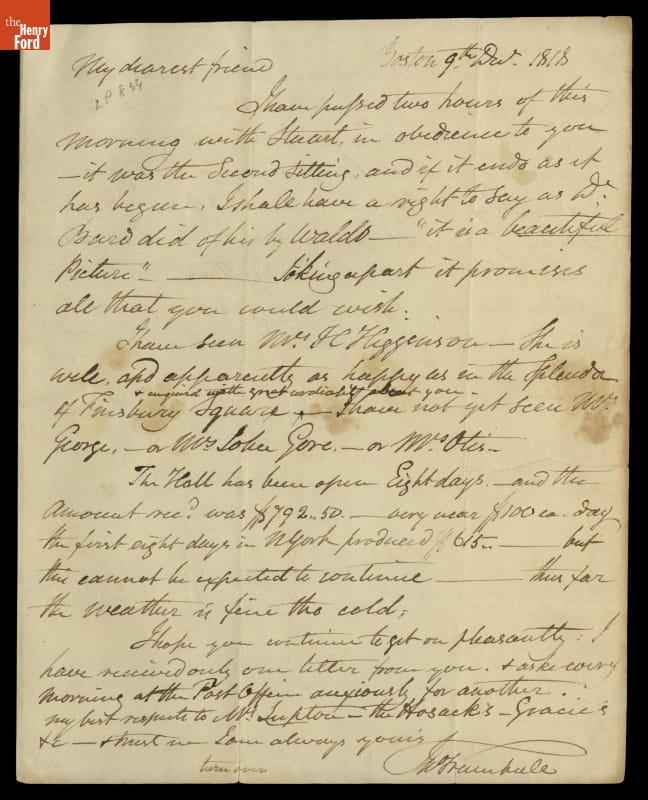
- Letter from John Trumbull to Sarah Hope Harvey Trumbull, December 9, 1818 - In 1817, the U.S. Congress commissioned John Trumbull to paint four Revolutionary-era scenes for the Capitol. The first, <EM>Declaration of Independence</EM>, was completed in 1818. Trumbull took the painting on a multi-city tour to give the public a chance to view the work before it returned to the Capitol. Trumbull mentioned the tour's success in this letter to his wife.
- December 09, 1818
- Collections - Artifact
Letter from John Trumbull to Sarah Hope Harvey Trumbull, December 9, 1818
In 1817, the U.S. Congress commissioned John Trumbull to paint four Revolutionary-era scenes for the Capitol. The first, Declaration of Independence, was completed in 1818. Trumbull took the painting on a multi-city tour to give the public a chance to view the work before it returned to the Capitol. Trumbull mentioned the tour's success in this letter to his wife.