
Search
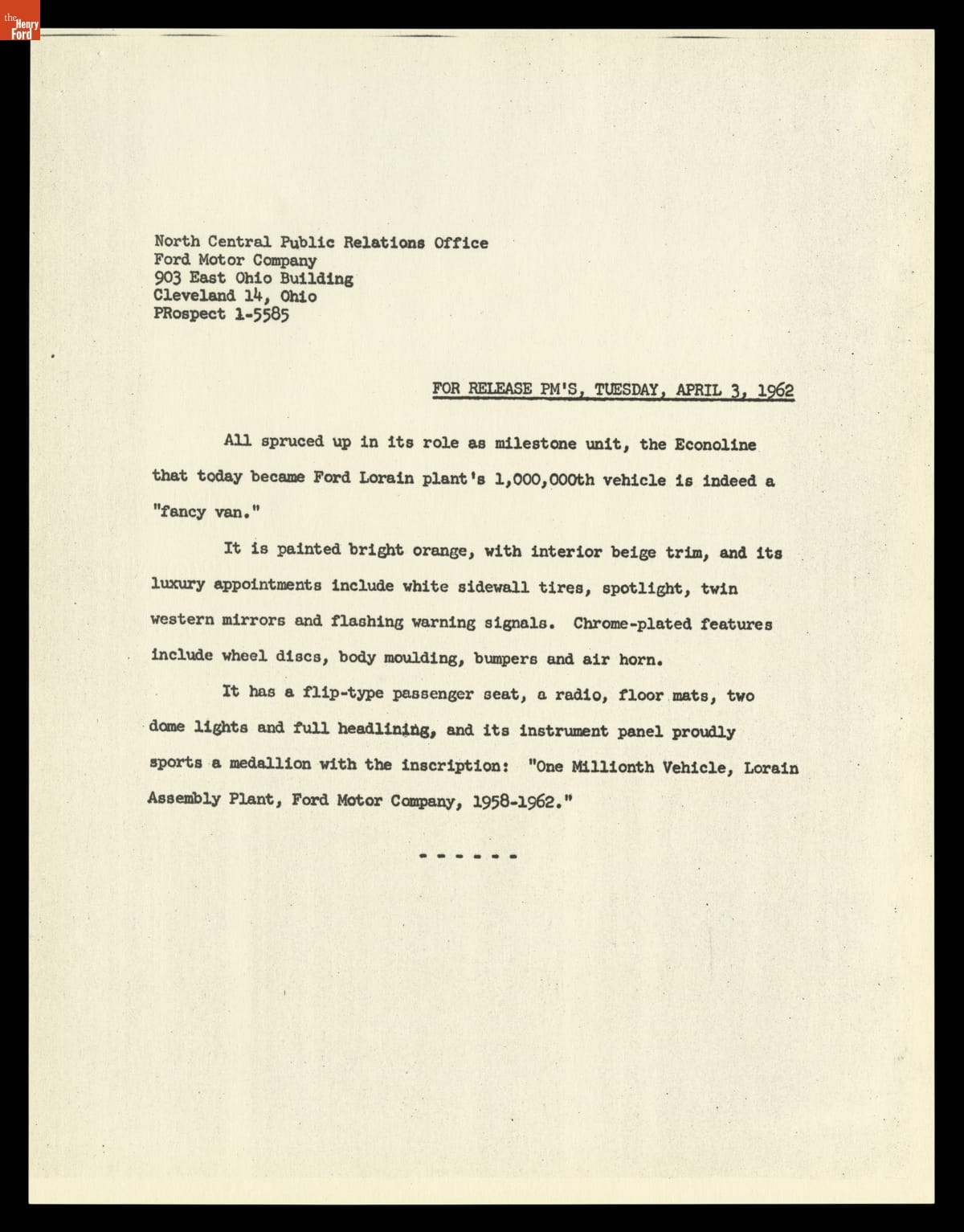
- One Millionth Vehicle Built at Ford Motor Comapany Assembly Plant, Lorain, Ohio, April 3, 1962 - Ford Motor Company opened an assembly plant in Lorain, Ohio, in 1958. Over the years, the factory manufactured various Ford and Mercury models. On April 3, 1962, employees celebrated production of the plant's one millionth vehicle: a Ford Econoline van. Workers at Lorain built another seven million vehicles before the plant closed in 2005.
- April 03, 1962
- Collections - Artifact
One Millionth Vehicle Built at Ford Motor Comapany Assembly Plant, Lorain, Ohio, April 3, 1962
Ford Motor Company opened an assembly plant in Lorain, Ohio, in 1958. Over the years, the factory manufactured various Ford and Mercury models. On April 3, 1962, employees celebrated production of the plant's one millionth vehicle: a Ford Econoline van. Workers at Lorain built another seven million vehicles before the plant closed in 2005.
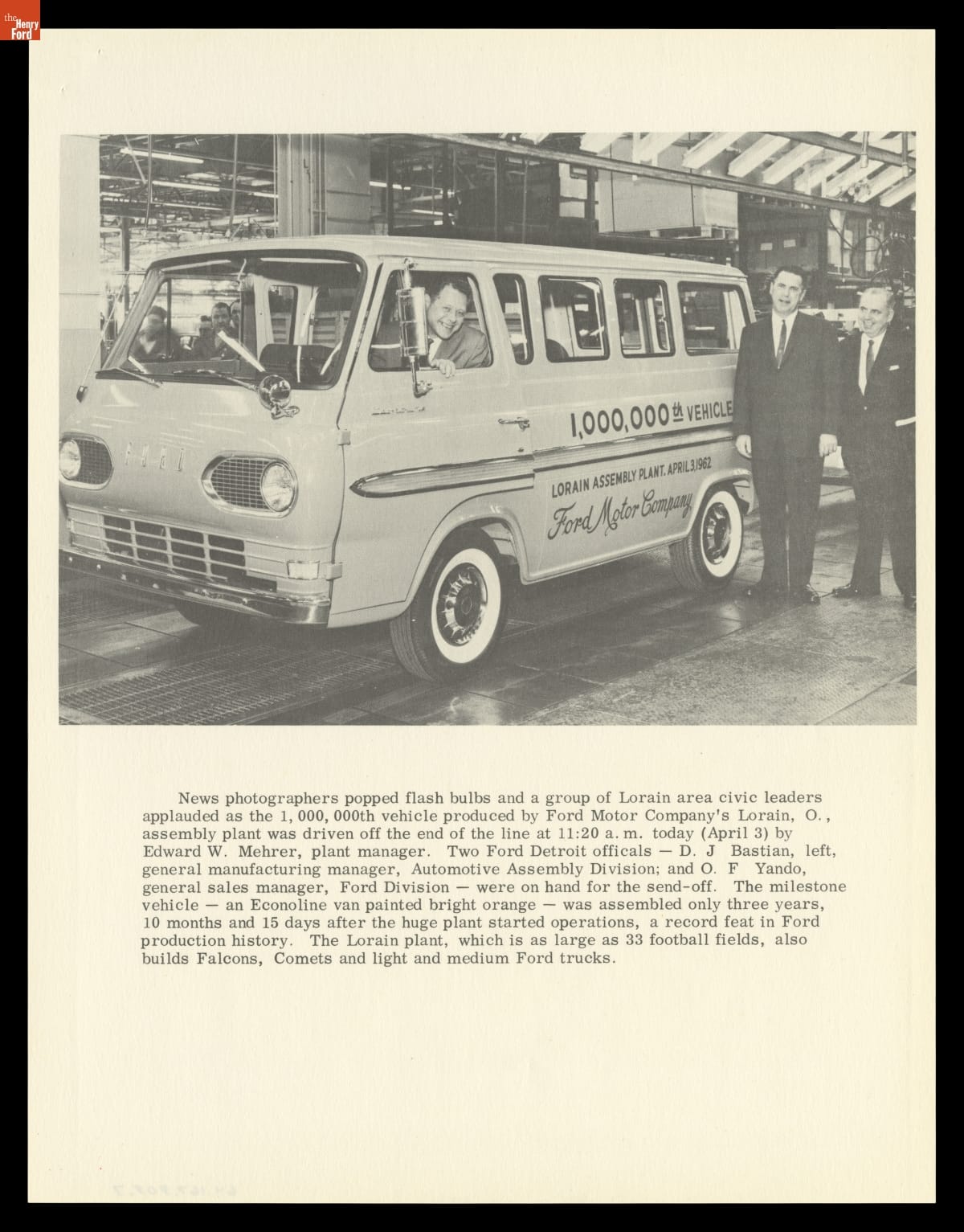
- 1,000,000th Vehicle Built at Ford Motor Company Assembly Plant, Lorain, Ohio, April 3, 1962 - Ford Motor Company opened an assembly plant in Lorain, Ohio, in 1958. Over the years, the factory manufactured various Ford and Mercury models. On April 3, 1962, employees celebrated production of the plant's one millionth vehicle: a Ford Econoline van. Workers at Lorain built another seven million vehicles before the plant closed in 2005.
- April 03, 1962
- Collections - Artifact
1,000,000th Vehicle Built at Ford Motor Company Assembly Plant, Lorain, Ohio, April 3, 1962
Ford Motor Company opened an assembly plant in Lorain, Ohio, in 1958. Over the years, the factory manufactured various Ford and Mercury models. On April 3, 1962, employees celebrated production of the plant's one millionth vehicle: a Ford Econoline van. Workers at Lorain built another seven million vehicles before the plant closed in 2005.
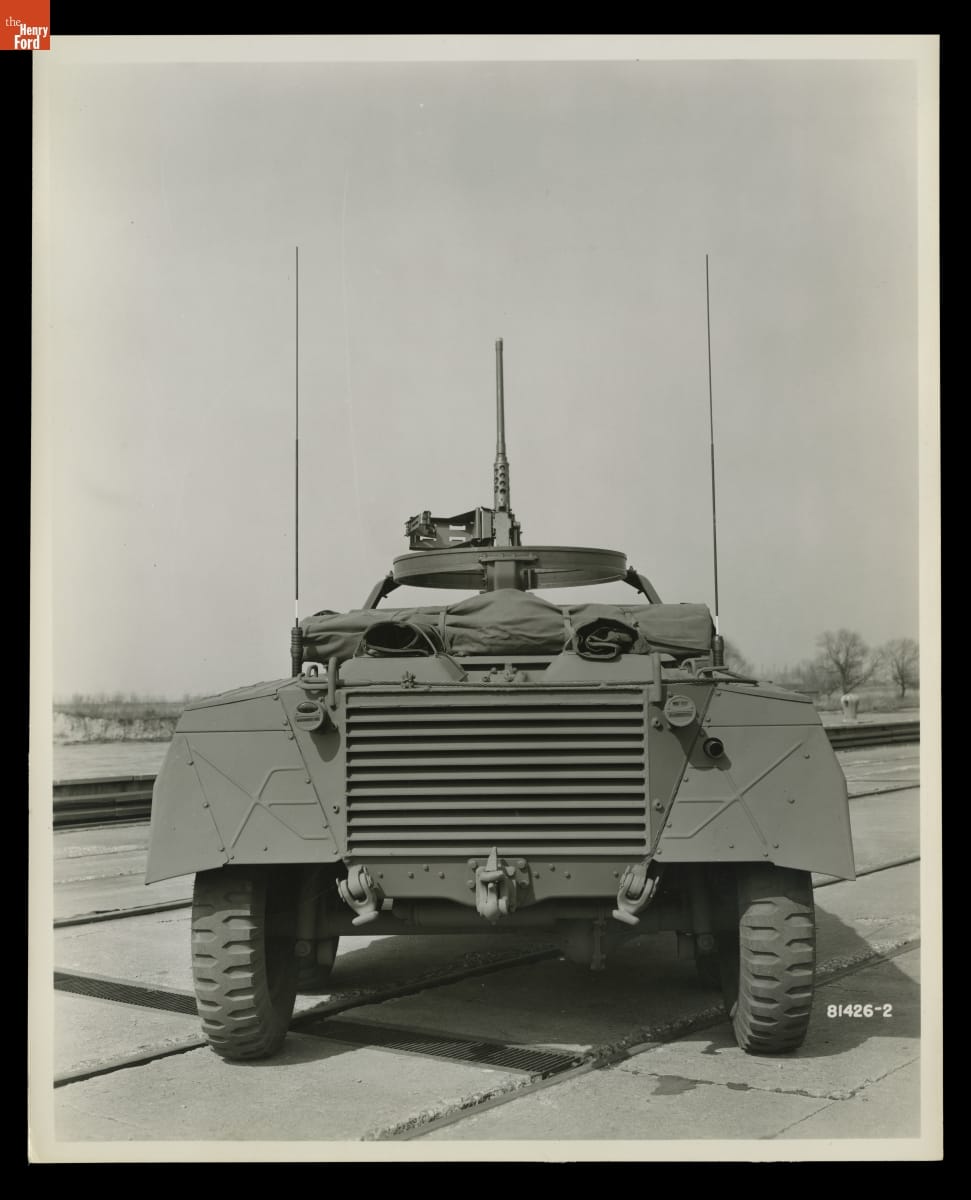
- M20 Armored Car Built at the Ford Motor Company Chicago Assembly Plant, March 1945 - Ford's T-26 Command Car, designated M20 by the U.S. Army, combined speed with protection. The vehicle featured six-wheel drive, a cruising range of 400 miles, and a top speed of 56 miles per hour. Armor plating, up to 3/4-inch thick, and a top-mounted .50 caliber machine gun provided further defense. Ford built 3,791 M20 vehicles, all at its Chicago plant.
- March 12, 1945
- Collections - Artifact
M20 Armored Car Built at the Ford Motor Company Chicago Assembly Plant, March 1945
Ford's T-26 Command Car, designated M20 by the U.S. Army, combined speed with protection. The vehicle featured six-wheel drive, a cruising range of 400 miles, and a top speed of 56 miles per hour. Armor plating, up to 3/4-inch thick, and a top-mounted .50 caliber machine gun provided further defense. Ford built 3,791 M20 vehicles, all at its Chicago plant.
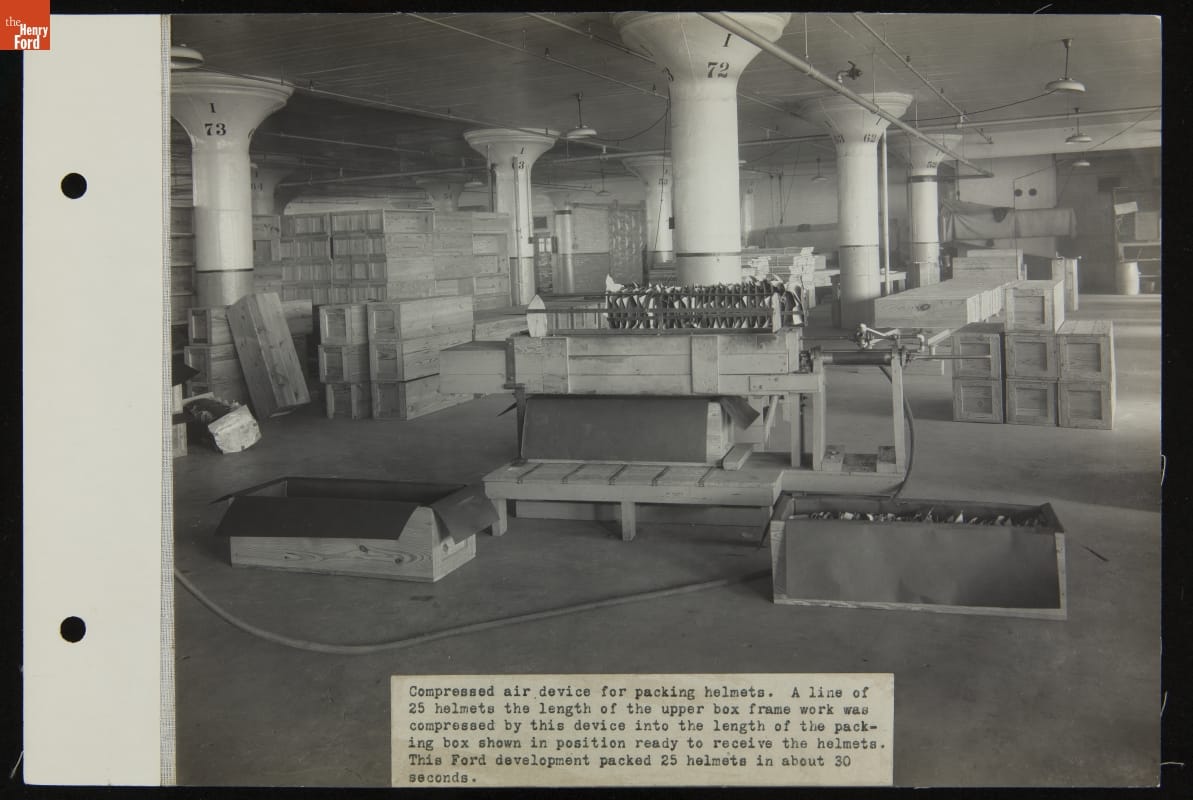
- Compressed Air Device for Packing Helmets during World War I, Ford Motor Company Philadelphia Plant, 1917-1918 - When the United States entered World War I, American automobile companies turned some of their manufacturing capacity to the production of war materiel. Ford Motor Company received a contract to paint, assemble, and crate steel helmets for American soldiers. Altogether, Ford's Philadelphia plant processed more than 2.7 million helmets at a rate as high as 40,000 each day.
- 1917-1918
- Collections - Artifact
Compressed Air Device for Packing Helmets during World War I, Ford Motor Company Philadelphia Plant, 1917-1918
When the United States entered World War I, American automobile companies turned some of their manufacturing capacity to the production of war materiel. Ford Motor Company received a contract to paint, assemble, and crate steel helmets for American soldiers. Altogether, Ford's Philadelphia plant processed more than 2.7 million helmets at a rate as high as 40,000 each day.
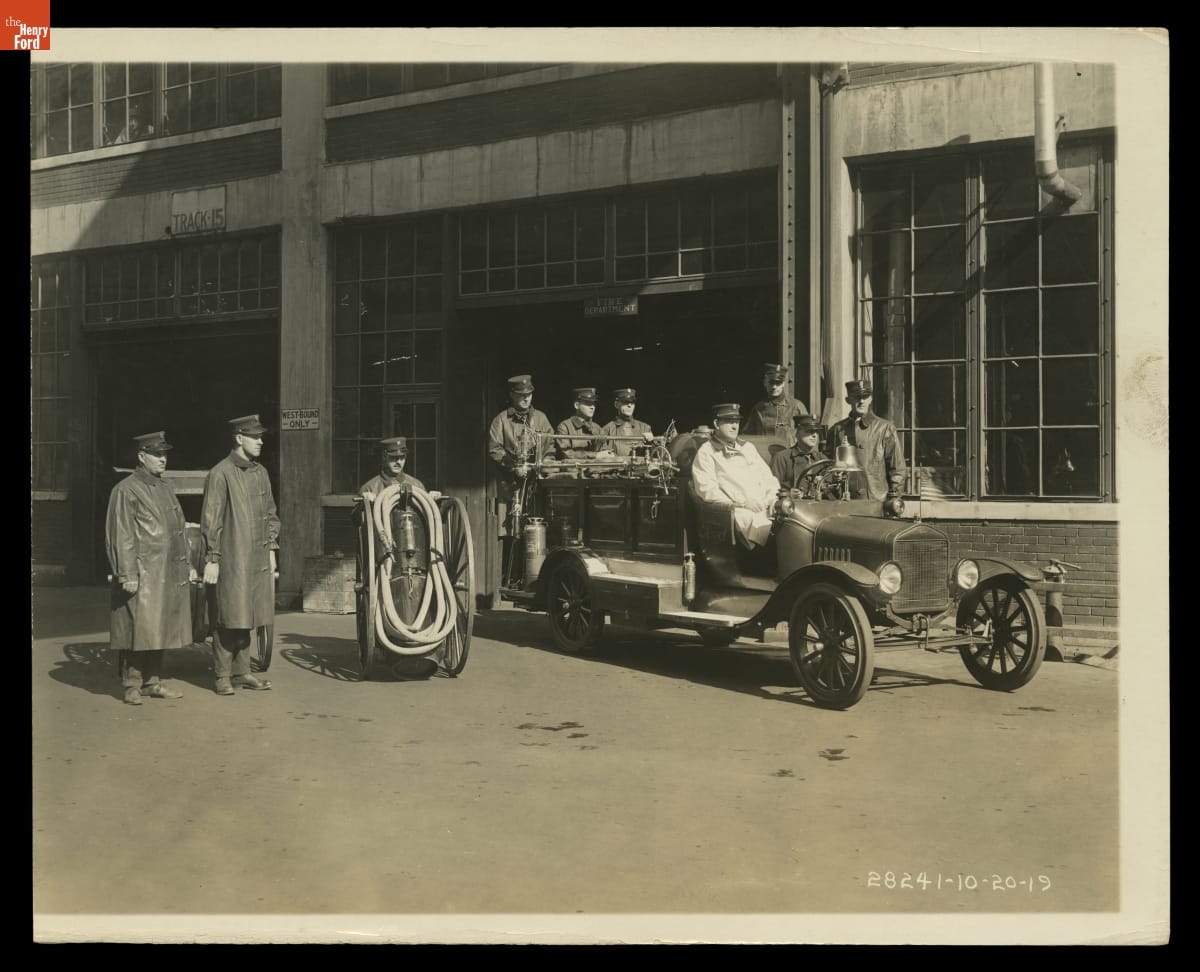
- Ford Highland Park Fire Department, October 20, 1919 - Fire was a constant threat to factories and industrial facilities. Large plants often operated their own fire departments to protect from the danger. Ford Motor Company maintained a fire department at its Highland Park plant near Detroit, Michigan. Naturally, Ford's department used Model T fire trucks.
- October 20, 1919
- Collections - Artifact
Ford Highland Park Fire Department, October 20, 1919
Fire was a constant threat to factories and industrial facilities. Large plants often operated their own fire departments to protect from the danger. Ford Motor Company maintained a fire department at its Highland Park plant near Detroit, Michigan. Naturally, Ford's department used Model T fire trucks.
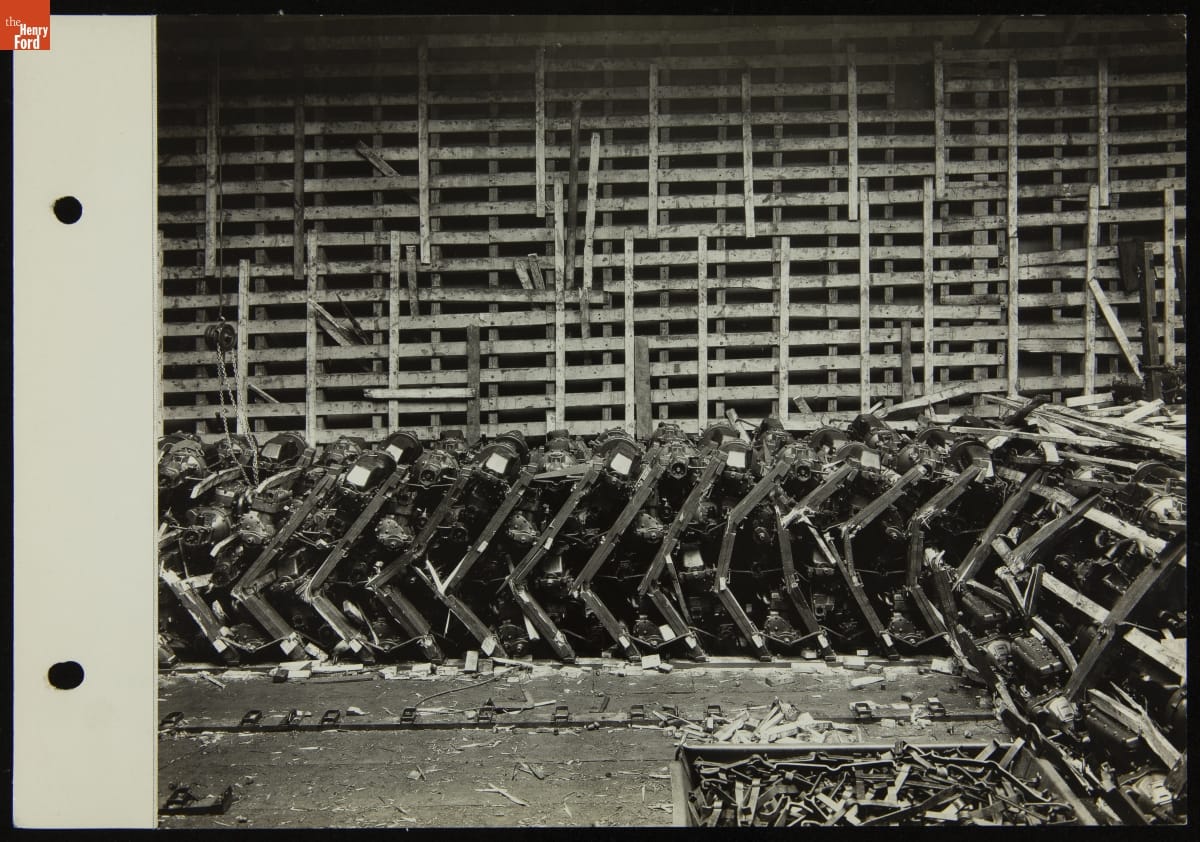
- Hull of Freighter "Oneida" Loaded with Automobile Parts, circa 1924 - In the 1920s, Henry Ford assembled a fleet of cargo carriers, ocean-going ships, barges, tugboats and canal boats to bring raw materials to or take finished products from his new manufacturing complex on the Rouge River. The <em>Oneida</em>, a small ocean-going freighter acquired in 1923, carried automobile parts to Ford plants along America's Atlantic and Gulf coasts, and to foreign plants in South America and Europe.
- circa 1924
- Collections - Artifact
Hull of Freighter "Oneida" Loaded with Automobile Parts, circa 1924
In the 1920s, Henry Ford assembled a fleet of cargo carriers, ocean-going ships, barges, tugboats and canal boats to bring raw materials to or take finished products from his new manufacturing complex on the Rouge River. The Oneida, a small ocean-going freighter acquired in 1923, carried automobile parts to Ford plants along America's Atlantic and Gulf coasts, and to foreign plants in South America and Europe.
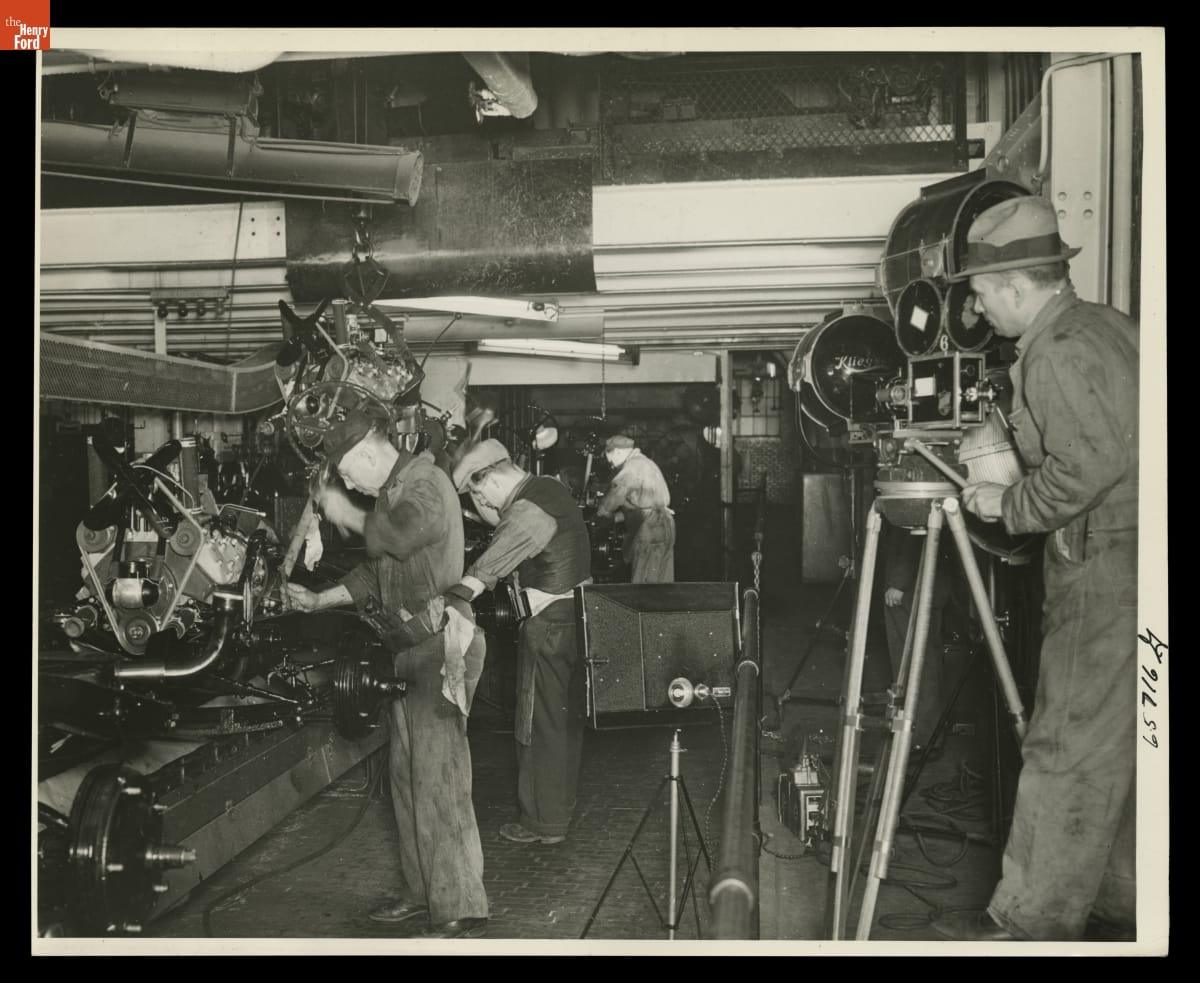
- Filming the Assembly Line at the Ford Rouge Plant, January 1936 - At its peak in the 1930s, Ford Motor Company's massive Rouge factory employed more than 100,000 workers. The complex included more than 15 million square feet of floor space and 120 miles of conveyors that turned out a new car every 49 seconds. In 1936, when this photo was taken, the people of Ford built more than 790,000 automobiles.
- January 15, 1936
- Collections - Artifact
Filming the Assembly Line at the Ford Rouge Plant, January 1936
At its peak in the 1930s, Ford Motor Company's massive Rouge factory employed more than 100,000 workers. The complex included more than 15 million square feet of floor space and 120 miles of conveyors that turned out a new car every 49 seconds. In 1936, when this photo was taken, the people of Ford built more than 790,000 automobiles.
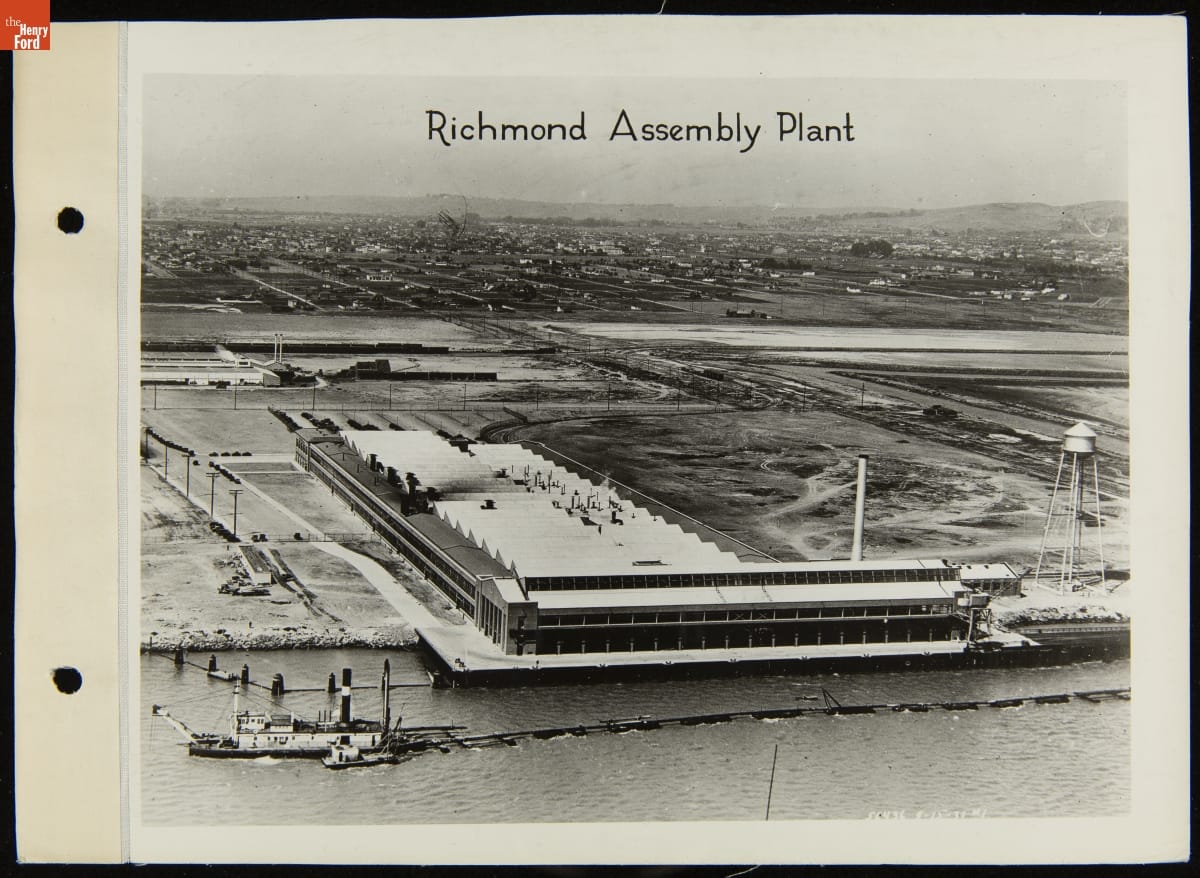
- Aerial View of Ford Motor Company Branch in Richmond, California, September 15, 1931 - Ford Motor Company opened an Albert Kahn-designed assembly plant in Richmond, California, in 1930. During World War II, employees at the factory built tanks, jeeps, and other military vehicles. Ford closed the Richmond plant in 1956. Today it houses private businesses and a visitor center for Rosie the Riveter / World War II Home Front National Historical Park.
- September 15, 1931
- Collections - Artifact
Aerial View of Ford Motor Company Branch in Richmond, California, September 15, 1931
Ford Motor Company opened an Albert Kahn-designed assembly plant in Richmond, California, in 1930. During World War II, employees at the factory built tanks, jeeps, and other military vehicles. Ford closed the Richmond plant in 1956. Today it houses private businesses and a visitor center for Rosie the Riveter / World War II Home Front National Historical Park.
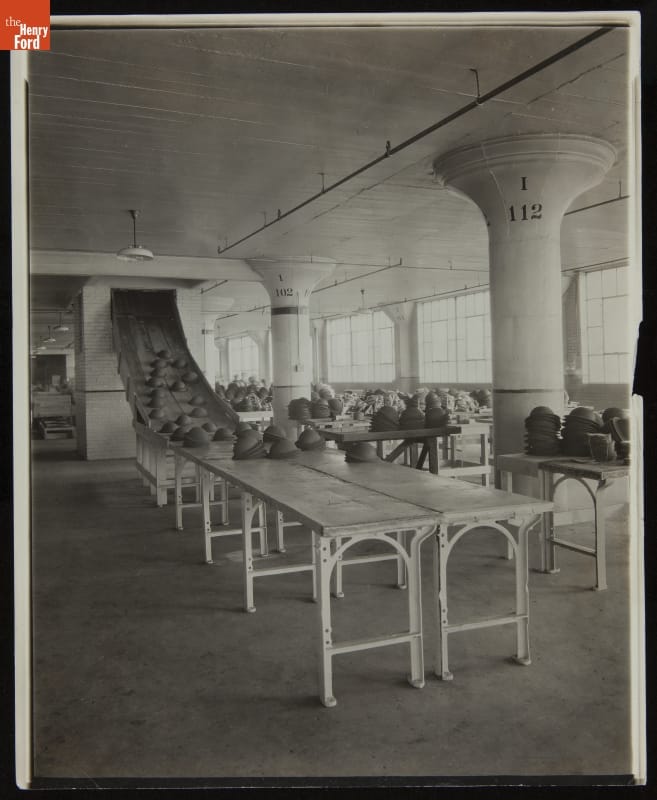
- Army Helmets Transferred from Tenth to Ninth Floor by Chute, Ford Motor Company Philadelphia Plant, 1917-1918 - When the United States entered World War I, American automobile companies turned some of their manufacturing capacity to the production of war materiel. Ford Motor Company received a contract to paint, assemble, and crate steel helmets for American soldiers. Altogether, Ford's Philadelphia plant processed more than 2.7 million helmets at a rate as high as 40,000 each day.
- 1917-1918
- Collections - Artifact
Army Helmets Transferred from Tenth to Ninth Floor by Chute, Ford Motor Company Philadelphia Plant, 1917-1918
When the United States entered World War I, American automobile companies turned some of their manufacturing capacity to the production of war materiel. Ford Motor Company received a contract to paint, assemble, and crate steel helmets for American soldiers. Altogether, Ford's Philadelphia plant processed more than 2.7 million helmets at a rate as high as 40,000 each day.
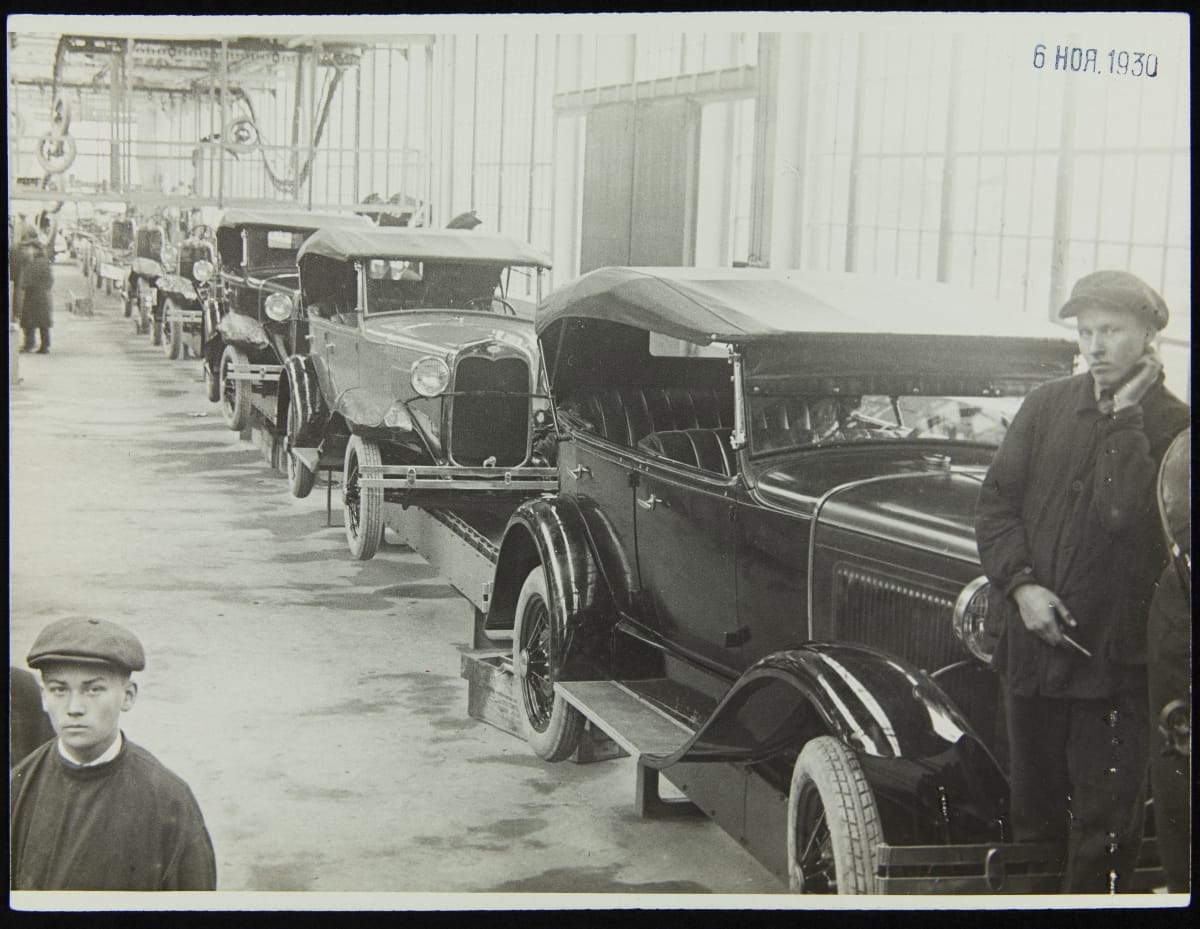
- Model A Assembly Line at Ford Motor Company's Moscow Factory, 1930 - In 1929, Ford Motor Company signed an agreement with the Soviet government to help open two plants in the U.S.S.R. at Nizhny Novgorod and Moscow. Ford provided detailed drawings of factory buildings and equipment, and it sent engineers and foremen to oversee construction and startup. Although Ford lost money on the venture, it earned favorable international publicity.
- November 06, 1930
- Collections - Artifact
Model A Assembly Line at Ford Motor Company's Moscow Factory, 1930
In 1929, Ford Motor Company signed an agreement with the Soviet government to help open two plants in the U.S.S.R. at Nizhny Novgorod and Moscow. Ford provided detailed drawings of factory buildings and equipment, and it sent engineers and foremen to oversee construction and startup. Although Ford lost money on the venture, it earned favorable international publicity.